



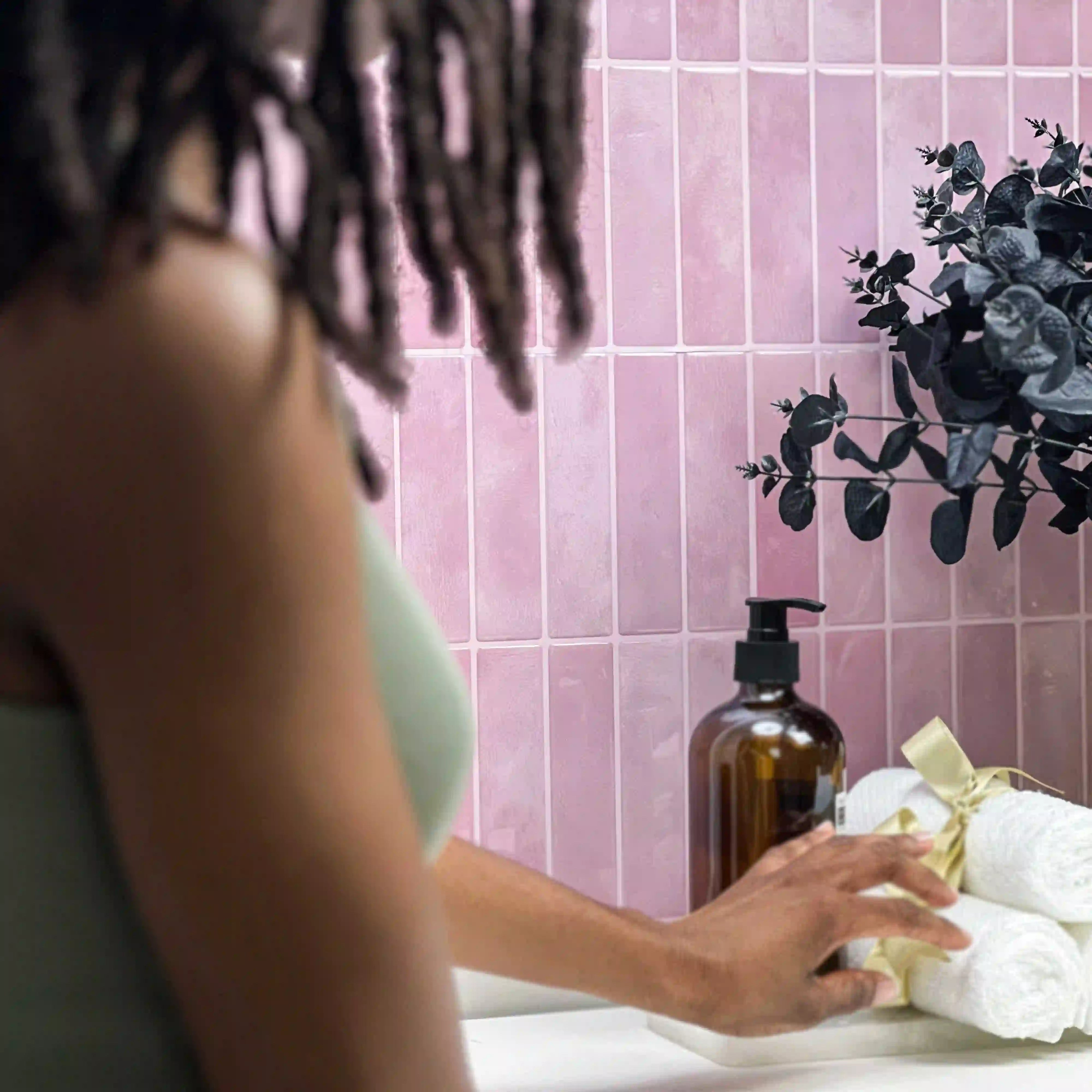
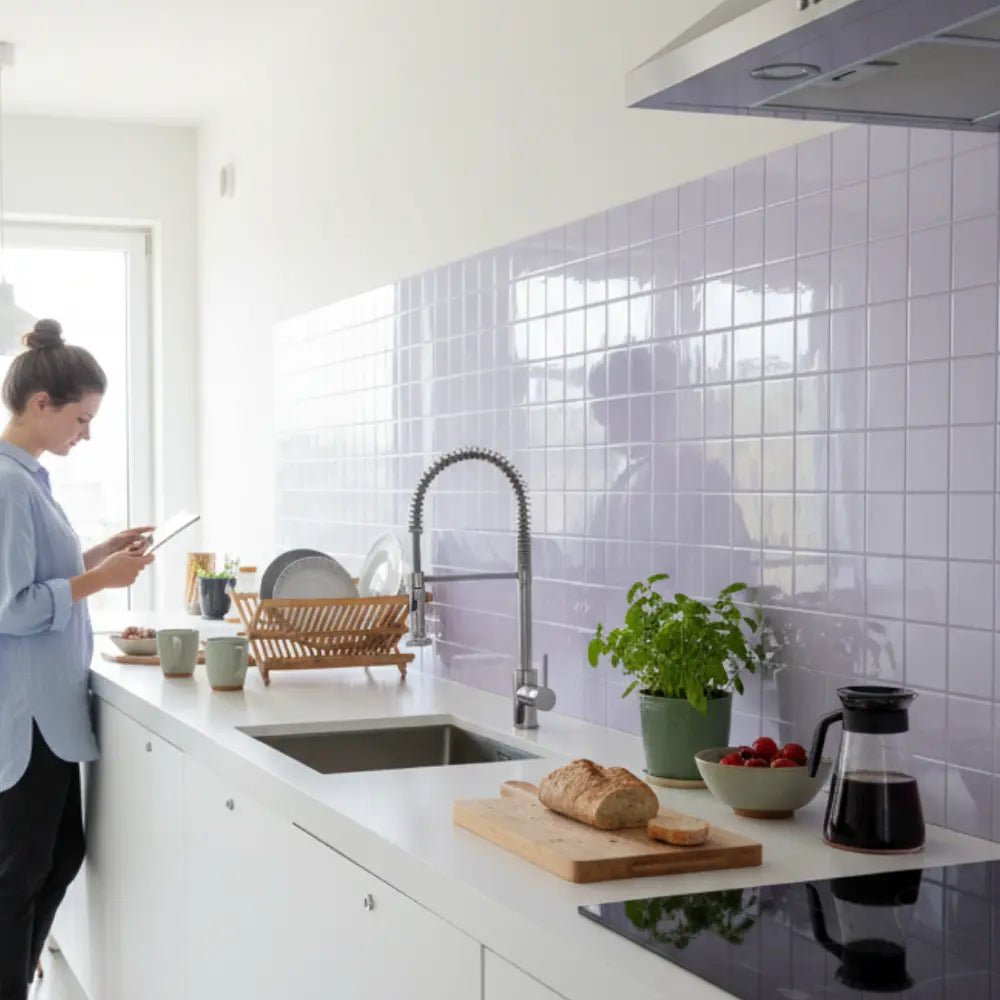



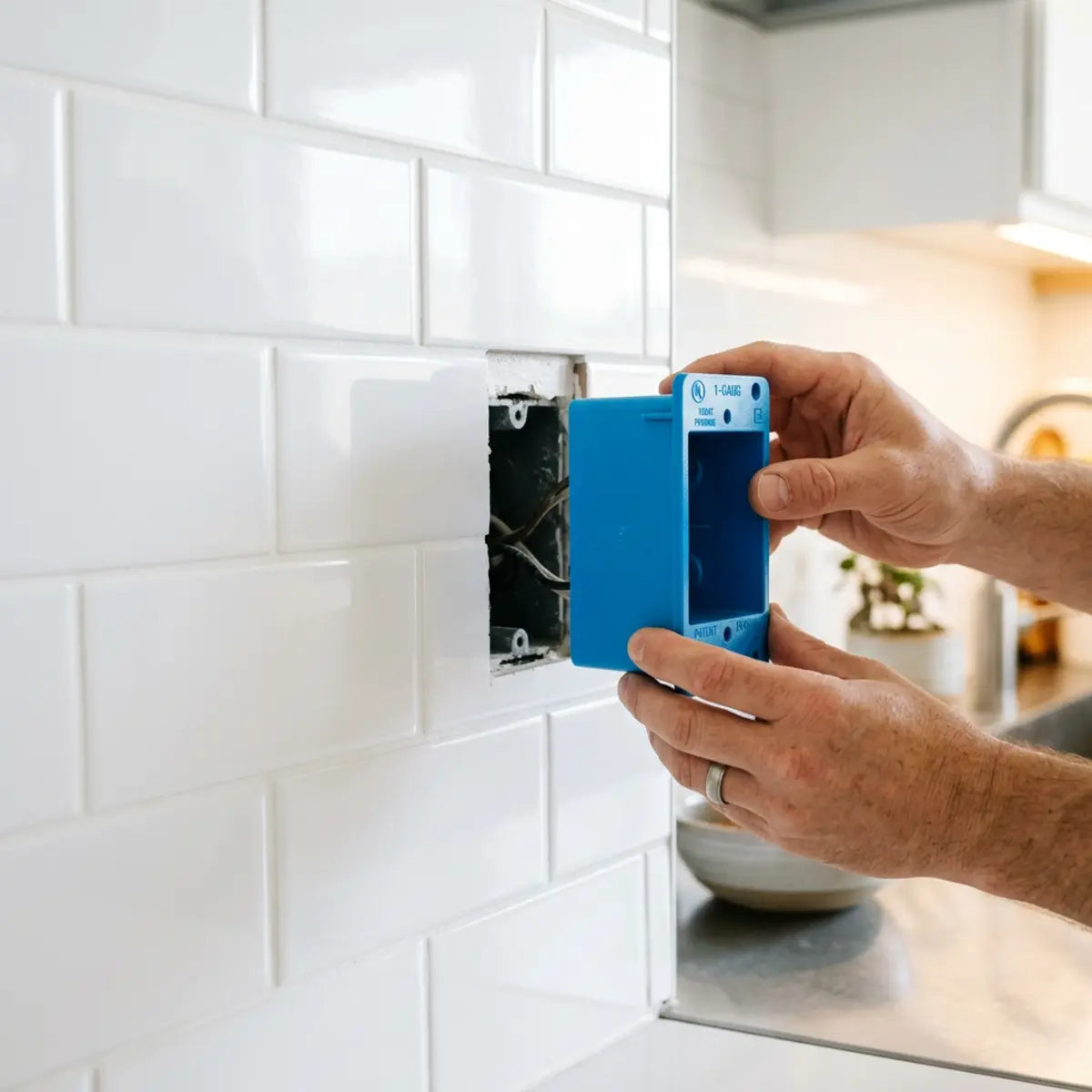
Wenn Ihre Elektrodose mehr als 1/4 inch hinter einer nicht brennbaren Wandoberfläche (z. B. Keramik) zurückliegt oder wenn sie überhaupthinter einer brennbaren Wandoberfläche (z. B. selbstklebenden Vinylfliesen oder Holz) zurückliegt, schreibt die US-amerikanische Elektroinstallationsnorm eineDosenverlängerungvor. Abstandshalter bringen lediglich das Gerät weiter nach vorn; Dosenverlängerungen schaffen einen brandschutzgerechten Bereich, der den Wandhohlraum vor elektrischen Lichtbögen schützt. Die Position der Elektrodose ist nur ein Teil der Wandplanung. Der Küchenrückwand-Ratgeber hilft Ihnen dabei, sie auf die Fliesenaufteilung, Bereiche an Spüle und Herd, sichtbare Kanten sowie den Zugang zur Reinigung abzustimmen.
Sie haben gerade eine schöne neue Rückwand angebracht. Nun möchten Sie die Abdeckung der Steckdose wieder festschrauben, doch die Steckdose rutscht nach hinten in die Wand. Die Abdeckung wackelt, und rundherum wird ein dunkler Spalt sichtbar. Da liegt es nahe, einfach längere Schrauben zu nehmen, die Abdeckung bündig anzudrücken und die Sache abzuhaken.
Greifen Sie aber noch nicht zu den längeren Schrauben. Hier geht es um einen wichtigen Sicherheitsaspekt, nicht nur um die Optik. Entscheidend ist, den Blick von der Oberfläche weg auf eine konkrete Vorgabe zu richten: den Sicherheitsgrenzwert für den Rücksprung der Steckdose.
Wenn die Öffnung der Elektrodose vollständig hinter Ihrer neuen fertigen Wandoberfläche liegt, bleiben durch den bloßen Austausch der Schrauben brennbare Wandschichten elektrischen Lichtbögen ausgesetzt.
Verwenden Sie eine Dosenverlängerung, wenn die Vorderkante der Elektrodose zu weit hinter der fertigen Oberfläche der Rückwand liegt. Das ist besonders wichtig, wenn Fliesen oder ein anderes Wandmaterial die Steckdose nicht ausreichend abstützen oder rund um die Dose einen Spalt entstehen lassen.
Abstandshalter können dabei helfen, die Steckdose nach vorn zu bringen. Sie ersetzen jedoch keine normgerechte Dosenverlängerung, wenn die Öffnung der Dose selbst zurückliegt. Sind Kabel beschädigt, sitzt die Dose locker, lässt sich der FI-Schutzschalter (GFCI) nicht korrekt einsetzen oder sind Sie sich bei der elektrischen Sicherheit unsicher, unterbrechen Sie die Arbeiten und wenden Sie sich an eine konzessionierte Elektrofachkraft.

Um diesen Tiefenunterschied richtig zu beurteilen, müssen Sie einige bauliche Gegebenheiten kennen:
- Rücksprung zuerst messen: Messen Sie die Position der Dosenfront immer im Verhältnis zur neuen fertigen Oberfläche der Rückwand – nicht zur alten Gipskartonwand. Diese Messung ist die Grundlage für eine normgerechte Elektroinstallation.
- Keine schnelle Lösung mit längeren Schrauben: Verlassen Sie sich nicht ausschließlich auf längere Schrauben, denn dadurch bleibt das Gerät mechanisch unzureichend abgestützt. Nicht abgestützte Steckdosen bewegen sich bei jedem Einstecken eines Steckers. Mit der Zeit können dadurch feine Risse in den Kupferleitungen entstehen.
- Anhand der Entscheidungshilfe vorgehen: Entscheiden Sie nach dem Prinzip „Sicherheit zuerst“, ob Sie eine Dosenverlängerung, einen Abstandshalter oder die Hilfe einer Elektrofachkraft benötigen. Genauigkeit an dieser Stelle kann verhindern, dass sich eine gefährliche Brandquelle unbemerkt hinter der Wand entwickelt.
Wann braucht eine Steckdose in der Rückwand eine Dosenverlängerung?
Unserer Erfahrung nach schätzen viele Heimwerker die Funktion einer Elektrodose falsch ein. Sie ist nicht bloß ein praktischer Hohlraum, in dem Kabel verschwinden. Eine Elektrodose dient als Brandschutzraum. Dieses grundlegende Prinzip ist entscheidend: Die Dose begrenzt die Sauerstoffzufuhr und hält Funken zurück, bevor diese die umliegende Konstruktion entzünden können.
Wenn ein loses Kabel Funken schlägt oder eine Steckdose überhitzt, hält die Metall- oder Kunststoffdose die Hitze von den Holzständern und der Papieroberfläche der Gipskartonplatte fern. Wir beurteilen dies anhand des Sicherheitsgrenzwerts für den Rücksprung der Steckdose. Dieser Wert beschreibt den Abstand zwischen der Vorderkante der Elektrodose und der fertigen Ebene der Rückwand.
Dieser Grenzwert entspricht dem NEC 314.20 – den US-amerikanischen Elektroinstallationsvorschriften, nach denen Gerätedosen in Wänden aus brennbaren Materialien bündig mit der fertigen Oberfläche abschließen müssen.
Bei nicht brennbaren Oberflächen wie reiner Keramik erlaubt die Vorschrift einen Rücksprung von bis zu 1/4 inch. Wenn Ihre Rückwand jedoch brennbare Bestandteile enthält, muss die Dose exakt bündig mit der Oberfläche abschließen. Beachten Sie bei der Auslegung dieser Vorschrift, dass „brennbar“ auch auf Holzverkleidungen, das Papier von Gipskartonplatten und sogar auf viele moderne synthetische Klebstoffe zutrifft.
Die Risiken einer unzureichenden Anpassung des Rücksprungs
Viele Heimwerker gehen davon aus, dass ein Spalt an der Abdeckung oder eine leicht wackelnde Steckdose lediglich ein optisches Problem ist. Die gängige Einschätzung in der Branche sieht das anders. Eine wackelnde Steckdose ist ein wichtiges Warnsignal.
Wenn Sie einen Stecker in eine lockere Steckdose stecken, bewegen sich die Kabel im Inneren. Durch dieses ständige Biegen wird das Kupfer mit der Zeit geschwächt und der Widerstand steigt. Hoher Widerstand erzeugt starke Hitze – ein häufiger Auslöser für Schwel- und Brände in der Wand. Daten der National Fire Protection Association (NFPA) zeigen regelmäßig, dass elektrische Verteilungsanlagen zu den häufigsten Ursachen für Brände in Wohngebäuden zählen. Eine wackelnde Steckdose zu ignorieren, kann daher eine spätere Schwachstelle in der empfindlichsten Infrastruktur Ihres Zuhauses begünstigen.
Unterschiedliche Materialien für die Rückwand
Wir hören häufig die Annahme, dass dünne, selbstklebende Wandverkleidungen keine Anpassung der Elektroinstallation erfordern. Doch selbst die dünnsten Materialien verändern die Geometrie Ihrer Wandverkleidung. Das Wandprofil reagiert empfindlich: Schon ein Unterschied von 1/16 Zoll kann eine Steckdose so stark neigen, dass sie an der Abdeckung klemmt.
- Klassische Keramik oder Porzellan: Diese Materialien sind in der Regel nicht brennbar. Ihre Stärke von häufig 1/4 bis 3/8 inch Zoll kann die Wandoberfläche jedoch leicht über die zulässige Tiefe hinaus vorziehen, sodass eine stabile Dosenverlängerung erforderlich wird. Den Steckdosenbügel können Sie nicht einfach so weit ausziehen, dass er diesen Spalt sicher überbrückt.
- Selbstklebende Wandverkleidungen: Auch diese Platten können einen messbaren Versatz erzeugen. Obwohl sie dünner als Keramikfliesen sind, bestehen sie häufig aus brennbarem Vinyl oder Kunststoff. Die Einstufung als „brennbar“ führt unmittelbar zu der strengen elektrotechnischen Vorgabe, dass die Dose bündig mit der Wand abschließen muss.
- Glas- und Natursteinverkleidungen: Diese schweren Materialien tragen nicht nur zur Tiefe bei, sondern erfordern auch eine absolut ebene Abstützung der Steckdose. So verhindern Sie, dass Glas- oder Steinkanten beim Festziehen der Abdeckung reißen. Ungleichmäßiger Druck auf die Schraube der Abdeckung kann Glasmosaike nahezu zwangsläufig zum Zerspringen bringen.
Bevor Sie den Rücksprung prüfen, müssen Sie aus Sicherheitsgründen den Strom am Sicherungsautomaten abschalten. Vergewissern Sie sich mit einem zuverlässigen berührungslosen Spannungsprüfer, dass keine Spannung mehr anliegt. Erst dann sollten Sie die Abdeckung abnehmen und die Tiefe der Dose prüfen, ohne die Verkabelung zu bewegen. Gehen Sie niemals davon aus, dass ein Wandschalter den gesamten Strom in einer bestimmten Steckdosendose abschaltet. Gemeinsame Neutralleiter und komplexe Küchenstromkreise können dazu führen, dass weiterhin Spannung anliegt, selbst wenn eine eingesteckte Lampe erlischt.
Was ist bei Steckdosen in einer selbstklebenden Rückwandverkleidung zu beachten?
Selbstklebende Paneele anzubringen, scheint unkompliziert. Beim Arbeiten rund um Steckdosen stoßen Heimwerker jedoch häufig auf Probleme. Wir bewerten diese Situation mithilfe des Index für Risiken bei dünnen Materialien. Dieser Index ist besonders hilfreich, da die tatsächliche räumliche Auswirkung bei starren Abdeckungen oft größer ist, als es die sichtbare Materialstärke vermuten lässt.
Der Index liefert eine quantitative Grundlage und berücksichtigt die zusätzliche Materialstärke, die Brennbarkeit, die Wärmeeinwirkung sowie die Qualität der Befestigung des Einsatzes. Dünne selbstklebende Paneele machen nicht immer einen vollständigen Schachtelaufsatz erforderlich, benötigen aber häufig Distanzstücke. Entscheidend ist, wie genau das neue Material an die Kante des Ausschnitts in der Trockenbauwand anschließt.
Wenn die Steckdose nach dem Anbringen des dünnen Materials rund um die Unterputzdose locker sitzt, ist die erforderliche Befestigungsqualität nicht gegeben. Brennbare Produkte mit Kunststoffoberfläche in der Nähe elektrischer Öffnungen müssen außerdem präzise zugeschnitten werden. Selbstklebendes Vinyl darf niemals in das Innere der Elektrodose hineinragen. Andernfalls gelangt leicht entzündliches synthetisches Material direkt in einen dafür vorgesehenen Brandschutzbereich.
Anforderungen an das Material der Rückwandverkleidung
Verschiedene Wandverkleidungen wirken sich unterschiedlich auf die vorhandene Elektroinstallation aus. Wir haben die gängigen Materialien verglichen, damit Sie die nächsten Schritte besser einschätzen können.
| Materialart | Zusätzliche Materialstärke | Brandrisiko | Erforderliche Maßnahme |
|---|---|---|---|
| Selbstklebendes Vinyl | Sehr dünn (~1/16") | Hoch | Benötigt häufig Distanzstücke; Kanten aus der Dose heraushalten. |
| Gelharzfliese | Dünn (~1/8") | Hoch | Distanzstücke erforderlich; Stabilität der Befestigung prüfen. |
| PVC-Paneel | Mittel (~3/16") | Mittel | Distanzstücke oder dünne Schachtelaufsätze; sauber zuschneiden. |
| Metallmosaik (selbstklebend) | Mittel (~3/16") | Niedrig | Distanzstücke sind normalerweise ausreichend; auf scharfe Kanten achten. |
| Selbstklebende Keramikfliese | Dick (~1/4"+) | Niedrig | Ein Schachtelaufsatz wird dringend empfohlen. |
| Steinverblender | Sehr dick (~1/2") | Niedrig | Ein vollständiger Schachtelaufsatz ist zwingend erforderlich. |
Wenn Sie die langfristige Beständigkeit Ihrer Wandverkleidung beurteilen – insbesondere ihre Widerstandsfähigkeit gegen Wärme und Feuchtigkeit in der Nähe elektrischer Installationen –, gelten bestimmte Produkte als Maßstab. Die von Ihnen ausgewählten Materialien wirken sich direkt auf die Sicherheitsschwelle der umliegenden elektrischen Komponenten aus.
Material im Fokus: Für eine widerstandsfähigere Wand
Materialien wie Lemon Zest neutralisieren diese Umwelteinflüsse von Natur aus. Dank ihrer hervorragenden wasserabweisenden und hitzebeständigen Eigenschaften ermöglichen sie eine optimale Lösung, die das Zuschneiden rund um komplexe Steckdosengehäuse erleichtert. Die selbstklebenden Fliesen Lemon Zest sind die schnellste und einfachste Möglichkeit, Ihre Einrichtungsidee zum Leben zu erwecken. Sie sind besonders langlebig und nehmen Ihnen die Sorge, dass sich das Material in der Nähe wärmeerzeugender Küchengeräte mit der Zeit verschlechtert.
Fliesen in Lemon Zest entdeckenAuch hochwertige Materialien setzen neue Maßstäbe für eine fugenlose Verklebung. Dank ihrer selbstklebenden Oberfläche entstehen nicht die Unebenheiten, die bei herkömmlichem Mörtel häufig zu ärgerlichen Lücken unter den Abdeckungen führen.
Bündige Wandmontage erzielen
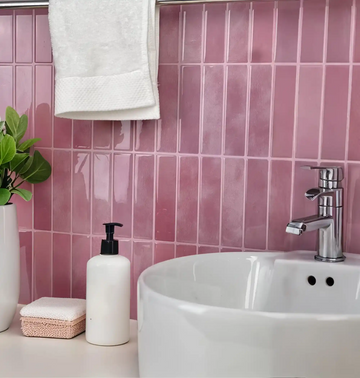
Durch die Wahl von Sakura Bloom Fliesen vermeiden Sie Mörtelaufbau, durch den Abdeckungen aus ihrer Position gedrückt werden können. Verleihen Sie Ihrem Zuhause mit den selbstklebenden Wandfliesen Sakura Bloom ein modernes Upgrade. Die fugenlosen Fliesen sorgen in jedem Raum für eine frische, zeitgemäße Optik und behalten dabei eine gleichmäßige, klar definierte Aufbauhöhe bei. So lässt sich die Einbautiefe Ihrer Elektrodose besonders einfach bestimmen.
Sakura-Bloom-Kollektion ansehenArbeiten mit GFCI-Steckdosen
Steckdosen mit Fehlerstromschutzschalter (GFCI) stellen eine besondere Herausforderung dar. Sie sind konstruktionsbedingt tiefer als herkömmliche Steckdosen. Kommt eine Rückwandverkleidung hinzu, verzeihen GFCI-Steckdosen kaum Spielraum. Der Innenraum der Elektrodose ist durch das voluminöse GFCI-Gerät ohnehin bereits stark eingeschränkt.
Ist die Dosentiefe ohnehin knapp bemessen, kann das Zurücksetzen einer voluminösen GFCI-Steckdose in eine mit Leitungsverlängerungen gefüllte Dose die zulässige Füllmenge überschreiten. Bei solchen beengten Einbausituationen ist eine besonders sorgfältige Planung entscheidend.
Profi-Strategie: Erst das Fliesenraster planen
Der ausführliche Leitfaden zeigt Ihnen, wie Sie Spülenbereiche und Ausschnitte für Steckdosen zuverlässig planen und kritische Fehler vermeiden. Riskieren Sie nicht, teure Fliesen durch einen schlecht geplanten Elektroausschnitt zu ruinieren. Planen Sie die Anordnung Ihrer selbstklebenden Küchenrückwand rund um Arbeitsflächen, Steckdosen, Spülenbereiche, Kantenabschlüsse und die benötigte Fliesenmenge, bevor Sie den ersten Schnitt machen.
Den vollständigen Leitfaden zur Anordnung lesen
Distanzstücke oder Dosenverlängerungen: Was löst das Problem sicher?
Wenn Sie wissen, welches Teil Sie im Baumarkt benötigen, sparen Sie Zeit und vermeiden gefährliche Fehler. Wir unterscheiden diese Bauteile anhand des Verhältnisses von Abschirmung und Halt. Dieses Kriterium zeigt, ob ein Produkt lediglich ein Gerät nach vorne versetzt oder die brandschutztechnisch relevanten Wände des Elektrogehäuses tatsächlich verlängert.
Stellen Sie sich eine Elektrodose wie einen feuerfesten Tresor vor. Wenn Sie eine neue Wandverkleidung anbringen, die zwei Zoll dicker ist als die Tresortür, können Sie das Schloss nicht einfach mit langen Schrauben frei in der Luft befestigen. Sie benötigen einen Stahltunnel, der den Tresor mit der neuen Wandoberfläche verbindet. Ein Spalt zwischen der alten Dose und der neuen Wand lädt Funken geradezu dazu ein, das Papier der trockenen Gipskartonplatte zu erreichen.
Die Funktion von Dosenverlängerungen
Eine Dosenverlängerung für Steckdosen bildet diesen schützenden Tunnel. Sie ist eine stabile, meist rechteckige Hülse aus nicht leitendem Kunststoff oder Metall.
- Brandschutz: Dosenverlängerungen werden direkt in die vorhandene, zurückgesetzte Dose eingesetzt. Sie überbrücken den Abstand zwischen dem Rand der alten Dose und der neuen Rückwandverkleidung und schaffen so eine durchgängige Schutzbarriere.
- Normgerechte Ausführung: Indem sie einen durchgängigen, brandschutztechnisch abgeschirmten Raum schaffen, verringern Dosenverlängerungen grundsätzlich das Risiko, dass Funken mit dem freiliegenden Wandhohlraum in Kontakt kommen. Dies entspricht 314.20 gemäß NEC.
- Stabilität: Sie bieten dem Tragring des Geräts eine feste, bündige Auflagefläche und verhindern so vollständig, dass die Steckdose wackelt. Das Gerät sitzt sicher auf dem Rand der Dosenverlängerung.
Die Funktion von Distanzstücken für Steckdosen
Distanzstücke für Steckdosen – oft auch als Krabben oder Unterlegstücke bezeichnet – erfüllen einen ganz anderen Zweck. Dabei handelt es sich um kleine, ziehharmonikaähnliche Kunststoffteile oder faltbare Gummihülsen.
- Ausrichten des Geräts: Distanzstücke werden über die Befestigungsschrauben geschoben und drücken das Steckdosengerät nach vorne. Sie gleichen lediglich die Länge der Schraube aus, nicht die Wände der Dose.
- Kein Brandschutz: Sie schließen den Spalt um die Dose nicht ab und bieten keinerlei Schutz gegen Lichtbögen. Kommt es zu einem Funken, liegt der Wandhohlraum vollständig offen.
- Einsatzgrenzen: Sie sind nur dann geeignet, wenn die vorhandene Dose bereits bündig mit der Wand abschließt, das Gerät selbst aber geringfügig nach vorne versetzt werden muss, damit es plan an der Abdeckung anliegt.
Interaktives Tool: Distanzstück oder Dosenverlängerung?
Wählen Sie Ihre aktuelle Situation aus, um das passende Bauteil zu bestimmen.
Wenn Probleme mit der Einbautiefe behoben werden, sollte man grundsätzlich die Ursache beheben, statt nur die Auswirkungen zu kaschieren. Eine gefährlich tief sitzende Steckdose lediglich mit Abstandshaltern auszugleichen, bringt ein erhebliches Haftungsrisiko mit sich. Wenn Sie frühzeitig lernen, Ihre Materialien richtig auszurichten, können Sie solche stressigen Situationen von vornherein vermeiden.
Installationsprobleme von Anfang an vermeiden
Die praxisnahen Problemlösungen in unserer Installationsanleitung bieten eine messbare Grundlage dafür, zu erkennen, wann eine falsche Ausrichtung eine vollständige Dosenverlängerung statt eines vorübergehenden Ausgleichs erfordert. Dieser Artikel zeigt umsetzbare, leicht verständliche Reparaturmethoden für die fünf häufigsten Installationsfehler – mit anschaulichen Erläuterungen, praktischen Lösungen und fachlich fundierten Tipps zur Vorbeugung für dauerhaft gute Ergebnisse.
Problemlösungsanleitung lesenWie misst und korrigiert man die Einbautiefe einer Elektrodose?
Wer die Einbautiefe nur schätzt, muss oft frustriert noch einmal zum Baumarkt fahren. Ermitteln Sie deshalb vor dem Materialkauf einen genauen Grenzwert. Messen Sie den Abstand von der Vorderkante der alten Dose bis zur Ebene der neuen Fliesen.
Nehmen Sie vor dem Einkauf ein scharfes, gut ausgeleuchtetes Foto Ihrer geöffneten Elektrodose auf – selbstverständlich bei abgeschalteter Stromversorgung. Fotografieren Sie auch die Anordnung der Kabel und die Form der vorhandenen Dosenkanten. Zeigen Sie das Foto zusammen mit Ihren genauen Maßen einer Fachkraft in der Elektroabteilung, damit Sie eine Dosenverlängerung kaufen, die zur Geometrie Ihrer Dose passt (einfach, zweifach oder rund).
Dafür eignet sich ein einfaches Lineal oder Maßband perfekt.
Sicherheits-Checkliste: Die Dose ausmessen
Arbeiten Sie diese wichtigen Schritte während des Messvorgangs ab, um das Risiko eines Stromschlags vollständig auszuschließen.
Wenn dieses Maß an einer nicht brennbaren Wand mehr als 1/4 inch beträgt oder an einer brennbaren Wand größer als null ist, ist eine Dosenverlängerung zwingend erforderlich. Versuchen Sie nicht, nach dem Prinzip „wird schon passen“ vorzugehen. Die Sicherheit der Elektroinstallation in Ihrem Zuhause hängt von klaren, messbaren Grenzwerten ab.

Die passenden Komponenten auswählen
Im Baumarkt finden Sie verschiedene Ausführungen. Dazu gehören Marken wie Arlington oder Carlon. Dabei handelt es sich um gängige Standardteile. Achten Sie darauf, dass die Dosenverlängerung für Einfach- oder Zweifachdosen, FI-Schutzschalter und Öffnungen im Decora-Stil geeignet ist.
Achten Sie auf der Verpackung immer auf das UL-Prüfzeichen. UL – Underwriters Laboratories – prüft diese Produkte darauf, ob sie im Fehlerfall einen sicheren Brandschutz gewährleisten. Verwenden Sie keine ungeprüften, 3D-gedruckten oder veränderten Kunststoffteile. Wenn Sie eine Dosenverlängerung verändern oder nicht zertifizierte Materialien verwenden, verliert die Brandschutzklassifizierung vollständig ihre Aussagekraft.
Unterbauleuchten integrieren
Oft wird eine neue Rückwand gleichzeitig mit der Montage einer Unterbauleuchte geplant. Dadurch entstehen zusätzliche Herausforderungen bei der Kabelführung rund um die frisch verlängerten Steckdosen. Mehrere Kabel, die über eine neue Fliesenoberfläche geführt werden, können die sorgfältig geplante Optik beeinträchtigen.
Für ein hochwertiges Ergebnis: Kabel geschickt integrieren
Für eine ansprechende Optik und eine sichere Kabelführung ist das ordentliche Verbergen der Kabel entscheidend für ein professionelles Ergebnis. Die Methoden in unserer Spezialanleitung zeigen, wie Sie sichtbare Kabel unauffällig unterbringen und eine saubere, harmonische Optik schaffen. Sie wünschen sich schnell eine integrierte Optik? Erfahren Sie, wie Sie Kabel hinter einer selbstklebenden Rückwand sicher, ordentlich und mit mieterfreundlichen Lösungen verbergen.
Erfahren Sie, wie Sie LED-Kabel verbergenWann sollten Sie aufhören und eine Elektrofachkraft rufen?
Wir möchten ausdrücklich dazu ermutigen, Projekte selbst in die Hand zu nehmen. Elektroarbeiten können jedoch schwerwiegende Folgen haben. Deshalb ist es wichtig, die eigenen Grenzen realistisch einzuschätzen. Berücksichtigen Sie dabei die Komplexität der Verkabelung und Ihre praktische Erfahrung.
Wenn Sie auf eine Situation stoßen, die über einfache mechanische Anpassungen hinausgeht, müssen Sie sofort aufhören. Eine Abdeckplatte auszutauschen oder eine Kunststoffverlängerung über vorhandene, intakte Kabel zu schieben, gehört zur üblichen Instandhaltung. Sobald Sie jedoch die eigentliche Elektroinstallation verändern, ist professionelle Hilfe erforderlich.
Wichtige Warnsignale erkennen
Wir haben mehrere typische Situationen zusammengestellt, in denen Hauseigentümer auf eigene Reparaturversuche verzichten und sofort eine zugelassene Elektrofachkraft kontaktieren sollten. Versuchen Sie nicht, diese Probleme mit einer schnellen Reparatur oder Klebeband zu überdecken:
Wenn die Kunststoffisolierung der Drähte abblättert, Risse aufweist oder beim vorsichtigen Herausziehen der Steckdose blankes Kupfer sichtbar wird, ist die Leitung beschädigt. Alte, spröde Leitungen neu zu isolieren, ist keine sichere DIY-Arbeit.
Wenn Ihr Haus Ende der 1960er- oder in den 1970er-Jahren gebaut wurde und statt Kupfer silberfarbene Aluminiumleitungen hat, ist eine besondere fachgerechte Ausführung vorgeschrieben. Werden Aluminium und Kupfer ohne speziell dafür zugelassene CO/ALR-Geräte miteinander verbunden, besteht Brandgefahr.
Wenn ein FI-Schutzschalter (GFCI) oder ein Dosenaufsatz nicht in den vorhandenen Platz passt, ohne die Drähte stark zu quetschen, liegt eine unzulässige Überfüllung der Gerätedose vor. Ein Elektriker muss die Dose durch ein Modell mit größerem Volumen und mehr Tiefe ersetzen.
Wenn die Drähte so kurz sind, dass sich die Steckdose nicht über die neue Backsplash-Ebene hinaus herausziehen lässt, muss ein Elektriker die Leitungen im Inneren der Dose sicher mit Verlängerungen (Pigtails) und dafür geeigneten Kabelverbindern verlängern.
Wenn der Schutzschalter beim Wiedereinschalten sofort auslöst oder sich die Reset-Taste des FI-Schutzschalters (GFCI) nach der Montage des Dosenaufsatzes nicht zurücksetzen lässt, haben Sie einen Kurzschluss verursacht. Schalten Sie den Schutzschalter nicht gewaltsam wieder ein. Schalten Sie ihn aus und rufen Sie einen Elektriker, der die hinter den neuen Fliesen eingeklemmte Leitung findet.
Die erforderlichen Sicherheitsabstände hängen vom jeweiligen Bereich Ihrer Küche ab. Direkt hinter Kochgeräten müssen beispielsweise besonders strenge Anforderungen an die Hitzebeständigkeit beachtet werden. Die beim intensiven Kochen entstehenden hohen Temperaturen wirken sich unmittelbar sowohl auf den Fliesenkleber als auch auf die elektrischen Leitungen im dahinterliegenden Hohlraum der Wand aus.
Sicherheitsregeln: Nähe zu offenen Flammen
Bei der Beurteilung solcher Hochtemperaturbereiche ist die genaue Einhaltung der vorgeschriebenen Geräteabstände die grundlegende Voraussetzung. Unser ausführlicher Ratgeber zu diesem speziellen Gefahrenbereich liefert die konkreten Richtwerte, die Sie für eine sichere Wandgestaltung in der Nähe offener Flammen benötigen. Sie sind unsicher, welcher Abstand bei einer Backsplash hinter einem Gasherd sicher ist? Erfahren Sie, welche Abstände für U.S. und Hausbesitzer in Kanada den geltenden Vorschriften entsprechen. So bleibt Ihre Elektroinstallation geschützt und Ihre Küche sieht stilvoll aus.
Richtlinien zum Abstand zum Herd lesenSaubere Übergänge an den Kanten gestalten
Sobald die Gerätedosen sicher verlängert und die Steckdosen fest abgestützt sind, geht es an die optischen Übergänge. Wie die Backsplash an die Wand, die Fensterrahmen und die Abdeckungen der Elektroinstallation anschließt, bestimmt maßgeblich die Qualität des gesamten Raums.
Eine häufige Herausforderung ist der Abschluss der sichtbaren Seiten von selbstklebenden Fliesen. Befindet sich die Gerätedose in der Nähe einer Fensternische, ist eine saubere Kante für Sicherheit und Optik besonders wichtig. Durch einen schlecht abgedichteten Fliesenrand am Spülenfenster kann Wasser mit der Zeit bis in den Bereich der Gerätedose eindringen.
Komplexe Fliesenzuschnitte perfekt ausführen
Bei solchen Kantenübergängen ist eine durchgehend zuverlässige Haftung entscheidend. Die erprobten Methoden in unserem speziellen Reparaturleitfaden helfen Ihnen dabei, saubere und für Mietwohnungen geeignete Ergebnisse zu erzielen. Unser Praxistest zeigt: Entdecken Sie die beste Methode für selbstklebende Fliesen an Fensternischen – für saubere Kanten, starke Haftung und langlebige Installationen, die sich auch an schwierigen Steckdosenecken nicht ablösen.
Lösungen für Fensternischen ansehenEbenso sorgt die richtige Methode zum Abdichten des Randbereichs für eine lange Lebensdauer.
Für eine langlebige Abdichtung und saubere Kanten
Unser ausführlicher Ratgeber vergleicht verschiedene Lösungen für Kantenabschlüsse und zeigt, wie Sie sichtbare Fugen kaschieren und bewusst gestaltete Ecklinien schaffen. Der Rand um die neu befestigten Abdeckungen der Elektroinstallation sollte makellos aussehen. Vergleichen Sie verschiedene Kantenabschlüsse für selbstklebende Fliesen, damit sichtbare Seiten, Übergänge an der Arbeitsplatte, Ecken und Fugen bewusst gestaltet wirken und über Jahre wasserdicht bleiben.
Optionen für Kantenabschlüsse vergleichenFazit
Messen Sie zuerst den Abstand bis zur fertigen Wandoberfläche. Entscheiden Sie sich anschließend je nach baulicher Sicherheit für einen Dosenaufsatz, einen Abstandshalter oder einen Elektriker mit entsprechender Zulassung – nicht allein nach der Optik.
Wir können es nicht oft genug betonen: Längere Schrauben durch eine wackelige Steckdose zu führen, ist niemals die richtige Lösung. Eine sichere Küche braucht fest abgestützte Geräte und ordnungsgemäß geschlossene Gerätedosen. Abkürzungen in der Wand können schwerwiegende Schäden verursachen, die sich mit einem einfachen, drei Dollar teuren zertifizierten Kunststoffteil vermeiden lassen.
Vergleichen Sie bei Ihrem örtlichen Baumarkt UL-gelistete Dosenaufsätze, damit Ihre schöne neue Backsplash weiterhin vollständig den geltenden Vorschriften entspricht. Erledigen Sie die Arbeit einmal – und zwar sicher – und freuen Sie sich über Ihren stilvollen, voll funktionsfähigen neuen Raum.
Häufig gestellte Fragen
Kann ich mehrere Abstandshalter für Steckdosen stapeln, statt einen Dosenaufsatz zu verwenden?
Nein. Mehrere gestapelte Abstandshalter drücken das Gerät zwar nach vorn, lassen die Seiten der Gerätedose jedoch vollständig offen. Damit wird die NEC-Anforderung an die Brandschutzabschottung im Wandhohlraum verletzt. Ist der Spalt größer als eine geringfügige Ausgleichskorrektur, ist zwingend ein stabiler, UL-gelisteter Dosenaufsatz erforderlich.
Muss ich den Hauptschutzschalter ausschalten, nur um die Tiefe der Gerätedose zu messen?
Ja. Aus Sicherheitsgründen muss die Stromversorgung ausgeschaltet werden, bevor Werkzeuge, Lineale oder Maßbänder in die Nähe einer offenen Gerätedose gebracht werden. Selbst beim Messen der Kante kann der versehentliche Kontakt mit einem spannungsführenden Anschluss zu schweren Verletzungen führen. Verwenden Sie immer zuerst einen berührungslosen Spannungsprüfer.
Warum steht meine GFCI-Steckdose weiter hervor als eine normale Steckdose?
FI-Schutzschalter-Steckdosen (GFCI) enthalten eine komplexe interne Schaltung, die den Strom im Fehlerfall schnell abschaltet. Dadurch sind sie deutlich tiefer als normale Steckdosen. Damit sie ohne Quetschen der internen Verdrahtung passen, müssen die Leitungen sorgfältiger geführt und die Größe des Dosenaufsatzes genau abgestimmt werden.
Kann ein Dosenaufsatz eine lockere Gerätedose stabilisieren?
Nein. Ein Dosenaufsatz überbrückt lediglich den Abstand zwischen der Gerätedose und der neuen Wandoberfläche. Wenn die ursprüngliche Gerätedose selbst locker ist oder sich vom Holzständer gelöst hat, kann ein Dosenaufsatz sie nicht befestigen. Zuerst muss die eigentliche Dose am Rahmen befestigt werden – dafür ist häufig der Einsatz eines Elektrikers erforderlich.


Kommentar hinterlassen
Diese Website ist durch hCaptcha geschützt und es gelten die allgemeinen Geschäftsbedingungen und Datenschutzbestimmungen von hCaptcha.