







Eine riesige, vom Boden bis zur Decke reichende Spiegelwand aus den 1980er-Jahren vor sich zu haben, kann ziemlich entmutigend sein. Du möchtest den Raum modernisieren, aber allein der Gedanke an zerbrechendes Glas, Handwerkerkosten und die aufwendige Beseitigung gefährlicher Scherben ist überwältigend. Schnell fühlt man sich mit der veralteten Optik festgefahren – nur weil das Entfernen des Spiegels zu teuer oder zu riskant wäre.
Die Einrichtungstrends vergangener Jahrzehnte setzten oft stark auf großflächige Spiegel, um Räume optisch größer wirken zu lassen. In beengten Wohnungen oder dunklen Esszimmern konnte das durchaus funktionieren. Heute wirken diese monumentalen Glasflächen jedoch häufig kalt, steril und ständig verschmiert. Hausbesitzer wünschen sich inzwischen mehr Wärme, Struktur und individuellen Charakter in ihren Wohnräumen – Elemente, die eine durchgehende reflektierende Glaswand einfach nicht vermitteln kann. Trotzdem schreckt fast jeder vor dem Abriss zurück. Neben der offensichtlichen Verletzungsgefahr beim Umgang mit großen, schweren Glasscheiben drohen auch Schäden an der darunterliegenden Trockenbauwand. Diese müssen meist aufwendig verspachtelt, abgeschliffen und neu gestrichen werden.
Selbstklebende Fliesen können auf großen Spiegeln angebracht werden, wenn das Glas sauber, fettfrei und für eine gute Haftung entsprechend grundiert ist. Verwende leichte Vinyl- oder Fliesen mit Schaumstoffrücken, die für nicht saugfähige Oberflächen geeignet sind, und teste zunächst eine kleine Stelle, um die Sicherheit und Haftung zu prüfen.
Eine gründliche Vorbereitung der Oberfläche ist entscheidend für den Erfolg dieses Projekts. Die Haftkraft unterscheidet sich je nach Marke deutlich – daher sind Sicherheit und rückstandsarmes Entfernen sowohl für Mieter als auch für Hausbesitzer wichtige Aspekte. Wenn du die besonderen Eigenschaften von Glas berücksichtigst, kannst du diese Veränderung sicher umsetzen.

Kann man selbstklebende Fliesen wirklich direkt auf einem Spiegel anbringen?
Du befürchtest, dass selbstklebende Fliesen von einer glatten, senkrechten Glasscheibe einfach abrutschen?
In diesem Abschnitt erklären wir, wie die Haftung auf Glas tatsächlich funktioniert, und zeigen, welche Fliesenmaterialien nachweislich sicher auf Spiegeln haften.
Ja, selbstklebende Fliesen lassen sich problemlos auf einem Spiegel anbringen. Glas bietet einen besonders ebenen und stabilen Untergrund. Für Klebeanwendungen ist ein glatter Spiegel in vielerlei Hinsicht sogar besser geeignet als eine strukturierte Trockenbauwand.
Glas stellt jedoch eine besondere chemische Herausforderung dar: Es ist vollständig nicht saugfähig. Herkömmliche Wandkleber nutzen winzige Unebenheiten in Farbe oder Trockenbau, um Halt zu finden. Auf Glas gibt es keine solchen Vertiefungen, in denen sich der Klebstoff mechanisch verankern kann.
Du suchst nach einem anfängerfreundlichen Einstieg?
Vielleicht bist du noch nicht bereit für eine umfassende Veränderung der gesamten Wand. Viele Hausbesitzer und Mieter testen lieber erst ein kleineres, aber wirkungsvolles Projekt, um Vertrauen in die Materialien und den Verlegeprozess zu gewinnen. Einen vorhandenen Standardspiegel mit einem Rahmen zu versehen, ist eine der effektivsten Möglichkeiten, ein Badezimmer optisch aufzuwerten – ganz ohne komplette Renovierung. Bei diesem überschaubaren Projekt kannst du dich mit dem Haftverhalten auf Glas vertraut machen und gleichzeitig einen eindrucksvollen, individuellen Blickfang schaffen. Wenn du dieses risikoarme Projekt genauer kennenlernen und eine inspirierende erste Veränderung sehen möchtest, empfehlen wir dir unseren ausführlichen Ratgeber zu diesem Thema.
Lesetipp: DIY-Spiegelrahmen fürs Bad mit selbstklebenden FliesenNach den von der American Chemical Society veröffentlichten Grundsätzen der Oberflächenchemie benötigen nicht saugfähige Oberflächen druckempfindliche Klebstoffe mit hoher Viskoelastizität. Der Klebstoff muss sich fast wie eine zähflüssige Substanz verhalten und dauerhaft eine saugnapfähnliche Verbindung mit dem glatten Glas aufrechterhalten.
So haftet Klebstoff auf Glas
Ohne ausreichende Oberflächenspannung lässt die Haftleistung schwerer Materialien auf Glas schnell nach. Die Schwerkraft zieht die Fliese ununterbrochen nach unten. Ist sie zu schwer, dehnt sich der Klebstoff langsam aus, bis die Verbindung versagt. Dieses mechanische Ausdehnen wird als „Kriechen“ bezeichnet. Auf einer glatten, senkrechten Fläche wie einem Spiegel ist es der größte Feind einer dauerhaften Haftung.
Ein weit verbreiteter Irrglaube ist, dass schwere, stabile Fliesen automatisch hochwertiger sind und besser haften. Tatsächlich ist es bei einer senkrechten Glasfläche geradezu eine Einladung zum Desaster, schwere Fliesen aus Steinverbundwerkstoff anzubringen. Durch ihr Eigengewicht werden sie unweigerlich nach unten rutschen. Die innere Festigkeit des Klebstoffs kann der anhaltenden Scherbelastung durch die Schwerkraft auf einem nahezu reibungsfreien Untergrund einfach nicht standhalten.
Planst du eine umfassende Badmodernisierung?
Wenn dein veralteter Spiegel nur ein Teil eines größeren Gestaltungsproblems im Badezimmer ist, denkst du vielleicht über eine umfassendere optische Veränderung nach. Die gute Nachricht: Dieselben leichten Materialien, mit denen sich Spiegel verkleiden lassen, können auch direkt auf alte, verfärbte Keramikfliesen, Duschverkleidungen aus Fiberglas und in die Jahre gekommene Trockenbauwände aufgebracht werden. Wenn du weißt, wie diese vielseitigen Klebematerialien auf verschiedenen Badoberflächen funktionieren, kannst du einen stimmigen, beeindruckenden Raum planen – ohne die hohen Kosten einer herkömmlichen Renovierung. In unserem neuesten Ratgeber findest du weitere Ideen für die Gestaltung des gesamten Badezimmers.
Ratgeber: Verändere dein Badezimmer mit selbstklebenden Fliesen 2025Für ein langfristig erfolgreiches Ergebnis solltest du die wichtigsten Umgebungsfaktoren kennen, die Glas beeinflussen:
- Wärmeausdehnung: Glas dehnt sich je nach Raumtemperatur aus und zieht sich wieder zusammen. Der Klebstoff muss flexibel genug sein, um diese Bewegungen des Spiegels mitzumachen. Starre Kleber können reißen und versagen, wenn sich das Glas auch nur geringfügig verschiebt.
- Feuchtigkeit: Im Badezimmer herrscht oft eine hohe Luftfeuchtigkeit. Kondenswasser auf dem Spiegel kann leicht hinter eine schwache Klebeverbindung gelangen. Das Material sollte daher die Kanten zuverlässig abdichten und das Eindringen von Wasserdampf verhindern.
- Materialgewicht: Das Gewicht der Fliese ist die größte Gefahr für die Haftung auf einer senkrechten Fläche. Für die Verkleidung von Spiegeln sind leichte und besonders flexible Materialien die einzige zuverlässige Option.
Ergebnisse aus der Praxis
Kürzlich haben wir die komplette Umgestaltung eines Mietobjekts begleitet. Der Mieter wollte einen veralteten Spiegel über einem Doppelwaschtisch verkleiden, ohne gegen seinen Mietvertrag zu verstoßen. Dafür entschied er sich für leichte, flexible Fliesen. Die große Spiegelwand aus den 1990er-Jahren beherrschte den kleinen Raum und warf ein grelles, klinisches Licht, das ihn alles andere als einladend wirken ließ.
Durch eine sorgfältige Kontrolle der Luftfeuchtigkeit während der Anbringung war die Installation äußerst erfolgreich. Nach 18 Monaten mit täglichem Duschdampf und wechselnden Temperaturen zeigten die Fliesen keinerlei Anzeichen dafür, dass sie sich lösten oder an den Kanten aufrollten. Der Mieter hatte praktisch direkt auf dem vorhandenen Spiegel über dem Waschtisch eine individuelle „Akzentwand“ geschaffen und den Raum dadurch deutlich modernisiert – bei vollständigem Erhalt von 100% der Mietkaution.
Entwickelt für perfekte Haftung auf nicht saugfähigen Oberflächen
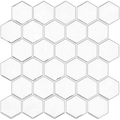
Für eine langfristige Haftung auf nicht saugfähigen Untergründen braucht es Materialien, die die Belastung durch die Schwerkraft gezielt ausgleichen. Genau darauf ausgelegt, diese strukturellen Grenzen zu überwinden, setzt die Minty Ceramic 8 neue Maßstäbe in puncto Preis-Leistung. Ihr geringes Gewicht minimiert nachweislich das Risiko des Abrutschens und macht sie ideal für senkrechte Glasflächen in feuchten Bereichen. Diese selbstklebenden, fugenlosen Fliesen verleihen dem Raum einen frischen, modernen Look – ganz ohne zusätzliches Gewicht.
Entdecke die Minty-Ceramic-8-KollektionFür Mieter bietet diese Methode einen besonders großen Vorteil. Du kannst das Badezimmer oder Wohnzimmer komplett neu gestalten, ohne deine Mietkaution zu gefährden. So entsteht eine wirkungsvolle Veränderung ganz ohne dauerhafte Verpflichtung.
Entdecke empfohlene Marken für selbstklebende Fliesen und finde leichte, mieterfreundliche Optionen für deinen Spiegel.

Wie bereitest du eine Spiegeloberfläche für selbstklebende Fliesen vor?
Du bist unsicher, wie du einen Spiegel richtig reinigst und vorbereitest, damit sich die neuen Fliesen nicht schon nach einer Woche lösen?
Dieser Abschnitt beschreibt eine absolut zuverlässige Schritt-für-Schritt-Anleitung zur Vorbereitung der Oberfläche, damit die Fliesen dauerhaft auf dem Glas haften.
Die Vorbereitung der Oberfläche ist der entscheidende Erfolgsfaktor bei diesem Projekt. Wenn du auf eine gründliche Reinigung verzichtest, klebst du deine neuen Fliesen im Grunde auf eine mikroskopisch dünne Schicht aus Staub, Hautfett und Rückständen von altem Glasreiniger. Die chemische Verbindung wird versagen – und die Schwerkraft gewinnt.
Stell dir vor, du bringst eine Schutzfolie auf einem Smartphone an. Schon ein winziges Staubkorn verursacht eine riesige Luftblase und beeinträchtigt die Haftung. Eine große Spiegelwand muss deshalb genauso gründlich und rückstandsfrei vorbereitet werden. Jede organische Substanz, die auf dem Glas zurückbleibt, bildet eine Barriere und verhindert, dass die speziell entwickelte Haftkleber-Rückseite deiner Fliesen ihre volle Wirkung entfaltet.
Die richtige Temperatur für den Haftkleber
Beim Aufbringen von Haftklebern auf Glas spielt die Raumtemperatur eine entscheidende Rolle. Glas leitet Wärme besonders gut und bleibt deutlich länger kalt als eine Trockenbauwand. Liegt die Raumtemperatur unter 65 °F (18 °C), wird die Kleberückseite starr und verliert ihre viskoelastische „Anfangshaftung“. Ist der Raum dagegen sehr heiß und feucht, kann der Kleber zu zähflüssig werden. Für optimale Ergebnisse sollte die Raumtemperatur mindestens 24 Stunden vor der Montage zwischen 70 °F und 75 °F (21 °C–24 °C) stabil gehalten werden. Wenn du in einem kühlen Badezimmer arbeitest, kannst du die Glasfläche unmittelbar vor dem Anbringen der Fliese mit einem herkömmlichen Haartrockner auf niedriger Stufe vorsichtig erwärmen. Dadurch werden die Kleberpolymere aktiviert und eine besonders starke, dauerhafte Haftung gewährleistet.
Das Problem mit herkömmlichem Glasreiniger
Die meisten Menschen greifen instinctiv zu einem herkömmlichen blauen Fensterreiniger, um ihre Spiegel vorzubereiten. Das ist ein entscheidender Fehler. Glasreiniger enthalten häufig Ammoniak, Wachse oder Silikone, die für streifenfreien Glanz sorgen sollen. Diese Zusätze lassen Fenster zwar makellos aussehen, sind für die Klebetechnik jedoch äußerst problematisch.
Dieser „Glanz“ ist in Wirklichkeit ein mikroskopisch dünner chemischer Film. Er bildet eine Barriere und verhindert, dass der Fliesenkleber direkten Kontakt mit dem Glas bekommt. Die klebende Rückseite deiner Fliese haftet dann am Wachs statt am dichten Siliziumdioxid des Spiegels.
Ein aktuelles Beispiel: Eine Person wollte in einer Wohnung in Chicago eine verspiegelte Schranktür aus den 1990er-Jahren modernisieren. Sie brachte die Fliesen direkt auf dem Glas an, nachdem sie es mit herkömmlichem Fensterreiniger gesäubert hatte. Innerhalb von 48 Stunden begannen sich die oberen Ecken der Fliesen aufzurollen, und am fünften Tag waren ganze Bahnen verrutscht. Die Ursache waren unsichtbare Rückstände des alltäglichen Haushaltsreinigers.
Die dreistufige Methode zur vollständigen Reinigung
Für eine erfolgreiche erneute Verklebung ist eine gründliche Entfettung erforderlich. Damit die Fliesen dauerhaft haften, musst du das Glas vollständig von allen Rückständen befreien. Befolge für ein zuverlässiges Ergebnis genau diese Reihenfolge:
- Trocken entstauben Entferne losen Staub und Schmutz mit einem trockenen, fusselfreien Mikrofasertuch von der Spiegeloberfläche. Verwende keine Küchenrolle, da sie mikroskopisch kleine Holzfasern abgibt, die deine Arbeitsfläche verunreinigen können. Dieser erste Schritt verhindert, dass du den Schmutz im zweiten Schritt lediglich verteilst.
- Chemisch entfetten Wische den gesamten Spiegel mit Isopropylalkohol (mit einer Konzentration von mindestens 70%) ab. Dadurch werden zurückgebliebene Öle und Haarspray-Rückstände gelöst; der Alkohol verdunstet schnell und vollständig, ohne Rückstände zu hinterlassen. Arbeite in kleinen Abschnitten und wische so lange, bis das Glas quietscht.
- Kanten und Ecken nachbearbeiten Achte besonders auf die Kanten und Ecken des Spiegels. Dort sammeln sich im Laufe der Jahre häufig Haarspray, Kosmetik und Staub. Verwende ein in Alkohol getränktes Wattestäbchen, um die schmalen Randbereiche gründlich zu reinigen – insbesondere dort, wo das Glas auf Metall- oder Kunststoffhalterungen trifft.
Probleme mit hoher Luftfeuchtigkeit im Badezimmer?
Wenn sich dein Spiegel in einem häufig stark vom Duschdampf erfüllten Hauptbad befindet, ist die richtige Vorbereitung der Oberfläche nur die halbe Miete. Du musst außerdem Fliesen wählen, die speziell für hohe Feuchtigkeit entwickelt wurden und über besonders widerstandsfähige, überlappende Schutzschichten verfügen. Herkömmliche dekorative Klebefolien geben unter Kondenswasser schnell nach. Eine ausführliche Übersicht darüber, welche Fliesentechnologien den besten Wasserschutz und die schnellste Montage am Wochenende für Bereiche mit hoher Luftfeuchtigkeit bieten, findest du in unserem speziellen Ratgeber zur Feuchtigkeitsreduzierung.
Lesetipp: Selbstklebende Badezimmerfliesen für feuchte RäumeInteraktiver Check: Ist dein Spiegel bereit?
Teste dein Wissen, bevor du teure Fliesenmaterialien anbringst.
Welche Flüssigkeit solltest du für den abschließenden Wisch des Spiegels verwenden?
Haftung bei dauerhaften Installationen verbessern
Wenn du die Fliesen langfristig anbringen möchtest und eine rückstandsfreie Entfernung keine Rolle spielt, kannst du für zusätzliche Sicherheit sorgen. Ein transparenter Haftgrund für Glas kann für die notwendige Mikroaufrauung sorgen.
Diese Haftvermittler auf Silanbasis erzeugen eine mikroskopisch feine Struktur auf dem Glas. Dadurch erhält der Haftkleber eine Oberfläche, in die er sich verankern kann, was die langfristige Scherfestigkeit deutlich verbessert. Der Haftvermittler bildet eine chemische Brücke zwischen den organischen Polymeren des Fliesenklebers und dem anorganischen Siliziumdioxid des Spiegels.
Klebe die Spiegelkanten mit schwach haftendem Malerkrepp ab, um angrenzende Trockenbauwände oder Waschtischunterschränke vor deinen Entfettungsmitteln zu schützen. Isopropylalkohol kann die Farbe umliegender Flächen stumpf machen, wenn du nicht vorsichtig arbeitest.
Branchenüblichen Empfehlungen zufolge entscheidet die sorgfältige Vorbereitung darüber, wie lange das fertige Ergebnis hält. Die in „DIY Bathroom Mirror Frame with Peel & Stick Tiles“ beschriebenen standardisierten Bewertungsmethoden liefern die quantitative Grundlage, um diese Vorbereitungsarbeiten ohne kritische Fehler umzusetzen – insbesondere in Bereichen mit hoher Luftfeuchtigkeit.
Sobald das Glas gründlich sauber ist, solltest du die Oberfläche nicht mehr mit bloßen Händen berühren. Das natürliche Fett deiner Fingerspitzen kann bereits ausreichen, um die Kleberückseite deiner neuen Fliesen zu beeinträchtigen.
Entdecke weitere Ideen für die Spiegelverschönerung im DIY-Stil, um dein Verlegemuster festzulegen, bevor du mit dem Aufkleben beginnst.

Welche selbstklebenden Fliesen eignen sich am besten für Spiegel und wie bringst du sie sicher an?
Du bist von der riesigen Auswahl an Fliesen überfordert und hast Angst, den Spiegel bei der Montage zu beschädigen?
In diesem Abschnitt zeigen wir dir, welche Materialien am sichersten sind und wie du die Fliesen kontrolliert anbringst, um das Glas zu schützen und dein Design perfekt umzusetzen.
Bei der Auswahl der richtigen selbstklebenden Fliesen für eine Spiegelwand musst du Ästhetik und Materialeigenschaften gleichermaßen berücksichtigen. Du brauchst leichte, flexible Fliesen mit einer industrietauglichen Kleberückseite, die speziell für glatte, wenig saugfähige Oberflächen entwickelt wurde.
Nicht alle selbstklebenden Produkte sind gleich. Fliesen aus massivem Metall oder schwere Steinverbundmaterialien sind für eine glatte, senkrechte Oberfläche zu schwer. Entscheide dich für Materialien, die speziell für Bereiche mit geringer Reibung entwickelt wurden.
Du suchst hochwertige Materialien mit bewährter Langlebigkeit?
Befindet sich die Spiegelfläche in einem stark frequentierten Bereich oder möchtest du das Fliesendesign direkt in einen angrenzenden Küchenbereich weiterführen, sind besonders hochwertige Materialien entscheidend. Die neuesten Entwicklungen bei selbstklebenden Fliesen bieten eine hervorragende Hitzebeständigkeit und äußerst strapazierfähige Nutzschichten, die sich gleichermaßen hinter Herd und Spüle bewähren. Diese Premium-Kollektionen verleihen deiner Wand die realistische Optik von Keramik oder Glas, ohne das hohe Gewicht, das bei der Montage auf Spiegeln zu Problemen führen kann. Entdecke unsere umfassend getesteten Favoriten für das kommende Jahr.
Entdecke: Die besten selbstklebenden Fliesen für die Küchenrückwand 2025Materialien für Glas im Vergleich
Sehen wir uns an, wie gut sich verschiedene Fliesenmaterialien für die direkte Anbringung auf einer senkrechten Glasfläche eignen.
| Materialart | Haftung auf Glas | Gewicht | Ideal für |
|---|---|---|---|
| Dünnes Vinyl | Hervorragend | Sehr leicht | Spiegelwände, Renovierungen in Mietwohnungen |
| 3D-Gel/PU | Hoch | Leicht | Badmöbel, Küchenrückwände |
| Metall/Aluminium | Mittel | Mittelschwer | Kleine Akzentspiegel (Grundierung erforderlich) |
| Steinverbundstoff | Schlecht (hohes Verrutschrisiko) | Schwer | Für senkrechte Glasflächen nicht empfohlen |
Wie die Daten zeigen, bieten dünne Vinylfliesen und 3D-Polyurethan-(PU)-Gelfliesen die sicherste und zuverlässigsten Ergebnisse. Sie sind flexibel genug, um die Wärmeausdehnung des Spiegels auszugleichen. PU-Gel sorgt dabei für die hochwertige Optik von echtem, starkem Glas oder Keramik, ohne deren hohes Gewicht.
Design-Highlight: Olive Lines™
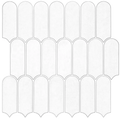
In feuchten Badezimmern müssen Materialien auch bei dauerhaft hoher Luftfeuchtigkeit zuverlässig funktionieren. Materialien wie Olive Lines™ vermeiden konstruktionsbedingt typische feuchtigkeitsbedingte Schwachstellen. Dank ihrer hitzebeständigen Zusammensetzung reduziert die Kollektion das Aufrollen der Kanten und sorgt so für eine langanhaltende Haltbarkeit auf Glasflächen. Anders als flache Aufkleber erzeugen diese selbstklebenden Wandfliesen eine echte 3D-Optik und verleihen deinem flachen Spiegel mehr Tiefe, Struktur und Stil. Du brauchst weder spezielle Werkzeuge noch besondere Vorkenntnisse, um deinen Raum innerhalb weniger Stunden komplett zu verwandeln.
Olive-Lines™-Kollektion entdeckenKurzanleitung: Spiegel vorbereiten und Fliesen anbringen
Gründlich reinigen
Wische die gesamte Glasfläche mit 70%+ Isopropylalkohol ab. Lass sie vollständig trocknen.
Gerade Grundlinie festlegen
Projiziere eine gerade Laserlinie über den Spiegel. Verlass dich nicht auf die Kanten des Badmöbels.
Ansetzen und andrücken
1 inch vom Trägerpapier abziehen. Ausrichten, festkleben und mit einem Filzrakel nach außen glattstreichen.
Sichere und präzise Verlegemethoden
Das Anbringen von Fliesen auf Glas erfordert eine besondere Vorgehensweise. Da Glas vollkommen eben ist, fällt jeder Fehler beim Ausrichten sofort auf. Eine falsch ausgerichtete Fliese lässt sich auf Glas nicht einfach glatt andrücken – der harte Untergrund führt sonst dazu, dass sich das Vinyl wellt und Luftblasen einschließt.
Gehen Sie schrittweise und sorgfältig vor, um Blasen, Wellen und ungleichmäßige Linien zu vermeiden:
- Eine gerade Ausgangslinie mit dem Laser festlegen Verlassen Sie sich nicht darauf, dass Decke, Fußleisten oder Waschtischkante vollkommen waagerecht sind. Häuser setzen sich, und Spiegel werden häufig leicht schief montiert. Projizieren Sie mit einer Laser-Wasserwaage eine exakt gerade Ausgangslinie über den Spiegel. Sie dient als Orientierung für die erste Reihe.
- Spiegelclips berücksichtigen Wenn Ihr Spiegel mit transparenten Kunststoff- oder Metallclips befestigt ist, entfernen Sie diese nicht. Andernfalls könnte sich das schwere Glas plötzlich lösen und herunterfallen – mit erheblicher Verletzungsgefahr. Messen Sie stattdessen sorgfältig und schneiden Sie mit einem Präzisionsmesser oder einer scharfen Schere kleine, passgenaue Aussparungen in die Fliesen, damit sie nahtlos um die Clips herumliegen.
- Die Scharniermethode Ziehen Sie am oberen Rand nur etwa 2,5 cm des Trägerpapiers ab. Richten Sie die Fliese an Ihrer Laserlinie aus, kleben Sie die freigelegte Kante fest und ziehen Sie das restliche Trägerpapier langsam nach unten ab. Streichen Sie die Fliese dabei von oben nach unten am Glas glatt.
Die richtige Ausrichtung meistern
Eine gut geplante Anordnung ist entscheidend, bevor Sie auch nur ein Stück Trägerpapier abziehen. Mit einem zuvor überprüften Verlegeplan reduzieren Sie Materialverschwendung, vermeiden schmale und unschöne Fliesenstreifen an den Rändern des Spiegels und erzielen ein professionelles, nahtloses Ergebnis. Ob Sie mit komplizierten Ecken arbeiten oder um in das Glas integrierte Leuchten herum verlegen – ein klarer Plan ist unverzichtbar. In unserem umfassenden Verlegekurs erfahren Sie, wie Sie Ihre Technik perfektionieren.
Anleitung: Selbstklebende Fliesen anbringen & die besten Designs 2025
Gleichmäßigen Druck ausüben
Verwenden Sie ein weiches Glättwerkzeug mit Filzkante, um die Fliesen auf das Glas zu drücken. Durch kräftiges Andrücken wird der druckempfindliche Kleber aktiviert und legt sich vollständig an die porenfreie Oberfläche an. Diese Aktivierung auf kleinster Ebene sorgt dafür, dass aus einer klebenden Folie eine dauerhafte Verbindung wird.
Laut den Sicherheitsrichtlinien der Glass Association of North America (GANA) kann ungleichmäßiger, punktueller Druck bei großen Architekturspiegeln zu Spannungsrissen führen. Üben Sie beim Anbringen immer festen, großflächigen und gleichmäßigen Druck aus. Verwenden Sie niemals harte Kunststoffschaber, den Griff eines Schraubendrehers oder einen Hammer, um die Fliesen an ihren Platz zu klopfen. Ein zerbrochener Spiegel ist äußerst gefährlich und aufwendig zu beseitigen.
Wenn Sie sich bei der anfänglichen Ausrichtung Zeit lassen, ersparen Sie sich später stundenlangen Frust. Da Glas den Kleber besonders fest greifen lässt, kann das Abziehen einer falsch ausgerichteten Fliese das Vinyl dehnen und unbrauchbar machen. Messen Sie zweimal, richten Sie die Fliese mit dem Laser aus und drücken Sie sie erst dann fest.
Abschließende Gedanken
Veraltete Spiegel mit Fliesen zu verkleiden, ist bei sorgfältiger und präziser Arbeitsweise ein durchaus machbares und budgetfreundliches Projekt. Selbstklebende Fliesen können sicher auf Spiegeln angebracht werden, sofern das Glas gründlich entfettet wird und Sie die richtigen, leichten Materialien auswählen.
Beachten Sie stets die glatte, porenfreie Beschaffenheit von Glas. Reinigen Sie die Oberfläche gründlich mit Isopropylalkohol und halten Sie sich genau an eine sorgfältige, waagerechte Verlegetechnik. So erhalten Sie ein schönes, langlebiges Ergebnis, ohne die darunterliegende Oberfläche zu beschädigen – und vermeiden Schmutz, Kosten und Gefahren eines herkömmlichen Ausbaus der Glasspiegel.
Bereit für noch mehr Inspiration?
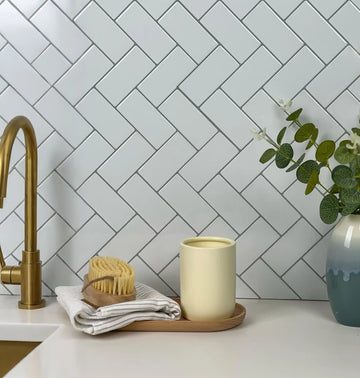
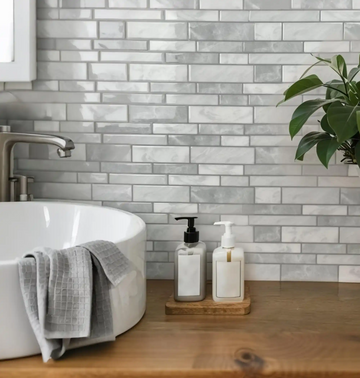
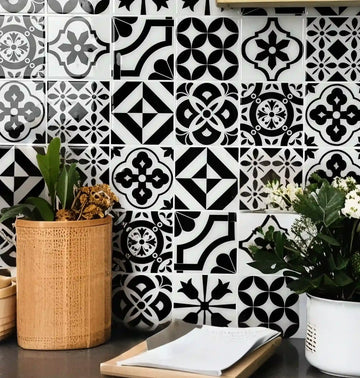
Ihr veraltetes Bad langweilt Sie? Sich das Endergebnis vorzustellen, kann bei jedem DIY-Projekt die größte Herausforderung sein. Aus einem riesigen, unpersönlichen Spiegel einen beeindruckenden Blickfang zu machen, ist unglaublich befriedigend. Die Wahl des passenden Looks – ob elegantes, modernes Subway-Design, rustikale Steinoptik oder luxuriöse Metallic-Oberfläche – prägt dabei die Atmosphäre des gesamten Raums. Mit erschwinglichen selbstklebenden Lösungen verwandeln Sie den Raum innerhalb weniger Stunden. Lassen Sie sich von beeindruckenden Vorher-Nachher-Beispielen inspirieren und bringen Sie Ihre Gestaltungsidee zur Umsetzung.
Galerie: Bad-Makeover mit selbstklebenden FliesenMit den richtigen flexiblen Materialien und einer passenden Umgebung schaffen Sie die aufwendige Demontage einfach aus der Welt. So können Sie Ihren Waschtischbereich im Bad oder eine Akzentwand im Wohnzimmer an nur einem Nachmittag komplett auffrischen.
Wenn Sie Ihren Raum neu gestalten möchten, testen Sie zunächst eine kleine Ecke Ihres Spiegels. Vergewissern Sie sich, dass Ihnen die Haftkraft des Klebers und die gewählte Optik zusagen. Danach können Sie Ihr Zimmer guten Gewissens verwandeln. Entdecken Sie unsere empfohlenen Produktlinien und Designgalerien und beginnen Sie mit der Planung Ihrer perfekten Renovierung ohne Beschädigungen.
Welchen Bereich mit Spiegeln in Ihrem Zuhause würden Sie zuerst verwandeln?

Häufig gestellte Fragen
Lassen sich selbstklebende Fliesen problemlos von einem Spiegel entfernen?
Ja. Da Glas vollständig porenfrei ist, lassen sich die Fliesen oft einfacher und sauberer entfernen als von gestrichenen Trockenbauwänden. Erwärme die Kleberückseite mit einem gewöhnlichen Haartrockner, um den Klebstoff zu lösen. Sobald die Fliese warm ist, ziehe sie vorsichtig vom Glas ab. Entferne zurückgebliebene Klebereste mit einem speziellen Klebstoffentferner auf Zitrusbasis und einem weichen Tuch.
Wird das Glas beschädigt, wenn ich einen Spiegel mit Fliesen verkleide?
Nein, der Klebstoff selbst ist chemisch inert und beschädigt oder ätzt die Glasoberfläche nicht. Fehler bei der Entfernung können jedoch Probleme verursachen. Übermäßiger Kraftaufwand, das Hebeln mit scharfen Metallwerkzeugen oder der Einsatz von abrasiven Schaberklingen kann zu dauerhaften Kratzern oder gefährlichen Spannungsrissen führen. Verwende immer sanfte Wärme und weiche Kunststoffschaber.
Wie lange halten selbstklebende Fliesen auf einem Badezimmerspiegel?
Bei fachgerechter Anbringung auf einem gründlich entfetteten Spiegel können hochwertige Vinyl- oder Polyurethan-Gelfliesen mehrere Jahre halten. Eine kontrollierte Luftfeuchtigkeit im Badezimmer durch eine geeignete Abluftanlage verlängert die Lebensdauer der Klebeverbindung deutlich. Drücke die Kanten sorgfältig fest an, damit keine Feuchtigkeit hinter die Fliesen gelangt.
Muss ich den Spiegel vor dem Anbringen der Fliesen anschleifen?
Auf keinen Fall. Glas zu schleifen ist äußerst gefährlich. Dabei entsteht gesundheitsschädlicher Quarzstaub in der Luft, und die strukturelle Stabilität des Spiegels wird vollständig beeinträchtigt, sodass er leichter zerbrechen kann. Chemisches Entglänzen und eine gründliche Reinigung mit hochkonzentriertem Isopropylalkohol sind die einzigen sicheren und notwendigen Vorbereitungsschritte, bevor Klebstoffe auf Glas angebracht werden.


Kommentar hinterlassen
Diese Website ist durch hCaptcha geschützt und es gelten die allgemeinen Geschäftsbedingungen und Datenschutzbestimmungen von hCaptcha.