


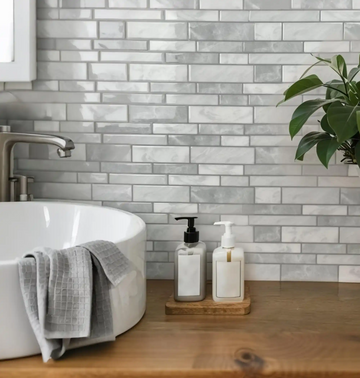
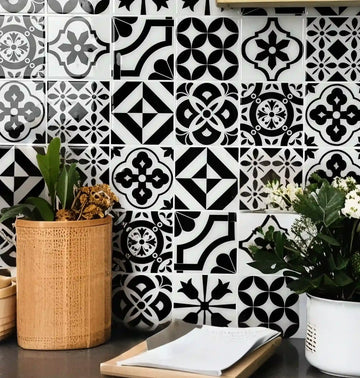
Dejemos de lado la idea obsoleta de que todas las baldosas peel-and-stick no son más que papel de contacto glorificado. Durante décadas, la industria inundó el mercado con adhesivos finísimos, lo que dejó un escepticismo persistente tanto entre propietarios como entre inquilinos.
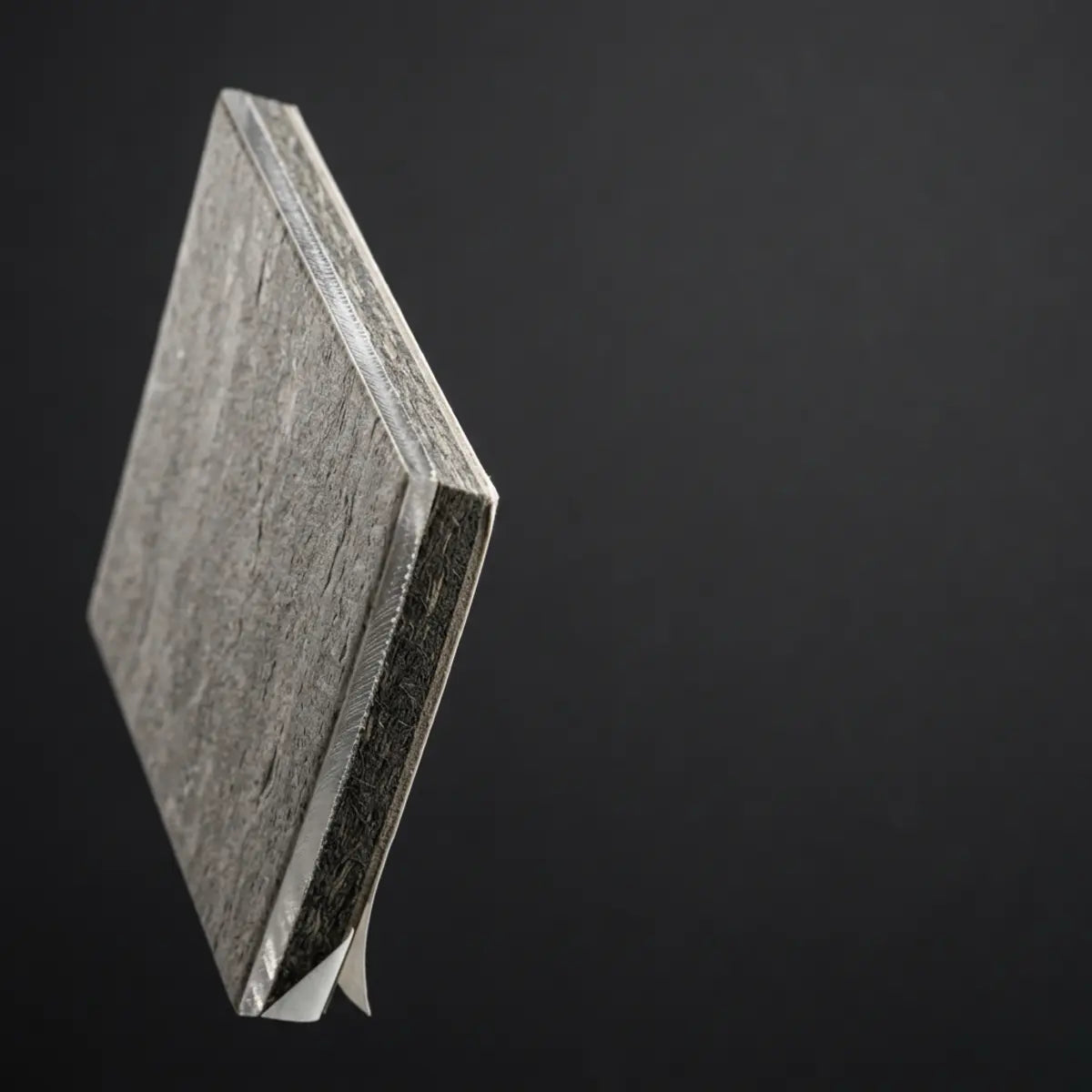
Sin embargo, la ingeniería moderna ha transformado esta categoría. Hoy, una inspección visual de una baldosa seccionada replantea por completo la calidad. Ya no hablamos de simples pegatinas. Estamos analizando revestimientos de suelo y pared altamente ingenierizados, de múltiples capas, diseñados para tolerancias operativas específicas.
Las Baldosas Peel-and-Stick Premium, como Baldosas Adhesivas Dual Ceramics, son un Sistema Compuesto De Múltiples Capas compuesto por un adhesive backing, un stabilizing core, un printed design film, una wear layer y un protective top coating. La wear layer de la baldosa peel-and-stick es la capa superficial transparente que ayuda a resistir rayones, rozaduras, manchas y el desgaste por limpieza, mientras que la composite construction mejora la adhesión, el realismo y la estabilidad de los bordes. La mejor forma de juzgar la calidad no es el precio de etiqueta, sino la Layer-Integrated Durability: qué tan bien trabajan juntas todas las capas después de la instalación.
Entender esta construcción es fundamental. La construcción por capas determina la durabilidad en el mundo real. Una baldosa solo es tan resistente como su componente más débil.
Además, las afirmaciones de impermeabilidad deben distinguir entre resistencia superficial y vulnerabilidad en las juntas. Malinterpretar esta diferencia conduce a fallos de instalación generalizados.
En definitiva, los materiales premium justifican su costo cuando reducen el riesgo de fallos y la frecuencia de reemplazo. El ahorro inicial en baldosas baratas desaparece en cuanto los bordes empiezan a levantarse o las superficies se marcan más allá de la reparación.
¿De Qué Está Hecha Realmente Una Baldosa Peel-and-Stick Premium?
Esta sección descompone la anatomía ingenierizada de las baldosas premium, demostrando cómo la construcción multicapa justifica el costo con una longevidad tangible. Al comprender la jerarquía estructural de los materiales implicados, puedes apreciar mejor los complejos procesos de fabricación necesarios para crear una superficie resistente y duradera que imita elementos naturales sin las cargas de mantenimiento asociadas.
Para evaluar con precisión un composite peel and stick tile material, el consenso de la industria dicta una evaluación estandarizada. Lo medimos mediante el Layer-Integrated Durability Index (LIDI).
Esta métrica desplaza el foco lejos de la estética superficial. En su lugar, LIDI evalúa cómo la resistencia del adhesivo, la estabilidad del núcleo, el realismo del diseño y la protección de la capa de desgaste funcionan como un sistema unificado y estructuralmente sólido.
En comparación con el vinilo decorativo estándar, las baldosas compuestas premium ofrecen una mejora estadísticamente significativa en su vida útil. Superan los puntos de fallo tradicionales de las alternativas baratas.
Desglosamos cada capa para entender su función específica en tu hogar.
La Base: Capas Desprendibles Y Adhesivos Sensibles A La Presión
La capa inferior de cualquier baldosa peel-and-stick es la release liner. Su única función es proteger el adhesivo hasta el momento exacto de la instalación.
Debajo de este papel o película se encuentra un componente altamente especializado: el Pressure-Sensitive Adhesive (PSA).
Muchas personas asumen que el adhesivo para baldosas funciona como un pegamento húmedo tradicional, secándose y endureciéndose con el tiempo para formar una unión.
En realidad, el PSA no "se seca". Requiere presión física para activar los enlaces químicos con el contrapiso. Por eso, usar un rodillo pesado para suelos durante la instalación ofrece una configuración óptima.
La calidad de este adhesivo determina en gran medida la estabilidad dimensional. Las baldosas premium utilizan PSAs a base de acrílico diseñados para resistir las fluctuaciones de temperatura.
Sin embargo, el adhesivo solo puede adherirse a lo que toca. Si pegas una baldosa premium sobre un suelo con polvo, el adhesivo se adhiere al polvo, no al suelo.
- Preparación Del Contrapiso: Una limpieza minuciosa reduce de forma fundamental el riesgo de que los bordes se levanten o se despeguen.

La formulación del Adhesivo Sensible A La Presión (PSA) es el héroe invisible de su proyecto de revestimiento. Los adhesivos más baratos tienden a desgasificarse, liberando compuestos orgánicos volátiles (VOCs) que pueden causar olores desagradables y comprometer la calidad del aire interior durante semanas o meses. Además, los adhesivos básicos sufren de baja resistencia al cizallamiento. Esto significa que, cuando se someten a fuerzas laterales —como una silla pesada empujada hacia atrás desde una mesa de comedor—, el adhesivo cede, haciendo que la baldosa se deslice o se curve en los bordes. Los PSA acrílicos de grado comercial premium están reticulados específicamente a nivel molecular para resistir esta fuerza de cizallamiento, asegurando que, una vez colocado el suelo, se convierta en una instalación funcionalmente permanente, resistente tanto al desplazamiento estructural como a la expansión normal inducida por el clima.
El Motor Estructural: El Núcleo Compuesto
Al subir en la estructura, encontramos el núcleo compuesto. Esta es la columna vertebral estructural de la baldosa.
Las Baldosas Baratas Utilizan PVC Muy Plasticado Y Delgado, Que Se Flexiona Y Se Estira Con Facilidad. Las baldosas premium presentan un núcleo compuesto denso y multicapa, a menudo reforzado con fibra de vidrio o compuestos de vinilo rígido.
Este núcleo es el responsable de ocultar las imperfecciones de su subsuelo. Este fenómeno se conoce como "telegraphing".
Imagine Colocar Una Sábana Fina Sobre Un Camino De Grava. Verá Cada Piedra. Ahora imagine colocar una gruesa lámina de contrachapado sobre el mismo camino. La superficie permanece plana.
Un núcleo compuesto más grueso y denso actúa como ese contrachapado. Absorbe la textura menor del subsuelo, evitando que protuberancias y hendiduras se transmitan a través de la superficie de su nuevo suelo.
- El Grosor Importa: Los núcleos premium van de 1.5mm a más de 2.5mm de grosor, proporcionando la rigidez necesaria.
- Estabilidad Dimensional: Un núcleo denso evita que la baldosa se encoja o se expanda excesivamente, manteniendo las juntas ajustadas.
- Beneficios Acústicos: Los núcleos más gruesos ofrecen ligeras cualidades de amortiguación del sonido en comparación con las alternativas de papel ultrafino.

Más Allá De Simplemente Evitar El Telegráfico, Un Núcleo Compuesto Altamente Diseñado Impacta Directamente La Resistencia Al Impacto Y La Transmisión Acústica. En Un Hogar Activo, Los Objetos Caen Con Frecuencia—Conservas En La Cocina, Juguetes Pesados En La Sala De Juegos. Un Azulejo Delgado Y Altamente Plastificado Simplemente Se Comprimirá Bajo Impactos De Carga Puntual, Marcando Permanentemente El Suelo. Un Núcleo Compuesto Rígido Distribuye Esta Energía Cinética Horizontalmente A Través De Su Matriz, Protegiendo La Integridad Estructural Del Azulejo. Además, Los Núcleos Más Densos Poseen Mayores Clasificaciones De Clase De Aislamiento De Impacto (IIC). Aunque Ningún Azulejo Peel-And-Stick Es Realmente A Prueba De Sonido, Los Núcleos Premium Atenúan Significativamente El Sonido Hueco De “Click-Clack” De Los Zapatos De Suela Dura, Dando Como Resultado Un Suelo Que No Solo Se Ve Como Madera Noble O Piedra De Alta Gama, Sino Que Estructuralmente Se Siente Y Suena Más Cercano Al Material Real Bajo Los Pies.
La Interfaz Estética: Películas De Impresión De Alta Resolución
El Atractivo Visual De Cualquier Azulejo Reside En La Película De Diseño Impresa. Esta Capa Se Sitúa Directamente Sobre El Núcleo Compuesto.
Los Azulejos Económicos Del Mercado Suele Utilizar Impresión De Baja Resolución. Esto Da Como Resultado Patrones Artificiales De Piedra O Madera Pixelados Que Se Repiten Con Demasiada Frecuencia, Revelando De Inmediato El Suelo Como Una Imitación Barata.
La Fabricación Premium Se Adhiere Estrictamente A La Reproducción Fotográfica En Alta Definición. Utilizan Impresoras Comerciales Avanzadas Para Capturar Las Variaciones Sutiles De Los Materiales Naturales.
Al Revisar Muestras De Azulejos, Cuenta El Número De Patrones Únicos De Azulejo En Una Caja. Las Marcas Premium Priorizan La Variación Visual, Asegurando Que Tu Suelo No Parezca Un Tablero De Ajedrez Repetitivo.
La Sofisticación De La Película Impresa Va Mucho Más Allá De La Apariencia Inicial; Implica Dominar La Profundidad Óptica Y Mitigar El Metamerismo. El Metamerismo Es El Fenómeno Por El Que Un Color Parece Diferente Bajo Diversas Condiciones De Iluminación—Como Lámparas Incandescentes Cálidas Frente A Bombillas LED Frías De Luz Diurna. Las Impresiones Económicas A Menudo Parecen Convincente En Una Sala De Exposición Bien Iluminada, Pero Adquieren Un Tono Plano, Artificial O Verdoso Bajo La Iluminación Habitual Del Hogar. Las Películas De Diseño Premium De Alta Definición Utilizan Procesos Avanzados De Estratificación De Tintas Multicromáticas Que Gestionan La Reflexión De La Luz De Forma Similar A Los Depósitos Minerales Reales O A Las Vetas De Madera Orgánica. Esto Significa Que Un Azulejo De Aspecto Pizarra Premium Mantendrá Su Rica Autenticidad Multitonal Tanto Si Está Bañado Por La Luz Del Sol De La Mañana Como Si Está Iluminado Por La Luz Ambiental De La Tarde, Preservando Permanentemente La Estética De Interior Deseada.
El Escudo Protector: La Capa De Desgaste Del Azulejo Peel And Stick
El Componente Más Crítico Para La Supervivencia Diaria Es La Capa De Desgaste Del Azulejo Peel And Stick. Este Es El Escudo Transparente Y Claro Aplicado Directamente Sobre La Película De Diseño Impresa.
Sin Una Capa De Desgaste Sustancial, El Tránsito De Personas Desgastaría El Diseño Impreso Del Azulejo En Cuestión De Semanas.
Medimos El Espesor De La Capa De Desgaste En "Mils" (Milésimas De Pulgada), No En Milímetros. Un Número Más Alto De Mils Generalmente Equivale A Una Mayor Resistencia A La Abrasión.
Los Productos De Entrada Pueden Presentar Una Capa De Desgaste Insignificante De 2 Mils A 4 Mils. Los Azulejos Residenciales Premium Suelen Presentar Una Capa De Desgaste De 12 Mils A 20 Mils, Estableciendo Una Base Cuantitativa Para Un Uso Residencial Intenso.
Según Las Pruebas Estandarizadas De Abrasión (Similares A ASTM F510 Para Suelos Resilientes), Una Capa De Desgaste Con Revestimiento De Uretano De 12 Mils Puede Soportar Años De Tránsito Residencial Antes De Que La Película De Diseño Se Vea Comprometida.
Para Mejorar Aún Más Esta Protección, Los Azulejos Premium Reciben Un Revestimiento De Poliuretano Aplicado En Fábrica Sobre La Capa De Desgaste.
Esta Capa Superior Rellena Los Poros Microscópicos Del Vinilo. Neutraliza De Forma Eficaz Agentes Manchadores Como El Vino Derramado, El Café O Los Accidentes De Mascotas, Haciendo Que La Superficie Sea Excepcionalmente Fácil De Limpiar.

La Wear Layer y su capa superior son su principal defensa contra el envejecimiento prematuro. En entornos de laboratorio, esto se mide mediante la Taber Abrasion Test, donde una rueda abrasiva se desliza contra la superficie del tile para ver cuántos ciclos tarda en desgastarlo. Un tile de 2 mil puede fallar rápidamente, mientras que un tile de 12 mil o 20 mil demuestra una longevidad exponencial. Además, los fabricantes premium suelen infundir la capa superior de poliuretano con microesferas cerámicas o óxido de aluminio. Esta armadura invisible aumenta de forma significativa la resistencia a los microarañazos causados por la suciedad que entra con el calzado. En última instancia, esto significa menos tiempo dedicado a limpiar meticulosamente y a preocuparse por marcas de roce, y más tiempo viviendo sobre un suelo que mantiene año tras año su brillo de fábrica sin requerir rutinas de encerado ni pulido.
Desglose Comparativo: Premium Frente A Estándar
Para ilustrar claramente las diferencias estructurales, podemos comparar estas capas directamente. La tabla a continuación describe la curva de degradación del rendimiento que puede esperar según la construcción del material.
| Componente Estructural | Azulejo Estándar Del Marketplace | Baldosa Premium Compuesta | Impacto En El Rendimiento Diario |
|---|---|---|---|
| Espesor De La Capa De Desgaste | 2 a 4 mils (protección mínima) | 12 a 20+ mils (residencial pesado) | Determina la resistencia a rozaduras, arañazos y pérdida del diseño. |
| Capa Protectora | Ninguno o Acrílico Básico | Poliuretano con Esferas Cerámicas | Dicta La Resistencia A Las Manchas Y La Facilidad De Fregado. |
| Núcleo Compuesto | PVC muy flexible y delgado (<1mm) | Compuesto Multicapa Denso (1.5mm+) | Controla el marcaje visible, la sensación estructural y la estabilidad de los bordes. |
| Diseño Visual | Impresión De Baja Resolución, Repetición Frecuente Del Patrón | Fotografía De Alta Resolución, Repetición Mínima | Impulsa el realismo de las imágenes de piedra, madera o cerámica. |
| Base Adhesiva | Pegamento Básico, Sensible A La Temperatura | PSA Acrílico De Grado Comercial | Evita que se despegue, se ondule y se desplace con el tránsito de personas. |
¿Cómo Deben Juzgar Los Propietarios La Durabilidad Del Peel-and-Stick Tile Antes De Comprar?
Esta sección le proporciona un marco práctico de inspección para identificar la verdadera durabilidad y evitar los puntos de fallo comunes antes de comprar. Aprender a descifrar las especificaciones del producto y a probar muestras físicamente le permite ir más allá de la jerga de marketing y tomar decisiones basadas únicamente en la ciencia de los materiales y en el rendimiento esperado en el mundo real.
- • Las especificaciones indican claramente la capa de desgaste en "mils" (e.g., 12-mil, 20-mil).
- • Mencionan un recubrimiento de "Polyurethane" o "PU" sobre la capa de desgaste.
- • Destacan un núcleo compuesto de varias capas o un soporte rígido de fibra de vidrio.
- • Incluyen pautas específicas de temperatura de instalación y tiempos de aclimatación.
- • Usan términos vagos como "Extra Thick" sin indicar medidas en mils.
- • Afirman ser 100% a prueba de marcas o indestructibles (estructuralmente imposible).
- • La baldosa se siente endeble, blanda o fácilmente plegable al tacto.
- • Promueven la instalación directamente sobre superficies sucias, sin preparar o muy texturizadas.
Al calcular la viabilidad a largo plazo de un proyecto de suelo, los criterios de evaluación deben evolucionar. Nos apoyamos en la métrica de Riesgo De Rendimiento Instalado (IPR).
Esta métrica evalúa la probabilidad de fallo según la intensidad del tránsito, la exposición a la humedad y la preparación del subsuelo. Ofrece una evaluación estandarizada de cómo se comportará el producto en un entorno real.
Al tener en cuenta el IPR, puede demostrar de forma empírica qué productos son adecuados para un recibidor frente a un dormitorio de invitados de poco tránsito. Ajusta con precisión el resultado de su decisión de compra.
Cómo Interpretar La Capa De Desgaste: Arañazos Vs. Abolladuras
Los propietarios suelen malinterpretar los límites de la capa de desgaste de una baldosas peel and stick. Es fundamental separar la terminología de marketing de la realidad del material.
Los consumidores suelen asumir que una capa de desgaste "scratch-resistant" significa que el suelo es totalmente a prueba de abolladuras. Esto es estructuralmente incorrecto.
Una capa de desgaste de 12 mil destaca por repeler abrasiones superficiales. Soportará sin problema los calcetines al deslizarse, las patas de mascotas habituales y el barrido diario.
Sin embargo, arrastrar muebles pesados con patas metálicas afiladas perforará la capa de desgaste y dañará la película de diseño.
Aplique siempre protectores de fieltro en la parte inferior de los muebles pesados. La capa de desgaste es un escudo resistente, pero no una lámina sólida de acero.
- Microarañazos: Un recubrimiento de uretano de calidad resiste el efecto opacante de las microabrasiones diarias causadas por la suciedad que entra con el calzado.
- Resistencia A Las Manchas: La naturaleza no porosa de la capa superior garantiza que los derrames se limpien fácilmente sin decolorar de forma permanente el suelo.
- Prevención De Abolladuras: El mantenimiento preventivo, como usar felpudos y protectores para muebles, se ajusta estrictamente a las mejores prácticas para prolongar la vida útil de la capa de desgaste.
La Ciencia De La Adhesión: Por Qué La Preparación Del Subsuelo No Es Negociable
El material de baldosas peel and stick compuesto de la más alta calidad fallará si el adhesivo no puede establecer un vínculo químico.
Los fallos de adhesión rara vez son un defecto del producto. Casi siempre son un síntoma de una preparación inadecuada del subsuelo.
Aplicar peel-and-stick tile sobre un suelo polvoriento e irregular es como intentar poner una tirita sobre piel cubierta de loción y arena. Se despegará de inmediato.
El polvo, los residuos de cera de antiguos productos de limpieza y los subsuelos con textura crean una barrera física. El adhesivo sensible a la presión debe entrar en contacto directo con una superficie lisa, limpia y seca.
Además, apresurar el proceso de aclimatación es una de las principales causas del curvado de los bordes.
- Aclimatación: Las baldosas deben permanecer en la habitación de instalación durante 48 horas para ajustarse a la temperatura ambiente y la humedad antes de la instalación.
- Limpieza Química: Usar un desengrasante como TSP (Trisodium Phosphate) elimina las barreras invisibles de cera y aceite.
- Nivelación: Las juntas del contrachapado, las líneas de lechada profundas y las grietas del subsuelo deben rellenarse con un compuesto de parcheo para garantizar una adhesión continua.
La Matización Impermeable: Impermeabilidad Superficial Frente A Vulnerabilidad En Las Juntas
Los fabricantes suelen anunciar las premium peel and stick tiles como "waterproof". Aunque técnicamente es cierto en cuanto al material en sí, esta afirmación requiere un contexto crítico.
La superficie de una vinil composite tile es totalmente impermeable al agua. Puedes derramar un balde de agua sobre la wear layer, y no penetrará en la baldosa.
Sin embargo, las juntas entre las baldosas no son herméticas.
Si el agua estancada no se atiende, puede filtrarse por los microespacios entre las baldosas. Una vez que el agua llega al subsuelo, puede degradar el adhesivo y atrapar humedad, provocando moho o levantamiento.
Entender la diferencia entre la resistencia superficial a la humedad y la integridad estructural impermeable es crucial para prevenir el moho y el fallo del adhesivo en entornos húmedos.
- Protección De La Superficie: La wear layer y el topcoat neutralizan de forma natural la humedad superficial, lo que hace que las baldosas sean ideales para limpiezas rápidas de derrames.
- Vulnerabilidad Del Subsuelo: El agua estancada continua, como una fuga grave de fontanería, comprometerá la instalación a través de las juntas.
- Sellado Perimetral: En entornos húmedos como los baños, aplicar un cordón de silicona alrededor del perímetro de la habitación evita que la humedad se filtre por debajo de los zócalos.
Correspondencia Estratégica De Ambientes: Alinear Las Especificaciones De Las Baldosas Con El Entorno
Entender las métricas LIDI e IPR le permite adaptar la construcción correcta de la baldosa a las exigencias específicas de cada habitación.
Las distintas zonas de una casa ejercen diferentes fuerzas mecánicas sobre el suelo. Una evaluación estandarizada de la distribución de su hogar garantiza un rendimiento óptimo.
Aplicar una baldosa básica de bajo espesor en una zona de alto tránsito es una receta segura para un fallo rápido. Por el contrario, sobredimensionar el suelo de un armario es innecesario.
Aquí Tiene Un Marco Objetivo Para Adaptar Las Especificaciones De La Baldosa A Entornos Domésticos Específicos:
Requieren una capa de desgaste mínima de 12 mil a 20 mil. El alto arrastre de grava y suciedad exige la máxima resistencia a los arañazos y un núcleo compuesto altamente estable para soportar a diario el tránsito intenso y abrasivo.
Requieren una alta resistencia a las manchas. La capa superior de poliuretano es fundamental aquí para repeler la grasa, los alimentos caídos y el fregado frecuente. Asegúrese de desengrasar rigurosamente el subsuelo antes de la instalación.
Requieren una excelente estabilidad dimensional. Las fluctuaciones de temperatura causadas por las duchas calientes pueden hacer que las baldosas económicas se expandan y contraigan. El sellado perimetral con masilla es absolutamente obligatorio para proteger el subsuelo.
Requieren un equilibrio delicado entre durabilidad y fácil retirada. Las baldosas compuestas premium resisten la rotación de inquilinos, pero luego pueden retirarse con calor dirigido sin destruir permanentemente el subsuelo subyacente.
Las zonas de bajo tránsito pueden tolerar con seguridad una capa de desgaste estándar de 6 mil a 12 mil, lo que permite un ahorro importante sin sacrificar la estética visual ni la integridad estructural.
Al Respetar La Ingeniería De La Pila De Baldosas, Puede Ejecutar Una Renovación Altamente Exitosa Y Asequible.
¿Es El Peel-And-Stick Adecuado Para Su Habitación?
Responda 3 preguntas rápidas para determinar el Riesgo De Rendimiento Instalado (IPR) de su proyecto y obtener una recomendación de material personalizada.
La Lista De Verificación De Inspección De Muestra Física
Antes De Empezar Tu Próximo Proyecto, Pide Una Muestra Física. Usa Esta Lista De Verificación Interactiva Para Probar Empíricamente La Calidad De Cualquier Azulejo En Tu Propia Casa Antes De Comprometerte Con Una Compra Completa.
Reflexiones Finales
El valor de una premium peel-and-stick tile se hace evidente cuando se analiza desde la óptica de la ciencia de los materiales. Justifica su precio cuando el adhesivo, el núcleo compuesto, la película de diseño, la wear layer y el recubrimiento funcionan como un solo sistema unificado.
Al aplicar el Layer-Integrated Durability Index (LIDI) y evaluar el Installed Performance Risk (IPR), dejas de adivinar la calidad y pasas a tomar una decisión de compra empíricamente sólida.
Ahora entiendes que una wear layer más gruesa determina la resistencia a los arañazos, mientras que una preparación minuciosa del subsuelo determina la durabilidad del adhesivo.
Antes de empezar tu próximo proyecto, te invitamos a pedir una muestra física. Prueba la rigidez del núcleo, examina la claridad de la película de diseño y revisa las condiciones del subsuelo de tu habitación con una lista de verificación estándar de durabilidad.


Deja un comentario
Este sitio está protegido por hCaptcha y se aplican la Política de privacidad de hCaptcha y los Términos del servicio.