




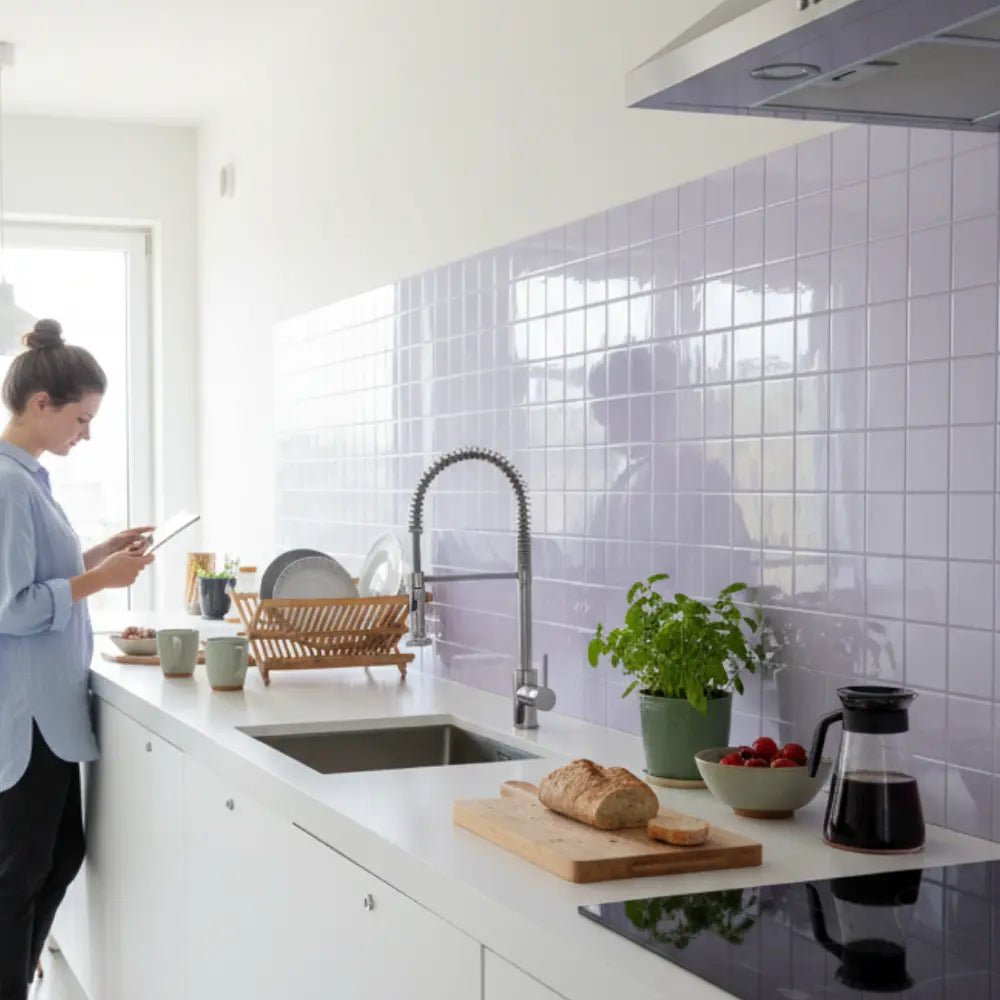



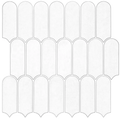

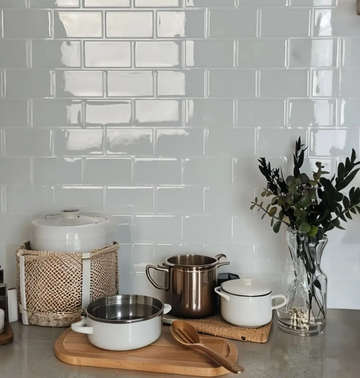
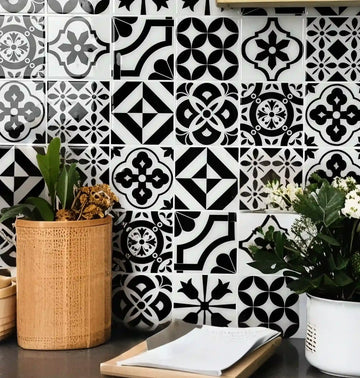
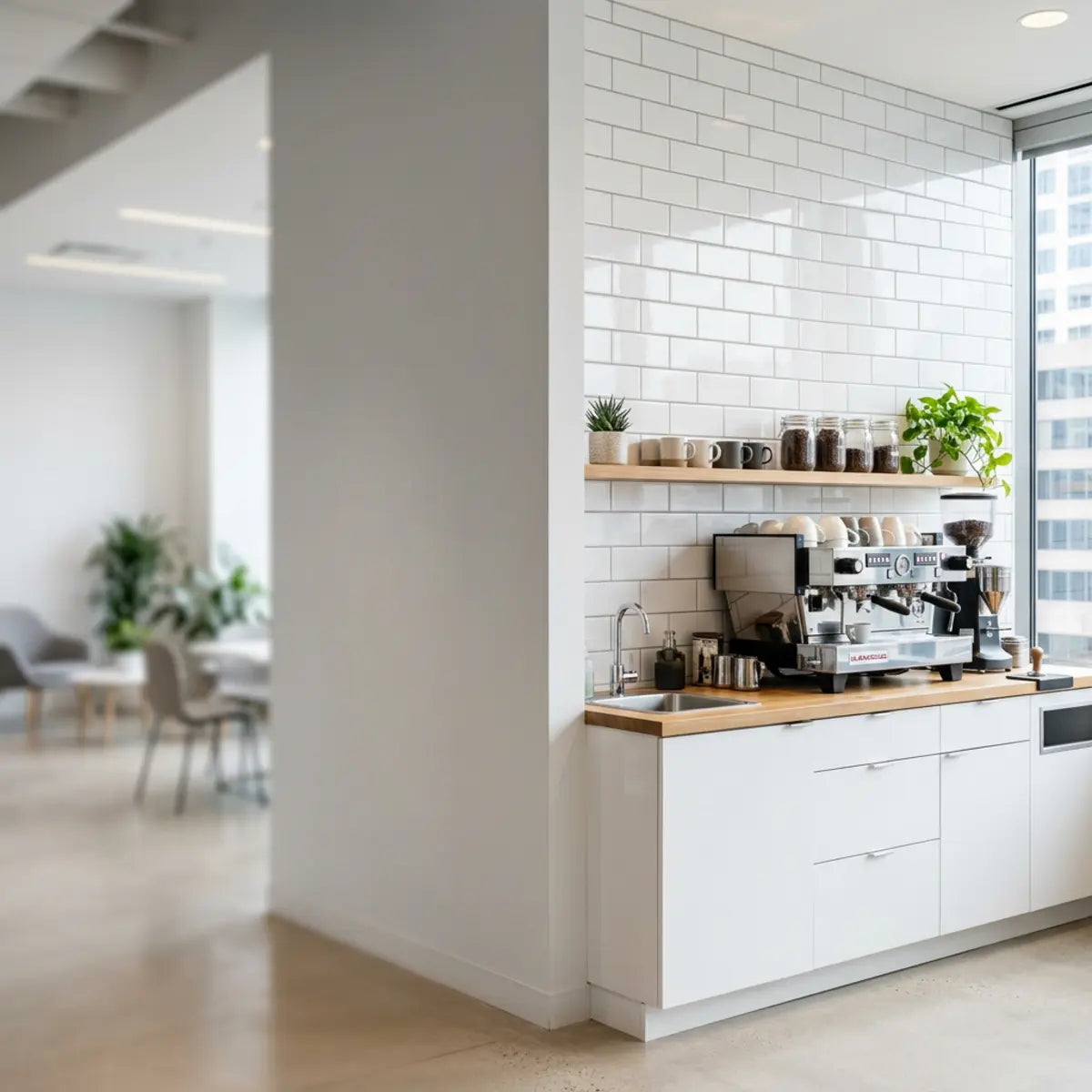
Peel-and-stick wall tile can be considered for some office breakroom walls, but “commercial-grade,” “lease-safe” and “removable” are not substitutes for a facility review. The project still needs landlord or tenant-improvement approval, a suitable wall, product-specific heat and moisture limits, access to equipment and outlets, a cleaning plan and a realistic restoration plan at lease end.
This guide replaces homemade lease scores and cost-of-ownership formulas with a facility workflow. It focuses on decorative wall finishes—not countertops, floors, food-contact surfaces, fire-rated assemblies or code compliance. Use the actual lease, building rules, product instructions and qualified facility professionals for those decisions.
Start with the lease and tenant-improvement process
Before selecting a wall pattern, review the lease, building handbook and tenant-improvement requirements. Some landlords require written approval for adhesive finishes, drilling, painting, electrical work or changes in common areas. Others may require a specific contractor, insurance documentation or restoration at lease end.
Document the request in writing. Include the wall location, product, installation method, whether the finish can be removed, whether any electrical or plumbing work is involved, and how the wall will be restored if required. A marketing claim that the tile is “renter-friendly” does not override the commercial lease.
Separate decorative finish from food-contact and work surfaces
A wall backsplash is not the same as a countertop, cutting surface, sink basin or food-preparation surface. Do not use decorative wall tile on a surface that requires a different food-contact, heat or wear rating unless the exact product is documented for that use.
OSHA’s 1910.141 sanitation standard addresses food and beverage areas, waste receptacles and sanitary handling in workplaces. It does not certify a particular decorative backsplash. Use it as part of the facility’s sanitation context while following the exact product’s cleaning and placement limits.
Keep waste, cleaning and storage functions independent of the wall finish
OSHA 1910.141 requires appropriate waste receptacles and sanitary conditions where employees consume food or beverages. A decorative wall finish can make a breakroom easier to wipe, but it does not replace waste management, sink cleaning, refrigerator maintenance or housekeeping procedures.
Do not write “easy-clean backsplash” into the facility plan as though it guarantees a sanitary room. Identify who cleans the wall, what cleaner is approved, how often the area is inspected and what happens if seams, edges or the substrate are damaged.
Confirm the product’s commercial-use and cleaning limits
A product that performs well in a residential kitchen may or may not be appropriate for a high-use office coffee station. Review the exact product documentation for wall substrate, temperature, moisture, cleaning chemicals and expected contact.
Do not assume a thicker tile is automatically “commercial grade.” Thickness, adhesive, face coating and core construction describe different properties. If the manufacturer does not support the intended environment, choose a different finish rather than adding stronger adhesive.
Inspect the wall before approving the finish
Look for weak paint, chalking, heavy texture, water staining, soft drywall, grease, old adhesive, cracks and recent repairs. A breakroom wall behind coffee machines and microwaves can collect aerosolized soil even when it looks clean.
If the wall is damp or damaged, repair the cause before covering it. If plumbing or electrical work is expected soon, complete that work first so the decorative finish is not immediately removed for service.
Surface preparation should follow the exact wall and tile system
Use a cleaner compatible with the coating and product instructions. A high-pH degreaser, TSP substitute or solvent is not automatically required for every breakroom. Choose the least aggressive method that removes the contamination present without damaging the wall.
3M’s general pressure-sensitive adhesive guidance illustrates why clean, dry compatible surfaces and application pressure matter, although the tile may use a different adhesive. Follow the tile manufacturer for the actual project.
Do not prescribe a paint sheen as a lease-safety requirement
Satin or semi-gloss paint can differ from flat paint in cleanability and surface properties, but sheen alone does not prove that the coating is strong enough for adhesive tile or future removal. Paint age, cure, adhesion to the drywall and previous repairs all matter.
If the existing coating is weak, changing the decorative finish does not fix it. Repair or repaint the wall using an approved system, allow the coating to reach the condition required by its manufacturer and then reevaluate the tile.
Accessibility belongs in the room plan, not in a tile marketing claim
The 2010 ADA Standards include requirements for accessible routes, reach ranges, dining surfaces and certain kitchens or kitchenettes. The standards also distinguish employee work areas from break rooms and kitchenettes. That means a facility should evaluate the actual space and applicable scoping rather than assuming the backsplash has no relationship to accessibility because “only employees use it.”
ADA.gov’s 2010 Standards are the official source. A decorative tile article cannot determine whether a particular office kitchenette meets ADA obligations. Use qualified design/legal guidance when accessibility changes, counters, sinks, appliances, routes or controls are being altered.
Do not reduce reach or service access with decorative details
A backsplash can add thickness near outlets, switches, dispensers, shelves and controls. Make sure the finished wall does not interfere with cover plates, service panels, appliance ventilation, valves or equipment removal.
Do not install decorative trim where it creates a sharp projection into a circulation route or makes an accessible element harder to operate. The wall finish should adapt to the room’s required clearances and reach conditions, not force the facility to redesign around it afterward.
Keep electrical work separate from tile work
Breakrooms often have multiple receptacles for microwaves, coffee makers, vending equipment and countertop appliances. Turn off power before removing cover plates. A decorative tile cut should not hide a damaged electrical box, loose device, overheated receptacle or wiring problem.
If electrical alteration is needed, use the appropriate qualified electrician and building process. Do not extend boxes, relocate devices or change circuits solely as a DIY backsplash step without the required expertise and approvals.
Map appliance heat before choosing the wall product
Coffee machines, microwaves, toaster ovens and other equipment can create heat and steam. A product marketed for kitchens is not automatically suitable next to every appliance. Follow the exact tile and appliance clearances.
Do not invent a fixed “commercial heat zone” or borrow a stove clearance from another brand. If the product documentation does not address the planned exposure, choose a more conservative placement or a different finish.
Keep sink splashes and persistent moisture separate
A wipe-clean face can be useful beside a breakroom sink, but the complete assembly still includes seams, exposed edges, outlets and the wall beneath. A decorative backsplash should not be treated as a waterproofing system.
If the wall shows recurring moisture, staining or softness, investigate plumbing, condensation or another source before covering it. Maintenance staff should be able to inspect the wall and finish rather than having moisture hidden by a cosmetic update.
Plan around janitorial cleaning methods
Ask the facility or janitorial team which cleaners are actually used. A product that tolerates mild household cleaner may not be compatible with strong disinfectants, degreasers or abrasive pads used in a workplace.
Compare the tile manufacturer’s care instructions with the existing cleaning program before approving the finish. If the routine cleaner is incompatible, change either the cleaning method or the material rather than assuming the decorative face will tolerate commercial chemicals indefinitely.
Use a cleaning test on spare material
Keep a spare tile or approved sample and test the normal cleaner on it according to the manufacturer’s instructions. Look for gloss change, print damage, softening, edge lifting or residue. This is a project-specific compatibility check, not a standardized chemical-resistance test.
Document the approved cleaner with the breakroom maintenance record so future staff do not switch to a harsher product without knowing the finish limits.
Do not create a proprietary “lease safety” score
Commercial-space decisions involve written permission, wall condition, room exposure, service access, cleaning, restoration and business operations. Converting those factors into one homemade score makes the decision look more certain than it is.
Use a checklist. If one requirement is not met—such as landlord approval, heat compatibility or access to equipment—the project should pause regardless of how many other boxes are checked.
Plan work around business operations
A small self-adhesive wall project can create less disruption than a mortar-set tile installation, but it still requires wall access, cleaning, layout, cutting and a period when the area may need to remain undisturbed.
Schedule work when the breakroom can be partially closed without affecting food storage, sinks, required egress or staff needs. Remove or protect appliances according to manufacturer guidance. Do not perform dusty or chemical work around exposed food or drink.
Use a staged installation when the breakroom cannot close
Divide the wall into bounded sections so one part of the room can remain usable while another is prepared. Complete wall repair before the decorative installation phase and keep tools, scrap and cleaning chemicals away from food and beverage storage.
Do not rush surface drying or coating cure because employees need the room back. If the wall or repair material is not ready for adhesive, delay the installation instead of accepting a weak bond.
Measure coverage from the actual wall, not a nominal pack
Record the usable backsplash dimensions and all outlets, cabinets, dispensers and interruptions. Use the exact tile dimensions and joining method to calculate coverage. Overlaps, pattern matching and cuts can reduce usable area.
Add a reasonable spare allowance for future local repair, especially in a commercial space where equipment may be replaced or moved. Keep spare pieces labeled with the product and installation date.
Compare complete project scope instead of a proprietary cost formula
It is reasonable to compare cost, but a proprietary formula adds false precision. Build a transparent scope for each option. Include material, wall repair, preparation, tools, shipping, trim, after-hours labor if used, cleaning changes, spare material and lease-end restoration.
For conventional ceramic tile, include the complete installation system and labor actually proposed. For peel-and-stick wall tile, include surface preparation and any product-specific edge method. Compare the same wall and finish level rather than one product’s pack price against another system’s fully installed quotation.
Do not assume self-installation eliminates permits or contractor requirements
A decorative adhesive wall finish may involve less construction than a mortar-set renovation, but the lease or building may still require approval, insured contractors or after-hours access. Electrical or plumbing work can trigger separate requirements even when the tile itself is simple.
Ask the property manager which parts of the project can be self-performed. Keep written approval with the project record.
Choose design that works with corporate maintenance
Very dark gloss can show fingerprints and mineral spots; highly textured surfaces can hold dust; strong directional patterns make local replacement more obvious. A workplace backsplash should be judged not only by the launch-day photo but also by how it will look after repeated cleaning.
Use samples near the actual cabinets, countertop, appliances and lighting. Ask the cleaning team which visual issues are likely to become noticeable in normal use.
Keep brand identity separate from a permanent tenant improvement
A company may want colors or patterns that match its brand. In a leased space, consider whether the design still works if the tenant moves, rebrands or subleases. A highly specific logo-like wall can increase restoration work even when the underlying tile is removable.
Use brand colors in a bounded area or through movable décor when flexibility matters. The wall finish can coordinate with the brand without becoming a permanent corporate graphic.
Document the original wall before installation
Take wide photographs and close-ups of the paint, existing marks, repairs, outlets and trim. Record the paint type or maintenance information if available. This is useful for lease-end restoration planning and helps distinguish pre-existing conditions from changes created during removal.
Documentation does not guarantee that the landlord will accept the wall at lease end. It simply creates a factual starting point.
Removal planning begins before installation
Save the product’s removal instructions, order information and spare material. If the manufacturer permits a test area, use a manageable location before covering the full wall. A short test can reveal immediate incompatibility but cannot guarantee the same result after years of service.
Do not add unapproved permanent adhesive because one edge is difficult. That can convert a potentially removable finish into a much larger restoration problem.
Do not prescribe one heat-assisted removal protocol
Some products may permit controlled warming during removal. Others may not. Paint and wallboard can also respond differently to heat. There is no universal temperature, distance, peel angle or timing that protects every commercial wall.
Follow the exact manufacturer method and stop if paint, primer or drywall paper begins releasing. At that point, the task may need to transition from removal to wall repair.
Plan patching and repainting as a possible outcome
A commercial lease may require restoration even when the tile removes relatively cleanly. Screw holes from shelves, old wall repairs, paint fade or adhesive residue can also affect the final condition.
Include a restoration allowance in the project budget and schedule. This is more realistic than promising “zero wall damage” or full deposit recovery.
Do not promise deposit recovery
Security deposits and restoration charges depend on lease terms, wall condition, landlord expectations and the final state of the premises. A wall-tile product cannot guarantee the commercial financial outcome.
Review the surrender/restoration clause and obtain written approval for the intended finish. If the lease requires professional repainting or another standard at move-out, budget that work from the beginning.
Use a punch list after installation
- All tiles are adhered according to the product instructions.
- Outlets and cover plates fit correctly and remain serviceable.
- Sink and appliance zones are within documented product limits.
- Edges and seams are finished using compatible methods.
- No grille, valve, panel or appliance service access is obstructed.
- Cleaning staff have the approved care method.
- Spare pieces and product records are stored for repair.
- Landlord or facility documentation is updated if required.
Use a maintenance inspection instead of a longevity guarantee
Inspect the wall periodically for lifting edges, damaged seams, cleaning wear, moisture staining or impact near appliances. Frequency can follow the facility’s normal breakroom inspection schedule rather than an invented tile-specific interval.
Respond to the cause. If an edge is lifting because the wall is damp, pressing it back down does not solve the moisture problem. If repeated impact occurs behind a chair or cart, change the room layout or protection strategy before replacing the tile again.
When conventional tile or another finish may be the better choice
A more permanent wall system may be appropriate when the breakroom receives heavy abrasion, frequent harsh cleaning, high heat, direct wet exposure or a long-term owner-occupied build-out. The correct alternative depends on the building and maintenance program.
Do not frame peel-and-stick as universally cheaper or conventional tile as universally more durable. Compare the systems that actually meet the room requirements, then compare cost and disruption.
Build procurement around replacement and documentation
Commercial spaces change. Microwaves are replaced, sinks are serviced, cabinets are moved and tenants reconfigure rooms. Buy enough spare material for reasonable local repairs and keep the product identifier, dimensions, color/pattern, order date and supplier information with the facility record.
When the exact design is discontinued, a small repair can become a full visual mismatch. Spare pieces reduce that risk. Store them in a labeled flat package where maintenance staff can find them rather than leaving an unlabeled box in a storage room.
Include the wall finish in the facility handover
After installation, give facilities or janitorial staff a short handover sheet: approved cleaner, cleaning tools to avoid, product removal instructions, spare-material location, supplier information and any room-specific heat or moisture limits.
This avoids a common problem where a new finish is installed by one team and maintained by another team that never receives the product instructions. A finish is more likely to stay serviceable when the people cleaning it know what it is.
Use an incident workflow when a tile lifts or is damaged
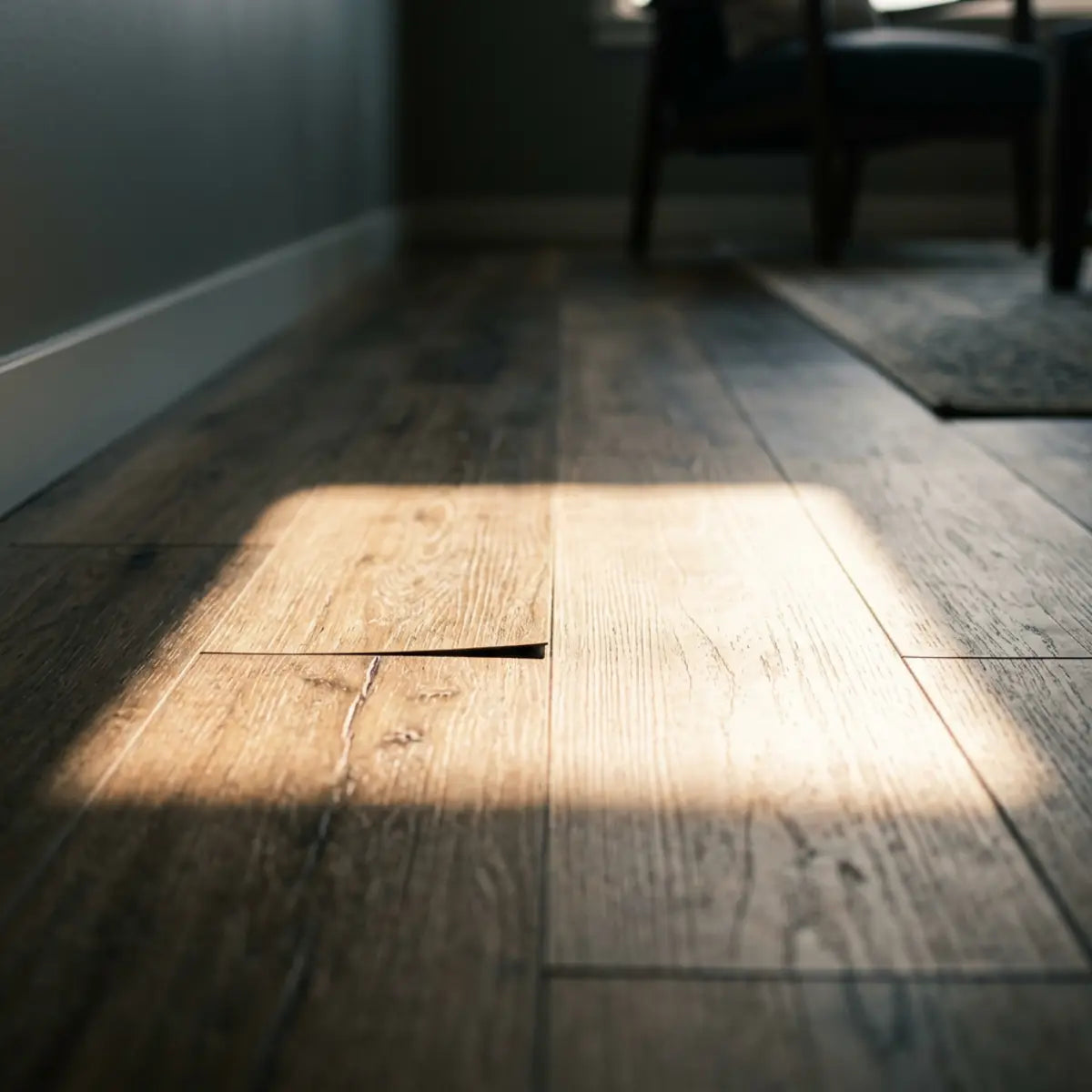
If a tile lifts, cracks, stains or is hit by equipment, document the location and likely cause before repairing it. A loose edge beside a sink may point to moisture or contamination; a damaged section behind a chair may be an impact problem; widespread release can indicate wall or coating compatibility.
Correct the cause first. Then use the manufacturer-supported repair method and a matching spare piece where practical. Do not convert every local failure into stronger adhesive, more caulk or a permanent patch without understanding why the finish changed.
Keep occupational-safety claims narrow
A cleanable wall finish can support a well-maintained room, but the product itself does not certify the breakroom as OSHA-compliant, hygienic or safe. OSHA sanitation obligations cover the workplace conditions and operations described by the standard. The employer remains responsible for the broader environment.
Likewise, an attractive backsplash does not correct food-handling practices, overflowing waste, unsafe appliances or inaccessible layouts. Treat the wall finish as one maintainable surface inside a larger facility-management system.
Frequently asked questions
Can peel-and-stick tile be used in an office breakroom?
Potentially, if the lease/building permits it, the wall is suitable, the product is documented for the room exposure and the cleaning/service plan is compatible. Do not rely on a residential marketing label alone.
Is peel-and-stick tile “commercial grade”?
That phrase is too broad without a defined test or application. Review the exact product’s construction, cleaning limits, room use, warranty and installation guidance. A thicker tile is not automatically a commercial rating.
Does OSHA require a specific backsplash material?
OSHA 1910.141 addresses workplace sanitation and food/beverage areas, but this article does not identify a rule requiring one decorative backsplash material. Use the official standard and facility-specific requirements for compliance decisions.
Does an office breakroom have to meet ADA kitchen standards?
Accessibility scoping depends on the facility, use and applicable law. ADA.gov’s 2010 Standards define break rooms and kitchenettes separately from employee work areas and contain requirements for accessible routes, dining surfaces and certain kitchen elements. Use qualified accessibility guidance for the actual project rather than treating tile choice as an ADA determination.
Can I install tile around outlets and appliances myself?
Decorative cutting can be part of the wall project, but electrical or appliance alterations are separate work. Turn off power before removing covers and use the appropriate qualified trade when the box, device, wiring or equipment requires modification.
Will removable tile protect the security deposit?
No material can guarantee a commercial lease outcome. Removal depends on the wall, adhesive, service time and method, while restoration obligations depend on the lease. Plan patching or repainting as a possible outcome.
Should I use a hairdryer to remove the entire backsplash?
Only if the exact product instructions permit controlled warming. There is no universal heat setting or peel angle that guarantees intact paint or drywall.
Can janitorial staff use their normal cleaner?
Only if it is compatible with the product face and installation. Compare the current cleaning program with the manufacturer’s care instructions and test a spare piece where appropriate.
Can the tile go directly behind a microwave or coffee machine?
Check the exact tile and appliance guidance. Heat, steam and exhaust vary by equipment. Do not borrow a clearance from another product or article.
Is peel-and-stick always cheaper than ceramic tile?
No. Compare complete equivalent scopes: preparation, materials, tools, labor, trim, downtime, cleaning, repairs and lease-end restoration. Pack price alone is not the project cost.
Facility approval checklist
- Written landlord or tenant-improvement approval obtained where required.
- Exact wall location and product identified.
- Wall is sound, dry, clean and within product requirements.
- Sink, heat and appliance exposure verified.
- Electrical/plumbing/service access remains available.
- Accessibility and circulation impacts reviewed where applicable.
- Cleaning chemicals checked against product care guidance.
- Installation schedule avoids food/beverage contamination and excessive business disruption.
- Removal instructions and restoration obligations recorded.
- Spare pieces and maintenance documentation stored.
Close out the project before the lease ends
Before move-out, review the landlord’s restoration requirements while there is still time to repair the wall properly. Photograph the finished condition, remove the tile only according to the product instructions, and separate adhesive residue, paint damage and pre-existing wall defects instead of treating them as one problem.
If patching or repainting is required, complete that work to the lease standard and keep the final photographs and invoices. A planned closeout is easier to manage than discovering restoration obligations during the final walkthrough.
Bottom line
A peel-and-stick wall finish can be a practical office-breakroom upgrade when it fits the lease, wall, exposure and maintenance program. The right question is not whether the product earns a synthetic facility rating or promises a lower total cost. The right question is whether the documented product and installation work within the facility’s actual constraints.
Get permission, inspect the wall, preserve service and accessibility, compare the cleaning program, keep food-contact functions separate, follow product-specific heat and moisture limits, and plan restoration before installation. That creates a defensible commercial project without pretending the decorative finish controls OSHA compliance, ADA compliance or the lease outcome.


Leave a comment
This site is protected by hCaptcha and the hCaptcha Privacy Policy and Terms of Service apply.