





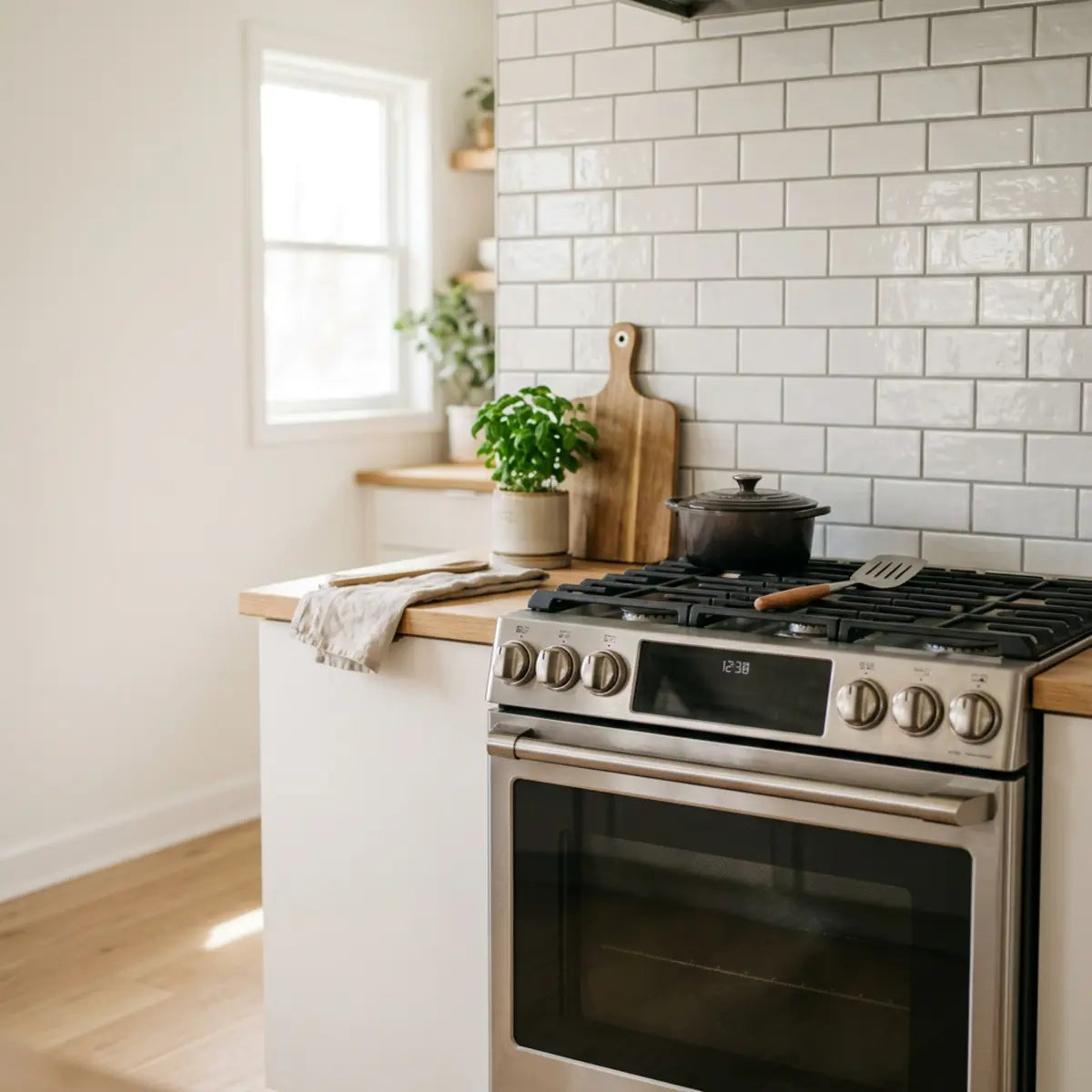
Die moderne Küchenrevolution hat hochwertiges Design für immer mehr Eigenheimbesitzer erschwinglich gemacht – nicht zuletzt dank der enormen Beliebtheit von DIY-Materialien. Doch wenn brennbare Materialien auf leistungsstarke Kochgeräte treffen, steht viel auf dem Spiel. Die entscheidende Frage ist nicht, ob selbstklebende Fliesen hinter jedem Herd angebracht werden können. Es kommt vielmehr darauf an, ob Herdtyp, Abstand zur Rückwand, Wärmequelle, Zustand der Wand und die Temperaturbeständigkeit des Materials das Risiko eines Versagens gering halten. Gerätetyp und Abstand bestimmen die heiße Zone; der Leitfaden für Küchenrückwände hilft Ihnen dabei, diesen Bereich auf das gesamte Layout sowie Steckdosen, den Bereich rund um die Spüle, Kanten und die Reinigung abzustimmen.
Eine selbstklebende Küchenrückwand kann hinter vielen Standherden, Einschubherden sowie Elektro- und Induktionsherden sicher eingesetzt werden. Das Material muss für die Wärme in unmittelbarer Nähe geeignet sein. Die Wand muss sauber und eben sein. Besonders wichtig ist, dass die vom Hersteller vorgeschriebenen Abstände gemäß der Herdanleitung eingehalten werden. Bei Gasherden und kleinen Abständen zur Rückwand ist besondere Vorsicht geboten. Offene Flammen, eine starke Wärmeabfuhr nach hinten, Fett und die Bewegung des Geräts können zu Schmelzen, Verfärbungen oder einem Versagen der Klebeschicht führen, wenn die richtigen Abstände nicht eingehalten werden.
Wer die Feinheiten der Küchengestaltung verstehen möchte, muss berücksichtigen, dass nicht jedes Gerät auf die gleiche Weise mit seiner Umgebung interagiert. Beim Kochen entstehen in Ihrer Küche lokal begrenzte Wärmebereiche. Eine Wand, die sich beim Wasserkochen auf einem Induktionskochfeld angenehm kühl anfühlt, kann beim scharfen Anbraten auf einem Gasbrenner mit 15.000 BTU sehr heiß werden. Deshalb ist es entscheidend, die Küchenrückwand zuerst als funktionale Schutzschicht und erst danach als dekoratives Element zu betrachten – so gelingt eine erfolgreiche und langlebige Renovierung.
⚠️ PROFITIPP: Prüfen Sie zuerst die Gebrauchsanleitung
Bevor Sie Materialien kaufen oder auch nur eine einzige Fliese zuschneiden, müssen Sie in der Installationsanleitung Ihres Herds den Abschnitt „Abstände zu brennbaren Oberflächen“ finden. Dieses Dokument enthält die verbindlichen und praktischen Vorgaben für die Sicherheit in Ihrer Küche. Verlassen Sie sich nicht auf allgemeine Bauvorschriften: Maßgeblich für die sicheren Bereiche sind die Prüfungen und Vorgaben des Herstellers.
Bevor Sie Materialien kaufen, sollten Sie diese grundlegenden Schritte durchführen. Wer diese ersten Prüfungen überspringt, riskiert, dass die selbstgemachte Küchenrückwand bereits im ersten Jahr nach der Montage Probleme macht. In der Vorbereitungsphase wird die Grundlage für die Langlebigkeit gelegt.
- Wärmequelle bestimmen: Stellen Sie fest, ob es sich um einen Standherd, Einschubherd, Gasherd, Elektroherd oder Induktionsherd handelt. Jede dieser Kategorien wirkt sich grundlegend auf die Wärmeentwicklung und die erforderlichen Einbaumaße aus.
- Maße überprüfen: Messen Sie die Abstände zur Rückwand und die seitlichen sichtbaren Bereiche, bevor Sie festlegen, wo die Küchenrückwand beginnt und endet. Präzise Messungen verhindern sichtbare Stellen der Gipskartonwand und sorgen für eine nahtlose Optik.
- Risiko bewerten: Nutzen Sie eine strukturierte Bewertungsmethode, um sicherere Materialien auszuwählen und die Montage in der richtigen Reihenfolge durchzuführen. Nicht jeder Klebstoff ist gleich – deshalb ist es besonders wichtig, seine chemischen Belastungsgrenzen zu kennen.

Können selbstklebende Küchenrückwände sicher hinter einem Standherd oder Einschubherd angebracht werden?
*Machen Sie sich Sorgen, dass Ihre günstige Küchenrenovierung hinter einem heißen Herd schmilzt, sich ablöst oder zur Brandgefahr wird?*
*In diesem Abschnitt erfahren Sie genau, wann selbstklebende Fliesen sinnvoll sind, wann eine Platte ohne Klebeschicht zwingend erforderlich ist und warum die Herstelleranleitung allgemeine Ratschläge aus dem Internet ersetzt.*
Selbstklebende Küchenrückwände können hinter den meisten Elektro- und Induktionsherden sicher angebracht werden, sofern sie für die entsprechende Temperatur geeignet sind und die vom Hersteller vorgeschriebenen Abstände eingehalten werden. Bei Gasherden gelten wegen der offenen Flammen strengere Sicherheitsabstände. Gehen Sie niemals davon aus, dass eine dekorative Vinyl- oder dünne Metallfliese einen echten Brandschutz ersetzt. Wärmeübertragung verzeiht keine Fehler, und die chemische Zusammensetzung von Klebstoffen führt unweigerlich zu einem Versagen, wenn sie thermischen Belastungen jenseits ihrer vorgesehenen Grenzen ausgesetzt werden.
Um diese Zusammenhänge umfassend zu verstehen und nicht mehr raten zu müssen, verwenden wir ein eigenes Verfahren, das speziell für DIY-Küchenrenovierungen entwickelt wurde. Wir nennen es den Heat-Gap-Adhesion Risk Score (HGARS).
Der Heat-Gap-Adhesion Risk Score (HGARS)
Definition: Eine Kennzahl für die Sicherheitsplanung, die Wärmequelle, Abstand zur Rückwand, Temperaturbeständigkeit des Materials, Vorbereitung der Wand, Fettbelastung und das Risiko bei der Entfernung zu einem einzigen Sicherheitsprofil zusammenfasst. Durch die Bewertung dieser Faktoren können Eigenheimbesitzer besser einschätzen, ob ihre Küchenrückwand langfristig geeignet ist, statt sich lediglich darauf zu verlassen, dass sie hält.
Elektro- und Induktionsherde stellen für die Wand hinter dem Gerät in der Regel ein geringeres Risiko dar als Gasherde. Für die endgültige Entscheidung über die Abstände ist jedoch immer die Anleitung Ihres konkreten Geräts maßgeblich. Werbeaussagen wie „hitzebeständig“ oder „wasserdicht“ müssen anhand konkreter Angaben zu den Temperaturgrenzen überprüft werden. Es ist erstaunlich, wie viele als „hitzebeständig“ gekennzeichnete Produkte nur für kurzzeitige, gelegentliche Wärme ausgelegt sind – nicht für die über Stunden anhaltende Strahlungswärme, die beim Kochen eines großen Suppentopfs entsteht.
Wärmeübertragung verstehen
Viele Eigenheimbesitzer glauben fälschlicherweise, dass alle Herde die Wärme auf exakt gleiche Weise nach hinten zur Wand abgeben. Dieses grundlegende Missverständnis führt zu einer falschen Materialauswahl mit möglicherweise gravierenden Folgen. Ein Gasherd erzeugt tatsächlich Konvektionswärme, die nach oben und außen strömt. Wenn die offene Flamme Sauerstoff verbraucht, müssen die stark erhitzten Abgase entweichen. Meist steigen sie direkt an der Rückseite des Geräts nach oben und streichen über den unteren Bereich Ihrer Küchenrückwand.
Ein Induktionsherd hingegen konzentriert elektromagnetische Energie direkt im ferromagnetischen Metall Ihres Kochgeschirrs. Deshalb bleibt die Wand hinter einem Induktionsgerät im Vergleich zu einem Gasbrenner bemerkenswert kühl. Die Wärmequelle ist der Topf selbst, nicht das Kochfeld. Dadurch verändert sich die Risikobewertung nach HGARS grundlegend: Aus einem Bereich mit hohem Risiko wird eine risikoarme und leicht zu handhabende Zone, die sich praktisch für jedes hochwertige selbstklebende Produkt eignet.
Nach Angaben der National Fire Protection Association (NFPA) sind Kochgeräte die häufigste Ursache für Brände in Wohngebäuden. Deshalb ist es besonders wichtig, eine selbstklebende Fliese als dekorative Schicht und nicht als Hitzeschutz zu betrachten. Wenn eine Wand laut Vorschriften eine nicht brennbare Schutzschicht benötigt, verhindert eine dünne Schicht aus Vinyl und Acrylkleber in keiner Weise die Wärmeübertragung auf die Holzständer hinter der Gipskartonwand.
Bei der Bewertung der Sicherheit einer Küchenrückwand ist eine gründliche Überprüfung der Temperaturgrenzen entscheidend. Um diesen wichtigen Schritt der Küchensicherheit richtig umzusetzen, sollten Sie unsere ausführliche Recherche lesen. Die genauen Temperaturschwellen und wissenschaftlichen Daten finden Sie in unserem umfassenden Leitfaden Sind selbstklebende Fliesen hitzebeständig? Der ultimative Leitfaden für eine sichere Küchenplanung. Diese Ressource liefert die notwendigen konkreten Grundlagen, damit Sie Ihre Gestaltungsidee umsetzen können, ohne ein schwerwiegendes Versagen zu riskieren.
Gerätetyp und HGARS-Bewertung
Bei der Beurteilung des Abstands bei einem Gasherd richtet sich die Vorgehensweise strikt nach etablierten Sicherheitsvorgaben. Wenn Sie einen Gasherd haben, gibt es praktisch keinen Spielraum für Fehler. Die leistungsstarken Brenner erzeugen intensive Hitze, die Strukturklebstoffe schnell beeinträchtigen kann. Eine ausführliche Erklärung der standardisierten Bewertung für diese leistungsstarken Geräte sowie wichtige Informationen zu den Bauvorschriften finden Sie in unserem speziellen Leitfaden zum Abstand hinter Gasherden. Dieses Vorgehen hilft, Fehler bei der Platzierung zu vermeiden und ein schwerwiegendes Versagen des Materials zu verhindern.
Für die praktische Anwendung können Sie sich ansehen, wie verschiedene Herdtypen in unserer Risikomatrix abschneiden. Diese Tabelle dient Ihnen vor Beginn des Projekts als wichtigstes Hilfsmittel zur Einschätzung.
| Herdtyp und Ausführung | HGARS-Risikostufe | Hauptgefahr | Empfohlene Lösung für die Küchenrückwand |
|---|---|---|---|
| Gasherd, freistehend | Hoch | Offene Flamme, heiße Abluft an der Rückseite | Vorgeschriebener Abstand. Verwenden Sie Metall- oder Glasplatten oder halten Sie unbedingt einen Sicherheitsabstand von 9 Zoll ein. |
| Gasherd, einschiebbar | Hoch | Ungeschirmte offene Flamme | Nur Fliesen mit entsprechender Hitzebeständigkeit verwenden. Prüfen Sie im Handbuch, ob eine nicht brennbare Rückwand vorgeschrieben ist. |
| Elektroherd mit Heizspiralen (freistehend) | Mittel | Strahlungswärme | Hitzebeständige selbstklebende Fliesen sind in der Regel geeignet. Halten Sie einen Mindestabstand von 2 Zoll ein. |
| Elektroherd mit Strahlungsheizung (einschiebbar) | Niedrig bis mittel | Verbleibende Oberflächenwärme | Für die meisten selbstklebenden Fliesen geeignet. Stellen Sie sicher, dass die Wand eben und gründlich entfettet ist. |
| Induktionsherd (freistehend) | Niedrig | Minimale Strahlungswärme | Ideal für selbstklebende Fliesen. Die Wärme wird auf den Topf übertragen, nicht an die Umgebung abgegeben. |
| Induktionsherd (einschiebbar) | Niedrig | Ausrichtung und Fugenabstände | Sehr gut geeignet. Achten Sie vor allem auf die exakte Ausrichtung an den Kanten und die richtigen Fugenabstände. |
Wenn Sie für Ihr Projekt ein verlässliches Ergebnis erzielen möchten – also ein Ergebnis, das auf Fakten und nicht auf Glück beruht –, müssen Sie sich genau mit Ihrem Gerät befassen. Suchen Sie online nach der Installationsanleitung. Die meisten Hersteller stellen auf ihren Support-Websites PDF-Versionen bereit. Suchen Sie nach dem Abschnitt „Abstände zu brennbaren Oberflächen“. Wenn in der Anleitung ein Schutzblech für einen abstandslosen Einbau vorgeschrieben ist (eine Metallplatte, die an der Rückseite des Herds befestigt wird), dürfen Sie im Bereich hinter den Kochstellen keine Vinylfliesen direkt anbringen – weder rechtlich noch sicher –, ohne dieses Schutzblech zuvor zu montieren.

Die tatsächliche Bedeutung von Temperaturangaben
Viele Heimwerker gehen fälschlicherweise davon aus, dass eine dicke selbstklebende Fliese von Natur aus hitzebeständiger ist als eine dünne. Das stimmt so nicht. Die Materialstärke ist nicht gleichbedeutend mit der Wärmebeständigkeit. Entscheidend für die Lebensdauer ist, wie sich der Klebstoff bei steigenden Temperaturen verhält. Bei dauerhaft höheren Temperaturen als 120°F (49°C) verändern billige Acrylklebstoffe ihre Phase: Sie verflüssigen sich buchstäblich, verlieren ihre Scherfestigkeit und bringen das schwere Fliesenmaterial dazu, langsam an der Wand nach unten zu rutschen.
Wenn Sie diese Materialien unbedingt in der Nähe einer Wärmequelle verwenden möchten, sollten Sie sich mit den richtigen Verlegetechniken vertraut machen, um diese Risiken zu verringern. Überlassen Sie die Sicherheit Ihrer Küche nicht dem Zufall. Lernen Sie die genauen Techniken für eine sichere Haftung kennen und lesen Sie dazu unsere umfassende Anleitung: Hitzebeständige selbstklebende Fliesen hinter dem Herd anbringen. Diese Vorgehensweise schafft optimale Voraussetzungen für eine dauerhaft zuverlässige Haftung und zeigt Ihnen, wie Sie das Material auch bei hoher thermischer Belastung andrücken, aushärten lassen und pflegen.
Wie verändert ein einschiebbarer Herd, wo die Küchenrückwand beginnt und endet?
*Gehen Sie davon aus, dass Ihr neuer einschiebbarer Herd exakt dieselbe Fläche wie Ihr bisheriges freistehendes Gerät abdeckt?*
*In diesem Abschnitt erfahren Sie, wie einschiebbare Geräte die optische Ausrichtung verändern, eine vollständige Abdeckung der Rückwand erfordern und den richtigen Zeitpunkt für die Montage bestimmen.*
Bei einem einschiebbaren Herd muss sich die Küchenrückwand über die gesamte hintere Wand bis hinunter auf Höhe der Arbeitsplatte erstrecken. Diese Geräte haben kein erhöhtes, senkrechtes Bedienfeld, wie es bei herkömmlichen freistehenden Modellen üblich ist. Durch diese besondere Bauweise wird die Trockenbauwand direkt hinter der Kochfläche sichtbar, wodurch sich die Planung der Fliesen vollständig verändert. Wenn Sie diesen sichtbaren Bereich nicht berücksichtigen, beeinträchtigen Sie die Optik Ihrer Küchenrenovierung erheblich.
Für eine korrekte Planung verwenden wir eine weitere wichtige Kennzahl für die räumliche Abstimmung: den Kontinuitätswert der Gerätepassung (AFCS).
Kontinuitätswert der Gerätepassung (AFCS)
Definition: Eine umfassende Kennzahl, die die optische Ausrichtung, die Überlappung der seitlichen Flansche, die Passung zur Arbeitsplatte, die insgesamt sichtbare Rückwand und die Flexibilität bei einem späteren Geräteaustausch bewertet. Ein hoher AFCS lässt Ihre Küche wirken, als wäre sie von einem erfahrenen Schreiner maßgefertigt worden. Ein niedriger AFCS führt zu sichtbaren Lücken an der Trockenbauwand, unpassenden Abschlussleisten und schwer zu reinigenden Zwischenräumen.
Slide-in-Herde sind darauf ausgelegt, eine individuelle, integrierte Optik zu schaffen. Deshalb sind sie derzeit die bevorzugte Wahl bei hochwertigen Küchenrenovierungen. Häufig verfügen sie über Metallleisten, die seitlich und hinten leicht über die Kanten der Arbeitsplatte ragen und so verhindern, dass Krümel zwischen die Schränke fallen. Da sich die Bedienelemente an der Vorderseite befinden – wodurch man über heiße Kochfelder greifen muss, was eine zusätzliche Sicherheitsfrage darstellt –, ist die gesamte Rückwand deutlich sichtbar.
Das Problem der verdeckten Wandbereiche
Ein häufiger und kostspieliger Fehler passiert, wenn Hausbesitzer eine vorhandene freistehende Herd-Kochfeld-Kombination umfliesen. Um Zeit und Material zu sparen, beenden sie die Fliesen dort, wo die hohe Bedienblende beginnt, und zeichnen im Grunde die Konturen ihres aktuellen Herds nach. Jahre später gibt der alte Herd den Geist auf und wird durch ein elegantes, modernes Slide-in-Modell ersetzt. Plötzlich ist ein großes, kahles Rechteck aus fettverschmutzter Gipskartonwand direkt hinter der neuen Kochfläche sichtbar.
Dieses Versäumnis wirkt sich negativ auf die Gesamtbetriebskosten (TCO) Ihrer Küchenrenovierung aus. Eine spätere Korrektur erfordert möglicherweise, nicht mehr erhältliche Fliesen passend zu finden, alten Kleber an einer schwer zugänglichen Stelle zu entfernen oder den gesamten unteren Wandbereich neu zu beplanken. Der dafür nötige Arbeitsaufwand übersteigt die Kosten, die zusätzlichen drei Quadratfuß von Anfang an zu fliesen, bei Weitem.
Um dieses vollständig vorhersehbare Problem zu vermeiden, sollten Sie die Fliesen unterhalb der Arbeitsplattenkante weiterführen. Für ein makelloses Ergebnis sollten die Fliesen mindestens fünf Zentimeter unterhalb des höchsten Punkts der hinteren Geräteabdeckung enden. So bleibt die Wand unabhängig von späteren Gerätewechseln baulich und optisch geschützt.
Praxisbeispiel: Upgrade auf einen 30-Zoll-Slide-in-Herd
Stellen Sie sich die typische Installation eines 30-Zoll-Elektro-Slide-in-Herds vor. Noch bevor der Lieferwagen eintrifft, misst der erfahrene Heimwerker die genaue Breite des benötigten Schrankausschnitts aus (normalerweise 30 1/8 inches, damit etwas Spielraum bleibt). Diese senkrechten Lotlinien werden an der Wand markiert. Anschließend werden die selbstklebenden Fliesen über den gesamten Zwischenraum angebracht und ganze drei Zoll unterhalb der Höhenlinie der Arbeitsplatte geführt.
Wenn das Lieferteam das neue Gerät an seinen Platz schiebt, treffen die seitlich und hinten überlappenden Metallleisten nahtlos auf die frisch geflieste Wand. Gipskarton ist nirgends sichtbar. Der AFCS-Wert wird maximiert und erzeugt den Eindruck einer mehrere Tausend Dollar teuren Küchenrenovierung – umgesetzt allein durch präzise Planung und selbstklebende Fliesen.
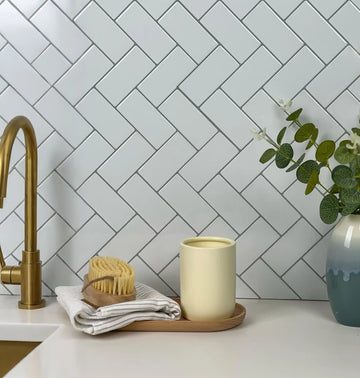
Wenn Sie ein Material für diesen besonders sichtbaren Bereich auswählen, sind Ästhetik, Sicherheit und Langlebigkeit gleichermaßen wichtig. Berücksichtigt man die langfristige optische Wirkung und den Wunsch nach einem wirklich luxuriösen Blickfang, ist unsere Weißes Chevron Kollektion der ultimative architektonische Maßstab. Mit raffinierten 3D-Strukturen lässt sie flache, altmodische Wände optisch zurücktreten und sorgt für ein hochwertiges, durchgängiges Erscheinungsbild, das elegante Slide-in-Geräte perfekt ergänzt.
Störungen durch überstehende Leisten vermeiden
Prüfen Sie die endgültigen Geräteabmessungen, bevor Sie die Fliesenkanten festlegen. Einige moderne Slide-in-Herde werden mit optionalen hinteren Abdeckleisten geliefert, die den Spalt zwischen dem Gerät und einer ungefließten Wand überbrücken. Andere Modelle sind dafür ausgelegt, bündig an einer kahlen Wand zu stehen.
Hier entsteht ein physisches Problem: Eine stark strukturierte, hochwertige 3D-Fliese zum Aufkleben bringt zusätzliche, messbare Wandstärke mit sich (häufig 1/8 bis 1/4 inch). Diese zusätzliche Tiefe kann verhindern, dass der Slide-in-Herd vollständig bündig steht, sodass er leicht über die unteren Schränke hinausragt. Berücksichtigen Sie bei der Planung des erforderlichen Tiefenabstands unbedingt die Stärke Ihrer ausgewählten Fliesen. Möglicherweise müssen Sie die Position der 220V Steckdose anpassen, um die nun fehlende Tiefe auszugleichen.
Bereit, Ihre Anordnung zu planen?
Raten Sie nicht bei den Maßen. Nutzen Sie unsere professionelle Mess-Checkliste, um Seitenansichten, rückseitige Abstände und Durchgangshöhen zu erfassen, bevor Sie Ihre Materialien kaufen.
Die ultimative Checkliste zum Ausmessen Ihrer Küche herunterladenWie lässt sich der Spalt hinter einem freistehenden Herd am sichersten überbrücken?
*Genervt von dem dunklen, fettanfälligen Spalt zwischen Ihrem freistehenden Herd und der frisch gefliesten Wand?*
*Dieser Abschnitt zeigt praxiserprobte Lösungen, um rückseitige Abstände sicher zu überbrücken und Ablagerungen zu verhindern, ohne die notwendige Belüftung des Geräts zu beeinträchtigen.*
Am sichersten lässt sich der rückseitige Spalt mit einem dafür vorgesehenen Herdspaltfüller aus Metall oder einer hitzebeständigen Silikonbrücke überbrücken. Achten Sie unbedingt darauf, dass der erforderliche hintere Belüftungsabstand des Geräts frei bleibt. Füllen Sie diesen baulich bedingten Spalt niemals mit brennbaren Materialien wie Schaumstoff-Hinterfüllschnur, dicken Raupen aus herkömmlicher Maler-Acrylmasse oder nicht abgestützten Fliesenstücken zum Aufkleben.
Der Abstand hinter einem freistehenden Herd hat einen ganz bestimmten und wichtigen Zweck. Er bietet Platz für den sperrigen 220V-Netzstecker (der mehrere Zentimeter Freiraum benötigt), die starre oder halbstarre Gasleitung sowie den wichtigen, am Boden befestigten Kippschutz. Außerdem benötigen moderne Backöfen – insbesondere Modelle mit digitalen Steuerplatinen und Umluftgebläse – eine zuverlässige Luftzirkulation, damit ihre elektronischen Bauteile gekühlt werden. Diese Luftzufuhr für eine bündige Optik zu blockieren, führt mit Sicherheit zu einem Ausfall des Geräts.
Der Kamineffekt
Um die Gefahr eines falsch bemessenen Abstands zu verstehen, sollten Sie sich den Bereich direkt hinter Ihrem Herd wie einen Schornsteinzug vorstellen. Heiße Luft entweicht unvermeidlich aus den Backofenöffnungen (die sich meist direkt unterhalb des hinteren Bedienfelds befinden) und steigt an der Rückwand nach oben. Wenn Sie das Gerät versehentlich zu dicht an eine selbstklebende Vinyl-Rückwand schieben, um den sichtbaren Abstand zu minimieren, schränken Sie die Luftzirkulation stark ein und stauen die entstehende Wärme direkt an der Wand.
Diese angestaute Wärme beschleunigt die Alterung des Kleberückens der Fliesen erheblich. Innerhalb weniger Monate führt der ständige Wechsel zwischen schnellem Aufheizen beim Kochen und raschem Abkühlen dazu, dass der Klebstoff kristallisiert und seine Elastizität verliert. Schließlich beginnen sich die Fliesenecken zu lösen, nach außen zu wölben und sich komplett von der Gipskartonwand abzulösen – direkt hinter dem Herd.
Strategien zum Umgang mit dem Abstand
Wenn die Montageanleitung Ihres Herdes ausdrücklich einen Abstand von fünf Zentimetern zu brennbaren Oberflächen vorschreibt, müssen Sie diesen unbedingt einhalten. Um den unschönen Spalt optisch zu kaschieren, ohne gegen Sicherheitsvorschriften zu verstoßen, können Sie sich an den folgenden Gestaltungsrichtlinien orientieren:
- Eine mechanische Abstandsabdeckung anbringen Besorgen Sie sich ein spezielles T-Profil aus Aluminium oder gebürstetem Edelstahl, das für diesen Zweck entwickelt wurde. Es überbrückt den Abstand sicher, liegt fest auf der hinteren Metallkante der Herdblende auf und berührt die geflieste Wand nur leicht. So entsteht eine physische Barriere gegen Krümel, während die Wärme seitlich entweichen kann.
- Fliesen für eine optische Täuschung weiter nach unten führen Beenden Sie die Fliesen nicht abrupt genau an der oberen waagerechten Kante der Herdblende. Führen Sie das Fliesenmuster mindestens zehn bis fünfzehn Zentimeter hinter der Blende weiter nach unten. Auch wenn dieser Bereich größtenteils verdeckt ist, entsteht dadurch aus verschiedenen Blickwinkeln in der Küche der Eindruck einer durchgehenden, stabilen Wandfläche.
- Mit dunklen Fugenlinien den Spalt optisch kaschieren Wenn die Seite Ihres freistehenden Herds sichtbar ist und der Abstand beim Vorbeigehen auffällt, wählen Sie ein selbstklebendes Fliesenmuster mit dunkleren, kontrastierenden Linien – etwa eine Subway-Optik mit anthrazitfarbenen Fugen. Die dunklen Linien lenken den Blick auf natürliche Weise ab und lassen den tatsächlichen Spalt optisch in den Hintergrund treten, sodass der Übergang deutlich weniger störend wirkt.
Ein sauberer Abstand ist nicht nur eine Frage der Optik, sondern auch entscheidend für die Haltbarkeit des Klebstoffs. Beim Kochen gelangen verdampfte Fettspritzer in die Luft, kühlen schnell ab und lagern sich in diesem hinteren Spalt ab. Damit das Verhältnis von Kosten und Nutzen Ihrer günstigen Küchenveränderung erhalten bleibt, sind regelmäßige und strukturierte Reinigungsroutinen wichtig. Raten Sie nicht länger, welche Reinigungsmittel Ihre Investition beschädigen könnten, sondern entdecken Sie das spezielle, auf unseren gründlichen Tests basierende Reinigungsverfahren in Wir haben fettverträgliche Reinigungsmethoden für selbstklebende Fliesen getestet. Dieser Ratgeber zeigt Ihnen die optimale Vorgehensweise für eine lange Haltbarkeit und wie Sie Fett gründlich entfernen, ohne die Oberfläche der Fliesen zu beschädigen.
Stark angesammeltes Fett löst Acrylklebstoffe mit der Zeit durch chemische Einwirkung auf. Es dringt in die winzigen Zwischenräume der Fliesen ein und wirkt dort wie ein aggressives Lösungsmittel. Eine regelmäßige, nicht scheuernde Reinigung wirkt dieser ganz speziellen und vermeidbaren Form von Materialschäden gezielt entgegen.
Wie beurteile ich für Mietküchen Hitzebeständigkeit und rückstandsfreies Entfernen?
*Sie möchten Ihre Mietküche mieterfreundlich aufwerten, haben aber Angst, wegen geschmolzenem Klebstoff oder Schäden an der Gipskartonwand Ihre Kaution zu verlieren?*
*In diesem Abschnitt erfahren Sie, wie Sie Angaben zur tatsächlichen Hitzebeständigkeit überprüfen und Klebesysteme auswählen, die sich beim Auszug sauber und ohne Schäden entfernen lassen.*
Für Mieter besteht ein grundlegender Widerspruch: Das Material muss robust genug sein, um die anspruchsvolle Umgebung hinter einem heißen Herd auszuhalten, und sich gleichzeitig beim Auszug rückstandslos abziehen lassen. Achten Sie darauf, dass für ein selbstklebendes Produkt ausdrücklich eine dauerhafte Hitzebeständigkeit von mindestens 120°F (49°C) angegeben ist. Außerdem sollten Sie gezielt ein Produkt mit einem speziell entwickelten, wieder ablösbaren Klebstoff auswählen, der keine dauerhafte Verbindung mit der empfindlichen Papieroberfläche einer herkömmlichen Gipskartonwand eingeht.
Eine hohe Hitzebeständigkeit mit einfachem Entfernen zu verbinden, ist wohl die schwierigste Aufgabe bei einer Renovierung in einer Mietwohnung. Die grundlegenden chemischen Eigenschaften von Klebstoffen bestimmen, wie sie sich im Laufe der Zeit verhalten. Deshalb sollten Sie die beiden wichtigsten Kategorien kennen:
Acrylklebstoff (das dauerhafte Risiko)
Ein dauerhafter, druckempfindlicher Klebstoff, der beim Aushärten mit der Zeit härter wird. Er bildet mit porösen Oberflächen wie Gipskarton eine strukturelle, quervernetzte Verbindung. Für Eigentümer, die eine Lebensdauer von zehn Jahren anstreben, ist er ideal – für Mieter jedoch ein großes Risiko, da er sich dauerhaft mit der Wand verbindet.
Silikon-/Gelklebstoff (die Wahl für Mieter)
Ein flexibler, chemisch entwickelter Klebstoff für eine vorübergehende Verbindung. Er haftet zuverlässig auf der Oberfläche, ist aber speziell so formuliert, dass er bei gezielter, konzentrierter Wärmeeinwirkung – etwa durch einen Föhn beim Entfernen – nachgibt und sich sauber ablösen lässt.
Das Dilemma von Mietern
Ein leider sehr häufiger Fehler von Mietern ist es, schwere Fliesen aus echtem Steinverbundmaterial oder dickem Glas zu kaufen, um eine unansehnliche Küche in der Mietwohnung zu verdecken. Aufgrund ihres hohen Eigengewichts müssen Hersteller solche Materialien mit besonders starken, dauerhaft haftenden Bauklebstoffen versehen, damit sie trotz der Schwerkraft an der Wand halten.
Wenn der Auszug ansteht, wird das Abziehen dieser schweren Fliesen unweigerlich die Papierschicht der Gipskartonwand bis zum rohen Gipskern herunterreißen. Der Schaden wird erheblich sein und an einen schweren Wasserschaden erinnern. Ihre Kaution werden Sie mit Sicherheit verlieren. Die Kosten für eine fachgerechte Reparatur und das anschließende Streichen der Wand werden die ursprünglich für die Rückwand eingeplanten Kosten bei Weitem übersteigen und aus einem günstigen DIY-Projekt eine massive finanzielle Belastung machen.
Wer dagegen ins andere Extrem geht und die billigsten, dünnsten Vinylaufkleber kauft, die häufig online als große Bögen angeboten werden, riskiert, dass die Strahlungswärme des Elektrokochfelds sie fast sofort verformt, Blasen wirft und schrumpfen lässt – eine unmittelbare Brandgefahr.
Das richtige Material auswählen
Für ein allgemein anerkanntes Maß an Sicherheit in Mietwohnungen brauchen Sie einen praktikablen Mittelweg. Suchen Sie gezielt nach Verbundfliesen aus Vinyl und Gel. Diese modernen Materialien bieten eine überzeugende 3D-Optik mit nachgebildeten Fugen und abgeschrägten Kanten echter Fliesen, bleiben aber leicht genug für eine mieterfreundliche Gelklebeschicht.
Wenn Sie in einer Mietwohnung eine umfassende und zuverlässige Anleitung für die richtige Umsetzung suchen, profitieren Sie von Expertenwissen. Entdecken Sie die passenden Marken, Materialien und mieterfreundlichen Techniken in unserem ausführlichen Ratgeber: Selbstklebende Küchenrückwand zum Selbermachen: mieterfreundliche Küchenaufwertung. Dieser Ratgeber hält sich konsequent an schadensfreie Vorgehensweisen, nennt zuverlässige Produkteigenschaften und hilft Ihnen, Gespräche mit Ihrem Vermieter sicher zu führen.
Anleitung zum rückstandsfreien Entfernen
Wenn Ihr Mietvertrag endet und der Umzug ansteht, sollten Sie nicht einfach eine Ecke greifen und die Fliesen wie ein Pflaster von der Wand reißen. Diese grobe Methode führt garantiert zu Wandschäden. Befolgen Sie stattdessen die statistisch belegte, wissenschaftlich fundierte Methode für ein vollständig sauberes Entfernen:
- Gezielt erwärmen: Verwenden Sie einen herkömmlichen Haushaltsföhn auf der höchsten Wärmestufe. Halten Sie die Düse etwa 15 Zentimeter von einer Eckfliese entfernt und erwärmen Sie sie 30 bis 45 Sekunden lang. Verwenden Sie keine Heißluftpistole, da diese die Wandfarbe versengen kann.
- Die Klebeverbindung lösen: Durch die gezielte Wärme wird der vorübergehend haftende Gelklebstoff unter dem Vinyl sanft aufgeweicht und nimmt wieder einen hal leicht flüssigen, sehr geschmeidigen Zustand an.
- In einem spitzen Winkel abziehen: Fassen Sie die angewärmte Ecke und ziehen Sie die Fliese langsam in einem spitzen Winkel von 45 Grad direkt nach hinten über sich selbst zurück. Wichtiger Hinweis: Wenn Sie die Fliese gerade zu sich ziehen, erhöht sich die Spannung auf der Wand erheblich – dadurch steigt das Risiko, dass die Papierschicht der Trockenbauwand einreißt.
- Kleberückstände entfernen: Nachdem alle Fliesen entfernt sind, kann sich die gestrichene Oberfläche noch leicht klebrig anfühlen. Geben Sie einen milden, citrus-basierten Klebstoffentferner auf ein Mikrofasertuch und wischen Sie damit die verbliebene Klebrigkeit ab. Reinigen Sie die Wand anschließend mit milder Seife und Wasser.
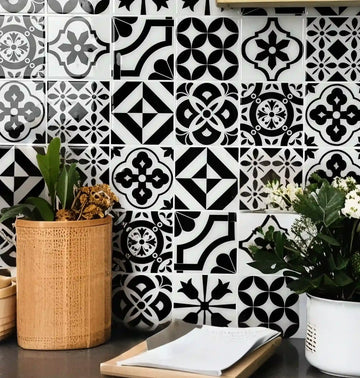
Wenn Sie eine besonders stilvolle Lösung suchen, die starke, lebendige Optik mit einem einfach zu handhabenden, mieterfreundlichen Kleber verbindet, ist unsere Retro-Retreat Kollektion eine ausgezeichnete Wahl. Im Vergleich zu gewöhnlichen, wenig aufregenden Veränderungen in Mietwohnungen bringt sie sofort Vintage-Flair und Persönlichkeit in den Raum – ganz ohne den Aufwand und Schmutz von dauerhaftem Mörtel und Fugenmasse.
Sollte ich den Spritzschutz vor oder nach der Lieferung eines neuen Haushaltsgeräts anbringen?
*Sie ersetzen Ihren alten Herd und fragen sich, ob die Fliesen angebracht werden sollten, bevor das schwere Lieferteam eintrifft?*
*In diesem Abschnitt wird die Reihenfolge der Installation erklärt, damit die Fliesen exakt ausgerichtet werden können, ohne das neue Gerät zu beschädigen oder durch falsch berechnete Abstände Material zu verschwenden.*
Bringen Sie den Spritzschutz unbedingt an, nachdem das alte Gerät entfernt wurde, aber noch bevor das neue Gerät endgültig an seinem vorgesehenen Platz steht. Messen Sie den jetzt freien Ausschnitt zwischen den Schränken aus, um eine perfekte Ausrichtung der Fliesen sicherzustellen. Wenn ein sperriges, 200 Pfund schweres Gerät noch im Weg steht, führt das Anbringen der Fliesen schnell zu einer Reihe von Problemen: schiefe Zuschnitte, umständliches Arbeiten in gebückter Haltung und unzureichender Druck auf den Kleber an den untersten und wichtigsten Stellen entlang der Arbeitsplatte.
Stellen Sie sich präzises Fliesenlegen wie das Anfertigen eines maßgeschneiderten Anzugs vor. Sie würden schließlich auch keine Hose schneidern, ohne vorher die betreffende Person genau auszumessen. Wenn Sie die Fliesen anbringen, bevor die tatsächliche Stellfläche Ihres neuen Herds feststeht, sind räumliche Fehler vorprogrammiert – insbesondere bei den unvorhersehbaren hinteren Leisten moderner Slide-in-Herde.
Interaktives Tool: Entscheidungsbaum zum richtigen Installationszeitpunkt
Behalten Sie Ihren bisherigen Herd oder kaufen Sie einen neuen?
Die Logistik der Gerätelieferung
Lieferteams für Haushaltsgeräte haben vor allem ein Ziel: äußerst schwere Metallgeräte so schnell und sicher wie möglich vom Lieferwagen in Ihr Zuhause zu bringen. Ihre empfindliche Wandvorbereitung oder frisch angebrachten Fliesen gehören nicht zu ihrem Aufgabenbereich – und das sollten sie auch nicht sein. Wenn Sie am Abend vor der Lieferung einen neuen selbstklebenden Spritzschutz anbringen, ist Ärger vorprogrammiert, weil der Kleber noch nicht ausreichend Zeit zum Aushärten hatte.
Wichtiger Grundsatz – Aushärtezeit: Damit ist der erforderliche Zeitraum von 24 bis 48 Stunden gemeint, in dem Haftkleber ihre maximale chemische Verbindung mit dem Untergrund – also der Wand – entwickeln. Während dieser Zeit können sich die Fliesen verschieben, wenn sie angestoßen oder sofort großer Hitze ausgesetzt werden.
Wenn ein in Eile arbeitender Lieferant beim Manövrieren eines 200 Pfund schweren Herds mit einer scharfen Ecke gegen die frisch geflieste Wand stößt, kann er den weichen Vinylbelag tief beschädigen und die noch nicht ausgehärteten Fliesen dauerhaft aus ihrer Ausrichtung verschieben. Damit wären Stunden sorgfältiger Planung und Ausrichtung zunichtegemacht.
Die optimale Reihenfolge der Installation
Halten Sie sich genau an die folgende Reihenfolge, um diese logistischen Herausforderungen zu umgehen und ein professionelles Ergebnis zu erzielen. Abweichungen von diesem Zeitplan führen fast immer zu optischen Beeinträchtigungen oder Schäden.
Unterbrechen Sie die Stromzufuhr sicher am Sicherungskasten oder schließen Sie das Gasventil. Ziehen Sie das alte Gerät vollständig aus der Küche, damit Sie im Arbeitsbereich vollkommen freie Bewegungsmöglichkeiten haben.
Reinigen Sie die nun freiliegende Wand sorgfältig. Hinter alten Herden sammeln sich oft über Jahrzehnte Fettnebel, Staub und Essensspritzer. Normales Spülmittel reicht dafür nicht aus. Verwenden Sie stattdessen einen starken TSP-Entfetter (Trinatriumphosphat) und lassen Sie die Wand vollständig trocknen.
Lassen Sie das Lieferteam den neuen Herd in die Küche bringen, weisen Sie es jedoch an, ihn mit einem Abstand von mindestens einem bis eineinhalb Metern zur Wand stehen zu lassen. Lassen Sie ihn nicht in den Ausschnitt einsetzen.
Zeichnen Sie mithilfe der Montageanleitung des neuen Herds und einer Laserwasserwaage exakte Richtlinien für Breite und Höhe an die Wand. Markieren Sie, wo die Oberkante des Herds sitzen wird.
Stellen Sie sich bequem in den freien Zwischenraum. Ohne sich umständlich über das Kochfeld beugen zu müssen, können Sie Ihre selbstklebende Fliese mit optimalem Druck anbringen und so auf jedem Quadratzentimeter der Klebefläche kräftigen, gleichmäßigen Druck ausüben.
Warten Sie mindestens 24 Stunden, damit der Klebstoff vollständig an der Wand aushärten kann. Schieben Sie das neue Gerät anschließend vorsichtig an seinen endgültigen Platz und prüfen Sie dabei, ob die Abstände beim Zurückschieben eingehalten werden.

Die Fliesen auf das neu gelieferte Gerät abzustimmen, ist ein weiterer wichtiger, aber häufig übersehener Schritt. Das Zusammenspiel von Fliesen und Metalloberfläche bestimmt maßgeblich die Atmosphäre des gesamten Raums. Weiße Subway-Fliesen könnten beispielsweise stark mit einem schiefergrauen Kühlschrank kontrastieren. Optimieren Sie Ihre Gestaltung, indem Sie den passenden Vergleich aus Wir haben Küchenrückwände auf 4 Geräteoberflächen abgestimmtnutzen. Diese hilfreiche Übersicht sorgt für ein stimmiges Gesamtbild – besonders bei anspruchsvollen Oberflächen wie schwarzem Edelstahl, mattem Schiefergrau oder Vintage-Weiß.
Indem Sie den Zeitplan für die Montage genau einhalten, schützen Sie Ihre Investition vor sowohl Beschädigungen als auch unsauberer Ausführung. Sie vermeiden es vollständig, im Einbeinstand um stromführende Steckdosen herum umständliche und gefährliche Schnitte machen zu müssen. Außerdem stellen Sie sicher, dass die Fliesen weit genug reichen, um mögliche spätere Lücken abzudecken, falls sich das Gerät noch setzt. Am wichtigsten ist jedoch: Der Klebstoff haftet auf einer vollkommen sauberen, freien Wand – und die Lebensdauer Ihrer Renovierung wird maximiert.
Häufig gestellte Fragen
Kann ich selbstklebende Fliesen direkt über vorhandenen Keramikfliesen hinter meinem Herd anbringen?
Ja, selbstklebende Fliesen können direkt auf vorhandenen, ebenen Keramikfliesen angebracht werden – eine praktische Abkürzung für eine schnelle Renovierung. Entfetten Sie die Keramikoberfläche jedoch vorher gründlich, da sich durch jahrelangen Kochdampf ein hartnäckiger Film gebildet haben kann. Sind die vorhandenen Fugen tief (breiter als 1/8 inch), sollten Sie sie mit einer leichten Spachtelmasse oder Kitt auffüllen, um eine vollkommen ebene Oberfläche zu schaffen. Andernfalls kann sich die dünne Klebefliese mit der Zeit beim Erwärmen in die tiefen Fugen drücken und dadurch das gleichmäßige Erscheinungsbild der neuen Oberfläche beeinträchtigen.
Wie schütze ich meine selbstklebende Küchenrückwand vor kochendem Wasser und Dampf?
Dampf von kochenden Töpfen kann die Klebeverbindungen stark belasten, da heiße Feuchtigkeit durch die kleinsten Fugen zwischen den Fliesen eindringen kann. Schalten Sie zum Schutz der Rückwand die Dunstabzugshaube immer auf hoher Stufe ein, bevor Sie die Herdplatte zum Wasserkochen einschalten. Gewöhnen Sie sich außerdem an, stark dampfende Speisen nach Möglichkeit auf den vorderen Kochstellen zuzubereiten. So gelangt deutlich weniger direkte Feuchtigkeit auf die Klebefugen an der Rückwand, was die Lebensdauer der Montage verlängern kann.
Kann die Hitze während der Selbstreinigung meines Backofens die Küchenrückwand schmelzen lassen?
Beim Selbstreinigungsprogramm wird der Backofen im Inneren auf extreme Temperaturen erhitzt, um Speisereste zu verbrennen – häufig auf über 800°F (426°C). Dabei wird über die hintere Abluftöffnung eine große Menge stark konzentrierter Hitze direkt auf den unteren Bereich der Küchenrückwand geleitet. Daher sollten Sie einen freistehenden Herd vor dem Start des Selbstreinigungsprogramms immer einige Zentimeter von einer mit selbstklebenden Fliesen versehenen Wand abrücken. So beugen Sie einem Versagen der Klebeverbindung und einer möglichen Verfärbung der Vinyloberfläche vor.
Was kann ich tun, wenn sich die Kanten meiner selbstklebenden Fliesen in der Nähe des Herds lösen?
Wenn sich Kanten durch lokale Temperaturwechsel oder unzureichenden Anfangsdruck lösen, besteht kein Grund zur Panik. Verwenden Sie auf keinen Fall handelsüblichen Flüssig-Sekundenkleber, da dieser das Vinyl schmelzen kann. Greifen Sie stattdessen zu einem speziellen hitzebeständigen Sprühkleber (wie 3M High Strength) oder einem Hochtemperatur-Silikondichtstoff. Geben Sie mit einem Zahnstocher eine winzige Menge unter die angehobene Ecke, drücken Sie sie fest an, um Luftblasen herauszudrücken, und fixieren Sie sie 24 Stunden lang mit blauem Malerkrepp bündig an der Wand. So verbessern Sie die Haftung, ohne die umliegenden Fliesen zu beschädigen.
Abschließende Gedanken
Eine schöne selbstklebende Küchenrückwand direkt hinter einem Herd erfolgreich anzubringen, ist kein Glücksfall. Entscheidend ist vielmehr, die Wärmequelle sorgfältig zu beurteilen, den rückwärtigen Abstand vorausschauend zu berücksichtigen, die Temperaturgrenzen des Produkts zu prüfen und die einzelnen Montageschritte richtig aufeinander abzustimmen.
Mit den oben beschriebenen Kennzahlen wie dem Heat-Gap-Adhesion Risk Score (HGARS) und dem Appliance Fit Continuity Score (AFCS) nehmen Sie der Küchenrenovierung das kostspielige Rätselraten. Ob Sie die besonders engen Toleranzen eines eleganten modernen Induktionsherds mit Einschubmontage berücksichtigen oder die strengen Sicherheitsanforderungen eines leistungsstarken freistehenden Gasherds erfüllen müssen: Fundiertes Wissen über die baulichen Gegebenheiten ist Ihr wichtigstes Werkzeug.
Verlassen Sie sich bei leistungsstarken Haushaltsgeräten nicht auf allgemeine Einrichtungstipps im Pinterest-Stil, die den praktischen Gegebenheiten nicht gerecht werden. Ihre Sicherheit und der Wert Ihres Zuhauses hängen von einer sorgfältigen Umsetzung ab.
Nehmen Sie sich heute vor dem Kauf Ihrer Materialien zehn Minuten Zeit, um das Gerät nach vorne zu ziehen. Messen Sie den Abstand. Berechnen Sie Ihre Risikowerte. Lesen Sie in der Anleitung des Herstellers nach, welche konkreten Abstände vorgeschrieben sind. Nutzen Sie unsere Checkliste für die Planung, um genau die Fliesen auszuwählen, die für Ihre Gegebenheiten geeignet und entsprechend temperaturbeständig sind. Wenn Sie diese Vorgaben sorgfältig berücksichtigen, schaffen Sie eine Küchenrenovierung, die über Jahre hinweg optisch überzeugt, wirtschaftlich sinnvoll ist und sicher bleibt.


Kommentar hinterlassen
Diese Website ist durch hCaptcha geschützt und es gelten die allgemeinen Geschäftsbedingungen und Datenschutzbestimmungen von hCaptcha.