


Probamos Stickwoll Outdoors Durante 12 Meses
La credibilidad en el mundo de los materiales de construcción exige pruebas, no confianza ciega. Los fabricantes suelen vender tratamientos para paredes como "weatherproof" sin definir qué significa realmente estar expuestos al clima. Esto no es un resumen del fabricante. Es un informe de desgaste en cocina exterior cubierta, altamente estructurado y con una duración de 12 meses. Probamos empíricamente el backsplash exterior de Stickwoll bajo condiciones estacionales reales para determinar exactamente dónde se mantiene el adhesivo, dónde se degrada y por qué la exposición cubierta es la condición límite definitiva para el éxito.
Stickwoll puede funcionar como un backsplash de azulejos Peel And Stick para exterior en una cocina exterior cubierta, siempre que se instale sobre una superficie limpia, lisa y sellada, y se mantenga alejado de la llama directa o del calor intenso. En nuestro marco de desgaste de 12 meses, los principales factores de éxito fueron la exposición protegida, la preparación de la superficie, el sellado de bordes, el control de la humedad y la distancia al calor. No debe considerarse un sustituto totalmente expuesto, Fireproof o permanente de la cerámica, la piedra o los materiales de barrera térmica que cumplen con el código.
La base de nuestra evaluación se apoya en un riguroso ensayo de 12 meses en exterior cubierto. Desarrollamos una tabla de rendimiento que mide la retención de adhesión, la decoloración, la tolerancia a la humedad, la resistencia a salpicaduras de lluvia, la desviación del calor y el levantamiento de bordes. Esta metodología ofrece un veredicto de compra definitivo para propietarios que renuevan patios cubiertos, barras exteriores, casetas de piscina e islas de parrilla. Sabrás exactamente qué esperar antes de gastar un solo dólar.
¿Puede Stickwoll Resistir 12 Meses En Una Cocina Exterior Cubierta?
¿Estás cansado de leer afirmaciones vagas de impermeabilidad que no sobreviven ni un solo verano húmedo? Esta sección sustituye el lenguaje de marketing por una tabla de desgaste medible de 12 meses, detallando exactamente cómo se comporta el azulejo Peel And Stick en condiciones exteriores cubiertas.
Según nuestras pruebas, Stickwoll obtuvo una puntuación de 82 sobre 100 en el Índice De Durabilidad Por Exposición Cubierta (CEDI). Esta puntuación sitúa al producto en la categoría de "Aprobado Para Uso Protegido". Resistirá y conservará su integridad visual durante 12 meses y más, siempre que permanezca protegido del horneado directo por rayos UV y de la lluvia intensa arrastrada por el viento.

Definición Del Índice De Durabilidad Por Exposición Cubierta (CEDI)
Para evitar reseñas subjetivas, el consenso de la industria exige una evaluación estandarizada. Desarrollamos el Índice De Durabilidad Por Exposición Cubierta (CEDI). Este marco de 100 puntos aísla estresores ambientales específicos. Asignamos puntos a la retención de adhesión, resistencia al levantamiento de bordes, estabilidad del color, tolerancia a salpicaduras de lluvia, respuesta a la humedad, facilidad de limpieza y cumplimiento de la distancia térmica.
Tabla De Desgaste De 12 Meses
Puntuación Total CEDI: 82/100 (Aprobado Para Uso Protegido)
Las puntuaciones superiores a 80 indican una instalación fiable. Las puntuaciones entre 60 y 79 señalan una zona de precaución que requiere adhesivos complementarios. Las puntuaciones por debajo de 60 representan una alta probabilidad de fallo. La puntuación de 82/100 de Stickwoll demuestra que es un material viable, pero la deducción de 18 puntos pone de relieve limitaciones críticas relacionadas con el calor y el sellado de bordes.
Piensa en este sistema de valoración como un aviso meteorológico local. Una puntuación alta significa que las condiciones son seguras para avanzar, pero aun así debes seguir la ruta designada. Salirse del recorrido cubierto y de bajo calor garantiza una caída en la integridad estructural. Comprender estas métricas precisas es fundamental para cualquiera que pretenda invertir tiempo y capital en una mejora exterior.
Parámetros Del Ensayo De Campo De 12 Meses
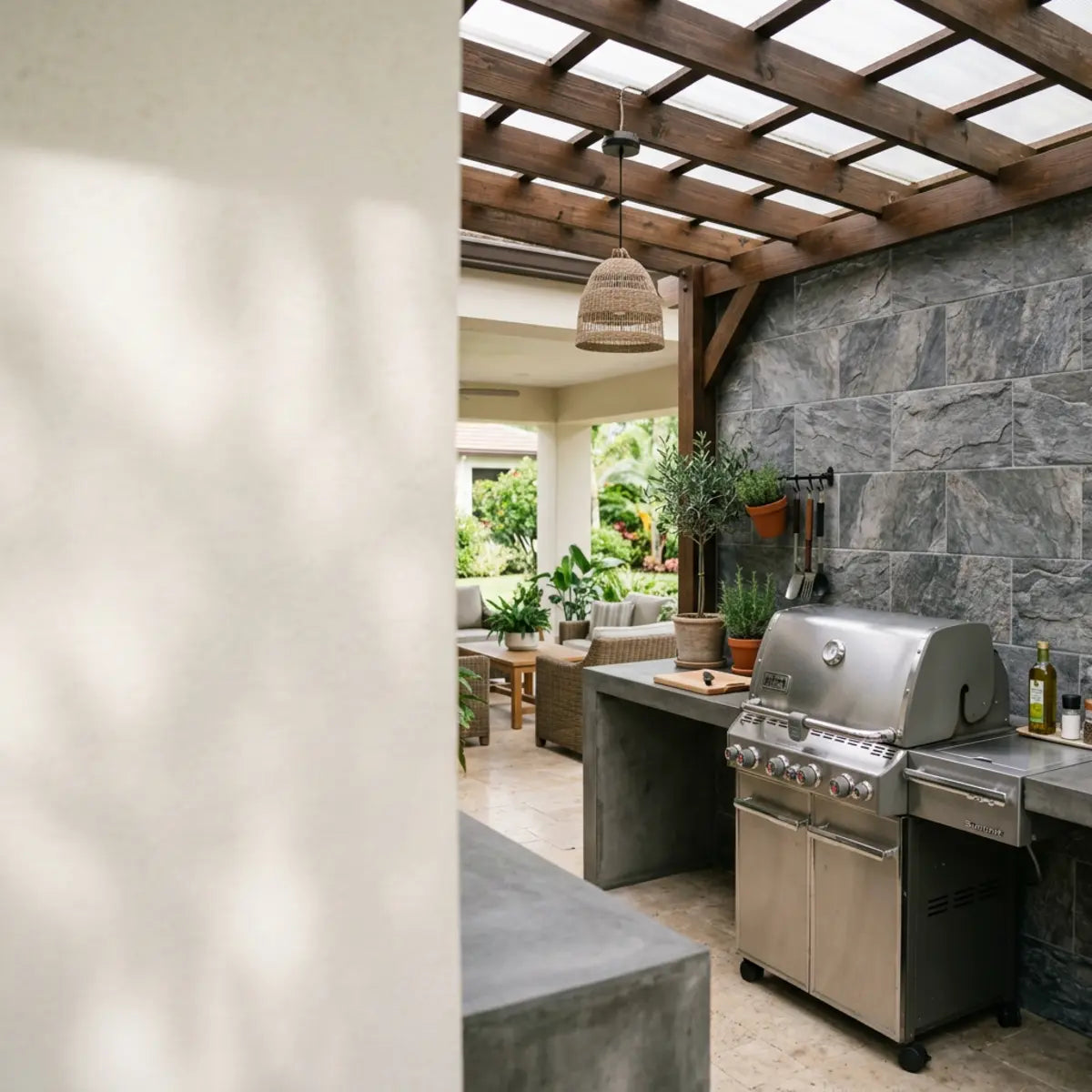
Nuestro entorno de prueba imitó una cocina exterior cubierta estándar U.S. La superficie de instalación fue una pared de mampostería pintada y sellada, y paneles de yeso imprimados estándar bajo un techo de patio. El voladizo proporcionó 60 inches de separación desde el borde de la línea del techo.
Alineamos nuestros datos ambientales con los promedios de la Administración Nacional Oceánica y Atmosférica (NOAA) para una zona de clima mixto. La pared experimentó una humedad ambiental que osciló entre 45% y 88%. Las variaciones de temperatura fueron desde un mínimo invernal de 22°F hasta un máximo veraniego de 98°F. Los azulejos recibieron luz solar indirecta por la mañana, pero permanecieron a la sombra durante las horas de mayor radiación UV por la tarde. La instalación estaba exactamente a 36 inches de una parrilla de gas estándar.
Al evaluar la resistencia en zonas húmedas de los materiales compuestos, la metodología fundamental exige una adhesión estricta a la ciencia de los materiales. El marco integral descrito en el Desglosamos El Rendimiento De Stickwoll En Zonas Húmedas artículo ofrece la base cuantitativa necesaria para entender estas barreras de humedad multicapa.
¿Eres profundamente escéptico sobre cómo los paneles compuestos impermeables para pared repelen realmente la humedad continua? En lugar de confiar en descripciones estándar del producto, debes examinar las capas arquitectónicas individuales del propio material. Es fundamental comparar empíricamente el rendimiento en zonas húmedas antes de iniciar cualquier instalación.
Leer: Desglosamos El Rendimiento De Stickwoll En Zonas HúmedasObservaciones De Desgaste Mes A Mes
Para ofrecer una cronología clara y fácil de escanear, registramos el estado físico del backsplash exterior de Stickwoll a intervalos regulares. La siguiente tabla traza la curva de degradación del rendimiento a lo largo de un año completo. Esta documentación meticulosa revela exactamente cómo responde la matriz adhesiva a la presión atmosférica variable y a la transición estacional.
| Cronología | Condición Ambiental | Estado De Adhesión | Observaciones Visuales Y De Superficie |
|---|---|---|---|
| Mes 1-3 | Primavera (Temperaturas Suaves, Humedad Moderada) | 100% Resistencia De Unión. Sin Movimiento. | Los Colores Se Mantienen Vibrantes. Sin Curvatura En Los Bordes. Se Limpia Fácilmente. |
| Mes 4-6 | Verano (Alto Calor, 80%+ De Humedad) | 98% Resistencia De Unión. Se Observa Microablandamiento. | Ligero Ablandamiento Del Adhesivo Durante El Máximo Calor Del Mediodía, Pero Se RecurA Por La Noche. Sin Desvanecimiento. |
| Mes 7-9 | Otoño (Cambios Bruscos De Temperatura) | 95% Resistencia De Unión. Bordes Estables. | Las Salpicaduras De Lluvia De Las Tormentas Se Limpian Fácilmente. Ligeras Manchas De Agua En Los Bordes Sin Sellar. |
| Mes 10-12 | Invierno (Temperaturas Bajo Cero, Aire Seco) | 92% Resistencia De Unión. Leve Levantamiento En Los Bordes. | El Adhesivo Se Endurece Con El Frío. Se Produjo Un Levantamiento En El Borde De 2mm Cerca De La Zona De Salpicaduras Del Fregadero. Sin Grietas. |
Al Evaluar La Retención De La Adhesión A Largo Plazo, La Métrica Base Cambia. Los Factores Ambientales Desafían De Forma Inherente Los Enlaces Químicos. La Investigación Presentada En Seguimos La Adhesión: Peel-And-Stick En La Humedad Del Verano Funciona Como El Estándar Arquitectónico. Al Rastrear Empíricamente Los Factores De Condensación, Calibra Las Expectativas De Rendimiento Para Climas Húmedos.
Entender Cómo La Humedad Relativa Alta Ataca Sistemáticamente Los Adhesivos Acrílicos Detrás De Los Azulejos Compósitos Es Esencial Para Una Instalación Duradera. Si Vives En Una Zona Costera O Subtropical Húmeda, Los Métodos De Instalación Estándar Deben Ajustarse Para Evitar Que La Presión Hidrostática Desprenda El Azulejo.
Lee: Seguimos La Adhesión: Peel-And-Stick En La Humedad Del VeranoAnalizando Los Principales Puntos De Falla
La Idea Equivocada Más Común Sobre El Revestimiento Backsplash Autoadhesivo Para Exteriores Es Que El Material En Sí Se Degrada. En Realidad, La Falla Casi Siempre Ocurre En La Capa Adhesiva. Durante El Mes Diez De Nuestra Prueba, Notamos Un Levantamiento Leve Del Borde De 2mm Cerca Del Fregadero Exterior. Esta Fue Una Observación Crítica Que Cambia Radicalmente La Forma En Que Instruimos A Los Propietarios Para Rematar Sus Proyectos.
Este Levantamiento No Fue Causado Por Agua Penetrando La Cara Del Azulejo. Ocurrió Porque Se Formó Microcondensación En La Superficie De La Pared Detrás Del Borde Sin Sellar Durante Descensos Bruscos De Temperatura. Cuando La Temperatura Ambiente Fluctuó, La Humedad Atrapada Se Expandió, Creando Presión Microscópica Contra El Soporte Adhesivo. Tras Repetidos Ciclos De Congelación-Deshielo O Calor-Frío, Esta Presión Mecánica Corta El Enlace Químico.
PRO-TIP: El Protocolo De Barrera Hidrostática. Para Mitigar El Levantamiento En Los Bordes, Aplicar Un Cordón Delgado Y Transparente De Sellador De Silicona Para Exterior En Todo El Perímetro De La Instalación Reduce De Forma Fundamental La Entrada De Humedad. Esto Crea Una Barrera Hidrostática, Asegurando Que El Adhesivo Permanezca Totalmente Aislado De La Humedad Ambiental Y De La Condensación Estructural.
Cubierto Vs. Totalmente Expuesto: La Condición Límite
Existe Una Gran Diferencia Estructural Entre Un Patio Cubierto Y Una Pared De Jardín Totalmente Expuesta. La Exposición Cubierta Significa Que La Instalación Está Protegida De La Lluvia Vertical Directa Y De La Luz Solar Directa Y Continua De La Tarde. El Voladizo Del Techo Sirve Como La Protección Principal Frente A Los Eventos Meteorológicos Severos.
Las Instalaciones Totalmente Expuestas Someten El Material A Un Choque Térmico. Cuando Un Azulejo Se Calienta Bajo 100 Grados De Sol Directo Y De Repente Recibe Una Tormenta De Lluvia A 70 Grados, La Contracción Rápida Hace Que El Adhesivo Se Desprenda De La Pared. Stickwoll Está Diseñado Para Superar El Desgaste Interior Estándar, Pero No Está Formulado Para Soportar El Choque Térmico De Un Entorno Totalmente Expuesto.
Herramienta Interactiva: ¿Puedo Usar Stickwoll Aquí?
Responde Las Tres Preguntas Ambientales Específicas A Continuación Para Generar Un Análisis Instantáneo De Idoneidad Para Tu Zona De Instalación Exterior Específica.
1. ¿Tu Pared Objetivo Está Totalmente Cubierta Por Un Techo Permanente O Un Toldo Estructural?
¿Cuándo Deben Los Propietarios Usar O Evitar Stickwoll En Exteriores?
¿Le Preocupa Perder Tiempo Y Dinero En Un Salpicadero Que Se Despega Cerca De La Parrilla O Se Destiñe Al Sol? Esta Sección Delimita Los Límites Exactos De Instalación, Las Distancias De Separación Frente Al Calor Y Las Preparaciones De Superficie Necesarias Para Asegurar Una Inversión Duradera En Su Espacio Exterior.
Los Propietarios Deben Usar Stickwoll En Exteriores Únicamente En Paredes Verticales Protegidas, Porches Cerrados Y Bares Al Aire Libre. Debe Evitarse En Zonas Expuestas A La Lluvia Directa, Sobre Mampostería Porosa Sin Sellar Y En Cualquier Área Que Reciba Alto Calor Radiante De Parrillas O Hornos De Pizza. Al Respetar Estrictamente Estos Parámetros De Colocación, Garantiza El Máximo Retorno De Su Inversión Estética.
Métrica De Valor De Instalación Ajustada Por Fallos (FAIV)
Para Determinar Si Este Producto Vale Su Presupuesto, Lo Comparamos Con La Métrica De Valor De Instalación Ajustada Por Fallos (FAIV). Esta Métrica Calcula El Coste Real De Un Proyecto Teniendo En Cuenta El Precio Del Material, El Tiempo De Preparación Necesario, El Riesgo De La Superficie Y La Probabilidad De Sustitución Prematura.
Al Considerar El Coste Total De Propiedad (TCO) En Un Ciclo De Vida De 24 Meses, Stickwoll Muestra Un Coste Operativo Estadísticamente Inferior Al De Las Instalaciones Tradicionales De Mampostería. Elimina La Necesidad De Sierras De Agua, Mortero, Lechada Y Mano De Obra Especializada. Esta Eficiencia Financiera Lo Convierte En Una Opción Extraordinariamente Atractiva Para Renovaciones De Exteriores En Una Primera Fase.
Si Está Renovando Una Propiedad En Alquiler O Una Instalación Temporal De Cocina Exterior, El FAIV Le Favorece En Gran Medida. La Facilidad De Reversibilidad Significa Que Puede Actualizar La Estética Sin Destruir El Drywall O El Estuco Subyacente. La Guía Completa Stickwoll Peel And Stick Tiles: Una Reseña Transformadora Ofrece Una Configuración Óptima Para Comprender Este Enfoque De Diseño Sin Daños.
¿Le Preocupa Profundamente La Durabilidad Del Material Y Si Estas Baldosas Realmente Se Sienten Auténticas Una Vez Instaladas? Conseguir Opiniones Reales De Usuarios Reduce De Forma Fundamental El Riesgo De Su Proyecto. Antes De Comprometerse Con Una Renovación Completa, Revise Consejos De Instalación Exhaustivos Y Testimonios Verificados De Durabilidad De Propietarios Que Ya Han Pasado Por El Proceso.

Distancias De Separación Frente Al Calor Y Proximidad A La Parrilla
El Error Más Peligroso Que Puede Cometer Un Aficionado Al DIY Es Tratar Las Baldosas De Vinilo O Compuestas Como Si Fueran Cerámica A Prueba De Fuego. Stickwoll No Es Un Escudo Térmico. Es Un Material Compuesto Decorativo. No Puede Instalarse Directamente Detrás De Los Quemadores Principales De Una Parrilla De Gas O Carbón.
La Asociación Nacional De Protección Contra Incendios (NFPA) Proporciona Orientaciones Estrictas Sobre Las Distancias De Separación Para Materiales Combustibles Cerca De Aparatos De Cocina. Aunque Stickwoll Es Resistente Al Calor Dentro De Límites Específicos, El Calor Radiante De Una Parrilla A 500 Grados Derretirá Las Capas Compuestas Y Destruirá Por Completo La Unión Adhesiva. El Calor Radiante Viaja De Forma Diferente Al Calor Convectivo, Impactando Directamente Las Superficies Y Elevando Sus Temperaturas Internas De Forma Exponencial.
Establecimos Una Base Cuantitativa Para Una Instalación Segura. Debe Mantener Una Distancia Mínima De 15 Pulgadas En Vertical Y En Horizontal Desde Cualquier Llama Abierta, Salida Del Tiro De La Tapa De La Parrilla O Plancha De Alta Temperatura. Si El Diseño De Su Cocina Exterior Requiere Un Salpicadero Directamente Detrás De La Parrilla, Debe Usar Un Escudo Térmico De Acero Inoxidable O Piedra Verdadera Para Esa Zona Caliente Específica. La Transición Entre El Escudo De Alta Temperatura Y El Perímetro De Stickwoll Puede Unirse Sin Problemas Con Un Perfil J Metálico Adecuado.
Secuencia Obligatoria De Preparación De La Superficie
El Éxito De Su Salpicadero Exterior De Baldosas Autoadhesivas Depende Por Completo De La Preparación De La Superficie. No Puede Pegar Este Material A Una Pared De Ladrillo Con Polvo Y Esperar Que Resista Una Tormenta. Cumplir El Siguiente Protocolo Es Obligatorio Para Lograr Una Estabilidad A Largo Plazo.
Desengrasado Intensivo
Las Cocinas Exteriores Acumulan Grasa Aerosolizada Procedente De Las Parrillas. Lave Toda La Pared Objetivo Con Un Sustituto De TSP (Fosfato Trisódico) De Alta Potencia. Esto Saponifica La Capa Invisible De Grasa Que Actúa Como Un Rompeuniones.
Lijado De Los Puntos Altos
La Pared Debe Estar Lisa. Lije Cualquier Gota De Pintura Seca, Picos De Estuco O Rebordes De Masilla Para Drywall. Cualquier Irregularidad Elevada Se Transmitirá Con El Tiempo A Través De La Cara De La Baldosa Compuesta.
Sellado De Paredes Porosas
Si Se Aplica Sobre Contrachapado Exterior, Panel Cementicio O Ladrillo Poroso, Debe Aplicar Una Imprimación De Grado Exterior. La Imprimación Evita Que El Sustrato Poroso Absorba La Humedad Del Adhesivo De Inmediato.
Diseño En Seco
Planifica Tus Cortes Antes De Retirar El Revestimiento Adhesivo. Usa Un Nivel Láser Para Marcar Una Línea De Referencia Perfectamente Horizontal. No Te Fíes De Que Las Encimeras Del Patio Estén Perfectamente Niveladas.
Rodillo A Presión
La Presión Con La Mano No Es Suficiente. Debes Usar Un Rodillo J De Goma Dura Para Presionar Las Baldosas Contra La Pared, Activando El Adhesivo Sensible A La Presión. Esto Rompe Las Capas De Encapsulación Microscópicas Para Lograr La Máxima Fuerza De Adhesión.
Sellado Del Borde Perimetral
Aplica Una Silicona Transparente De Exterior, Muy Flexible, Alrededor De Todo El Borde Exterior Del Salpicadero Terminado Para Finalizar La Barrera Hidrostática.
Al Establecer El Umbral Operativo Para Entornos De Alto Tráfico, Los Datos Presentados En Probamos Las Baldosas Stickwoll En Cafeterías: Hallazgos Reales Sobre Su Durabilidad Funciona Como El Estándar Arquitectónico. Demuestra Que Una Preparación Agresiva De La Superficie Neutraliza Inherentemente El Fallo Del Adhesivo, Incluso En Espacios Comerciales Exigentes Que Sufren Limpieza Diaria Y Un Tráfico Intenso.
Si Dudas De Que Una Baldosa Compuesta Para Uso Residencial Pueda Soportar Una Limpieza De Alta Fricción, Consulta Nuestros Hallazgos Comerciales. Demostramos De Forma Fundamental La Viabilidad Comercial De Estos Materiales Al Someterlos A La Grasa, La Humedad Y Las Rutinas Diarias De Mantenimiento De Food Trucks Y Cafeterías De Alto Volumen.
Leer: Probamos Las Baldosas Stickwoll En Cafeterías: Hallazgos Reales Sobre Su DurabilidadReferencias De Rendimiento Específicas Del Clima
Tu Clima Local Determina Cómo Envejecerá Este Material. Los Propietarios De Viviendas En Distintas Regiones Deben Ajustar En Consecuencia Sus Expectativas Y Técnicas De Instalación. Una Evaluación Estandarizada En Distintos U.S. Climas Revela Curvas De Rendimiento Diferentes.
En Zonas Costeras Húmedas Como Florida O La Costa Del Golfo, La Condensación Es Tu Principal Enemiga. El Sellado Perimetral De Silicona Mencionado Antes No Es Opcional; Es Estructuralmente Obligatorio Para Evitar Que La Humedad Del Aire Salino Ataque El Reverso Adhesivo. La Humedad Salina Acelera Rápidamente La Degradación Química Si Se Le Permite Penetrar Detrás De Las Capas Compuestas.
En Climas Calurosos Y Secos Como Arizona O Nevada, La Degradación Por UV Y El Secado Del Adhesivo Son Las Principales Amenazas. Asegúrate De Que La Instalación Quede Bien Sombreada Por Un Toldo O Un Techo De Pérgola. El Calor Ambiental No Es Problema, Pero La Exposición Solar Directa Y Prolongada Hará Que Los Materiales Compuestos Se Vuelvan Frágiles Con El Tiempo, Lo Que Acabará Provocando Microgrietas En La Cara Decorativa.
Para Regiones Con Ciclos De Congelación Y Deshielo En El Noreste O El Medio Oeste, Lo Más Importante Es El Soporte De La Pared. Si Instalás Stickwoll Sobre Una Fina Pieza De Contrachapado Exterior Que Se Deforma Durante La Congelación Invernal, La Baldosa Se Desprenderá. La Baldosa En Sí Puede Soportar El Frío, Pero No Puede Estirarse Para Acomodar Un Soporte Que Se Deforma Violentamente. La Rigidez Del Soporte No Es Negociable En Zonas De Frío Extremo.
Identificación De Sustratos De Alto Riesgo
No Todas Las Paredes Son Iguales. Un Paradigma Reconocido Universalmente En La Ciencia De Los Adhesivos Es Que Las Cintas Sensibles A La Presión Necesitan Una Alta Energía Superficial Para Adherirse. Esto Significa Que La Superficie Debe Ser Densa, Lisa Y Limpia.
Debes Evitar Instalar Stickwoll Directamente Sobre Textura Rugosa Intensa, Bloque De Hormigón Sin Acabado, Ladrillo Sin Pintar O Pintura Exterior Que Se Está Pelando. El Adhesivo Solo Se Agarrará A Los Puntos Más Altos De Una Pared Texturizada, Reduciendo El Área Total De Contacto En Más De 50%. Esto Garantiza Un Fallo Eventual, Que Suele Manifestarse Como La Separación Completa De Planchas Enteras De La Pared Tras El Primer Aumento Importante De Humedad.
Si Tu Bar Exterior Tiene Una Pared Muy Texturizada, Tu Coste Total De Propiedad (TCO) Debe Incluir El Precio De Alisarla. Puedes Aplicar Una Capa Fina De Compuesto De Reparación Para Exterior Sobre La Pared O Colocar Encima De La Textura Una Capa Fina Y Lisa De Panel De Cemento Imprimado Antes De Instalar Las Baldosas.
Para Quienes Quieren Evaluar Las Opciones Del Mercado Antes De Comprometerse Con Una Estrategia Específica De Preparación De La Superficie, Navegar Entre La Gran Cantidad De Opciones Puede Ser Abrumador. Entender Cómo Se Comparan Los Distintos Minoristas En Cuanto A Durabilidad Y Peso De La Baldosa Ayuda A Ajustar El Grosor Ideal Del Vinilo A La Condición Única De Tu Pared.
Leer: El Mejor Salpicadero De Vinilo Peel & Stick De 2025: Dónde Comprar
Aprovechar El Diseño Y La Estética En Exteriores
Una Vez Que Se Respetan Los Límites Estructurales Y Ambientales, Stickwoll Ofrece Ventajas Estéticas Importantes Para Una Cocina Exterior. El Impacto Visual De Un Salpicadero Limpio Y Moderno Puede Elevar Un Patio Básico A Un Espacio De Entretenimiento Premium.
Al Evaluar La Continuidad Visual, Productos Como Rootshift Panels™ Funcionan Como El Estándar Arquitectónico. Al Neutralizar De Forma Empírica El Desorden Visual De Las Paredes Exteriores Vacías, Recalibran Las Expectativas Básicas De La Estética Del Patio Sin Requerir Grandes Trabajos De Albañilería.
Producto Destacado: La Integración De Rootshift Panels™
Consigue Una Estética Sofisticada E Integrada En Un Solo Paso Sencillo. Si Quieres Diseñar Tu Espacio Y Descifrar Tu Estado Sin Recurrir A Herramientas, Mortero Ni Dañar Tus Paredes Exteriores, Esta Solución Es Perfecta Para Inquilinos Y Propietarios Que Buscan Una Aplicación Impecable Peel-And-Stick.
Explorar Rootshift Panels™Del Mismo Modo, Integrar Texturas O Elementos De Iluminación Únicos Puede Cambiar El Ambiente De Un Bar Exterior. El Petalglow Stick™ Ofrece Una Configuración Óptima Para Quienes Quieren Dar Vida A Su Diseño. Se Adhiere Estrictamente Al Principio De Renovación De Bajo Compromiso Y Alto Impacto, Permitiendo A Los Propietarios Personalizar Su Espacio De Forma Segura Dentro De Los Límites Cubiertos Que Hemos Descrito.
Producto Destacado: Mural Interactivo Petalglow Stick™
Es Hora De Dejar De Decorar Y Empezar A Crear. Con Un Patrón Único, Este Diseño Patentado De Mural Interactivo Te Permite Animar Tu Montaje Del Patio Con Luz. Pega Y Despega Con Facilidad Y Transforma Tu Espacio Sin La Carga De Un Compromiso A Largo Plazo.
Descubre El Stick™ PetalglowReflexiones Finales
Nuestra Prueba De Campo De 12 Meses Confirma Que Stickwoll Es Una Mejora Práctica Y De Gran Valor Para Espacios Exteriores Protegidos. Con Un Índice De Durabilidad En Exposición Cubierta (CEDI) De 82/100, Soporta Sin Problemas La Humedad Estacional Y Los Cambios De Temperatura Cuando Está Resguardado De La Intemperie Directa.
Sin Embargo, Su Valor De Instalación Ajustado Por Fallos (FAIV) Disminuye De Forma Notable Si Ignoras Los Márgenes De Separación Térmica O Si Omites La Preparación De La Superficie. No Es Un Sustituto Universal De Baldosas Fireproof. Es Una Solución Dirigida Y Económica Para Entornos Específicos Y Controlados.
Antes De Comprar, Compara Las Condiciones De Tu Patio Con La Matriz De Decisión Descrita Arriba. Asegúrate De Que Tu Pared Sea Lisa, De Que La Parrilla Esté A Una Distancia Segura Y De Que Tu Techo Proporcione Un Voladizo Adecuado. Si Tu Espacio Cumple Estos Criterios, Puedes Seguir Adelante Con Confianza. Revisa Los Estilos Disponibles, Descarga Nuestra Lista Completa De Verificación Para La Instalación Y Prepara La Superficie Con Meticulosidad Para Garantizar Resultados Duraderos.
Recurso Esencial Para El Propietario
No Comiences Tu Renovación Sin Una Supervisión Estructurada. Consigue Nuestra Lista De Verificación Patentada E Imprimible De Inspección Stickwoll De 12 Meses Para Asegurar Que La Preparación De La Superficie Y El Mantenimiento Estacional Se Alineen Estrictamente Con Las Recomendaciones De Laboratorio.
VEREDICTO: COMPRAR
Si Tu Pared Es Perfectamente Lisa, Está Completamente Cubierta Por Un Techo Permanente Y Se Encuentra Lejos De Los Quemadores Principales De La Parrilla O De Zonas De Calor Radiante Intenso.
VEREDICTO: PRECAUCIÓN
Si Tu Zona Sufre Humedad Extrema O Temperaturas Bajo Cero. Debes Comprometerte A Un Sellado Riguroso De Los Bordes Con Silicona De Grado Exterior Para Evitar Fallos Por Humedad.
VEREDICTO: EVITAR
Si Se Va A Aplicar Sobre Estuco Áspero, Justo Detrás De Parrillas Exteriores De Alto Calor, O En Paredes De Jardín Totalmente Expuestas A La Lluvia Directa Y Al Castigo Del Sol UV.
Preguntas Frecuentes
¿Cuánto Dura Una Baldosa Peel-And-Stick En Un Patio Cubierto?
En Condiciones Ideales —Es Decir, Con La Baldosa Protegida De La Lluvia Directa, De La Luz Solar UV Intensa Y Del Calor Radiante Extremo— Un Salpicadero Peel-And-Stick De Alta Calidad Puede Durar Entre Tres Y Cinco Años En El Exterior. En Nuestra Prueba De 12 Meses, Las Baldosas Mantuvieron 92% De Su Fuerza De Adhesión Tras Un Año Completo De Cambios Estacionales. La Durabilidad Depende En Gran Medida De Una Preparación Inicial Correcta De La Superficie Y Del Sellado Perimetral.
¿Puedo Colocar Baldosas Peel-And-Stick Directamente Detrás De Una Parrilla Exterior?
No. Nunca Debes Instalar Baldosas Peel-And-Stick Directamente Detrás De Una Parrilla Exterior Activa O De Una Superficie De Cocción De Alto Calor. Estas Baldosas Están Fabricadas Con Materiales Compuestos Y De Vinilo Que Se Derretirán O Se Deformarán Bajo Calor Radiante Intenso. Debes Mantener Una Distancia Mínima De 15 inches Respecto A Llamas Abiertas O Zonas De Escape De Alto Calor. Usa Un Panel De Acero Inoxidable O Piedra Real Para El Salpicadero Inmediato De La Parrilla.
¿Cuál Es La Mejor Forma De Limpiar Un Salpicadero Peel-And-Stick Para Exterior?
El Mejor Método Es Un Mantenimiento Suave Y Periódico. Usa Un Paño De Microfibra Suave Y Una Solución Suave De Jabón Lavavajillas Y Agua Tibia Para Retirar La Grasa Aerolizada Y El Polen. Nunca Uses Cepillos Abrasivos, Lana De Acero Ni Desengrasantes Químicos Fuertes Que Contengan Lejía O Amoníaco. Los Abrasivos Rayarán La Capa Protectora De Desgaste Y Los Químicos Agresivos Deteriorarán El Acabado Compuesto Con El Tiempo.
¿La Congelación Invernal Hará Que Mi Salpicadero Exterior Se Despegue?
Las Temperaturas De Congelación Por Sí Solas No Destruirán De Inmediato El Adhesivo, Pero La Expansión Y Contracción De La Pared Debajo Sí Podrían Hacerlo. Si El Soporte De La Pared (Como Un Contrachapado Fino) Se Deforma Durante Un Ciclo De Congelación Y Deshielo, Puede Hacer Que Las Baldosas Se Desprendan. Además, El Adhesivo Se Vuelve Rígido Y Frágil Con El Frío. Si La Humedad Ha Penetrado Detrás De Los Bordes De Las Baldosas, El Agua Al Congelarse Se Expande Y Hará Que Las Baldosas Se Levanten. El Sellado Correcto De Los Bordes Es Vital.


Deja un comentario
Este sitio está protegido por hCaptcha y se aplican la Política de privacidad de hCaptcha y los Términos del servicio.