
Limningsforensik: Säkra Lösningsmedel För Gipsväggsrester
Ett deterministiskt, vetenskapligt underbyggt sätt att ta bort envisa vägglim utan att förstöra din färg eller förlora din deposition.
De flesta skador på gipsväggar uppstår i ett ögonblick av frustration. Husägare tar ofta fram en metallskrapa eller häller ett starkt lösningsmedel direkt på väggen innan de analyserar vilket specifikt lim de står inför. Det här reaktiva angreppssättet förstör lätt färgen, river sönder gipsskivans pappersyta och garanterar att hyresdepositionen går förlorad. Den psykologiska påfrestningen vid en flytt, i kombination med den plötsliga paniken av att se en vägg helt vanställd av envisa, sega limrester, driver många välmenande DIY:are in i en destruktiv spiral. I ett desperat försök att rengöra ytan använder de aggressiva kemikalier vid midnatt i hopp om ett mirakel, bara för att vakna upp till permanent fläckiga, uppsvällda och komprometterade väggar. Vi måste omforma hela detta beslutsunderlag kring ett strikt Väggskade-Riskindex i stället för att bara söka den starkaste, snabbast verkande kemikalien som finns på järnaffärens hylla.
Det säkraste sättet att ta bort envisa peel-and-stick-rester från gipsvägg är att börja med kontrollerad värme, en plastskrapa och en mild tvållösning. Du bör bara gå vidare till lågrisklösningsmedel, som 70% isopropylalkohol eller små mängder citrusbaserad limborttagare, efter att ha gjort ett noggrant, vetenskapligt korrekt punktprov. Undvik aceton, lacknaftatunnare, aggressiv slipning med grovt slippapper och helt genomdränkta appliceringar. Dessa aggressiva metoder kan mjuka upp det underliggande färgskiktet, missfärga den porösa pappersytan på gipsväggen eller skapa omfattande spacklings-, slip- och strukturarbete som kräver en professionell hantverkare. I slutändan är det absolut bästa lösningsmedlet det som tar bort limmet samtidigt som det helt bevarar gipspappret, färgens vidhäftning och möjligheten att måla om.
För att lyckas med denna känsliga kemiska process måste du först diagnostisera restens specifika karaktär innan du väljer produkt. Lim förändras över tid; de oxiderar, kristalliseras eller blir till ogenomträngliga sega lager beroende på sin exponering för omgivningen. Använd alltid den minst aggressiva mekaniska eller kemiska metod som fungerar för just din situation. Till sist måste du noggrant rengöra, neutralisera och försegla ytan innan du applicerar ny färg för att säkerställa långvariga resultat. Att hoppa över dessa neutraliserande steg är den främsta orsaken till misslyckad ommålning i branschen.

Om du hyr bostaden är gränsen mellan "normalt slitage" och "egendomsskada" hårt granskad när gipsväggar bedöms. Hyresvärdar räknar inte avdrag utifrån kostnaden för en färgburk; de räknar utifrån professionella hantverkspriser för spackling, strukturering och ommålning av en hel vägg. Om du råkar riva sönder gipspappret när du tar bort lim, dokumentera skadan omedelbart med fotografier. Innan du försöker med amatörmässiga spackelreparationer — som ofta ser värre ut än själva revan och framhäver skadan — bör du överväga att kontakta din hyresvärd. Öppen kommunikation om mindre skador leder ofta till lägre avgifter än att försöka dölja ett dåligt utfört lagarbete under färg som inte matchar.
Läs Den Fullständiga Guiden För Hyresgästens BorttagningVad Är Det Säkraste Sättet Att Ta Bort Peel-And-Stick-Lim Från Gipsvägg?
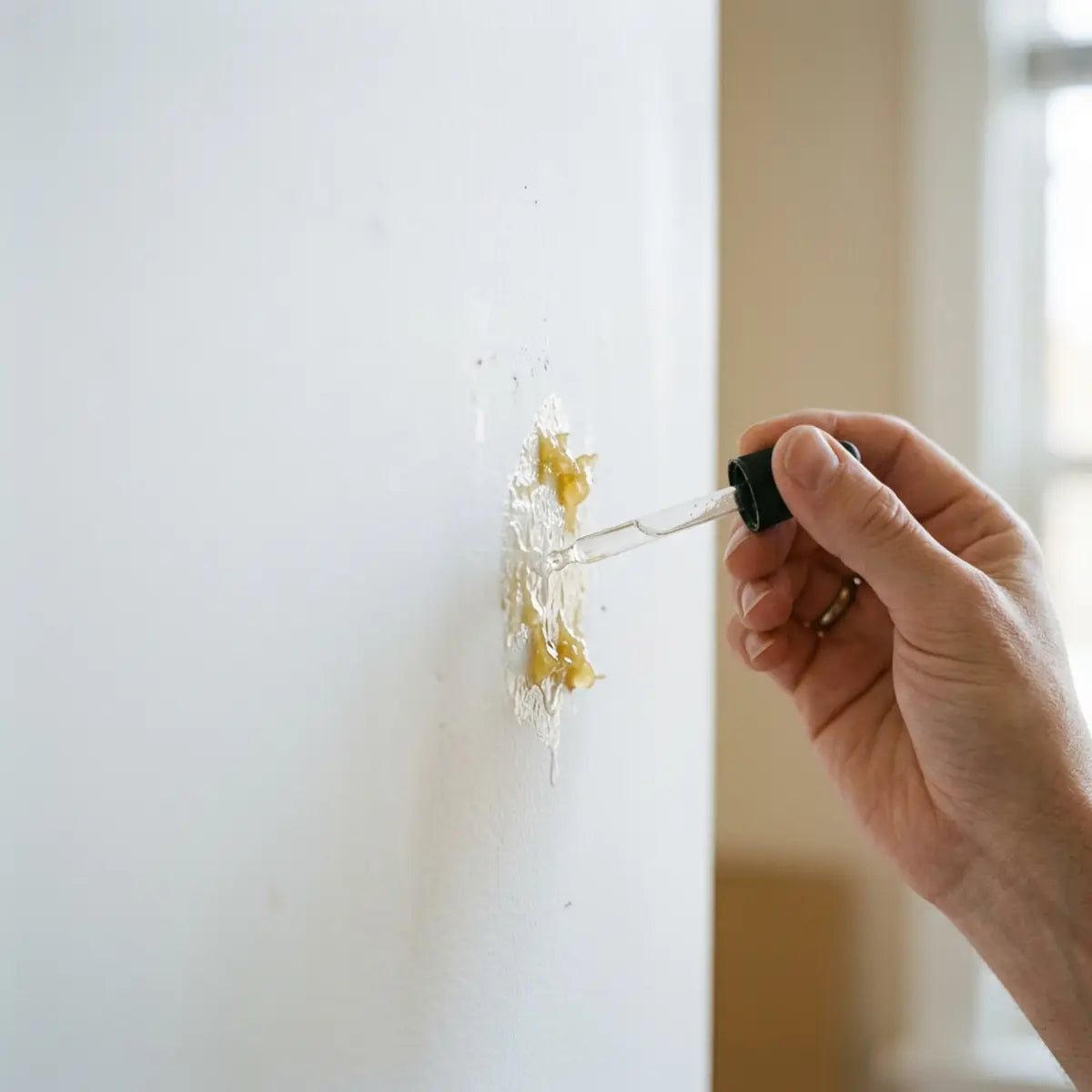
Har du någonsin fruktat att skrapa bort gammalt kakellim ska lämna väggarna som en sönderriven papperspåse? Detta avsnitt beskriver ett specialiserat eskaleringssystem — inspektera, värm, testa och applicera mikrodoser av säkra lösningsmedel — så att du kan ta bort rester utan att offra din deposition eller gipsväggens integritet.
När man bedömer den totala påverkan av limborttagning på inomhusväggar kräver den grundläggande metodiken strikt efterlevnad av ett Väggskade-Riskindex (WDRI). WDRI är ett rankat mått som kombinerar risk för rivning av gipspapper, risk för att färgen mjuknar, risk för kontaminering av rester, exponering för flyktiga organiska föreningar (VOC) samt den övergripande påverkan på möjligheten att måla om. Genom att använda detta kvantitativa index flyttar vi berättelsen från en kaotisk, panikartad städning till ett kontrollerat, arkitektoniskt bevarandearbete. Gipsväggar är i grunden ömtåliga; de består i praktiken av en kärna av kritaktigt gipsdamm mellan tjockt kraftpapper. Det tunna lagret av latex- eller akrylfärg är den enda barriären som skyddar detta känsliga papper från de katastrofala effekterna av flytande lösningsmedel.
Genom att empiriskt neutralisera slumpmässigt gissande ger WDRI en standardiserad bedömning för både DIY:are och hantverkare. Branschens samstämmighet slår fast att mekaniska skador på gipsskivor skapar exponentiellt mycket dyrare reparationsarbete än kemiska fläckar. Därför måste din borttagningsstrategi prioritera fysisk bevaring av väggen framför allt annat. Ett enda jack från en stålskrapa kan kräva tre separata lager fogmassa, timmar av torktid, noggrann slipning, specialanpassad grundmålning och exakt färgmatchad målning för att rättas till.
Förebygg Problemet Innan Det Börjar
Komplexiteten i att ta bort envisa vägglim kan till stor del undvikas genom att förstå rätt appliceringsteknik från början. Många limfästen blir alltför aggressiva eftersom väggen inte förbereddes ordentligt, eller för att fel typ av tillfällig kakelprodukt tvingades på en inkompatibel glansnivå i färgen. Att förstå livscykeln för peel-and-stick-material är avgörande för alla hyresgäster som fruktar att förlora sin deposition. För att verkligen bemästra livscykeln för din väggdekoration och säkerställa att du använder bästa praxis från dag ett, rekommenderar vi varmt att du utforskar vårt omfattande grundprotokoll. Upptäck de exakta hyresgästvänliga metoderna för sömlös applicering och skadefri borttagning genom att läsa vår dedikerade guide om Hur Man Installerar Och Tar Bort Stickwoll Tiles Utan Att Skada Väggar. Denna viktiga läsning fungerar som den ultimata förebyggande åtgärden och säkerställer att dina framtida borttagningsförsök blir enkla.
Diagnostisera Tryckkänsliga Lim (PSA)
Peel-and-stick-produkter bygger vanligtvis på tryckkänsliga lim (PSA). PSA är unikt framtagna polymerer som bildar bindningar när tryck appliceras och förblir permanent klibbiga i rumstemperatur. Till skillnad från härdande lim (som trälim eller epoxi) som genomgår en kemisk omvandling för att härda, förlitar sig PSA på viskoelasticitet — de flyter som en tjock vätska för att fukta väggens mikroskopiska ytstruktur, men motstår skjuvkrafter som en fast substans för att hålla plattan på plats. Det är denna dubbla natur som gör dem så otroligt svåra att ta bort.
Att förstå det aktuella, realtidsbaserade tillståndet hos dina PSA-rester avgör dina nästa steg. Med tiden förändras dessa komplexa viskoelastiska lim beroende på temperaturväxlingar, exponering för ultraviolett ljus, oxidation och den specifika kemiska sammansättningen hos de material de fäster mot.
Interaktiv Diagnostik: Identifiera Ditt Resttillstånd
Välj den beskrivning som bäst matchar limresten som för närvarande sitter fast på din vägg för att se ditt anpassade borttagningsprotokoll.
Basprotokollet: Värme Och Mekanisk Borttagning
Innan du tillsätter ens en droppe vätska till målad gipsskiva måste du fastställa en kvantitativ baslinje med hjälp av termisk påverkan. Värme fungerar som en icke-förstörande fysisk katalysator; den sänker limmets viskositet och förvandlar det från ett halvfast hålltillstånd tillbaka till ett flytande, rinnande tillstånd. Detta tvingar polymererna att släppa sitt mekaniska grepp om färgens mikroskopiska yta, ofta kallad färgens "tand".
För att säkert utföra värmeborttagning, applicera värme med en vanlig hårtork inställd på medelvärme. Håll munstycket exakt sex tum från väggen och för det fram och tillbaka i en kontinuerlig, rytmisk rörelse i exakt fyrtiofem sekunder. Detta specifika avstånd och denna tid kalibrerar yttemperaturen perfekt—det värmer limmet utan att passera tröskeln som skulle få latexfärgen att blåsas upp och lossna från gipsskivans papper.
Använd aldrig en kommersiell värmepistol avsedd för färgborttagning. Industriella värmepistoler kan lätt överstiga 800°F (426°C). Vid dessa temperaturer kommer du snabbt att blåsas upp interiör latexfärg, permanent sveda den råa pappersytan på gipsskivan under, och till och med riskera att förånga de kemiska föreningarna i limmet till giftiga ångor. En hårtork är den maximala termiska gränsen för att bevara väggar inomhus.
Dessutom, när du går över till vätskeprodukter, blötlägg aldrig gipsskivan eller spraya lösningsmedel direkt på den vertikala väggytan. Vätska tar den väg som bjuder minst motstånd. Sprayning skapar okontrollerbara droppar som rinner nerför väggen, tränger in i golvlisterna, sipprar in i undergolvet och permanent förstör det omålade papperet längst ner på gipsskivans kant. Applicera alltid din lösning direkt på din duk.
När limmet är varmt och smidigt, använd en styv spackelspade i plast. En plastkant minskar i sig risken för urgröpning jämfört med styva stålverktyg, som lätt fastnar i osynliga skarvar eller ojämnheter i väggens struktur.
-
Angreppsvinkeln: Håll plastbladet i en låg vinkel på 15 grader mot väggen. Denna spetsiga vinkel säkerställer att bladet glider under resterna istället för att gräva sig ner i färgskiktet.
-
Korta Drag: Tryck i kontrollerade steg om en tum i taget. Långa, kraftfulla tryck ökar drastiskt sannolikheten att fastna i en osynlig färgskarv, ett lagat spikhål eller en gipsskarv, vilket omedelbart river sönder pappret.
-
Rulltekniken: När limmet samlas på bladets kant, använd tummen för att rulla limmet till en sammanhängande boll. Själva bollen blir då ett verktyg; den kan sedan användas för att bestämt dutta och lyfta bort kvarvarande små bitar av lim, eftersom lim naturligt vill fastna vid sig självt mer än vid väggen.
Historiska Underlag: Hantering Av Extrem Skörhet
När man tar hänsyn till bevarandet av äldre hem, hundra år gammal läkt och puts, eller mycket sköra arkitektoniska underlag, blir en standardiserad, empirisk utvärdering otvetydigt avgörande. Den rena mekaniska kraft som används på modern gipsskiva kommer omedelbart att spräcka spröd historisk puts, vilket leder till katastrofalt strukturellt sönderfall som kräver omfattande murarkunskaper för att reparera. Den omfattande analytiska ram som beskrivs i vår specialartikel, Vi Testade Det Säkraste Sättet Att Ta Bort Kakel Från Gammal Puts, ger den kvantitativa baslinje som behövs för att genomföra dessa grundläggande mekaniska metoder utan att orsaka ett kritiskt fel. Om ditt hem byggdes före 1960 är det inte förhandlingsbart att gå igenom dessa uppgifter från en bevaringsexpert innan du rör en skrapa.

Placering Av Förstahandslösningsmedel Genom Väggskaderisksindexet
Om kontrollerad värme och varsam friktion helt misslyckas med att ta bort PSA—vilket ofta händer med kraftigt oxiderade eller djupt inbäddade lim—måste du klokt gå vidare till vätskeprodukter. Gypsum Association (via standarden GA-214) definierar tydligt den extrema skörheten hos papperstäckta gipsskivor. Att utsätta detta grundläggande papperslager för långvarig fukt orsakar omedelbart svullnad, allvarlig delaminering och slutligen strukturellt haveri som äventyrar hela väggsystemet.
Därför måste vätskor användas i mycket kontrollerade, lokaliserade mikroappliceringar. Som betonats, applicera lösningsmedel enbart på en mikrofiberduk och spraya dem aldrig direkt på den vertikala väggytan där gravitationen annars får droppar att tränga in i golvlister och undergolv.
| Lösningsmedelsalternativ | WDRI-Resultat (1=Säkraste, 10=Högst Risk) |
Primär Mekanism | Risk För Gipsskivans Papper | Risk För Uppmjukning Av Färg |
|---|---|---|---|---|
| Varmt Vatten Och Diskmedel | 2 | Ytaktivt Medel (bryter ytspänningen) | Måttlig (om den är kraftigt genomdränkt) | Mycket Låg |
| 70% Isopropylalkohol | 3 | Milt Lösningsmedel (löser upp lätta akrylrester) | Låg (avdunstar snabbt) | Låg Till Måttlig |
| Citrusbaserad Limborttagare | 5 | Naturligt Avfettningsmedel (D-Limonen) | Låg | Måttlig (lämnar en oljig hinna) |
| Mineralsprit | 7 | Petroleumdestillat | Måttlig (fläckar papperet mörkt) | Hög (mjukar upp latexfärg snabbt) |
| Aceton | 10 | Starkt Ketonsolvent | Hög (snabb djup penetration) | Extrem (smälter färg omedelbart) |
Utför alltid ett noggrant punktprov med varje lösningsmedel på ett mycket dolt område, till exempel direkt bakom en golvlist, bakom en stor möbel eller under ett borttaget uttagslock. Applicera kemikalien sparsamt, vänta exakt tre minuter tills lösningsmedlet aktiveras och torka sedan bestämt med en ren vit trasa. Kontrollera noggrant om färg överförs till trasan, om färgskiktet bubblar mikroskopiskt eller om det finns kvarstående obehaglig kemisk lukt. Om något av detta inträffar är lösningsmedlet för aggressivt för just din väggs färgformulering.
Säkra Skraptekniker Och Skydd Av Underlaget
Även med det helt rätta lösningsmedlet kommer dåliga skraptekniker att orsaka katastrofala väggskador på bara några sekunder. Ytskiktet på vanlig modern gipsvägg består i princip av tjockt, poröst hantverkspapper. Det tunna lagret av latex- eller akrylfärg ovanpå fungerar som ett vattentätt skydd. När det skyddande färgskiktet bryts, repas eller får jack suger det råa papperet under upp vätska i skrämmande snabb takt, vilket förvärrar skadan exponentiellt.
Du måste hela tiden vara uppmärksam på visuella "stopptecken" under den fysiska borttagningen. Att upptäcka att underlaget försämras tidigt är skillnaden mellan en snabb avtorkning och att behöva anlita en professionell gipsväggsinstallatör.
Visuell Guide: Tecken På Skadat Underlag
Skydda Ditt Ekonomiska Ansvar
När man utvärderar latexmålas skjuvhållfasthet och kemisk beständighet vid aggressiv borttagning av lim blir den byggnadstekniska och juridiska standarden för hyresgäster drastiskt annorlunda. Att säkerställa att du behåller den skyddande latexbarriären är den allra viktigaste faktorn för att säkra din deposition när du flyttar ut. De specialiserade skyddsprotokoll och juridiska insikter som beskrivs i Hur Du Tar Bort Peel And Stick-Tiles Utan Att Ta Bort Färg: Den Ultimata Guiden För Hyresgäster ger en optimal, testad konfiguration för att skydda underlaget. Genom att studera dessa steg-för-steg-metoder för hyresgäster utrustar du dig med de verktyg och tekniker som behövs för att navigera strikta besiktningar av fastigheten utan problem.
Vilka lösningsmedel bör du använda, undvika och rengöra bort innan ommålning?
Är du förvirrad av motstridiga råd om rödsprit, kraftiga citrusbaserade borttagare och färgförtunning? Detta avsnitt reder ut kemiska lösningsmedel genom att fastställa tydliga beslutsregler, avslöja vilka vanliga hushållskemikalier som kommer att förstöra din färg och beskriva de exakta förberedelsestegen som krävs för en felfri ommålning.
För att garantera helt lyckade efterföljande väggbehandlingar—oavsett om det innebär ett nytt lager grundfärg, ny färg eller ny tapet—måste vi utvärdera varje kemiskt val genom en strikt Repaint Readiness Score (RRS). RRS är ett avancerat mått som definierar sannolikheten för att den rengjorda, skrapade gipsväggen sömlöst ska ta emot ny grundfärg och latexmålning utan att drabbas av katastrofala visuella fel som kratrar, kemiskt genomslag, omfattande flagning eller grova strukturfel.
Statistiskt signifikanta branschdata visar att förbluffande 70% av ommålningsmisslyckanden som inträffar efter borttagning av lim orsakas av mikroskopiska, osynliga kemiska rester som lösningsmedlet självt lämnat efter sig, inte av det ursprungliga limmet. När du inte kemiskt neutraliserar rengöringsmedlet du just applicerade, dömer du ditt nästa målningsarbete att misslyckas innan du ens öppnar burken.
Hantera Lågrisklösningsmedel: Citrusbaserade Borttagare Och Isopropylalkohol
Citrusbaserade limborttagare (som Goo Gone och liknande märken) använder D-Limonen, en naturligt förekommande, mycket kraftfull organisk förening som huvudsakligen utvinns ur citrusskal. Denna förening är otroligt effektiv för att bryta ned de klibbiga, tvärbundna polymerbindningarna i envisa lim. Men även om D-Limonen är mycket effektiv på att lösa upp segt lim, innebär den en unik och ofta förbisedd utmaning vid renovering i hemmet: den är i grunden en olja.
Om du applicerar ett tjockt lager citrusborttagare, skrapar väggen och bara torkar bort den upplösta limsörjan med en torr handduk, blir en osynlig, seg oljefilm kvar och sitter permanent bunden till färgens struktur. Om du sedan försöker rolla på ny vattenbaserad latexgrundfärg eller färg ovanpå denna oljefilm kommer den nya beläggningen snabbt att separera vid kontakt. Detta skapar en gropig, kraterliknande yta över väggen som inom måleribranschen kallas "fisheyeing".
För att matematiskt neutralisera detta oljiga hot måste citrusborttagare alltid följas av ett separat, aggressivt avfettningssteg. Tvätta den behandlade ytan noggrant med en kraftfull blandning av varmt vatten och ett högkvalitativt diskmedel som löser fett (som fungerar som ett ytaktivt ämne). Detta ytaktiva ämne bryter ytspänningen i D-Limonen-oljan och lyfter bort den från väggen. Skölj sedan ytan noggrant med en separat ren, fuktig trasa för att ta bort såpaskummet, och torka väggen helt med forcerad luft eller en mikrofiberhandduk.
Vetenskapen Om Ytneutralisering
När man jämför med vanliga oljiga kolväterester är det av yttersta vikt för projektets framgång att hitta exakt rätt kemiskt neutraliserande medel. Att gissa vilket tvättmedel som ska användas kan helt enkelt sprida oljan ännu längre över väggen. Den standardiserade, evidensbaserade utvärderingen som finns i Vi Testade Avfettningsmedel På Peel And Stick-Bakstycken visar empiriskt vilka specifika milda hushållsrengöringsmedel som lyckas lyfta envisa kolväterester utan att kompromettera, mjuka upp eller ta bort det underliggande känsliga färgskiktet. Vi rekommenderar starkt att du läser detta innan du väljer ditt rengöringsmedel efter borttagning.
Å andra sidan avdunstar 70% isopropylalkohol (IPA) otroligt rent ut i luften utan att lämna några mätbara fysiska rester efter sig. Denna anmärkningsvärda egenskap gör den till ett utmärkt, lågriskval för lätt borttagning av lim och efterarbete. IPA har dock också tydliga begränsningar. Den kan fungera som ett "långsamt lösningsmedel" på latexfärger av lägre kvalitet eller med låg glans. Låt inte alkohol ligga aktivt våt på gipsvägg med platt eller matt färg i mer än sextio sekunder, annars börjar kemikalien mjuka upp bindemedlen i färgen och få pigmentet att följa med direkt på din trasa.
Faran Med Lacknafta Och Aceton På Målade Väggar
Lacknafta—ett tungt, petroleumbaserat lösningsmedel—kan effektivt och brutalt lösa upp tunga industriella mastixmassor och hårt åldrade, kristalliserade bygglim. Men användning på vanlig invändig gipsvägg medför betydande och ofta irreversibla komplikationer.
För det första kräver lacknafta intensiv, aktiv ventilation på grund av utsläpp av mycket skadliga, koncentrerade flyktiga organiska föreningar (VOC). Dessutom har detta lösningsmedel en ökändt lång avdunstningstid. Om lacknafta lyckas tränga in i en mikroskopisk spricka i färgskiktet, ett nålhål eller en hårfin skarv, når den det porösa gipspappret under. Väl där sprids den genom kapillärkraft och lämnar en permanent, mörk, krypande oljefläck som obevekligt blöder igenom flera nya lager dyr grundfärg och färg.
Aceton innebär en extrem, katastrofal risk för målade innerväggar. Även om det marknadsförs hårt för att effektivt ta bort superlim, nagellack och kraftiga epoxier, minskar användningen på gipsvägg i praktiken dina chanser till en ren och prisvärd reparation.
Aceton är en oerhört kraftfull, snabbverkande keton som omedelbart återför vattenbaserad latex och moderna akrylväggfärger till flytande form vid kontakt. Att applicera aceton på en målad vägg kommer snabbt att skapa en utsmetad, klibbig och oåterställbar röra av upplöst färgpigment och lim, och på bara några sekunder helt blottlägga det ömtåliga, råa bruna gipspappret under. Aceton måste strikt och helt undvikas för denna användning. Gör inte ens ett punktprov.
Den Kemiska Nedbrytningskurvan
När man bedömer nedbrytningskurvan för vanliga hushållskemikalier sträcker sig många frustrerade gör-det-självare blint under diskbänken efter starka rengöringsmedel, helt ovetande om de förödande kemiska konsekvenserna. Blekmedel, ammoniak och högalkaliska avfettningsmedel kan reagera kemiskt med lim, skapa giftiga ångor eller ytterligare cementera bindningen. Den omfattande, deterministiska genomgången som dokumenteras i 7 Rengöringsmedel Som Förstör Peel And Stick-Tile-Lim ger tydliga resultat om hur aggressivt dessa oseriösa formuleringar angriper både syntetiska lim och känsliga ytskikt. Sätt dig in i dessa 7 skadliga kemikalier innan du av misstag förstör din gipsväggs yta permanent.
Det Steg-För-Steg-Arbetsflödet För Lösningsmedelshöjning
För att hantera den inneboende komplexiteten och riskerna med kemisk borttagning på ett säkert sätt måste du strikt följa detta högkontrollerade, linjära eskaleringsflöde. Att hoppa över ett steg ökar direkt sannolikheten för permanent väggskada.
Protokollet För Kontrollerad Eskalering
Identifiera Kritiska Felpunkter: När Det Är Dags Att Gå Över Till Väggreparation
Att veta exakt när man ska överge kemisk borttagning är lika viktigt som att välja rätt lösningsmedel från början. Ihärdig, aggressiv skrubbning med slipande pads eller fortsatt blötläggning av ett envist område kommer till slut att orsaka ett stort mekaniskt haveri i gipsväggssystemet.
Om du stöter på djupt inbäddade limspöken—mörka, platta skuggor där limmets kemiska sammansättning permanent har missfärgat eller kemiskt bundit sig till färgskiktet—kommer inget ytlösningsmedel att ta bort dem. Du har då nått den absoluta operativa gränsen för kemisk rengöring. Ytterligare applicering är meningslös och skadlig.
På samma sätt, om du av misstag blottar den bruna pappersytan eller skapar djupa, oåterkalleliga skador under skrapfasen, måste du omedelbart ändra strategi till professionell reparation av gipsvägg. Om du applicerar mer vätskor eller lösningsmedel på rivet, blottat gipspapper kommer den råa gipskärnan att expandera dramatiskt, bubblas upp och smulas sönder utåt, vilket förvandlar ett litet lagningsjobb till en strukturell mardröm.
Ekosäkra Försvar För Hyresgäster
Om du är en hyresgäst som aktivt oroar dig för dessa exakta, förödande felpunkter och den efterföljande förlusten av din säkerhetsdeposition, är en övergång till ekosäkra borttagningsmetoder absolut inte förhandlingsbar. De mycket strukturerade, steg-för-steg-protokoll som fastställs i Depositionens Försvar: Säker Guide För Borttagning Av Stickwoll ger det nödvändiga, hyresgästtestade ramverket för att genomföra en helt skaderfri borttagning. Den här guiden fungerar som din ultimata sköld, skyddar i grunden ditt ekonomiska ansvar och säkerställer en stressfri utflyttningsbesiktning genom att prioritera väggens bevarande framför kemisk snabbhet.
Efter Borttagning: Förberedelse För Ommålning Och Ytbehandling
När limmet slutligen har tagits bort lyckat kan du inte bara rolla ny latexfärg direkt över den rengjorda väggen. Ytans struktur måste justeras om noggrant och metodiskt för att uppnå en felfri, professionell finish. Eventuella kvarvarande mikrotexurer, osynliga kemiska filmer eller små pappersrevor kommer omedelbart att synas genom ett nytt lager färg och se värre ut än det ursprungliga limresterna.
Viktigt är att allt exponerat brunt papper från mindre skrapskador måste förseglas kemiskt innan du försöker spackla. Om du applicerar standard vattenbaserat fogspackel direkt på rått, rivet gipspapper kommer den djupa fukten i spacklet omedelbart att få det skyddande pappret att suga upp vatten och bubbla utåt, vilket skapar en permanent, mycket synlig bula på din nymålade vägg.
Interaktiv Masterchecklista För Förberedelse Av Ommålning
Klicka på varje kritisk förberedelsefas när du slutför den för att garantera en felfri ommålning utan fiskögon.
Väggdekorationens Utveckling: Att Helt Hoppa Över Lim
När man väger in långsiktiga estetiska designmål och minimerar det totala livscykelarbete som krävs för att hålla ett hem fläckfritt, fungerar det som den nya arkitektoniska standarden att helt hoppa över kladdiga, oförutsägbara kemiska limapplikationer. Tiden för skadliga lim är på väg att ta slut. Avancerade hårdvarusystem som Rootshift Panels omdefinierar denna dekorativa kategori helt. Genom att använda patenterade, skadelfria, peel-and-stick-interaktiva designer eliminerar de i grunden den stora smärtpunkten med framtida reparation av gipsvägg, och ger en statistiskt betydande och visuellt slående fördel jämfört med traditionella limmade plattor. Inga verktyg behövs. Ingen skada på dina väggar.
Dessutom, för sofistikerade bostads- eller kommersiella utrymmen som kräver dynamisk, arkitektonisk belysning tillsammans med skadelfria applikationer, Petalglow Stick system erbjuder granskade motsvarigheter med oöverträffad säkerhet för underlaget. De är konstruerade specifikt för att kringgå kraftig kemisk nedbrytning av lim och kalibrerar utan problem det estetiska resultatet för krävande hyresgäster och husägare som vill ha exklusiva, animerade ljuseffekter utan den tunga bördan av intensiv kemisk rengöring senare. Förvandla ditt utrymme utan att binda dig; börja skapa i stället för att bara dekorera.

Slutliga Tankar
Att på ett säkert sätt ta bort lim från drywall kräver tålamod, helt rätt fysiska verktyg och en djup förståelse för ytans kemi. Processen handlar aldrig om att hitta det mest aggressiva, giftiga lösningsmedlet på hyllan i ett ögonblick av ren frustration. Det handlar helt och hållet om att bevara den sköra, sårbara pappersytan på gipsskivan och noggrant upprätthålla den befintliga färgskiktets strukturella integritet.
Följ alltid den etablerade stegringsordningen strikt: börja med termisk påverkan med hjälp av en vanlig hårtork, använd säker skrapning med plastskrapa i grunt vinkel och applicera först milda tvållösningar baserade på tensider. Gå bara vidare till låg-risk-lösningsmedel som isopropylalkohol eller citrusborttagare genom mycket kontrollerade, lokaliserade mikroappliceringar. Genom att respektera väggens strikta kemiska gränser och utföra korrekt ytberedning och neutralisering efter borttagning kan du uppnå en helt ren, ommålningsklar yta utan att drabbas av de höga, smärtsamma kostnaderna för professionell reparation av drywall.
Vanliga Frågor
Kan jag använda vinäger för att ta bort peel-and-stick-lim från drywall?
Vit vinäger är en mild ättiksyra som kan hjälpa till att mjuka upp vissa lätta, vattenbaserade lim, men den är i allmänhet mycket ineffektiv mot de tunga, tvärbundna tryckkänsliga lim (PSA) som används i moderna peel-and-stick-tiles. Dessutom ökar det porösa pappersskiktet på drywall risken för svällning drastiskt om det blötläggs i en vatten- och vinägerlösning. Det är oändligt mycket säkrare att börja med riktad, kontrollerad värme och 70% isopropylalkohol.
Kommer Goo Gone att förstöra mina målade väggar med matt eller flat färg?
Goo Gone och liknande kraftfulla citrusbaserade borttagningsmedel är mycket effektiva för att bryta ner syntetiska lim, men de lämnar efter sig en ihållande, tung oljig rest. På mycket porösa väggar målade med flat eller matt färg kan denna olja tränga djupt in i ytan och lämna en permanent, mörk, våtliknande fläck. Du måste noggrant punkttesta dessa medel och alltid följa upp med en särskild avfettande diskmedelstvätt för att säkert lyfta bort oljan från färgens mikroskopiska struktur.
Hur vet jag om jag har slipat igenom färgen och skadat drywall?
Standard invändig latexfärg ligger ovanpå ett tunt lager kraftigt pappersskikt som omsluter den kritiga gipskärnan. Om ditt sandpapper eller din plastskrapa visar en plötslig luddig, brun eller matt grå fibrig struktur, har du lyckats bryta igenom den skyddande färgen och fysiskt skadat drywallens strukturella pappersyta. Du måste omedelbart sluta applicera vätska och försiktigt försegla det exponerade råa pappret med en specialiserad oljebaserad primer eller PVA-primer innan du applicerar någon vattenbaserad spackelmassa.
Hur länge bör jag vänta efter att ha använt ett lösningsmedel innan jag målar med ny färg?
Efter att ha använt något kemiskt lösningsmedel måste du noggrant tvätta väggen med ett milt rengöringsmedel och skölja den helt med rent vatten. När väggen är helt tvättad, låt drywall torka i minst 24 timmar under normala inomhusförhållanden. Denna viktiga väntetid säkerställer att alla flyktiga organiska föreningar har avdunstat helt och att all kvarvarande fukt har försvunnit, vilket förhindrar framtida katastrofala färgbubblor eller omedelbar separation av primern.


Lämna en kommentar
Denna webbplats är skyddad av hCaptcha och hCaptchas integritetspolicy . Användarvillkor gäller.