



Säkerhetsfokuserad bedömning av väggbeklädnad
Det kan vara fysiskt möjligt att montera självhäftande material över intakt och stabilt asbesthaltigt väggkakel, men det är inte automatiskt säkert eller likvärdigt med inkapsling av asbest.
Du kan eventuellt montera kompatibla självhäftande plattor över intakt och ordentligt fastsatt asbesthaltigt väggkakel utan att rubba det, men först måste hela väggkonstruktionen, produktens krav, rummets förhållanden och lokala regler bedömas.
Dekorativ självhäftande väggbeklädnad utgör inte i sig en specialutformad inkapsling av asbest. På spruckna, lösa, dammiga eller vattenskadade ytor, eller ytor som kräver omfattande förberedelser, ska arbetet avbrytas och fackkunnig hjälp anlitas.
Gör en röd-gul-grön bedömning innan du jämför färger eller priser:

De dolda lagren är minst lika viktiga som de synliga plattorna. Fogar, underlag, spackel, väggskivor, puts och fästmassa kan ha olika sammansättning och skick.
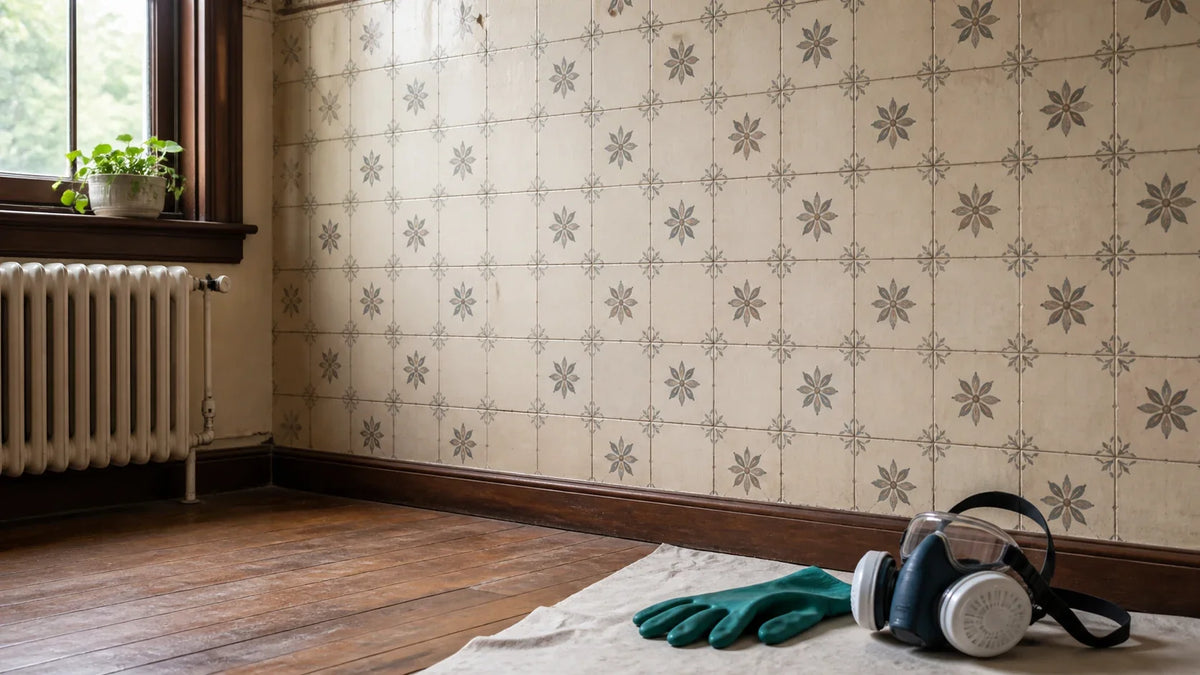
Försök aldrig identifiera asbest utifrån färg, plattornas storlek, mönster, ålder eller utseende. Den U.S. amerikanska miljöskyddsmyndigheten uppger att asbest inte kan identifieras enbart genom att titta på materialet och rekommenderar provtagning av en korrekt utbildad och ackrediterad asbestexpert när testning behövs (EPA, Skydda din familj mot exponering för asbest).
- Ytskikt av kakel: Ytan du kan inspektera.
- Fogar och lagningar: Material som kan spricka, pulveriseras eller variera beroende på när reparationen gjordes.
- Fästmassa: Dold fästmassa som kan skilja sig från själva plattan.
- Underlag: Väggskiva, puts, cementbaserat material eller annan yta.
- Väggens underkonstruktion: Konstruktionen vars fukt och rörelser påverkar alla lager ovanför.
Tre frågor måste hållas isär:
- Fäster överlägget? Detta är en fråga om produktens kompatibilitet och handlar om glasyr, struktur, fukt, värme, tyngdkraft och begränsningar vid rengöring.
- Kan arbetet utföras utan att något rubbas? Detta är en fråga om riskhantering vid asbest och omfattar alla lager samt hela monteringsprocessen.
- Kan systemet räknas som inkapsling? Detta är en fråga om regelverk och produktens prestanda. Man bör inte utgå från att vanliga dekorativa självhäftande plattor fungerar som inkapsling för asbest.
Enligt vår erfarenhet går projekt ofta fel när en husägare bara besvarar den första frågan. En platta kan sitta kvar i flera månader och ändå leda till ett dåligt beslut på lång sikt, eftersom en framtida borttagning kan dra med sig fogar, fästmassa, underlag eller skadat väggmaterial.
När kan självhäftande material över asbesthaltigt väggkakel över huvud taget komma i fråga?
Försöker du fatta ett säkert beslut när den synliga plattan säger nästan ingenting om materialen bakom den?
I det här avsnittet används en röd-gul-grön beslutsmodell för att bedöma skick, risk för påverkan, dolda lager, regelefterlevnad och framtida borttagning innan någon dekorativ produkt övervägs.
En möjlig täckning kan gå vidare till granskning endast när hela väggkonstruktionen är stabil, arbetet inte kräver någon förstörande förberedelse och utestående juridiska frågor eller materialfrågor har klarlagts. Detta innebär inte att installationen är godkänd.
Vad betyder ”bekräftat” och ”förmodat” asbestinnehållande material?
Asbestinnehållande material, eller ACM, är i allmänhet material som innehåller mer än 1% asbest enligt de federala definitioner som används i EPA:s regelverk. Laboratorieanalys krävs för att bekräfta om ett prov från ett byggmaterial innehåller asbest.
Förmodat asbestinnehållande material, ofta förkortat PACM i arbetsmiljöregler, är material som behandlas som asbesthaltigt tills motsatsen har visats enligt det tillämpliga regelverket. OSHA:s formella definition av PACM fokuserar på viss isolering i värme- och installationssystem samt vissa ytmaterial i byggnader uppförda före angivna datum. Den bör inte utan vidare användas som en juridisk beteckning för alla gamla plattor.
För husägare är den praktiska principen enklare: ett misstänkt material som inte har testats ska inte hanteras som om det vore fritt från asbest.
Åldern kan väcka misstanke, men kan inte ge någon diagnos. En installation från 1970-talet kan innehålla asbest i plattorna, fixet, lagmaterialet eller inte i något av dem. En yta som ser nyare ut kan också dölja en äldre väggkonstruktion.
Både EPA och Consumer Product Safety Commission avråder från att störa misstänkta material enbart för att ta reda på vad de består av. Material i gott skick hanteras vanligtvis på plats, medan skadat material bör bedömas av fackperson (CPSC, Asbestos in the Home; EPA:s asbestvägledning).
Varför är väggens skick avgörande för beslutet?
Hela väggplattor och skadade väggplattor innebär inte samma risk för påverkan. Federala bestämmelser definierar lättsmulat asbestmaterial som material som i torrt tillstånd kan smulas sönder, pulveriseras eller omvandlas till pulver med handkraft (40 CFR §61.141).
Vissa elastiska plattor och fix klassificeras normalt som icke-lättsmulande. Det betyder inte att de är ofarliga eller inte kan frigöra fibrer. Kapning, slipning, sandning, nedbrytning eller kraftfull borttagning kan förändra risken för exponering.
En vanlig missuppfattning är att skadat material automatiskt kapslas in om man täcker över det. I praktiken kan trycket från installationen göra sprickor större, medan instängd fukt kan fortsätta att bryta ned väggen utan att det syns.

Hur fungerar ADLRS-bedömningen?
Den Riskpoäng för asbestpåverkan och livscykelrisk, eller ADLRS, är ett bedömningsramverk för det här beslutet. Det är inte en beräkning av medicinsk risk, ett mått på exponering, en laboratoriemetod eller en ersättning för professionell bedömning.
Bedöm varje faktor enligt följande:
- Noll: Skicket är dokumenterat och kan hanteras utan ingrepp.
- Ett: Skicket är oklart och kräver testning, skriftlig bekräftelse eller professionell bedömning.
- Två: Skicket medför en förutsebar risk för störningar eller att konstruktionen inte håller, vilket kräver arbetsstopp.
| ADLRS-faktor | 0: Utgångsläge med lägre risk | 1: Oklart förhållande på gul nivå | 2: Rött förhållande som kräver arbetsstopp |
|---|---|---|---|
| Materialets skick | Sitter fast ordentligt, är oskadat, torrt och stabilt | Skicket kan inte inspekteras fullständigt | Löst, sprucket, pulvrigt, vått eller skadat |
| Förberedelser som krävs | Tillverkaren tillåter endast rengöring utan slipande metoder | Anvisningarna eller begränsningarna för rengöring är oklara | Slipning, fräsning, skrapning eller borttagning av ytmaterial krävs |
| Fästmetod | Ingen borrning, inga skruvar, spikar eller ankare | Detaljer kring kanterna är oklara | Genomträngande fästdon eller skärning i misstänkta lager |
| Osäkerhet kring dolda lager | Lagren är dokumenterade eller formellt hanterade som misstänkta | Fästmassa, baksidesmaterial eller lagningar är fortfarande okända | Dolt material är exponerat, nedbrutet eller riskerar att dras loss |
| Exponeringsmiljö | Torr vägg med stabil temperatur som är lätt att inspektera | Ånga, fett, tillfälliga stänk eller måttlig värme | Läckage, direkt vattenbesprutning, hög värme eller återkommande kondens |
| Regeluppfyllelse | Fastighetsägarens godkännande och tillämpliga regler är bekräftade | Ansvar enligt statliga, kommunala eller hyresrelaterade regler samt entreprenörens skyldigheter är oklara | Arbetet strider mot ett lagkrav, ett tillståndskrav eller ett ägarkrav |
| Framtida borttagning | Planen för borttagning isolerar misstänkta lager | Överlägget fäster direkt, men det är osäkert hur det kommer att lossna | Det förväntade borttagandet skulle skrapa, riva sönder eller delaminera konstruktionen |
Tillämpa resultatet på ett entydigt sätt:
- Rött resultat: Varje poäng på två betyder stopp. Täck inte över varningssignalen i hopp om att överlägget ska stabilisera den.
- Gult resultat: Varje poäng på ett betyder att problemet måste åtgärdas före köp eller installation.
- Grönt resultat: Om alla faktorer får noll kan du gå vidare med en produktspecifik bedömning. Det bevisar inte att materialet är asbestfritt eller att överlägget är ett reglerat inkapslingssystem.
ADLRS ger framför allt konsekventa bedömningar. Det förhindrar att ett lågt produktpris väger tyngre än ett skadat underlag, en oklar regel eller kostsamma problem vid framtida borttagning.
ADLRS – självbedömning
Välj det mest korrekta svaret för varje faktor. Den här kontrollen hänvisar osäkerhet till vidare bedömning; den fastslår inte att en vägg är asbestfri eller säker.
Är riskhantering utan att ta bort materialet samma sak som att täcka kaklet?
Nej. Riskhantering utan att ta bort materialet innebär att riskerna hanteras medan materialet lämnas kvar, med stöd av dokumentation, regelbundna kontroller, begränsad åtkomst, underhållsrutiner och en åtgärdsplan om materialets skick förändras.
En dekorativ täckning kan bli en del av riskhanteringen utan att materialet tas bort, men den kan också försvåra inspektioner. Om en läcka uppstår bakom täckningen kan dolda skador förvärras tills skarvarna börjar lossna eller väggen mjuknar.
En användbar dokumentation för riskhanteringen innehåller:
- Platsöversikt: Identifiera varje vägg och avgränsning som innehåller bekräftat eller misstänkt material.
- Datummärkta foton: Dokumentera befintliga sprickor, genomföringar, kanter, fogar, apparater, rörinstallationer och närliggande värmekällor.
- Materialstatus: Anteckna om varje skikt har testats, antagits innehålla asbest eller lämnats oklassificerat.
- Laboratorierapport: Spara dokumentationen över provets spårbarhet samt analysresultaten om provtagning utförs av fackpersonal.
- Uppgifter om täckningen: Dokumentera tillverkare, produkt, parti, installationsdatum, förberedelsemetod och skriftliga anvisningar om kompatibilitet.
- Inspektionsschema: Kontrollera kanter, skarvar, övergångar vid rörinstallationer, områden nära värmekällor och tecken på fukt.
- Viktig information inför framtida arbeten: Ange att borttagning inte får påbörjas innan den underliggande konstruktionen har bedömts på nytt.
Dokumentationen skyddar framtida boende från att tolka täckningen som ett bevis på att den gamla väggen har tagits bort.
Är dekorativ självhäftande väggbeklädnad en godkänd asbestinkapsling?
Vanligt självhäftande väggkakel är en dekorativ täckning, såvida inte tillverkaren tillhandahåller specifik dokumentation som visar att produkten är avsedd, testad och godkänd för den aktuella användningen för asbestkontroll.
Inkapsling innebär vanligtvis att man applicerar ett specialutvecklat material som tränger in i och binder asbestfibrer eller skapar en hållbar skyddande beläggning. Inbyggnad innebär att en lufttät eller på annat sätt skyddande barriär placeras runt materialet. Exakt terminologi och vilka krav som gäller varierar beroende på lokala bestämmelser och projektets typ.
Tryckkänsligt lim – det klibbiga lim som används på många självhäftande produkter – är utvecklat för att fästa ett ytskikt på ett godkänt underlag. Den funktionen visar inte att limmet kontrollerar eller binder asbestfibrer.
Den här skillnaden är viktig vid en framtida försäljning. Att beskriva en dekorativ stänkskiva som ”asbestinkapsling” kan överdriva vad som faktiskt installerats och leda till felaktiga uppgifter i fastighetsdokumentationen.
Använd exakta formuleringar:
- Korrekt beskrivning: ”En dekorativ, icke-penetrerande täckning installerades över intakt misstänkt väggkakel efter en bedömning av materialets skick och produktens lämplighet.”
- Beskrivning utan stöd: ”Asbesten har förseglats permanent och gjorts ofarlig.”
- Nödvändig upplysning: ”Det underliggande kaklet eller limmet finns fortfarande kvar och kan behöva bedömas på nytt innan borrning, borttagning, reparation eller ombyggnad.”
När bör man göra en provtagning eller anlita en fackkunnig bedömare?
Provtagning eller professionell bedömning är lämplig när resultatet kan påverka beslutet och provtagningen kan utföras på ett säkert sätt. Husägaren bör inte bända loss plattor, skrapa bort fix, borra på ett dolt ställe eller samla in damm för att skapa ett prov.
EPA rekommenderar att man anlitar utbildade och ackrediterade asbestexperter för bedömning, provtagning och åtgärdsarbete. Laboratoriets kvalifikationer bör vara anpassade till provtypen och analysmetoden.
National Institute of Standards and Technology ansvarar för National Voluntary Laboratory Accreditation Program för analys av asbestfibrer. NVLAP-ackreditering ger en standardiserad grund för att bedöma laboratoriers kompetens inom programmets tillämpningsområde (NIST NVLAP – analys av asbestfibrer).
Fråga följande innan du anlitar någon:
- Ackrediteringens omfattning: Är inspektören eller projektören ackrediterad enligt delstatens krav för den här typen av arbete?
- Laboratoriets status: Är laboratoriet ackrediterat för den avsedda metoden för analys av bulkmaterial?
- Strategi för olika lager: Kommer plattor, fix, fog, spackel och bakomliggande material att hanteras som separata misstänkta material där det är lämpligt?
- Säkerhetsåtgärder vid provtagning: Hur kommer den fackkunniga personen att förhindra att skräp och fibrer sprids?
- Tolkning: Kommer rapporten att förklara vad som har testats, vad som inte har testats och hur resultaten påverkar den föreslagna täckningen?
- Oberoende: Är bedömaren, där det är praktiskt möjligt, oberoende från företaget som säljer sanerings- eller rivningstjänster?
Ett negativt resultat för de synliga plattorna innebär inte att otestat fix kan avskrivas. Det är ett av de mest allvarliga misstagen vi ser i projekt med äldre väggar.
Vilka regler kan påverka ett bostadsprojekt?
Federal vägledning är bara utgångspunkten. Regler på delstats-, läns- och kommunnivå samt krav på behörighet, avfall, hyresvärdar, arbetsplatser och bygglov kan innebära ytterligare skyldigheter.
EPA:s National Emission Standards for Hazardous Air Pollutants för asbest reglerar vissa rivnings- och renoveringsarbeten. Vissa bostadsbyggnader kan omfattas av undantag från delar av det federala NESHAP-regelverket, medan vissa flerbostadshus, samordnade projekt samt kommersiella eller institutionella projekt kan omfattas (EPA, Asbestos NESHAP).
OSHA:s krav för byggarbete skyddar anställda som kan komma i kontakt med asbest vid renovering, underhåll, rivning och liknande arbeten. En husägares privata gör-det-själv-arbete omfattas inte automatiskt av samma regler som en arbetsgivares arbetsplats, men när en entreprenör anlitas uppstår arbetsmiljökrav (29 CFR §1926.1101).
Kontrollera vilka regler som gäller för det planerade projektdatumet. För arbeten som planeras till eller efter den 26 juli 2026 bör du bekräfta aktuella krav i stället för att enbart förlita dig på en äldre artikel eller ett tidigare bygglov.
Kontrollera följande myndigheter och instanser:
- Delstatligt asbestprogram: Använd EPA:s katalog över delstatliga asbestkontakter för att hitta ansvarig miljö- eller hälsomyndighet.
- Lokalt byggnadskontor: Fråga om det krävs tillstånd för väggbeklädnad, brandskyddsavstånd, VVS-arbeten, uthyrning eller renovering.
- Avfallsmyndighet: Kontrollera om borttagna prov, byggavfall eller framtida rivningsavfall omfattas av särskilda regler för hantering.
- Hyresvärd eller fastighetsförvaltare: Skaffa ett skriftligt godkännande och följ kraven i hyresavtal samt regler för information och underhåll.
- Tillsynsmyndighet för entreprenörer: Kontrollera vilka licenser, utbildningar, försäkringar och asbestspecifika behörigheter som krävs.
En hyresvärd bör inte se hyresgästens samtycke som ett alternativ till en myndighetsprövning. En hyresgäst bör inte täcka över misstänkt material utan skriftligt godkännande och dokumentation för framtida underhållspersonal.
Checklista för att hitta myndigheter och kvalificerade utförare
Markera varje punkt när du har kontrollerat den för din delstat och kommun. Dina framsteg sparas endast under den aktuella sidsessionen.
0 av 6 kontroller slutförda.
Hur bör ett eventuellt täcksystem utvärderas och hanteras?
Även om de gamla plattorna är intakta – kommer den nya ytan att sitta kvar trots tyngdkraft, ånga, fett, värme, rengöring och en eventuell framtida borttagning?
I det här avsnittet utvärderas täckningens hela livscykel med utgångspunkt i icke-invasiv förberedelse, rumsspecifika förhållanden, fogarnas hållbarhet, möjligheten att inspektera ytan, dokumentation och möjligheten att ta bort täckningen.
Ett täcksystem bör utvärderas som en helhet, inte som ett klistermärke. Underlaget, den gamla ytbeläggningen, dolt lim, det nya tryckkänsliga limmet, fogar, kanter, rörgenomföringar, rummets miljö, rengöringsmetod och plan för borttagning påverkar alla resultatet.
Hur bedömer CCRI kompatibiliteten hos en täckning?
The Index för kompatibilitet och reversibilitet vid övertäckning, eller CCRI, är ett deterministiskt bedömningsverktyg baserat på åtta faktorer. Det certifierar inte asbestkontroll och ersätter inte tillverkarens anvisningar.
Tilldela varje faktor följande poäng:
- Noll: Skriftliga belägg stöder den föreslagna användningen utan att misstänkt material behöver störas.
- Ett: Belägg saknas, är motstridiga eller gäller endast under vissa villkor.
- Två: Förhållandet strider mot produktens anvisningar, orsakar störning eller gör en säker hantering under hela livscykeln omöjlig.
| CCRI-faktor | Godkända belägg | Gul osäkerhet | Rött underkännande |
|---|---|---|---|
| Icke-invasiv förberedelse | Rengöringsmetoden är godkänd och icke-slipande | Rengörings- eller förberedelsemetoden är oklar | Slipning, skrapning, borttagning av ytbeläggning eller etsning krävs |
| Vertikal vidhäftning | Produkten är godkänd för vertikala, glaserade underlag eller kakelunderlag | Ett allmänt påstående om ”användning på vägg” saknar information om underlaget | Produkten är endast avsedd för golv eller är inte godkänd för underlaget |
| Fukttålighet | Det specifika rummet och exponeringsområdet är godkända | Påståendet ”vattentät” saknar information om hela konstruktionen | Användning i områden som utsätts direkt för vatten är förbjuden eller så finns det läckor |
| Värmetålighet | Yttemperatur och säkerhetsavstånd uppfyller de angivna gränsvärdena | Temperaturuppgifter saknas | Spis, värmare eller annan apparat överskrider gränsvärdena |
| Skarvarnas täthet | Överlappningar och övergångar är lämpliga för exponeringen | Metoden för tätning av kanterna är oklar | Öppna skarvar släpper in vatten eller fett |
| Rengöringsmöjlighet | Godkända rengöringsmedel kan användas för att skonsamt underhålla ytan | Det nödvändiga rengöringsmedlet har inte kontrollerats | Rengöring kräver starkt lösningsmedel eller slipande behandling |
| Möjlighet till inspektion och livslängd | Kanter och riskområden förblir synliga | Dolda områden saknar en plan för inspektion | Systemet döljer pågående försämring |
| Risk för störning vid borttagning | Dokumenterad borttagning kan avskärma misstänkta skikt | Direkt vidhäftning gör det osäkert hur materialet lossnar | Det förväntas att borttagningen river sönder, skrapar eller skiktar materialet |
Resultatet är enkelt:
- Röd konfiguration: Varje poäng på två underkänner systemet.
- Gul konfiguration: Varje poäng på ett kräver skriftliga anvisningar från tillverkaren, bedömning, tester eller en omarbetad lösning.
- Grön konfiguration: Åtta nollor ger en optimal konfiguration för fortsatt godkännande och dokumentation under hela livscykeln.
CCRI jämförs med tillverkarens tekniska data, EPA:s riktlinjer för störning, CPSC:s råd för hemmet, tillämpliga skyddsåtgärder enligt OSHA och lokala krav. Marknadsföringsuttryck som ”vattentät”, ”avtagbar” eller ”utan skador” räknas inte i sig som tekniska belägg.
Varför skapar glaserade plattor och nivåskillnader i fogarna problem med vidhäftningen?
Glaserad keramik är slät och har låg porositet på ytan. Det kan begränsa det mekaniska grepp som vissa tryckkänsliga lim kan få. Djupa fogar minskar också kontaktytan och kan synas igenom tunna ytskikt.
Vanliga gör-det-själv-råd går ofta ut på att slipa blanka plattor eller fylla ut lågt liggande fogar. Sådana metoder kan vara rimliga på en konstruktion där det har verifierats att asbest saknas, men de kan vara olämpliga när plattor, fogmassa, lagningsmaterial eller fix misstänks innehålla asbest.
Försök inte lösa ett vidhäftningsproblem genom att skapa ett problem med asbeststörning.
Tillverkarens godkännande bör omfatta:
- Exakt underlag: ”Slät vägg” är inte samma sak som glaserade keramiska plattor med försänkta fogar.
- Vertikal montering: Tyngdkraften skapar kontinuerliga krafter som vill dra loss och skjuva materialet, något som golvmonteringar inte utsätts för.
- Ytstruktur: Bekräfta största tillåtna fogdjup, fogbredd och ojämnhet.
- Begränsningar för rengöring: Det godkända rengöringsmedlet måste avlägsna fett utan slipande behandling eller lösningsmedel som är oförenliga med materialet.
- Krav på primer: Om en primer kräver etsning, slipning eller kemiskt aggressiv förbehandling kan arbetet inte längre betraktas som icke-ingripande.
- Förutsättningar för härdning: Kontrollera lägsta temperatur, luftfuktighet, tryck och rekommenderade väntetider.
- Användningstemperatur: Jämför de dokumenterade gränsvärdena med de uppmätta väggförhållandena i närheten av apparater.
Ett litet vidhäftningstest kan hjälpa dig att bedöma produktens kompatibilitet, men först när asbestfrågan och konsekvenserna av eventuell borttagning har utretts. Placera inte en testbit där borttagningen kan dra med sig, flisa eller blottlägga misstänkt material.
Vad skiljer bedömningen av kök, badrum, tvättstugor och teknikrum åt?
Rumsbenämningar säger inte tillräckligt. Bedöm den faktiska exponeringszonen.
| Plats | Huvudsakliga påfrestningar | Vanlig bedömningsstatus | Dokumentation som krävs |
|---|---|---|---|
| Torr köksvägg | Fett, rengöring och måttlig värme | Gult tills kompatibiliteten är dokumenterad | Godkännande för glaserade underlag och kompatibilitet med rengöringsmedel |
| Stänkskydd bakom diskho | Stänk, skarvar och rörläckage | Gult | Godkännande för stänkzoner och tätade övergångar |
| Bakom en spishäll | Värme, säkerhetsavstånd till lågor och fett | Ofta gult eller rött | Säkerhetsavstånd till apparater, brandkrav och temperaturklassning |
| Badrumsvägg vid handfatet | Tillfälliga stänk och luftfuktighet | Gult | Fukttålighet, ventilation och detaljer vid kanterna |
| Vägg i dusch eller vid badkar som utsätts för direkta vattenstrålar | Upprepad väta och vatteninträngning | Rött om inte hela konstruktionen uttryckligen är godkänd | Dokumentation för en vattentät konstruktion – inte bara ett påstående om ytan |
| Stänkskydd i tvättstuga | Vibrationer, tvättmedel, luftfuktighet och slangläckage | Gult | Plan för fukt-, rengöringsmedels- och läckagekontroll |
| Torr källarvägg | Kondens och dold fukt i murverket | Gult | Fuktutredning och stabilt underlag |
| Teknik- eller pannrum | Värme, rör, åtkomst för service och genomföringar | Gul eller röd | Plan för avstånd, åtkomst och montering utan borrning |
”Vattentåliga plattor” gör inte nödvändigtvis väggen vattentät. Vatten kan tränga in genom skarvar, kapade kanter, hörn, eluttag, rörgenomföringar och övergångar.
För att skilja torra områden vid handfatet från områden som utsätts för stänk då och då eller direkt vattenbegjutning innan du väljer ytskikt, använd det kvantitativa ramverket för badrumsväggens zonindelning i Vi kartlade var självhäftande badrumsplattor faktiskt fungerar. Den zonbaserade metoden motverkar i sig den missvisande föreställningen att alla badrumsväggar utsätts för samma påfrestningar.
För en bredare och riskmedveten jämförelse mellan olika rum och underlag, läs Vi testade självhäftande väggplattor i olika rum och på olika underlag. Där används fukt, värme, underlag och risk vid borttagning som standardiserade bedömningskriterier. Det ger ett bättre beslutsunderlag än att välja utifrån utseende eller en generell märkning som ”kök och badrum”.
Kan självhäftande plattor användas nära en spis eller annan värmekälla?
Endast om den exakta produkten, väggens placering, typen av apparat, den uppmätta temperaturen, nödvändiga säkerhetsavstånd och tillämpliga brandregler överensstämmer. Ett allmänt påstående om värmetålighet räcker inte.
Gasbrännare, elektriska värmeelement, ugnar, pannor, torktumlare, varmvattenberedare och synliga rör skapar olika förutsättningar. Värme kan mjuka upp det tryckkänsliga limmet, göra att kanterna lossnar snabbare, missfärga ytskiktet och förändra hur materialet kan tas bort.
Gå igenom följande steg noggrant:
- Identifiera värmekällan: Notera apparatens modell, bränsletyp, ventilationsöppningar, intilliggande reglage och behov av fritt utrymme för service.
- Ta reda på tillverkarens gränsvärden: Be om skriftliga uppgifter om högsta tillåtna driftstemperatur och förbjudna placeringar för den aktuella produkten.
- Kontrollera apparatens anvisningar: Apparatens säkerhetsavstånd går alltid före dekorativa planer.
- Bekräfta lokala krav: Fråga byggnadsnämnden eller brandskyddsmyndigheten om det finns begränsningar för brännbara ytskikt.
- Säkerställ åtkomst för service: Täck aldrig över ventiler, kopplingspunkter, märkskyltar, avstängningsanordningar eller nödvändiga serviceluckor.
- Avstå vid osäkra förhållanden: Om uppgifter om temperatur eller säkerhetsavstånd saknas blir resultatet gult – det är inte ett tillstånd att uppskatta.
Om monteringen kräver att en täcklist borras fast i den misstänkta väggen blir projektet rött enligt ADLRS, även om de dekorativa plattorna på den synliga ytan monteras med lim.
Vilket alternativ för väggbeklädnad innebär lägst risk under hela livslängden?
Svaret beror på det befintliga skicket, de juridiska ramarna, rummet och planerna för framtida renovering. Den initiala kostnaden är i sig ett dåligt mått.
Den totala ägandekostnaden (TCO) bör omfatta professionell bedömning, begränsningar för förberedande arbete, reparationer, inspektioner, informationsskyldighet, risk för vattenskador, arbetskostnad för borttagning, avfallshantering och återställning av den ursprungliga väggen.
| Alternativ | Huvudsaklig funktion | Främsta fördel | Främsta begränsning | Typisk position sett över livscykeln |
|---|---|---|---|---|
| Låt det intakta materialet vara orört | Förvaltning på plats | Undviker störningar vid montering och borttagning | Ingen kosmetisk förändring; kräver övervakning | Ofta det alternativ som orsakar minst störning när skicket är stabilt |
| Dekorativ självhäftande väggbeklädnad | Kosmetiskt överlägg | Snabb visuell uppdatering utan bruk eller fog | Inte automatiskt en inkapsling; direkt vidhäftning kan försvåra borttagningen | Villkorad gul status tills CCRI har godkänts |
| Inkapslingsmedel utvecklat för ändamålet | Fiberbindande eller skyddande behandling | Utvecklat för användning vid asbesthantering | Kräver kompatibelt material, utbildad applicering och myndighetsgranskning | Alternativ för professionell användning eller användning under myndighetskontroll |
| Panel utan genomträngande infästning eller frikopplat överlägg | Skapar ett separerbart ytskikt | Kan minska direktkontakten med limmet och förbättra möjligheten att återställa ytan | Kanter, vikt, skarvar och infästning måste fortfarande planeras | Ofta att föredra när det finns en verifierad metod utan genomträngande infästning |
| Professionell borttagning | Avlägsnar den asbestinnehållande komponenten | Avlägsnar materialet när arbetet är korrekt utfört och dokumenterat | Högre initial kostnad, behov av inneslutning och eventuell återuppbyggnad av väggen | Lämpligt vid skador eller när störningar vid renovering inte går att undvika |
Ett återställbart system förändrar förhållandet mellan kostnad och nytta, eftersom det tar hänsyn till nästa renovering – inte bara till hur ytan ser ut i dag. Den arkitektoniska grundprincipen är att skilja det nya dekorativa skiktet från den misstänkta konstruktionen när det kan göras utan genomföringar, osäkra belastningar eller dold fukt.
Läs om en bevarandeprocess där borttagning prioriteras, den ursprungliga väggen dokumenteras, aggressiv förbehandling undviks, direktkontakt med lim isoleras där det är möjligt, skarvar hanteras och en plan för framtida borttagning lämnas på plats: Så skyddade vi 1930-talets kakel med ett återställbart överlägg. Den behandlar historiskt keramikkakel snarare än att bekräfta asbestsäkerhet, så ADLRS-granskningen måste ändå komma först.

Är avtagbara produkter automatiskt säkra för misstänkt kakel?
Nej. ”Avtagbar” beskriver vanligtvis det förväntade beteendet under vissa förhållanden. Det garanterar inte att produkten kan tas bort utan rester från alla typer av glasyr, fog, beläggning, lagning eller åldrade väggkonstruktioner.
Krafterna vid borttagning kan fördelas ojämnt. Ett överlägg kan lossna enkelt från glaserat kakel men sitta fast i nedsänkta fogar, exponerad fästmassa, spruckna kanter eller lagade partier. Värme som används för att mjuka upp lim kan dessutom vara oförenlig med den tillåtna metoden för asbesthantering.
Om framtida borttagning saknar en dokumenterad, icke-destruktiv metod förblir CCRI gul.
För känsliga ytor, Vi testade det säkraste sättet att ta bort kakel från gammal puts fastställer en kurva för försämrad prestanda baserad på underlagets reaktion och tydliga stoppunkter. Dess bevarandeprincip gäller även här: arbetet ska avbrytas innan motståndet vid borttagningen övergår i skador på underlaget.
Den artikeln är inte en metod för asbestsanering. Om överlägget sitter fast på konstaterat eller misstänkt ACM är det en kvalificerad asbestbedömning som avgör nästa steg.
Hur väljer man en kompatibel produkt?
Välj en produkt först när väggen har klarat ADLRS och det föreslagna systemet har klarat CCRI. Varumärkespåståenden kan inte väga tyngre än ett skadat väggsystem eller kvarstående rättsliga skyldigheter.
Till exempel kan Dual Ceramics övervägas som en möjlig kategori för dekorativa väggplattor. Den presenteras som en självhäftande väggplatta för kök, badrum och fondväggar, med angiven motståndskraft mot fukt och värme. Dessa påståenden visar vilken användningskategori produkten kan vara aktuell för, men utgör inte ett godkännande för inkapsling av asbest eller bevis på att produkten är kompatibel med en viss konstruktion av glaserat kakel och fästmassa.
Vid en standardiserad bedömning krävs fortfarande följande underlag:
- Godkännande av underlaget: Skriftlig bekräftelse för den exakta glaserade, strukturerade eller fogade väggytan.
- Godkännande för exponering: Dokumentation för rummets faktiska förhållanden vad gäller stänk, luftfuktighet, fett och värme.
- Godkännande av förberedelserna: En metod som strikt följer gränserna för icke-slipande behandling.
- Kantutförande: Anvisningar för hörn, skarvar, eluttag, rör och synliga avslut.
- Förutsättningar vid borttagning: Underlag som visar att limmet kan lossas utan skrapning eller utan att delar av underlaget följer med.
- Begränsning avseende asbest: Ett tydligt erkännande av att produkten är dekorativ, om inget annat uttryckligen har dokumenterats.
Den här omformuleringen av måtten förhindrar att ett marknadsföringspåstående om vattentålighet förvandlas till en säkerhetsslutsats utan tillräckligt stöd.
Om en vägg redan har bedömts vara lämplig för vanlig dekorativ installation kan den praktiska ordningsföljden i Så installerar du självhäftande väggplattor utan att orsaka skador hjälpa till att minska onödig belastning på ytan. Installationsanvisningarna ersätter inte en asbestbedömning, dokumentation av produktens kompatibilitet eller ägarens godkännande.
För fondväggar med fokus på design kan du utforska Rootshift Panels först när säkerhets- och underlagskontrollerna är klara. Ett självhäftande format och en positionering med fokus på hyresgäster är estetiska egenskaper och installationsegenskaper – inte bevis på kompatibilitet med misstänkta material eller en garanti för skadefri borttagning.
Vad ska en säker plan för produktens hela livscykel innehålla?
En livscykelplan beskriver vad som händer före installationen, under användningen, efter en läcka och när beklädnaden så småningom tas bort. Utan en sådan plan förs osäkerheten vidare till nästa person.
Skapa en fastighetsdokumentation som innehåller:
- Bedömningsdokumentation: Spara den professionella rapporten, testresultaten, laboratorieinformationen, fotografierna och kartan över väggarna.
- Beslutsdokumentation: Spara de färdigställda tabellerna för ADLRS och CCRI tillsammans med ouppklarade förhållanden och hur de har hanterats.
- Tillverkardokumentation: Spara tekniska data, installationsanvisningar, skriftlig korrespondens, garantivillkor och begränsningar för hur rummet får användas.
- Installationsdokumentation: Dokumentera rengöringsmedel, tryckmetoder, skarvar, lister, datum, produktpartier och eventuella avvikelser.
- Inspektionsdokumentation: Kontrollera åtkomliga kanter och närliggande rör efter installationen, efter läckor och vid regelbundna fastighetsinspektioner.
- Informationsdokumentation: Informera entreprenörer, hyresgäster, köpare och underhållspersonal om att misstänkt eller bekräftat material finns kvar bakom ytbeklädnaden.
- Begränsningar för borttagning: Ange att borrning, kapning, skrapning, uppvärmning eller bortdragning inte får ske innan väggen under materialet har bedömts på nytt.
Det är säkrare att dokumentera uppgifterna än att sätta upp en synlig varning direkt på en färdig köksvägg, men informationen måste fortfarande gå att hitta. Förvara den tillsammans med fastighetsuppgifter, underhållsdokumentation och renoveringshandlingar.
I hyresbostäder bör förvaltningssystemen flagga väggen innan en entreprenör monterar skåp, eluttag, stödhandtag, rör eller fästen för vitvaror. Annars kan ett dekorativt ytskikt göra det alldeles för lätt att glömma bort den gamla konstruktionen.
Vilket är det säkraste slutliga beslutet?
Känner du dig fortfarande osäker på vilket val som är ansvarsfullt, trots uppgifter om vidhäftning, låg kostnad och ett oskadat utseende?
Det slutliga beslutet skiljer mellan fysisk vidhäftning, riskhantering för asbest och verifierad inkapsling. Därefter avgörs nästa steg utifrån röda, gula eller gröna förutsättningar.
Självhäftande plattor ovanpå asbesthaltiga väggplattor kan vara möjliga under vissa förutsättningar, men fysisk vidhäftning är bara ett av flera krav. Konstruktionen under måste förbli stabil under förberedelser, montering, användning, inspektion och framtida borttagning.
Branschens samlade bedömning är att misstänkt material inte ska störas enbart för att genomföra ett kosmetiskt projekt. Dekorativa självhäftande plattor bör inte beskrivas som verifierad asbestinkapsling utan produktspecifika och lokalt godkända belägg.
Använd båda bedömningssystemen:
- ADLRS först: Bedöm skick, förberedelser, infästning, dolda lager, exponeringsmiljö, efterlevnad av regler och framtida ingrepp.
- CCRI därefter: Bedöm vidhäftning på lodräta ytor, fukt, värme, skarvar, rengöringsmöjligheter, inspekterbarhet, livslängd och möjlighet att återställa ytan.
- Röd åtgärd: Avbryt arbetet och kontakta en kvalificerad asbestexpert eller behörig statlig eller lokal myndighet.
- Gul åtgärd: Klargör osäkerheten genom ackrediterad provning, en kvalificerad bedömning, skriftliga anvisningar från tillverkaren, godkännande från fastighetsägaren eller bekräftelse från relevant myndighet.
- Grön åtgärd: Gå igenom de exakta produktanvisningarna, dokumentera väggen, bevara åtkomst för inspektion och skapa en plan för hela livscykeln innan du köper material.
Det säkraste sättet att täcka över asbesthaltiga väggplattor är inte en enskild produkt. Det är en kontrollerad beslutsprocess som i grunden minimerar risken för störning nu och förebygger odokumenterade risker vid nästa reparation.
Vanliga frågor
Vill du ha korta svar på de praktiska frågor som kan uppstå före köp, montering, försäljning eller framtida ombyggnad?
Här får du klarhet kring provning, rengöring, badrum, borrning, upplysningsplikt och vad du ska göra om ett monterat ytskikt börjar släppa.
Kan man täcka över asbesthaltiga väggplattor utan att ta bort dem?
Hoppas du kunna undvika kostnader för borttagning utan att dölja ett tillstånd som kräver professionell bedömning?
Ett ytskikt kan övervägas endast om konstruktionen är intakt, stabil och torr, får hanteras på plats enligt gällande regler och är kompatibel med en verkligt icke-invasiv montering.
Ja, vissa intakta asbesthaltiga material kan hanteras på plats i stället för att tas bort. Det betyder inte att alla metoder för att täcka över dem är säkra eller följer gällande regler.
Avbryt om ytan är skadad eller om monteringen kräver slipning, skrapning, borrning, fräsning, utjämning eller kemisk borttagning. Klargör förekomsten av okänt fix, underlag, exponering i rummet och lokala krav innan du bedömer projektet som genomförbart.
Är självhäftande plattor säkra ovanpå asbesthaltiga plattor?
Verkar en självhäftande produkt utan fogmassa säker bara för att den ser ut att kräva färre verktyg?
Säkerheten beror på hela processen och risken för störning över tid, inte på att murbruk saknas eller att monteringen går snabbt.
Självhäftande plattor är inte automatiskt säkra ovanpå asbesthaltiga plattor. De kan minska vissa monteringsmoment, men tryck vid rengöring, kapning längs kanter, användning av roller, direktkontakt med limmet, framtida bortdragning och dold fukt kan fortfarande innebära risker.
Produkten måste klara både ADLRS och CCRI. Inga påståenden om en dekorativ produkt kan göra sprucket, löst, vått eller pulveriserande material till ett godtagbart underlag.
Bör limmet under asbesthaltiga väggplattor analyseras separat?
Kan de synliga plattorna ge ett negativt provresultat medan limmet bakom dem fortfarande är misstänkt?
Genom att identifiera lagren separat undviker man att ett ofullständigt laboratorieresultat misstas för ett klartecken för hela väggen.
Ofta, ja. Plattor, fix, fogmassa, underlag och spackelmassor kan vara separata material med olika asbestinnehåll.
En kvalificerad inspektör bör utforma provtagningsstrategin. Fastighetsägare bör inte ta bort en platta för att komma åt limmet. Rapporten bör identifiera varje analyserat lager och tydligt ange vilket material som inte har provtagits.
Kan jag rengöra misstänkt asbesthaltiga plattor innan jag monterar ett ytskikt ovanpå?
Kan vanlig rengöring av ytan bli riskfylld om fett eller beläggningar inte går att få bort utan större ansträngning?
Efter den inledande bedömningen av väggens skick bör endast skonsam rengöring som är godkänd av tillverkaren övervägas.
Slipa, skura, borsta med stålborste, skrapa eller högtryckstvätta inte, och använd inga metoder som skadar fogar, kanter, lagningar eller plattor. Torrsopa inte misstänkt damm och använd inte en vanlig hushållsdammsugare för att suga upp skräp.
Om vanlig, skonsam rengöring inte kan ge ett godkänt underlag är lösningen inte att använda mer aggressiva förberedelser. Den föreslagna överläggningen är inte kompatibel med väggen.
Kan jag montera självhäftande stänkskydd ovanpå asbestplattor bakom en spis?
Kommer ett stänkskydd att förbli stabilt och uppfylla kraven nära värme, fett, öppen låga och områden där vitvaror eller apparater servas?
Beslutet kräver skriftligt angivna temperaturgränser, avstånd till apparater, lokala krav och en plan för montering utan att göra hål i underlaget.
Det är möjligt, men väggar intill spisar bör betraktas som ett osäkert eller olämpligt användningsområde tills exakta uppgifter har bekräftats. Kontrollera apparatens bruksanvisning, produktens temperaturgränser vid användning, krav på brandsäkra avstånd och begränsningar för rengöring.
Borra inte fast lister, beslag eller paneler i misstänkt material. Om produkten saknar exakta anvisningar för användning nära värmekällor bör du välja ett annat system eller inhämta kvalificerad rådgivning.
Vad gör jag om ett självhäftande material som redan har monterats ovanpå gamla plattor börjar lossna?
Kan materialet under ytskiktet störas om man trycker på, värmer upp eller drar loss en del som har släppt?
Betrakta oförklarlig lossning som något som kräver inspektion, inte som en vanlig limreparation.
Sluta hantera området. Dra inte tillbaka överläggningen, skrapa inte bort lim, använd inte värmepistol, spruta inte in lim och fäst inget genom materialet med skruv eller spik.
Begränsa åtkomsten om skräp eller skadat material är synligt. Fotografera skicket på säkert avstånd och kontakta en kvalificerad asbestexpert, särskilt om det finns fukt, sprickor, synligt baksidesmaterial eller lösa originalplattor.
Tar en täckning av asbestplattor bort skyldigheten att lämna information om dem?
Kan en ny ytbeklädnad göra det underliggande materialet irrelevant vid en försäljning, uthyrning eller ett besök av en entreprenör?
Korrekt dokumentation bidrar till säkerheten, eftersom den gamla konstruktionen fortfarande finns kvar även när den inte längre syns.
Nej. En täckning tar inte bort det underliggande materialet och innebär inte automatiskt att tillämpliga skyldigheter kring information, underhåll, arbetsmiljö eller renovering upphör.
Spara dokumentation från provtagning, fotografier, monteringsuppgifter, inspektionsanteckningar och begränsningar för borttagning. Reglerna för informationsskyldighet varierar mellan delstater och lokala områden, så fastighetsägare bör kontrollera vilka krav som gäller för deras fastighet och transaktion.
Vem bör jag kontakta innan jag går vidare?
Är du osäker på om du behöver kontakta ett laboratorium, en inspektör, en saneringsentreprenör, en tillverkare eller en myndighet?
Välj kontakt utifrån det som fortfarande är oklart, i stället för att automatiskt anlita en saneringsfirma.
Följ den här ordningen:
- Osäkerhet kring materialet: Kontakta en asbestinspektör med rätt utbildning och ackreditering.
- Laboratorieanalys: Använd ett laboratorium som är ackrediterat för den aktuella metoden för asbestanalys.
- Skadat material: Kontakta en auktoriserad asbestexpert i den utsträckning som krävs enligt lokala regler.
- Osäkerhet kring regelverket: Kontakta delstatens asbestprogram samt den lokala byggnads- eller hälsomyndigheten.
- Osäkerhet kring produkten: Be den aktuella tillverkaren av överläggningen om skriftliga anvisningar.
- Hyresbostad eller förvaltad fastighet: Meddela fastighetsägaren eller förvaltaren innan du vidrör väggen.
- Arbete som leds av en entreprenör: Kontrollera behörighet, asbestutbildning, försäkring och tillämpliga OSHA-rutiner innan arbetet påbörjas.


Lämna en kommentar
Denna webbplats är skyddad av hCaptcha och hCaptchas integritetspolicy . Användarvillkor gäller.