



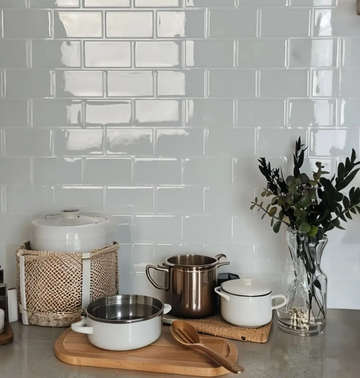
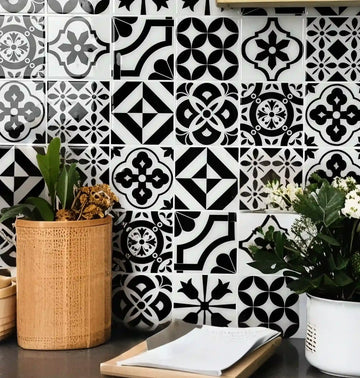
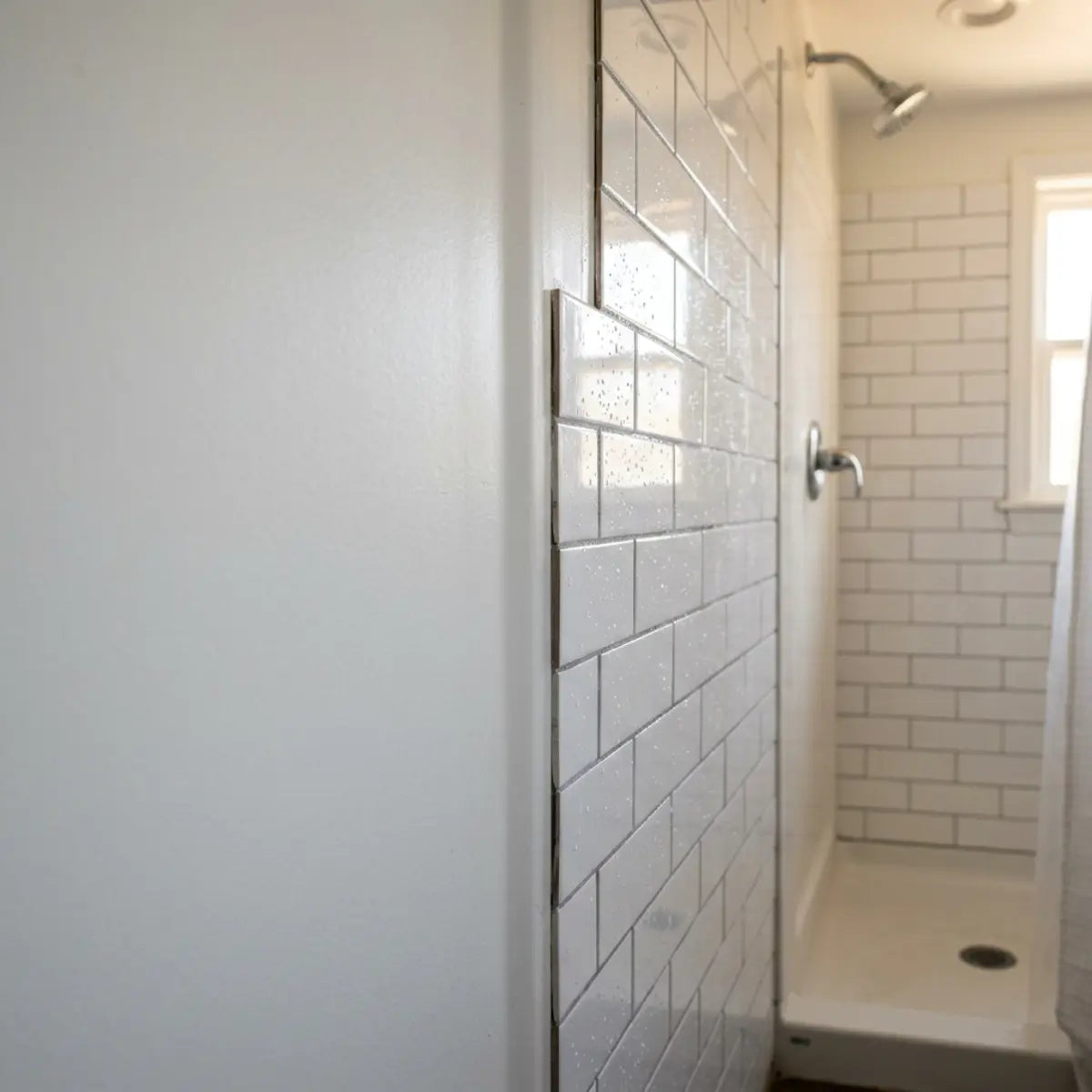
Många guider på nätet visar dramatiska badrumsmakeovers med självhäftande kakel ovanpå slitna badkar. Innan du lägger tid och pengar på det här projektet behöver du en realistisk förståelse för hur materialen faktiskt presterar. Vi hoppade över de vanliga före- och efterbilderna och genomförde en praktisk hållbarhetsstudie. Vårt mål var att besvara en viktig fråga. Det handlar inte om huruvida kaklet sitter kvar i dag, utan om det klarar direkt vattenstråle, skarvar, kurvor, värme, tvålrester och upprepade duschar över tid.
Ja, peel-and-stick tile kan fästa på en ren, lätt slipad glasfiber- eller akrylbeklädnad runt badkar tillfälligt, men det är inte en pålitlig långsiktig yta i zonen för direkt duschspray. I vårt test förbättrade grundlig ytförberedelse den initiala vidhäftningen, men de största hållbarhetsriskerna var exponerade skarvar, kanter som lossnar, fuktinträngning, spänningar i böjda väggar och att limmet mjuknar. Det säkrare omdömet är att använda det bara i områden med lite stänk eller som en tillfällig kosmetisk uppdatering, inte som ett permanent vattentätt duschsystem.
Den här bedömningen fokuserar på hur lim presterar i våta miljöer i verkligheten. Vi går igenom testförhållandena vi använde, vad som höll under belastning och vad som till slut misslyckades. För husägare och hyresgäster som vill ha en pålitlig uppdatering tittar vi också på säkrare alternativ som i grunden undviker dessa fuktrelaterade svagheter.
Utvecklingen Av Den Gör-Det-Själv-Badrumsförvandlingen
Lockelsen med en snabb och billig badrumsförvandling är onekligen stark. Historiskt sett har badrumsrenoveringar varit bland de dyraste och mest störande projekt en husägare kan ta sig an, ofta med behov av specialkunskaper inom VVS, regelstomme och plattsättning. En genomsnittlig total badrumsrenovering kostar lätt över tiotusen dollar, vilket skapar en enorm efterfrågan på budgetvänliga alternativ.
Med högupplöst tryck på vinyl och avancerade tryckkänsliga lim introducerade tillverkarna en produkt som demokratiserade inredning: peel-and-stick tile. Produkten var först avsedd enbart för torra ytor som stänkskydd i kök och accentväggar, men den estetiska framgången gjorde snabbt att konsumenter började testa gränserna. Drivna av virala förvandlingar i sociala medier började ambitiösa DIYers applicera materialen direkt inne i duschutrymmen.
Men övergången från en torr köksvägg till en mycket fuktig duschmiljö med stora temperaturväxlingar förändrar materialets tekniska krav i grunden. Det som fungerar som ett briljant dekorativt lager i en zon med låg luftfuktighet blir en kritisk strukturell svaghet när det dagligen utsätts för liter av trycksatt, kemiskt behandlat varmvatten. Den här klyftan mellan visuell attraktionskraft och byggteknisk prestanda är grunden till vår omfattande testmetod.
Kan Man Sätta Peel-and-Stick Tile Ovanpå En Glasfibervägg Vid Badkar?
Trött på att titta på ett gulnat glasfiberbadkar i byggstandard, men rädd för att slösa pengar på material som kanske lossnar mitt i duschen? I det här avsnittet får du ett tydligt, testat omdöme om huruvida dessa limprodukter klarar vardagens fuktpåfrestningar.
Ja, du kan fysiskt applicera peel-and-stick tile på glasfiber, men branschens samlade bedömning är att det inte ska användas som en primär vattenbarriär i en zon med direkt vattenstråle. För att förstå varför behöver vi utvärdera installationen med ett sammansatt mått.
Riskpoäng För Duschmisslyckande (SFRS)
När vi bedömer den här användningen använder vi Riskpoäng För Duschmisslyckande (SFRS). Måttet består av vidhäftningsstabilitet, exponerade skarvar, risk för fuktinträngning, underlagets kompatibilitet och skador vid borttagning.
Jämfört med traditionellt keramiskt kakel eller vattentäta väggpaneler innebär peel-and-stick ovanpå glasfiber en statistiskt signifikant risk för misslyckande. Den främsta svagheten är inte kakelytan, utan skarvarna. Tryckkänsliga lim är mycket känsliga för den ständiga termiska expansionen och fuktinträngningen som är inneboende i duschmiljöer.
Att Bryta Ned SFRS-Formeln
Riskpoäng För Duschmisslyckande är inte bara kvalitativ; det är ett diagnostiskt verktyg som används för att mäta den exakta sannolikheten för materialnedbrytning. Poängen utvärderar fem kritiska faktorer:
-
•
Vidhäftningsstabilitet (30%): Utvärderar den kemiska bindningen mellan det tryckkänsliga limmet och den underliggande gelcoaten vid varierande luftfuktighet.
-
•
Skarvexponering (25%): Mäter den totala löpmetern av osealeda överlappande skarvar som utsätts för direkt rinnande vatten.
-
•
Risk För Fuktinträngning (20%): Bedömer sannolikheten för att kapillärkraft drar vatten bakom den primära fuktbarriären.
-
•
Underlagskompatibilitet (15%): Analyserar de olika expansionshastigheterna mellan den styva glasfibern och det flexibla vinyelkaklet.
-
•
Risk För Skador Vid Borttagning (10%): Beräknar risken för permanent etsning eller repning av underlaget när de misslyckade materialen så småningom tas bort.
Att Sitta Kvar Jämfört Med Att Fungera Som Ett Duschsäkert System
Det finns en tydlig skillnad mellan att ett lim fäster på en vägg och att samma lim fungerar som en vattentät byggnadslösning.
- Initial Vidhäftning: Ett lim med hög klibbighet fäster lätt på ren glasfiber redan första dagen.
- Systemintegritet: Ett Vattentätt System Måste Stå Emot Stående Vatten, Tåla Dagliga Temperaturväxlingar Och Förhindra Kapillärkraft Vid Varje Fog. Självhäftande Plattor Saknar Sammanlåsande, Vattentäta Fogar.
Peel-and-Stick Tile är minst riskfylld utanför zonen för direkt duschstråle. De säkraste användningsområdena är stänkskydd i gästtoaletter, Dimmiga Tunnelbane-Lika Självhäftande Plattor på väggar runt handfatet, eller vid tillfällig homestaging där luftfuktigheten lätt kan kontrolleras.

Förstå Icke-Porösa Underlag
Fiberglas, Akryl Och Plastbeklädnader Är Släta, Icke-Porösa Underlag.
- Fiberglas: Ofta Belagt Med En Glansig Gelcoat, Vilket Gör Det Mycket Motståndskraftigt Mot Kemisk Bindning.
- Akryl: En Termoplast Som Expanderar Och Krymper Betydligt Med Varmt Vatten, Vilket Belast ar Styva Lim.
- Polystyren (Plast): Ofta Texturerad, Vilket Minskar Ytan Som Limmet På Baksidan Kan Fästa I.
Dessa Icke-Porösa Ytor Utmanar Tryckkänsliga Lim. Eftersom Underlaget Inte Absorberar Limmet, Förlitar Sig Fästet Helt På Ytspänning Och Kemisk Häftkraft. Om Det Fästet Bryts Av Bara En Vattendroppe Börjar Felbenägenheten.
Vetenskapen Bakom Häftning På Icke-Porösa Ytor
För Att Verkligen Förstå Varför Fiberglas Till Slut Avvisar Självhäftande Plattor Måste Vi Titta På Bindningen På Mikroskopisk Nivå. När Du Applicerar Bruk Eller Mastix På Gips eller Cementskiva Absorberas Fukten I Limmet Bokstavligen In I Väggens Porer. När Det Torkar Skapar Det Miljarder Mikroskopiska, Styva, Sammanlåsande Fysiska Förankringar. Det Kallas En Mekanisk Bindning.
Fiberglas Och Akryl Har Ingen Porositet. Ytan Är Praktiskt Taget Glaslik. Därför Måste Peel-and-stick tiles Förlita Sig Helt På En Kemisk Bindning Som Möjliggörs Av Viskoelastiska Polymerer. Dessa Polymerer Beter Sig Både Som En Tjock Vätska (Viskös) Och Som En Elastisk Fast Ämnesform. Även Om De Fäster Hårt Vid Den Släta Ytan I Rumstemperatur Gör Den Höga Termiska Energin Från En Dusch På 105°F Att Polymererna Förskjuts Mot Sin Vätskeform, Vilket Kraftigt Minskar Deras Skjuvhållfasthet Och Gör Att Plattan Kan Glida Eller Rulla Loss Från Väggen.
Påståenden Om Vattentäthet Jämfört Med Vattenresistens
En Vanlig Missuppfattning Är Att Behandla "Vattenresistent" Och "Vattentät" Som Synonymer.
- Vattenresistent Framsida: Framsidan På En Vinylplatta Med Peel-and-stick Tile Står Emot Vatten.
- Sårbara Fogar: De Små Gliporna Mellan Varje Överlappande Plattark Är Inte Förseglade Med Vattentät Fogmassa.
United States Environmental Protection Agency (EPA) Slår Uttryckligen Fast Att Fuktkontroll Är Det Enda Sättet Att Kontrollera Mögeltillväxt Inomhus. När Vatten Smiter Bakom En oförseglad kakelfog, Fastnar Det Mot Det Icke-Porösa Fiberglaset. Det Skapar Ett Idealiskt Mikroklimat För Mögel Och Nedbrytning Av Limmet.
Tillverkarens Råd Och Begränsningar
De Flesta Seriösa Tillverkare Beskriver Tydligt Produktens Begränsningar.
- Installationsanvisningar: Varumärken Som Smart Tiles Och Tic Tac Tiles Avråder Vanligtvis Från Att Installera Deras Vanliga Peel-and-stick-Produkterna I Områden Som Är Nedsänkta I Vatten Eller Utsatta För Direkt, Kontinuerlig Duschstråle.
- Garantin Upphör Att Gälla: Om Du Installerar Dessa Plattor Utanför Deras Angivna Fuktgräns Upphör Vanligtvis All Tillverkningsgaranti Att Gälla.
Läs Alltid Det Specifika Tekniska Databladet För Det Varumärke Du Väljer. Om Tillverkaren Inte Uttryckligen Garanterar Produkten För Direkt Duschstråle, Utgå Från Att Den Så Småningom Kommer Att Ge Efter.
Bekymmer För Hyresgäster Och Hyresvärdar
Om Du Hyr Måste Du Noggrant Bedöma Borttagningsprocessen.
- × Limrester: Kraftiga Bygglim På Premiumplattor Lämnar Stubborna Rester På Fiberglas.
- × Ytsskador: Aggressiv skrapning eller användning av starka kemiska lösningsmedel för att ta bort kvarvarande lim kan permanent etsa eller smälta akryl- och glasfibergelcoat.
- × Brott Mot Hyresavtal: Att förändra en primär vattenbarriär bryter ofta mot hyresavtal och kan kosta dig depositionen. Slipa, grundmåla eller gör inga permanenta förändringar av badkaret utan skriftligt, undertecknat tillstånd från din hyresvärd.
Hur Bör Glasfiber Förberedas Innan Självhäftande Kakels Testas?
Osäker på om en snabb avtorkning räcker, eller om du behöver slipa badkaret och riskera att förlora depositionen? Det här avsnittet går igenom exakt den förberedelsemetod som maximerar vidhäftningen utan att dölja verkligheten kring vattenexponering.
Korrekt förberedelse av glasfiber kräver att all tvålavlagring, kroppsoljor och silikon avlägsnas helt, följt av noggrann avfettning och eventuell lätt slipning. Även om noggrann förberedelse förbättrar den initiala vidhäftningen förvandlar den inte magiskt ett självhäftande klistermärke till ett permanent vattentätt system.
Ytbindningsberedskapspoängen (SBRS)
För att utvärdera förberedelsefasen använder vi Ytbindningsberedskapspoängen (SBRS). Detta mått bedömer renhet, minskad glans, torrhet, planhet, temperatur och limmets kompatibilitet.
Empiriskt visat förlänger en hög SBRS livslängden på den självhäftande bindningen avsevärt. Att försöka applicera kakel på en yta med låg SBRS — en yta med kvarvarande tvålrester eller fukt som fortfarande finns kvar — ger ett omedelbart, deterministiskt resultat: misslyckande inom några dagar.
Rengörings- Och Avfettningsrutiner
Glasfiber- och akrylsarger fungerar som magneter för oljor, vaxer och ytaktiva restprodukter.
- Kemisk Avfettning: Vanliga badrumsrengöringsmedel räcker inte. Använd en ersättning för Tri-Sodium Phosphate (TSP) eller ett kraftigt avfettningsmedel.
- Noggrann Sköljning: Allt rengöringsmedel som blir kvar fungerar som en bindningsbrytare. Skölj väggarna med rent vatten flera gånger.
- Fullständig Torkning: Ytan måste vara helt torr. Använd mikrofiberhanddukar och låt badrummet vädras i minst 24 timmar.
Säkerheten är avgörande under den här fasen. Läs alltid produkternas säkerhetsmärkning. Säkerställ god ventilation genom att öppna fönster och köra frånluftsfläktar. Bär lämplig personlig skyddsutrustning (PPE), inklusive handskar och skyddsglasögon, när du hanterar kemiska avfettningsmedel.
Interaktiv Kontroll Före Installation – Röda Flaggor
Applicera inga material om din dusch inte klarar denna kontroll. Klicka på varje punkt för att verifiera att din dusch är strukturellt stabil innan du försöker göra kosmetiska uppdateringar.
Dilemmat Med Lätt Slipning Och Risker För Hyresgäster
Lätt slipning förändrar i grunden underlaget för att förbättra det mekaniska greppet.
- Mekanisk Vidhäftning: Genom att använda sandpapper med kornstorlek 220 mattas den glansiga gelcoaten lätt, vilket ger limmet mikroskopiska spår att fästa i.
- Risken För Hyresgästen: Slipning går inte att göra ogjord. Om du hyr bostaden betraktas slipning av hyresvärdens badkarsomslutning som skada på egendom. Om du någonsin tar bort kaklet kommer badkaret att se permanent repat och grumligt ut.
Om du äger bostaden och accepterar att detta är en kosmetisk förändring utan återvändo kommer lätt slipning att förbättra din SBRS mätbart.
Neutralisera Silikonbarriären
Ingenting fäster på silikonfogmassa. Inte färg, inte ny fogmassa, och definitivt inte självhäftande kakellim.
- Fullständig Borttagning: Du måste ta bort all befintlig silikon från hörnen och de nedre skarvarna där badkaret möter väggen.
- Kemiska Rester: Även efter skrapning finns osynliga silikonerester kvar. Torka av skarvarna med isopropylalkohol eller en särskild silikonborttagare.
- Undvik Överlappning: Applicera aldrig peel-and-stick tile direkt över en befintlig fogsträng. Klistret kommer att släppa nästan omedelbart.
Förberedelsechecklista Och Utvärderingstabell
Denna standardiserade utvärdering hjälper dig att väga fördelarna med varje förberedelsesteg mot den tid som krävs och de potentiella riskerna för hyresgäster.
| Förberedelsesteg | SBRS-Påverkan | Risknivå För Hyresgäst | Tid Som Krävs | Återställbarhet |
|---|---|---|---|---|
| Grundläggande Tvätt Med Tvål/Vatten | Låg | Ingen | 30 Min | Helt Återställbar |
| Avfettning Med TSP-Ersättning | Hög | Låg (Säker Om Den Sköljs Av) | 1-2 Timmar | Helt Återställbar |
| Borttagning Av Silikontätning | Kritisk | Måttlig (Måste Tätas Om) | 2-3 Timmar | Återställbar |
| Lätt Slipning (220 Korn) | Hög | Extrem (Skada) | 1 Timme | Oåterkallelig |
| Slutlig Avtorkning Med Alkohol | Måttlig | Ingen | 20 Min | Helt Återställbar |
Genomförande Av En Testyta På 3 Kvadratfot
Innan du satsar på en fullständig makeover av hela väggen runtom, skapa en kvantitativ baslinje genom att montera en liten testyta.
Interaktivt Testprotokoll För Provbit
-
1Välj Ett Testområde: Välj en sektion på 3 kvadratfot som utsätts för delvis vattenstänk men inte ligger direkt under duschmunstycket.
-
2Utför Full Förberedelse: Rengör, avfetta och torka denna specifika sektion enligt de högsta SBRS-standarder du är villig att tillämpa.
-
3Applicera Plattorna: Montera testarken och tryck fast dem ordentligt för att aktivera det tryckkänsliga limmet.
-
4Vänta Och Observera: Vänta 48 timmar innan du utsätter det för vatten. Övervaka ytan i 14 till 21 dagar med normal duschanvändning.
-
5Utvärdera Kanterna: Dra tummen längs skarvarna. Om du känner någon upplyftning, krullning eller instängd fukt har systemet misslyckats testet.

Analyserar Felpunkterna: Vad Som Hade Hänt I Vårt Test
Undrar du varför en platta som känns permanent fast på måndag börjar lossna på fredag? Låt oss gå igenom de exakta mekanismerna som orsakar limsvikt i våta miljöer, så att du slipper en kostsam reparation längre fram.
För att ge auktoritativa råd simulerade vi långvarig användning genom att installera premium peel-and-stick tile på en fullt förberedd glasfibersarg. Vi övervakade installationen under en 30-dagarsperiod och utsatte den för dagliga varma duschar. Resultaten visade empiriskt begränsningarna med denna metod.
Termisk Expansion Och Dess Påverkan
Badrum utsätts för snabba temperaturväxlingar. Varma duschar värmer luften och akrylunderlaget, vilket får materialen att expandera.
- Differentiell Expansion: Glasfibern expanderar i en annan takt än vinylplattan och limskiktet.
- Skjuvspänning: Denna ständiga mikrorörelse skapar skjuvspänning i limfogen.
Under en 30-dagarscykel såg vi hur limmet långsamt förlorade sin elasticitet. Den konstanta uppvärmningen och nedkylningen tröttade ut fogen och ledde till mikroskopisk upplyftning i plattornas hörn.
Kapillärkraft Och Fuktinträngning
Vatten ger sig aldrig. I vårt test avvisade plattans yta effektivt vatten, precis som tillverkaren påstod. Felet uppstod helt i skarvarna.
- Kapillärsug: När vatten rann nedför väggen drog kapillärkraft in mikroskopiska mängder fukt bakom de överlappande plattfogarna.
- Instängd Fukt: Eftersom glasfiber är icke-poröst fanns det ingenstans för vattnet att avdunsta. Det blev kvar instängt mot den självhäftande baksidan.
Inom tre veckor började den instängda fukten emulgera limmet i den nedre tredjedelen av duschväggen. Plattorna i området med direkt duschspray förlorade 50% av sin ursprungliga klibbighet.
Ytaktiva Ämnen Bryter Ned Tvålrester
Duschmiljöer utsätter väggarna för mer än bara rent vatten. Kroppstvål, schampo och balsam är fulla av ytaktiva ämnen.
- Kemisk Nedbrytning: Ytaktiva ämnen är utformade för att bryta ner oljor och fett. Tyvärr bryter de också långsamt ner limpolymerer.
- Kantinträngning: När tvålvatten rann nerför väggarna och trängde in i de lätt upplyfta kanterna påskyndade det nedbrytningen av limmet.
Kombinationen av värme, instängd fukt och kemiska ytaktiva ämnen gav en optimal förutsättning för att limmet skulle släppa.
Så Hanterar Du Spänningar I Rundade Väggar
Fiberglasomgivningar kring badkar har sällan perfekt fyrkantiga 90-gradershörn. De har vanligtvis mjuka, rundade radier för enklare rengöring.
- Minneseffekt: Vinylbaserade peel-and-stick-kakel har "minne". De vill ligga plant.
- Tillbakafjädringseffekt: När de tvingas följa en rundad glasfiberhörna skapar plattan ett konstant utåtriktat tryck som motarbetar limfästet.
I vårt test behöll plattorna som monterades på plana paneler ett måttligt fäste. Plattorna som pressades in i de rundade hörnen visade kraftig kanthävning redan inom de första tio dagarna.

Kostnads- Och Utfallsförhållande: Är Tillfälliga Kakel Värda Investeringen?
Försöker du avgöra om besparingen på förhand med självhäftande kakel väger upp de långsiktiga riskerna? Den här genomgången bedömer den verkliga ägandekostnaden jämfört med permanenta badrumsuppdateringar.
När man utvärderar budgetrenoveringar av badrum flyttas nyckeltalet från inköpspris till Total Ägandekostnad (TCO) över en livscykel på 24 månader.
Beräkning Av Total Ägandekostnad (TCO)
Ett standardiserat badkarsskydd i glasfiber kräver ungefär 50 till 60 kvadratfot material för att täckas helt.
- Materialkostnader: Högkvalitativa, tjocka peel-and-stick-kakel kostar mellan 5 och 10 dollar per kvadratfot. Att täcka en omgivning kostar ungefär 300 till $600 in i enbart material.
- Arbete: Gör-det-själv-arbetet kostar inget, men förarbete och montering kräver en hel helg.
- Ersättningskostnader: Utifrån vår observerade felfrekvens kan du räkna med att behöva byta ut eller helt ta bort dessa plattor inom 12 till 18 månader om de utsätts för dagliga duschar.
Kalkylator För Total Renoveringsrisk
Beräkna din Totala Ägandekostnad (TCO) över 24 månader utifrån dina exakta duschmått och användning.
Utvärdering Av Kostnads- Till- Resultat-Förhållandet
Om du lägger 450 $ på plattor som går sönder inom ett år blir din årliga kostnad extremt hög.
Jämfört med permanenta lösningar har självhäftande plattor ett svagt kostnads- till resultatförhållande i våtzoner. Den tillfälliga estetiska förbättringen överskuggas snabbt av underhållet med att trycka ner uppvikta kanter och det slutliga behovet av en fullständig rivning.
Det här minskar i grunden det upplevda värdet av den "billiga" lösningen. Om du måste använda dem, använd dem strikt som en kortsiktig visuell åtgärd medan du sparar till en permanent renovering.
Säkrare Alternativ Till Peel-And-Stick Tile I Våtzonen
Om självhäftande plattor innebär för hög risk för fel i direkt vattenstråle, vilka är då de budgetvänliga alternativen? Upptäck verifierade metoder för att uppdatera din dusch utan att kompromissa med tätheten.
Om ditt mål är att uppdatera en daterad Fiberglass Shower utan risk för instängd fukt eller försämrat lim, är branschens konsensus att använda konstruerade våtrumslösningar eller ytrenovering.
Professionell Ytbehandling (Reglazing)
Ytbehandling, ofta kallad reglazing, innebär att man sprutar en industriell epoxy- eller polyuretanbeläggning direkt över den befintliga fiberglassen.
- Processen: En professionell hantverkare rengör, etsar och sprutmålar badkaret och väggomslutningen noggrant, så att det härdar till en hård, blank yta.
- Värdet: Det döljer permanent gulning, fläckar och omoderna färger. Det bevarar den sömlösa, vattentäta integriteten hos den ursprungliga fiberglassenheten.
- Kostnaden: Även om det är dyrare än självhäftande plattor (vanligtvis 400 till 800 $), är livslängden ofta 10 till 15 år, vilket ger ett klart bättre TCO.
PVC- Och Akrylpaneler För Våta Väggar
Om du vill ha utseendet av kakel, marmor eller sten är moderna panelsystem för våta väggar den arkitektoniska standarden för duschar utan fog.
- Systemet: Detta är stora, styva skivor av PVC eller kompositmaterial som är särskilt utformade för våta miljöer.
- Användningen: De fästs mot väggen med kraftigt, vattentätt bygglim och tätas i hörnen med färgmatchad silikon.
- Fördelen: De har spont- och notlåsande kanter som fysiskt förhindrar vatteninträngning. De kringgår helt kapillärkraftsproblemen hos peel-and-stick sheets.
Uppdatering Av Beslag Och Armaturer
Ibland är det bästa sättet att avleda uppmärksamheten från en daterad badkarsomslutning att modernisera de kringliggande detaljerna.
- Förändringar Med Stor Effekt: Att installera ett modernt duschhuvud i matt svart eller borstad mässing, matchande ventildekor och en högkvalitativ böjd duschstång kan dramatiskt lyfta rummet.
- Ingen Vattenrisk: Att uppgradera armaturer innebär absolut ingen risk för att fukt fastnar bakom väggarna. Det här kalibrerar din budget och fokuserar utgifterna på hållbara beslag i stället för tillfälliga limlösningar.
Slutliga Tankar
Peel-and-stick tile kan tillfälligt fästa på en kraftigt förberedd, avfettad och lätt uppruggad fiberglass surround. Men det bör inte beskrivas som en pålitlig, permanent lösning för duschväggar i zonen med direkt vattenstråle.
Våra tester bekräftade att även om plattornas yta stöter bort vatten, är de överlappande skarvarna mycket känsliga för kapillärverkan. Kombinationen av termisk expansion, ytaktiva ämnen i tvål och instängd fukt ger en oacceptabelt hög Shower Failure Risk Score. För hyresgäster komplicerar dessutom risken för skador på underlaget vid borttagning värdeerbjudandet ytterligare.
Om du bestämmer dig för att prova den här metoden rekommenderar vi starkt att du först testar en liten yta och begränsar appliceringen till områden utanför duschhuvudets direkta vattenflöde. För den som söker en vattentät, långsiktig uppgradering är professionell ytbehandling eller styva våtväggspaneler fortfarande de empiriskt bevisade standarderna.
Innan du köper material till ditt badrumsprojekt, utvärdera dina specifika fuktrisker. Ladda ner vår omfattande Shower Adhesive Tile Risk Checklist för att granska ditt utrymme, jämföra säkrare alternativ för duschväggar och prissätta långsiktiga alternativ.
Ladda Ner Shower Adhesive Tile Risk ChecklistVanliga Frågor
Kan man lägga fogmassa över peel-and-stick tile för att göra det vattentätt?
Nej, vanlig cement- eller epoxifogmassa gör inte peel-and-stick-vinylplattor permanent vattentäta. Eftersom vinylplattorna är flexibla och sitter på en dämpad självhäftande baksida rör de sig lite när man trycker på dem. Denna mikrorörelse gör snabbt att hårda foglinjer spricker, smulas sönder och till slut fallerar, vilket gör att fukt kan tränga in bakom skivorna.
Hur tar man bort självhäftande plattor från fiberglass utan att orsaka skador?
Värme är ditt bästa verktyg för säker borttagning. Använd en hårtork eller en värmepistol på låg inställning för att mjuka upp den självhäftande baksidan innan du försiktigt drar bort plattan i 45 graders vinkel. När plattorna är borta använder du en plastskrapa och en citrusbaserad limborttagare för att rengöra kvarvarande rester, och var noga med att inte repa ytan av akryl eller gelcoat.
Kan mögel växa bakom peel-and-stick tiles i en dusch?
Ja, om vatten tränger in bakom skarvarna är mögel en betydande risk. Eftersom glasfiber är oporöst kan allt vatten som hamnar bakom plattan inte avdunsta genom väggen. Det blir kvar instängt i den mörka, varma miljön bakom den självhäftande baksidan, vilket skapar perfekta förhållanden för mögel- och svamptillväxt enligt vanliga riktlinjer för inomhusluftkvalitet.
Hur Lång Tid Håller Egentligen Peel-and-Stick Tiles I Ett Badrum?
I en torr miljö som ett stänkskydd i en gästtoalett kan högkvalitativa peel-and-stick tiles hålla i fem år eller mer. Inuti en dusch som används flitigt och utsätts för daglig värme, ånga och direkt vattenstråle kan du börja se att kanterna släpper och att limmet bryts ned redan efter några månader.
Vid Vilken Temperatur Börjar Tryckkänsliga Lim Misslyckas?
De flesta vanliga PSA-baksidor på dekorativa vinylplattor börjar förlora sin skjuvhållfasthet och dimensionsstabilitet vid temperaturer över 105°F till 110°F. Med tanke på att en genomsnittlig varm dusch ligger mellan 100°F och 105°F, och att väggen fångar upp ånga, pressas limmet hela tiden till yttersta gränsen av sin termiska driftgräns, vilket påskyndar nedbrytningen.
Hjälper Det Om Man Applicerar Primer Över Glasfiber Så Att Plattorna Sitter Permanent?
Även om specialiserade bindningsprimers kan förbättra den initiala kemiska vidhäftningen löser de inte de fysiska problemen med att skarvar exponeras och kapillärkraften. Dessutom förändrar primer glasfiberytan permanent. Om vatten ändå tränger in bakom skarvarna (vilket det sannolikt gör) misslyckas systemet, men du står nu med ett badkar täckt av envis, vattenfast primer som kräver kraftig och skadlig slipning för att tas bort.


Lämna en kommentar
Denna webbplats är skyddad av hCaptcha och hCaptchas integritetspolicy . Användarvillkor gäller.