




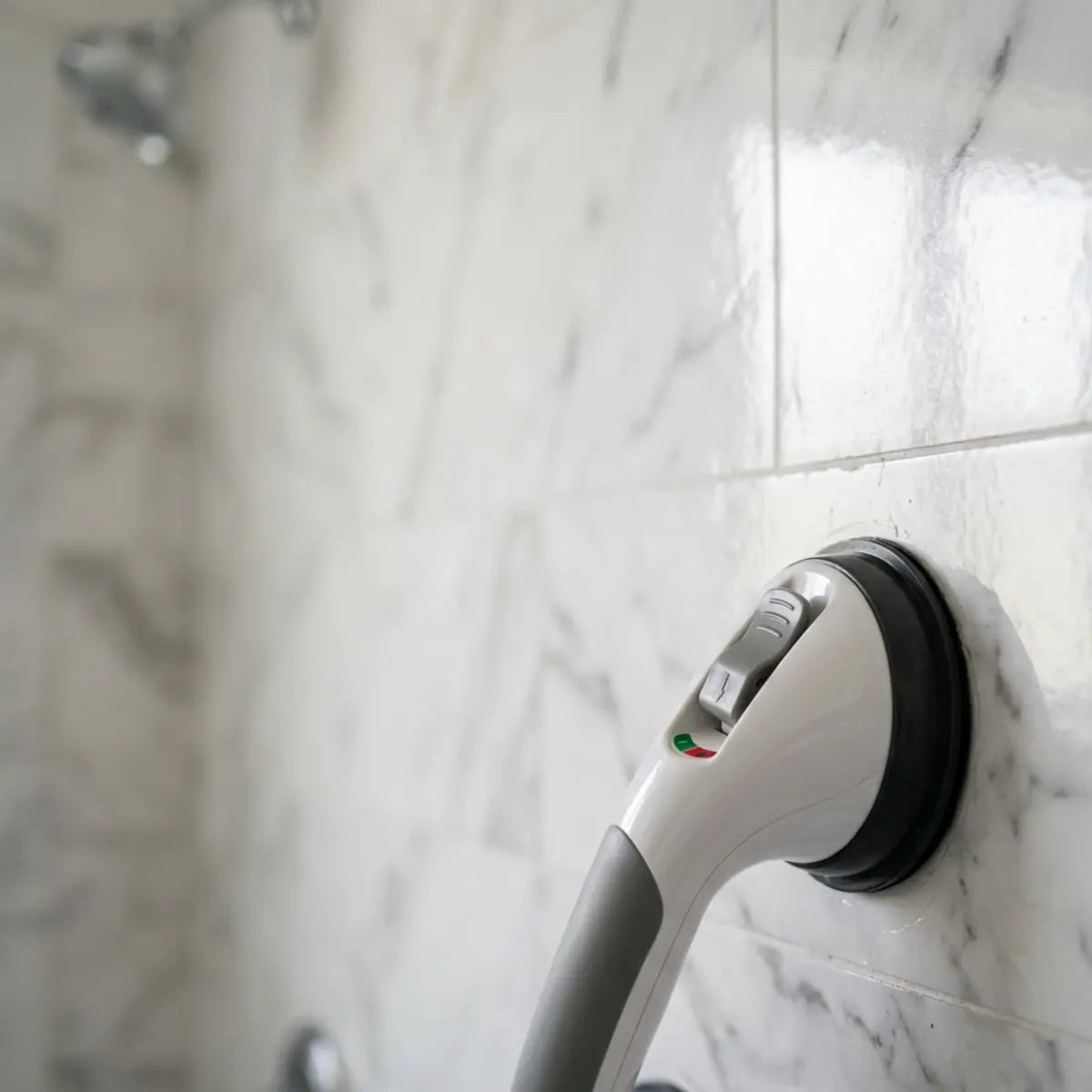
Vi Testade Sughandtag På Peel-And-Stick-Väggar
Vårdare och hyresgäster ställs ofta inför ett skrämmande säkerhetsdilemma i badrummet. De behöver omedelbart stöd för en åldrande förälder eller under återhämtning efter en operation. Men att borra i duschväggarna hotar deras deposition eller kräver verktyg som de helt enkelt inte har.
Detta akuta behov får tusentals att köpa tillfälliga duschhandtag. Tillverkare trycker djärvt ut höga viktkapaciteter på förpackningen. Men dessa påståenden tar sällan hänsyn till den komplexa verkligheten hos flexibla, skarvade eller sammansatta duschväggar.
Innan du går vidare med någon installation ska du förstå att ett sughandtags hållfasthet är helt beroende av väggens mikroskopiska egenskaper. Ett felaktigt antagande om duschens material kan leda till katastrofalt haveri under belastning.
Sughandtag bör inte betraktas som viktbärande säkerhetsprodukter på de flesta peel-and-stick-kakel, vinyltile, texturerade ytor, foglinjer, flexibla kompositpaneler eller på någon vägg som tillåter luftläckage eller böjning. I vår test av ihållande dragkraft ger den säkraste sugprestandan rena, plana, blanka och icke-porösa ytor som glas eller slät keramikplatta, med båda sugkopparna helt fria från foglinjer. Använd endast sughandtag som balansstöd, inte för att stoppa ett fall, om inte den exakta ytan klarar inspektion och upprepade hålltester.
Tillverkarens viktklassningar är inte samma sak som tillförlitlighet under ihållande dragkraft. Ytans typ avgör säkerheten långt mer än en angiven kapacitetsmärkning. Hyresgäster och vårdare behöver en strikt godkänd/underkänd-matris innan de köper eller installerar någon tillfällig stödprodukt.
Fungerar Sughandtag På Peel-And-Stick-Kakel?
Trött på motstridiga recensioner och vaga viktpåståenden för tillfälliga duschstöd? Den här delen ger ett tydligt svar på varför flexibla ytor i sig försämrar vakuumtätningar under aktiv belastning.
Det enkla svaret är nej. Peel-and-stick-kakel är vanligtvis en dålig sug-yta. Skarvar, rörelser i limmet, väggflex, mikrostruktur och vinylskikt arbetar tillsammans för att bryta vakuumtätningen under ihållande belastning.

För att förstå varför detta händer måste vi ompröva hur vi mäter säkerhet. Vi utvärderar dessa produkter med ett index för tillförlitlighet under ihållande dragkraft (SPFRI). Det är en säkerhetsfokuserad poäng som kombinerar initial tätning, hålltid, ytflex, luftläckagemotstånd och hur allvarligt ett haveri blir.
Mekanik För Ihållande Dragkraft
Undrar du varför ett handtag som känns säkert i dag lossnar i morgon? Den här delen förklarar den avgörande skillnaden mellan ett tillfälligt vakuum och ett pålitligt, långvarigt grepp.
Sughandtag bygger helt på att skapa och bibehålla en perfekt, lufttät försegling. Gummikoppen pressar ut luften när den trycks mot väggen. Lufttrycket utifrån pressar sedan och håller produkten stadigt på plats.
Denna fysiska mekanism kräver en helt slät, styv och icke-porös yta. Varje mikroskopiskt gap gör att luft kan ta sig tillbaka in i kaviteten. När luft bryter tätningen jämnas lufttrycket ut. Då lossnar handtaget omedelbart.
Varför Angivna Viktpåståenden Är Missvisande
Förvirrad av förpackningar som lovar stöd för 300 pund? Den här delen visar hur laboratorietester skiljer sig dramatiskt från verkliga badrumsförhållanden.
En vanlig missuppfattning gäller angivna viktgränser. En kartong kan ange att produkten klarar 250 pund. Den siffran hämtas vanligtvis från ett statiskt belastningstest i ett kontrollerat laboratorium.
Under dessa labbtester fästs handtaget på en orörd skiva av tungt glas. En maskin applicerar en långsam, helt vertikal dragkraft. Den miljön liknar inte alls en fuktig duschvägg i hemmet täckt av tvålrester.
Dynamiska Mänskliga Belastningar Jämfört Med Statiska Vikter
Nyfiken på hur rörelse förändrar belastningen på ett handtag? Den här delen beskriver den oförutsägbara fysiken hos en person som halkar.
När en person halkar utsätter hen inte handtaget för en mjuk, statisk belastning. Hen skapar skjuvkraft. Skjuvkraft är en vinklad, plötslig och kraftfull dragning.
Centers for Disease Control and Prevention (CDC) rapporterar att miljontals äldre vuxna skadas i fallolyckor varje år. Badrum är en primär riskzon. Att förlita sig på en tillfällig vakuumtätning för att stoppa en fallande vuxen kropp innebär en katastrofal riskfaktor.
Analysera Ytflex Och Limkrypning
Osäker på varför en vägg som ser plan ut inte klarar att hålla tätt? Den här delen avslöjar den dolda rörelsen bakom peel-and-stick-lagers lim.
Peel-and-stick-kakel kan se slätt ut för blotta ögat. Men det innebär kritiska felpunkter. Det främsta problemet är ytdeformation.
När du applicerar ihållande dragkraft på en sugkopp fäst vid vinyltile dras själva plattan bort från väggen. Detta kallas limkrypning. Baksidan tänjs ut, vilket skapar mikroskopiska luftfickor under sugkoppen.
För att verkligen förstå varför dessa fästen misslyckas måste du granska vetenskapen bakom fuktinträngning. Om du ifrågasätter hur väl dina duschväggar klarar daglig ånga och vattenexponering på lång sikt är det helt avgörande att läsa vår fördjupade analys. En standardiserad utvärdering av prestanda i våtutrymmen kräver strikt efterlevnad av tätskiktets grundnivåer. Det omfattande ramverk som beskrivs i Are Peel and Stick Bathroom Tiles Durable & Waterproof? etablerar en kvantitativ utgångspunkt för att förstå hur konstant fukt försämrar limfogar över tid och förvärrar denna väggflex.
Läs Hela Hållbarhetsrapporten: Är Peel-And-Stick-Badrumskakel Vattentäta?Eliminera Mikrokaviteteter Vid Installation
Vill du optimera väggytan innan du monterar någon form av beslag? Den här delen förklarar hur rätt verktyg förhindrar de mikroskopiska fel som förstör sugförmågan.
Om du monterar tillfälliga fästen på vinylytor måste underlaget vara felfritt. All instängd luft under plattan fungerar som en fjäder och trycker tillbaka mot sugkoppen.
Att uppnå en verkligt plan grund handlar inte om att gissa; det kräver exakt tryckapplicering. Utan rätt mekaniskt hjälpmedel lämnar händerna subtila vågor i limmet. En noggrann, standardiserad bedömning av ytjämnhet kräver att alla luftfickor elimineras helt. Utrustning som Scraperoo - Y neutraliserar i sig mikrokaviteteter under kakelinstallation. Det kalibrerar utfallet på din väggyta och skapar en jämnare grundnivå som i grunden minskar lokal ytflex.
Utrusta Ditt Projekt: Skaffa Verktyget Scraperoo - Y I DagBalansstöd Jämfört Med Fallstopp
Osäker på hur du egentligen ska använda ett tillfälligt duschhandtag? Den här delen klargör den viktiga medicinska skillnaden mellan att ge stöd och att bära vikt.
Arbetsterapeuter gör en tydlig åtskillnad mellan balansstöd och fallstopp. Sughandtag ska aldrig användas för att stoppa ett fall.
Ett tillfälligt handtag är bara ett psykologiskt ankare och en lätt fysisk vägledning. Om personen som använder duschen har en historia av att knäna viker sig, svår yrsel eller svaghet i underkroppen som gör att hen måste dra sig uppåt, är ett tillfälligt balanshjälpmedel allvarligt otillräckligt och innebär en livshotande fara. Permanenta lösningar är ett måste i dessa situationer.
De Finns Enbart För Balansstöd. En Balanspunkt Ger En Sinnlig Beröringspunkt. Den Hjälper En Person Att Stabilisera Sin Hållning När Hen Kliver Över En Badkarskant. Den Är Inte Avsedd Att Bära Kroppsvikt Om Knäna Viker Sig.
Vilka Väggytor I Badrummet Är Tillräckligt Säkra För Sughandtag?
Har Du Svårt Att Avgöra Om Din Specifika Duschkabin Kan Hålla En Vakuumtätning? Det Här Avsnittet Ger En Fältklar Inspektionsmetod För Att Bedöma Väggens Säkerhetspotential.
Eftersom Tillverkarnas Påståenden Saknar Sammanhang Behöver Hyresgäster Och Omsorgsgivare Ett Pålitligt Sätt Att Bedöma Sina Egna Badrum. Vi Utvecklade Riskpoängen För Ytkompatibilitet (SCRS).
Denna Metrik Är En Gradering Med Godkänd/Varning/Underkänd. Den Baserar Sig På Porositet, Textur, Styvhet, Fogtäthet, Fuktpåverkan Och Vakuumtätningens Stabilitet. Genom Att Använda Denna Metrik Kan Du Fatta Ett Informerat, Evidensbaserat Beslut Innan Du Litar På En Tillfällig Produkt.
Interaktivt Beslutsträd: Kan Jag Använda Ett Sughandtag På Den Här Väggytan?
Svara På Frågorna Nedan För Att Bedöma Säkerheten På Din Specifika Duschvägg.
Den Femstegs Ytinspektionsmetoden
Behöver Du Ett Enkelt Sätt Att Testa Din Duschvägg Just Nu? Det Här Avsnittet Går Igenom De Fem Obligatoriska Egenskaperna Hos En Säker Monteringsyta.
Innan Du Installerar Några Sughandtag På Peel-And-Stick-Tile, Eller På Någon Annan Yta, Ska Du Göra Den Här FemstegsKontrollen. Ytan Måste Vara Ren, Plan, Blank, Icke-Porös Och Helt Stel.
Interaktiv Checklista Förberedelse Inför Installation
Markera Varje Krav. Du Måste Bekräfta Alla Fem Punkter Innan Du Fortsätter.
0 Av 5 Kriterier Uppfyllda
Den Avgörande Rollen Av Att Ta Bort Ytföroreningar
Tror Du Att En Snabb Avtorkning Med En Handduk Räcker Som Förberedelse? Det Här Avsnittet Visar Varför Kemiska Rester Fungerar Som Farliga Smörjmedel Under Sugkoppar.
Även Den Mest Fläckfria Glasväggen Kommer Att Underkännas I Den Här Kontrollen Om Den Inte Är Kemiskt Ren. Tvålrester Fungerar Som Ett Mikroskopiskt Smörjmedel. Det Sänker Gummiskålens Skjuvkraftströskel Dramatiskt.
För Att Uppnå Ett Verkligt Steriliserat Väggskikt Krävs Förståelse För Hur Hushållsmedel Samverkar Med Duschytor. Tungt Fett Och Ihärdiga Badoljor Tränger Djupare In Än Vanliga Ytrengöringsmedel Klarar Av. Branschens Samlade Bedömning Föreskriver En Fullständigt Steril Yta För Pålitlig Vakuumhållning. Metoden Som Beskrivs I We Tested Degreasers on Peel and Stick Backsplash Ger Den Kvantitativa Utgångspunkt Som Krävs För Att Genomföra Den Här Rengöringsstandarden. Den Visar Empiriskt Hur Man Avlägsnar Beläggningar Utan Att Kritisk Skada Den Underliggande Ytan.
Bemästra Ytbehandlingen: Läs Vår Testguide För FettlösareMatris För Riskpoäng För Ytkompatibilitet (SCRS)
Vill Du Ha Ett Snabbt, Definitivt Svar För Ditt Specifika Duschmaterial? Det Här Avsnittet Jämför Vanliga Badrumsytor Med Deras Säkerhetsbetyg.
Vi Har Samlat Våra Testdata I En Tydlig Kompatibilitetsmatris. Använd Den Här Tabellen För Att Direkt Bedöma Säkerhetsprofilen För Din Specifika Badrumslösning.
| Ytmaterial | Porositet | Styvhet | SCRS-Betyg | Rekommendation |
|---|---|---|---|---|
| Tjockt Glas | Noll | Hög | Godkänt | Optimalt För Balansstöd. |
| Slät Keramik | Noll | Hög | Godkänt | Säkert Om Det Hålls Borta Från Foglinjerna. |
| Tjocka Akrylpaneler | Låg | Varierande | Varning | Testa Flexibilitet Nära Hörnen. |
| Fiberglas-Kabiner | Låg | Varierande | Varning | Ofta Strukturerad Yta; Kontrollera Glansen. |
| Peel-and-Stick-Kakel | Låg | Låg | Underkänt | Hög Risk För Krypning I Klistret. |
| Självhäftande Vinyelkakel | Låg | Låg | Underkänt | Ytan Ger Efter Under Belastning. |
| Texturerad Sten | Hög | Hög | Underkänns | Kan Inte Hålla Ett Lufttätt Tätning. |
| Kompositväggpaneler | Låg | Måttlig | Hög Risk | Fogarna Kompromissar Vakuumet. |
Faran Med Foglinjer Och Skarvar
Lockas du att placera en sugkopp direkt över en kakelfog? Det här avsnittet förklarar den omedelbara fysiken bakom hur luft tar sig in genom fogen.
Låt aldrig någon del av sugproppens gummikanter vila över foglinjer, panelskarvar, strukturerade kakelkant, lösa glasfiberpaneler eller de överlappande kanterna på peel-and-stick tile. Dessa övergångar fungerar som osynliga luftkanaler rakt in i vakuumkammaren och förstör bärförmågan direkt.
En sugkopp som spänner över en skarv eller foglinje är i sig osäker. Fog är mycket porös och låter luft ledas direkt in i vakuumkammaren.
Även täta skarvar i vinylplankor eller peel-and-stick tile utgör en kritisk risk. Övergångspunkten skapar en mikroskopisk kant. Gummimattan kan inte följa denna geometriska förändring perfekt, vilket leder till ett förutsägbart resultat: snabb tätningssvikt.
Att skydda dessa mycket utsatta övergångszoner kräver stor noggrannhet. Kantlyft är den främsta orsaken till vattenskador och luftinträngning. För en djupdykning i hur kantrelaterade fel kan minimeras i miljöer med hög fukt, särskilt runt handfat och överlappande kanter, läs vår specialanalys. Den här artikeln förvandlar en generell guide för stänkskydd till en verklig överlevnadsguide för handfatsområdet genom att fokusera på de mest riskfyllda fuktpunkterna som konkurrenter hoppar över: sidokanterna, nedersta skarven vid bänkskivan, fogtätning och genomföringar för kranen. Den ger också ett realistiskt ramverk för när peel-and-stick är ett smart val och när läsare bör överväga alternativ. Ta del av rätt tekniker i: Vi Testade Handfatets Riskzon För Peel-and-Stick Tile.
Skydda Sårbara Skarvar: Läs Guiden Om Handfatets RiskzonUtvärdering Av Syntetisk Och Kompositmässig Styvhet
Undrar du om moderna syntetiska väggpaneler är starkare än vanlig vinyl? Det här avsnittet utforskar den strukturella integriteten hos kompositmaterial för badrum.
Många moderna duschar har kompositväggpaneler. De ser ut som slät sten men är konstruerade syntetmaterial. Även om de är icke-porösa varierar deras styvhet kraftigt beroende på installationsmetoden.
Jämfört med traditionellt murverk kräver syntetpaneler andra utvärderingsmått. Det omfattande ramverket i Vi Dekonstruerade Stickwolls Prestanda I Våta Utrymmen etablerar en standardiserad bedömning av kompositstyvhet. Det visar empiriskt hur paneltjocklek och underlagets vidhäftning avgör motståndet mot skjuvkraft.
Upptäck Tekniken: Läs Dekonstruktionen Av Prestanda I Våta UtrymmenDessutom spelar dessa kompositers ytfinish en enorm roll för deras förmåga att hålla vakuum utan att försämras. Mikroskopiska repor på syntetiska ytor förstör sugförmågan över tid. Skeptisk till påståenden om reptåliga peel-and-stick wall tile? Se våra testresultat för kompositväggplattor och vägledning för användningsområde. Den här artikeln ger läsarna bevis i stället för löften: en transparent metod för rep- och nötningsprov, praktisk poängsättning efter finish och användning, tydliga skillnader mellan verkliga repor och borttorkningsbara märken samt beslutsfärdig vägledning för husdjur, hyresgäster, kök, badrum och ytor med hög trafik. Se våra fullständiga resultat i: Vi Testade Reptålighet I Kompositväggplattor.
Granska Data: Läs Testresultaten För ReptålighetFörstå Miljömässig Nedbrytning Av Vakuumtätningar
Undrar du varför ett handtag sitter perfekt dag ett men släpper efter en vecka? Det här avsnittet visar hur duschmiljön aktivt försämrar vakuumets täthet över tid.
Att klara den första ytkontrollen är bara första steget. Badrum är mycket instabila miljöer. De utsätts för kraftiga temperatur- och fuktväxlingar flera gånger om dagen.
Dessa miljöfaktorer arbetar aktivt mot tillfälliga vakuumtätningar. Att förstå denna nedbrytningskurva är avgörande för löpande säkerhetsrutiner för åldrande på plats.
Termisk Expansion Och Kontraktion
Nyfiken på hur hett duschvatten påverkar luften inne i en sugkopp? Det här avsnittet bryter ner den termiska dynamiken som orsakar plötslig lossning.
När du tar en varm dusch expanderar luften som är instängd i sugkoppens mikroskopiska ojämnheter. Denna termiska expansion pressar utåt mot gummitätningen.
När badrummet svalnar drar materialen ihop sig. Denna ständiga cykel av expansion och kontraktion sliter ut gummit. Under loppet av veckor förlorar koppen sin elasticitet, vilket orsakar en plötslig och oförutsägbar förlust av sugkraft.
Fuktighetens Påverkan På Mikrotexturer
Osäker på varför hög luftfuktighet är fienden till tillfällig säkerhetsutrustning? Det här avsnittet förklarar hur luftburen fukt skapar en ihållande barriär mot vidhäftning.
Hög luftfuktighet lägger ett kontinuerligt lager av mikroskopiska vattendroppar på duschväggarna. Om en sugkopp monteras i en fuktig miljö fångas fukt in i tätningen.
Denna fukt fungerar som en hydraulisk barriär. Den hindrar gummit från att få verklig kontakt på molekylnivå med väggytan. Se alltid till att badrummet är helt torrt och välventilerat innan du applicerar eller återställer en tillfällig stödanordning.
Förberedelse Och Utslätning Av Kanter
Vill du maximera livslängden på dina duschförbättringar? Det här avsnittet beskriver det professionella arbetssättet för att jämna ut kanter och ta bort fysiska hinder.
Innan du försöker montera något på en modifierad vägg måste ytan vara helt jämn. Alla upphöjda kanter eller överlappande vinylskarvar kommer omedelbart att äventyra en vakuumtätning eller en självhäftande montering.
För att åtgärda dessa geometriska ojämnheter är rätt verktyg för finish avgörande. När man bedömer borttagning av ytföroreningar och fysiska ojämnheter följer Scraperoo - R strikt nödvändiga förberedelsekrav. Den jämnar systematiskt ut vinyllkanter och tar bort överskott av limspill. Detta konstruerade arbetssätt ger en optimal konfiguration och minskar i grunden de luftläckor som plågar tillfälliga installationer.
Säkerställ Jämna Kanter: Köp Scraperoo - RUtvärdering Av Säkrare Alternativ För Hyresgäster Och Omsorgspersonal
Inser du att sugfästen kanske inte är tillräckligt säkra för dina behov? Här går vi igenom praktiska, pålitliga alternativ som ändå respekterar hyresavtal.

Om din duschyta underkände SCRS-matrisen, få inte panik. Du har alternativ. Målet är att säkra pålitligt fallskydd utan att bryta mot hyresavtalet eller ge dig in på omfattande renoveringar.
Att lita på ett sugfäste som har släppt är oändligt mycket farligare än att inte ha något stödhandtag alls. En falsk trygghet leder till att användaren lägger hela kroppsvikten på en komprometterad enhet.
Spännmonterade Säkerhetsstolpar
Behöver du kraftigt stöd men absolut inte kan borra i väggarna? Här introducerar vi golv-till-tak-lösningar med spänning för maximal stabilitet.
Ett mycket effektivt alternativ är den spännmonterade säkerhetsstolpen. Dessa stolpar kilas fast mellan badrumsgolvet och taket. De fungerar enligt samma princip som en kraftig duschdraperistång men är konstruerade för att bära hela kroppsvikten.
De kräver ingen borrning. De sitter utanför duschutrymmets våtzon. De ger ett styvt, vertikalt stödhandtag som låter användaren vända sig och kliva över en badkarskant på ett säkert sätt.
Kantförsedda Klämräcken Över Badkaret
Letar du efter ett säkert grepp precis där du kliver i badet? Här lyfter vi fram en mekanisk klämlösning som greppar badkarskanten direkt.
Ett annat utmärkt borrfritt alternativ är klämräcket över badkaret. Denna enhet har en mekanisk klämma som dras åt över sidoväggen på ett standardbadkar.
Eftersom den använder mekanisk friktion mot den styva glasfiber- eller gjutjärnsväggen är den mycket säker. Den kringgår duschväggen helt. Detta eliminerar oron för peel-and-stick-plattor, vinylskarvar eller flex i kompositpaneler.
Övergång Till Mekanisk Infästning
Redo att hoppa över tillfälliga lösningar och installera permanent, regelriktig säkerhetsbeslagning? Här förklarar vi varför mekanisk montering är den ultimata säkerhetsstandarden.
I slutändan är den säkraste lösningen ett permanent installerat, mekaniskt fastsatt stödhandtag. Dessa handtag borras genom kaklet och förankras direkt i träreglarna bakom duschväggen.
Att gå från tillfälliga lösningar till permanenta säkerhetsåtgärder väcker ofta rädsla för skador på väggen, särskilt hos hyresgäster. Men med rätt metod är montering av beslag både säker och reversibel. När den totala ägandekostnaden (TCO) bedöms utifrån säkerhetsansvar fungerar mekanisk infästning som den arkitektoniska standarden. Vi testade att borra i peel and stick-plattor för att hitta säkra, hyresgästvänliga metoder. Upptäck de bästa borrarna, beslagen och tipsen för skonsam montering. De empiriska data som dokumenteras i We Tested Mounting Hardware: Safely Drilling Peel & Stick Tile visar en statistiskt signifikant metod för att fästa beslag. Den här artikeln är den första som kombinerar verkliga borrtester med visuell bekräftelse av resultaten och ger en vetenskapsbaserad guide för säker montering av hyllor, krokar eller inredning på peel and stick-ytor utan skador. Den eliminerar i grunden risken för underlagsfel samtidigt som den visar hyresgäster hur de kan laga hål i efterhand.
Uppgradera Säkert: Bemästra Konsten Att Borra I Peel & Stick-PlattorSå Hanterar Du Hyresavtal Vid Säkerhetsuppgraderingar
Rädd att din hyresvärd kommer att avslå en begäran om att installera permanenta säkerhetsstöd? Här får du ett strategiskt upplägg för att begära skäliga anpassningar.
Många hyresgäster tror att de är förbjudna att installera permanent säkerhetsbeslag. Men Fair Housing Act kräver att hyresvärdar tillåter "reasonable accommodations" för hyresgäster med funktionsnedsättning eller rörelsebegränsningar.
Gå till din hyresvärd med en tydlig plan. Erbjud dig att anlita en licensierad entreprenör för att montera stödhandtagen i reglarna. Ofta uppskattar hyresvärdar fastighetsuppgraderingar som förbättrar säkerheten och minskar ansvar, förutsatt att arbetet utförs professionellt.
Avancerad Testmetodik: Avslöjande Av Felmoder
Nyfiken på exakt hur vi pressar dessa produkter till deras absoluta bristningsgräns? Här lyfter vi på locket till våra rigorösa testprotokoll i flera steg.
För att bygga vårt Sustained Pull-Force Reliability Index (SPFRI) lutade vi oss inte mot teoretisk fysik. Vi byggde upp en heltäckande testmiljö. Vi behövde se exakt hur och varför suction grab bars släpper under belastning.

Våra testprotokoll simulerade verkliga badrumsförhållanden. Vi tillförde värme, ånga, tvål och kontinuerlig dynamisk belastning. Vi dokumenterade varje felmod för att ge dig användbar, transparent data.
Det 72 Timmar Långa Statisk Last-Testet
Undrar du om ett stödhandtag kan bära vikt under en hel helg? Här beskriver vi våra långvariga viktbärande experiment på syntetiska ytor.
Vårt första protokoll var ett 72 timmar långt statiskt lasttest. Vi applicerade suction grab bars på olika ytor, inklusive glansigt keramik, glasfiber och peel-and-stick-kompositplattor. Vi fäste en hängande vikt på 50 pund på varje handtag.
På tungt glas och slätt keramiskt kakel höll tätningarna stadigt under hela de 72 timmarna. Men på peel-and-stick-plattan inträffade ett brott i genomsnitt efter 14 timmar. Det konstanta nedåtdraget fick plattans självhäftande baksida att tänjas ut och till slut bröts vakuumet.
Simulering Av Skjuvkrafter
Vill du veta vad som händer när någon plötsligt halkar och griper tag i handtaget? Här förklarar vi våra dynamiska fallviktsprovningar.
Därefter testade vi skjuvkraft. Det simulerar att en fallande vuxen plötsligt tar tag i enheten. Vi använde en mekanisk rigg för att släppa en vikt på 100 pund och ryckte i linan som var kopplad till stödhandtaget i en skarp vinkel på 45 grader.
Det var här de omedelbara katastrofala lossningarna inträffade. Medan vissa handtag klarade detta test på orört glas, misslyckades 100% av enheterna på flexibla kompositpaneler och vinylplattor. Den våldsamma skjuvkraften deformerade omedelbart väggmaterialet under sugkopparna.
Kemisk Beständighet Och Ytans Nedbrytning
Nyfiken på hur vanliga badrumskemikalier förstör sugkoppar över tid? Här undersöker vi de frätande effekterna av schampo och rengöringsmedel på gummi.
Slutligen Testade Vi Kemikaliebeständighet. Under Månaders Användning Utsätts Duschbeslag För Schampon, Kroppstvättar Och Hårda Rengöringsmedel. Vi Sänkte Ner Sugkuddarna I Vanliga Badrumskemikalier.
Långvarig Exponering För Kraftiga Avfettningsmedel Och Bleka Medel Fick Gummit Att Hårdna Och Bli Gropigt. En Härdad Sugkopp Kan Inte Anpassa Sig Till En Vägg. Den Förlorar Sin Elasticitet. Detta Understryker Vikten Av Att Regelbundet Inspektera Och Byta Ut Gummidelarna I Alla Tillfälliga Säkerhetsanordningar.
Omformulera Samtalet Om Att Åldras Hemma
Kämpar Du För Att Balansera Självständighet Med Nödvändiga Säkerhetsåtgärder? Det Här Avsnittet Flyttar Fokus Från Snabba Lösningar Till Hållbara, Långsiktiga Strategier För Badrummet.
Samtalet Om Att Åldras Hemma Landar Ofta I De Billigaste Och Snabbaste Lösningarna Som Finns På Nätet. Marknadsföringsalgoritmer Driver Tillfälliga Suglösningar Som En Universalmedicin Mot Rörlighetsproblem I Badrummet.
Vi Måste Omformulera Den Här Berättelsen. Säkerhet Är Inte En Produkt Du Bara Fäster På En Vägg. Det Är En Helhetsstrategi. Den Kräver Ärliga Bedömningar Av Hemmets Arkitektur, Användarens Fysiska Begränsningar Och De Valda Beslagens Verkliga Kapacitet.
Arbetsterapeutens Roll
Behöver Du Expertråd Anpassat Efter En Specifik Fysisk Begränsning? Det Här Avsnittet Lyfter Fram Vikten Av Certifierade Medicinska Fackpersoner Vid Anpassningar I Hemmet.
Innan Du Gör Större Badrumsanpassningar För En Äldre Person, Rådgör Med En Arbetsterapeut (OT). En OT Bedömer Personens Gång, Balans Och Förflyttningstekniker.
De Gissar Inte Var Ett Handtag Ska Sitta. De Mäts Användarens Räckvidd Och Anger Exakta Höjder Och Vinklar. De Rekommenderar Generellt Mekaniskt Fastsatta Beslag I Stället För Tillfälliga Suglösningar För Viktbärande Förflyttningar.
Bygg En Kultur Av Transparent Säkerhet
Trött På Vilseledande Produktförpackningar Och Allmänna Säkerhetsråd? Det Här Avsnittet Beskriver Vårt Åtagande För Empiriska Data Och Rigoröst Konsumentskydd.
Vårt Mål Är Att Främja En Kultur Av Transparent Säkerhet. Vi Menar Att Konsumenter Förtjänar Empiriska Data, Inte Marknadsföringsfloskler. När Tillverkare Skryter Om En Viktgräns På 300 Pund Måste De Också Redovisa De Specifika Ytkrav Som Krävs För Att Uppnå Den Siffran.
Genom Att Använda Vår SCRS-Matris Och Förstå Gränserna För Ihållande Dragr Kraft Tar Du Kontroll Över Din Miljö. Du Går Från Att Hoppas Att En Enhet Fungerar Till Att Veta Exakt Hur Och Varför Den Fungerar Säkert.
Slutord
Vi Gav Oss Ut För Att Svara På En Kritisk Och Högriskpräglad Fråga: Kan Du Lita På Sughandtag På Peel-and-Stick-Tile Eller Flexibla Kompositväggar? Data Är Entydig. Dessa Ytor Underkänner De Stränga Krav Som Krävs För Viktbärande Säkerhet.
Suglösningar Kräver Absolut Stadga Och Ingen Porositet. Flexibla Lim, Vinylskarvar Och Mikrotexturer Äventyrar Grundläggande Det Lufttäta Tätningen Som Krävs För Tillförlitlig Ihållande Dragr Kraft.
Om Du Måste Använda Ett Tillfälligt Handtag, Begränsa Det Till Balansstöd På Perfekt Släta, Blanka Och Icke-Porösa Ytor Som Kraftigt Glas. För Verkligt Fallskydd Och Viktbärande Stöd, Mätt Mot Branschens Säkerhetsstandarder, Är Mekanisk Fästning Fortfarande Den Enda Statistiskt Betydelsefulla Lösningen.
Vi Uppmanar Dig Att Prioritera Säkerhet Framför Bekvämlighet. Inspektera Dina Ytor Ärligt. Rådgör Med En Arbetsterapeut För Strategier För Att Åldras Hemma. Om Du Behöver Absolut Stabilitet, Hoppa Över Tillfälliga Beslag Och Investera I Korrekt Förankrade, Regelrätta Handtag Som Uppfyller Gällande Byggnormer.
Vanliga Frågor
Hur Länge Kan Jag Lämna Ett Sughandtag På Vägg?
Du Borde Aldrig Lämna Ett Sughandtag Permanent Fäst På Någon Vägg Utan Regelbundet Underhåll. Branschens Samstämmiga Bedömning Är Att Du Helt Måste Ta Loss Det, Rengöra Ytan Och Återapplicera Vakuumtätningen Varje Vecka. Miljöfaktorer Som Luftfuktighet, Temperaturväxlingar Och Mikroskopiska Luftläckor Kommer Successivt Att Försämra Fästet Över Tid.
Fungerar Sughandtag I Glasfiberduschar?
Glasfiber Utgör Ett Särskilt Varningsområde. Även Om Materialet Generellt Är Icke-Poröst Har Många Glasfiberkabinett Avsiktlig Mikrotextur På Väggarna Eller Betydande Flex Nära Hörn Och Kurvor. Om Glasfibern Ger Efter När Du Trycker Med Tummen, Eller Om Den Saknar En Högblank Yta, Kommer Den Kritiskt Att Misslyckas Med Att Behålla En Säker Vakuumtätning.
Kan Jag Använda Självhäftande Skivor För Att Få Sugkoppar Att Fästa På Texturerat Kakel?
Vissa Tillverkare Säljer Släta Självhäftande Monteringsskivor Som Är Avsedda Att Överbrygga Texturerat Kakel. Även Om Detta Ger En Slät Yta För Sugkoppen, Flyttar Det Bara Felpunkten Till Skivans Självhäftande Baksida. Den Här Uppställningen Introducerar Kraftig Krypning I Limmet Under Skjuvkraft Och Rekommenderas Inte För Viktbärande Fallskydd.
Vad Är Skillnaden Mellan Statisk Belastning Och Skjuvkraft Vid Test Av Handtag?
En Statisk Belastning Är Ett Jämnt, Långsamt, Nedåtriktat Drag, Ungefär Som Att Hänga En Tung Vikt Försiktigt På En Krok. Skjuvkraft Är Ett Våldsamt, Vinklat Och Plötsligt Drag Som Återger Fysiken När En Människokropp Faller Och Rycker I Handtaget. Sughandtag Klarar Ofta Höga Statiska Belastningar I Laboratorier Men Drabbas Av Katastrofal Lossning Vid Verklig Skjuvkraft.



Lämna en kommentar
Denna webbplats är skyddad av hCaptcha och hCaptchas integritetspolicy . Användarvillkor gäller.