








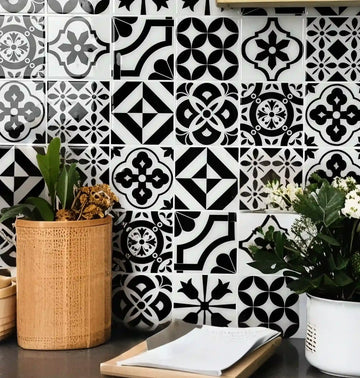

Quick verdict: Peel-and-stick tile can work on some commercial restroom vanity walls, especially low-to-moderate traffic splash zones behind sinks. It is a conditional solution, not a universal commercial wall system. The wall must be smooth, dry, sound, properly prepared, and protected from standing water, direct spray, harsh abrasion, and repeated guest abuse.
For facility managers, the practical question is not simply, “Is peel-and-stick tile waterproof?” That question is too broad to guide a real project. The better question is whether the product can meet the demands of the specific vanity wall:
- Will the adhesive remain attached after routine splash exposure?
- Can staff wipe away soap, fingerprints, and water spots without damaging the finish?
- Can the surface tolerate the facility’s approved cleaning process?
- Are seams and exposed edges protected?
- Will the finished wall look professional after months of public use?
- Does the upgrade reduce total project burden, or create a maintenance problem later?
We call this decision framework Splash-Zone Serviceability. It considers adhesion, wipe-clean performance, seam stability, edge protection, cleaning chemistry, traffic level, and appearance. The framework is useful for screening a project, but it should not be mistaken for a published laboratory score or a substitute for product-specific testing.

| Restroom situation | Recommendation | Reason |
|---|---|---|
| Private office or low-traffic restroom with a vanity backsplash | Conditional pass | A good candidate if the wall is sound and the cleaning routine is gentle and compatible. |
| Small retail, cafe, or hotel-lobby restroom with moderate traffic | Conditional pass | Limit the installation to a protected vanity splash zone and inspect edges regularly. |
| Clinic or restaurant restroom with frequent cleaning and disinfectant use | Review carefully | The exact tile and cleaning chemicals must be confirmed before installation. |
| High-traffic public restroom with frequent guest contact or impact | Usually fail for this use | The risk of scuffs, edge damage, chemical incompatibility, and premature replacement is higher. |
| Shower room, direct-spray wall, soaked substrate, or wall with active water damage | Fail | Peel-and-stick decorative tile is not a waterproofing system or a repair for a failing wall. |
| Leased space requiring a reversible visual upgrade | Conditional pass | Removability can be useful, but obtain landlord approval and verify substrate compatibility first. |
The central finding is straightforward: peel-and-stick tile is best treated as a decorative commercial restroom vanity backsplash, not as code-grade wet-area protection.
What did the commercial-use test actually evaluate?
A commercial-use evaluation should measure the wall system, not just the tile’s appearance on installation day. That means looking at the substrate, adhesive, seams, edges, cleaning process, and traffic exposure together.
The available evidence supports a decision framework based on manufacturer installation and care requirements, government cleaning guidance, accessibility planning, and comparison with established wall finishes. It does not provide a controlled hands-on trial with a named tile SKU, sample count, soil load, observation period, or failure threshold. We therefore do not report invented scores, cleaning labor minutes, or pass/fail laboratory results.
A useful evaluation has five parts:
- Splash exposure: Observe whether water beads, runs behind edges, or reaches an unprotected seam. Check the countertop transition and the bottom edge first because those areas receive the most repeated moisture.
- Adhesion retention: Inspect corners, seams, and cut edges after normal humidity and splash exposure. Adhesive failure often begins at a small exposed edge rather than across the entire panel.
- Janitorial cleanability: Test the actual cleaning method used by staff. A surface that looks easy to wipe may respond poorly to repeated disinfectant exposure, abrasive pads, or aggressive scrubbing.
- Guest-contact wear: Consider fingerprints, bags, cleaning carts, paper-towel dispensers, mobility aids, and accidental contact. A vanity wall in a public restroom is not an untouched backsplash.
- Total upgrade burden: Include preparation, installation, drying time, staff training, future tile replacement, chemical restrictions, and downtime. A low purchase price does not guarantee a low operating burden.
This is why a product can pass a residential bathroom test but still be a poor choice for a busy commercial restroom.
Our related guide on where peel-and-stick bathroom tile actually works maps the difference between a low-splash backsplash and a direct-spray or continuously wet wall.

Where can peel-and-stick tile be used on commercial restroom walls?
Peel-and-stick tile is most suitable for a limited vanity backsplash or hand-splash area where water exposure is occasional, the wall can dry between cleanings, and the surface is not subject to impact.
A splash zone is the area behind and beside a sink that receives intermittent droplets, soap residue, and wipe-down moisture. It is different from a shower surround or a wall that remains wet for long periods. That distinction matters because many adhesive-backed tile products are marketed for bathroom use while still carrying exclusions for direct water exposure.
For example, Smart Tiles states that properly installed tiles can withstand bathroom humidity and water splashes, but it excludes surfaces directly exposed to water, such as shower cabins. The manufacturer’s guidance does not establish suitability for standing water, immersion, direct spray, or heavy commercial traffic. See the Smart Tiles bathroom use and care guidance for the product-family limits.
Reasonable applications may include:
- The wall directly behind a handwashing sink.
- A narrow backsplash between a vanity countertop and mirror.
- A powder-room wall with no shower or tub.
- A low-splash restroom in a private office.
- A visually tired wall in a leased space where permanent tile work is restricted.
- A small reception-area restroom where the wall is protected from carts and frequent contact.
Applications that deserve a different wall system include:
- Shower rooms and locker-room wet areas.
- Walls receiving direct spray from a faucet, hose, or shower.
- Areas with standing water at the countertop or floor line.
- Walls with bubbling paint, crumbling drywall, mold, active leaks, or recurring condensation.
- High-abuse restrooms where guests may pull, scrape, strike, or lean against the wall.
- Clinics or food-service facilities that require a specific cleanable or hygienic wall assembly under local rules or internal standards.
A decorative wall refresh can improve appearance and reduce visible staining. It does not correct plumbing leaks, replace waterproofing, or make a noncompliant restroom accessible.
Decorative refresh versus commercial wall protection
A decorative wall refresh covers a sound surface to improve appearance. Commercial wall protection is a broader building-performance requirement that may include impact resistance, chemical resistance, moisture control, cleanability, fire performance, and code or specification compliance.
Peel-and-stick tile generally belongs in the first category unless the exact product documentation states otherwise. FRP panels, ceramic tile, and specified commercial wall coverings may be selected when the facility needs a more formal wall-protection system.
That distinction should appear in the project scope. Describe the work as a vanity backsplash or decorative splash-zone treatment unless the product has documentation supporting a broader use.
Why does substrate preparation matter more than the product claim?
The wall beneath the tile is often the real source of failure. Adhesive-backed tile cannot stabilize loose paint, damp drywall, grease, soap film, or a wall that moves when pressed.
Manufacturer guidance commonly requires a flat, smooth, clean, dry, structurally sound substrate. ACP’s Aspect Stone installation guide specifies installation between 65°F and 100°F and requires the surface to be free of dust, wax, soap scum, and grease. It also warns that improper preparation may affect the warranty. Review the Aspect Stone installation requirements as a useful example of how specific these limits can be.
Smart Tiles guidance gives additional preparation timing: fresh paint should cure for 21 days, while prepared primer should dry for 72 hours. Those waiting periods do not turn a water-damaged or failing wall into a suitable substrate. They only address curing time for a properly prepared surface.
Before installation, inspect the wall for:
- Soft spots or swelling around the sink.
- Peeling, chalking, or bubbling paint.
- Previous adhesive residue.
- Grease, soap film, wax, or silicone contamination.
- Uneven drywall patches or protruding fasteners.
- Moisture caused by plumbing leaks or poor ventilation.
- Gaps where the countertop meets the wall.
- Loose trim, mirror brackets, dispensers, or fixtures.
Press the wall lightly with a clean, dry finger or a broad plastic scraper. If the finish lifts, powders, flakes, or flexes, stop. Repair the substrate first.
For a deeper planning sequence, use the peel-and-stick tile preparation and compatibility guide. It covers surface condition, moisture limits, edge planning, quantity, and when another finish makes more sense.
A practical installation checklist
The installation itself is simple only after the preparation is complete.
- Remove dispensers, mirrors, trim, and other obstacles that prevent full contact.
- Repair damaged drywall or masonry and allow all patching compounds to cure.
- Remove loose paint and clean away grease, soap residue, and dust.
- Confirm that the surface is flat enough for the selected tile.
- Allow newly painted or primed surfaces to cure according to the product instructions.
- Dry-fit the layout so narrow slivers do not land beside the countertop or corner.
- Keep the room and wall within the manufacturer’s temperature range.
- Apply each tile without stretching, trapping debris, or contaminating the adhesive.
- Press the tile firmly, especially along corners, seams, and cut edges.
- Protect the installation during the adhesive-setting period. Smart Tiles states that its adhesive is intended to set firmly within 48 hours, but that is not proof that the surface can be immediately scrubbed or disinfected. See the Smart Tiles installation guide for its stated setting guidance.
- Finish exposed edges and countertop transitions only with materials and methods approved for the exact product.
- Photograph the completed wall and record the product, lot, installation date, and cleaning restrictions.
The last step is easy to skip and valuable later. Facility teams need a record of what was installed and what cleaners are permitted.

Can peel-and-stick tile handle janitorial cleaning?
It may handle routine gentle wiping, but “wipe-clean” does not mean “compatible with every commercial disinfectant.” Cleaning performance depends on the tile’s face material, texture, seams, adhesive, edge treatment, and the chemistry used by staff.
Smart Tiles recommends soft, non-abrasive cleaning products and warns that strong cleaners or aggressive chemicals may damage the surface or affect warranty validity. That is a meaningful limitation for facilities whose standard procedure includes frequent disinfectant application, abrasive pads, or long wet dwell times.
The Centers for Disease Control and Prevention and the Environmental Protection Agency both direct facility teams to follow the disinfectant label, confirm approved surface use, and keep the surface visibly wet for the required contact time. Contact time is the period the surface must remain wet for the product’s labeled use. The EPA notes that the required period varies by product and use; a cited example of 10 minutes is not a universal rule. Review the CDC facility cleaning and disinfecting guidance and the EPA registered disinfectant guidance before approving a cleaning protocol.
What can collect in textured seams?
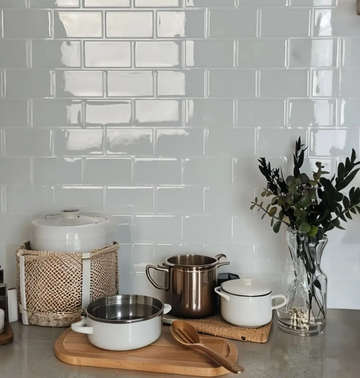
Faux grout lines and textured surfaces can improve the visual effect of tile, but they also create more places for soap residue, dust, and cleaner film to collect. A smooth painted wall may release residue with one broad wipe. A textured tile face may require a slower pass along each seam.
This does not make textured tile unusable. It changes the labor and inspection requirement. Staff should avoid treating the wall as a flat painted surface.
A practical routine is:
- Use a soft microfiber cloth or non-abrasive pad.
- Start with the mildest cleaner permitted by the tile manufacturer.
- Wipe along seams rather than only across the tile faces.
- Remove residue instead of allowing cleaner film to dry.
- Dry the countertop transition and lower edge after cleaning.
- Spot-test any disinfectant in an inconspicuous location.
- Record dulling, discoloration, swelling, seam opening, or edge lift.
- Replace a damaged tile before the problem spreads to neighboring edges.
FRP offers a useful comparison point. Panolam states that its FRP panels can withstand repeated cleaning with recommended methods, while abrasive cleaners, steel wool, acetone, xylene, and some strong solvents may mar or dull the surface. That guidance applies to Panolam FRP, not to peel-and-stick tile, but it illustrates an important principle: even a commercial wall panel has defined chemical limits. See the Panolam FRP cleaning bulletin before using FRP as a maintenance baseline.
Cleaning comparison by wall finish
The table below is a decision guide, not a controlled labor study. Comparable cleaning-minute data were not supplied, so no exact time advantage should be claimed.
| Wall finish | Routine cleaning outlook | Main maintenance risk | Best fit |
|---|---|---|---|
| Peel-and-stick tile | Usually manageable with gentle wiping if seams and edges remain intact | Harsh chemicals, abrasive scrubbing, residue in texture, edge lift | Low-splash decorative backsplash |
| Semi-gloss paint | Simple to wipe when new; touch-up may be easy | Staining, scuffing, repeated repainting, moisture damage | Low-cost refresh outside high-splash zones |
| FRP panels | Intended for repeated cleaning under the manufacturer’s methods | Solvents, abrasives, damaged seams or fasteners | Higher-maintenance commercial areas where panel protection is needed |
| Ceramic wall tile | Strong surface durability and broad design flexibility | Grout maintenance, installation time, cracked tile, permanent alteration | Long-term renovation and higher abuse |
| Commercial vinyl wall covering | Often selected for cleanability and broad wall coverage | Seam damage, puncture, adhesive or specification limits | Projects requiring a specified wall-covering system |
The correct comparison is not “Which product is cheapest?” It is “Which wall finish matches the facility’s exposure and maintenance process without creating more work than it removes?”
For a broader room-by-room fit check, see the bathroom and wet-area tile guide.
What should the weekly maintenance checklist include?
A weekly inspection should take only a few minutes, but it should focus on the areas most likely to fail: edges, seams, corners, and the countertop transition.
Weekly commercial restroom wall checklist
- Confirm that no tile corner is lifting.
- Check the lower edge behind the faucet and along the countertop.
- Inspect vertical seams for opening or darkening.
- Look for swelling, bubbling, or soft substrate.
- Wipe soap residue from textured lines.
- Check for visible scuffs near dispensers and hand dryers.
- Confirm that the approved cleaner is being used.
- Spot-test a new disinfectant before applying it across the wall.
- Dry the surface after cleaning where water collects.
- Photograph and log any change that may require repair.
Office and low-traffic restrooms may need only a weekly detailed inspection with routine daily wiping. Cafes, clinics, restaurants, and retail facilities may need more frequent visual checks because cleaning cycles and guest contact are heavier.
The peel-and-stick tile maintenance guide provides a related routine for gentle cleaning, edge inspection, spotting adhesive failure, and replacing damaged pieces.

How does peel-and-stick tile compare with FRP, ceramic tile, and paint?
Peel-and-stick tile usually wins on installation disruption and reversibility. Ceramic tile and FRP generally offer a stronger case when the project requires formal wall protection, repeated aggressive cleaning, or long service life under heavy use.
| Factor | Peel-and-stick tile | Semi-gloss paint | FRP panel | Ceramic wall tile |
|---|---|---|---|---|
| Installation disruption | Low if the wall is ready | Low | Moderate | High |
| Substrate tolerance | Low; requires sound, smooth surface | Moderate after proper repair | Moderate, depending on system | Moderate, with proper backing |
| Moisture boundary | Splash exposure only unless documentation says otherwise | Vulnerable if water reaches substrate | Better suited to specified commercial wet-area use | Strong when correctly installed and detailed |
| Cleaning chemistry | Product-specific and often limited | Can dull or remove finish | Manufacturer-specific but intended for repeated cleaning | Broad, though grout and sealers matter |
| Appearance after installation | Can look polished if aligned and edged well | Clean but less dimensional | Functional and commercial | Permanent, high-end finish |
| Reversibility | Often better for leased spaces | High | Low to moderate | Low |
| Main failure mode | Edge lift, seam opening, adhesive loss | Staining, peeling, repeated touch-up | Damaged panels, seams, solvents | Cracked tile, grout deterioration, installation defects |
| Best use | Low-splash vanity wall | Low-cost cosmetic refresh | Higher-demand wall protection | Permanent remodel |
This comparison should be read as a fit matrix, not a ranking. A restaurant with a heavy daily cleaning routine may value FRP’s documented repeated-cleaning guidance more than a removable finish. A small office in a leased space may place greater value on low disruption and reversibility.
The comparison of durable peel-and-stick bathroom tile options can help separate moisture resistance from true waterproofing and identify where seams and edges become the weak point.
What about cost and downtime?
Peel-and-stick tile may reduce labor and downtime compared with ceramic tile, but the total result depends on wall preparation. A damaged wall can turn a quick installation into a repair project.
Do not approve a quote based only on tile coverage. Ask for:
- Substrate repair and primer work.
- Removal of old adhesive or loose paint.
- Edge and countertop finishing.
- Fixture removal and reinstallation.
- Cleaning restrictions after installation.
- Replacement tile availability.
- Expected restroom closure time.
- Future inspection and repair responsibilities.
No comparable cost dataset was supplied for this article, so exact savings or payback should not be claimed. The useful calculation is a local one: material cost plus preparation, labor, closure time, maintenance, and likely replacement risk.
For leased properties, the commercial breakroom peel-and-stick planning guide offers a related approach to substrate audits, downtime planning, cleanability, and reversible improvements.

Does an accessible restroom change the installation decision?
Accessibility planning still applies after a wall covering is selected. Peel-and-stick tile does not make a restroom ADA-compliant, and the installation should not reduce required clearances or interfere with fixtures, mirrors, dispensers, grab bars, or door swings.
The 2010 ADA Standards address restroom planning elements such as turning space, lavatory clear floor space, mirror placement, water-closet location, and water-closet clearances. The standards do not rate wall finishes for durability or cleaning performance. Review the 2010 ADA Standards for Accessible Design before changing an accessible restroom layout.
During planning:
- Measure the room before adding trim or wall build-up.
- Keep dispensers and accessories in their required locations.
- Do not cover inspection panels or plumbing access.
- Preserve grab-bar clearances and attachment areas.
- Confirm that the mirror and lavatory remain correctly positioned.
- Coordinate any alteration with the applicable building, plumbing, health, and accessibility requirements.
For a small backsplash, the physical change may be minor. The planning obligation is still real.
Which restroom types are a pass, conditional pass, or fail?
Traffic level is useful, but it is not enough by itself. Cleaning chemistry, guest contact, ventilation, substrate condition, and exposure pattern matter just as much.
Office restroom: conditional pass
A private office restroom with a sound wall, moderate humidity, limited guest contact, and a gentle cleaning routine is the strongest candidate. Keep the installation behind the vanity and document the approved cleaning products.
Retail or hotel-lobby restroom: conditional pass
These spaces may have moderate traffic and a stronger appearance requirement. Use a protected backsplash, inspect the lower edge, and avoid placing tile where carts, bags, or fixtures can strike it.
Cafe or restaurant restroom: conditional pass with review
Food-service facilities may clean more frequently and may use stronger chemicals. Confirm the exact disinfectant, dilution, contact time, and tile-care restrictions before installation. If the routine cannot be changed and the product is not documented for that chemistry, select another wall finish.
Clinic restroom: conditional pass only after specification review
Clinics can have stricter cleaning and disinfection procedures. A decorative adhesive-backed product should not be specified until the facility confirms that the exact surface and adhesive system are compatible with the required cleaning process.
High-traffic public restroom: usually fail
Frequent guest contact, vandalism risk, carts, repeated wet cleaning, and harsh chemicals increase the chance that edge and seam problems will appear. Ceramic tile, FRP, or a specified commercial wall covering is usually easier to defend.
Leased-space restroom: conditional pass
Removability can be valuable when permanent renovation is restricted. Obtain written approval, check whether removal may damage paint or drywall, and keep replacement material available. A removable installation still needs proper preparation and maintenance.
Which peel-and-stick tile products should you consider?
Choose by documented use limits, not by the most convincing residential photograph. The exact product’s material, adhesive, finish, edge detail, care instructions, and warranty restrictions should be reviewed before purchase.
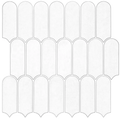
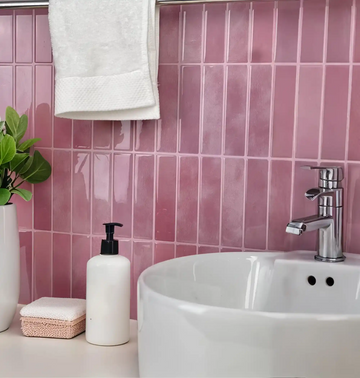
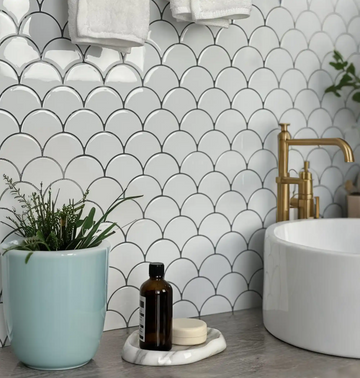
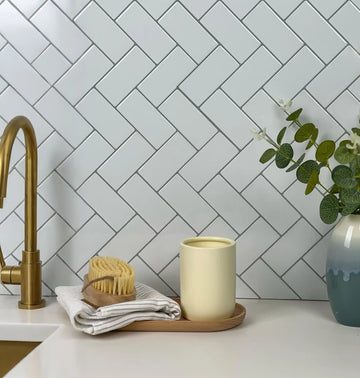
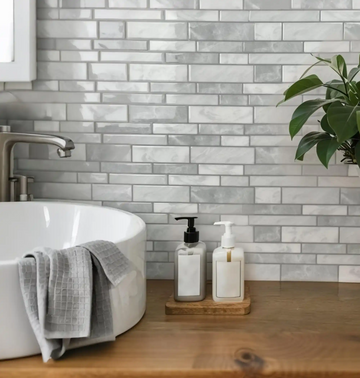
For a low-splash vanity application, products such as Minty Ceramic 8 self-adhesive wall tiles, Subway Magic grout-free wall tiles, or Subway Marble marble-look wall tiles may be considered as decorative options. Those product records describe removable, self-adhesive wall tile applications, but they do not establish commercial restroom durability or compatibility with a particular disinfectant.
Before specifying any product, request or verify:
- Approved wall locations.
- Direct-water exclusions.
- Temperature requirements.
- Substrate requirements.
- Adhesive-setting period.
- Edge and seam treatment.
- Approved cleaning products.
- Prohibited solvents and abrasives.
- Removal instructions.
- Commercial-use or warranty limitations.
Do not describe a product as completely waterproof, disinfectant-proof, or suitable for every public restroom unless the exact documentation supports that claim.
What is the final recommendation?
Peel-and-stick tile can be a credible low-cost commercial restroom vanity backsplash when the wall is sound, the exposure is limited to intermittent splash, the edges are protected, and the cleaning process is compatible with the product.
It is a good candidate for a low-traffic office, a carefully selected leased-space upgrade, or a protected vanity wall in a small retail, cafe, or hotel restroom. It becomes a weaker choice as traffic, cleaning intensity, direct water exposure, and guest contact increase.
Use this decision rule:
- Pass for consideration: smooth, dry, structurally sound wall; low-to-moderate splash; controlled cleaning; limited impact.
- Conditional pass: moderate traffic, frequent cleaning, or leased-space restrictions, provided the exact product and janitorial process are reviewed.
- Fail: direct spray, standing water, active leaks, damaged substrate, high-abuse exposure, or cleaning chemistry that the product does not permit.
The safest next step is a short wall-readiness review before buying material. Check the substrate, map the splash zone, list the cleaners used by staff, identify exposed edges, and compare the total burden against FRP, ceramic tile, paint, and commercial vinyl wall covering.
For facilities that need a broader renovation decision, start with the commercial restroom renovation planning resources, then use the product documentation to confirm the exact installation and care limits.
The honest conclusion is conditional: peel-and-stick tile may solve a stained or tired vanity wall, but it should not be used to hide a moisture problem or substitute for a commercial wall system where the facility requires high abuse resistance, continuous wet-area protection, or documented chemical durability.




Leave a comment
This site is protected by hCaptcha and the hCaptcha Privacy Policy and Terms of Service apply.