




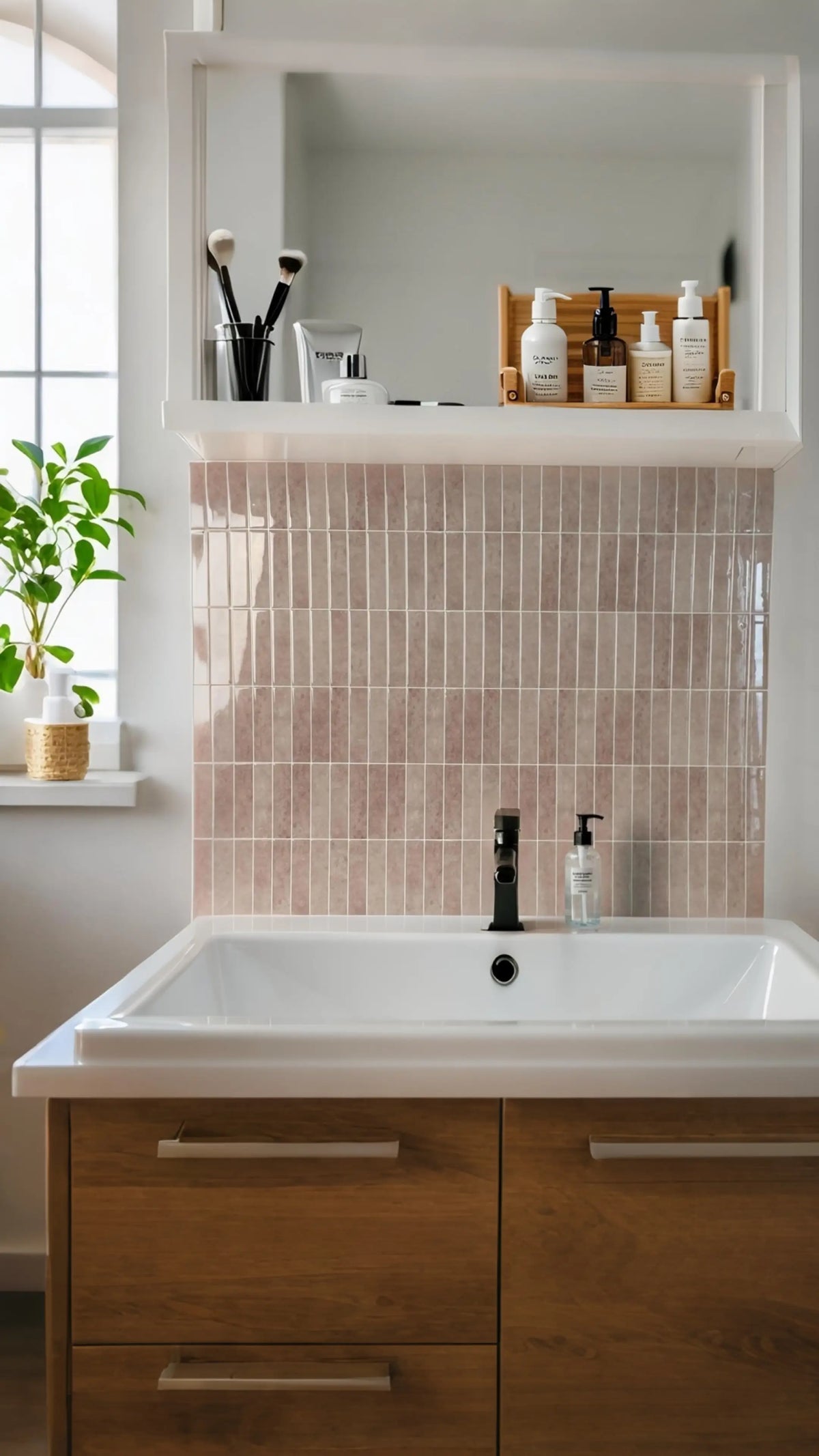
Smart Tiles or traditional tile: what are you choosing?
Smart Tiles is a brand of self-adhesive decorative wall tiles, not an electronic tile system. The relevant comparison is a peel-and-stick wall finish versus a conventionally installed ceramic or porcelain finish. Choose by the wall, exposure, installation work and future removal—not by imagined lighting, sensors or smart-home connectivity.
Explore this guide
Smart Tiles and Stickwoll are separate brands. This guide explains the decision rather than presenting a laboratory test or a ranking. A statement about one manufacturer's product is not a specification for another manufacturer's tiles. Start with the exact product instructions, then use the planning questions below.
What Smart Tiles actually are
The manufacturer's Smart Tiles FAQ describes self-adhesive wall tiles with a Gel-O decorative layer. It excludes floors and direct-water shower locations. These products should not be confused with separately engineered heated floors, illuminated panels or connected devices.
A ceramic appearance is also not the same as ceramic construction. Before buying, compare a sample's thickness, edge profile and finish with the surrounding countertop and cabinets. The printed or moulded joint in an adhesive sheet may look different from a grouted joint when you stand close to the wall.
Compare the whole installation, not just the tile
| Decision | Self-adhesive wall tile | Conventional ceramic or porcelain |
|---|---|---|
| What to check first | Approved wall surfaces, exposure limits and preparation instructions for the exact product. | Tile suitability plus the substrate, setting material, joints and any required waterproofing. |
| Installation planning | Sheet orientation, usable coverage after overlap, cuts and adhesive contact. | Tile layout, joint spacing, cutting method, setting and curing stages. |
| Budget | Include samples, preparation, trims, spare sheets and possible paint repair. | Include preparation, setting materials, grout, trims, tools and any labour quotation. |
| Removal | Do not assume that removable means paint-safe or reusable. | Plan for a more involved removal and substrate-repair project. |
| Best decision test | Does the specific product suit this wall and the change you are allowed to make? | Does the complete assembly suit the room and the permanence you want? |
Choose by location before choosing a pattern
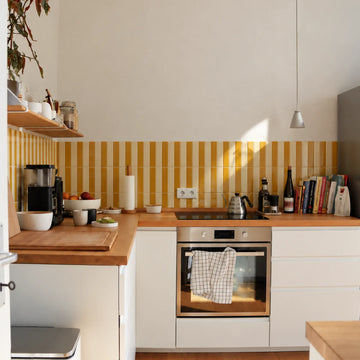
For a kitchen, sketch the proposed tile area and mark the sink, range, countertop appliances and outlets. A decorative finish cannot override appliance installation clearances. Where a product's heat guidance is unclear, leave the area undecided until the manufacturer confirms suitability. There is no single clearance in this article that makes every adhesive tile safe near every stove.
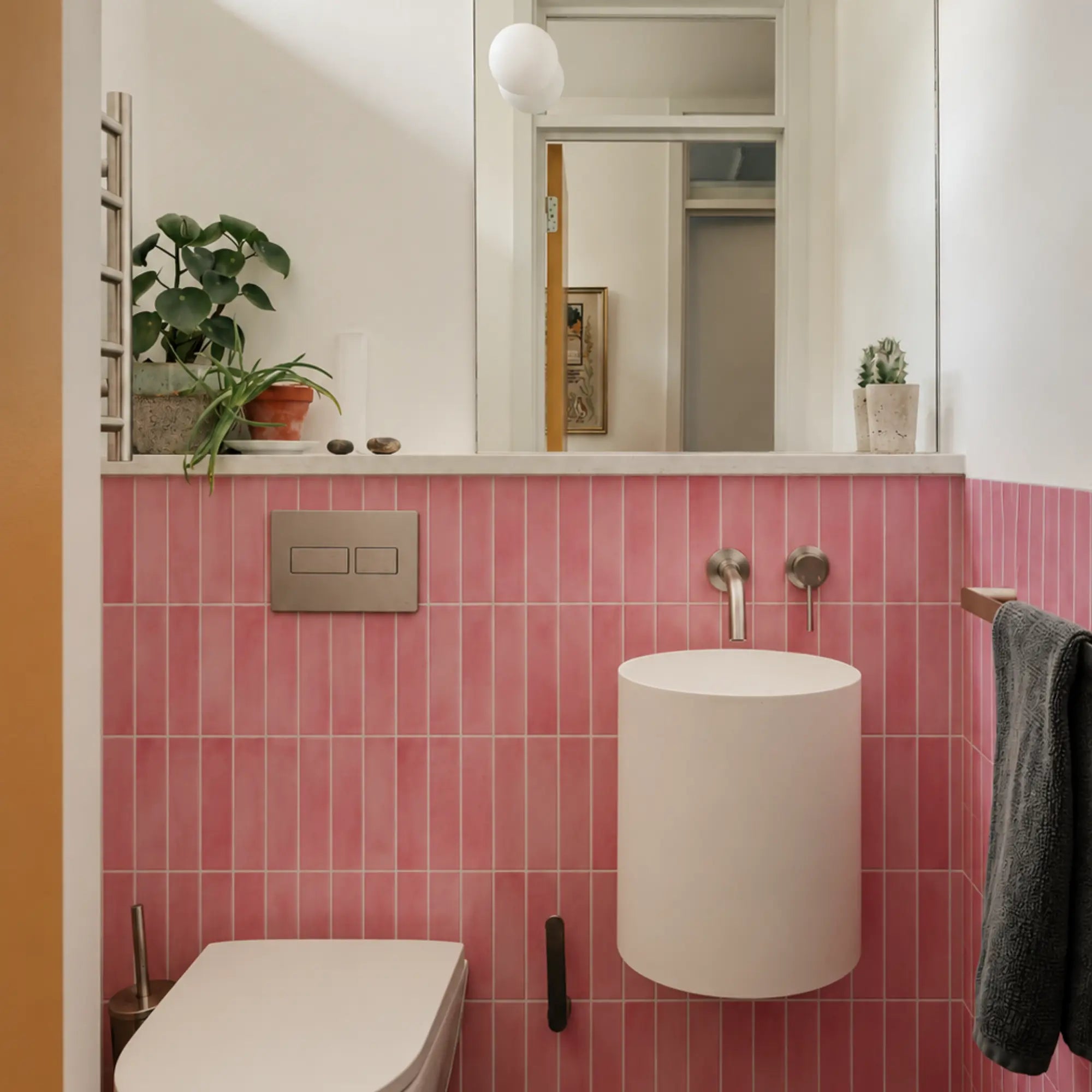
For a bathroom, separate an occasional-splash wall from a shower enclosure. A cosmetic wall covering is not a substitute for a waterproofing system. Our bathroom and wet-area planning guide helps organize those different locations before you select a finish.
For a rental, check the permission and reinstatement requirements before attaching anything. Inspect paint condition, ask about unfamiliar coatings and keep a small repair allowance. The manufacturer's renter guidance acknowledges that older or unprimed paint can lift during removal. A successful sample is useful information, not a guarantee for every wall or a promise about a security deposit.
A practical way to plan a small project
First, photograph and measure the wall. Next, choose one or two samples rather than ordering several competing patterns. View each sample beside the countertop in daylight and under the lights you use at night. Finally, draw the sheet layout, including partial pieces at the ends, so that you can compare the real pack requirement.
Use the kitchen backsplash guide for the room layout and the peel-and-stick tile guide for surface and installation planning. Keeping those decisions separate helps avoid buying a finish that looks right but does not suit the wall.
Frequently asked questions
Do Smart Tiles contain LEDs or connect to Alexa?
The self-adhesive wall tiles discussed here are decorative coverings. Do not assume electronic functions unless a specific product's manufacturer explicitly documents them.
Is one option always cheaper?
No. Compare the required packs and the complete project cost. A small adhesive project and a large professionally installed tile project are not equivalent price comparisons.
Can I apply one brand's instructions to another?
No. Materials, adhesives, sheet designs and approved uses differ. Use the instructions for the exact item you are buying.
Which option should I choose?
Choose a self-adhesive finish only when its documented limits fit your wall and your project. Choose a conventional tiled assembly when its installation requirements and permanence better fit your needs. Neither choice removes the need for careful preparation.
Compare the installed systems, not only the visible tiles
A traditional ceramic wall and a peel-and-stick wall use different installation systems. Ceramic commonly relies on an appropriate substrate, setting material, joints or grout and edge details. Self-adhesive wall tile arrives with its attachment layer integrated into the product. Comparing only the face materials misses the parts that determine preparation, repair, water management and eventual removal.
Start with the same wall and room. What is the substrate? Is it sound and flat? Is there direct water, grease, appliance heat or repeated impact? Are there outlets, valves or access panels? Which parts of the wall need to remain serviceable? Once those conditions are defined, compare only systems intended for them.
A permanent system is not automatically better for every homeowner, and a removable system is not automatically easier in every building. A strong mortar installation can be appropriate when long service and a complete wet-area assembly are required. A self-adhesive decorative finish can be appropriate when the wall and exposure fit the product and low-mess installation is valuable.
Substrate preparation is different, but neither system ignores the wall
Ceramic tile does not make a failing substrate sound, and self-adhesive tile does not bond reliably to dust, loose paint or active moisture. Traditional tile may require a backer board, membrane, leveling or mortar compatible with the substrate. Self-adhesive products may require a smooth, unified, clean and dry surface. The preparation belongs to the chosen system.
Do not assume self-adhesive means no tools or no repair. A wall with deep texture, damaged drywall paper or low spots may need correction before either approach. Conversely, do not assume every existing ceramic wall must be demolished. Some new finishes may be installed over suitable existing surfaces when the product and complete assembly allow it.
Keep the preparation documents. A later repair is easier when you know which primer, setting material or wall coating is under the visible finish.
Installation time should include the steps around the tile
Peel-and-stick can remove mortar mixing and grout from some projects, but the full schedule still includes cleaning, repair, layout, difficult cuts, appliance or fixture work and any required conditioning. Traditional tile schedules can include substrate preparation, setting, curing, grouting, sealing when applicable and cleanup. Compare the actual project rather than one idealized installation step.
For a simple dry backsplash, self-adhesive tile may reduce disruption substantially. For a wall with damage or a complex wet-area requirement, the difference can shrink because both options need the underlying problem resolved. A precise schedule should therefore list tasks and dependencies instead of promising a certain number of hours for the material category.
If a contractor is involved, compare quotations with the same scope. One quote may include demolition and disposal while another assumes a ready wall. Labor price comparisons are not meaningful until the work included is aligned.
Water resistance belongs to the complete assembly
Ceramic or porcelain tile faces can be highly water-resistant, yet a shower still relies on a suitable backing and waterproofing system. A self-adhesive tile can also have a water-resistant face without making the wall behind it waterproof. Direct-wet locations need a complete design for seams, penetrations, transitions and drainage.
Schluter's waterproofing systems, for example, use membranes, corners and specific seals around pipe and mixing-valve penetrations. The lesson is not that every bathroom needs that particular brand. It is that a finished wet-area wall is more than the visible tile face. A decorative wall covering should not be used to bypass the system required for the actual exposure.
For a powder-room wall or vanity backsplash, the exposure may be much lower. That can make decorative self-adhesive products practical when their instructions permit the surface and occasional splash. Define the location before making a material comparison.
Maintenance depends on the exact surface and joints
Traditional tile care varies by ceramic, porcelain, natural stone, glass, grout and sealant. Self-adhesive tile care varies by printed film, gel, composite, metal face and other constructions. There is no useful statement that one category always cleans more easily.
Compare the cleaners you actually use. A household that cooks with oil may care about degreaser compatibility. A bathroom wall may see toothpaste, cosmetics and repeated damp wiping. A natural-stone installation can have etching or sealing considerations that do not apply to a printed polymer face, while a polymer face can have solvent and abrasion limits that do not apply to glazed ceramic.
Joints matter too. A grout joint can discolor or require maintenance. A faux grout line may be part of a sheet and behave differently. A seam in an adhesive sheet can still collect residue or allow water entry if the product is not intended for the exposure.
Repair paths are different
A cracked ceramic piece may be replaced, but the repair can involve grout removal, cutting or chiseling and matching an older tile. A self-adhesive piece may be easier to remove locally when the product is designed for that, but pattern, batch and wall condition can still make the repair visible. Keep spare material for either system when matching is important.
Do not evaluate repair only by removal speed. Ask whether the underlying wall can remain intact, whether the replacement can match, whether the repair affects waterproofing, and whether the same problem will recur. A local repair on a damp substrate simply hides the same condition again.
For wet systems, any repair must preserve the required waterproofing. That can make a small visible tile repair part of a larger assembly decision.
Removal and reversibility
Traditional tile is generally chosen as a permanent finish, so removal often means demolition and substrate repair. Self-adhesive tile can be selected partly for reversibility, but removable does not mean guaranteed damage-free. The adhesive, wall coating, time in service, heat and removal method can change the result.
Renters should obtain permission and document the original wall. A concealed sample can reveal an obvious paint problem, but a sample removed after a short period cannot guarantee the result after a long tenancy. Include possible patching and repainting in the exit plan.
Future reuse is a separate claim again. A tile that comes off intact can still have contaminated or transferred adhesive and may not lie flat on a new wall. Reuse should be based on exact product instructions and a representative second-use trial rather than on retained tack alone.
Budget the same wall at the same level of finish
List the eligible wall area, surface repair, material, trim, tools, professional work and cleanup. For traditional tile, include setting materials and joint finishing. For self-adhesive tile, include any required primer, edge trim and repair reserve. Do not compare a DIY material price with a fully installed contractor quote and call the difference a material saving.
For an illustrative 20-square-foot wall, suppose a self-adhesive product needs six packs at the selected layout, while a ceramic proposal includes 22 square feet of tile, mortar, grout and labor. Insert current quotations for both scopes and keep the wall repair line identical if both require it. This produces a useful comparison without inventing a national average.
Also consider disruption. A business or busy household may value a shorter installation window, while a homeowner planning a long-term remodel may value a more permanent system. Those priorities can be stated without turning them into a universal return-on-investment score.
Appearance and realism
Traditional material can offer depth, edge detail and variation that a printed product may not reproduce exactly. Modern self-adhesive products can also create convincing relief, grout effects and large-scale prints. Judge the actual samples rather than the category name.
Look at seams from normal standing distance and under task lighting. Check repeated prints, reflected hotspots and exposed edges. For ceramic, examine grout color and variation. For self-adhesive tile, examine sheet boundaries, edge construction and how the face responds to the lighting. A well-planned affordable finish can look intentional without needing to imitate every physical property of the material it references.
Decision examples
Rental kitchen: a suitable self-adhesive backsplash may be preferable when permission, wall condition and removal expectations are clear. Owned shower remodel: a complete wet-area tile system may be the more relevant comparison than a decorative self-adhesive wall product. Dry feature wall: either approach can work when the substrate is appropriate, so cost, texture and reversibility may decide. Historic or fragile wall: the preservation risk of both installation and removal deserves separate review before either material is chosen.
The practical conclusion is not that one category wins. Choose the complete system whose requirements match the wall, exposure, maintenance, budget and future plans.
Frequently asked questions
Is peel-and-stick tile as durable as ceramic?
There is no single category-wide durability comparison. Ceramic, grout, adhesives, printed films, gels and composites fail in different ways. Compare the exact products and the actual exposure.
Is self-adhesive tile waterproof?
A product may have a water-resistant or waterproof face, but the complete wall assembly and intended location still matter. Do not infer shower waterproofing from the face alone.
Which is cheaper?
Compare current quotes for the same wall, including preparation, materials, labor, trim and restoration. DIY self-adhesive projects can reduce labor in suitable situations, but a fixed national savings percentage is not meaningful for every job.
Which is better for renters?
Self-adhesive decoration can be useful when the lease permits it and the wall is suitable, but removal outcome is not guaranteed. Document the wall and plan restoration.
Compare environmental and health claims carefully
Do not assume that a lighter product automatically has a lower environmental footprint or that a natural clay product is automatically better in every life-cycle category. Manufacturing, transport, service life, repair and end-of-life all matter. Use product-specific declarations or certifications when environmental performance is part of the purchase decision.
Likewise, odor is not a safety test. Review the product's documentation and applicable emissions or chemical information rather than judging a wall finish by whether it smells strong during installation. Ventilation and safe handling still matter for cleaners, primers, sealants and other materials used in the complete job.
Think about future changes to the room
A backsplash that is suitable today may face different conditions after a remodel. A new range can change heat exposure. A deeper sink can change splash. A new cabinet can cover an access point. A decorative finish should be reassessed when the room's use changes.
This favors documentation for both permanent and removable systems. Save tile or panel information, photographs and the layout. Future work can then identify what is on the wall and what lies behind it without relying on appearance alone.
Use decision priorities rather than a winner-takes-all ranking
Create a short list of non-negotiable conditions such as wet-area suitability, substrate compatibility, appliance limits and service access. Remove any option that conflicts with those conditions. Then compare remaining choices by appearance, disruption, repair, removal and cost.
This prevents a low price or easy installation from outweighing an unsuitable location. It also prevents a premium permanent system from being selected when the household actually values reversibility and the wall is an appropriate low-exposure surface.
Plan edges, corners and transitions before choosing a system
Edge details often reveal the difference between a quick sample and a finished room. Traditional tile may use profiles, finished edges or carefully planned cuts. Self-adhesive products can use molded edges, overlap joints or separate trim. Check the actual product before assuming one technique transfers to another.
At an outside corner, a rigid panel can expose its core if the edge is not finished. At an inside corner, a flexible sheet may be tempted to wrap even when the material wants to spring back. At a counter junction, sealant may be part of a specified detail but should not be used to make an excluded product appear suitable for water.
Think about who will maintain the wall
A system that looks simple on installation day can be inconvenient if ordinary household cleaners are incompatible or if every local repair requires specialized work. Compare the actual maintenance routine with the people who will perform it.
For a rental or frequently updated space, a straightforward local repair and documented removal method may be valuable. For a long-term owned renovation, a more permanent system may be worth the initial disruption. State that priority directly rather than hiding it behind a generic durability ranking.
Keep the final comparison honest
A practical comparison can end with different winners for different rooms. A dry rental backsplash may favor a suitable self-adhesive finish. A shower surround may favor a complete conventional waterproof tile system. A feature wall may come down to texture, edge quality and reversibility. This is not inconsistency; it is the result of matching the system to the job.
Write the decision in one sentence that includes the reason and the main limitation. That sentence is more useful than a score out of ten because it remains connected to the actual project.
Detailed example: a rental kitchen backsplash
Imagine a rental kitchen with a sound painted wall, no direct flame exposure, ordinary sink splash and a landlord who permits a removable backsplash. The tenant values low mess, does not want to remove cabinets and expects to move in two years. A suitable self-adhesive wall product may fit those priorities better than a permanent ceramic installation, provided the wall coating, cleaning and removal conditions are acceptable.
The comparison still includes risk. The paint can be weaker than expected, the pattern can repeat visibly and removal can require patching. The tenant photographs the wall, tests a permitted sample, keeps spare pieces and budgets for restoration. The decision is reasonable because the product fits the defined use, not because all peel-and-stick tile is inherently renter-safe.
Detailed example: an owned kitchen under a major remodel
Now imagine an owned kitchen where the cabinets, electrical layout and countertop are all being replaced and the homeowner expects the finish to remain for decades. Wall repair is already part of the project and professional tile labor is available. Traditional tile may fit the broader renovation because permanence, edge detailing and integration with the other work matter more than quick removal.
This does not make ceramic automatically superior. The specific tile, grout or joint system, substrate and maintenance still need to be chosen. It simply shows that the household's priorities and project scope can point to a different system.
Detailed example: a vanity wall outside the shower
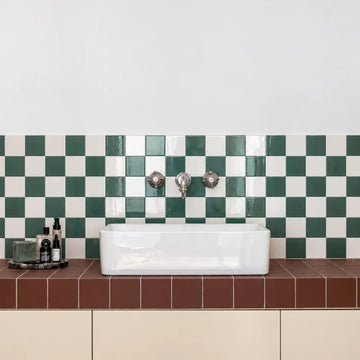
A vanity backsplash receives handwashing droplets and cleaners but is outside the direct-wet enclosure. A decorative self-adhesive wall finish may be a candidate when its instructions allow the wall and splash exposure. Inside the shower, the comparison changes because the wall needs a complete wet-area system. The two surfaces can coordinate visually without sharing the same construction.
This room-by-room approach prevents a successful low-splash application from being used as proof for a much more demanding location.
Questions to ask before ordering either system
- What exact substrate and preparation does this installation require?
- Is the proposed water, heat and cleaning exposure permitted?
- How are inside corners, exposed ends and penetrations finished?
- Which parts of the wall must remain serviceable?
- What are the actual usable material coverage and current costs?
- Can a local repair be made without compromising the surrounding system?
- What removal or demolition should be expected later?
- Which records, spare materials or warranties should be retained?
Answering those questions usually makes the material decision clearer than a generic pros-and-cons list. It also gives contractors or suppliers enough information to correct a bad assumption before the work starts.
How to compare samples fairly
Mount or hold samples against the same wall rather than comparing one in a store and another on a screen. Use the room's normal daylight and task lighting, then view them from the doorway and from the working position. Compare seam visibility, relief, reflected hotspots, edge appearance and how the sample relates to the countertop or vanity.
Keep technical suitability outside the visual ranking. A sample that looks best but is excluded from the substrate or exposure is not a finalist. Among the suitable options, appearance can then carry real weight without being asked to compensate for an unresolved installation condition.
If one sample is ceramic and another is a self-adhesive sheet, compare the intended finished assembly rather than the loose pieces alone. Grout color, edge profiles, sheet seams and trim can change the final look significantly.
Ask to see more than one piece when print variation matters. A single sample cannot reveal repeated graphics, lot variation or the rhythm created by several adjacent joints. Photograph a small dry layout and compare it with the fixed room finishes before purchasing the full quantity.
Also compare how each system ends. A ceramic field can use a profile, bullnose or another finished detail, while a self-adhesive product may expose a printed edge, foam core or molded border. The ending detail often has more influence on perceived quality than a close-up of the center of the sample.
Sources and scope
- Smart Tiles official FAQ — Manufacturer-specific examples for its products only; not Stickwoll specifications.
- US EPA: A Brief Guide to Mold, Moisture and Your Home — Moisture control and prompt drying guidance; not a tile approval or hidden-wall diagnosis.
- Schluter: Pipe and Mixing-Valve Waterproofing Seals — Shows that pipe penetrations belong to a complete waterproofing system; not approval of decorative self-adhesive tile in showers.


Leave a comment
This site is protected by hCaptcha and the hCaptcha Privacy Policy and Terms of Service apply.