





Peel-and-stick tile may be a decorative option for a suitable cafe wall, but the exact product, surface, exposure and local requirements must be checked first. Decorative wall tile should not be treated as commercial flooring, a slip-resistant surface, a food-contact material or a heat shield without the specific documentation required for that use. Plan the room by working zone rather than applying one material everywhere.
A cafe renovation has to look right and remain workable during cleaning, service and maintenance. A quiet wall behind seating is different from the espresso machine's steam path, a food-preparation sink or the floor where staff turn with hot drinks. The useful question is not whether a tile survived an impressive-sounding traffic count. It is whether the complete installation is appropriate for the place and the way the business will use it.
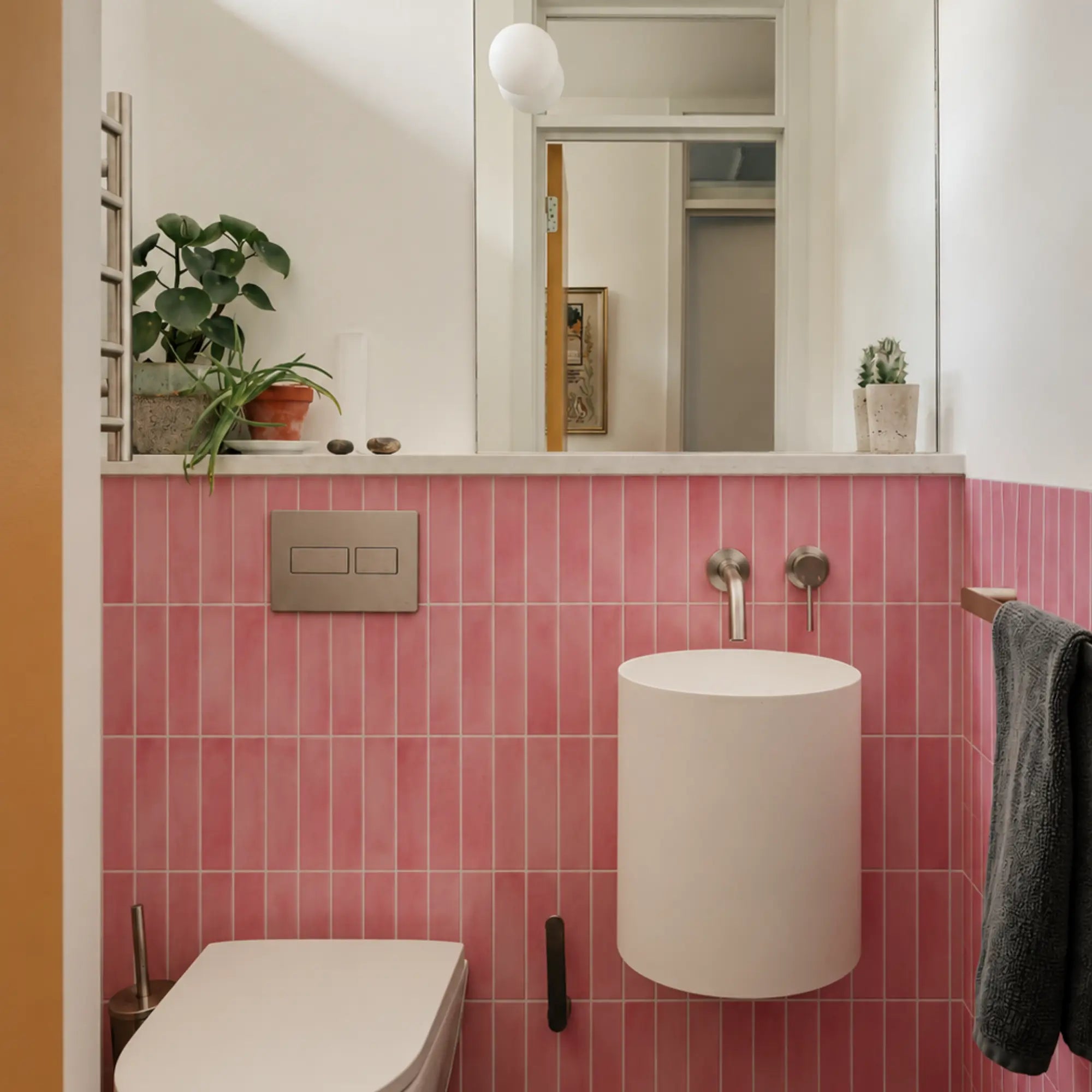
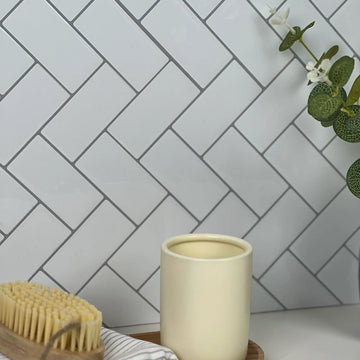
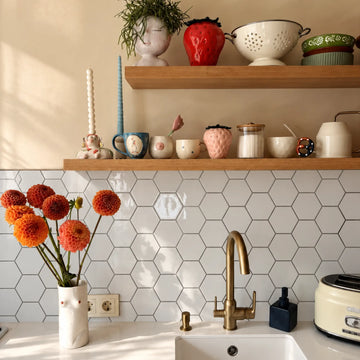
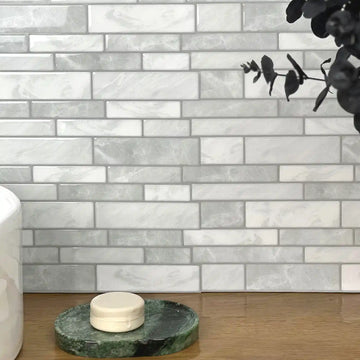
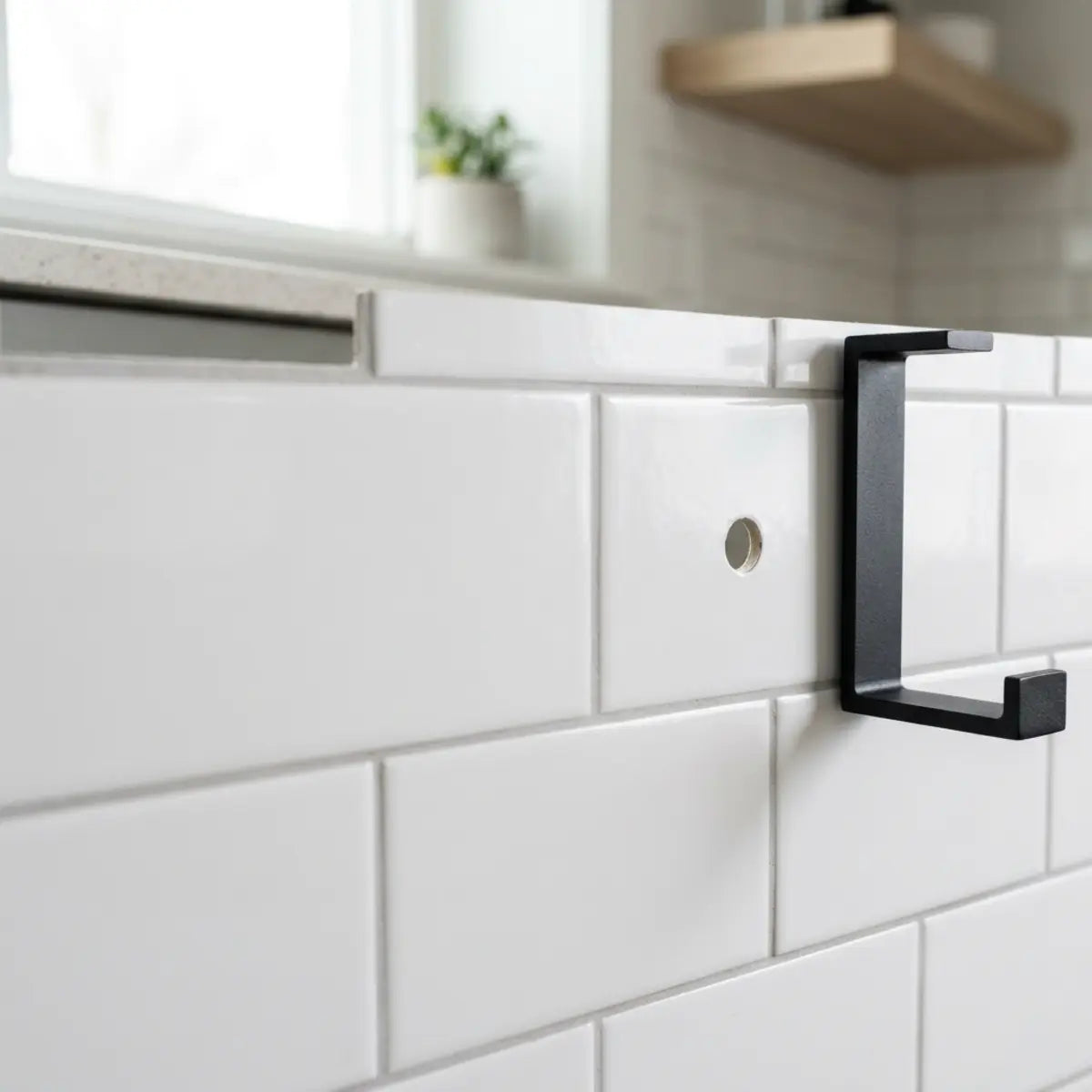
Evidence boundary: this article is a commercial-wall planning guide, not a report of a completed Stickwoll cafe or food-truck trial. It does not claim measured adhesion retention, a commercial durability score, customer polling, slip performance or a food-safety certification. The photographs are retained as illustrations and do not establish approval for the applications pictured.
Divide the cafe into zones before choosing a finish
Start with a plan showing seating, the service counter, drink preparation, food preparation, washing, waste handling, storage and exits. Mark what actually happens near each proposed wall. Include chairs moving backward, bins being carried, pitchers being rinsed and equipment being serviced. A decorative mood board does not capture those activities, but a simple annotated plan can.
Use different decision criteria for different zones. A customer-facing feature wall may be judged primarily on appearance, permitted cleaning and accidental contact. A wet work zone may need a finish and joint system compatible with its sanitation process. A cooking location also brings appliance and fire-safety requirements. None of those decisions automatically establishes suitability for the floor below.
| Zone | Questions to resolve | What a decorative-wall claim does not establish |
|---|---|---|
| Seating feature wall | Is the substrate sound, and can the finish be cleaned and protected from furniture contact? | Impact resistance or suitability for attached loads |
| Dry service-counter wall | What spills and cleaning products are normal? | Food-contact or sanitation approval |
| Espresso and hot-drink station | Where do steam, hot liquid and maintenance movements go? | Steam resistance or a universal appliance clearance |
| Sink and washing area | What direct water exposure and joint details apply? | A waterproof wall assembly from the face alone |
| Cooking area | What do the appliance instructions and relevant authorities require? | Noncombustibility or an approved heat shield |
| Floor or food-truck walking surface | Which floor-rated system meets the actual service requirements? | Any flooring or slip rating for decorative wall tile |
For a hypothetical small cafe, the owner selects one suitable finish for a dry customer wall and a different specified system for the wash area. The palette can still be coordinated. Using more than one construction is not a design failure; it reflects different operating conditions. Document the boundary so staff and future contractors know why the materials change there.
Keep the plan current when equipment moves. A dry wall can become a splash zone after a sink or dispenser is relocated. A new menu can change the cleaning routine. Revisit suitability when use changes instead of relying indefinitely on the conditions that existed on installation day.
Confirm the product and the local requirements separately
Obtain the product's written intended use, accepted substrates, cleaning restrictions and any relevant test documentation before ordering the full area. Give the supplier the actual zone description rather than only the word commercial. A product may be acceptable for one decorative application without being suitable for every surface in a food business.
For US projects, FDA describes its Food Code as a model offered for adoption by the authorities that regulate retail and food-service establishments. It is not a single automatic approval for every cafe nationwide. Check the code and requirements actually applied by the local authority. A product's marketing description does not replace that review. [1]
For Canadian projects, consult the relevant provincial or territorial rules and local public-health and building authorities rather than assuming the US model applies. Ask about the proposed wall material, cleaning method, joints, penetrations and any required plan review. This article is not a determination of compliance for a particular premises. Keep the authority's response and the submitted product information together.
A useful question is whether the proposed assembly can meet the cleaning and maintenance requirements for that exact zone. Ask whether exposed seams, porous edges or pronounced texture create an issue there, and what documentation is needed. Request clarification before installation when the answer depends on details. It is easier to revise a drawing than to replace a finished wall after an inspection.
Separate different kinds of approval
A coating's abrasion result does not establish food-contact suitability. A fire-test report does not approve a cleaner, and a water-resistant face does not demonstrate a floor's slip performance. Make a small evidence table with one row for each claim and the document that supports it. Leave unresolved cells blank and assign someone to obtain the answer.
Check that every document matches the supplied product version and installation. A report for a different backing, thickness or mounting arrangement may not answer your question. Where a classification is relevant, ask the supplier or professional to explain its scope and how it applies. Avoid collecting impressive-looking certificates without confirming their relationship to the actual wall.

Break durability into properties you can evaluate
Durability is not one universal number. Appearance, attachment, resistance to routine cleaning, edge condition and maintainability can change independently. Define what matters to the proposed wall. A visible scratch at eye level may be unacceptable on a feature wall, while a hidden service-area finish may be judged mainly by whether it remains suitable for its required cleaning and use.
Ask how an abrasion result was produced. ASTM D4060 concerns abrasion resistance of organic coatings using a Taber Abraser on a plane, rigid surface. Its public scope and interpretation notes are not a commercial-flooring certification. A result for a coating must be connected to the actual product and test conditions before it can inform a comparison. [2]
Similarly, ASTM E84 addresses comparative surface-burning behavior under defined exposure conditions. Its scope explicitly does not make a flame-spread index alone a classification of noncombustibility or a measurement of heat transmission through the surface. Do not turn a reported fire classification into a claim that a decorative panel is fireproof or an approved heat shield. [3]
For attachment, distinguish visual observation from mechanical testing. A panel that remains flat has not thereby been measured to retain 98% of its initial bond. A photograph cannot identify shear strength. An appropriate report should state the tested construction, substrate, conditioning, loading and measurement, including any failures or repairs. Ask what the number means before comparing it with another product's result.
Operational evidence can still be useful without laboratory claims. A documented observation that an approved sample was easy to clean with the actual permitted routine answers a practical question. A record of repeated edge damage near a chair identifies a layout problem. Describe those findings accurately rather than combining them into a proprietary score with no defined measurement basis.
Design the cleaning routine before installing the wall
Ask the people who actually clean the premises how each area is maintained. Record the cleaner name, dilution, tool, contact time and whether rinsing is required. Include occasional deep-cleaning methods, not just the routine used during a site visit. A finish that tolerates a light household wipe may still be unsuitable for the business's required process.
Cleaning, sanitizing and disinfecting are different tasks. CDC’s general community-facility guidance emphasizes suitable products, label directions, contact time, protective equipment and training, and warns against mixing chemicals. It expressly excludes food-preparation and food-service areas governed by their own requirements. Follow the applicable food-service rules and product directions in those areas rather than using this general guidance as their sanitation specification. [4]
If a required chemical exposure conflicts with the tile care guide, do not resolve the conflict by shortening the process or quietly changing the dilution. Seek a compatible approved method or a different finish for that zone. A successful-looking sample cannot establish microbiological effectiveness, and a clean appearance does not establish compliance with a sanitation procedure.
Plan the physical route of cleaning. Can staff reach the lower edge without moving connected equipment? Does liquid collect at a trim line? Are there recesses that need a permitted tool? Can the area be inspected after drying? These practical questions often determine whether a finish remains manageable after the opening-week photographs are taken.
For a dry decorative wall, a simple care card may be enough to keep the permitted routine consistent. For a regulated work zone, integrate the surface into the business's formal cleaning and inspection process. Do not use this article to improvise a sanitizer recipe. The operational plan should identify who checks the wall, what they record and when a change needs escalation.
What to put on the care card
Include the product and finish, approved routine cleaner, required dilution, permitted tools, residue-removal step and supplier contact. Note any restricted areas, such as seams that should not receive runoff. Keep the relevant product instructions available to supervisors. When the cleaning contractor or product changes, review compatibility before adopting the new routine.
Also separate cleaning supplies by task so an abrasive pad used on cookware is not casually used on a decorative face. Use the protective equipment and ventilation appropriate to the chemicals. Store and label working solutions correctly. Consistency means following the actual procedure, not insisting on one universal wiping method across the whole cafe.
Map steam, splashes and equipment service movements
At an espresso station, observe the normal workflow: filling the reservoir, operating the steam wand, emptying the tray and cleaning equipment. Record where moisture reaches the wall. Do not stage a direct steam blast to test a decorative panel. The exact appliance instructions and the wall product's permitted exposure determine placement, not a generic six-inch rule.
A wall that receives occasional incidental splashes is different from a surface exposed to repeated direct spray or standing water. The face, seams, backing and substrate form an assembly. A water-repellent face does not identify how a joint or underlying coating will behave. Confirm the complete detail before using a decorative product near a washing area.
Published work on industrial acrylic-tape joints after 21 days of immersion found that the substrate interface mattered to the result. That study was not performed on Stickwoll cafe walls. Its value here is the reminder to evaluate the whole connection rather than infer assembly performance from one water-resistant component. [5]
Maintain access to shutoffs, drains and service panels. A finish should not make a leak harder to find or an appliance harder to service. Include the space required to remove tanks, trays and other components when planning a decorative edge. A neat-looking wall that forces unsafe handling during routine maintenance is not a well-resolved design.
Heat and flame require their own assessment. Keep the required appliance clearances and use an appropriate specified assembly where protection is needed. A metallic face, stone pattern or a general durability description does not justify reducing a clearance. Have a qualified installer or relevant authority review uncertain arrangements before adding the finish.
Keep wall durability separate from floor and load performance
Foot traffic matters to a floor, but it does not directly measure the durability of a wall tile. For a wall, think about the contacts that actually occur: chair backs, bags, cleaning carts, bins and equipment movement. Map those locations and decide whether the decorative finish is appropriate or whether another protection detail is needed. Do not convert the cafe's daily customer count into a wall-adhesion result.
A decorative wall covering is not a structural attachment for shelves, hooks or heavy signs. Those items need suitable support in the wall assembly. Plan attachments independently and keep any required access available. Adhesive-backed decoration should not be asked to carry equipment simply because the initial bond feels strong.
For floors, select a system explicitly intended for the expected traffic, loads, moisture and cleaning process. Slip performance, rolling loads, indentation, transitions and accessibility are separate considerations. A printed stone pattern or textured face does not establish a safe walking surface. Do not use a wall-product sample under a refrigerator or as a public walking trial to decide whether it can become flooring.
Food trucks add a distinct operating environment. Movement, cleaning, equipment, heat and the vehicle's construction need to be considered together. A photograph of a tile-like floor does not approve a particular adhesive wall product for that use. Ask for a separately suitable system and the relevant professional or authority review rather than transferring a household backsplash method into a vehicle.

Prepare the wall and schedule the work realistically
Inspect the existing wall before committing to an installation date. Record the substrate, coating, damage, moisture history and any previous covering. If paint is weak or the wall is damp, resolve that condition before adding adhesive tile. Do not treat cleaning as a repair for a deteriorating base, or assume that a primer makes every unknown coating suitable.
For new paint or repairs, obtain the required cure and conditioning instructions. Dry to the touch is not necessarily ready to receive an adhesive covering. The product, paint and repair material can impose different requirements. Build those conditions into the schedule rather than selecting a weekend first and making the materials fit the deadline.
Plan the layout around actual wall interruptions. Measure the installed coverage, check pattern repeats and decide how edges and penetrations will finish. Dry-fit difficult pieces before removing release liners. Keep adhesive faces protected from contamination. Use the application tool and method specified for the product, not a heavy floor roller borrowed from a different installation system.
Separate preparation work from food operations appropriately. Dust, tools and cleaning chemicals should not become part of an active preparation area. Coordinate the work with the business's hygiene process and any required professional work. Where access involves moving connected equipment, use suitable help rather than treating it as an ordinary furniture adjustment.
Do not promise immediate reopening from the absence of grout. A project can still require coating cure, adhesive bond development, cleanup, inspection and equipment checks. Confirm the conditions for return to use with the relevant product instructions and authorities. A realistic plan can still be efficient without claiming that every cafe can be transformed safely overnight.
3M's VHB preparation guidance illustrates that adhesive contact, surface condition, pressure and time can all matter. The numerical values and solvents in that guidance belong to its specified tape systems. They are not a universal installation recipe for Stickwoll or permission to use concentrated alcohol on any cafe wall. [6]
Run a permitted pilot with an honest observation log
After the product and location have been accepted, a small representative pilot can answer practical questions about appearance, cutting, edge details and the permitted cleaning routine. It is not a way to override a product exclusion or avoid an inspection requirement. Choose a location that represents the intended use rather than only the easiest dry corner.
Record product name and batch, substrate and coating, preparation, application method, date and the applicable instructions. Photograph the installed sample before it enters normal permitted use. Keep any interventions in the record. If someone reattaches a corner or changes the cleaner, note it rather than presenting later images as an untouched installation.
| Observation | How to record it | What it can support |
|---|---|---|
| Appearance | Same-position images in comparable lighting | A visual record of the observed sample |
| Edges and joints | Location, measured gap where relevant and any repair | Identification of changes needing investigation |
| Cleaning | Product, method, frequency and visible result | Practical experience with that permitted routine |
| Operational contact | What touched the wall and where | A reason to adjust layout or protection |
| Water or heat exposure | Normal-use context and deviations from the approved plan | A prompt to reassess suitability, not a new rating |
Use observation appointments that fit the business, such as after installation, after initial permitted use and during routine maintenance. These are planning choices, not standardized certification checkpoints. A sample observed for a month does not establish a one-year service life. Do not extrapolate customer visits or cleaning passes into a durability guarantee without a valid method and data.
Define a stop condition before the pilot begins. Repeated detachment, a changed finish, dampness or a conflict with the required cleaning process should trigger review rather than more improvised exposure. Make someone responsible for recording the issue and contacting the supplier. The purpose is to learn about an approved installation, not to keep testing until an attractive photograph can be produced.
Compare total project cost without inventing a payback
Build the budget from the actual scope. Include assessment, repairs, product quantity, trim, approved preparation, professional work, cleanup and replacement spares. Record quotations and distinguish confirmed costs from allowances. A low box price does not describe the cost of correcting a weak wall or maintaining access around equipment.
Downtime deserves its own line, but lost sales are not the same as lost profit. For an illustrative calculation only, assume a cafe normally sells 1,000 currency units per day and retains 45% after the variable costs associated with those sales. Two days of completely lost sales would correspond to 900 units of lost contribution under those assumptions: 1,000 × 0.45 × 2. This is not a forecast for your cafe or an assertion that all costs disappear while closed.
Keep ongoing fixed costs, actual additional labor and any rescheduled sales separate so they are not counted twice. A business that can trade in part of the premises has a different situation from one that must close entirely. Use your own operating records and professional financial advice where needed. The example's purpose is to make the categories clear, not to promise that a particular finish pays for itself.
Compare equivalent quotations. One installer may include wall repair and edge finishing, while another assumes a ready-to-cover surface. Check the same proposed area, preparation, materials and return-to-use conditions. Ask what happens if the substrate fails the initial assessment. An explicit contingency is more useful than a headline installation price with uncertain exclusions.
Also consider maintainability. A finish that allows an approved local repair with retained spare material may be less disruptive than one that requires replacing a whole visible section. But do not assume a repair will be invisible or that a future batch will match perfectly. Keep spare quantities and batch records appropriate to the actual layout and product advice.

Give staff a clear maintenance and escalation plan
At handover, identify the boundaries between decorative and work-zone finishes. Explain which cleaner and tools belong to each surface and which areas must remain accessible. Keep the supplier information, installation record and any authority review available to the manager. A future shift supervisor should not need to guess why a particular wall has a different cleaning method.
Make reporting simple. Staff can note the location of a new stain, loose edge or unexpected dampness and take a clear photograph when safe. Avoid encouraging them to pull panels off, test strength by hand or add adhesive during service. The manager should compare the report with the original conditions and decide whether the area needs restriction, supplier advice or professional assessment.
When a piece needs repair, identify the cause before replacing it. Paint on the back of a detached piece suggests a different question from damage to the decorative face. Recurring water requires source investigation. A change in cleaning product needs compatibility review. Describe the observation accurately rather than assigning a chemical failure mechanism from a photograph alone.
Keep repairs visible in the maintenance record. Record the date, replacement material and any change in preparation or use. A repaired installation can still be a practical success, but it should not later be described as unchanged performance through the whole period. An honest record is useful for warranties, staff training and future renovation planning.
Keep the commercial design coherent without overextending the product
Choose a visual language that can work across different appropriate materials. Color, pattern scale and edge alignment can connect a decorative seating wall with a separately specified service-area finish. You do not need identical construction everywhere to make the room look intentional. Plan the transitions where they are accessible, cleanable and visually balanced.
Use samples to judge the pattern under actual daytime and evening lighting. Check reflections near menu boards and the appearance from normal seating positions. Think about how chairs, shelving and signs interrupt the layout. These observations address the design directly and do not need to be disguised as laboratory performance measurements.
For Stickwoll styles, begin with the wall-tile planning guide and confirm the exact product's permitted use with the supplier. For equipment areas, read the separate coffee-bar steam-exposure guide, grease-cleaning guide and wet-area planning guide. These resources support a decision; they do not replace commercial approval.
The successful project is not necessarily the largest area covered in the shortest time. It is a wall treatment that fits the site, can be maintained by the actual team and does not claim a use the product has not established. Keep appearance, operating requirements and evidence together from the first sample through the final handover.
Frequently asked questions
Can Stickwoll decorative wall tile be used as a cafe floor?
Do not infer floor approval from a wall-tile description, a textured face or the illustrations in this article. A cafe floor needs a separately floor-rated system suitable for the actual loads, wet conditions, cleaning and applicable requirements. This guide does not establish such approval for Stickwoll decorative wall tile.
Does waterproof mean suitable for a washing area?
Not by itself. Clarify whether the claim concerns the exposed face or an entire installed assembly, and whether it covers the actual direct-water and cleaning exposure. Joints, edges, penetrations and the substrate matter. Confirm the complete system and the local requirements before using it in a demanding work zone.
Can a fire classification justify placing tile closer to a grill?
No such conclusion follows automatically. A test classification has a defined scope and does not replace the appliance instructions or an appropriate site-specific assembly. Do not reduce clearances or improvise a heat shield based on a decorative product's appearance or an unrelated report.
How many customer visits prove commercial durability?
There is no universal visit count that certifies a wall finish. Describe the actual contact, cleaning, environment and observation period. Customer traffic is not a direct measurement of adhesion, abrasion or slip performance. A useful record identifies the tested or observed property rather than combining unrelated events into a score.
Can the cafe reopen immediately because there is no grout?
Only when all relevant conditions for return to use are satisfied. Preparation materials, coatings, adhesive instructions, cleaning, equipment work and any required inspections can affect the schedule. Plan those steps explicitly instead of promising an overnight reopening before the wall has been assessed.
What should I ask the supplier before ordering?
Provide the product, proposed zone, substrate, coating, water and heat exposure, cleaning process and any relevant commercial requirements. Ask for written compatibility and supporting documents for each claimed property. Include the full assembly and intended use; a photograph and the word cafe are not enough to define the project.
Sources and their scope
- FDA: Food Code overview, editions and adoption resources. Model-code context; local adoption and requirements must be checked.
- ASTM D4060-25 public scope. Coating abrasion method, not floor certification.
- ASTM E84-26a public scope. Surface-burning measurements, not a declaration that a product is noncombustible or a heat shield.
- CDC: Cleaning and Disinfecting a Facility. Operational safety and cleaning guidance.
- Machalická et al., Buildings: Water Resistance of Acrylic Adhesive Tapes for Rooftop Fastening. Industrial-joint research, not Stickwoll field testing.
- 3M: Surface Preparation for VHB Tape Applications. Product-family principles, not a Stickwoll installation specification.



Leave a comment
This site is protected by hCaptcha and the hCaptcha Privacy Policy and Terms of Service apply.