
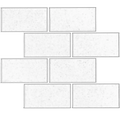
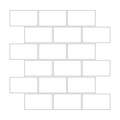



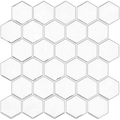
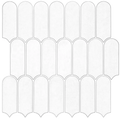
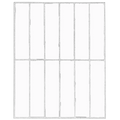
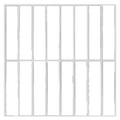
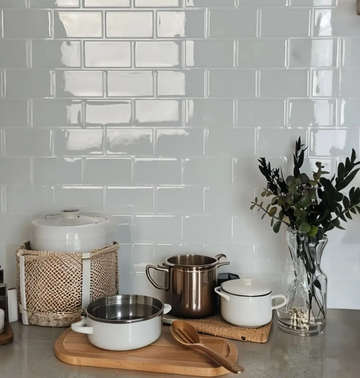
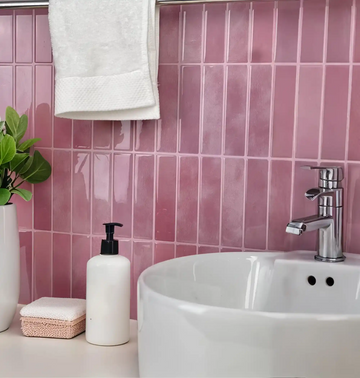
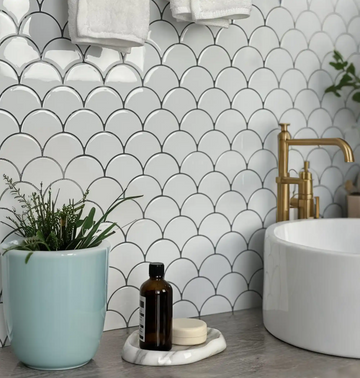
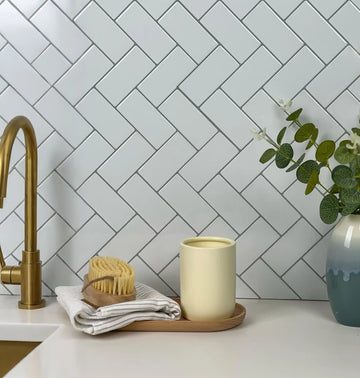
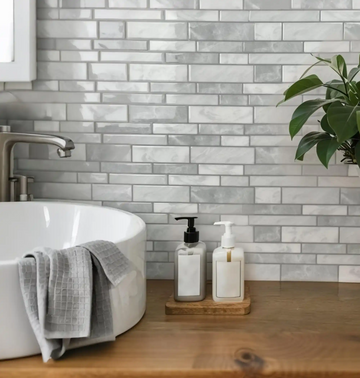
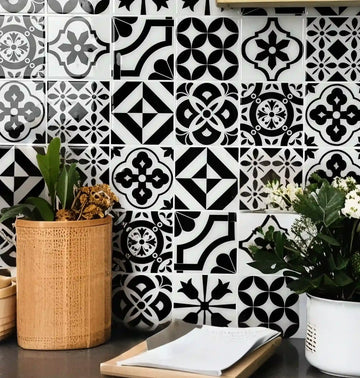
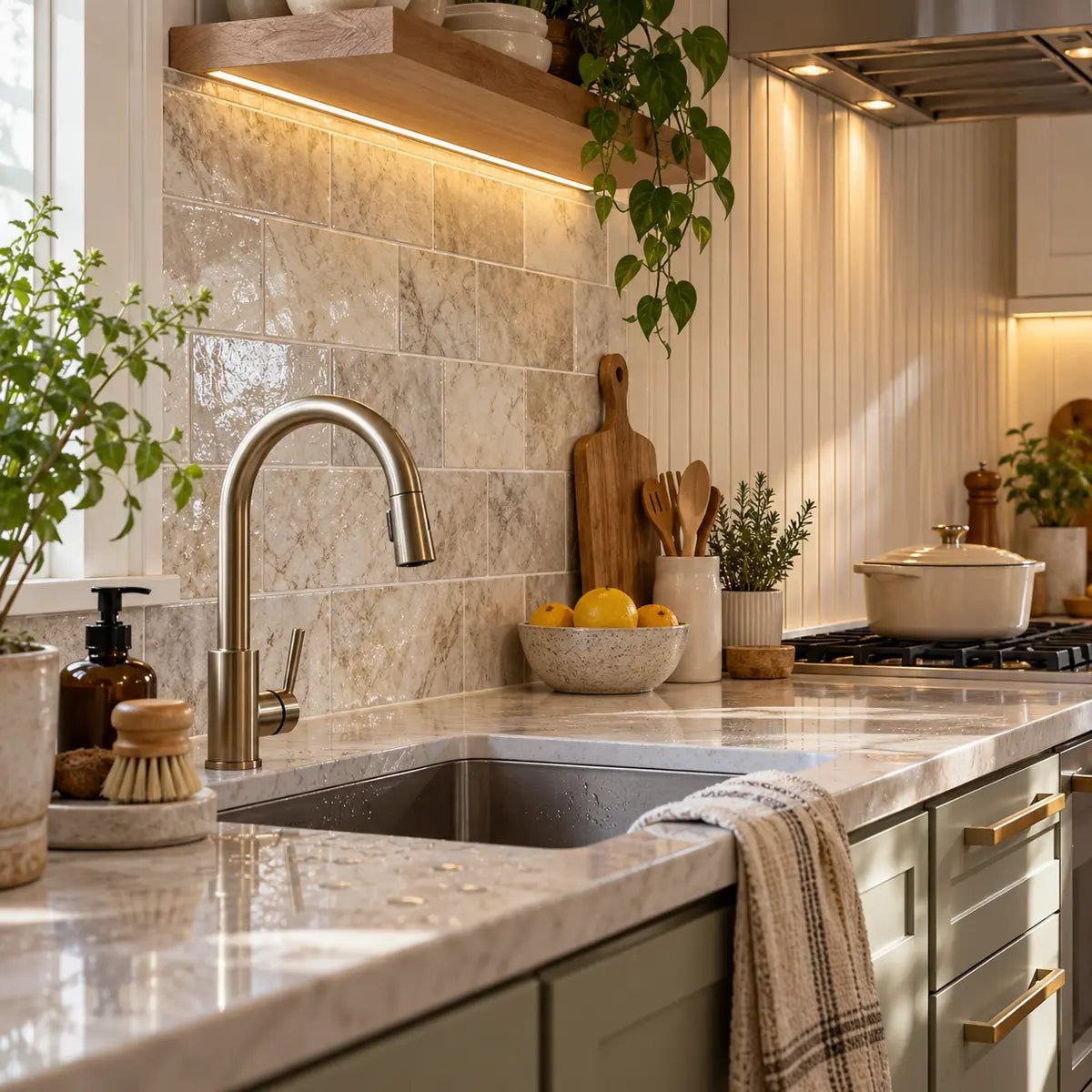
The better backsplash depends less on appearance than on exposure. A peel-and-stick tile can be a practical choice for a low-splash kitchen wall or a carefully selected sink area, while beadboard can work well when its material, finish, seams, edges, and installation details match the location. Neither option deserves a universal “waterproof” verdict without checking the exact product instructions and the way water, grease, heat, and cleaning affect that wall.
For a fair peel-and-stick tile vs. beadboard backsplash comparison, separate three situations:
- Low-splash areas: A wall behind a counter or breakfast station that receives occasional wiping.
- Sink-splash areas: A wall behind or beside a sink that may receive repeated droplets and damp wipe-downs.
- Cooking-splash areas: A wall near a range or cooktop that may face grease, steam, heat, and more frequent cleaning.
For low-splash areas, peel-and-stick tile often has the practical advantage because installation is quick, the surface may be grout-free, and removal can be possible when the wall is suitable. For a sink or cooking-splash area, the answer becomes product-specific. Wood or MDF beadboard needs more caution around repeated moisture. PVC beadboard may offer stronger material-level moisture resistance, but its seams, caulk lines, trim, adhesive, and countertop joint still need careful detailing.
Stickwoll’s general guidance describes its tiles as water-resistant and wipe-clean for routine splashes, while advising against prolonged water exposure unless the product-specific instructions allow that placement. A specific Stickwoll product page may use stronger language, but those claims still apply to that named product and its stated installation conditions, not to every peel-and-stick tile or every backsplash assembly. Stickwoll’s current splash and care guidance
The short recommendation is simple:
- Choose peel-and-stick tile when you value quick installation, a grout-free face, visual variety, and conditional reversibility, and the wall has only manageable splash exposure.
- Choose PVC beadboard when you prefer a continuous panel look and are prepared to handle cutting, adhesive, caulk, trim, and finishing details.
- Treat wood or MDF beadboard as a finish-sensitive material rather than an automatically moisture-safe backsplash.
- If water repeatedly pools, runs behind the countertop, reaches open edges, or comes from a plumbing or wall leak, fix the moisture problem before covering the wall.
Start with the exposure zone
Use the location of the backsplash as the first decision point. The complete comparison below explains the limits behind each path.
Which situation sounds most like your wall?
- Dry counter or breakfast station: Peel-and-stick tile is often the efficient choice when the wall is smooth, dry, and stable.
- Regularly used sink: Verify the exact product, then focus on the bottom edge, seams, corners, and countertop joint. PVC beadboard may offer a material-level moisture advantage, but neither format is automatically a complete waterproof assembly.
- Cooktop or range: Check heat, grease, steam, and cleaning limits together. Product-specific instructions control.
- Leak or persistently damp wall: Choose neither material until the moisture source is corrected.
Which material handles kitchen moisture better?
The material that handles kitchen moisture better is the one whose complete installation matches the exposure zone. A water-resistant face is only one part of a backsplash. Seams, cut edges, corners, the countertop-to-wall joint, adhesive bond, and the wall behind the covering can determine whether repeated moisture becomes a maintenance problem.
A useful distinction is water resistance. Water resistance means a surface can tolerate some contact with water under stated conditions. It does not automatically mean the installed assembly blocks water indefinitely, withstands direct spray, or protects a wall cavity from moisture.
Waterproofing is a stronger claim. It should describe a defined product, assembly, test condition, or installation system. A marketing phrase on a product page is not the same as a tested waterproof wall system.
Stickwoll’s general FAQ supports routine splash use with limits. It does not establish immersion resistance, hydrostatic-pressure resistance, seam testing, or universal protection for the wall behind the tile. The same source distinguishes ordinary splash exposure from prolonged wetting. That is why the safest comparison begins with location rather than appearance.

A practical exposure map
| Kitchen location | Typical exposure | Peel-and-stick tile | Wood or MDF beadboard | PVC beadboard |
|---|---|---|---|---|
| Behind a dry counter | Occasional crumbs, light wiping, limited moisture | Often a reasonable fit if the wall is clean, smooth, and dry | Usually practical with suitable finish | Practical, though installation may be more work than needed |
| Behind a prep area | Food residue, damp cloths, occasional splashes | Often suitable when product guidance allows routine splashes | Finish and edge details matter | A strong candidate if the product is specified for the environment |
| Behind a sink | Repeated droplets, wet hands, damp cleaning cloths | Conditional; verify the exact product, edges, seams, and countertop joint | Higher concern, especially for unfinished, damaged, or moisture-sensitive material | Potentially suitable at the material level, but joint and installation details remain decisive |
| Near a cooktop | Grease, steam, heat, frequent wipe-downs | Conditional; check heat and cleaning limits | Finish may need frequent attention; direct heat can be a concern | Material may tolerate humidity, but verify heat clearance and finish requirements |
| Where water pools or runs | Prolonged wetting or hidden moisture | Poor choice unless a complete approved system specifically permits it | Poor choice for generic wood or MDF beadboard | Do not assume the PVC panel alone solves the water path |
| Around a leak or damp wall | Recurring moisture from behind | Do not cover the defect | Do not cover the defect | Do not cover the defect |
This table is a decision guide, not a product certification. The source material does not provide an independent head-to-head test of peel-and-stick tile versus beadboard under matched kitchen moisture conditions. The comparison should therefore use conditional recommendations rather than a numerical winner.
Why the seams matter more than the center of the panel
The center of a tile or panel may shed water while its vulnerable areas behave differently. These areas deserve closer attention:
- Tile-to-tile joints.
- Exposed top, bottom, or side cuts.
- Outside corners and inside corners.
- Gaps around outlets and switches.
- The line where the backsplash meets the countertop.
- The line where the backsplash meets a cabinet, hood, or trim piece.
- Any edge that can catch a wet cloth or receive direct splash.
This is the central mistake people make with backsplash comparisons: they evaluate the visible face and ignore the water path. A surface can wipe clean while moisture still reaches an unsealed cut edge or weak bond.
Stickwoll’s zone-based guidance makes the same practical point: the product face does not turn unsealed seams into a waterproof system. Its kitchen peel-and-stick tile fit guide by zone is useful for checking the relationship between splash intensity, exposed edges, heat, wall condition, and removal risk.
What should you compare besides moisture resistance?
Compare exposure, cleaning, seams, edges, preparation, repair, appearance, and reversibility together. A backsplash that handles occasional water well may still be a poor fit if it is hard to clean around textured grooves, difficult to repair, or likely to pull paint from a weak wall.
Exposure
Ask where water lands first and where it travels afterward. Behind a sink, water may hit the wall directly, collect on the countertop, run down the backsplash, or reach the bottom edge through repeated wiping. Near a cooktop, grease and steam may be more important than visible droplets.
Cleaning frequency
A surface cleaned once a week has different demands from one wiped several times a day. Frequent cleaning increases the importance of:
- A surface that tolerates the approved cleaner.
- Edges that do not lift when wiped.
- Seams that do not trap grease.
- A finish that does not become dull from abrasive scrubbing.
- A shape that can be reached without special tools.
Seam and edge maintenance
Peel-and-stick tile may have many visible seams, depending on the design. A grout-free product avoids grout maintenance, but it does not eliminate joints. Beadboard may appear more continuous, yet panel joints, corners, cut edges, trim, and caulk lines still require attention.
Wall preparation
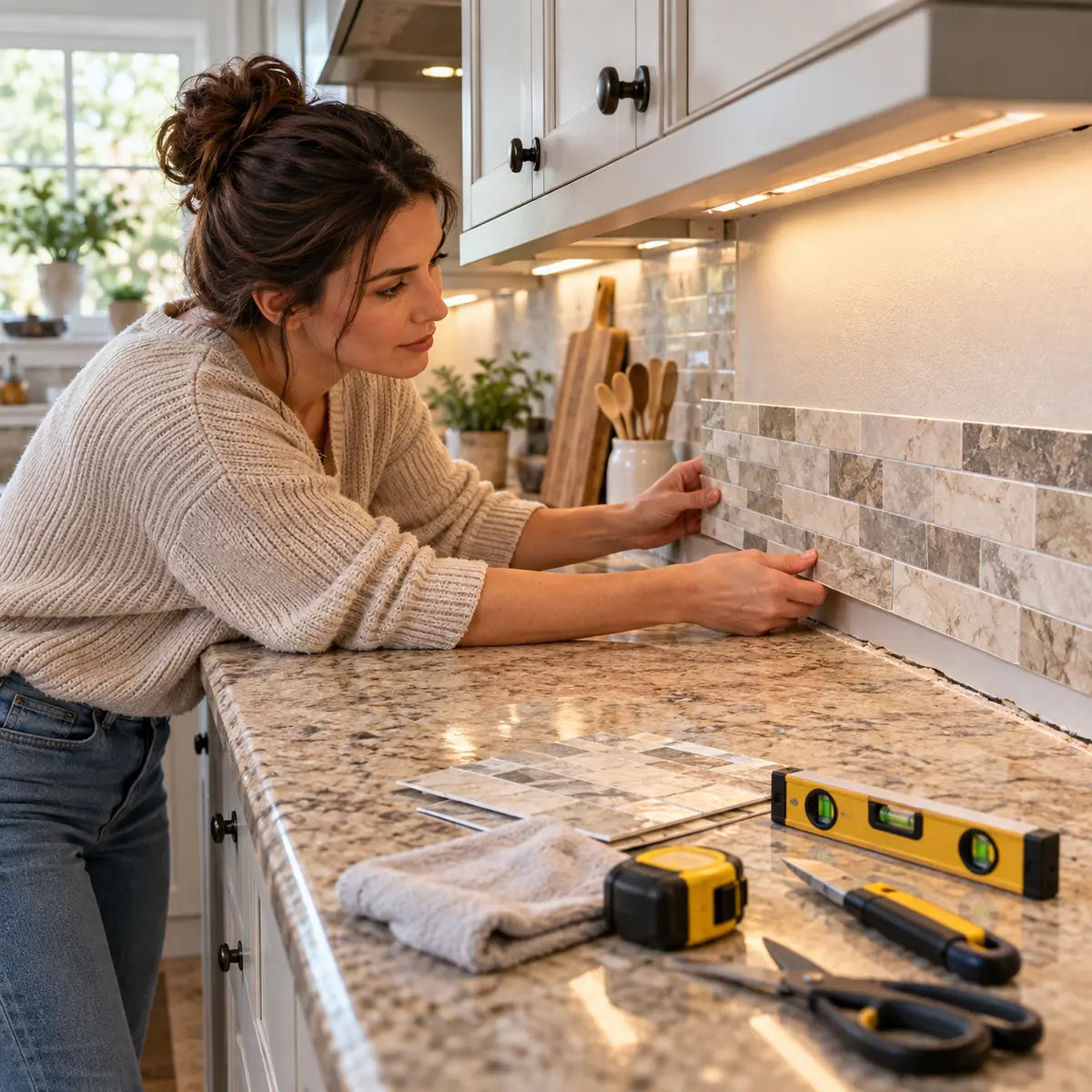
Peel-and-stick tile depends heavily on the wall. A substrate is the surface receiving the material. For an adhesive tile, the substrate generally needs to be clean, smooth, dry, stable, and free from loose paint or prominent texture. Dust, peeling paint, dampness, and uneven surfaces can weaken the bond.
Beadboard also needs a sound wall, but its installation typically gives you more attachment options, such as construction adhesive, fasteners, trim, and caulk. That does not make poor preparation harmless. A panel can remain attached while a weak wall finish fails behind it.
Repair and replacement
A single damaged peel-and-stick tile may be easier to replace if the pattern and product are still available. A damaged beadboard panel may require cutting, removing trim, matching paint, and addressing the fastening or adhesive method.
The reverse can also be true. If one peel-and-stick tile is strongly bonded or the design is discontinued, a small repair may be visually difficult. A painted beadboard panel can sometimes be sanded, filled, or recoated, but that depends on the material and finish.
Reversibility
Peel-and-stick products are often chosen for rentals or temporary updates, but “removable” does not mean “guaranteed damage-free.” Wall paint, substrate condition, adhesive age, installation pressure, and removal technique all affect the result.
Stickwoll’s installation and removal guidance recommends testing the surface, documenting its original condition, and avoiding assumptions about residue-free removal. That is the correct mindset for a rental wall: treat removability as conditional and test before covering a large area.
Beadboard is usually a more committed installation because it may involve adhesive, nails, screws, caulk, trim, and paint. It can still be removed, but the work is less likely to resemble a clean peel-off process.
Is peel-and-stick tile good for a kitchen backsplash?
Peel-and-stick tile can be good for a kitchen backsplash when the location has routine splash exposure, the exact product allows that use, and the wall is properly prepared. It is less suitable as a substitute for a fully waterproofing system or as a cover for recurring dampness.
The practical advantages are clear:
- Installation does not usually require mortar or grout.
- The visual change can be completed quickly.
- Many designs are available.
- A grout-free face can simplify routine wiping.
- The material can be easier to replace or remove than a permanently installed tile system, subject to wall conditions.
- It can suit renters and homeowners who want a lower-commitment refresh.
Those advantages create a common misconception: that quick installation means low preparation. Adhesive products are often less forgiving of wall defects than people expect. The wall has to provide a stable surface, and the adhesive needs consistent contact.
Stickwoll’s product guidance for a named design uses stronger product-specific language about kitchen and bathroom use, splash-prone walls, moisture, and heat. It also requires a clean, smooth, dry wall and states that performance depends on surface preparation and daily usage conditions. Read that as a product-specific use case, not a universal verdict for all peel-and-stick tile. Stickwoll Coastal Breeze product specifications
The same caution applies to product labels such as “waterproof.” The supplied product documentation does not report a standardized test method for direct water jets, submerged conditions, every seam configuration, or every cooking-surface placement. The complete installation still includes the wall, adhesive, tile joints, cut edges, and surrounding sealant.
For a lower-splash wall, peel-and-stick tile can be an efficient option. Behind a sink, it needs a more careful review:
- Confirm the exact product’s current moisture and heat guidance.
- Inspect the wall for dampness, loose paint, texture, grease, and unevenness.
- Plan how the bottom edge meets the countertop.
- Plan inside corners and exposed side edges.
- Confirm which cleaners and tools the manufacturer permits.
- Test a small area before committing to the full wall.
A good place to organize those decisions is Stickwoll’s peel-and-stick tile guide for preparation, exposure, cleaning, and removal.
Is beadboard good for a kitchen backsplash?
Beadboard can work as a kitchen backsplash, but “beadboard” describes a style rather than one moisture-performance category. Wood, MDF, and PVC beadboard should be evaluated separately, because their response to humidity, water, paint, fasteners, and cleaning can differ.
Wood beadboard
Wood responds to humidity. Nantucket BeadBoard’s installation guidance recommends indoor relative humidity between 25% and 55% and 48 to 72 hours of acclimation before installation for its wood products. Acclimation means allowing the material to adjust to the indoor environment before it is installed.
That guidance does not mean wood beadboard is unsuitable for every kitchen. It means the installation should respect movement, moisture, joints, and finish requirements. Nantucket also calls for moisture-aware detailing in certain high-moisture or below-grade applications, including an air gap to avoid wicking, flexible adhesive, supported joints, and attention to exposed cut edges. The company places responsibility for application suitability on the installer or end user. Nantucket BeadBoard wood installation guidance
Behind a sink, the risk is not simply that water touches painted wood. The greater concern is repeated moisture reaching a cut edge, joint, bottom edge, or unprotected area. Paint can slow water entry, but paint is a finish, not an automatic waterproofing membrane.
Wood beadboard may be attractive when you want:
- A traditional cottage or farmhouse appearance.
- A panel look with fewer visible tile seams.
- A surface that can be repainted.
- A more permanent renovation.
- The ability to coordinate the backsplash with wainscoting or cabinetry.
It requires more discipline around finish maintenance. If the paint chips, caulk separates, or an edge absorbs water, the repair should happen early rather than after the panel has visibly swollen, softened, or changed shape.
MDF beadboard
MDF, or medium-density fiberboard, is an engineered wood-fiber panel. It is often sold in painted or paint-ready beadboard profiles. Its moisture suitability depends on the specific panel, its edges, its finish, and the manufacturer’s instructions.
Do not transfer a PVC product’s moisture claims to MDF. The evidence supplied for this comparison does not establish a universal MDF backsplash recommendation or a general water-exposure rating for every MDF beadboard product.
For MDF, pay close attention to:
- Whether the panel is approved for kitchen backsplash use.
- Whether all cut edges must be sealed.
- Whether the finish must cover the face, grooves, edges, and back.
- How the bottom edge will meet the countertop.
- Whether the manufacturer limits direct splash or prolonged dampness.
- Whether the product can tolerate the intended cleaning routine.
MDF may be a reasonable choice on a low-splash wall with a sound finish. It deserves more caution behind a sink or near a location where water can pool.
PVC beadboard
PVC is a plastic material. Ekena’s documentation describes its PVC products as closed-cell and suitable for high-humidity settings, with no water absorption at the material level as described by the manufacturer. That distinction can make PVC beadboard a stronger moisture candidate than ordinary wood beadboard in some applications.
The qualification matters: a moisture-tolerant panel is not automatically a waterproof backsplash assembly. The wall, adhesive, caulk, trim, fasteners, joints, and countertop interface still need to be appropriate for the exposure.
PVC beadboard also is not preparation-free. Ekena’s PVC panel instructions call for acclimation, a clean surface, construction adhesive and/or finishing nails, caulking, and finishing steps when paint is used. The instructions specify 48 hours of acclimation for the covered PVC wall-panel kits, but that requirement should not be assumed for every PVC product. Ekena PVC beadboard installation instructions
PVC beadboard may be the more practical form of beadboard for a moisture-prone kitchen location, provided the exact product allows the use and the installation details are compatible. It still may require more cutting, finishing, and trim work than peel-and-stick tile.

Which backsplash is easier to clean?
Peel-and-stick tile is often easier to wipe when it has a smooth, grout-free face, but ease of cleaning depends on texture, seams, edges, and the approved cleaning method. PVC beadboard can also be easy to clean, while painted wood or MDF beadboard is more dependent on the condition of its finish.
Peel-and-stick tile cleaning
A smooth face with minimal texture can make daily wiping straightforward. Grease and food residue are less likely to become lodged in deep grooves than they would be on a heavily textured surface.
The cleaning limitations deserve equal attention. Stickwoll’s general guidance recommends a soft cloth or sponge with mild soap and water and advises avoiding abrasive products, harsh chemicals, and abrasive scrubbers. That supports gentle maintenance. It does not approve every disinfectant, degreaser, solvent, bleach solution, steam tool, or scouring pad. Stickwoll product care and cleaning information
Use this as the baseline routine unless the exact product says otherwise:
- Remove loose crumbs or residue.
- Wipe with a soft cloth or non-abrasive sponge dampened with mild soap and water.
- Avoid soaking seams, edges, and lifting corners.
- Rinse the cloth rather than flooding the wall.
- Dry the surface, especially near the countertop joint and lower edge.
- Test any unfamiliar cleaner on an inconspicuous area only if the product instructions permit that type of testing.
The supplied product guidance does not provide cleaner concentrations, dwell times, abrasion ratings, or a complete compatibility chart. That is why a specific chemical should not be recommended simply because it is common in kitchens.
Beadboard cleaning
Beadboard cleaning depends on the material.
PVC beadboard may tolerate a broader range of ordinary household cleaners than painted wood or MDF, but the manufacturer’s guidance applies to the specific PVC product. Ekena’s PVC information names regular household cleaners such as Soft Scrub or Spic and Span for normal cleanup. This is a product-family statement, not permission to use abrasive or solvent-based products on every beadboard finish. Ekena architectural PVC cleaning guidance
Wood and MDF beadboard should be treated as painted or finished surfaces unless the product documentation says otherwise. Strong cleaners can dull, soften, stain, or remove the finish. Grooves may collect grease, but aggressive scrubbing can wear the raised ridges and expose the material underneath.
The main cleaning tradeoff looks like this:
- Smooth peel-and-stick tile: Usually simple daily wiping, but edges and seams need inspection.
- Textured peel-and-stick tile: More visual depth, but grooves can hold residue.
- Painted wood beadboard: Can be wiped when the finish is sound, but damaged paint increases moisture risk.
- Painted MDF beadboard: Finish and edges are especially important; follow product-specific limits.
- PVC beadboard: Often practical for damp cleaning conditions, but inspect caulk, joints, trim, and painted areas.
If your routine involves frequent wiping after nearly every meal, favor a surface with shallow texture, accessible seams, and a clearly stated care method. The best-looking option may be more work if grease collects in grooves or if the cleaner you normally use is not approved.
What details cause moisture and cleaning problems?
Most backsplash failures begin at details rather than in the middle of the material. A sound face can still fail at a seam, corner, edge, countertop joint, or wall transition.
Countertop-to-backsplash joint
The bottom joint receives water from both directions: splash from above and damp wiping from below. A narrow opening can collect crumbs, grease, and water. A poorly finished joint can also allow moisture behind the backsplash.
The correct treatment depends on the backsplash system and the countertop material. Do not assume that a generic bead of caulk or an added adhesive layer is approved for the product. Follow the backsplash and countertop manufacturer’s instructions, and make sure the joint remains maintainable.
Exposed cut edges
Peel-and-stick tile often requires cutting around outlets, corners, cabinets, and end walls. Beadboard panels require cuts around plumbing, outlets, and trim. A factory edge and a cut edge may not have the same finish or protection.
Before installation, decide whether each cut edge will be:
- Covered by trim.
- Positioned away from direct splash.
- Sealed or finished according to the product instructions.
- Exposed and therefore subject to regular inspection.
Inside corners
Inside corners can show gaps when the wall is not square or the material does not flex easily. They also receive concentrated wiping and can collect grease.
A pattern with many small tiles may make small alignment changes less obvious. A long beadboard panel may make a corner gap more visible, but the continuous profile can reduce the number of field seams across the main wall. Neither advantage removes the need for careful fitting.
Heat near the cooking surface
Moisture is only part of the kitchen exposure. Heat and steam can affect adhesive, paint, caulk, and plastic materials. Product pages may describe a tile as heat resistant for everyday use, but the supplied documentation does not establish one universal clearance for every stove, burner, hood, or cooking pattern.
Before placing any material near a cooktop, confirm:
- The product’s stated heat limitations.
- The distance from burners and hot surfaces.
- Whether a protective panel or alternate material is required.
- Whether the adhesive and finish have separate temperature limits.
- Whether the product is intended for the exact location.
Stickwoll’s peel-and-stick backsplash comparison guide covers the relationship among installation speed, wall preparation, cleaning, heat sensitivity, and moisture limits.
Recurring wall moisture
If the wall is damp because of a leak, condensation problem, plumbing issue, or poor ventilation, covering it with either material can hide the cause. Stickwoll’s installation guidance specifically treats recurring moisture as a condition to address rather than conceal.
This is a judgment call worth making before design selection: a backsplash is a finish, not a repair for a leaking pipe, wet drywall, failed countertop joint, or persistent ventilation problem.

How should you prepare the wall before installation?
Prepare the wall according to the material’s attachment method, not according to the promise of a fast project. Peel-and-stick tile needs a clean, smooth, dry, stable surface for adhesion. Beadboard needs a sound surface that can support adhesive, fasteners, trim, and caulk.
Preparation for peel-and-stick tile
Start with inspection. Look for:
- Peeling or chalky paint.
- Grease near the range.
- Dust around the countertop.
- Heavy wall texture.
- Loose wallpaper or unstable old coverings.
- Dampness or recurring condensation.
- Cracks, holes, or uneven patches.
- Silicone or other low-adhesion residue.
- A wall that has not fully dried after cleaning or painting.
Stickwoll’s current installation guidance identifies clean, smooth, dry, stable, generally non-textured surfaces as preferred conditions. It also cautions against assuming that a stronger adhesive can compensate for a weak, damp, loose, or textured wall.
The practical sequence is:
- Remove loose or failing surface material.
- Repair holes and uneven areas.
- Degrease the wall where cooking residue is present.
- Allow the surface to dry fully.
- Confirm that the wall is stable and smooth enough for the product.
- Test a small area if the surface, paint, or old covering is uncertain.
- Plan the first row, corners, outlets, top edge, and countertop joint before exposing large adhesive areas.
The verified Stickwoll guide for kitchen exposure and preparation can help you compare the wall condition with the product’s current installation requirements.
Do not rush the dry-wall condition. Installing adhesive tile on a wall that feels merely “mostly dry” can create a weak bond or trap moisture. The exact drying time depends on the repair or coating, the room, and the manufacturer’s instructions.
Preparation for beadboard
Beadboard preparation varies by material and system. A panel installation may require:
- Measuring and cutting.
- Acclimation.
- Adhesive.
- Finishing nails or other fasteners.
- Support at joints.
- Caulk at selected transitions.
- Priming or painting.
- Sealing or finishing cut edges.
- Trim at exposed ends or corners.
Wood products can move with humidity, so follow the product’s acclimation and environmental guidance. Nantucket’s wood instructions give a product-specific relative-humidity range and acclimation period. PVC products may have different movement and finishing requirements, such as the Ekena instructions for its wall-panel kits.
Beadboard is often described as easier because it is a panel. That can be true for layout, but a large panel transfers mistakes across a larger area. If the wall is out of square, the countertop is uneven, or the corner is not plumb, the panel may need more careful scribing and trim work.
Test the smallest risky area first
A test area is especially useful when:
- You are working over painted drywall.
- The wall has a rental-grade finish.
- The surface has mild texture.
- You are unsure whether grease has been removed.
- You are installing behind a sink.
- You care about clean removal.
- The product page and general FAQ use different moisture language.
A small test cannot prove long-term performance, but it can reveal immediate adhesion, residue, appearance, and cleaning concerns before they cover the entire wall.

Which option better fits a rental or quick refresh?
Peel-and-stick tile usually fits a rental or short-term refresh better, but its reversibility remains conditional. Beadboard generally makes more sense when you want a stronger visual change, a more permanent finish, or a panel system you are willing to cut, attach, caulk, and repaint.
Peel-and-stick tile can be attractive for renters because it may avoid demolition and can be installed without grout. Stickwoll’s guidance still recommends documenting the wall and testing before installation. A rental wall with weak paint may suffer damage during removal even when the product itself is described as removable.
The current removability and surface-testing guidance is worth reviewing before you choose a product for a lease-bound space.
For a temporary project, ask:
- Is the wall painted with a stable finish?
- Does the lease permit adhesive coverings?
- Can you test a hidden area?
- Will the backsplash receive frequent sink splashes?
- Can you accept touch-up work after removal?
- Will the exact design still be available if one tile needs replacement?
Beadboard can be temporary in the sense that it can later be removed, but removal may leave holes, adhesive residue, caulk lines, or damaged paint. It is usually a more permanent decision.
Should appearance or maintenance decide the choice?
Appearance should narrow the options; moisture and cleaning should make the final decision. A backsplash that looks right in a sample may become frustrating if it demands cleaning methods you do not use or sits in an exposure zone it was never meant to handle.
Choose peel-and-stick tile when:
- You want a quick visual update.
- The wall is smooth, dry, and stable.
- The location has low to moderate routine splash exposure.
- You prefer a tile pattern or decorative finish.
- You want to avoid grout installation.
- Conditional reversibility matters.
- You are willing to inspect edges and follow gentle cleaning guidance.
Stickwoll products such as Nature’s Green peel-and-stick tiles or Sakura Bloom self-adhesive tiles can be reviewed as named product options, but the exact current installation and exposure instructions should control the final placement decision.
Choose PVC beadboard when:
- You want a continuous panel profile.
- You prefer fewer field seams across the main wall.
- You are comfortable with cutting, adhesive, caulk, trim, and finishing.
- The exact PVC product is approved for the intended environment.
- You want a material that may be more moisture-tolerant than wood at the panel level.
- A more permanent installation suits the home.
PVC is not automatically the best choice near every sink or stove. Its material properties do not decide the performance of the joint, adhesive, edge, trim, or wall.
Choose wood or MDF beadboard when:
- The wall has limited direct splash exposure.
- The product documentation supports the location.
- You want a traditional painted finish.
- You are prepared to maintain the finish and repair exposed edges.
- The installation can be detailed carefully around the countertop and corners.
A painted wood or MDF panel may look familiar and attractive, but it should not be treated as a generic waterproof backsplash.
Use this scenario decision guide
Choose by the strongest exposure your backsplash will face, not by the easiest installation claim. Start with the location, then check cleaning, wall condition, and reversibility.
If the wall is behind a dry counter
Peel-and-stick tile is often the most efficient choice when the wall is smooth and the product is intended for interior kitchen use. Beadboard can work too, but the additional cutting and finishing may not provide much practical value unless you prefer the panel look.
If the wall is behind a regularly used sink
Do not select a material from the word “waterproof” alone. Verify the product’s exact splash guidance, then inspect the bottom edge, corners, seams, and countertop joint.
A properly specified peel-and-stick product may work for routine sink splashes, but the supplied Stickwoll guidance does not certify every complete sink-backsplash assembly. PVC beadboard may have a material-level moisture advantage, yet it still needs correct joint and edge detailing. Wood or MDF beadboard requires more caution and a finish that remains intact.
If the wall is beside a cooktop
Treat heat, grease, and cleaning as a combined exposure. Confirm heat limits, distance requirements, and approved cleaners for the exact product. A surface that tolerates damp wiping may not be appropriate beside a high-output burner or in a location that receives direct heat.
If the wall has a leak or stays damp
Choose neither material until the moisture source is corrected. Covering the wall can hide damage and make later repairs more difficult.
If you need the easiest removal
Peel-and-stick tile is usually the more flexible category, but test the wall first. Treat the result as conditional, especially over painted drywall or older surfaces.
If you want a permanent, architectural panel look
Beadboard may better match the visual goal, especially PVC or a well-finished wood product selected for the environment. Plan for installation work rather than treating it as a peel-and-stick substitute.

What should you inspect after installation?
Inspect the vulnerable zones after installation and keep cleaning gentle enough to preserve the finish. A backsplash should be checked after the first few uses, not only when a corner has already lifted or a panel edge has changed.
Use this maintenance checklist:
If a peel-and-stick tile begins to lift, do not simply press it back repeatedly after water has reached the adhesive. Identify why it lifted. The cause may be grease, wall texture, moisture, movement, an exposed edge, or a poor fit around a corner.
If beadboard caulk separates, repair the joint according to the product and sealant instructions. If a painted edge chips, address it before water reaches the panel material. Small maintenance tasks are easier before the problem spreads behind the covering.
Frequently Asked Questions
Which handles kitchen moisture better, peel-and-stick tile or beadboard?
There is no universal winner. A product-specific peel-and-stick tile may handle routine splash exposure well when installed on a clean, smooth, dry wall. PVC beadboard may offer stronger material-level moisture tolerance than wood or MDF beadboard. The complete result still depends on seams, edges, adhesive, caulk, heat, countertop joints, and the manufacturer’s instructions.
Is peel-and-stick tile good behind a kitchen sink?
It can be, but the answer is conditional. Confirm that the exact product permits the intended sink exposure, then plan the bottom edge, corners, cut edges, and countertop joint carefully. Stickwoll’s general guidance supports routine splash use with limits and does not establish universal waterproof protection for every sink installation.
Is beadboard good for a kitchen backsplash?
Beadboard can be suitable for some kitchen backsplash locations, but the material must be identified. PVC beadboard, wood beadboard, and MDF beadboard do not represent one performance category. Wood and MDF need particular attention to finish, cut edges, joints, and repeated moisture. PVC may be more moisture-tolerant as a material, but it still requires proper installation and detailing.
Which is easier to clean?
A smooth, grout-free peel-and-stick tile is often easy to wipe, especially on a low-texture design. PVC beadboard can also be practical to clean. Painted wood and MDF beadboard depend more heavily on the condition of the finish. In every case, follow the exact cleaning instructions and avoid assuming that a common kitchen cleaner is safe.
Can peel-and-stick tile be removed without damaging a rental wall?
Sometimes, but no general guarantee applies. Removal depends on the wall paint, substrate, adhesive age, installation pressure, and removal technique. Test an inconspicuous area and document the wall before installing. A rental-friendly product is not the same as a guaranteed damage-free product.
Final decision
For most low-splash kitchen refreshes, peel-and-stick tile is the easier and more flexible option. For a more permanent panel look, PVC beadboard may be the stronger beadboard candidate. Behind a sink or near a cooktop, neither choice should be made from appearance or a single waterproof claim.
Use this order:
- Identify where water, grease, steam, and heat will land.
- Decide whether the exposure is low splash, repeated sink splash, or direct and prolonged contact.
- Identify the beadboard material if beadboard is under consideration.
- Inspect and prepare the wall.
- Review the exact product’s current installation, moisture, heat, cleaning, and removal guidance.
- Plan seams, edges, corners, and the countertop joint.
- Test before committing to the full backsplash.
- Inspect the finished installation regularly.
The practical answer to peel-and-stick backsplash vs. beadboard is therefore exposure first, maintenance second, appearance third. A quick installation is useful only when the wall and the location support it. A familiar panel look is valuable only when the material and finish can tolerate the way the kitchen is actually used.
Before proceeding, review the selected product’s current installation and care requirements and compare them with the exact location. That final check is more reliable than treating either peel-and-stick tile or beadboard as universally waterproof, maintenance-free, or appropriate for every kitchen wall.


Lämna en kommentar
Denna webbplats är skyddad av hCaptcha och hCaptchas integritetspolicy . Användarvillkor gäller.