



Build the bathroom budget from the actual wall scope
Start with the surfaces you can reasonably change rather than an arbitrary total such as under $200. Measure the eligible decorative walls, note corners and fixtures, and calculate usable product coverage. Add only the extra material justified by the actual cuts, pattern matching and a small repair reserve.
Explore this guide
Keep floor, shower and wall products separate. A wall tile illustration does not approve the same product for foot traffic or direct shower exposure. If the makeover includes a wet enclosure, use a complete system intended for that zone and include its substrate and waterproofing work in the budget.
Use one visual priority instead of changing every surface
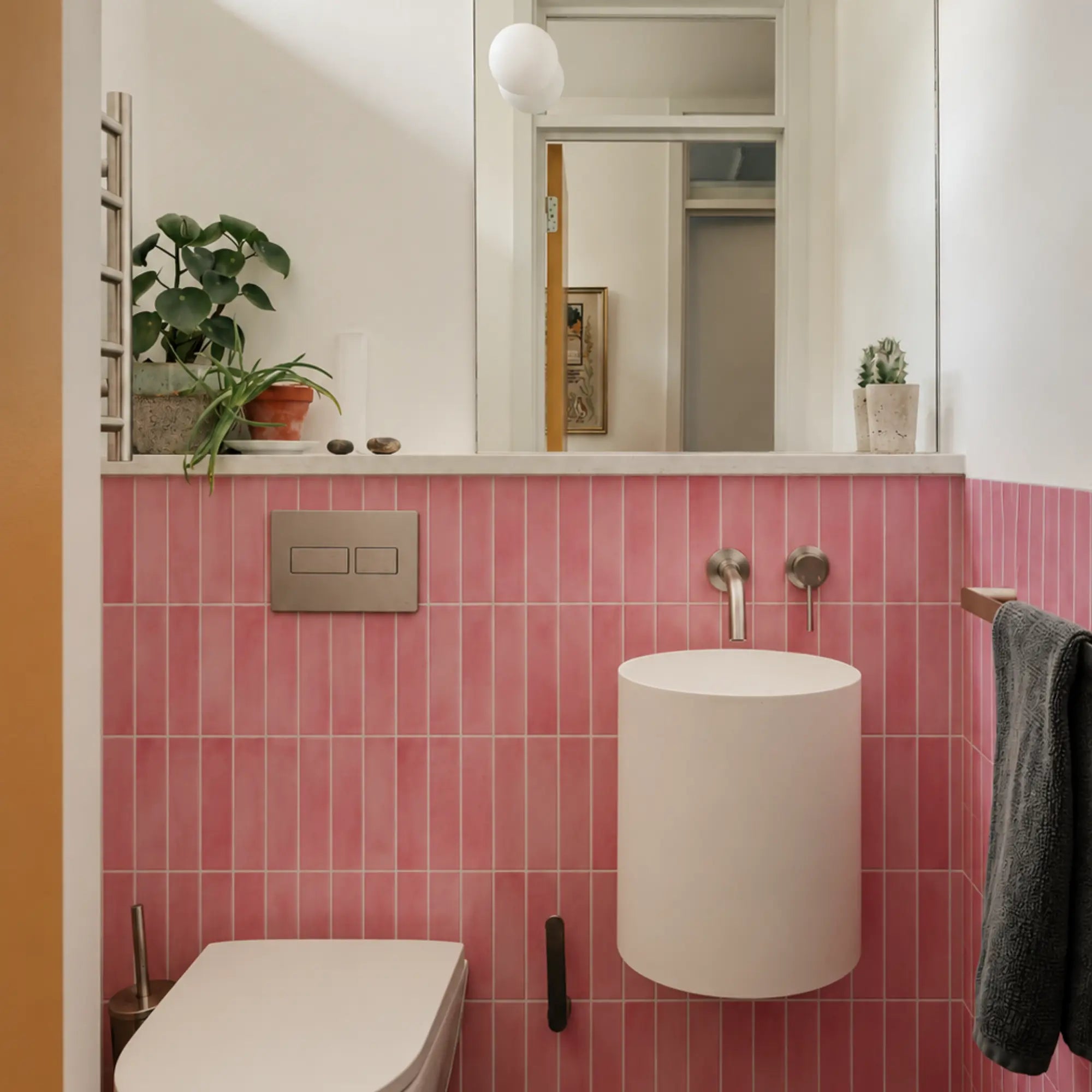
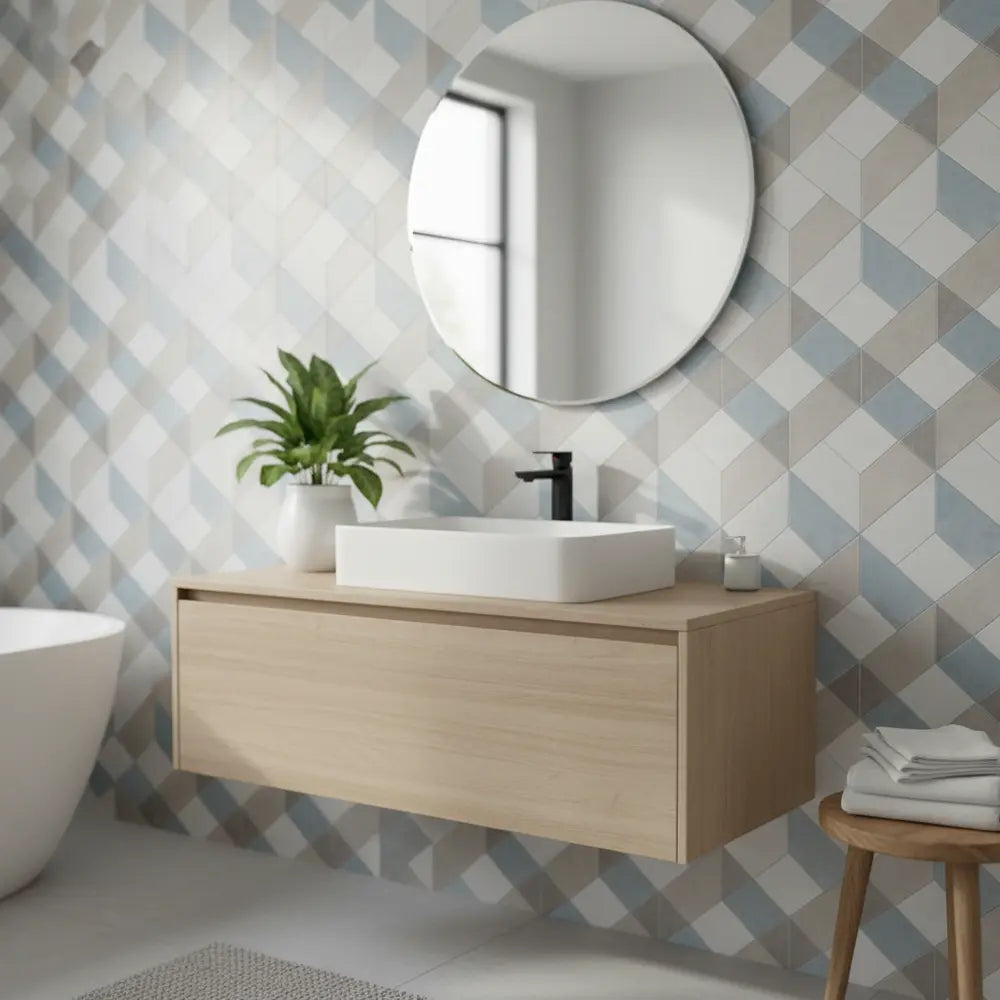
A vanity wall, mirror surround or dry feature wall can carry the strongest pattern while other surfaces remain quiet. Compare samples beside the existing floor, vanity and lighting before ordering. This can produce a coherent update without replacing everything or relying on a social-media before-and-after.
For a rental, check permission before primer, permanent trim or additional adhesive. Photograph the original wall and leave enough time before move-out to discover whether cleaning, patching or repainting is needed.
Include cleaning and maintenance in the scope. A highly textured face may need more careful wiping, while a glossy surface may show water spots or reflections. Choose the appearance you are willing to maintain.
Separate dry, splash and direct-wet zones
A wall opposite the shower can have very different exposure from the tub surround, even though both are in the bathroom. Map where water reaches the surface during normal use. A water-resistant decorative face is not automatically a shower waterproofing assembly.
At the vanity, inspect the countertop joint, faucet splash path and cleaning routine. At the tub or shower, follow the complete wet-area system requirements. Do not use extra caulk to convert a product that is not intended for the location.
Ventilation also affects the room, but a fan recommendation does not replace product suitability or repair a leak. If recurring condensation or staining appears, investigate the source before covering it.
Before ordering, photograph the proposed wall after normal bathroom use and note whether droplets remain on the surface, collect at the lower edge, or appear mainly from a plumbing issue. This simple observation makes the location easier to describe to the product supplier and helps separate ordinary room humidity from direct water exposure.
Budget-Friendly Bathroom Makeovers with Peel & Stick Tiles
A bathroom refresh can sometimes be lower-disruption than a full renovation, but cost and timing depend on the surfaces, repairs, product coverage, tools and whether professional work is needed.
Renters and budget-conscious homeowners often need to balance appearance with lease rules, moisture zones, surface condition and project cost. Peel-and-stick products are one option only when the exact product is documented for the intended wall or floor.
This guide shows how to plan a lower-disruption bathroom wall refresh without inventing a fixed price or claiming every surface is suitable. Separate dry decorative walls, splash areas and direct-wet zones before choosing materials.
Why Peel & Stick Tiles Are a Game-Changer for Renters
For anyone in a rental, the words "no permanent changes" can feel like a creative dead end. You're stuck with whatever design choices were made a decade ago. Traditional tile work is expensive, messy, and absolutely out of the question. This is precisely why peel and stick tiles are such a revolutionary product for renters.
Peel-and-stick products vary by intended use. Treat wall decoration, floor covering and direct-wet applications as separate categories and use only products documented for the actual location.
A self-adhesive wall finish can reduce some installation steps, but total cost depends on surface repair, product coverage, finishing, tools and any professional work. Compare the same scope instead of a fixed category price.
For those navigating the challenges of temporary living, understanding which products are truly safe and effective is crucial. To get a complete overview tailored for tenants, explore our guide on Renter-Friendly Bathroom Upgrades with Peel & Stick Tiles, which provides landlord-safe hacks and easy removal tips.
Illustrative Bathroom Budget Worksheet
Use the following as an illustrative budget worksheet, not a reported renter case. The listed prices are sample assumptions only; replace them with current local prices and the actual measured coverage for your room.
The "Before"
Illustrative starting condition: a small bathroom with sound but visually dated finishes. Before choosing any covering, inspect the substrate and keep wall, floor and direct-wet applications as separate product decisions.
The Transformation
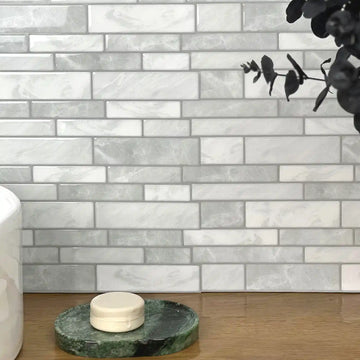
Illustrative change: use a marble-look decorative wall finish only on a location approved by that product, and use a separate floor product if the floor is part of the project. Project time varies with surface preparation, cutting, fixtures and curing or waiting requirements.
Budget Breakdown
- Peel & Stick Marble Tiles (Accent Wall): $85
- Peel & Stick Patterned Floor Tiles: $50
- New Shower Curtain & Bath Mat: $25
- Small Faux Plant: $15
- Total Cost: $175
This example shows how to organize a hypothetical budget, not what another renter actually spent. Recalculate every line item from current prices, usable coverage, preparation and any restoration allowance.
Types of Peel & Stick Tiles: Choosing the Right Style
Feeling inspired to start your own project? The next step is choosing the right tile. The market has exploded with options, moving far beyond simple vinyl squares. Modern peel and stick tiles offer texture, durability, and sophisticated designs that mimic expensive materials.
Faux Stone Tiles
These tiles are perfect for adding an organic, earthy feel. They often feature textured surfaces that look and feel remarkably like real slate, travertine, or other natural stones.
- +Pros: Excellent at hiding minor subfloor imperfections. Adds warmth and texture.
- -Cons: Darker stone styles might make a very small bathroom feel smaller.
Marble-Look Options
For a touch of timeless elegance, peel and stick marble look shower tiles are a top choice. They deliver the luxurious feel of Carrara or Calacatta marble without the high cost and difficult maintenance. This style aligns perfectly with the "quiet luxury" trend for 2025.
- +Pros: Brightens a space. Looks incredibly high-end.
- -Cons: The pattern needs to be carefully aligned for a seamless look.
Eco-Friendly Choices
A growing number of brands offer tiles made from recycled materials or sustainable composites. These are a great option for the environmentally conscious decorator. They often come in bold colors and unique patterns, fitting the "dopamine decor" trend.
- +Pros: Sustainable materials. Often come in unique, artistic designs.
- -Cons: Can sometimes be slightly more expensive than standard vinyl options.
A common misconception is that all peel and stick tiles are flimsy. Today's best options are thick, rigid, and specifically designed for longevity. For a deeper look at the most durable and stylish options, the go-to resource is our comprehensive guide on the Top Waterproof Peel and Stick Shower Tiles for 2025.
Installation Tips for Peel and Stick Shower Tiles
The success of your DIY bathroom makeover with peel and stick tiles hinges on proper installation. While the process is beginner-friendly, skipping key steps can lead to peeling corners and a less-than-professional finish. Don't worry—we're here to ensure you get it right the first time.
Think of preparing your wall or floor like a painter primes a canvas. It is the most critical step for a lasting result. The surface must be perfectly clean, dry, and smooth. Any lingering dust, grease, or moisture will compromise the adhesive.
Get Your Free Installation Checklist
Don't miss a single step. Download our printable checklist to guide you through a flawless installation process, from surface prep to the finishing touches.
Download ChecklistYour Step-by-Step Installation Checklist
- 1 Deep Clean the Surface: Start by scrubbing the existing tiles or wall with a strong degreasing cleaner. A trisodium phosphate (TSP) substitute works wonders. This removes soap scum and grime. Rinse thoroughly and let it dry completely—at least 24 hours.
- 2 Level and Plan: Do not start your first tile in a corner. Find the center of your main wall or floor and draw level horizontal and vertical lines to guide you. A laser level is a pro-level tool that makes this incredibly easy. A dry layout (placing tiles without peeling the back) helps you visualize the final look.
- 3 The First Tile is Key: Your first tile sets the standard for the entire project. Peel the backing, carefully align it with your guidelines, and press it firmly into place. Work from the center of the tile outwards to push out any air bubbles.
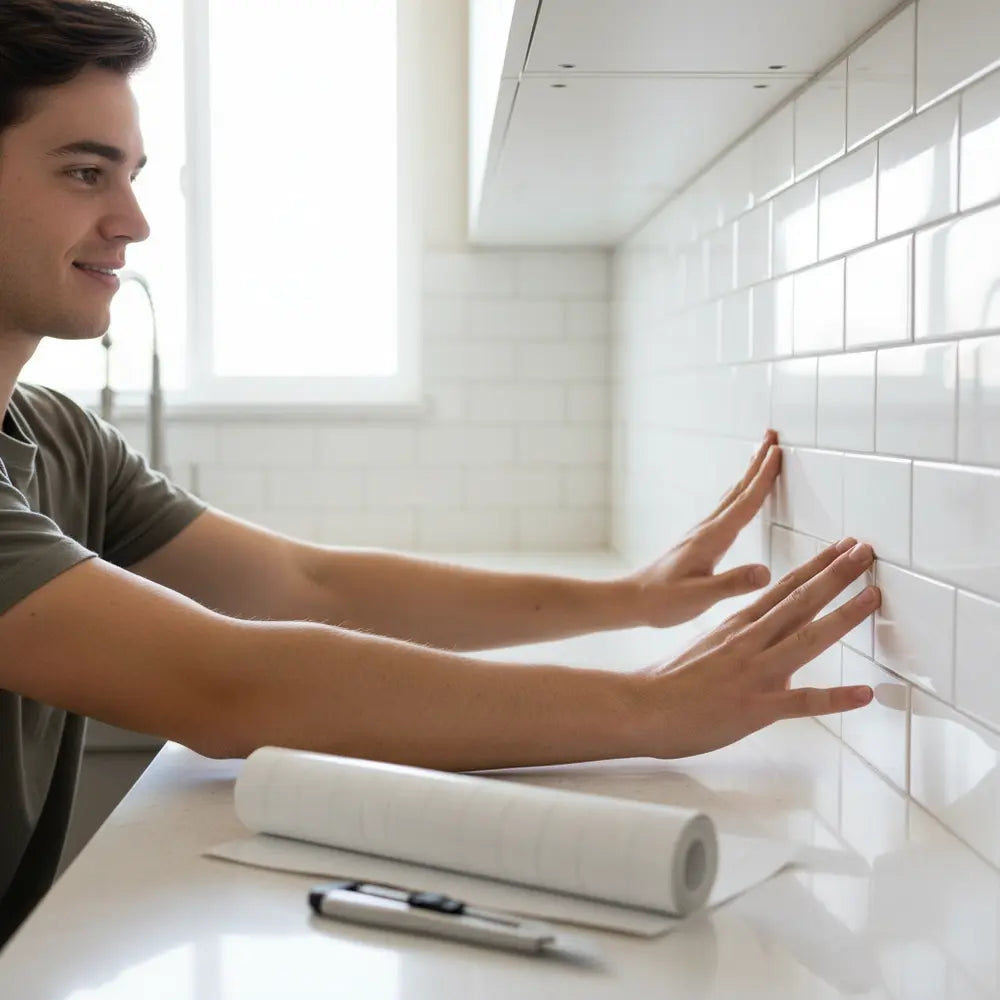
- 4 Use Pressure for a Strong Bond: Your hands aren't enough. Use a J-roller or a small wallpaper smoother to apply even pressure across the entire surface of every tile. This simple tool is essential for activating the pressure-sensitive adhesive and ensuring a strong, permanent bond.
- 5 Seal the Edges for a Watertight Finish: This is a crucial pro-tip that many people miss. For the best peel and stick tiles for shower walls, apply a thin bead of 100% silicone kitchen and bath caulk around all exposed edges where the tiles meet the tub, floor, or corner. This provides an extra layer of protection against moisture.
A common myth is that you can just stick these tiles over any surface. While they are versatile, they won't adhere well to heavily textured or uneven walls. If your surface is rough, a quick skim coat of drywall compound can create the smooth canvas you need. For a full visual walkthrough and more in-depth advice on achieving that perfect finish, our guide on How to Install Peel and Stick Tiles & Best Designs 2025 provides an excellent step-by-step tutorial.
Maintenance & Longevity: Do Peel & Stick Tiles Last?
One of the biggest questions people have is about durability. Will your beautiful new bathroom start peeling after a few steamy showers? The answer depends on two things: the quality of the tile and the quality of your installation. With the right approach, your makeover can look great for years.
High-quality peel and stick tiles are specifically engineered to handle the humidity and temperature changes of a bathroom. Their lifespan is impressive; with proper care, many homeowners report their tiles looking brand new for over 5 years. The key is avoiding common pitfalls like improper cleaning or installation on a damp surface.
Simple Maintenance Hacks for Lasting Beauty
To fully understand how to protect your investment and ensure your tiles look great for years, the definitive resource is our Peel and Stick Tile Maintenance Guide 2025. It offers a complete checklist for keeping your new space pristine.
Peel & Stick vs. Ceramic: A Maintenance Snapshot
| Feature | Peel & Stick Tiles | Ceramic Tiles |
|---|---|---|
| Cleaning | Easy; requires mild, non-abrasive cleaners. | Easy; can handle stronger chemicals. |
| Grout | None; no grout lines to stain or scrub. | Requires regular grout cleaning and sealing. |
| Repair | Simple; just heat, lift, and replace a single damaged tile. | Difficult and messy; requires breaking out old tile. |
| Longevity | Service life depends on the exact product, wall, exposure, cleaning and maintenance; use product-specific documentation instead of a category-wide lifespan. | 20+ years, but grout can discolor. |
Budget Breakdown: Makeover Ideas Under $200
Let's prove just how accessible these budget-friendly bathroom makeovers can be. You don't need a huge budget to make a massive impact. The key is to spend smart and focus on changes that provide the most visual bang for your buck. Here's another real-world scenario to inspire you.
Illustrative Scenario: A Rustic-Modern Refresh
For a second illustrative scenario, assume a small guest bathroom where the goal is to retain the vanity and mirror while changing selected decorative finishes. Treat every dollar figure below as a planning example rather than a reported project cost.
- Before: The bathroom had a basic, builder-grade vanity and a plain mirror, with a dated linoleum floor.
- After: By using faux stone peel and stick tiles on the floor, the space was instantly grounded with natural texture. The vanity was painted a deep charcoal gray, and the old hardware was swapped for sleek matte black knobs.
The Budget
- Faux Stone Peel & Stick Floor Tiles: $70
- Vanity Paint (Sample Pot): $8
- Matte Black Cabinet Knobs: $15
- New Towel Bar & Toilet Paper Holder: $40
- DIY Wood-Framed Mirror (using trim): $17
- Total Cost: $150
Hidden Cost Savers
This approach shows that a thoughtful, targeted DIY bathroom makeover with peel and stick tiles can completely redefine a space without draining your bank account. Curious about whether you can install new tiles directly over your old ones? Get the definitive answer and see more inspiring transformations in our guide, How to Transform Your Bathroom with Peel and Stick Tiles 2025.
Bathroom Hacks with Peel & Stick Tiles (2025 Trends)
Ready to think outside the box? Peel and stick tiles are more versatile than you might imagine. They aren't just for floors or full shower walls. You can use them in smaller, creative ways to inject personality and style into your bathroom, aligning with the top home decor trends for 2025.
Which Style Is Yours?
Hack 1: The Statement Accent Wall
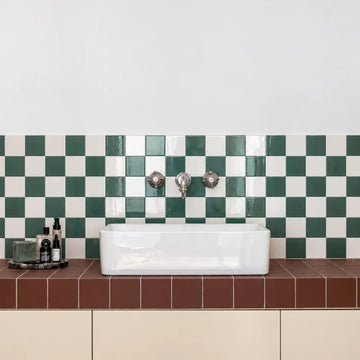
Instead of tiling the entire room, create a high-impact focal point by tiling just one wall. The wall behind your vanity mirror or toilet is the perfect candidate. This is where you can be bold with a colorful pattern or a rich texture, like a deep green subway tile or a dramatic black marble. This technique is a cornerstone of peel and stick bathroom design ideas.
Hack 2: The Faux Wainscoting
For a classic, sophisticated look, create a "tile wainscoting" effect. Apply peel and stick tiles only to the bottom third or half of your bathroom walls. Top it off with a thin piece of painted trim for a clean, finished edge. This adds architectural interest and protects the walls from splashes, making it both beautiful and practical.
Hack 3: The Vanity Backsplash Upgrade
A small vanity backsplash can be a contained project, but timing depends on surface preparation, cutting around fixtures, product instructions and finishing details.
Small-area decorative changes can reduce project scope, but renter suitability and reversibility depend on lease permission, wall condition, adhesive and removal method. Related planning: Peel Stick Backsplash Kitchen Ideas 2025
Peel & Stick vs. Ceramic Tiles: Which is Right for You?
The choice between peel and stick and traditional ceramic tile ultimately comes down to your specific situation, budget, and long-term goals. There's no single "best" answer, only what's best for you. Let's break down the peel and stick shower tiles vs ceramic tiles debate.
Imagine two friends, Maria and Leo. Maria just bought her forever home and plans to live there for 20 years. For Maria, investing in ceramic tile makes sense. The higher upfront cost is justified by its extreme durability and permanence, adding long-term value to her property.
For an illustrative renter scenario, compare lease permission, wall condition, product limits, current project cost and the removal/restoration plan. A removable label does not guarantee that paint, drywall or a security deposit will be unaffected. Related planning: Peel Stick Bathroom Tile for Moisture
A Head-to-Head Comparison
If a larger renovation is planned later, a temporary decorative phase can make sense only when the current product is suitable for the surface and its future removal will not create more repair work than the short-term update is worth.
A bathroom can be updated selectively rather than all at once. Prioritize the surfaces that are suitable for change, compare the complete project scope and keep direct-wet work separate from decorative dry-wall changes.
A bathroom refresh can be visually significant without changing every surface, but no decorative product can promise a one-weekend result or a security-deposit outcome. Plan installation, maintenance, removal and possible restoration as part of the same project.
Ready for more inspiration? Explore our complete collection of Bathroom Makeover TransformationsHow to Validate a Bathroom Makeover Budget Before Buying
Build the estimate from measured surfaces and product coverage, then add the costs that social-media makeovers often omit: wall repair, primer only when permitted, trim, cutting waste, delivery, tools, sealants that are actually part of the approved system, and a small allowance for future wall restoration. Keep floor products, decorative wall products and shower-system materials on separate lines so one low-cost category does not make the entire bathroom appear cheaper than it is.
For each proposed surface, write down the exposure zone: dry wall, occasional splash, regular splash, or direct wet enclosure. Then match that zone to the exact product documentation. A bathroom label, water-resistant face or attractive before-and-after photo is not enough to approve a product for shower walls, floors or locations beside heat-producing fixtures.
For a rental, add a permission and exit column. Record whether the lease or owner permits the installation, whether the wall coating is sound, what removal method is published, and what patching or repainting could be required later. Photograph the starting condition. A short sample can reveal obvious incompatibility, but it cannot guarantee the same wall response after months or years.
Finally, compare the revised total with simpler alternatives such as paint where permitted, hardware, lighting, textiles or leaving a sound surface unchanged. The best budget project is not the one with the lowest advertised material price; it is the one whose full scope, exposure limits, maintenance and exit plan fit the actual bathroom.
Frequently Asked Questions
1. Can you really use peel and stick tiles on shower walls?
Direct shower use requires a complete product and wall system documented for that exposure. A vinyl or composite face and a bead of silicone do not by themselves create a waterproof shower assembly; follow the exact manufacturer and wet-area requirements for the location.
2. How do I remove peel and stick tiles without damaging the wall underneath?
Removal behavior depends on the adhesive, wall coating, dwell time and manufacturer instructions. Use heat only when the product maker permits it, work slowly, and stop if paint or drywall paper begins to lift. Budget for touch-up or repair rather than promising damage-free removal.
3. How much does a DIY peel and stick bathroom makeover really cost?
There is no reliable universal price range for a bathroom makeover. Measure the eligible surface, use current product coverage and local prices, then add preparation, trim, tools, delivery and any removal or restoration work.
4. Will peel and stick tiles look cheap in my bathroom?
Appearance varies by product, print quality, relief, seam layout and installation. Inspect a sample in the actual bathroom light and compare it with the surrounding fixtures; do not assume a peel-and-stick finish will be indistinguishable from ceramic.
Sources and scope
- US EPA — Mold, Moisture and Your Home — Moisture-source control and drying guidance; not product certification.
- Smart Tiles — Official FAQ — Manufacturer-specific use and care examples; not Stickwoll specifications.


Leave a comment
This site is protected by hCaptcha and the hCaptcha Privacy Policy and Terms of Service apply.