








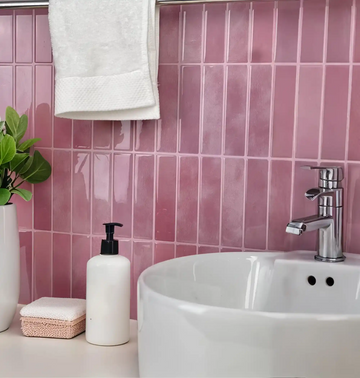




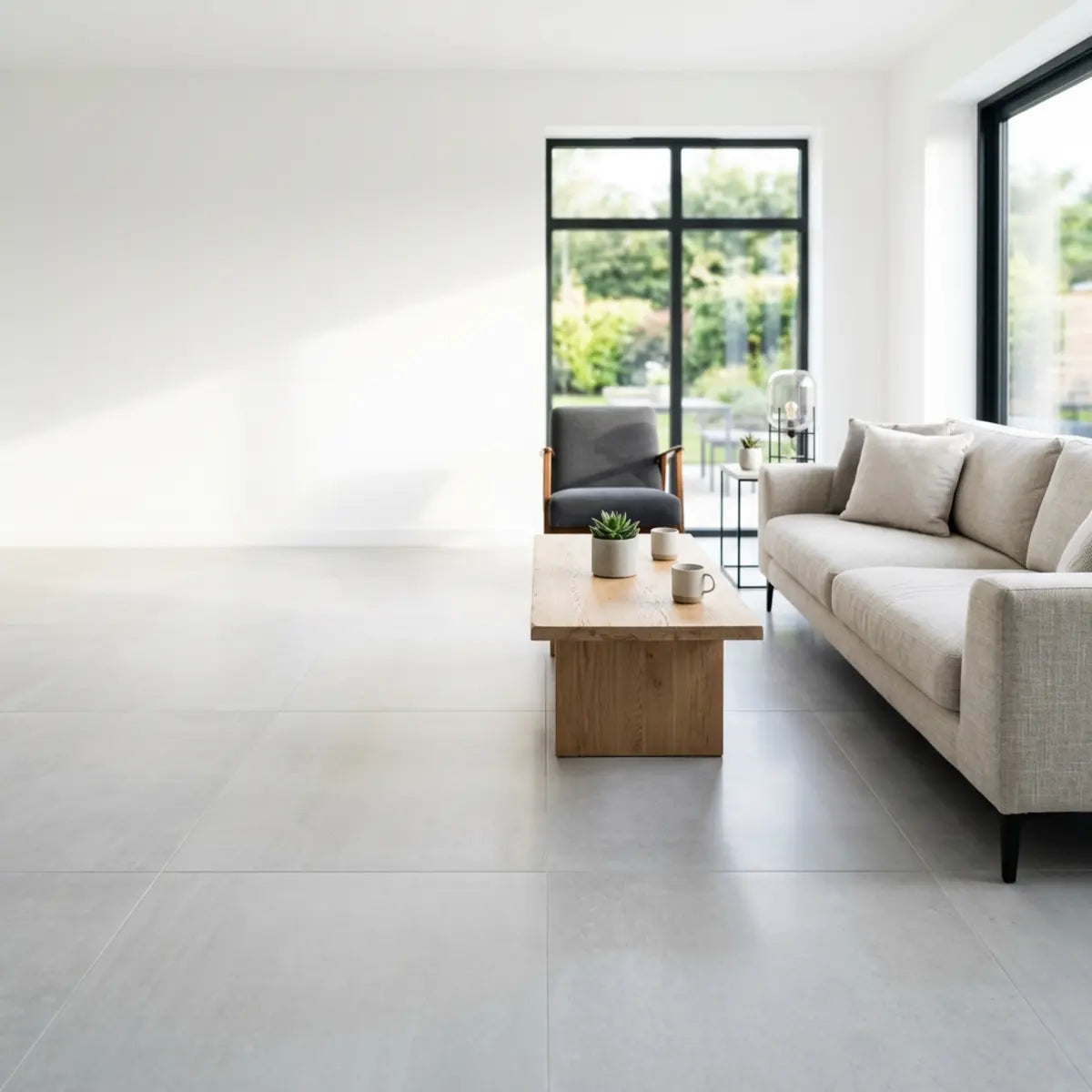
Flexible decorative tile can respond differently to small substrate movement than rigid ceramic, but it does not diagnose or repair “house settling.” Cracked grout, a drywall fissure, a concrete slab crack and a structural foundation problem are different conditions. The finish should be chosen only after the substrate and movement issue are understood.
This guide replaces synthetic movement scores, fixed lifecycle comparisons and claims that flexibility alone solves cracking with a practical workflow: identify where the crack is, separate wall from floor conditions, preserve movement joints, check concrete moisture where relevant, repair unstable substrates and use flexible products only within their documented applications.
Start by locating the failure
A grout crack between ceramic tiles is not the same as a crack through the tile body. A drywall seam crack is not the same as a concrete slab crack. A gap at a cabinet or trim transition can come from a different mechanism again.
Photograph the condition and note whether the line follows a joint, crosses several materials, has vertical or horizontal displacement, appears wet, or changes over time. The location often tells you more than the word “settling.”
Do not diagnose a foundation from one finish crack
New homes can experience drying shrinkage, framing movement, substrate changes, normal material expansion/contraction and workmanship-related finish cracks. Some cracks can also indicate more significant movement.
A wall-tile article cannot determine which condition is present. If cracks are widening, offset, recurring across multiple building elements or accompanied by other structural symptoms, obtain appropriate professional evaluation before covering them.
Wall tile and floor tile are different systems
Stickwoll products discussed here are decorative wall finishes unless a specific product states otherwise. A flexible wall panel should not be treated as a floor underlayment, crack-isolation membrane or substitute for a floor tile assembly.
Floors carry traffic, loads and substrate movement differently. Concrete-slab moisture and uncoupling details belong to floor systems; use products and methods designed for the actual floor when that is the project.
Why rigid ceramic can show substrate stress
Ceramic and porcelain tile are rigid. When the substrate and tile move differently, stress can concentrate in grout, tile or the bond. That is why tile-industry methods include movement accommodation rather than treating grout as a continuous structural bridge.
TCNA’s movement-joint guidance explains that tile and substrates expand and contract and that movement joints are needed to accommodate those differences. This does not mean ceramic is unsuitable; it means the complete assembly matters.
Flexible finish changes failure behavior but does not eliminate movement
A flexible wall tile can bend or deform more than ceramic. That may reduce brittle cracking of the decorative face under some local conditions, but the adhesive can still release, the face can crease, seams can move and the substrate can continue cracking underneath.
Flexibility should therefore be treated as one material property—not as a universal crack-bridging rating. Use a documented crack-isolation or movement claim only when the exact product publishes one for the substrate and conditions involved.
Ordinary drywall seams should be finished before tile
A normal taped and finished drywall seam is intended to become part of the continuous wall surface. If it is stable, dry and properly finished, it can be treated like the surrounding wall when the tile manufacturer approves the substrate.
If the seam is cracked, crowned, loose or damp, repair the wall first. Peel-and-stick tile is not drywall tape and should not be used to hold a failing joint together.
Control joints and building joints should remain functional
An intentional control or movement joint is different from a normal panel seam. It exists so adjacent areas can move relative to one another.
Do not bridge that joint continuously with decorative tile unless an approved detail specifically accommodates the movement. Terminate the finish in a way that preserves the wall/building joint.
Concrete cracks need a substrate decision before a finish decision
A concrete crack can be caused by shrinkage, curing, substrate restraint, structural movement or other conditions. Do not cover it with a flexible wall finish and call the slab repaired.
For floor systems, use applicable concrete/tile methods and any documented crack-isolation or uncoupling system. For wall applications on concrete, repair or assess the wall substrate according to the product and building requirements before installing decorative tile.
Concrete moisture is a separate question
Moisture in concrete affects many flooring and adhesive systems, but it should be measured and interpreted using the actual product and test method. Do not use a generic “new slab” label as evidence that every adhesive or tile will fail.
The retained source section in this article links ASTM F2170 for in-situ relative humidity testing. That standard measures concrete moisture conditions; it does not tell you which finish to install without the flooring/adhesive manufacturer’s threshold.
Curing compounds and sealers can interfere with bonding
New concrete can contain curing compounds, sealers, dust, paint overspray or other surface treatments. Those materials can interfere with adhesives and setting materials even when the slab looks clean.
Use the finish manufacturer’s preparation method and substrate testing. Do not grind or chemically strip a slab simply because it is new; identify what is actually on the surface and choose the proper removal/preparation process.
Do not use a new-build age cutoff as a performance rule
A home that is six months old and a home that is three years old can have very different movement histories. Construction type, climate, materials, moisture, framing and foundation conditions matter more than the calendar alone.
Do not publish a fixed building-age cutoff as proof that movement is finished. If movement is suspected, observe the actual condition and use appropriate professional guidance when needed.
Grout cracking can be the visible symptom, not the root cause
In a rigid tile assembly, grout may crack before the tile body because the joint can be a location where stress becomes visible. That does not prove the grout was defective or that replacing it with flexible wall tile solves the substrate condition.
Before repairing grout, check whether the crack follows a movement joint, substrate seam, corner or other repeated line. A cosmetic repair over active movement can crack again.
Do not treat flexible adhesive tile as an uncoupling membrane
Uncoupling membranes are engineered components in tile assemblies with specific geometry and installation methods. A flexible decorative tile or pressure-sensitive adhesive backing is not automatically equivalent.
If a floor project needs uncoupling or crack isolation, use a system documented for that purpose. If a wall project needs movement accommodation, follow the wall/joint detail rather than relying on the decorative finish.
New drywall can move without indicating structural failure
Framing moisture changes, joint-compound shrinkage and normal building movement can create hairline drywall cracks. Those conditions still need to be distinguished from recurring or displaced cracks.
Repair a normal stable drywall seam properly before applying wall tile. If the crack returns repeatedly or crosses structural transitions, investigate further rather than hiding it under a flexible panel.
Cabinet and countertop movement can create local lines
Backsplashes meet cabinets, countertops, window returns and appliance openings. Differential movement at those transitions can create visible gaps or stress without indicating a foundation problem.
Plan edge and change-of-plane details that allow the finish to terminate cleanly. Do not rigidly bridge a movement location just to preserve a continuous pattern.
Use photographs to track the wall before covering it
If a small crack is uncertain but not urgent, photograph it with a ruler or other reference and note the date. Compare the same location later using similar lighting and reference points.
Observation can reveal change, but no short period proves permanent stability. If the crack widens, develops offset, becomes damp or appears across multiple materials, stop the decorative project and obtain appropriate assessment.
Moisture can mimic movement problems
Swollen drywall, paint bubbles and substrate deterioration can create cracking or lifting that looks like movement. The EPA’s mold and moisture guidance emphasizes correcting moisture sources and drying affected materials.
Do not cover a damp crack with flexible tile. Solve the water condition first, repair the substrate and then decide whether the finish is suitable.
Flexible tile can be useful on stable walls for other reasons
Flexibility can make a wall product easier to cut, handle or install across minor non-structural surface variation. It can also reduce brittle edge breakage compared with ceramic.
Those are practical material characteristics. They do not need to be turned into a foundation-settlement claim to make the product useful.
Repairability is often more important than a synthetic movement rating
If a decorative wall tile is locally damaged, the ability to replace one piece can matter more than trying to predict every future movement event. Keep spare material and the product identifier.
Before replacing the tile, check the substrate. If the wall crack or moisture condition continues, a new piece can fail again in the same location.
Rigid tile can remain the right choice on a suitable assembly
Ceramic and porcelain are not “wrong for settling homes” as a category. Proper substrate preparation, setting materials, movement joints and applicable tile-industry methods are designed to manage expected service conditions.
Choose ceramic when the complete assembly and room requirements support it. A flexible alternative does not make rigid tile obsolete; it offers a different material and installation path.
Choose flexible wall tile for documented wall applications
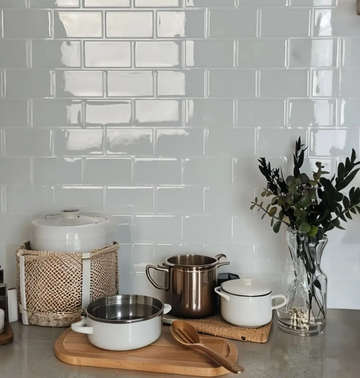
A flexible self-adhesive wall tile can be useful when the wall is stable, smooth enough, dry and within the product’s approved substrate and room limits. Lower weight, easier cutting and grout-free installation can reduce installation complexity.
Use those documented advantages. Do not add unsupported claims about solving structural movement or preventing structural cracks.
Do not convert visual crack contrast into structural risk
Dark grout, white tile or high-gloss surfaces can make a small crack more visible than a low-contrast surface. Visibility is not the same as severity.
Photograph and diagnose the condition before choosing a new finish based on how well it hides the line. A decorative pattern should not be selected primarily to conceal evidence of ongoing movement.
Use a new-home punch list for finish conditions
If the home is still within a builder warranty or punch-list period, document cracks, loose tile, grout separation and wall movement before repairing or covering them. Notify the appropriate builder or warranty contact when required.
Covering the condition immediately can remove useful evidence. A decorative refresh should not interfere with an unresolved construction or warranty issue.
Separate cosmetic repair from structural repair
Regrouting a stable joint, patching a drywall seam or replacing a chipped tile can be cosmetic maintenance when the underlying condition is understood. Foundation repair, structural framing correction and moisture remediation are different scopes.
Do not let a product-comparison article blur those categories. The finish decision comes after the building/substrate condition is appropriately addressed.
What if a drywall crack is repaired and stays stable?
Once a normal drywall repair is complete, dry, stable and compatible with the tile product, the wall can be evaluated like any other finished substrate. Check flatness, coating cure and surface cleanliness before installation.
Keep a photograph of the repaired line. If the crack later returns beneath the decorative finish, the original location helps with diagnosis.
What if a concrete crack is stable but visible?
The appropriate treatment depends on whether the project is a floor or wall, the crack type, the substrate and the finish system. A wall product should not be used to make floor crack-isolation decisions.
For conventional floor tile, use a documented crack-isolation or uncoupling method where appropriate and follow the tile system requirements. For wall finishes, repair or prepare the wall substrate according to the product instructions and building condition.
What if grout cracks only at an inside corner?
Changes of plane can move differently from the flat tile field. A rigid grout joint at a movement location may crack even when the field tile is otherwise sound.
Use the applicable tile-system detail for changes of plane and movement. Do not infer whole-house settlement from one corner crack.
What if the crack appears after a season change?
Temperature and humidity changes can affect wood framing, drywall and other building materials. Record the condition and determine whether it is cosmetic, recurring or accompanied by other symptoms.
A seasonal pattern can be useful evidence, but it does not automatically define the cause. Use appropriate professional assessment when the condition is significant or changing.
Use product thresholds for substrate and temperature
Each wall finish can publish different limits for substrate type, temperature, humidity, surface flatness and wet-area exposure. Those product-specific thresholds are more useful than category-wide flexibility ratings.
Remove any candidate that conflicts with the documented project conditions before comparing style or price.
Build a comparison worksheet without proprietary lifecycle formulas
Compare the actual project scopes: wall repair, substrate preparation, finish material, tools, trim, spare material, maintenance and local repair. For ceramic, include setting/grout components and applicable movement details. For self-adhesive wall tile, include surface preparation and removal/restoration planning.
Use current quotes or cart totals for the same wall. A proprietary lifecycle formula can hide assumptions about repairs, service time and labor that are not supported by the project.
Three practical scenarios
Stable new-home drywall backsplash
The wall has a normal repaired seam, no recurring crack, no moisture and a suitable cured paint system. A documented self-adhesive wall tile can be evaluated through the ordinary substrate/preparation process.
Recurring crack near a door opening
The crack has reopened after repair and shows the same line repeatedly. Stop the decorative project and investigate why the wall continues to move before covering it.
Rigid ceramic floor with a crack through several tiles
This is a floor-assembly problem, not evidence that a flexible wall tile should replace the floor. Inspect the substrate and tile assembly and use an appropriate floor repair/movement method.
Keep warranty evidence before changing the finish
When a crack appears in a newly built home, photograph it before removing tile, grinding grout or covering the wall. Record the date, location, approximate length and any related condition such as moisture or door/window movement.
If the builder or warranty provider needs to inspect the condition, preserve enough evidence for that review. A decorative repair should not erase the information needed to determine whether the condition belongs to the original construction scope.
Document repairs separately from decorative upgrades
If the builder repairs a drywall joint, concrete crack or tile assembly, keep that repair record separate from the later decorative installation. This makes future troubleshooting easier because the owner can see which condition existed before the new finish.
Do not describe a repaired crack as “solved forever.” Record what was done and observe the actual performance over time.
Use a repair-first timeline
- Identify and document the crack or movement symptom.
- Check for moisture, displacement, recurring movement or other building symptoms.
- Use the appropriate drywall, concrete, tile or structural repair process.
- Allow repair materials and coatings to reach the condition required by their manufacturers.
- Re-evaluate the substrate for the decorative finish.
- Only then install the wall tile using its documented method.
This sequence prevents the decorative layer from becoming part of the diagnosis.
Do not use tile flexibility as a warranty workaround
A homeowner may be tempted to cover a recurring crack with a flexible product so the crack is less visible. That can complicate a builder or structural warranty discussion and may hide the symptom without changing the underlying movement.
Resolve warranty and repair questions before using a finish primarily to conceal the line.
Frequently asked questions
Does flexible tile prevent cracks in a settling house?
No universal claim is appropriate. A flexible decorative finish can deform differently from ceramic, but it does not repair structural movement or guarantee that the substrate will stop cracking.
Is grout cracking normal in a new build?
Some finish movement can occur in newer construction, but “normal” depends on the location, extent, recurrence and cause. Document the crack and investigate significant or changing conditions rather than assuming every new-home crack is harmless.
Should I replace cracked ceramic with flexible peel-and-stick tile?
Not until the cause is understood. If the crack reflects substrate movement, moisture or an assembly problem, changing the visible finish alone may hide the symptom.
Can flexible wall tile bridge a drywall crack?
Repair and assess the crack first. Unless the exact product publishes a documented crack-bridging capability for that condition, treat it as a decorative finish over a stable wall.
Can I use flexible wall tile on a concrete floor?
Do not infer floor suitability from a wall product’s flexibility. Floors require products rated for traffic, loads, substrate and movement conditions.
Do concrete floors need moisture testing?
Many flooring and adhesive systems use product-specific concrete moisture requirements. ASTM F2170 is one recognized method for measuring in-situ relative humidity in concrete slabs. Use the flooring/adhesive manufacturer’s thresholds for the actual system.
Does an uncoupling membrane make ceramic crack-proof?
No. Uncoupling systems are designed to manage specific stresses within documented applications, but they do not correct severe structural movement or make every substrate suitable.
How long should I watch a crack before covering it?
There is no universal observation period that proves stability. Dated photos and measurements can reveal change, but significant, recurring or displaced cracks deserve appropriate professional assessment.
Can I hide a crack with backsplash tile if it is only cosmetic?
Repair the cosmetic wall condition first so the substrate is sound and flat. Then install the decorative tile if the product approves the repaired wall.
What should I save for future maintenance?
Keep wall photos, repair records, product information, spare pieces and any builder/warranty documentation. Those records can help distinguish a new finish problem from a pre-existing movement condition.
Decision checklist
- Identify whether the problem is wall, floor, grout, tile, concrete or another assembly.
- Document the condition before covering or repairing it.
- Check for moisture, displacement and recurrence.
- Preserve intentional movement joints.
- Use builder/warranty or professional review where appropriate.
- Repair the substrate before selecting the decorative finish.
- Use product-specific moisture, temperature and substrate limits.
- Do not treat flexible wall tile as structural repair or floor crack isolation.
- Keep spare material and repair records.
Bottom line
Flexible wall tile can be useful in a new home because it handles and deforms differently from rigid ceramic, but flexibility should not be marketed as a cure for settlement or cracking. The correct sequence is diagnose the substrate, preserve movement joints, repair unstable conditions, respect product-specific moisture and substrate limits, and then choose the decorative finish.
When a wall is stable and within the product’s documented use, a flexible self-adhesive tile can offer a lightweight, grout-free option. When the building or substrate is still moving, the finish decision should wait. Hiding the symptom is not the same as solving the condition.
Cracks need diagnosis before a material recommendation
Grout or tile cracking in a newer home can come from shrinkage, substrate movement, missing movement accommodation, installation defects, moisture, structural conditions or a combination. A decorative article should not classify a crack as cosmetic from appearance alone.
Document width, location, direction and whether the crack changes over time. Escalate significant or recurring movement to appropriate building or structural review.
Movement joints are system details
Tile assemblies rely on movement accommodation designed for the actual field size, exposure and construction. Do not substitute one generic spacing rule for the applicable installation standard and project conditions.
Existing building joints should not be bridged merely to keep a decorative pattern continuous.
Separate flexibility from structural performance
A flexible finish may tolerate some local deformation differently from a brittle finish, but that does not make it a structural remedy. The wall or floor system beneath it still has to be suitable for the installation.
Avoid turning material flexibility into an invented score or a promise that cracking will not appear.
Concrete moisture needs product-specific interpretation
ASTM F2170 defines a method for measuring in-situ relative humidity in concrete slabs. The acceptable value for an adhesive or floor system comes from the product manufacturer and project specification, not from a universal threshold in a decorating article.
Testing method, slab condition and mitigation decisions should follow the relevant flooring and project requirements.
Do not infer foundation risk from finish cracks alone
A hairline grout crack, sticking door or drywall fissure can have multiple causes. One symptom does not prove foundation failure or prove that movement is harmless.
Use appropriate professional evaluation when the pattern, width, displacement or progression raises concern.
Keep curing compounds and contaminants in the substrate review
Concrete treatments, paint overspray, dust, sealers and other surface conditions can affect bonding. Preparation should be compatible with the selected system and should not be guessed from a generic tutorial.
If mechanical preparation is required, follow the project and safety requirements for that work.
Compare finishes by documented use
For each candidate, record intended substrate, dimensions, attachment, movement limitations, moisture requirements and repair method. Keep unknowns visible instead of converting them into a score.
A product with better documentation for the actual substrate may be a stronger candidate than one marketed broadly as flexible.
Plan inspection after installation
Photograph joints, transitions and existing cracks before covering or finishing the area. If a new change appears, compare it with the baseline and investigate the location rather than immediately blaming or replacing the visible finish.
A repair should address the cause that can be established, not just hide the symptom.
Keep the conclusion conditional
A flexible decorative finish may change where visible cracking appears, but it cannot be described as a cure for building movement. The substrate, attachment and movement-accommodation strategy remain part of the assembly.
Choose materials only after the source and significance of movement are understood well enough for the project.
Keep repair and monitoring separate from structural diagnosis
A local cosmetic repair can restore appearance, but it should not erase the record of a crack that may need monitoring. Photograph and date the condition before repair.
If movement continues, reassess the substrate and project rather than repeating surface repairs indefinitely.
Use product thresholds, not category thresholds
When moisture, temperature or substrate-flatness limits matter, use the exact manufacturer documentation for the selected finish.
A broad flexible-tile category cannot supply one universal acceptance threshold.
Use a final evidence boundary
The article can explain movement mechanisms and preparation questions, but it cannot determine whether a specific crack is structural from text alone.
Keep diagnosis and engineering decisions with qualified project-specific evaluation.
Sources and scope
- ASTM F2170 — ASTM standards directory lists F2170-19a for in-situ RH in concrete slabs; product thresholds remain manufacturer-specific.



Leave a comment
This site is protected by hCaptcha and the hCaptcha Privacy Policy and Terms of Service apply.