



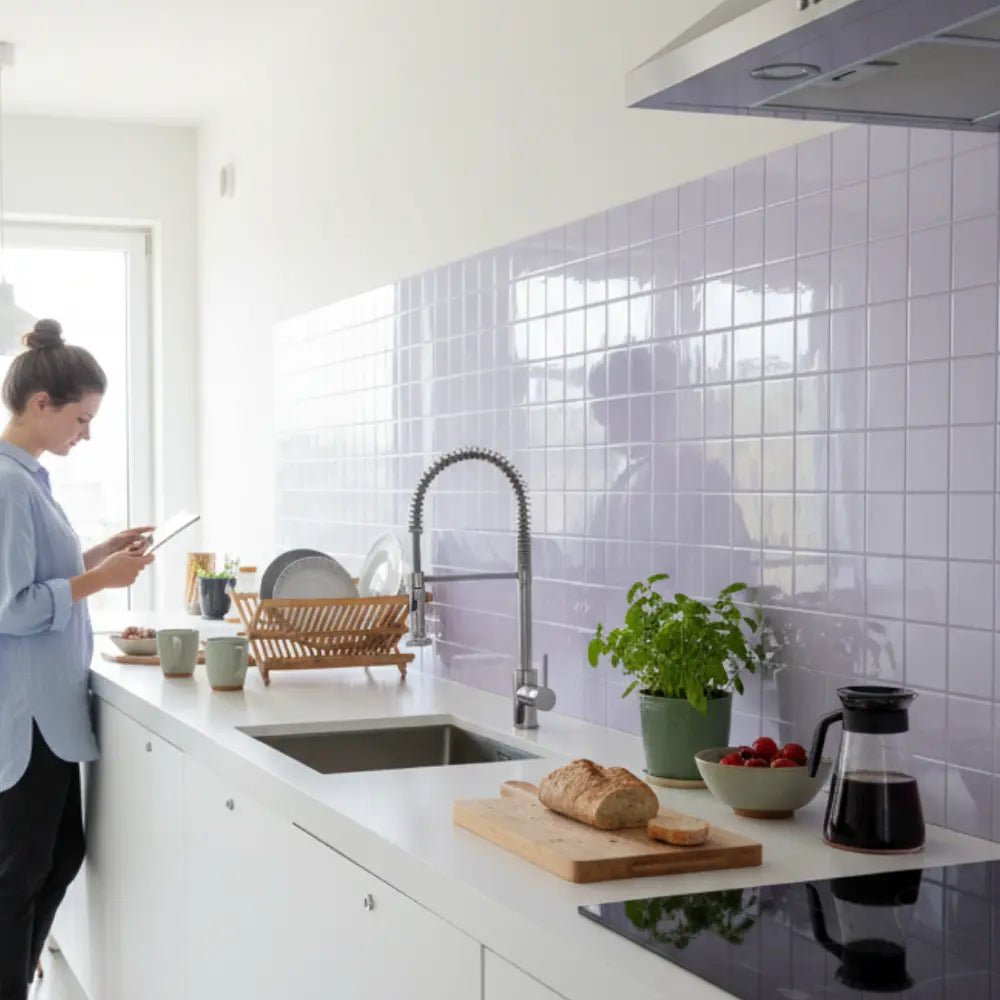




How to Install Heat Resistant Peel and Stick Tiles Behind Your Stove
That tired, stained, or just plain boring wall behind your stove is staring you down again. You dream of a stylish backsplash, but the thought of grout, mortar, and a big bill is a non-starter. Even worse, you've heard horror stories about peel and stick tiles melting or peeling from the heat. It feels like you're stuck.
But what if you could install a gorgeous, durable backsplash in an afternoon, even as a renter, without any safety worries? You can.

Direct Answer:
Heat resistant peel and stick tiles can be safely installed behind your stove if they’re rated for high temperatures and applied on a clean, dry surface. Choose tiles labeled for "high temperature" or "heat resistant" and maintain at least a 6-inch clearance from direct flame.
This guide will show you exactly how to do it safely and effectively. We'll cover choosing the right heat-rated products, preparing your wall for a perfect stick, and following specific spacing guidelines for the high-heat zone behind your stove. Let’s get that kitchen updated.
Are peel and stick tiles safe to use behind a stove?
The Question: "Can I really put something with 'stick' in the name that close to a heat source without it being a fire hazard?"
The Promise: This section will give you the confidence you need by explaining the key safety factors and clear rules to follow for a worry-free installation.
The short answer is yes, but with a critical condition: you must use the right kind of tile. Standard vinyl peel and stick tiles—the kind you might use on a bathroom floor or a low-traffic wall—are not built for this job. They can warp, discolor, or lose adhesion when exposed to the sustained, radiant heat from a stovetop.
In our experience, this is the number one mistake DIYers make. They assume all peel and stick products are created equal. True heat resistant peel and stick backsplash tiles are specifically engineered with superior materials and stronger, temperature-rated adhesives to handle the kitchen environment.
Why Heat Ratings Matter
Think of it like cookware. You wouldn't put a plastic mixing bowl in the oven. Similarly, you need a backsplash material designed for the job. Look for products that explicitly state they are "heat resistant" and check for a temperature rating, often found in the product specifications. A quality tile should be able to withstand temperatures up to at least 120°F (49°C), and premium versions can handle much more.
A common misconception is that "fireproof" and "heat resistant" mean the same thing. Heat resistance refers to the material's ability to not degrade under high temperatures. Fireproof means it won't combust. For a backsplash, heat resistance is the primary quality you need, as the main threat is radiant heat, not direct flame.
The Golden Rule: The Safety Gap
For any stove, whether it's gas, electric, or induction, you must maintain a safety gap. We recommend a minimum clearance of 6 to 8 inches between the back of the stove and the first row of tiles. If you have a gas stove with open flames that face the rear, extending that to 9 inches is a wise precaution. For broader planning, see our kitchen backsplash guide.
This gap allows heat to dissipate and prevents the tiles' surface and adhesive from reaching critical temperatures. Always check your stove manufacturer’s installation manual, as they may specify a required rear clearance for safety, which you must follow.
Let's consider a quick example. A renter, Sarah, wanted to cover a dated yellow wall behind her gas stove. She chose an aluminum composite peel and stick tile specifically rated for kitchens. By leaving an 8-inch gap and ensuring the wall was perfectly clean, her new backsplash has looked flawless for over two years, with no peeling or discoloration.
What materials make peel and stick tiles heat safe?
The Question: "The store has so many options. How do I know which material will actually last behind my stove and which will just melt?"
The Promise: Here, we'll break down the best materials for the job, so you can shop with certainty and choose a product that looks great and performs perfectly.
The secret to a durable DIY heat resistant kitchen backsplash lies in the material composition. The tile's face and the adhesive backing work together to fight the heat. Let's compare the most common options you'll find.
A Head-to-Head Comparison of Backsplash Materials
When you're choosing the best peel and stick backsplash for heat, you're essentially choosing between different core materials. While many look similar on the surface, their performance varies dramatically. Here’s a clear breakdown.
| Material | Heat Resistance | Durability | Cost | Best For |
|---|---|---|---|---|
| Aluminum Composite | Excellent | Excellent | $$$ | Behind any stove type (gas, electric, induction) |
| Stone Composite (SPC) | Very Good | Excellent | $$$ | Behind electric or induction stoves; good for gas |
| Metal (Stainless Steel) | Excellent | Excellent | $$$$ | Modern, industrial look behind any stove type |
| Vinyl / PVC | Poor to Fair | Good | $ | General kitchen walls, far away from heat sources |
| Gel-Coated Vinyl | Fair to Good | Good | $$ | Behind electric or induction stoves with caution |
Why Metal and Stone Composites Win
Vinyl and basic PVC tiles are essentially plastic. When they get too hot, their structure softens. This can cause the embossed design to flatten, the colors to yellow, and the adhesive to fail. While some thicker, gel-coated vinyl tiles offer better performance, they still carry risk in high-heat zones.
Aluminum and stone composite tiles, on the other hand, are engineered differently.
- ● Aluminum Composite: These tiles have a thin layer of real aluminum over a mineral or polymer core. Aluminum is fantastic at dissipating heat, which protects the tile's structure and the adhesive behind it. They are often the top choice for a peel and stick tile around an oven.
- ● Stone Polymer Composite (SPC): These are made from a mix of natural limestone powder, stabilizers, and a polymer. The high stone content makes them incredibly rigid and stable under temperature changes. They won't warp or expand like vinyl.
To ensure you're choosing a product that meets rigorous safety and durability standards, you need a detailed comparison. For a deeper analysis of different product types and their performance in high-heat zones, the go-to resource is our article on Heat-Resistant Peel and Stick Tiles for High-Heat Kitchens. It's the most comprehensive breakdown you'll find.
Don't Forget the Adhesive
The tile material is only half the story. The adhesive must also be rated for high temperatures. Reputable brands use proprietary adhesives that are formulated to cure and strengthen with low-grade ambient heat, creating an even stronger bond over time. A cheap, generic adhesive will soften and let go. This is why investing in a quality, kitchen-specific brand is non-negotiable for this project.
Pro-Tip
For the strongest bond, install your tiles when the room temperature is between 65°F and 80°F (18°C - 27°C). This allows the adhesive to properly activate without being too soft or too brittle.
How do you install heat resistant peel and stick tiles step-by-step?
The Question: "I'm not a professional contractor. Am I going to mess this up and make it look terrible?"
The Promise: This detailed, step-by-step walkthrough is designed for beginners. We'll guide you through every stage, from prep to finish, ensuring a professional-looking result you can be proud of.
Alright, this is where the fun begins. With the right tiles in hand, you’re ready to transform your kitchen. You don’t need a contractor to pull this off—just patience and a methodical approach.
Step 1: Gather Your Tools and Materials
Having everything ready before you start makes the process smooth and stress-free. There's nothing worse than having a half-stuck tile on the wall while you hunt for a utility knife.
Your Toolkit:
- Degreasing cleaner (like TSP or simple green)
- Microfiber cloths or shop towels
- Measuring tape
- Pencil
- Level (a laser level is great, but a 24-inch bubble level works perfectly)
- Sharp utility knife with extra blades
- Cutting mat or piece of scrap drywall
- Straightedge or metal ruler
- Your heat resistant peel and stick tiles
Step 2: Prepare Your Wall Surface
This is the most important step. I can't stress this enough: 99% of peel and stick failures are due to poor surface preparation. The adhesive needs a perfectly clean, dry, and smooth surface to create a permanent bond.

First, turn off the circuit breaker to the outlets on that wall. Then, thoroughly clean the wall with a degreasing agent to remove any trace of cooking oil, grime, or dust. Even invisible grease will prevent the tiles from sticking properly.
After cleaning, rinse the wall with a damp cloth and let it dry completely. We recommend waiting at least 24 hours. If your wall is freshly painted, you must wait for the paint to fully cure—check the paint can, but this is often 21-30 days. Sticking tiles to uncured paint will cause bubbling and failure.
If your wall has a heavy texture (like "orange peel" or "knockdown"), you’ll need to skim coat it with joint compound and sand it smooth for the best results.
Step 3: Measure and Plan Your Layout
Measure the height and width of your backsplash area. Use these measurements to calculate how many tiles you need, adding 10% for cuts and mistakes.
Your starting point is crucial. Find the center of your backsplash area (usually the center of the stove) and draw a faint vertical pencil line using your level. Then, decide on your horizontal starting line—this should be the line where the bottom of your first row of tiles will sit, respecting that 6-8 inch safety gap above the stove's surface. Use your level to draw this horizontal line.
These intersecting lines give you a starting point to ensure your pattern is centered and level.
Step 4: The First Tile is Key
Do not peel the entire backing off at once. This is a common mistake that leads to misaligned tiles that are difficult to reposition.

Peel back just the top 2-3 inches of the paper backing and fold it down. Align the top edge of your tile with your horizontal guideline and the side with your vertical guideline. Lightly press the exposed adhesive to the wall.
Check with your level one last time. Once you're sure it's perfect, press down firmly on the top portion. Then, slowly pull the rest of the backing away from behind the tile while simultaneously smoothing the tile onto the wall from top to bottom. This technique prevents air bubbles.
Press firmly across the entire surface of the tile, especially the edges. This activates the pressure-sensitive adhesive.
Step 5: Cutting and Fitting Tiles
You will inevitably need to cut tiles to fit around outlets, cabinets, or the end of a wall.
For straight cuts, measure where the cut needs to be, mark it on the tile, and place it on your cutting mat. Use your straightedge and utility knife to score the tile firmly. You don't need to cut all the way through most composite tiles. Just make a deep score line, then snap the tile along the line for a clean break. When comparing finishes, browse Stickwoll peel-and-stick tiles and review the product details for your surface and room.
For outlets, turn the power off. Remove the cover plate. Hold the tile over the outlet and mark the four corners with your pencil. Use your utility knife and ruler to cut out the rectangle. The outlet cover will hide any minor imperfections in your cut.
Step 6: Sealing the Edges for Extra Protection
For the area directly behind the stove and along the countertop, applying a thin bead of clear, 100% silicone kitchen-and-bath caulk is an excellent pro-tip. This seals the seams and prevents any steam, water, or grease from getting behind the tiles.
This final step provides an extra layer of defense for your renter-friendly kitchen update and gives the project a truly finished, professional look.
Feeling inspired? Now that you know how to do it right, it's time to find the perfect style. If you want to see all the latest trends and find a design that speaks to you, our updated guide is the perfect place to start.
Browse Best Designs of 2025Final Thoughts on Your New Backsplash
You now have the expert knowledge to confidently install a heat resistant peel and stick backsplash behind your stove. By choosing the right materials, meticulously preparing your surface, and respecting the safety gap, you can create a stunning kitchen feature that is both beautiful and durable.

This project is one of the most impactful renter-friendly kitchen updates you can make. It proves that you don't need a massive budget or a professional crew to have a space that you love. You just need the right information and a little bit of DIY spirit.
Remember the key takeaways: select aluminum or stone composite tiles, clean your wall obsessively, and leave a safe clearance from the heat source. Follow these rules, and you're set for success.
Ready to explore your options? See how others have completely changed the look of their space and get inspired for your own project.
Transform Your Kitchen with Top-Rated TilesWhich heat resistant tile style fits your kitchen best?
Further Reading & Resources
To continue your DIY journey, explore our other expert guides. These resources provide even more detail on selection, installation, and creative uses for peel and stick tiles throughout your home.
- How to Upgrade Kitchens with Peel and Stick Tiles: Avoid common pitfalls and learn pro tips for a flawless kitchen tile application from start to finish.
- How to Use Peel and Stick Tiles in 2025: Explore creative ideas beyond the kitchen and see how these versatile tiles are revolutionizing home renovation.
- Transform Your Bathroom with Peel and Stick Tiles: Discover if you can tile over existing surfaces and see stunning before-and-after bathroom makeovers.
- Easy Peel and Stick Kitchen Tile Installation: Get an in-depth tutorial specifically designed for renters, covering simple installation and damage-free removal.
- Renter-Safe Kitchen Installation Guide: Learn simple, renter-friendly instructions and troubleshooting tips for heat, moisture, and wall protection.
Frequently Asked Questions
Can I install these tiles directly over existing ceramic tiles?
Yes, in most cases you can. The key is that the existing tile surface must be flat, clean, and non-porous. If you have deep grout lines, you will need to fill them with a grout filler or skim coat the area to create a smooth, level surface before applying the peel and stick tiles.
How much of a gap do I really need behind my stove?
We strongly recommend a minimum of 6 inches, and 8-9 inches is even better, especially for high-output gas ranges. This space is not just for the tiles; it's a general safety best practice for preventing heat damage to your wall. Always consult your stove's manual for its specific clearance requirements.
What's the best way to clean these tiles?
Use a soft cloth or sponge with a mild, non-abrasive cleaner and water. Avoid harsh chemicals, bleach, or abrasive scrubbing pads, as they can scratch the surface of the tiles or damage the finish. Most food splatters will wipe away easily from quality composite tiles.
Are these tiles truly removable for renters?
High-quality, heat resistant tiles are designed for a strong, long-term bond. While they can be removed, it requires effort. To remove them, gently heat the surface of each tile with a hairdryer to soften the adhesive. Then, use a putty knife to carefully pry the tile away from the wall. Some minor drywall repair may be needed afterward, which is a common part of rental move-outs.


Leave a comment
This site is protected by hCaptcha and the hCaptcha Privacy Policy and Terms of Service apply.