








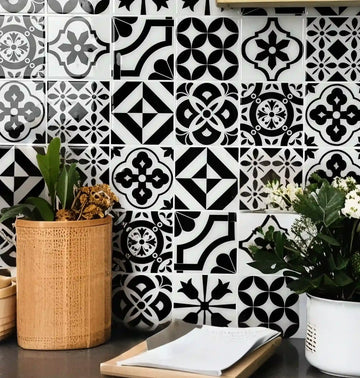

Use zones instead of proprietary design scores
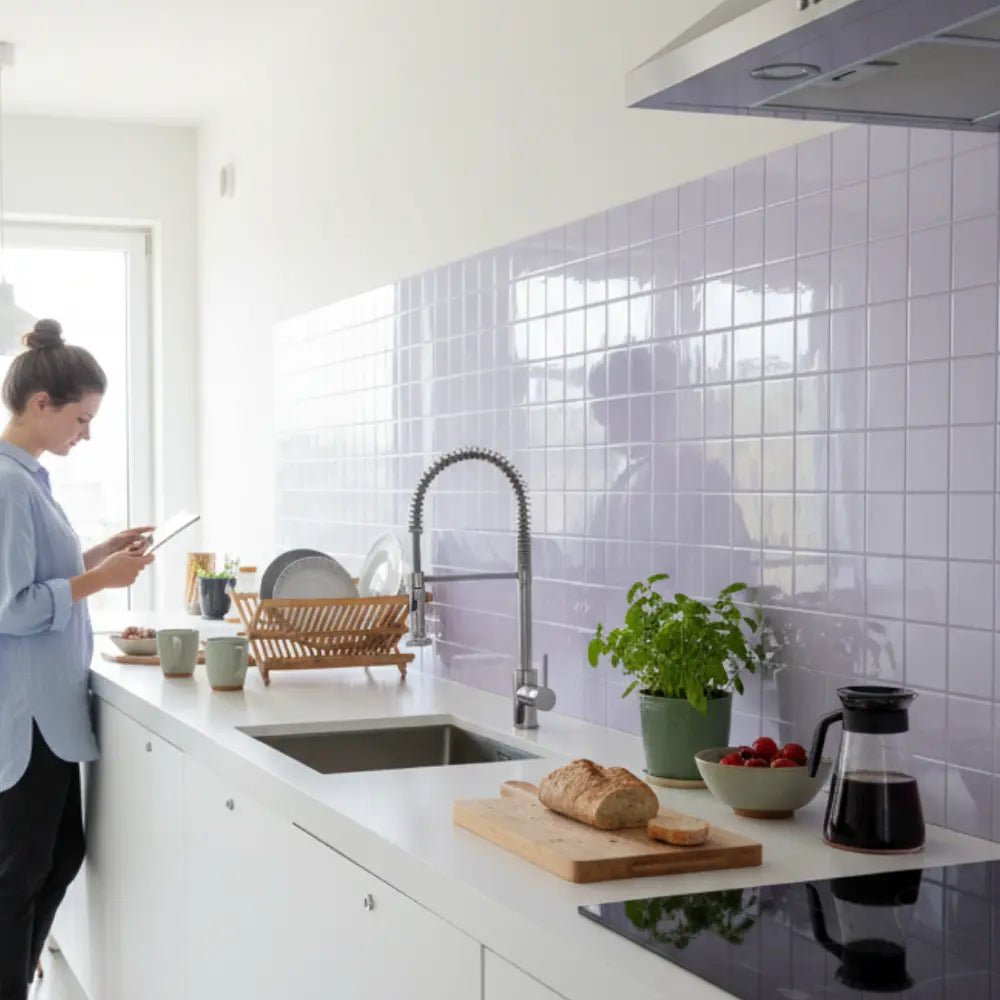
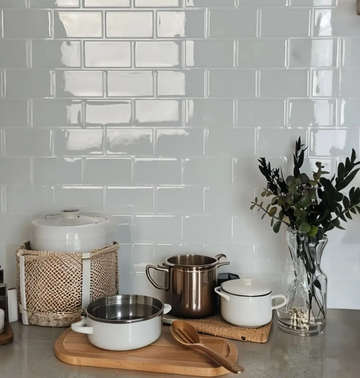
A mixed-material kitchen can be planned without a Design Cohesion Index or Material Integrity Score. Divide the backsplash into zones by exposure, substrate, service access and visual role. Traditional ceramic may be appropriate in one zone while an approved peel-and-stick wall finish works in another, but the decision comes from each complete system rather than a universal hierarchy.
Explore this guide
Map the sink, range, prep walls, pantry and coffee area. Ask which surfaces receive direct splash, stronger cleaning, heat or repeated equipment movement. Then compare the actual product documentation for each zone.
Make the transition intentional
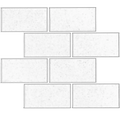
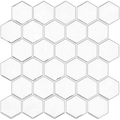
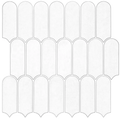
Ceramic and adhesive wall panels often differ in thickness, edge profile and seam design. Use a planned transition, trim or change in plane rather than trying to make two constructions appear physically identical. A deliberate boundary can look more convincing than a forced imitation.
Coordinate color and sheen with real samples
Do not rely on one LRV number or a proprietary cohesion score. Put both materials next to the countertop and cabinets under the room lighting. DOE lighting guidance shows that color appearance and rendition depend on the light source, so similar whites can separate noticeably under LEDs.
Look at grout-line scale, print repeat, gloss and texture from normal viewing positions. The goal is a relationship that appears intentional, not mathematical identity between unlike materials.
Compare the same finished scope
Ignore fabricated case-study savings. Price the exact ceramic area, substrate work, setting materials, grout, trim and labor; then price the adhesive area, preparation, trim, quantity and labor. A high-low design saves money only if the real quotations and scope support that conclusion.
Keep repairability in the comparison. One material may allow a local panel replacement while another requires grout or tile repair. Those differences can matter more than the initial pack price.
The Architectural Strategy of the High-Low Kitchen: Mixing Ceramic and Vinyl Without Compromaterial-suitability checkliste
Mastering spatial mapping, adhesive chematerial-suitability checklisttry, and visual cohesion to build a luxury kitchen on a practical budget.
The tactile sensation of a culinary space is a paramount element of interior design. Running your hand over a freshly glazed ceramic subway tile feels permanent, luxurious, and undeniably expensive. It speaks to a legacy of master craftsmanship, evoking the timeless, enduring appeal of early 20th-century architectural design where formidable durability met meticulous, handcrafted artistry. The cool, dense, unyielding surface of kiln-fired clay, enveloped in a luminescent, hand-applied glass glaze, catches the morning ambient light in a dynamic, shifting way that synthetic materials have historically struggled to fully replicate.
However, the reality of executing this aesthetic vision often collides with economic boundaries. Watching a contractor quote $4,000—or sometimes upwards of $8,000 depending on your metropolitan market, the scarcity of the materials, and the structural complexity of the herringbone or chevron patterns you desire—for a complete, wall-to-wall kitchen backsplash installation feels entirely different. It induces a sudden, sharp reality check that forces homeowners to re-evaluate their entire renovation allocation.
A kitchen project often has to balance visual priorities with the budget and the technical requirements of ventilation, appliances, countertops and wall finishes. A mixed-material strategy can be useful when each material is chosen for the exposure and substrate it is actually documented to handle.
The compromaterial-suitability checkliste—or rather, the intelligent, strategic evolution in modern home design—is the high-low kitchen strategy. This methodology borrows from the high fashion industry, where haute couture is seamlessly blended with accessible ready-to-wear pieces. By intelligently mixing authentic, heritage materials with modern, high-performance vinyl alternatives, you bypass traditional budget limitations entirely. You create a bespoke culinary environment that sacrifices neither structural durability nor financial sanity.
The best way to mix real ceramic and peel-and-stick tiles in a high-low kitchen design is to use ceramic in heat and water zones while applying peel-and-stick tiles in low-impact areas, ensuring a seamless transition using color-matched grout or transition strips.
Implementing this strategy requires significantly more than just purchasing two different boxes of tile and hoping for the best. It requires careful, methodical planning akin to architectural drafting. You must master three specific elements: precise zone planning to mitigate environmental degradation, strict material compatibility to ensure chemical bonding, and professional finishing tips that trick the human eye.
By applying a standardized, rigorous evaluation to your kitchen layout, you completely eliminate subjective guesswork. You will learn exactly where to place heavy, rigid ceramics and where flexible, polymer-based adhesives truly shine. This dual-material approach fundamentally mitigates the catastrophic risk of adhesive failure while maximizing your design impact, allowing you to allocate your budget with surgical precision.
How do you plan a high-low kitchen design that looks cohesive?
Ever stare at a wall of expensive tile and wonder if you could just use it where it counts, without the whole room looking like a material-suitability checklistmatched patchwork?
Establishing a zone-based approach that defines high-impact and low-impact surfaces ensures a perfect balance between premium beauty and budget-friendly function.
The foundational methodology of any successful mixed-material installation requires a strict adherence to spatial mapping and environmental forecasting. A high-low design fails spectacularly when materials are mixed randomly, creating a chaotic, disjointed aesthetic that immediately betrays the budget constraints of the project. It succeeds beautifully when material transitions align perfectly with the natural architectural purpose and functional flow of the kitchen space.
Heat, moisture and cleaning requirements vary by zone and by the exact material system. Use each product and appliance specification rather than assuming every hot or wet area requires one material category and every dry area accepts another.
Use a design-cohesion checklist to compare color, sheen, pattern scale, transition details and the actual room. The checklist organizes observations; it is not a validated quantitative baseline or industry score.
A standardized metric evaluating how successfully multiple materials blend within a single visual plane, factoring in light reflectance, texture matching, and transition logic.
This guide does not rely on an unverified five-year satisfaction benchmark or a 40% uplift. Judge the mixed-material design from the actual room, samples, maintenance needs and project scope.
The Science Behind Visual Balance
Visual weight is a critical, often material-suitability checklistunderstood component of the design-cohesion checklist metric. Visual weight refers to how heavily an object draws the eye. Real ceramic tile possesses incredibly high visual and physical weight. Because it is formed from earth and fired in kilns at temperatures exceeding 2,000 degrees Fahrenheit, it develops microscopic undulations. It reflects ambient and directional light dynamically due to its deeply glazed, glass-like surface, creating natural shadows and highlights that give the wall profound depth.
Peel-and-stick tiles, typically manufactured from advanced polyvinyl chloride (PVC) or polyurethane gel composites, absorb and refract light differently. While high-end gels mimic the depth of glass beautifully, their flat backing means they do not possess the same inherent structural undulations as handmade clay. To achieve a high design-cohesion checklist score and maintain the illusion of seamless luxury, you must meticulously balance these textures.
Quick Design Cohesion Checklist
Click the items below to verify you have evaluated the visual balance of your materials before purchasing.
Always check the LRV of both materials. LRV measures the percentage of light a surface reflects, scaled from 0 (absolute black) to 100 (pure white). If your real ceramic is a high-gloss white (high LRV), your peel-and-stick counterpart should mimic that exact gloss level. A stark contrast between a flat, matte vinyl and a high-gloss ceramic on the same wall instantly breaks the design-cohesion checklist baseline and ruins the seamless illusion.

Zone Mapping for the High-Low Kitchen
Mapping your kitchen is the most critical preparatory phase. It yields an optimal configuration tailored for both uncompromaterial-suitability checklisting safety and elevated style. By treating the kitchen not as a single room, but as a series of micro-environments with distinct atmospheric conditions, you can assign materials logically. We strictly divide the kitchen into three distinct architectural zones.
1. The Red Zone (High Impact):
This includes the critical space directly behind your primary stovetop/range and the primary sink basin.
- Requirement: Real ceramic, porcelain, or stone tile installed with traditional thinset mortar and cementitious or epoxy grout.
- Why: These highly volatile areas face constant thermal expansion from boiling water and open flames, heavy grease splatter, acidic food spills, and standing water. Vinyl adhesives and flexible face materials degrade rapidly when subjected to this relentless environmental assault.
2. The Yellow Zone (Transition Areas):
These are the buffer areas adjacent to heat and water, such as the counters immediately flanking the stove or secondary prep sinks.
- Requirement: choose only a material documented for the exact heat, moisture, substrate and cleaning conditions at this location. A transition strip can organize the visual junction, but it does not make an otherwise unsuitable material safe.
- Why: A brass, brushed nickel, or anodized aluminum transition strip naturally defines the boundary. It gives the eye a structural reason for the shift in texture, making the material change look like an intentional, bespoke design choice rather than an accidental budget shortage.
3. The Green Zone (Low Impact):
This vast category includes dedicated coffee bars, expansive pantry walls, baking nooks, and secondary counter spaces used solely for storage or dry prep.
- Requirement: High-quality, premium peel-and-stick tiles (preferably 3D gel or composite cores).
- Why: These dry, temperature-stable micro-environments perfectly preserve the chemical and structural integrity of pressure-sensitive adhesives indefinitely, allowing you to maximize visual square footage without compounding labor costs.

Evaluating Your Layout Options
Use the matrix below as an editorial comparison of scope, installation complexity and exposure limits. It is not an empirically validated dataset, a long-term renovation study, or a scoring model that guarantees one layout will cost less or last longer.
| Metric Category | Traditional All-Ceramic Backsplash | Traditional All-Peel-and-Stick | design-cohesion checklist-Optimized High-Low Design |
|---|---|---|---|
| Visual Balance (design-cohesion checklist Score) | High (Uniform but potentially monolithic) | Low (Lacks authentic structural depth) | High (Intentional, curated contrast) |
| Project Cost and Commitment | High (Extensive Labor + Premium Materials) | Low (Materials only, DIY friendly) | Project-dependent |
| Heat/Moisture Durability | Depends on the documented system | Use only where the product is documented for the exposure | Exceptional in targeted zones |
| Installation Time | 3–5 Days (Requires curing/grouting delays) | Schedule depends on the selected system | Plan each material sequence separately |
Illustrative Scenario: The Peninsula Project
Use this hypothetical mixed-material kitchen to understand the planning method. The dimensions and material choices are assumptions for illustration, not a reported project, measured saving or published case study.
The deployment strategy was elegantly simple. The 18 square feet residing within the Red Zone—directly behind the heavy-duty commercial gas range and the deep farmhouse sink—received authentic, hand-glazed Moroccan ceramic tile. The remaining 40 square feet of expansive, wrap-around counter space, which served as a dry baking station and coffee bar (the Green Zone), utilized highly engineered, premium 3D-gel peel-and-stick tiles. These were painstakingly color-matched to the exact dominant shade of the adjacent ceramic.
To bridge the inevitable structural gap between the disparate materials, the professional installer used a specific architectural component: a Schluter-JOLLY edge-protection profile.
A precise, engineered metal finishing strip typically used to create flawlessly clean transitions between raw tile edges and other abutting surfaces, preventing chipping while adding a distinct linear design element.
A transition detail can make the thickness change between ceramic and a thinner wall finish look intentional. Compare actual trim options and quotations; this guide does not claim a measured $2,200 saving or a statistically significant cost result.
What materials and adhesives ensure longevity when mixing real and peel-and-stick tiles?
Are you worried that your peel-and-stick tiles will start peeling off the wall the moment you boil a large pot of pasta water, ruining all your hard work?
Using chemically compatible adhesives tailored to specific environments and selecting strictly heat-rated materials ensures a lasting, durable blend that performs exactly like an all-ceramic installation over the lifetime of your kitchen.
The primary, devastating failure point in mixed-material installations is not usually aesthetic material-suitability checklistmatch; it is invisible chemical degradation. Homeowners frequently underestimate the extreme environmental and micro-climatic shifts occurring daily within a standard residential kitchen layout.
Kitchen heat, moisture and cleaning can affect different materials differently. Evaluate each product using its own documented limits rather than a proprietary material score.
In the professional tile industry, we utilize the concepts behind the material-suitability checklist to determine the long-term viability of an installation.
A quantitative metric assessing an adhesive compound's resistance to sheer gravitational force, high-temperature thermal degradation, and microscopic moisture penetration over a projected 10-year lifecycle.
Materials and adhesive systems scoring high on the material-suitability checklist scale fundamentally mitigate the chronic risks that plague DIY installations: curled corners on vinyl tiles, shifting and cracking grout lines, and catastrophic sheer bond failure where tiles literally fall off the drywall.
Choose the installation system from the exact documentation
Use the selected tile or wall finish, appliance clearances, substrate and exposure to determine preparation, adhesive, grout and transition details. This guide does not prescribe those materials from a generic color-zone calculator.
Understanding Adhesive Chematerial-suitability checklisttry
To successfully mix real and peel-and-stick tiles without invoking structural disaster, you must understand the deep chematerial-suitability checklisttry of the two entirely distinct adhesive types at play. Treating them similarly is the most common path to installation failure.
1. Thinset Mortar (For Ceramic):
Thinset is a highly refined, Portland cement-based adhesive. When mixed with water, it undergoes a complex curing process, not just drying. It forms a powerful mechanical bond. As it cures, it physically locks into the microscopic pores and grooves of both the drywall substrate and the unglazed back of the ceramic tile. Once fully cured, it is virtually impervious to standard kitchen heat fluctuations and ambient moisture.
2. Pressure-Sensitive Adhesives (PSAs) (For Vinyl):
In stark contrast, high-quality peel-and-stick tiles rely entirely on PSAs. These are sophisticated, elastomer-based glues formulated in a laboratory setting. They do not cure like cement; rather, they form a chemical surface bond upon physical contact.
A specific type of non-reactive adhesive formulation that immediately forms a secure bond when physical pressure is applied to perfectly marry the adhesive layer with the adherend surface (the wall).
Because they remain slightly flexible to accommodate the expansion of vinyl, PSAs are inherently susceptible to extreme thermal expansion. When heated beyond their engineered operational threshold, the polymer chains within the adhesive physically break down. The adhesive reverts to a gummy, liquid-like state, causing the heavy tile to literally slide down the wall under its own weight.
Heat and Moisture Performance Benchmarks
Use the installation standards and manufacturer documentation that actually apply to the chosen ceramic system, adhesive finish, appliance and substrate. A generic article should not attribute universal heat thresholds to TCNA or another organization without a directly applicable standard.
Do not apply a generic adhesive-failure temperature or assume a wall temperature from burner type alone. Use the exact wall-finish temperature limit and the appliance manufacturer’s required clearances for the installed configuration.
Heat and moisture suitability must be checked from the actual product and appliance documentation. Use zones only as a planning aid to identify where requirements differ, not as a scientifically validated Red/Yellow/Green model.
Do not add construction adhesive behind a peel-and-stick product unless the manufacturer explicitly permits it. Third-party adhesives can change bonding, compatibility, heat behavior, removability and warranty coverage; use the documented system instead of trying to convert a decorative product into a heat-rated assembly.

Step-by-Step Mixed Material Installation Guide
Use a phased installation sequence that follows the actual ceramic and adhesive-wall systems. Do not convert the checklist into a rating or claim that rushing a generic sequence guarantees failure.
1 Step 1: Standardized Surface Preparation
Surface preparation differs across mortar, membrane and pressure-sensitive adhesive systems. Follow the substrate preparation and cleanliness requirements for each exact product instead of applying one chemical or friction standard to both.
- Vigorously degrease the entire wall area using highly concentrated TSP (Trisodium Phosphate) diluted according to the manufacturer's instructions.
- TSP (Trisodium Phosphate) — A heavy-duty, alkaline-based cleaning agent used heavily by professionals that forcefully cuts through stubborn kitchen grease, smoke residue, and old wax to perfectly prepare surfaces for painting or permanent gluing.
- Lightly but evenly sand any glossy or semi-gloss paint finishes across the entire installation area using 120-grit sandpaper to create millions of micro-abrasions (often called "tooth"). This mechanical texture gives adhesives something to bite into.
- Wipe away all residual dust meticulously with a slightly damp microfiber cloth. You must then allow the wall to dry completely for a minimum of 24 hours. Any trapped moisture behind vinyl tiles will cause bubbling.
2 Step 2: Establishing the Quantitative Baseline
Do not rely on the physical slope of your underlying countertops as a guide. Due to structural settling over decades, residential countertops are rarely, if ever, perfectly level.
- Deploy an auto-leveling laser level to cast a perfectly crisp, unbroken horizontal line across the entire length of the kitchen workspace at the height of your first grout line.
- This luminous red or green line serves as your absolute, unchangeable baseline for installing both the heavy ceramic section and the flexible peel-and-stick sections perfectly flush.
- Strategically plan your layout so that the required metal transition strip falls naturally at a logical architectural break—such as precisely aligning with the outer vertical edge of an upper cabinet or a window casing.
3 Step 3: Setting the Ceramic Core
Always begin an installation within the unforgiving Red Zone. Handling messy mortar is significantly easier before delicate vinyl tiles are placed nearby.
- Mix your chosen high-quality, unmodified thinset mortar with cool water in small batches to the precise consistency of thick, creamy, smooth peanut butter. It should hold a distinct ridge without slumping.
- Apply the thinset firmly onto the wall using the flat side of a trowel, then comb it out using a 1/4-inch by 1/4-inch square-notch trowel held at a strict 45-degree angle.
- Directional Troweling Technique: Ensure all trowel ridges run in the exact same direction (usually horizontal). This crucial technique allows trapped air to effortlessly escape through the valleys when you press the rigid tile firmly into the wall, ensuring 95–100% back coverage and maximum bond strength.
- Carefully measure and insert your chosen metal transition strip perfectly straight at the outer designated edge of the ceramic zone. The punched anchoring flange of the metal strip must be deeply embedded directly in the wet thinset firmly beneath the final vertical row of ceramic tiles.
4 Step 4: The Peel-and-Stick Integration
Exercise absolute patience. You must wait until the ceramic section is fully cured (usually 24 to 48 hours depending on humidity) and fully grouted before even opening the vinyl section.
- Accurately measure the exact distance from the exposed face of the transition strip outward into the Green Zone.
- Do not peel the entire backing off immediately. Peel back just one inch of the protective paper from the side of your first vinyl tile to expose a small strip of adhesive.
- Align that sticky edge perfectly flush against the metal transition strip, utilizing the metal itself as your square, vertical guide.
- Once perfectly aligned, slowly and methodically pull the rest of the backing paper down with one hand while forcefully smoothing the tile face upward with the other, effectively pushing out any microscopic air bubbles.
- Use a heavy, solid rubber seam roller to apply massive physical pressure back and forth across every square inch of the installed tile. Remember, PSAs specifically require immense, uniform physical force to properly activate the microscopic chemical bond with the wall texture.
5 Step 5: Grouting for Cohesion
This is precisely where the aesthetic magic happens and budget materials are elevated. To maximize your overall design-cohesion checklist, the grout lines spanning the entire kitchen must appear utterly continuous and identical.
- If a specific peel-and-stick product is designed to receive grout, use only the grout type and installation method documented by that product manufacturer. Do not transfer a generic acrylic, urethane or cement-grout rule across flexible tile systems.
- Critical Warning: Traditional, rigid cement grout will unequivocally crack, crumble, and fall out within weeks if applied over inherently flexible vinyl tiles due to micro-movements caused by simple room temperature changes.
- Meticulously color-match your advanced flexible acrylic grout to the exact shade of the standard cement or epoxy grout you used on your real ceramic tiles in the Red Zone.
- This flawless, unified color palette inherently neutralizes and obscures the minute visual differences between the two disparate core materials, visually tricking the eye and calibrating the final architectural output for maximum, bespoke luxury.
Final Thoughts on Blending Materials
Designing and executing a high-low kitchen is not simply a compromaterial-suitability checkliste to save money; it is a sophisticated exercise in balancing robust structural logic with highly elevated aesthetic strategy. By deliberately and strategically placing heavy, authentic ceramics in high-stress thermal zones and cleverly leveraging advanced, hyper-realistic vinyl composite tiles in expansive, low-impact areas, you achieve an unprecedented, maximized cost-to-yield ratio for your home renovation budget.
Ultimately, your success relies almost entirely on deeply respecting the unyielding physical and chemical limitations of your chosen materials. Following the precise, science-backed temperature thresholds and deploying the correct adhesive baselines outlined in this guide supports a documented installation that can be inspected and maintained over time.
You no longer have to make the painful choice between an incredibly durable, functional kitchen and an affordably striking one. By fully embracing a mixed-material layout, guided by the rigid principles of the Design Cohesion Index, you completely redefine the standard architectural paradigm for modern home renovation.
Ready to Start Planning Your Layout?
Ensure your mixed-material layout hits every metric for success before you buy. Map your specific high-stress and low-impact zones with absolute confidence.
Download 'High-Low Kitchen Planner' TXTFrequently Asked Questions
Can I use real grout on peel-and-stick tiles to make them look more authentic?
You should never use traditional, rigid cement-based grout on peel-and-stick tiles under any circumstances. Vinyl tiles, by their very chemical nature, naturally expand and contract microscopically with minor ambient temperature changes in the kitchen. Standard cement grout cures to a rigid, stone-like consistency. This inherent disparity in flexibility means the vinyl's movement will quickly cause traditional cement grout to severely crack, flake, and crumble within weeks of installation. Instead, use a premium, premixed, heavily modified acrylic or urethane grout, which remains highly flexible for years while perfectly mimicking the dull, textured, sandy look of real traditional grout, effectively fooling the eye.
How do I hide the thickness difference between ceramic tile and thin vinyl tile?
The most professional, structurally sound method for managing this drastic disparity in material depth is utilizing a dedicated metal transition profile, such as a sleek aluminum L-angle or a specialized Schluter JOLLY edge strip. During the initial ceramic installation phase, you firmly embed the wide, perforated anchoring flange of the metal strip directly into the wet thinset mortar directly beneath the final ceramic tile. The exposed, vertical metal lip effortlessly and perfectly covers the raw, ugly, thicker edge of the ceramic, creating a sleek, clean, intentional architectural line precisely where the dramatically thinner, 1/8-inch peel-and-stick tile begins. This simple addition elevates the transition from an obvious material-suitability checklisttake to a highly deliberate, luxury architectural boundary.
Are peel-and-stick tiles safe to put behind my kitchen sink?
Yes, high-quality, gel-core peel-and-stick tiles can absolutely be safely used behind a standard kitchen sink basin, provided they are explicitly manufacturer-rated for high moisture resistance and are strictly installed on a perfectly dry, sealed substrate. However, a critical extra step is required: you must thoroughly and perfectly seal the bottom horizontal edge—exactly where the fragile bottom row of vinyl tile squarely meets the rigid countertop—with a thick, unbroken bead of high-grade, 100% mold-resistant silicone caulk. This impenetrable silicone barrier aggressively prevents corrosive standing water from silently seeping upward behind the tile face and rapidly degrading the vulnerable pressure-sensitive adhesive backing, which would otherwise lead to immediate curling and mold growth.
What is the best way to remove peel-and-stick tiles without destroying the drywall?
When it is eventually time for a major design upgrade, you must exercise caution: never try to forcefully pull old vinyl tiles straight off the wall with brute strength. The aggressive chemical grip of the old adhesive will violently tear the fragile paper facing entirely off the underlying drywall, necessitating hours of expensive skim-coating repair work. Instead, deploy thermal physics. Use a standard commercial heat gun on a low setting, or a powerful household hair dryer on its highest heat setting. Slowly apply dry heat evenly across the entire face of a single tile for roughly 30 to 45 seconds. This intense, targeted thermal energy temporarily melts and breaks down the rigid polymer chains locked within the aged adhesive backing, safely allowing you to slide a flexible, thin plastic putty knife underneath and gently, cleanly peel the intact tile away from the wall with virtually zero drywall damage.
Sources and scope
- US EPA — Mold, Moisture and Your Home — Moisture-source control; not tile certification.
- 3M — Surface Preparation for VHB Tape Applications — Pressure-sensitive adhesive preparation principles; not Stickwoll specifications.
- US DOE — Color and Spectrum — CCT, spectrum and color rendition; not a universal room-lighting score.


Leave a comment
This site is protected by hCaptcha and the hCaptcha Privacy Policy and Terms of Service apply.