




Are Peel and Stick Tiles Heat Resistant? The Ultimate Kitchen Safety Guide
Protect your renovation investment: The definitive look at safety zones, material science, and expert installation.
Have you ever looked at a beautiful, affordable peel and stick backsplash and felt a sudden pang of worry? It’s the fear that after all your hard work, the heat from your stove might turn your stylish upgrade into a melted, warping disaster. For broader planning, see our kitchen backsplash guide.
It is a valid concern. We often see DIY enthusiasts and renters hesitate to upgrade their kitchens because they simply don't know the safety limits of these materials. You want the look of luxury, but not at the risk of fire safety or product failure.
Here is the truth, backed by manufacturing data and safety standards.

Question:
Are peel and stick tiles heat resistant?
Generally, no, most standard vinyl peel and stick tiles are not fully heat resistant. They typically withstand temperatures only up to 120°F – 180°F (49°C – 82°C). While they will not instantly catch fire, sustained exposure above these limits causes melting, yellowing, and adhesive failure.
In this guide, we will move beyond guesswork. We will break down exactly how these tiles react to thermal stress, define the safe zones in your kitchen, and show you how to get that high-end look without compromising safety.
Is Your Kitchen Safe for Standard Vinyl?
Take this 5-second check before you buy.
Does your stove have a raised metal back panel (where the clock/knobs are)?
What Does It Mean for Peel and Stick Tiles to Be Heat Resistant?
"Confused by product labels and vague marketing? This section cuts through the jargon to explain exactly what 'heat resistance' means for adhesive tiles versus traditional materials."
When we talk about heat resistance in the context of peel and stick tile heat resistance, it is crucial to distinguish between "fireproof" and "heat resistant."
Traditional ceramic or glass tiles installed with mortar are virtually fireproof. They do not burn, melt, or deform under standard kitchen cooking conditions. Peel and stick tiles, however, are composite materials. They are engineered for convenience and aesthetics, not for surviving inside a kiln.
The Material Composition Factor
Most self-adhesive tiles are made from polyvinyl chloride (PVC), gel resin, or thin metal veneers over a plastic core.
-
✓
Standard Vinyl/PVC: These are essentially thermoplastics. When heated, they soften. Think of a plastic food container in a microwave; it holds its shape to a point, but excessive heat makes it pliable and warped.
-
✓
Aluminum/Metal Composites: These offer higher heat tolerance on the surface, but they still rely on an adhesive backing that can degrade.
-
✓
Gel/Resin Tiles: These provide a 3D glass look but are often the most susceptible to yellowing from heat exposure over time.
Looking for the right materials?
If you are designing a high-heat zone, standard vinyl might not cut it. We have compiled a deep dive into specific materials that combine style with practicality. Compare different materials and their suitability for high-heat kitchen applications in our detailed guide on Heat-Resistant Peel and Stick Tiles for High-Heat Kitchens.
The "Thermal Shock" Concept
In our experience testing various brands, the issue is rarely immediate combustion (catching fire). The real enemy is "thermal shock"—rapid changes in temperature that cause the tile to expand and contract.
Unlike ceramic, which is rigid, vinyl expands when hot. If your peel and stick backsplash is too close to a heat source, it expands. When the stove turns off, it contracts. Over weeks of cooking, this movement breaks the bond between the adhesive and your wall.

Expert Insight: The Sunscreen Analogy
Think of heat resistance ratings like SPF in sunscreen. An SPF 30 sunscreen protects you for a certain amount of time and intensity, but it doesn't make you immune to the sun. Similarly, "heat resistant" on a tile package means it can handle some indirect warmth, not that it is impervious to the direct blast of a gas burner.
For those new to this DIY revolution, understanding the basics of the material is key. Before diving into complex heat installations, explore our beginner's guide on How to Use Peel and Stick Tiles in 2025 to master the fundamentals.
How Much Heat Can Peel and Stick Tiles Handle Before Damage?
"Anxious that your new backsplash will start peeling or bubbling while you cook dinner? We reveal the specific temperature thresholds where failure happens so you can cook with confidence."
To answer the core question—are peel and stick tiles heat resistant—we need to look at the numbers. While every manufacturer has slightly different specifications, industry standards provide a clear baseline.
The Temperature Thresholds
Most standard vinyl tiles are rated for a maximum continuous temperature of 120°F (49°C). Specialized "heat-resistant" versions, often made with aluminum or specialized gel, can typically withstand up to 180°F (82°C).
To put this in perspective:
If you expose a standard 120°F-rated tile to the exhaust of your oven, you are operating in the danger zone.
The Invisible Failure: Adhesive Degradation
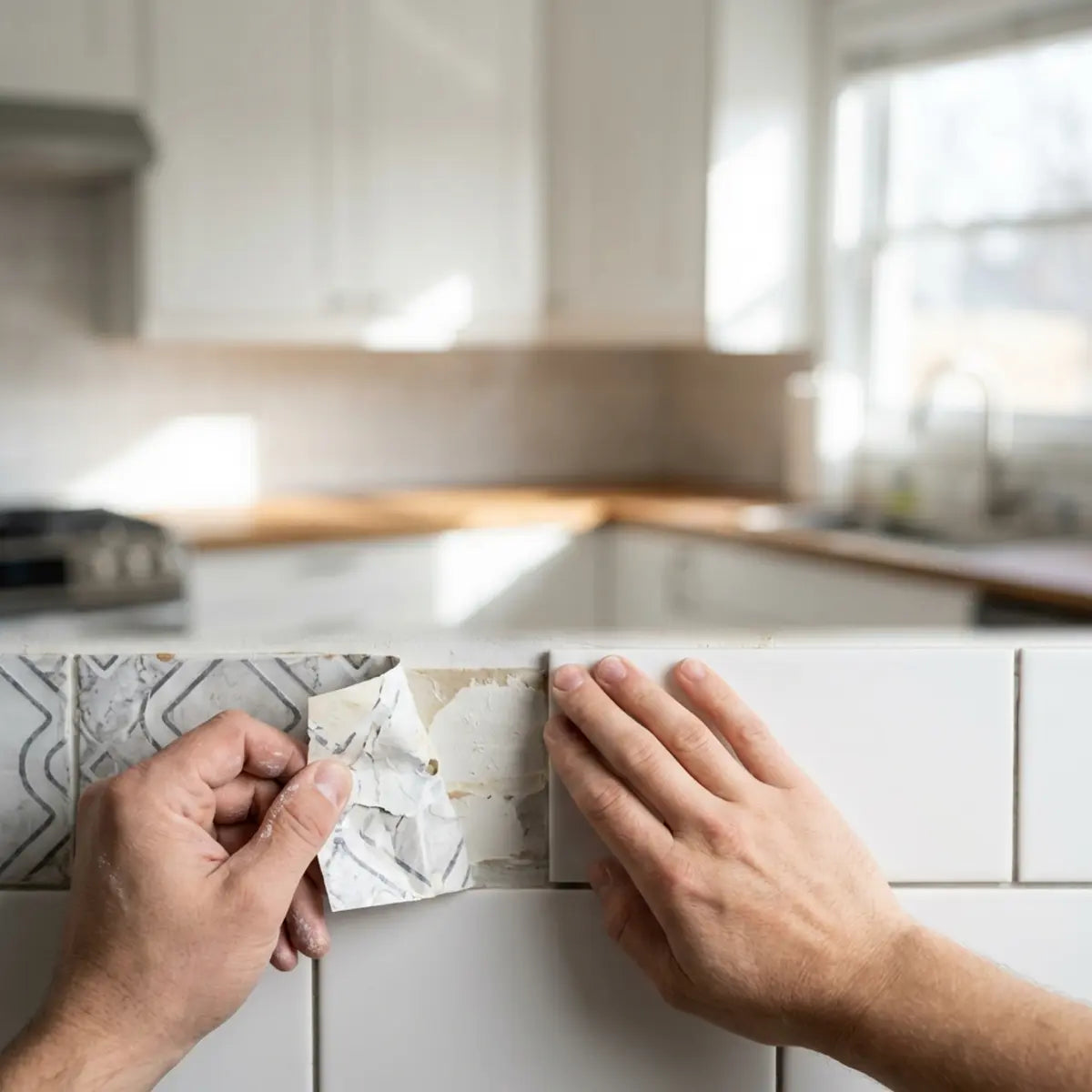
Heat does two things to peel and stick tiles. First, it affects the face (melting/discoloration). Second, and more commonly, it liquefies the adhesive.
I recall consulting with a renter, let's call her Sarah. She installed standard vinyl sheets directly behind a slide-in gas range with no backguard. The tiles looked fine for the first two weeks. However, by week three, the tiles hadn't melted, but they began sliding down the wall. The heat had softened the glue so much that gravity simply took over.
Verified Data Comparison
Here is how different materials generally stack up regarding peel and stick tile melting temperature:
| Material Type | Max Temp Rating (Avg) | Heat Reaction Risk | Best Use Case |
|---|---|---|---|
| Standard Vinyl (PVC) | 120°F (49°C) | Warping, softening, peeling | Low-heat zones, laundry rooms |
| Gel / 3D Resin | 125°F - 140°F | Yellowing, bubbling | Behind sinks, prep areas |
| Aluminum Composite | 170°F - 190°F | Adhesive failure (surface safe) | Behind stoves (with buffer zone) |
| Stone/PVC Mix | 160°F - 180°F | Cracking adhesive bond | Kitchens with backguards |
Pro-Tip: Never rely solely on the "heat resistant" badge on the packaging. Always check the "Technical Specifications" sheet for the exact Fahrenheit limit.
Once installed, longevity is key. Even the best tiles can degrade if scrubbed with abrasive cleaners while hot. Learn how to clean and care for your peel and stick tiles to preserve their appearance and adhesive lifespan in our Peel and Stick Tile Maintenance Guide 2025. When comparing finishes, browse Stickwoll peel-and-stick tiles and review the product details for your surface and room.
What Is the Safe Distance Between Peel and Stick Tiles and a Stove or Oven?
"Unsure exactly where you can stick your tiles without risking a meltdown? This section gives you precise measurements and 'safe zones' to ensure your installation lasts."
This is the most critical safety factor. Distance is your best defense against heat damage. The safe distance for peel and stick tile from oven or stove varies based on your appliance type, but we follow a strict "Safety Zone" rule.

The "8-Inch Rule" (No Backguard)
If your stove is a slide-in model or a drop-in cooktop that sits flush with the counter (meaning it has no raised control panel at the back), you have "zero clearance." The burners are right next to the wall.
In this scenario, you must leave at least 8 to 10 inches (20-25cm) of space between the burner and the start of the peel and stick tile. Installing tiles lower than this puts them in the direct path of open flames and pot heat.
- Leave the existing surface: If you have a painted wall or old ceramic tile, leave that 8-inch strip exposed.
- Install a Heat Shield: Use a tempered glass or stainless steel splash guard for the bottom 8-10 inches, then start your peel and stick tiles above that line.
The "Control Panel Protection" (With Backguard)
If your stove has a raised back (usually where the clock and knobs are), you are in a much better position. This metal barrier acts as a heat shield.
- ✓ Gas Stoves with Backguard: You can typically install tiles directly above the control panel. The metal panel absorbs and deflects the intensity of the heat.
- ✓ Electric Stoves with Backguard: Generally safe to install immediately above the backguard.
Beware of the Oven Vent
Check where your oven vents hot air. Many modern units vent directly out of the top of the backguard, aiming toward the wall. Even if you have a backguard, if the vent blows 400°F air directly onto your new vinyl tiles, they will melt.
Actionable Advice: Turn your oven to 400°F and let it run for 30 minutes. Place your hand carefully near the wall above the stove. If the air feels like a hair dryer on "high," it is too hot for vinyl tiles.
Learn how to safely install heat resistant peel and stick tiles behind your stove.
Are There Specific Types of Peel and Stick Tiles Recommended for Behind the Stove?
"Overwhelmed by choices and afraid of picking the wrong material? We narrow down the market to the specific materials engineered to handle the kitchen environment."
Not all peel and stick products are created equal. When searching for a heat resistant peel and stick backsplash for kitchen use, you need to filter your search by material composition.
1. Aluminum and Metal-Faced Tiles
These are the gold standard for high-heat areas. They consist of a thin layer of real aluminum or stainless steel over a composite core. The metal face reflects radiant heat rather than absorbing it.
- Why they work: Metal has high thermal conductivity, meaning it dissipates heat quickly.
- The Caveat: The adhesive is still vulnerable. Even with metal tiles, respect the 8-inch rule if you don't have a backguard.
2. Gel-O-Type (Epoxy Resin)
These are popular for their glossy, glass-like appearance. However, quality varies wildly.
- Why they work: High-quality resin is cured to withstand moderate heat.
- The Risk: Cheap epoxy yellows quickly. If you choose this style, ensure the manufacturer explicitly states "non-yellowing" and lists a heat tolerance above 140°F.
3. Stone Composite (SPC)
Stone Plastic Composite tiles are rigid and thicker. They mimic real stone or slate.
- Why they work: The density of the material provides a better thermal buffer than thin vinyl sheets.
Common Misconception: Many people believe that thicker tiles are always more heat resistant. This is false. A thick slab of pure PVC will still warp if it gets hot enough. The chemistry of the material matters more than the thickness.
For more specific product examples and U.S.-market recommendations, including visual diagrams of safe areas, check out The Ultimate Guide to Heat Resistant Peel and Stick Tiles for Kitchens (2025 Edition). If you are also renovating wet areas like the bathroom, don't miss our guide on Top Waterproof Peel and Stick Shower Tiles for 2025 to ensure you pick the right material for every room.
How Can I Test My Stove Area Before Installing Peel and Stick Tiles?
"Want to be 100% sure before you peel that first backing? Here is a simple, no-cost method to verify your specific kitchen's safety zone."
Every kitchen has a unique micro-climate. The power of your burners, the ventilation of your hood, and the insulation of your walls all play a role. Before you buy, perform a "Heat Mapping" test.
The "Zone" Test Method
- Simulate Cooking: Turn on your front burners to a medium-high boil (with pots of water). Turn on the oven to 350°F. Let everything run for 20 minutes.
-
Map the Heat:
- Zone 1 (Directly behind stove): Place your hand on the wall. Is it hot to the touch? If you can't keep your hand there comfortably for 10 seconds, you cannot use peel and stick tiles there.
- Zone 2 (10 inches up): Move your hand up. Where does the temperature drop to "warm" rather than "hot"? Mark this spot with a piece of painter's tape. This is your safe starting line.
- Zone 3 (Side splash): Check the side walls if your stove is in a corner. These areas often get surprisingly hot.
Use a Digital Thermometer
For absolute precision, use an infrared thermometer (the laser gun type).
- Safe Zone: Any wall area measuring under 110°F during cooking is safe for almost all peel and stick brands.
- Caution Zone: 110°F - 130°F requires premium heat-resistant metal tiles.
- Danger Zone: Anything consistently over 130°F requires a glass or steel back splash guard.

This testing method is a proactive way to avoid the heartbreak of a ruined renovation. Looking for inspiration beyond the stove? We have compiled common mistakes and practical tips for accessible DIY upgrades in our article on How to Upgrade Kitchens with Peel and Stick Tiles.
What Are Common Myths About Peel and Stick Tile Safety?
"Heard conflicting advice from friends or forums? We debunk the most dangerous myths that lead to kitchen mishaps."
There is a lot of misinformation circulating in DIY forums. Let's clear the air regarding peel and stick backsplash heat proof claims.
❌ Myth 1: Heat Resistant = Fireproof
Fact: As we established, heat resistance simply means the product won't deform at certain temperatures. It does not mean the product is non-combustible. If a grease fire flares up on your stove, vinyl tiles will add fuel to the fire.
❌ Myth 2: Extra Glue Works
Fact: Adding superglue or construction adhesive to the back of a vinyl tile does not make the vinyl itself heat resistant. The face of the tile will still melt or discolor if exposed to high heat, regardless of how strong the glue is.
❌ Myth 3: Steam Isn't Heat
Fact: Steam from a boiling pasta pot or a whistling kettle is incredibly hot (212°F). Steam combines heat with moisture—the two biggest enemies of adhesives.
Pro-Tip: Always pull appliances like toasters, air fryers, and kettles forward on the counter, away from the backsplash, when in use.
Final Thoughts: Balancing Style and Safety
Peel and stick tiles are a revolutionary tool for renters and budget-conscious homeowners. They allow you to transform a dated kitchen into a modern sanctuary in a single afternoon. See what's possible with a weekend project by exploring five remarkable transformations in our gallery: Transform Your Kitchen with Peel and Stick Tiles.
However, treating them with the same regard as fired ceramic is a mistake.
Summary: Key Takeaways for a Safe Installation
- Check the Rating: Ensure your tiles are rated for at least 120°F, preferably higher.
- Respect the Gap: Maintain an 8-12 inch clearance from open burners if you don't have a backguard.
- Test the Heat: Use the "hand test" or a thermometer to verify your wall temperature doesn't exceed the manufacturer's limit.
- Ventilate: Protect your investment by using your range hood fan to dissipate heat and steam.
By following these guidelines, you can enjoy a beautiful, custom kitchen without the worry.
Community Poll: How close is your backsplash to your stove?
Ready to start your renovation safely? Don't gamble with unverified products. Browse our curated selection of verified, high-performance options in our guide: Explore the Best Heat-Resistant Peel and Stick Backsplashes.
Frequently Asked Questions
Can you put peel and stick tiles near a stove?
Yes, but with strict conditions. If your stove has a raised back control panel (backguard), you can usually install tiles directly above it. If you have a flat drop-in cooktop or slide-in range, you must leave a gap of at least 8 to 10 inches between the burner and the tiles to prevent melting.
What happens if peel and stick tiles get too hot?
When exposed to temperatures above their rating (usually 120°F+), two things happen. First, the adhesive softens, causing the tiles to slide down the wall or curl at the edges. Second, the material itself (especially vinyl/PVC) can warp, bubble, or permanently yellow.
Are there any truly fireproof peel and stick tiles?
No. While some metal-faced peel and stick tiles are non-combustible on the surface, the adhesive backing and the core materials are flammable. No peel and stick product offers the same Class A fire rating as traditional ceramic or porcelain tile installed with mortar.
How do I protect my peel and stick backsplash from heat?
The best protection is distance. If you cannot move the tiles further away, consider installing a tempered glass or stainless steel "splash guard" panel directly behind the stove. This acts as a barrier, allowing you to have the peel and stick look on the rest of the wall while keeping the high-heat zone protected.


Leave a comment
This site is protected by hCaptcha and the hCaptcha Privacy Policy and Terms of Service apply.