




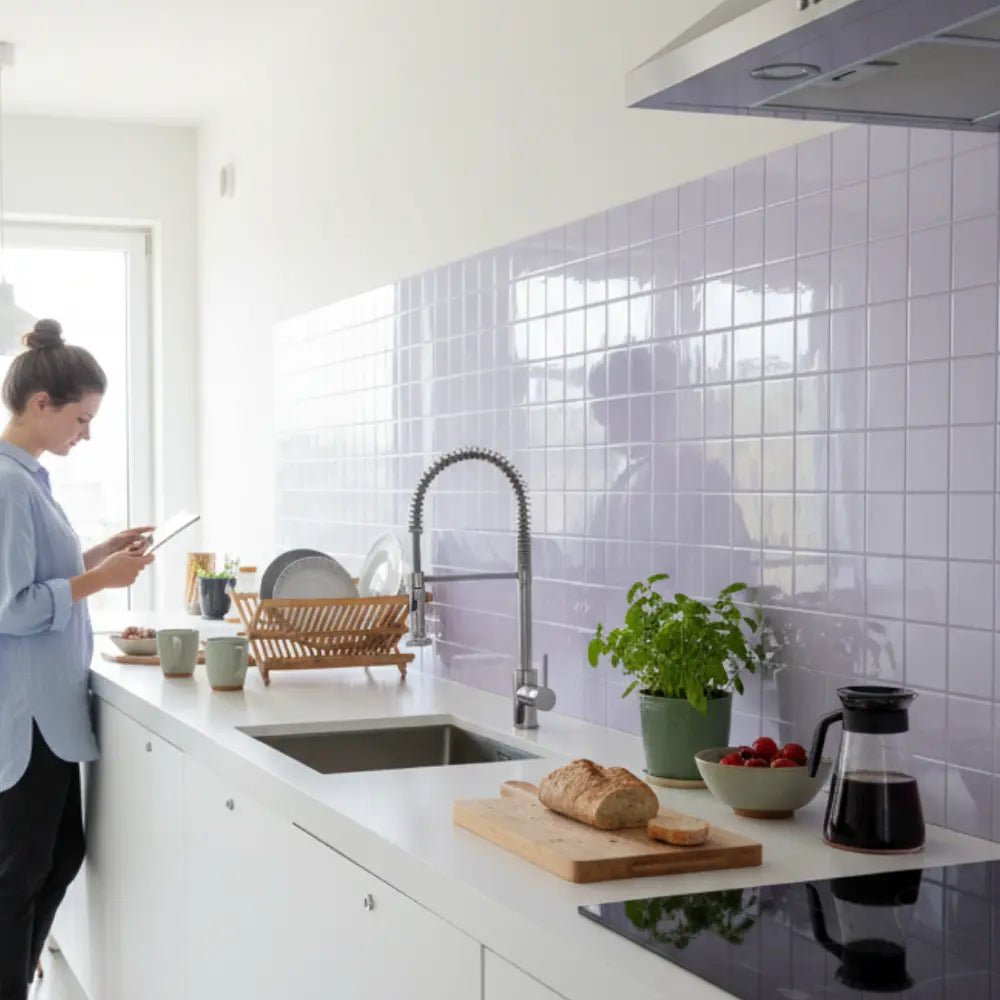



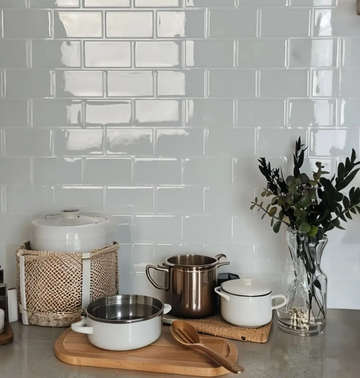
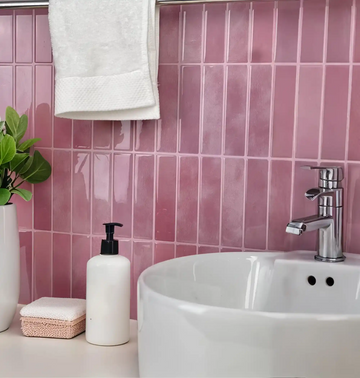
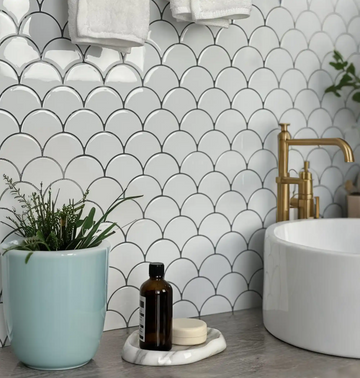
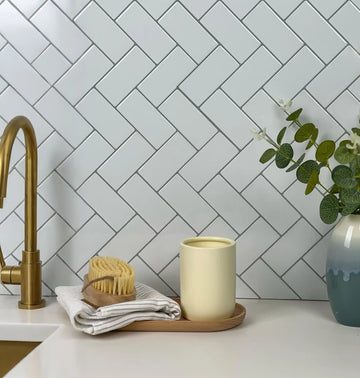
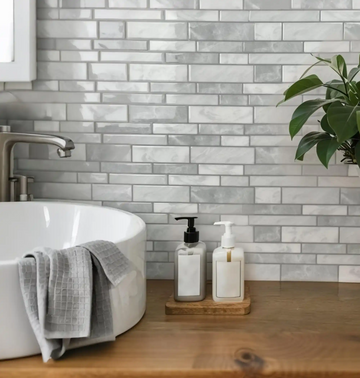
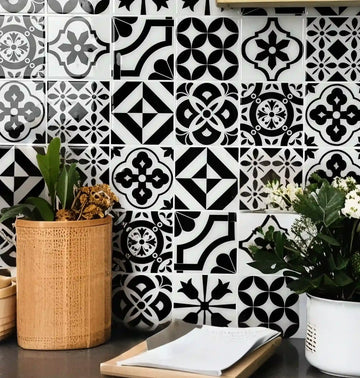
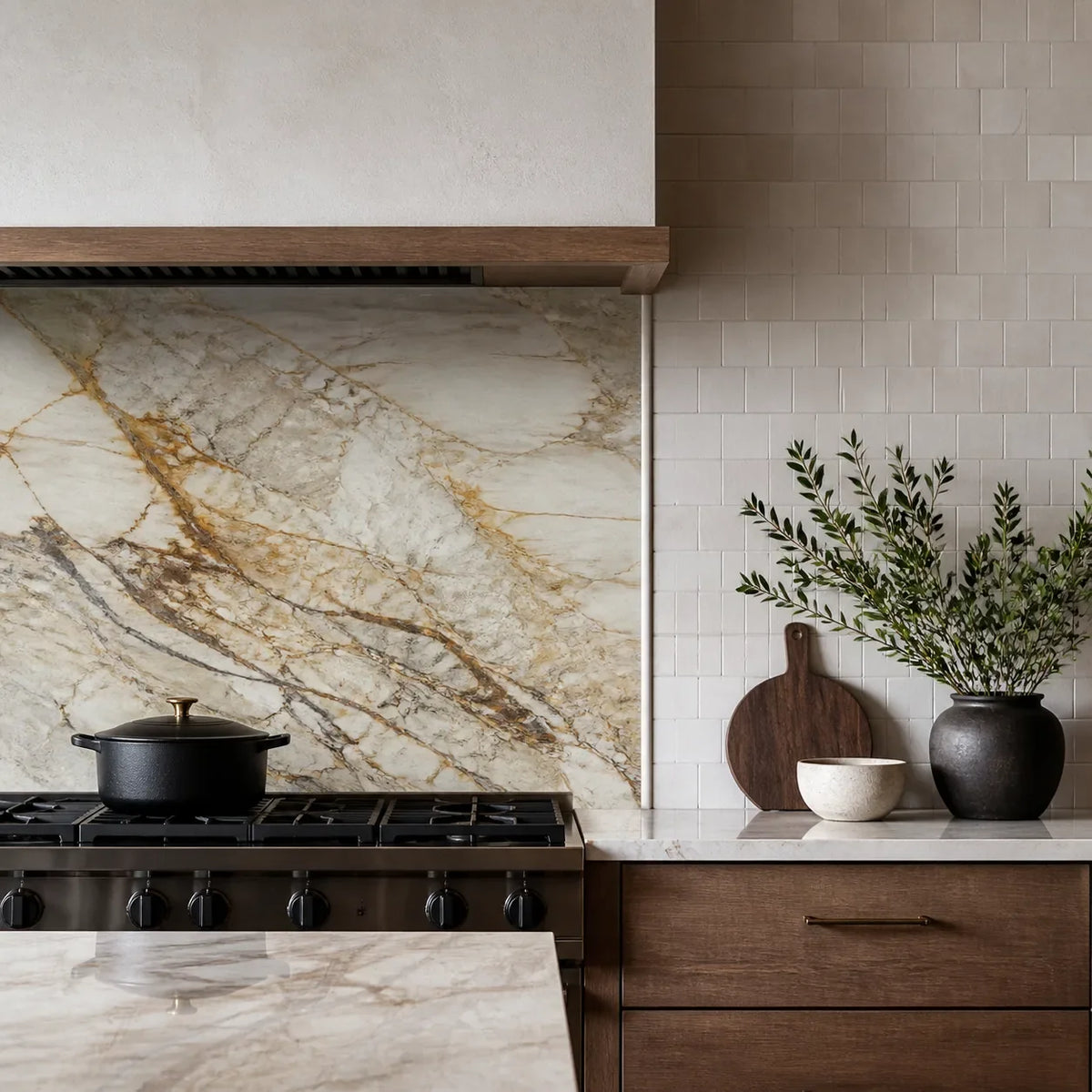
A quartzite slab can look quiet in a warehouse and become the loudest surface in the kitchen once it is vertical. On the wall, broad veins meet cabinet doors, a range hood, outlets, under-cabinet lighting, and the countertop pattern at eye level. A mismatch at that scale is expensive to correct.
The safest starting point is simple: decide whether you want true natural quartzite, a quartzite look, or a calm coordinating surface. Then judge four things in the actual room:
- The scale and direction of the pattern
- The backsplash height
- The relationship between the stone, cabinets, counter, floor, and hardware
- The heat, moisture, cleaning, substrate, and installation requirements of that wall
Do this with the actual slab or a representative layout, not a tightly cropped product image. A small sample can help with undertone, but it may leave out the dominant vein that defines the finished installation.
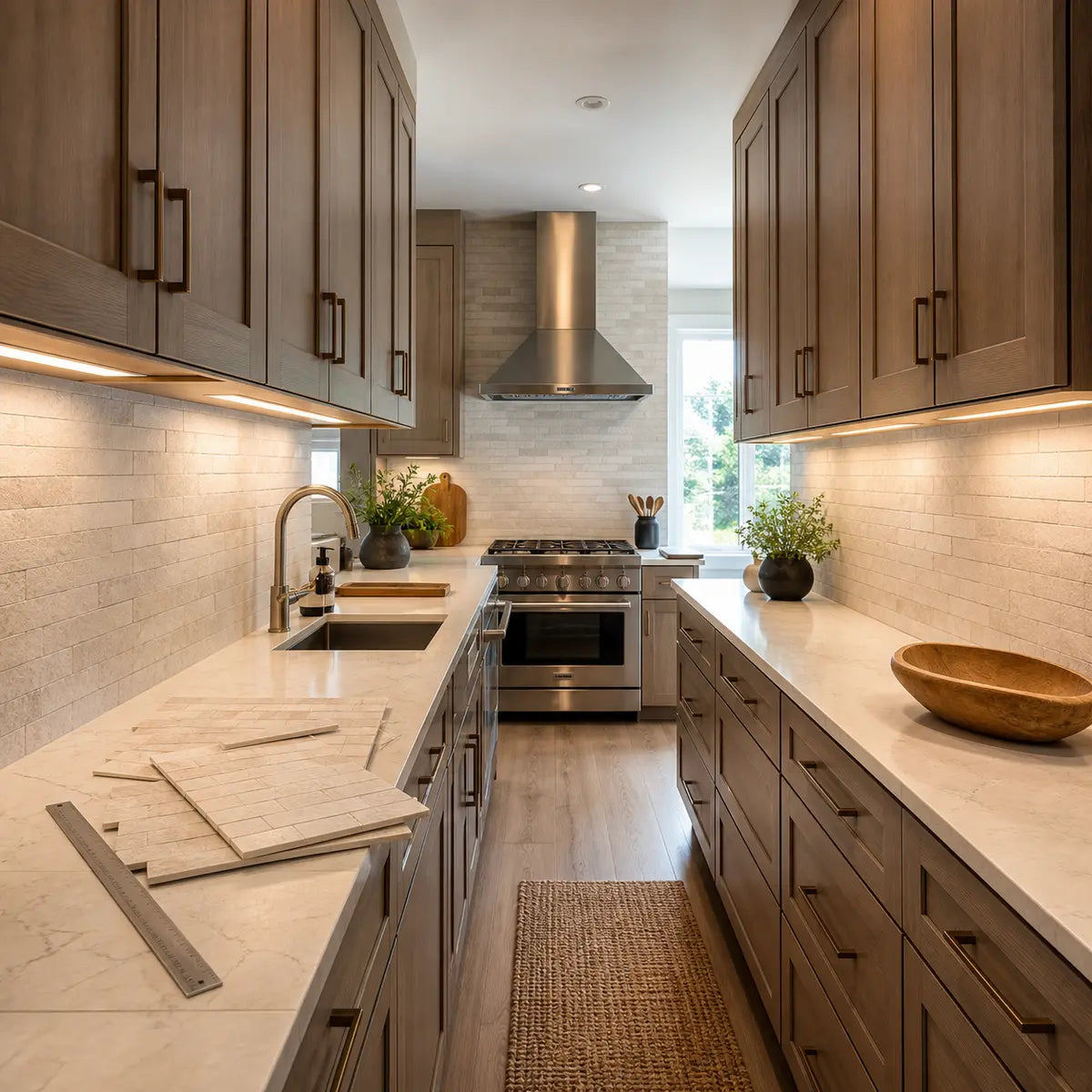
For a first comparison, place three candidates against the counter and cabinets: one continuation of the quartzite, one quieter hard-surface tile, and one lower-demolition decorative option. View all three in daylight and under the kitchen lights before narrowing the choice.
What Is a Quartzite Backsplash, Exactly?
A true quartzite backsplash is made from natural quartzite stone. It may be fabricated as a large slab, cut into tile, or installed in another dimension-stone format. A ceramic tile printed to resemble quartzite and a self-adhesive wall tile with a stone-like pattern are different material categories.
That distinction affects far more than terminology. Material identity influences fabrication, attachment, edge treatment, maintenance, repair, and the instructions that govern use near water or cooking appliances.
The Natural Stone Institute explanation of quartzite and engineered quartz defines natural quartzite as a geologically formed stone, while engineered quartz is manufactured from quartz particles combined with resin, pigments, and other ingredients. They can share quartz-related wording without being the same material.
The ASTM specification for quartz-based dimension stone likewise classifies quartzite within natural quartz-based dimension stone and excludes molded, cast, and artificially aggregated units from that definition.
| Surface description | What it means | What it does not mean |
|---|---|---|
| Natural quartzite slab | A fabricated piece of natural stone | Engineered quartz or printed tile |
| Natural quartzite tile | Natural stone cut into tile-sized units | A ceramic tile with quartzite imagery |
| Quartzite-look tile | A manufactured tile designed to suggest quartzite visually | Natural quartzite |
| Engineered quartz | A manufactured surface containing quartz particles and binders | Natural quartzite |
| Peel-and-stick stone-look tile | A decorative adhesive wall product | Quartzite, structural stone, or concealed waterproofing |
Product names such as “stone,” “marble,” “quartz,” or “quartzite look” may describe an appearance rather than composition. Ask the supplier to state the material clearly. For natural stone, request documentation for the stone being supplied rather than relying only on a trade name.
How Do You Read Veining Before It Reaches the Wall?
Read quartzite at wall scale by separating undertone, vein contrast, vein direction, and overall movement. Movement is the amount and visual force of pattern traveling across the surface. The more contrast and directional change a slab contains, the more attention it usually commands when installed vertically.
Taj Mahal is identified in Natural Stone Institute educational material as an example of light-colored natural quartzite. That does not create a universal color formula for every slab sold under the name. One slab may read as warm cream and taupe; another may contain more gray, gold, greenish beige, or darker linear movement. The actual slab controls the design decision.
Warm cream and gold movement
A warm Taj Mahal-style slab often works best with neighboring materials that repeat its quietest background tone rather than its strongest vein. Cream, almond, soft ivory, mushroom, and restrained warm gray are useful sample directions.
The common mistake is matching a dramatic gold or brown vein too literally. Repeating that vein in a busy mosaic, patterned floor, or heavily grained cabinet can multiply the movement. The eye no longer knows which surface is meant to lead.
For a broader explanation of this visual principle, our guide to balancing a subdued backsplash with strongly veined stone offers a useful pattern-and-undertone method. The visual framework transfers, although marble-specific material guidance does not define quartzite performance.
Cooler gray movement
A quartzite with a cooler white or gray field can support charcoal, stainless steel, blue-gray cabinetry, or crisp off-white finishes more comfortably than a warm cream slab can. Yet “gray” alone is too broad a label. Compare whether it leans blue, violet, green, brown, or nearly neutral.
Place a cabinet door sample directly against the stone. A small undertone conflict that seems harmless across a showroom can become obvious once the two materials form a long vertical line.
High-variation slabs
A high-variation slab may include broad fields, fine threads, dark fractures, cloudy zones, and sudden color shifts. These stones should be reviewed as a full composition.
Ask for a current slab photograph or inspect the reserved slab in person. Mark the approximate counter runs, range zone, outlets, corners, and hood opening. This helps reveal which veins will be cut off, repeated at seams, interrupted by appliances, or placed at eye level.
Our natural-stone undertone and lighting comparison method shows how to evaluate a variable surface in the room. Use the observation method only; travertine and quartzite remain different materials.

How High Should a Quartzite Backsplash Go?
Backsplash height should follow the stone’s visual role and the wall’s installation conditions. A dramatic quartzite may deserve one concentrated feature zone, while a quieter slab can sometimes cover more wall without overwhelming the room.
| Backsplash approach | Best fit | Main design question | Installation consideration |
|---|---|---|---|
| Counter to upper cabinets | Kitchens with continuous upper cabinetry | Does the pattern remain balanced across a long horizontal band? | Outlets, seams, corners, and the counter joint need planning |
| Full height behind the range | A defined cooking focal point | Does the range wall deserve stronger emphasis than the rest of the kitchen? | The complete wall assembly must meet appliance and local requirements |
| Full-wall or counter-to-ceiling stone | Minimal rooms with a carefully planned slab composition | Will the wall remain coherent around windows, hoods, shelves, and openings? | Large-format stone needs professional design, fabrication, support, and attachment decisions |
| Selective stone feature with quiet field tile | High-movement stone or budget-sensitive layouts | Can the quartzite lead in one zone while a calmer material connects the remaining walls? | Transitions, thickness changes, edges, and termination lines must be resolved |
Counter to upper cabinets
This familiar height keeps the quartzite inside the working zone. It can create continuity without turning the whole room into a stone composition.
It works particularly well when the cabinet layout already divides the wall into smaller sections. The upper cabinets visually contain the veins. Yet the narrow band can also expose awkward pattern fragments, especially if a broad diagonal vein is cut into several disconnected pieces.
Review the proposed cut layout, not just the material. A beautiful slab can produce an unconvincing backsplash if its most important movement is lost during fabrication.
Full height behind the range
A full-height range panel gives the stone room to show larger veins and can create a deliberate focal point. The quieter backsplash on the other walls then acts as negative space.
This is often a stronger solution than forcing dramatic quartzite across every wall. The range panel carries the visual story; the field tile handles repeated outlets, corners, small cuts, and daily background work.
A published Natural Stone Institute full-height quartzite project documents Mont Blanc quartzite fitted around a range hood and continued to the ceiling. It demonstrates that such an installation can be professionally executed, but it does not establish a universal method, typical cost, or long-term result for every quartzite.
Full-wall continuity
Full-wall quartzite is most convincing when the wall has a clear architectural composition. Windows, hood dimensions, shelves, corners, and ceiling lines should feel like intentional interruptions rather than obstacles cut through the pattern.
The stone is only one part of the system. The Natural Stone Institute vertical-surface design guidance treats interior stone walls as installation systems that require suitable attachment, support, substrate, geometry, and detailing. Large-format quartzite should therefore be planned with a qualified fabricator or installer.
Our slab-versus-tile backsplash comparison can help organize the visual and installation questions, though soapstone-specific recommendations should not be applied to quartzite.
Selective feature zone
A selective feature zone is often the practical middle ground. Use quartzite where the slab can be appreciated, then use a low-movement tile on the less prominent runs.
This approach can also make later repairs less disruptive because every outlet and corner is not embedded in the most visually sensitive material. Before choosing the boundary, draw the elevation and locate every stopping point. An arbitrary change halfway across an open wall usually feels less resolved than a transition aligned with a cabinet, corner, window, or hood.
For more height and layout comparisons, use the kitchen backsplash planning guide to map the counter line, range, sink, outlets, and exposed edges.

What Backsplash Goes With Taj Mahal Quartzite?
The most reliable backsplash for Taj Mahal quartzite is usually a surface that matches the actual slab’s background undertone and uses less movement than the stone. Warm off-white, almond, ivory, light mushroom, restrained taupe, and soft greige are common sample directions, but no single color suits every slab sold under the Taj Mahal name.
Start with the cabinet and slab together. The backsplash must connect those two large surfaces before it coordinates with small accents such as hardware.
With white cabinets
Avoid choosing tile by the word “white.” A cool blue-white tile can make a warm cream slab look yellow, while a very warm ivory can make a cleaner slab look gray.
Collect at least two whites: one close to the cabinet color and one close to the quartzite field. The better option is often the sample that softens the transition rather than matching either surface perfectly.
With cream or greige cabinets
These cabinets can support Taj Mahal-style warmth well, provided their undertones do not turn pink, green, or muddy beside the stone. A subtle subway field or low-contrast geometric tile can introduce structure without competing with the veins.
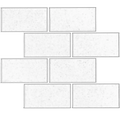
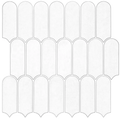
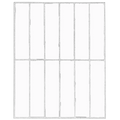
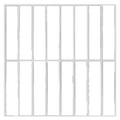
The Almond White Subway Marble decorative tile is one adhesive, grout-free visual option to sample where the wall and product instructions permit. It is not natural quartzite, and the word “marble” describes the product styling rather than making it a substitute for natural-stone construction or performance.
With wood cabinets
Wood introduces its own movement. Straight-grained pale oak may read as relatively quiet; knotty or high-contrast wood can become a second major pattern.
Rather than matching the darkest quartzite vein to the wood, look for a backsplash field color that appears in both materials. That shared middle tone can keep the stone and cabinetry from looking like separate design stories.
With dark cabinets
Deep brown, charcoal, green, navy, or black cabinetry can give pale quartzite a strong frame. Under-cabinet lighting becomes especially important because the dark cabinet underside may change how the backsplash reads at night.
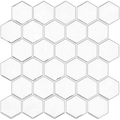
A quiet ivory geometric surface can add shape while retaining a light field. The Ivory Hexagons adhesive wall tile is a coordinating decorative option for eligible walls, not a quartzite tile.
Hardware, floor, and lighting still matter
Hardware should usually echo a color already present rather than introduce an unrelated metallic temperature. Warm brass may connect with gold or taupe movement. Nickel or stainless steel may sit more naturally with cooler gray lines. Black hardware creates outline contrast and should be judged across the whole kitchen, not against a stone chip alone.
The floor is often the overlooked pattern. If it contains strong grain, variation, or geometric lines, include it in every backsplash photograph. A combination that appears calm in a countertop-level close-up may look busy from the room entrance.
Use the tile pattern and scale comparison guide to compare subway, hexagon, herringbone, and stone-look patterns without losing sight of the countertop’s visual role.
How Do True Quartzite, Quartzite-Look Tile, and Removable Surfaces Compare?
True quartzite, quartzite-look tile, and removable adhesive tile solve different problems. Choose among them by material authenticity, visual continuity, installation conditions, repair expectations, and the amount of demolition you are prepared to accept.
| Option | Primary reason to choose it | Sample requirement | Key planning boundary |
|---|---|---|---|
| Natural quartzite slab | Continuous natural-stone movement and a strong architectural feature | Review the reserved slab and proposed cuts | Requires stone-specific fabrication and a suitable vertical installation system |
| Natural quartzite tile | Real stone in smaller units with grout rhythm | Review several tiles for variation | Material identity, thickness, edges, grout, sealing, and installation details must be verified |
| Quartzite-look ceramic or porcelain tile | Stone-like imagery with manufactured tile sizing | View multiple pieces for print repetition and scale | Follow the tile manufacturer’s installation and use instructions |
| Peel-and-stick decorative tile | Lower-demolition visual change on an eligible indoor wall | Dry-lay several sheets to judge repetition and seams | Requires a clean, smooth, dry, stable substrate and product-specific heat and moisture checks |
Sample scale
A stone chip answers a color question. It cannot show the full vein path, seam placement, or visual weight of a wall.
For slab quartzite, review the whole reserved slab and ask for a cut-layout drawing when possible. For natural tile, open several pieces because variation may be part of the material. For printed or adhesive products, lay out several units together to see pattern repetition, directional changes, and seam visibility.
Our guide to planning faux-stone vein alignment and repetition explains why one attractive sheet is not enough to judge a full wall.
Substrate and attachment
A full-height slab is not simply a heavy version of adhesive tile. The wall, stone geometry, attachment system, edges, openings, and support conditions must be evaluated together.
Peel-and-stick products have a different set of conditions. Stickwoll guidance calls for a clean, smooth, dry, stable substrate and directs users away from active dampness, heavy texture, loose or peeling paint, standing water, direct shower spray, and walls that require a true waterproofing system. Review the peel-and-stick surface and exposure requirements before choosing a pattern.
Water and cleaning
Natural stone and adhesive decorative tile should be maintained according to their own documentation.
The Natural Stone Institute care guidance recommends a neutral stone cleaner, stone soap, or mild liquid dish detergent with warm water for routine natural-stone cleaning, using a soft cloth and rinsing and drying the surface. A compatible impregnating sealer may improve stain resistance for some stones, but it does not make stone stain proof. The need for sealing and the reapplication schedule depend on the supplied stone, finish, sealer, and professional guidance.
Avoid assigning a porosity or sealing schedule from the name “quartzite” alone. An ASTM interlaboratory dimension-stone study involved three laboratories and 15 stone types and found that specimen geometry, laboratory method, immersion procedure, and duration can affect measured absorption and specific-gravity results. The study did not establish a Taj Mahal quartzite absorption value or a household sealing interval.
Stickwoll directs users to clean its decorative tiles with mild soap and water using a soft cloth or sponge and to avoid abrasive scrubbers and harsh chemicals. Those instructions apply to Stickwoll products; natural-stone care instructions should not be transferred to them.
Edges and transitions
Edges reveal whether a backsplash was fully planned. Before ordering, identify:
- Exposed side edges
- Cabinet and window returns
- Inside and outside corners
- Counter joints
- Hood and shelf intersections
- Outlet and switch cuts
- Changes between slab, tile, paint, and trim
A thin decorative sheet, a ceramic tile, natural-stone tile, and a fabricated slab can meet the wall at different thicknesses. Resolve those transitions before installation rather than treating edge trim as a final cosmetic decision.
Removal expectations
A removable or lower-demolition surface may suit a renter or a homeowner postponing a larger renovation, but “removable” should not be read as a guarantee of residue-free or damage-free removal.
Paint age, adhesion, wall preparation, prior repairs, and removal technique all matter. Stickwoll states that removal may leave residue and that removed tiles are not reusable. Test an inconspicuous area and confirm the landlord’s requirements before covering a rental wall.
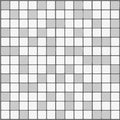
For a warm, compact pattern, Marble Hive adhesive wall tile is another decorative option to compare. It is a marble-look product, not natural quartzite or natural-stone tile.
Our overview of slab, tile, and peel-and-stick backsplash formats provides more layout context when the material category is still open.

Can Quartzite Go Behind a Stove?
Quartzite can be part of a professionally designed range-wall backsplash, but the stone face alone does not determine whether the complete installation is acceptable. The appliance listing, manufacturer instructions, wall construction, substrate, attachment materials, sealants, ventilation, nearby cabinetry, and locally adopted code all matter.
The International Code Council appliance inspection guidance directs installers and inspectors to consult the appliance manufacturer’s instructions. A model code does not replace local requirements, and a general material description does not override an appliance-specific clearance.
For Stickwoll products, the company’s FAQ says its tiles may be used behind an electric stove and states an eight-inch separation from a gas flame. Treat that as a general first-party instruction, not a universal code clearance or independent temperature rating. The checked documentation does not publish a maximum service temperature, test method, exposure duration, or configuration-specific certification.
Do not transfer natural-stone heat expectations to adhesive tile, its backing, its seams, or the wall beneath it.
A Three-Sample Test Prevents Most Visual Mismatches
The best final decision is usually made in the kitchen, with full-size samples held in their intended position.
Prepare three candidates:
- Sample A: The actual quartzite or a representative section of the reserved slab
- Sample B: A calm coordinating tile that repeats the slab’s background tone
- Sample C: A lower-demolition decorative surface suitable for the wall conditions
Place each sample vertically, touching the counter and cabinet finish. Include the hardware and a floor sample or clear floor view. Check the arrangement in morning light, afternoon light, and under the lighting used while cooking.
Then ask:
- Does the backsplash support the stone or compete with it?
- Does the color still work where it meets the cabinet?
- Is the pattern large enough to judge repetition and seams?
- Does the proposed height improve the wall composition?
- Are the substrate, moisture, cleaning, edge, and range conditions compatible with the product instructions?
If two options remain, photograph them from the room entrance rather than directly in front of the counter. Distance often reveals pattern competition more clearly than a close inspection.

Frequently Asked Questions
What backsplash goes with Taj Mahal quartzite?
A calm backsplash that repeats the actual slab’s background undertone is usually the safest starting point. Compare warm white, almond, ivory, mushroom, soft greige, and restrained taupe samples, then remove any option that turns visibly pink, yellow, green, or blue beside the slab and cabinets.
If the Taj Mahal quartzite has strong movement, reduce movement in the backsplash. If the reserved slab is unusually quiet, the room may support more tile texture or geometric structure.
Is a Taj Mahal quartzite backsplash always warm cream and gold?
No. Taj Mahal is used as a commercial stone name, and the checked evidence does not define one universal color or vein specification for every slab sold under that name. Evaluate the reserved slab’s full field, dominant veins, finish, and cut plan.
Is a quartzite backsplash the same as a quartz backsplash?
No. Natural quartzite is geologically formed stone. Engineered quartz is a manufactured material made with quartz particles and binders. A quartzite-look tile is another category again.
These surfaces may resemble one another, but their fabrication, installation, cleaning, heat guidance, and use limitations must come from the documentation for the exact product.
Should the backsplash match the quartzite countertop?
It can match, but it does not have to. Continuing the same quartzite can produce strong continuity. A quieter tile can preserve the countertop as the focal surface and simplify a room that already contains active cabinets, flooring, or architectural details.
“Match” should mean the surfaces belong together, not that every color and vein is duplicated.
Is quartzite tile the same as a quartzite slab?
Both may be natural quartzite if their material identity is verified, but they create different visual and installation results. Tile introduces repeated units, grout joints, more edges, and a smaller pattern scale. A slab can preserve broader natural movement with fewer visual interruptions.
What is a lower-demolition alternative to a quartzite backsplash?
A quartzite-look manufactured tile or a coordinating peel-and-stick decorative wall tile can provide a related color or stone-inspired appearance without installing a natural quartzite slab. Describe the choice accurately: it is a visual alternative, not quartzite unless the product is verified as natural quartzite.
For adhesive tile, confirm the substrate, moisture exposure, heat conditions, cleaning method, edge plan, and removal expectations before installation.
Make the Material Decision Before the Style Decision
A successful quartzite backsplash starts with two separate choices.
First, choose the material category: true natural quartzite, quartzite-look manufactured tile, or a coordinating decorative wall surface. Second, decide how much visual movement the room can support and where that movement should appear.
True quartzite is the right choice when natural-stone identity and broad geological movement are central to the design. Quartzite-look tile is useful when you want a related visual direction in a manufactured tile format. A calm coordinating tile may be the strongest answer when the countertop already carries the room. An eligible peel-and-stick surface can provide a lower-demolition change, but it remains a decorative adhesive product governed by its own instructions.
Before ordering, complete the three-sample test with the actual cabinet, counter, floor, hardware, and lighting. For any wall near a range or sink, verify the current appliance instructions, local requirements, substrate condition, and exact product guidance. That final check protects both the design and the installation from assumptions hidden behind a material name.


Leave a comment
This site is protected by hCaptcha and the hCaptcha Privacy Policy and Terms of Service apply.