






Wohnmobilküche neu gestalten: Warum selbstklebende Fliesen ideal für Camper sind
Wer eine typische Wohnmobilküche betritt, fühlt sich oft wie in eine Zeitkapsel mit beigefarbenen Oberflächen und schweren, altmodischen Materialien zurückversetzt. Du schaust auf die dunkle Verkleidung und fragst dich, wie du den Raum heller gestalten kannst, ohne zusätzliches Gewicht zu schaffen, das die zulässige Anhängelast beeinträchtigt. Wir haben Tausenden Reisenden geholfen, genau dieses Problem zu lösen. Die Antwort ist kein Abrissunternehmen, sondern moderne Klebetechnologie.

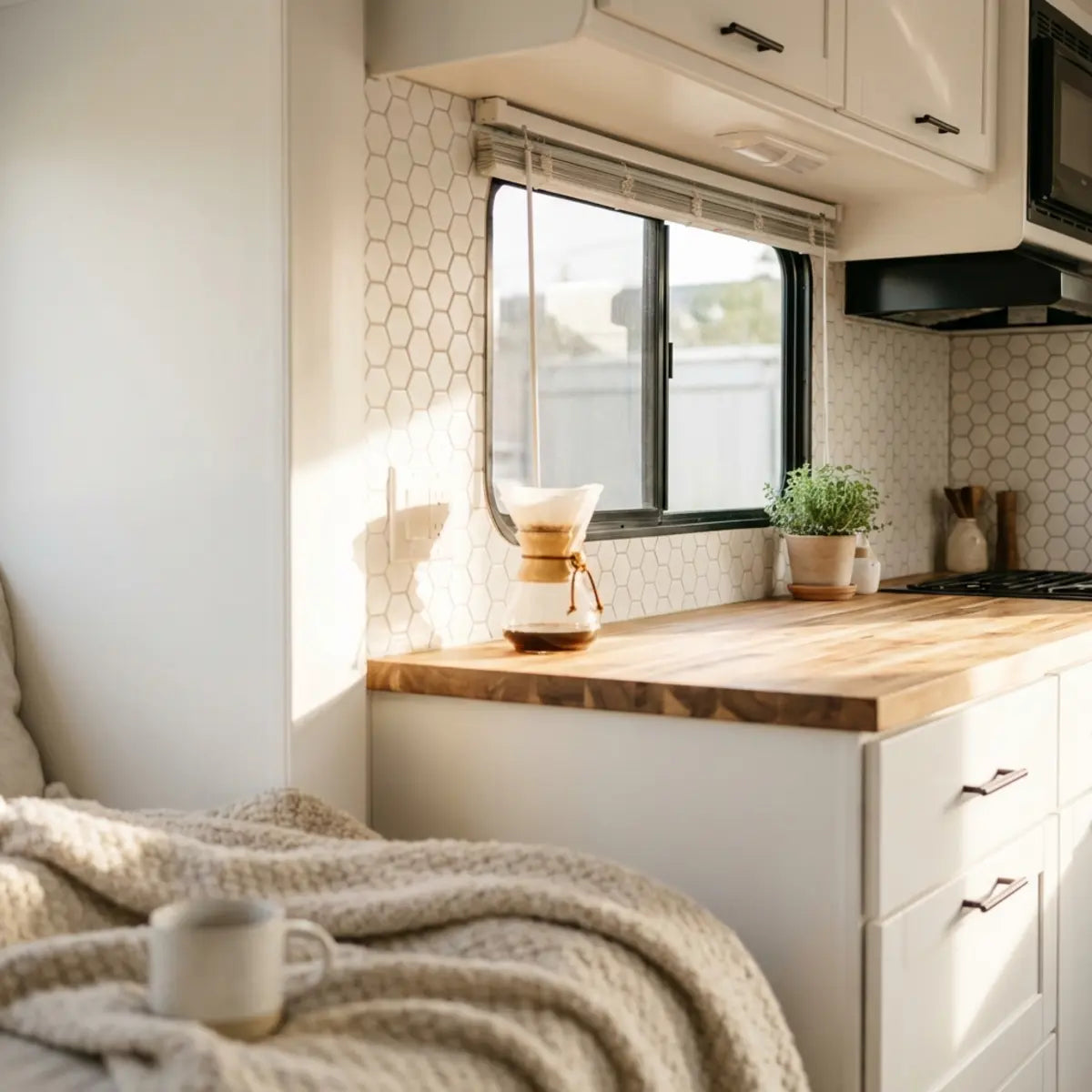
Selbstklebende Fliesen sind die ideale Lösung für die Neugestaltung von Wohnmobilküchen: Sie sind leicht, einfach anzubringen, lassen sich wieder entfernen und sind in stilvollen Designs erhältlich, die den Bedingungen unterwegs standhalten.
Die wichtigsten Vorteile:
- ✓ Weniger Gewicht: Im Vergleich zu Keramik- oder Steinfliesen verringern sie die zusätzliche Zuladung deutlich.
- ✓ Einfaches DIY-Projekt: Die Montage gelingt mit wenigen Werkzeugen – eine Nasssäge ist nicht erforderlich.
- ✓ Ideal für Mietobjekte: Mieter und Wochenendheimwerker können Oberflächen individuell gestalten, ohne dauerhafte Schäden zu hinterlassen.
Viele Wohnmobilbesitzer zögern mit einer Renovierung, weil sie den Aufwand von Bauarbeiten auf engem Raum scheuen. Wir haben jedoch festgestellt, dass selbstklebende Fliesen nicht nur eine optische Auffrischung sind, sondern ein funktionales Upgrade, das speziell auf die besonderen Bedingungen eines fahrenden Fahrzeugs zugeschnitten ist.
Warum sind selbstklebende Fliesen ideal für Wohnmobilküchen?
Das Problem: „Bringen die neuen Materialien mein Wohnmobil über das zulässige Gewicht oder brechen sie, wenn ich über ein Schlagloch fahre?“
Die Lösung: Dieser Abschnitt erklärt die konstruktiven Vorteile selbstklebender Vinylfliesen und zeigt, warum sie die sicherste und praktischste Wahl für das Leben unterwegs sind.
Selbstklebende Fliesen sind ideal für Camper, weil sie zwei der größten Herausforderungen beim Wohnmobildesign lösen: Gewicht und Bewegung. Anders als ein feststehendes Haus ist dein Camper ständigen Vibrationen, Verwindungen und Zuladungsbeschränkungen ausgesetzt. Herkömmliche Keramikfliesen mit Mörtel zu verlegen, kann schnell zum Desaster werden: Die starren Fugen können reißen, wenn sich das Fahrgestell des Wohnmobils auf der Straße verwindet.
Die Physik von Zuladung und Design
Zulässiges Gesamtgewicht (zGG) bezeichnet das vom Hersteller festgelegte maximale Betriebsgewicht beziehungsweise die maximale Masse eines Fahrzeugs. Jedes Pfund, das du für die Renovierung des Innenraums hinzufügst, steht nicht mehr für Wasser, Kraftstoff oder Ausrüstung zur Verfügung.
- Gewicht von Keramikfliesen: Eine herkömmliche Keramik-Rückwand kann 3–5 lbs pro Quadratfuß wiegen – Mörtel und Fugenmasse noch nicht eingerechnet.
- Gewicht selbstklebender Fliesen: Hochwertige Vinyl- oder Gelfliesen wiegen in der Regel weniger als 0.2 lbs pro Quadratfuß.

Bei einer typischen Wohnmobilküche mit 10–15 Quadratfuß Rückwandfläche kannst du durch den Wechsel zu selbstklebenden Fliesen mehr als 50 lbs einsparen. Unserer Erfahrung nach ist diese Gewichtsersparnis besonders für kleinere Wohnwagen und Kastenwagen der Klasse B entscheidend, bei denen die Zuladungsreserven äußerst knapp sind.
Der Flexibilitätsfaktor
Das Pascal’sche Gesetz mag zwar die Hydraulik bestimmen, bei Wohnmobilen kommt es jedoch auf die strukturelle Verwindungan. Während der Fahrt bewegen und verformen sich die Wände deines Wohnmobils. Starre Materialien wie Keramik können diese Bewegung nicht mitmachen, wodurch Risse entstehen. Selbstklebende Fliesen sind von Natur aus flexibel. Sie bewegen sich mit der Wand und absorbieren die Vibrationen der Straße, anstatt ihnen entgegenzuwirken.
Kosten und Komfort
Die Renovierung einer klassischen Massivbauküche kann Tausende kosten. Eine Neugestaltung der Wohnmobilküche mit selbstklebenden Fliesen kostet dagegen oft weniger als 200 US-Dollar.
Planst du eine optische Rundumerneuerung? Braucht Ihre Küche eine Auffrischung, aber Sie scheuen den Zeitaufwand, die Kosten und die Arbeit? Selbstklebende Fliesen lassen sich einfach anbringen, sind erschwinglich und können Ihre Küche völlig verwandeln. In unserem Ratgeber zeigen wir Ihnen genau, wie: Verwandeln Sie Ihre Küche mit selbstklebenden Fliesen.
Praxisbeispiel: Die Renovierung für ein arbeitsreiches Wochenende
Nehmen wir „Sarah“ – sie besitzt einen Jayco Flight aus dem Jahr 2015. Die werkseitig angebrachte Tapete löste sich ab, und die beige Farbgestaltung ließ den kleinen Raum beengt wirken.
- Herausforderung: Sie hatte keinerlei Renovierungserfahrung und nur einen Samstag Zeit.
- Lösung: Sie brachte 3D-Fliesen aus Gelharz direkt auf der vorhandenen Wandverkleidung an.
- Ergebnis: Die Montage dauerte 4 Stunden. Die reflektierende Oberfläche der Fliesen verteilte das Licht im Camper und ließ die Küche dadurch 30% größer wirken.
- Haltbarkeit: Zwei Jahre und 5.000 Meilen später hat sich noch keine einzige Fliese abgelöst.
Welche selbstklebenden Fliesen eignen sich am besten für Wohnmobile in den U.S und Kanada?
Die Frage: „Es gibt günstige Aufkleber und teure Fliesen – welche halten extremer Hitze und eisigen Wintern wirklich stand?“
Die Lösung: Wir erklären die Materialeigenschaften der besten Fliesen, damit Sie kein Geld für Produkte verschwenden, die bereits nach einer Saison versagen.
Die besten selbstklebenden Fliesen für Wohnmobile in Nordamerika bestehen aus Gelharz (Epoxidharz) oder Vinyl mit Steinkompositkern. Herkömmliche Vinylaufkleber sind zwar günstig, bieten aber nicht die nötige Hitzebeständigkeit für einen Camper, der in der Sonne Arizonas oder bei kanadischem Frost abgestellt werden kann.
Materialunterschiede verstehen
Nicht alle selbstklebenden Fliesen sind gleich. Im Allgemeinen gibt es drei Kategorien:
- Flache Vinylaufkleber: Dünne, bedruckte Motive. Gut für glatte Oberflächen, wirken aber „künstlich“.
- 3D-Gel/Epoxidharz: Dicker, flexibel und mit realistischer Struktur. Ideal für Küchenrückwände.
- Kompositkern: Starr und echtem Stein oder Glas nachempfunden. Schwerer zuzuschneiden, aber äußerst langlebig.
Wärmeausdehnung– also die Tendenz eines Materials, seine Form, Fläche, sein Volumen und seine Dichte bei Temperaturänderungen zu verändern – ist hierbei ein wichtiger Faktor. Ein Wohnmobil kann bei der Lagerung im Winter Temperaturen von -20°F erreichen und sich im Sommer auf über 100°F aufheizen. Günstige Klebemittel versagen unter dieser Belastung.

| Eigenschaft | Flacher Vinylaufkleber | 3D-Gelharz (Epoxidharz) | Kompositkern |
|---|---|---|---|
| Gewicht | Extrem leicht | Sehr leicht | Mittel |
| Hitzebeständigkeit | Niedrig (schmilzt bei über 120 °F) | Hoch (bis über 180 °F) | Sehr hoch |
| Realistische Optik | Niedrig (glatt) | Hoch (3D-Struktur) | Sehr hoch |
| Flexibilität | Hoch | Hoch | Niedrig (starr) |
| Ideal für | Schrankverkleidungen | Küchenrückwand | Akzente in der Dusche |
Expertenempfehlung: Für den Bereich hinter dem Herd sollten Sie unbedingt auf eine hohe Hitzebeständigkeit achten. Wir empfehlen dringend, unseren Vergleich von Hitzebeständigen selbstklebenden Fliesen für Küchen mit hoher Hitzeeinwirkung zu lesen, damit Sie ein Produkt auswählen, das sich beim Nudelkochen nicht verformt.
Regionale Besonderheiten: U.S im Vergleich zu Kanada
Für unsere Leser in Kanada und alle, die in den Norden reisen, stellt die sogenannte „Kalthärtung“ ein Risiko dar. Wenn Sie die Fliesen montieren, während das Wohnmobil eiskalt ist, haftet der Kleber nicht. Heizen Sie das Wohnmobil vor der Montage und danach immer 24 Stunden lang auf mindestens 68 °F (20 °C vorher und nachher ), damit der Kleber aushärten kann.
Fallstudie: Der Winter-Haltbarkeitstest
Ein Paar aus Ontario brachte wasserdichte, selbstklebende Fliesen in seinem tropfenförmigen Wohnanhänger an. Die beiden gehen das ganze Jahr über campen.
- Auswahl: Sie entschieden sich für eine dickere, wasserdichte Gelfliese, die speziell dafür entwickelt wurde, Feuchtigkeitskondensation zu widerstehen – ein häufiges Problem beim Betrieb von Propanheizungen im Winter.
- Ergebnis: Trotz Schwankungen der Luftfeuchtigkeit im Innenraum von 30% bis 80% hielt der wasserdichte Kleber zuverlässig.
- Erkenntnis: Herkömmlicher Tapetenkleister versagt bei hoher Luftfeuchtigkeit oft; hochwertiger Fliesenkleber ist hydrophob und weist Wasser ab.
Sie suchen eine mietfreundliche Lösung? Wenn Ihnen Ihr Wohnmobil nicht gehört oder Sie Ihren Stil häufig verändern möchten, lesen Sie unseren ausführlichen Bericht: Stickwoll selbstklebende Fliesen: Ein umfassender Testbericht. Darin werden Optik und Leistungsfähigkeit speziell für mietfreundliche Renovierungen untersucht.
Wie bringt man selbstklebende Fliesen in der Küche eines Campers an?
Die Sorge: „Ich bin handwerklich nicht besonders geschickt. Was, wenn ich die Fliesen schief anbringe oder sie sich während der Fahrt lösen?“
Die Lösung: Diese Schritt-für-Schritt-Anleitung erklärt die spezielle Vorbereitung von Wohnmobilwänden und sorgt dafür, dass die Fliesen auch viele Kilometer lang sicher haften.
Damit selbstklebende Fliesen in der Küche eines Campers halten, musst du die Wände zunächst gründlich entfetten, das Muster so planen, dass an den Rändern keine schmalen Reststücke entstehen, und festen Druck ausüben, damit der druckempfindliche Klebstoff aktiviert wird.
Schritt 1: Oberfläche vorbereiten (der entscheidende Schritt)
Die Wände von Wohnmobilen sind häufig mit einer Vinyltapete beklebt, die leicht strukturiert ist oder eine wachsartige Beschichtung hat. Wenn du diesen Schritt überspringst, lösen sich deine Fliesen ab.
- Reinigen: Wasche die Wände mit TSP (Trinatriumphosphat) oder einem starken Entfetter ab, um Kochfette und die wachsartigen Rückstände des Herstellers zu entfernen.
- Trocknen: Lass die Oberfläche vollständig trocknen. Eingeschlossene Feuchtigkeit hinter den Fliesen kann Schimmel verursachen.
- Schleifen (optional): Ist die Wand sehr glänzend, schleife sie leicht mit Schleifpapier der Körnung 220 an, damit der Klebstoff besser haftet.
+ Profi-Tipp: Projekt-Rechner
Du bist dir nicht sicher, wie viele Fliesen du für deine Rückwand brauchst? Gib unten die Maße ein, um die benötigte Fläche einschließlich eines 10%-Puffers für Verschnitt zu schätzen.
Schritt 2: Muster planen
Kleb nicht einfach drauflos.
- Miss die gesamte Fläche aus.
- Kauf 10-15% zusätzliches Material für Zuschnitte und Verschnitt.
- Profi-Tipp: Mach zunächst eine Trockenprobe: Befestige die Fliesen mit Malerkrepp an der Wand, um zu prüfen, wie das Muster wirkt.
Eine anschauliche Erklärung dieses Vorgangs findest du im Leitfaden „Selbstklebende Vinyl-Rückwand anbringen“ . Er gilt unter Heimwerkerinnen und Heimwerkern als Standard und enthält eine Werkzeug-Checkliste, damit du nichts vergisst.
Schritt 3: Zuschneiden und Anbringen
Du brauchst keine Nasssäge. Ein scharfes Cuttermesser und eine gerade Metallkante sind deine besten Helfer.
- Anritzen und Brechen: Bei dickeren Fliesen ritzt du die Vorderseite mit dem Messer an und brichst sie anschließend sauber entlang der Schnittlinie.
- Überlappung: Viele 3D-Fliesen haben Fugenlinien, die für eine Überlappung vorgesehen sind. Richte sie sorgfältig aus, damit ein nahtloses Gesamtbild entsteht.
- Andrücken: Diese Klebstoffe reagieren auf Druck. Drück nach dem Anbringen jede Fliese auf der gesamten Fläche fest an. Eine kleine Andrückrolle eignet sich dafür hervorragend.

Häufiger Irrtum: Viele glauben, dass sie zusätzlichen Sprühkleber benötigen. Verwenden Sie keinen Sprühkleber es sei denn, der Hersteller empfiehlt dies ausdrücklich. Er kann chemisch mit der Rückseite der Fliesen reagieren und eine klebrige Masse bilden, die nie vollständig aushärtet.
Schritt 4: Der letzte Schliff
Im Wohnmobil beginnen sich die Fliesen meist an den Kanten abzulösen.
- Silikonfugen: Tragen Sie entlang der unteren Kante, an der die Fliese auf die Arbeitsplatte trifft, eine dünne Silikonfuge auf. So kann beim Abwaschen kein Wasser hinter die Fliesen gelangen.
- Abschlussleisten: Verwenden Sie an den seitlichen, sichtbaren Kanten PVC-Abschlussleisten.
Möchten Sie typische Anfängerfehler vermeiden? Wir empfehlen Ihnen, „ So modernisieren Sie Küchen mit selbstklebenden Fliesen“ zu lesen. Darin geht es um die häufigsten Fehler, die zu Lücken, sich ablösenden Fliesen und ungleichmäßigen Linien führen – damit beim ersten Versuch alles gelingt.
Detaillierte Anleitung: Zeitaufwand
- Vorbereitung: 1 Stunde (Reinigen und Trocknen).
- Planung: 30 Minuten.
- Verlegen: 2–3 Stunden (je nach Steckdosen und Fenstern).
- Aushärtezeit: 24 Stunden (halten Sie die Temperatur im Wohnmobil konstant).
Wenn Sie zur Miete wohnen oder das Wohnmobil später verkaufen möchten, ist die Möglichkeit zum rückstandslosen Entfernen besonders wichtig. Lesen Sie So lassen sich selbstklebende Küchenfliesen ganz einfach anbringen für konkrete Tipps zur mieterfreundlichen Montage. So können Sie die Fliesen später entfernen, ohne die Wandverkleidung zu beschädigen.
Bereit für ein größeres Projekt?
In unserem DIY-Ratgeber für 2025 erfahren Sie, wie Sie Ihre gesamte Küche auffrischen können.
Lesen Sie: DIY-Küchen-Update mit selbstklebenden Fliesen 2025Fazit: Das cleverste Upgrade für Ihr Wohnmobil
Eine Küchenrenovierung im Wohnmobil erfordert weder eine komplette Entkernung noch ein großes Budget. Mit selbstklebenden Fliesen entscheiden Sie sich für ein Material, das für unterwegs entwickelt wurde: leicht, flexibel und unempfindlich gegenüber Temperaturschwankungen.
Ganz gleich, ob Sie nach einer günstigen Küchenrenovierung für Ihr Wohnmobil oder nach einem hochwertigen Design-Upgrade suchen – diese Fliesen verbinden Stil und Funktionalität. Sie sparen wertvolle Zuladung für die Dinge, die wirklich zählen – etwa Ihre Ausrüstung für unterwegs – und schaffen gleichzeitig einen Raum, der sich wie ein Zuhause anfühlt.
Entdecken Sie außerdem unsere Galerie mit den schönsten Designs und lassen Sie sich inspirieren: So bringen Sie selbstklebende Fliesen an: Die besten Designs 2025.
Bereit, Ihr Projekt zu starten? Entdecken Sie weitere Küchenverwandlungen im Wohnmobil und sehen Sie sich die in diesem Ratgeber vorgestellten Designs an, um die perfekte Lösung für Ihren Reisestil zu finden.
Welches Küchenprojekt steht als Nächstes in Ihrem Wohnmobil an?
Häufig gestellte Fragen
Schmelzen selbstklebende Fliesen hinter dem Herd in meinem Wohnmobil?
Die meisten hochwertigen Vinyl- und Gelfliesen sind bis 140°F–180°F hitzebeständig. Wenn dein Herd im Wohnmobil jedoch eine offene Flamme in der Nähe der Rückwand hat und keine Metallabdeckung vorhanden ist, empfehlen wir aus Sicherheitsgründen die Montage eines kleinen Spritzschutzes aus Glas oder Metall. Beachte immer die Hitzebeständigkeit, die der Hersteller angibt.
Kann ich diese Fliesen über vorhandenen Tapetenbordüren im Wohnmobil anbringen?
Ja, du kannst sie über vorhandenen Tapetenbordüren anbringen, sofern die Tapete gut an der Wand haftet. Wenn sie sich ablöst, musst du sie zuerst entfernen oder wieder festkleben. Wir empfehlen, die Bordüre leicht anzuschleifen, damit der Fliesenkleber zuverlässig haftet.
Wie entferne ich die Fliesen, ohne die Luan-Wandverkleidung zu beschädigen?
Erwärme die Fliesen zum Entfernen mit einem Föhn, damit der Kleber weicher wird. Ziehe sie langsam in einem Winkel von 45 Grad ab. Wenn du zu schnell ziehst, kann sich die dünne Papierschicht der Luan-Sperrholzwände deines Wohnmobils ablösen. Klebereste kannst du mit einem Zitruskleberentferner beseitigen.
Muss ich vor der Montage eine Grundierung auftragen?
In den meisten Fällen reicht eine gründliche Reinigung mit TSP aus. Bei unbehandeltem Holz oder stark saugendem Sperrholz ist jedoch eine Grundierung erforderlich, um die Oberfläche zu versiegeln. Ohne Grundierung saugt unbehandeltes Holz den Kleber auf, sodass sich die Fliesen mit der Zeit wieder lösen. Bei herkömmlichen vinylbeschichteten Wänden im Wohnmobil ist keine Grundierung erforderlich.


Kommentar hinterlassen
Diese Website ist durch hCaptcha geschützt und es gelten die allgemeinen Geschäftsbedingungen und Datenschutzbestimmungen von hCaptcha.