


L’angoisse d’un locataire qui rénove sa cuisine vient rarement du choix de la bonne couleur. Le vrai stress commence avec la peur de perdre une partie, voire la totalité, de la caution à cause de dégâts de peinture imprévus ou de résidus d’adhésif tenaces.
Une crédence adaptée aux locataires n’est vraiment peu risquée qu’après avoir passé en revue le bail, vérifié l’état du mur, confirmé le séchage de la peinture, testé un échantillon d’adhésif dans une zone cachée et fait un test de retrait. Le carrelage autocollant peut abîmer les murs d’un appartement si la peinture en dessous n’est pas complètement sèche, si elle est mate, mal apprêtée, déjà en train de s’écailler, exposée à la chaleur, ou si l’adhésif laisse beaucoup de résidus.
Avant de vous lancer dans une pose complète, il faut définir un seuil de validation clair. Cela veut dire commencer par vérifier les autorisations du bail. Ensuite, testez l’adhésif sur une zone discrète du mur pendant 48 à 72 heures. Enfin, documentez l’état du mur avant la pose et prévoyez votre méthode de dépose exacte bien avant de déménager. Modifier un espace qui ne vous appartient pas exige une approche très stratégique. Il ne s’agit pas seulement d’embellir le lieu ; c’est un exercice de gestion des risques et de préservation du bâti. Comprendre les interactions physiques et chimiques entre une décoration temporaire et les éléments structurels du mur est essentiel pour protéger votre argent.
Comment savoir si une crédence adaptée aux locataires est vraiment sans risque ?
L’expression « adaptée aux locataires » est une promesse marketing, pas une garantie légale pour la caution. Pour protéger vos finances, vous devez définir « adaptée aux locataires » comme réversible, documentée, conforme au bail et retirée sans dommage visible. Un produit n’est sûr que s’il respecte strictement ces conditions. La charge de la preuve revient en fin de compte au locataire. Les propriétaires raisonnent d’abord en termes de préservation du bien et considèrent toute modification non autorisée — même facilement réversible — comme un risque potentiel. Votre approche doit donc être rigoureuse et documentée.
L’erreur la plus courante chez les locataires est de faire confiance à une mention plutôt qu’à un test réel. Le support adhésif réagit différemment selon la texture du mur, le type de peinture et la température ambiante de la cuisine. Les adhésifs sensibles à la pression (PSA), qui équipent la plupart des produits muraux temporaires, fonctionnent à l’échelle microscopique de la tension de surface. Leur pouvoir d’adhérence dépend fortement de paramètres environnementaux qu’aucun fabricant ne peut prévoir parfaitement pour votre appartement.
Pour déterminer le vrai niveau de sécurité, le consensus du secteur recommande d’utiliser un système d’évaluation objectif. Nous utilisons un score de risque pour la caution (DRS). Il s’agit d’un barème de 0 à 100 qui combine l’autorisation du bail, la stabilité de la peinture, la facilité de retrait de l’adhésif, l’exposition à la chaleur, le risque de résidus et la réversibilité au moment du départ.
En appliquant cette évaluation standardisée, vous obtenez une base chiffrée pour votre projet. Cela élimine complètement l’émotion et les approximations de vos décisions de rénovation, en remplaçant l’espoir par des données concrètes.
Comprendre le score de risque pour la caution (DRS)
Le DRS vous oblige à regarder le mur de votre cuisine avec objectivité. Au lieu de deviner si une crédence temporaire va abîmer le mur, vous attribuez une valeur numérique à des facteurs de risque précis. En décomposant méthodiquement l’environnement de pose en critères mesurables, vous passez du souhait esthétique subjectif à une analyse objective du risque. Cette méthode est essentielle, car les gestionnaires immobiliers n’évaluent pas les dégâts de manière subjective : ils appliquent des barèmes stricts de retenues financières pour les réparations de placo, les enduits de lissage et la remise en peinture.
Cette méthode démontrée de façon empirique réduit considérablement le risque de perdre votre caution. Elle déplace les critères d’évaluation de l’esthétique vers la compatibilité avec le support. Voici le cadre théorique utilisé par les professionnels de la rénovation pour noter les installations temporaires.
| Critère d’évaluation DRS | Risque faible (80-100 points) | À surveiller (50-79 points) | Risque élevé / échec (0-49 points) |
|---|---|---|---|
| Conformité au bail | Autorisation écrite obtenue. | Clause du bail ambiguë. | Interdiction explicite des adhésifs muraux. |
| État de la peinture | Brillante/satinée, sèche depuis plus de 30 jours. | Âge inconnu, finition mate. | Peinture fraîche, cloques, aspect crayeux. |
| Texture de surface | Plaque de plâtre parfaitement lisse. | Légère texture peau d’orange. | Texture marquée, brique apparente. |
| Exposition à la chaleur | Posée loin de la plaque de cuisson. | Près de la cuisinière, chaleur indirecte. | Juste derrière un brûleur à forte puissance BTU. |
| Résultat du test sur échantillon | Retrait propre, aucun résidu. | Légers résidus, faciles à nettoyer. | Peinture arrachée, papier du placo déchiré. |
Si votre score total descend sous 50, n’installez pas le produit. Un résultat validé ou non validé est plus sûr qu’une simple supposition. Continuer avec un score insuffisant vous garantit presque, mathématiquement, de devoir consacrer de longues heures au départ à tenter d’effacer les dégâts, ou pire, de laisser des centaines d’euros à l’équipe d’entretien du propriétaire.
Outil interactif : calculez votre score DRS personnalisé
Sélectionnez les conditions qui correspondent à votre cuisine actuelle pour calculer instantanément votre niveau de risque avant de continuer.
Pour évaluer la conformité au bail et la préparation de la surface, la méthode de base exige de suivre une préparation rigoureuse à la lettre. Un défaut de préparation augmente considérablement le risque d’échec de l’adhérence ou de décollement de la peinture. Les locataires qui zappent la préparation du mur constatent souvent que, même si les carreaux tiennent au départ, les coins commencent à se décoller à cause de microcouches de graisse, emportant peu à peu la couche de peinture fragilisée. Le cadre complet détaillé dans notre Guide de préparation des murs pour locataires avant la pose de carreaux autocollants vous fournit la base chiffrée nécessaire pour mettre tout cela en place sans erreur critique. En assimilant et en appliquant minutieusement chaque étape de ce protocole de préparation, vous créez en pratique une barrière de protection entre votre projet déco et les constats de dégâts de votre propriétaire, tout en vous assurant que vos murs sont propres chimiquement et prêts sur le plan structurel pour une pose d’adhésif en toute sécurité.
Les cinq vérifications avant la pose
Pour que la rénovation de votre cuisine d’appartement ne se termine pas par une pénalité financière, vous devez effectuer cinq vérifications obligatoires avant la pose. En sauter ne serait-ce qu’une compromet la protection de votre caution. Voyez ces contrôles comme la check-list d’avant-vol d’un pilote : ici, la précision conditionne la sécurité de tout le parcours.
- Vérifier la clause de modifications du bail : Relisez votre contrat de location à la recherche de termes comme « modifications », « aménagements » ou « revêtements muraux ». La plupart des baux standard exigent une autorisation écrite pour toute transformation.
- Évaluer l’état du mur : Inspectez la zone pour repérer d’éventuels défauts. Cherchez une peinture qui cloque, des éclats existants, des résidus poudreux ou des traces d’humidité.
- Vérifier le temps de séchage de la peinture : La peinture doit être complètement polymérisée, pas seulement sèche au toucher. La plupart des fabricants recommandent au moins 30 jours pour que la peinture au latex soit totalement stabilisée.
- Faire un test d’adhérence sur une petite zone : Appliquez un petit morceau du produit dans une zone cachée. Vous devez observer comment l’adhésif réagit avec le mur dans le temps.
- Prévoir un plan de retrait au moment du déménagement : Sachez exactement comment vous retirerez le produit, quels outils seront nécessaires et combien de temps l’opération prendra.
Analyser la clause de modifications du bail
Votre bail est un contrat juridiquement contraignant qui précise ce que vous pouvez ou non faire dans le logement. Les propriétaires utilisent souvent des formulations larges pour empêcher les travaux non autorisés. Ce vocabulaire protecteur est pensé pour couvrir aussi bien le fait de planter des clous dans les montants que l’application d’adhésifs puissants. Tenter de profiter d’une faille en soutenant que des carreaux autocollants ne sont pas des « travaux permanents » tient rarement la route lors de l’état des lieux de sortie s’il existe des traces visuelles de modification.
Outil interactif d’analyse du bail
Parcourez votre bail numérique. Cochez les termes que vous trouvez pour évaluer les pièces justificatives nécessaires.

Selon les recommandations du U.S. Department of Housing and Urban Development (HUD), les locataires sont généralement responsables des dommages qui dépassent l’« usure normale ». Le décollement de la peinture causé par la pose d’une crédence adhésive est presque toujours considéré comme un dommage, et non comme de l’usure. L’usure normale couvre de petites marques, de minuscules trous de clous laissés par des cadres photo et une légère décoloration due au soleil. Arracher la couche supérieure du papier de placo sur une zone de près d’un mètre carré derrière l’évier relève d’une négligence grave.
C’est pourquoi obtenir une autorisation écrite est votre meilleure protection. Un simple e-mail à votre propriétaire, expliquant que vous posez un revêtement mural amovible et proposant de faire un test de dommage, peut souvent déboucher sur une solution idéale pour votre projet. Les gestionnaires immobiliers sont beaucoup plus enclins à approuver des modifications si vous leur présentez un plan professionnel, documenté, montrant comment vous éviterez tout dommage, plutôt que de demander un vague pardon après coup.
Comprendre le temps de séchage de la peinture
On pense souvent qu’une peinture sèche au toucher est prête à recevoir un adhésif. C’est faux, et c’est démontré. La peinture sèche rapidement lorsque l’eau s’évapore, mais le durcissement est un processus chimique beaucoup plus long. Dans le cas des peintures latex, les polymères se réticulent pour former un film continu et résistant. Ce processus de polymérisation dépend fortement de l’humidité, de la température et de la ventilation. Tant que cette réticulation n’est pas 100% complète, la couche de peinture reste structurellement vulnérable.
Lorsque vous posez une crédence adhésive à poser et retirer sur une peinture non durcie, l’adhésif se lie à la structure chimique encore souple de la peinture. Il fusionne en quelque sorte avec le film de peinture en cours de séchage. Au moment de retirer le carreau plus tard, la peinture s’arrache du primaire du placo, car l’adhérence entre l’adhésif et la peinture est plus forte que celle entre la peinture non durcie et la sous-couche en dessous.
Attendez toujours au minimum 30 jours après la mise en peinture d’un mur avant d’appliquer tout produit adhésif. Cette règle largement reconnue protège l’intégrité structurelle du mur. Si vous venez d’emménager dans un appartement fraîchement rénové avec des murs nouvellement peints, la patience n’est pas optionnelle : c’est une exigence chimique pour éviter de provoquer vous-même la perte de votre dépôt de garantie.
Quand éviter complètement les carreaux adhésifs à poser et retirer
Même la meilleure crédence anti-dégâts ne convient pas à tous les environnements. Il faut savoir reconnaître quand le seuil d’utilisation du produit est dépassé. L’intégrité structurelle du mur support détermine la réussite de la pose. Si la base est fragile, l’amélioration esthétique finira par échouer.
- Peinture qui cloque ou qui s’écaille : Si la peinture existante se dégrade déjà, l’adhésif arrachera tout simplement la peinture mal fixée du mur. Les adhésifs ne réparent pas les problèmes structurels ; ils les aggravent.
- Murs très texturés : Les adhésifs ont besoin d’un contact de surface suffisant. Une texture trop marquée empêche une adhérence fiable et augmente le risque que les panneaux se décollent. Les traces profondes de taloche ou les finitions très type crépi emprisonnent des poches d’air derrière le support du carreau.
- Zones directement exposées à la chaleur du fourneau : La chaleur extrême provoque la dégradation des polymères dans les adhésifs standard. Les carreaux peuvent alors fondre, se décoller ou faire pénétrer l’adhésif de façon permanente dans le mur.
- Problèmes d’humidité actifs : Si le mur derrière votre évier souffre de condensation ou de fuites de plomberie, l’humidité dégradera rapidement le dos adhésif. Une humidité chronique empêche la formation d’une adhérence durable et favorise le développement de micro-organismes derrière le vinyle.
La science de l’exposition à la chaleur et des adhésifs
L’exposition à la chaleur est un facteur critique, souvent sous-estimé. Les panneaux adhésifs de crédence standard sont conçus pour une température ambiante de pièce. Lorsqu’ils sont exposés à la dynamique thermique d’une cuisinière à gaz à forte puissance, les propriétés chimiques du matériau de support changent en profondeur. Une forte chaleur accélère le vieillissement des polymères.
Installé directement derrière une cuisinière à gaz puissante sans protection, le cycle de chaleur continu modifie l’état chimique de l’adhésif. Il vulcanise en quelque sorte la colle, transformant une crédence de cuisine temporaire en un élément quasi permanent qui peut faire perdre votre dépôt de garantie. La chaleur assouplit la colle, lui permettant de pénétrer plus profondément dans la structure poreuse de la peinture latex. En refroidissant, elle durcit en une masse impossible à séparer.
Le consensus du secteur recommande de maintenir un dégagement minimal de 20 à 23 cm par rapport aux sources de chaleur directe. Si l’agencement de votre appartement ne le permet pas, il faut utiliser un panneau autoportant ou un pare-chaleur en acier inoxydable. N’essayez pas de défier les lois de la thermodynamique dans une location : les dégâts qui en résultent sont notoirement difficiles et coûteux à corriger pour des peintres professionnels.
Quel test de dommages au mur les locataires doivent-ils faire avant d’installer des carreaux adhésifs à poser et retirer ?
Les locataires ne savent souvent pas comment tester un adhésif en toute sécurité. Ils ont du mal à savoir combien de temps attendre, à reconnaître un décollement de peinture, ou à comprendre quand un résidu signifie que le produit est trop risqué. C’est précisément ce manque de méthode de test qui donne aux solutions déco temporaires une mauvaise réputation auprès des gestionnaires immobiliers.
Pour lever cette incertitude, vous devez réaliser un test officiel de dommages au mur. Ce protocole est votre première défense en cas de litige avec le propriétaire. Il fournit une preuve incontestable de la façon dont un matériau précis réagit à vos murs précis, dans des conditions réelles.
En réalisant ce test, vous mesurez la compatibilité réelle entre l’adhésif et le mur de votre appartement. Cette évaluation objective neutralise naturellement le risque de mauvaises surprises au moment du retrait. Elle transforme l’inquiétude en confiance.
Ne testez jamais uniquement sur la surface la plus facile si la zone de pose comporte une peinture, des traces de graisse, une chaleur ou une texture différentes. Tester un adhésif derrière une bibliothèque impeccable du salon ne vous apprend absolument rien sur ses performances derrière une cuisinière de cuisine grasse et exposée à la chaleur. Assurez-vous que la zone de test reproduit les contraintes réelles de l’emplacement final.
L’indice de réversibilité au retrait (RRI)
Pour évaluer votre test de zone cachée, nous utilisons l’indice de réversibilité au retrait (RRI). Il s’agit d’un score pratique qui mesure la propreté du retrait, l’adhérence de la peinture, le niveau de résidus, la déformation de surface et le temps de nettoyage. Il évalue les conséquences d’une installation temporaire afin de vérifier que la clause de « remise en état d’origine » de votre bail peut être facilement respectée.
Le RRI est mesuré après un test de zone cachée strict de 48 à 72 heures. Ce délai permet à l’adhésif de se stabiliser et de créer une véritable liaison avec la surface du mur. Cette fenêtre précise est cruciale, car de nombreux adhésifs sensibles à la pression continuent d’augmenter fortement leur adhérence au cours des 48 premières heures de contact.
| Critère RRI | Seuil de réussite | Critère d’échec | Action requise |
|---|---|---|---|
| Retrait propre | Le carreau se décolle facilement avec une faible chaleur. | Le carreau se casse ou arrache la surface au retrait. | Utilisez des outils de retrait spécialisés ou abandonnez le projet. |
| Adhérence de la peinture | La peinture reste parfaitement intacte. | La peinture s’écaille, se décolle ou laisse apparaître l’apprêt. | Arrêtez immédiatement. N’installez pas. |
| Niveau de résidus | De zéro à très peu de résidus collants. | Une épaisse couche de colle reste sur le mur. | Testez un dégraissant chimique avant de continuer. |
| Papier de placo | La face papier reste impeccable. | La face papier se déchire ou peluche. | Arrêtez immédiatement. Le mur doit être réparé par un professionnel. |
| Temps de nettoyage | Moins de 5 minutes par pied carré. | Un frottage intensif est nécessaire. | Réévaluez le coût total en tenant compte de la main-d’œuvre. |
Si votre test entraîne un décollement de la peinture, la mise à nu de l’apprêt ou une déchirure du papier de placo, le produit échoue au RRI. Vous devez passer immédiatement à des alternatives plus sûres. Forcer un matériau qui échoue sur un mur fragile est une erreur de pose qui se répercutera directement sur votre portefeuille au moment de quitter les lieux.
Le protocole de test en 5 étapes
Cette évaluation standardisée est conçue pour ne laisser aucune place au doute. Suivez ces étapes avec précision afin d’établir une base fiable et factuelle pour la sécurité de votre projet. C’est exactement le protocole recommandé par les décorateurs d’intérieur spécialisés dans le logement temporaire et les locations.
- Choisissez un endroit caché : Testez un petit échantillon derrière un appareil, sur le retour latéral d’un meuble ou sur toute autre zone peinte et discrète, avec une finition identique à celle de votre crédence.
- Documentez l’état initial : Photographiez le mur avant toute intervention. Notez le type de peinture, la texture, les éclats existants, les traces de graisse et toute humidité.
- Appliquez l’échantillon : Nettoyez la zone de test avec un dégraissant doux, laissez-la sécher complètement, puis appliquez un petit morceau de carrelage ou d’adhésif. Appuyez fermement.
- Attendez puis retirez : Attendez 48 à 72 heures. Retirez ensuite l’échantillon lentement. Si le fabricant l’autorise, appliquez une chaleur douce avec un sèche-cheveux. Tirez parallèlement au mur, pas vers l’extérieur.
- Inspectez et évaluez : Examinez le mur sous une lumière vive. Notez les résultats selon l’indice de réversibilité au retrait (RRI).

Matrice interactive de décision échec/réussite
Une fois votre test de 72 heures terminé, utilisez cette matrice pour obtenir un verdict d’installation clair : OUI/NON, en fonction de vos observations.
Étape 1 : documentation stratégique
La documentation est votre meilleure protection contre des retenues de dépôt injustifiées. Avant d’installer une crédence en dalles repositionnables, prenez des photos haute résolution de toute la cuisine. Pensez à bien capturer les angles, la zone directement derrière l’évier et les espaces de part et d’autre de la cuisinière. Les propriétaires font souvent un état des lieux d’entrée rapide et passent à côté de micro-dégâts existants qu’ils pourraient soudain remarquer à votre départ.
Veillez à ce que l’éclairage soit suffisant et montre clairement l’état actuel de la peinture. S’il y a déjà des traces, des frottements ou des taches de graisse, documentez-les. Vous obtenez ainsi une preuve factuelle, datée, de l’état du mur avant votre intervention. Synchronisez immédiatement ces photos dans le cloud afin de disposer de métadonnées d’horodatage vérifiables.
Voyez cela comme une location de voiture. Vous prenez toujours des photos des rayures avant de quitter l’agence. Les murs de votre appartement méritent exactement le même niveau de vigilance. Une base photo solide évite toute version “il a dit / elle a dit” lors de l’état des lieux de sortie.
Étape 2 : préparation de la surface
Les adhésifs adhèrent à la couche supérieure de tout ce qu’ils touchent. Dans une cuisine, cette couche supérieure est souvent un film microscopique de graisse de cuisson en suspension dans l’air. Invisible à l’œil nu, il forme pourtant une barrière très efficace qui empêche l’adhésif d’atteindre la vraie couche de peinture.
Si vous faites un test d’adhérence de dalles repositionnables sur une surface grasse, vous ne testez que l’accroche de l’adhésif sur la graisse, pas sur la peinture. Cela fausse complètement le résultat : la dalle se retirera facilement parce qu’elle n’a jamais été réellement fixée au mur.
Vous devez nettoyer soigneusement la zone de test. Un simple coup de chiffon ne suffit pas. Utilisez un nettoyant de préparation de surface adapté, rincez à l’eau, puis laissez sécher complètement. Seule une peinture parfaitement dégraissée permet d’évaluer correctement la tension de l’adhésif et le niveau de risque.
Étape 3 : le temps d’attente crucial
La patience est indispensable. Poser un échantillon et le décoller cinq minutes plus tard ne vous apprend strictement rien. Les adhésifs ont besoin de temps pour se mettre en place et atteindre leur pouvoir de maintien maximal. Les polymères de la face adhésive pénètrent lentement, au fil des heures et des jours, dans les micro-pores de la peinture murale.
Laisser l’échantillon en place pendant 48 à 72 heures reproduit fidèlement une installation à long terme. Ce temps de pose permet d’observer la réaction de l’adhésif aux variations de température habituelles dans la cuisine. Quand la pièce chauffe puis refroidit, l’adhésif se dilate et se contracte légèrement, jusqu’à former son lien chimique final.
Lors du retrait de l’échantillon, utilisez toujours un sèche-cheveux réglé sur faible chaleur pour ramollir l’adhésif. Cette étape évite de tirer brusquement et réduit la contrainte exercée sur la peinture. En réchauffant la face adhésive, vous réactivez la colle, diminuez sa résistance au cisaillement et rendez le retrait nettement plus sûr.
Étape 4 : contrôle du soulèvement de peinture et des résidus
Une fois l’échantillon retiré, passez les doigts sur la zone. Est-elle collante ? Placez une lampe de poche à l’horizontale le long du mur. L’aspect de la surface est-il terne ou déformé ? Ces subtiles différences de texture sont les premiers signaux d’alerte indiquant que l’adhésif est peut-être trop agressif pour une pose complète.
Si vous voyez apparaître la couche blanche d’impression sous la couleur de votre peinture, le test est un échec. Le soulèvement de peinture indique que la cohésion de votre peinture est inférieure à l’adhérence de la dalle. C’est une incompatibilité structurelle rédhibitoire. Ne partez pas du principe que vous pourrez “faire simplement attention” au moment du retrait final : la physique impose que la peinture cède.
Si un résidu collant persiste après un nettoyage doux, vous devrez prévoir un important travail de remise en état au moment du déménagement. Il faut mettre cela en balance avec l’ensemble de votre projet. Même si les résidus peuvent souvent être éliminés, le temps nécessaire pour dégraisser sans risque un mur de cuisine de trois mètres sans abîmer la finition mate de la peinture est considérable.
Étape 5 : limiter les résidus après retrait
Si votre test laisse une couche de colle tenace, vous devez vérifier que vous pouvez l’enlever sans abîmer la finition de peinture en dessous. Les éponges abrasives ruinent immédiatement les peintures mates ou coquille d’œuf. L’objectif est de dissoudre la colle chimiquement, pas d’user le mur par frottement.
Par rapport aux méthodes de nettoyage standard, certains produits chimiques sont nécessaires pour un retrait sûr. Vous ne pouvez pas simplement utiliser du liquide vaisselle sur des résidus d’adhésif industriel tenaces. Les données empiriques présentées dans notre Nous avons testé les dégraissants sur une crédence adhésive rapport établit un résultat fiable pour un nettoyage en toute sécurité. L’analyse de ces données vous permet de choisir un solvant chimique capable de dissoudre la colle du support vinyle sans dissoudre, en même temps, la peinture murale latex de votre propriétaire.
Tester votre méthode de nettoyage pendant la phase d’essai sur une petite zone vous évite de devoir frotter frénétiquement vos murs le jour du déménagement. Anticiper coûte bien moins cher et génère beaucoup moins de stress que gérer la panique dans l’urgence.
Évaluer des alternatives plus sûres pour les locataires
Si votre test sur une petite zone échoue à l’indice RRI, vous ne pouvez pas poursuivre avec une pose adhésive standard. Cela ne veut pas dire pour autant que vous devez renoncer à une cuisine plus jolie. Le marché de la déco intérieure a évolué rapidement et propose des alternatives qui évitent complètement les surfaces murales fragiles.
Vous devez explorer des options plus sûres. Des panneaux autoportants, des crédences à fixer avec barre de tension ou des plaques acryliques amovibles offrent de vraies solutions sans dégâts. Ces méthodes reposent sur la friction mécanique ou sur une barrière physique, et non sur des adhésifs chimiques. Pour comprendre tout l’éventail de ces solutions design sécurisées et les mettre en œuvre sans risquer un centime de votre dépôt, vous devriez consulter un panorama complet. Les conseils de pose présentés dans le guide de référence Carrelage de cuisine amovible : guide de la crédence adhésive constituent une excellente base pour choisir les bons matériaux non destructifs, afin de transformer radicalement votre espace même si vos murs n’ont pas passé le test d’adhérence de base.
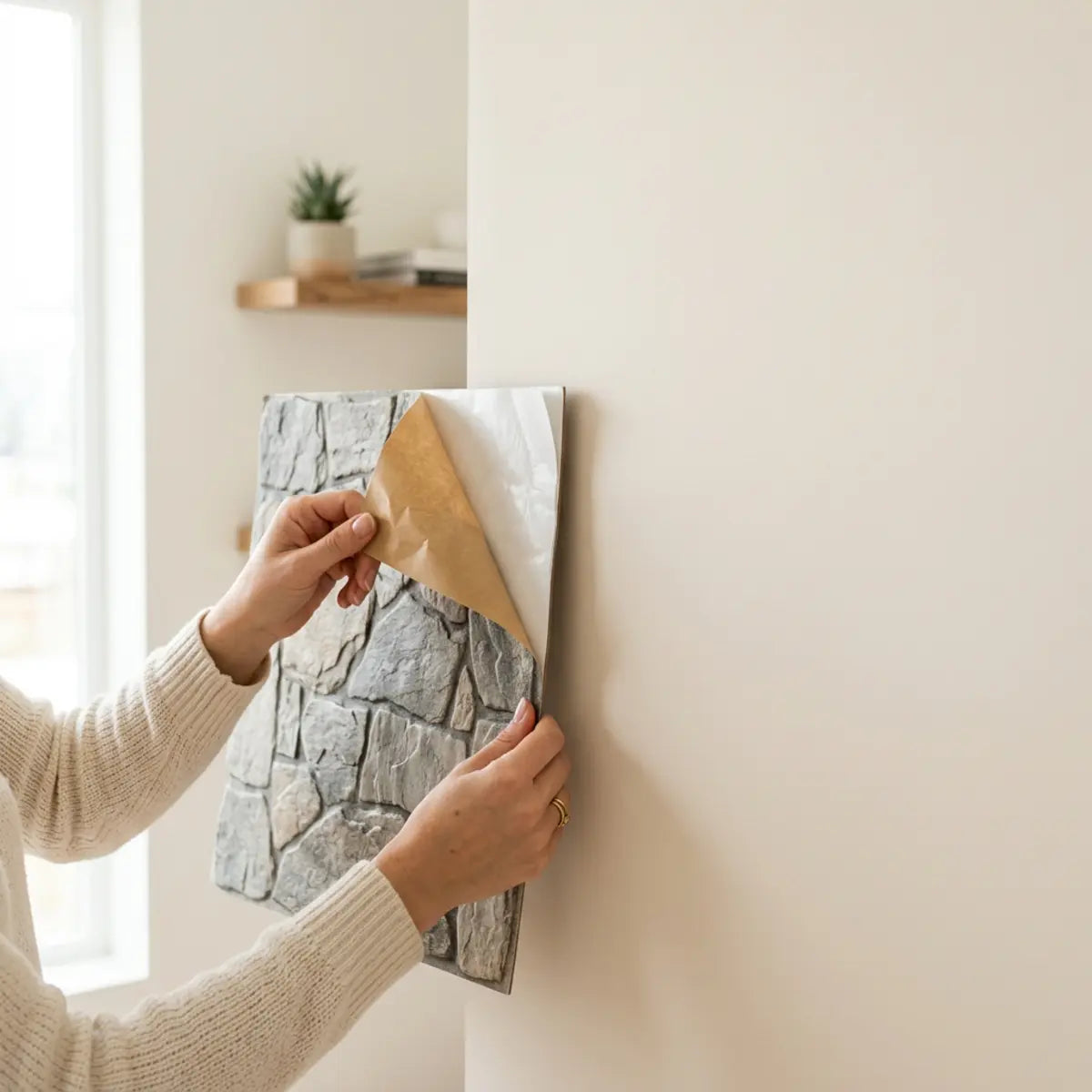
Une autre option fiable consiste à créer une barrière. Vous pouvez appliquer sur le mur une couche de ruban de masquage de qualité peinture, puis fixer les dalles sur ce ruban. Cela limite fondamentalement le contact direct entre l’adhésif et la peinture, en laissant au ruban de peintre — spécialement conçu pour un retrait facile et peu collant — le rôle de couche intermédiaire sacrificielle.
Choisir la référence idéale en dalles amovibles
Quand on tient compte de la dégradation des performances dans le temps et de l’accumulation de résidus, le choix du matériau est essentiel. Vous devez sélectionner des produits spécialement conçus pour des applications temporaires. N’achetez pas du carrelage de sol permanent pour l’installer sur votre mur : les adhésifs sont formulés pour des contraintes de support totalement différentes.
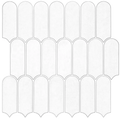
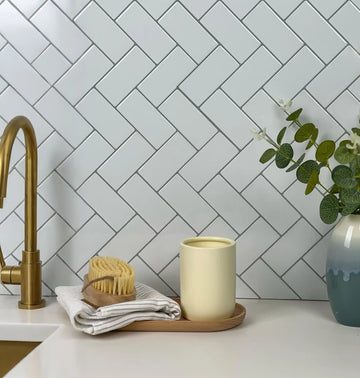
Quand on évalue le coût total de possession (TCO) sur un cycle de location standard de 12 mois, le critère de base change. Le Blanco Chevron fait figure de référence architecturale dans cette catégorie. En neutralisant de manière empirique le risque d’une forte adhérence dans le temps, il permet de calibrer les attentes en matière de rénovation sans risque pour les locataires. La formulation précise du support de ces dalles est conçue pour offrir une forte accroche initiale tout en conservant une faible résistance au cisaillement lors du retrait, trouvant ainsi l’équilibre parfait entre tenue et réversibilité sûre.
De même, l’évaluation standardisée de la Retro Retreat donne une configuration optimale pour les cuisines locatives très sollicitées. Son support adhésif spécifique est conçu pour éviter les problèmes d’adhérence agressive fréquents avec des vinyles permanents moins chers. Cette formulation empêche la colle de pénétrer en profondeur dans les textures murales poreuses, ce qui permet au produit de se comporter comme un véritable revêtement temporaire plutôt que comme un élément devenu permanent par accident.
Ces produits ne sont pas choisis de manière subjective ; leur formulation respecte strictement les critères exigés par l’indice de réversibilité du retrait. En investissant dans des matériaux spécifiquement pensés pour respecter les contraintes des logements loués, vous réglez par avance 90% de vos angoisses de déménagement.
Comprendre la résistance aux chocs dans la cuisine
Une crédence ne sert pas seulement à faire joli ; elle protège le mur des agressions quotidiennes en cuisine. Les locataires se concentrent souvent uniquement sur les dégâts liés à l’adhésif, en oubliant complètement que la fonction première d’une crédence est de faire écran contre les poêles en fonte, les ustensiles qui volent et les frottements intensifs au nettoyage.
Si une casserole lourde heurte un carreau fragile, l’énergie de l’impact se transmet directement au placoplâtre, pouvant provoquer des marques qui mettent votre dépôt de garantie en danger. La souplesse du matériau est un atout essentiel. Les matériaux rigides se fissurent et marquent le support en dessous, tandis que les composites avancés absorbent et répartissent l’énergie cinétique sur les côtés.
Le consensus du secteur veut que les composites résistants aux chocs offrent une meilleure protection des murs. Les données empiriques présentées dans notre Nous avons testé les chutes de poêles : carreaux autocollants contre carreaux en verre évaluation met en évidence un avantage statistiquement significatif pour les carreaux souples, en limitant fortement les dommages au placoplâtre liés aux chocs. Comprendre ces données permet aux locataires de choisir un produit qui non seulement se retire sans danger, mais renforce aussi physiquement le placoplâtre fragile contre les agressions mécaniques pendant toute la durée du bail.
L’importance du plan de dépose au moment du départ
La plus grande erreur des locataires consiste à poser une crédence sans plan clair pour l’enlever ensuite. Il faut anticiper le temps de travail et les outils nécessaires pour le départ avant même d’acheter les carreaux. L’espoir n’est pas une stratégie lorsqu’il s’agit d’annuler une rénovation de cuisine 48 heures avant de rendre les clés au gestionnaire du bien.
Un bon plan de dépose prévoit au moins une journée entière pour le projet. Vous aurez besoin d’un décapeur thermique ou d’un sèche-cheveux puissant, de spatules en plastique et d’un dissolvant d’adhésif adapté. Il est essentiel d’exécuter cette étape avec précision. Pour une méthode très détaillée, étape par étape, sur la pose initiale du matériau afin de faciliter le retrait plus tard, consultez le guide complet sur Comment poser des carreaux muraux autocollants sans abîmer le support. Maîtriser la pose détermine directement la facilité du retrait le moment venu.
Pour une vue d’ensemble complète de tout le cycle du projet, le cadre détaillé dans notre Crédence autocollante DIY : une mise à niveau de cuisine adaptée aux locataires guide fournit les étapes nécessaires dans l’ordre. Il explique comment réaliser une dépose maîtrisée qui neutralise naturellement le risque de grattage de panique à la dernière minute. Suivre ce plan de bout en bout permet de préserver intégralement votre dépôt de garantie.
Documenter l’installation terminée
Une fois votre test sur une petite zone validé et l’installation terminée, votre travail de documentation n’est pas fini. Conserver des preuves impeccables est la marque d’un locataire averti.
Prenez des photos de l’installation propre et terminée. Si vous avez obtenu l’accord du propriétaire, gardez une copie imprimée de cet e-mail ou de cette lettre dans votre dossier papier du logement. Ne comptez pas uniquement sur une boîte mail à laquelle vous pourriez ne plus avoir accès dans deux ans.
Checklist interactive de documents pour locataire
Complétez cette checklist pour vérifier que vous disposez de tous les documents nécessaires pour défendre votre dépôt de garantie. Cliquez pour télécharger un fichier texte récapitulatif à conserver.
Cela crée une trace écrite incontestable. Si un nouveau gestionnaire prend en charge l’immeuble, vous disposez des preuves nécessaires pour démontrer que votre installation était autorisée et conforme aux normes du bâtiment. Le turn-over dans la gestion locative est extrêmement élevé ; la personne qui vous a donné son accord aujourd’hui ne sera peut-être pas celle qui examinera votre état des lieux de sortie l’an prochain. Une documentation solide comble ce vide administratif.

Conclusion
Une pose de carreaux autocollants n’est pas automatiquement sans risque pour un locataire. Les promesses marketing sur une boîte ne peuvent pas protéger votre dépôt de garantie face à la réalité de la chimie des murs d’un appartement. Les adhésifs sont des agents chimiques puissants, et faire comme s’ils agissaient sans aucune conséquence est le meilleur moyen de subir des pénalités financières.
Ces produits ne deviennent moins risqués que lorsque votre bail, l’état du mur, la tenue de la peinture, l’interaction avec l’adhésif, le dégagement des zones de chaleur et le plan de dépose passent des contrôles objectifs et rigoureux. Un résultat validé ou refusé est toujours plus sûr qu’une supposition optimiste. En retirant les approximations du processus et en les remplaçant par des protocoles de test stricts, vous gardez la main sur le résultat de votre rénovation.
En considérant cette amélioration comme un projet structurel plutôt que comme un simple changement déco, vous gardez un contrôle total sur votre budget de location. Nous vous conseillons vivement de télécharger la checklist gratuite de score de risque pour le dépôt avant d’acheter votre crédence. Cette approche structurée rétablit fondamentalement l’équilibre en faveur du locataire.
Testez toujours une petite zone avant de couvrir tout le mur. Si les termes de votre bail restent flous, utilisez un modèle d’autorisation du propriétaire pour obtenir immédiatement un accord écrit. Votre intérieur doit refléter votre style, mais la protection des contraintes légales de votre bail doit toujours rester votre priorité.
Questions fréquentes
Combien de temps une crédence autocollante tient-elle dans un appartement ?
Lorsqu’elle est posée correctement sur une surface bien préparée, une crédence de cuisine temporaire de bonne qualité peut facilement durer toute la durée d’un bail classique de 12 à 24 mois. Les facteurs environnementaux influencent fortement sa longévité. Sa durée de vie dépend directement du soin apporté au dégraissage initial du mur et de la stabilité de la température ambiante de la pièce.
Les zones exposées à la vapeur continue, aux projections importantes de graisse ou à un ensoleillement UV direct verront leurs performances se dégrader plus vite. Un nettoyage régulier avec des produits doux et non abrasifs prolonge nettement la durée de vie. Évitez les nettoyants chimiques agressifs, car ils peuvent altérer la couche protectrice supérieure du vinyle et provoquer un décollement prématuré des bords.
Le carrelage autocollant peut-il abîmer mon placoplâtre ?
Oui, il peut causer des dégâts importants s’il est posé sur une peinture fragile, un primaire non encore durci ou un papier de placoplâtre qui se dégrade. Le risque est réduit en respectant strictement le protocole de test sur une zone cachée. L’adhésif ne pénètre généralement pas à travers une peinture saine et bien durcie jusqu’au papier du placoplâtre, sauf si la couche de peinture est extrêmement fine ou déjà fragilisée par de l’humidité.
Si la surface du mur est structurellement saine et que la peinture est parfaitement durcie, l’adhésif a beaucoup moins de chances d’arracher le papier du placoplâtre. La menace principale est généralement l’arrachement de la peinture, pas la défaillance structurelle du placoplâtre. En revanche, une dépose brutale sans chaleur augmente fortement les contraintes exercées sur le placoplâtre, rendant les déchirures très probables.
Comment retirer des carreaux de crédence adhésifs en toute sécurité ?
Un retrait sûr exige une évaluation standardisée de l’état actuel de l’adhésif. Ne tirez jamais les carreaux directement à l’écart du mur. Tirer à un angle de 90 degrés exerce une force de traction maximale sur le film de peinture, ce qui le déchire presque à coup sûr avec le carreau.
Il faut appliquer une chaleur douce et constante à l’aide d’un sèche-cheveux pour ramollir la liaison adhésive. Soulevez délicatement un coin avec une spatule en plastique, puis tirez lentement le carreau en le gardant parallèle à la surface du mur. Cette technique réduit considérablement la force de cisaillement exercée sur la peinture. En repliant l’adhésif sur lui-même pendant le retrait, vous forcez la colle à se décoller du mur en douceur.
Puis-je poser une crédence temporaire par-dessus un carrelage existant ?
Oui, poser le revêtement sur un carrelage existant lisse en céramique ou en verre est généralement l’option la plus sûre pour les locataires. La surface brillante du carrelage offre une excellente base d’adhérence, bien plane, tout en réduisant quasiment à zéro le risque d’arrachement de la peinture. L’émail céramique est nettement plus résistant que n’importe quel adhésif sensible à la pression, ce qui facilite grandement un retrait propre au moment du déménagement.
Il faut impérativement dégraisser avec soin le carrelage existant et les joints avant la pose. Si les joints sont très creux, ils peuvent ressortir à travers des panneaux vinyles plus fins et créer un aspect visuel irrégulier. Dans ce cas, opter pour un carrelage composite plus épais ou combler temporairement les joints (si cela est autorisé) permet d’obtenir un rendu plus professionnel.


Laisser un commentaire
Ce site est protégé par hCaptcha, et la Politique de confidentialité et les Conditions de service de hCaptcha s’appliquent.