




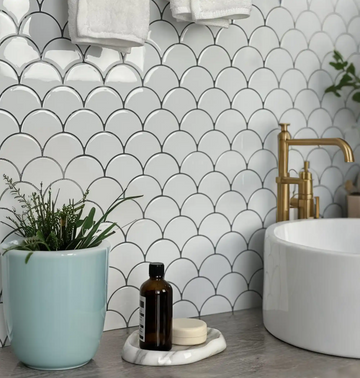
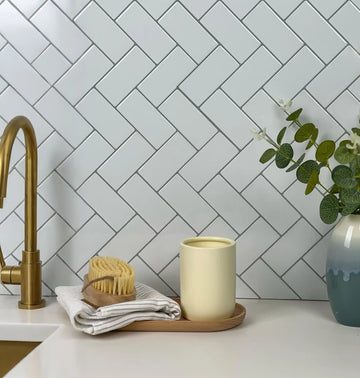
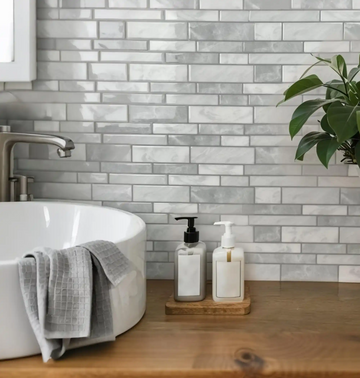
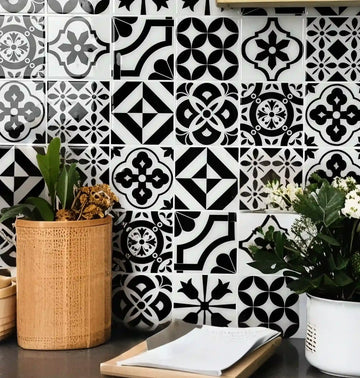
Commencez Ici
Sens Du Motif
Utilisez Des Dispositions Verticales, Horizontales Et Géométriques Pour Modifier L’Atmosphère D’Une Pièce.
Guide De Design
Trouvez Le Look Stickwoll Idéal En Associant Motif, Couleur, Finition Et Échelle De La Pièce À L’Usage Réel Du Mur.
Acheter Des Styles De CarrelageCommencez Ici
Utilisez Des Dispositions Verticales, Horizontales Et Géométriques Pour Modifier L’Atmosphère D’Une Pièce.
Inspiration
Reliez Couleur, Texture, Contraste Et Indices De Style À Des Mises À Jour Murales Pratiques.
Acheter
Comparez les styles Subway, en Chevrons, Hexagonaux, Aspect Marbre, Mosaïque et Axés Sur la Couleur.
Un Bon Design De Carrelage Peel-And-Stick Commence Par La Fonction Du Mur. Une crédence doit être facile à nettoyer et présenter des bords nets. Un mur d’accent doit offrir de l’ampleur et de l’équilibre. Un projet pour locataire doit privilégier la sobriété et la réversibilité. Choisissez le motif, la couleur et la finition une fois que vous connaissez le rôle de la pièce, la lumière et les contraintes d’installation.
Ne commencez pas par demander quel carrelage est tendance. Commencez par demander ce que le mur doit accomplir. Doit-il éclaircir une petite cuisine, apaiser un meuble-lavabo de salle de bain, créer un fond d’office prêt pour les photos, donner un aspect intégré à une tête de lit, ou apporter une touche boutique à un mur simple ? Une fois l’objectif clair, le choix du motif devient plus facile.
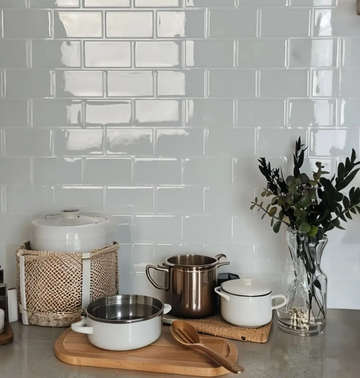
Les lignes horizontales et les formats subway peuvent étirer visuellement une crédence.
Les effets pierre, marble et mosaic créent un mur plus travaillé, sans poussière de chantier.
Un motif maîtrisé derrière un bureau peut rendre un espace de travail plus intentionnel.
De petits projets créatifs peuvent donner une seconde vie aux chutes sans engager tout un autre mur.
| Motif | Idéal Pour | Note De Préparation |
|---|---|---|
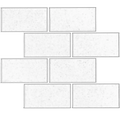
| Subway | Cuisines Épurées, Salles De Bain Et Agencements Débutants | Des lignes simples facilitent la maîtrise des coupes et des finitions. |
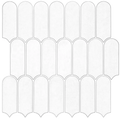
| Herringbone | Mouvement, Accents Boutique Et Murs Focaux | Prévoyez Les Terminaisons Des Bords Avant La Pose. |
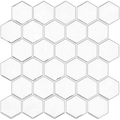
| Hexagon | Géométrie Moderne Et Petites Zones Accent | Les formes répétées demandent un alignement précis dans les angles. |
| Effet Marble | Luxe Doux Et Design Cuisine Haut/Bas | Le sens des veines compte plus que ce que la plupart des acheteurs imaginent. |
La lumière naturelle, l’éclairage sous les meubles hauts, les reflets du miroir et les ombres du mur changent la lecture du carrelage. Les tons blancs et brumeux peuvent agrandir une petite pièce. Le vert et le bleu apportent de la couleur sans être trop criards. Le noir, l’ardoise et les contrastes marqués fonctionnent mieux quand le mur bénéficie de suffisamment de lumière et d’un bord net. La finition brillante peut éclairer un coin sombre, mais elle révèle plus vite les reflets et les traces que les finitions mates.
Pour les décisions de couleur et de finition, lisez les tests crédence mate versus brillante, l’alignement des veines en faux marble, et les tendances couleur mode pour les intérieurs.
Dans une cuisine, privilégiez un produit facile à nettoyer et un motif simple à aligner autour des meubles et des prises. Dans une salle de bain, utilisez des finitions douces dans les zones peu exposées aux éclaboussures et ne confondez pas carrelage décoratif et étanchéité. Dans un bureau, priorisez le cadrage de la caméra et la maîtrise des reflets. Dans un salon, utilisez le carrelage comme accent contenu plutôt que de couvrir toutes les surfaces. Pour les locataires, choisissez une zone plus petite à fort impact, qui pourra être retirée avec moins de risque.
Des lectures utiles incluent le design de mur d’accent TV, un projet de fausse tête de lit, le style maison inspiré de la mode, et les astuces meuble en peel-and-stick.
Un bon design de carrelage doit soutenir l’ambiance de la pièce. Dans une cuisine, le carrelage doit souvent sembler propre, durable et facile à essuyer. Dans une salle de bain, il doit paraître frais sans prétendre résoudre des problèmes d’humidité qui relèvent de l’étanchéité. Dans un salon, le mur peut être plus chaleureux et décoratif car il n’est pas exposé aux éclaboussures quotidiennes. Dans un bureau à domicile, le motif doit aider l’arrière-plan à paraître soigné sans distraire à la caméra.
Utilisez des échantillons produits et la vraie lumière avant de faire votre choix final. Un carrelage qui paraît lumineux sur une photo produit peut sembler plus froid sous un éclairage LED. Un carrelage brillant peut réfléchir la lumière sous les meubles hauts dans une cuisine. Un motif fort peut être superbe sur un petit échantillon mais sembler chargé sur tout un mur. Ce sont des décisions de design, pas seulement des décisions produit.
Choisissez des formats subway si vous voulez un look crédence familier avec un alignement plus simple.
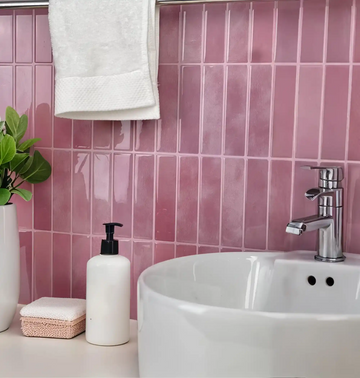
Utilisez des verts pâles, des bleus et des blancs pour un mur plus lumineux qui garde de la personnalité.
Utilisez des hexagones, des motifs herringbone ou du mosaic pour les petites zones focales.
Utilisez des produits effet pierre lorsque le sens des veines et la lumière peuvent être planifiés avec soin.
La façon la plus simple de rendre un carrelage peel-and-stick plus soigné est de contrôler les points d’arrêt. Arrêtez le carrelage à un meuble, un angle, une ligne de finition, une étagère, le bord d’un miroir ou une limite de design mesurée. Évitez qu’il s’arrête au hasard au milieu d’un mur, sauf si cette rupture fait partie du design. Si le bord est apparent, prévoyez une baguette de finition ou une révélation nette avant la pose.
Ensuite, faites preuve de retenue. Un seul mur d’accent fort peut sembler plus travaillé que trois surfaces partiellement carrelées. Un simple carrelage subway peut paraître plus premium qu’un motif complexe posé autour de trop d’obstacles. En cas de doute, choisissez l’agencement le plus facile à aligner, à nettoyer et à vivre sur la durée.
L’erreur la plus fréquente avec le carrelage peel-and-stick est de choisir un motif avant de définir le rôle du mur. Un mosaic chargé peut sembler excitant en gros plan, mais devenir bruyant sur une crédence complète. Un carrelage effet marble sombre peut paraître raffiné en ligne, mais nécessiter davantage de lumière dans une petite cuisine de location. Un petit hexagon peut donner un aspect sur mesure à un meuble-lavabo, mais aussi attirer davantage l’attention sur les joints qu’un subway plus calme.
Utilisez les éléments fixes de la pièce comme cadre de design : couleur des meubles, ton du plan de travail, finition du robinet, revêtement de sol, peinture murale et lumière naturelle. Si ces éléments sont déjà chargés, choisissez un carrelage plus discret. Si la pièce est simple, un herringbone, une couleur côtière, une fausse pierre ou un accent métallisé peuvent apporter de l’énergie. Les meilleures idées de carrelage peel-and-stick donnent l’impression de faire partie de la pièce, et non d’être une décoration ajoutée par-dessus.
Avant de commander, placez vos meilleures options de carrelage à côté de photos du mur réel, des meubles, du plan de travail et du sol. Comparez ensuite sous la lumière du matin, du soir et sous éclairage artificiel. Pour les designs adaptés aux locataires, ajoutez sur le board une note de départ : où le carrelage commence, où il s’arrête, et comment le bord sera retiré plus tard. Cela relie la décision créative à la pose pratique.
Règle Simple : choisissez un seul mouvement visuel principal : motif, couleur, texture ou brillance. Quand un carrelage peel-and-stick essaie de faire les quatre à la fois, la pièce peut sembler plus petite et plus difficile à décorer.
Le carrelage peel-and-stick subway est le point de départ le plus sûr si vous voulez une crédence propre, un mur de meuble-lavabo apaisé ou une mise à niveau classique pour locataire. Le carrelage herringbone fonctionne mieux lorsque le mur dispose d’assez d’espace libre pour que le motif se lise clairement. Le carrelage hexagon peut rendre un petit accent plus personnalisé, surtout près d’un miroir, d’une étagère ou d’un mur de bureau. Le carrelage effet marble fonctionne mieux lorsque le sens des veines et les surfaces voisines sont pensés ensemble.
Pour un design guidé par la couleur, laissez la pièce décider jusqu’où aller. Une cuisine blanche peut bénéficier d’un vert doux, d’un bleu côtier ou d’une pierre chaude. Une cuisine aux meubles foncés peut avoir besoin d’un carrelage plus clair pour éviter que le mur paraisse lourd. Une salle de bain avec robinetterie chromée paraît souvent plus nette avec des neutres pâles, tandis que des finitions laiton ou noires peuvent supporter un contraste plus fort. Utilisez des échantillons produits et des photos en conditions réelles ensemble pour que le choix final repose sur votre lumière, et pas seulement sur une image de catalogue.
Lorsque vous affinez le rendu, comparez les carrelages muraux subway, les carrelages herringbone, les carrelages hexagon, et Snowfish Marble côte à côte.
Les agencements de type subway sont généralement les plus simples pour débuter, car les lignes sont prévisibles et la planification des bords est plus facile.
Pas toujours. Les petites pièces profitent souvent de motifs plus simples et plus calmes. L’échelle du motif doit correspondre au rôle du mur et au nombre de coupes nécessaires.
Planifiez les bords, alignez les lignes visibles, évitez de trop couvrir et choisissez un style produit qui correspond à la pièce plutôt que de suivre uniquement une tendance.