


Kitchen surfaces · Intended use and product limits
A peel-and-stick tile may adhere to a countertop without being suitable for hot pans, knives, food preparation, sink exposure, or daily cleaning. You should use peel-and-stick wall tile on a countertop only when the exact product’s instructions support that horizontal application and its expected exposure. For a primary food-preparation counter, wall or backsplash suitability alone is insufficient.
The appeal is easy to understand: you want a fresh surface without demolition, grout, or a major renovation. But the decision needs four checks before appearance enters the conversation: heat, abrasion, food contact, and moisture or cleaning exposure. Adhesion—the bond that holds the tile to the surface—is one part of the decision.
Stickwoll’s current FAQ describes wall installation, routine splash care, and placement away from direct flame and concentrated heat. Those instructions provide useful boundaries; they don’t establish unrestricted countertop use.
Can peel-and-stick wall tile be used on countertops?
Conditionally, yes—but only where the exact product documentation supports the planned countertop use. Being able to press a tile onto a smooth counter doesn’t establish that the finished installation can handle the work performed there.
Start by identifying the product category. “Peel-and-stick” describes an installation method. It doesn’t tell you whether the product is decorative wall tile, flooring, a countertop covering, or another surface material. Likewise, “tile” can describe products with different surface layers, textures, adhesives, and installation requirements.
That distinction matters before purchase. A listing that says “for kitchens” could mean a kitchen wall. A photograph beside a sink could show a backsplash. Neither answers whether you can roll dough on the surface, place a warm appliance on it, or clean it after preparing raw food.
We recommend starting with a precise question: Does this exact product support this exact use on this exact surface? That phrasing gives you a more useful answer than asking whether a tile “sticks to counters.”
Separate permission to install from permission to use
There are two decisions:
- Installation compatibility: Can the adhesive bond to the existing surface using the specified preparation?
- Service suitability: Can the complete installation tolerate its intended heat, wear, food contact, moisture, and cleaning?
A product can satisfy the first condition while leaving the second unanswered. For example, listing laminate as a compatible surface doesn’t explain whether that laminate is a vertical panel or a busy kitchen worktop.
Treat countertop permission as a starting requirement. Then check its conditions. If horizontal decorative placement is allowed but direct food preparation is excluded, that restriction should shape how you use the space. If hot objects are prohibited, the installation remains subject to that prohibition.
Silence about countertops isn’t permission. Ask for written confirmation tied to the product name or model before buying or modifying the existing surface.
Temporary use still needs a suitable surface
A temporary renovation changes how long you want the finish to remain. It doesn’t change the tasks the surface must handle during that time.
For a renter, two questions deserve equal attention: whether the tile suits the application and whether installation or removal could affect the original finish. Get any required landlord permission before starting, and avoid assuming that “removable” guarantees a damage-free result.
A useful project can be smaller than your first idea. Updating a documented wall application while keeping the existing counter available for preparation may deliver the visual change you want with fewer unanswered conditions.
Wall tile versus countertop: compare the actual exposure
A countertop must be evaluated as a work surface, while a backsplash is evaluated as a wall installation. Their locations may be close, but their jobs differ.
A backsplash is the vertical surface behind or beside a counter. A decorative ledge is a horizontal display area. A light-use area might hold sealed containers or occasional serving items. A primary preparation counter is where you work with ingredients, utensils, cookware, and cleaning products.
These categories help you describe your project. They don’t grant approval. A decorative ledge can still sit near appliance heat, and a “light-use” coffee station can include steam, drips, and repeated movement.
| Planned area | Activities to identify | Documentation that matters |
|---|---|---|
| Backsplash | Cooking splashes, wiping, nearby appliance heat | Wall installation, appliance clearances, moisture and care restrictions |
| Decorative ledge | Display objects, dusting, occasional handling | Explicit horizontal decorative use, substrate compatibility, edge requirements |
| Light-use horizontal area | Containers, cups, serving items, repeated wiping | Horizontal-use permission, friction, spills, cleaning, appliance restrictions |
| Primary preparation counter | Ingredient handling, utensils, cookware, frequent cleaning | Countertop suitability, food-contact conditions, wear expectations, heat and sanitation instructions |
Use the table to describe what happens in your home rather than choosing the most reassuring label.
A breakfast bar used only for plated meals has a different exposure pattern from an island where dough is kneaded. A shelf behind the sink may be decorative in purpose but frequently wet. A countertop beneath an appliance needs a heat review even if food never touches the tile.

Trace a normal day through the space
Before deciding, imagine an ordinary day from breakfast through cleanup. Where do you set a pan? Which appliance remains plugged in? Where do you place washed dishes? Does anyone slide a heavy jar across the counter?
Then consider busy days. Guests may set serving dishes wherever space is available. Another household member may use a surface differently from you. Your plan should account for foreseeable use rather than depending entirely on a rule that everyone must recall.
This is especially useful in small kitchens, where a decorative section can become overflow preparation space. If you can’t reliably maintain the intended use, evaluate it as the more demanding application.
Choose your project route
Use the following decision guide to identify your next action. It sorts a project by documentation and exposure; it doesn’t test or certify a product.
First, identify the area: backsplash, decorative ledge, light-use horizontal area, or primary preparation counter. Next, mark whether it receives hot objects or appliance heat, direct food contact, repeated friction or impact, and standing water or intensive cleaning.
Finally, classify the manufacturer’s answer as explicitly permitted, explicitly excluded, or unclear for the application and each relevant exposure.
Your result follows these rules:
- Redirect the project: If the manufacturer excludes the planned application or any unavoidable exposure, choose another location or a material documented for that work.
- Ask before purchase: If the application or any relevant condition is unclear, send a specific written request. Treat unanswered food-contact or preparation-counter questions as a reason to keep preparation on an established suitable surface.
- Consider within the stated conditions: If the application and all relevant exposures are explicitly supported, continue to the substrate, installation, care, and removal review. Approval for one condition doesn’t cancel restrictions elsewhere.
Apply exclusion first, uncertainty second, and documented permission last. There’s no score to average: a confirmed substrate cannot offset an excluded use.
For example, a decorative ledge with documented horizontal-use permission still moves to “ask before purchase” if its cleaning requirements are unanswered. A wall backsplash moves to “redirect” if its unavoidable stove placement conflicts with the instructions. These are hypothetical illustrations of the decision rules, not reports of product testing.
Choose “no expected exposure” only after reviewing the actual activities in that area. It means that condition is outside your current plan; it does not mean the product tolerates it. For a primary preparation counter, the route also requires a documented food-contact answer even when you expect to use a separate board. Routine care still needs review for every location, including areas without standing water or intensive cleaning.
The result reflects the answers you enter. It cannot check a document, resolve conflicting instructions, or determine whether an exposure is avoidable. If two documents disagree, leave that condition unclear and ask which instructions apply to your product. Revisit the route whenever you change an appliance, cleaning method, or intended activity.
Can peel-and-stick tile withstand hot pans or appliance heat?
Don’t place hot cookware on peel-and-stick wall tile unless the exact product explicitly permits that contact. There is no universal countertop heat limit for everything sold as peel-and-stick tile.
“Heat resistant” needs context. Ask what temperature it refers to, how that temperature is measured, how long the exposure lasts, and whether the rating covers the entire installed assembly. The assembly is the tile, adhesive, joints, edges, and supporting surface working together.
A statement about wall placement near cooking cannot answer a question about direct contact with the bottom of a pan. Similarly, a temperature listed for an adhesive ingredient cannot establish the operating limit of a finished tile installation.
Review hot objects and appliances separately
Your heat review should distinguish:
- Direct contact from pans, baking dishes, or other hot objects.
- Sustained exposure beneath or beside an operating appliance.
- Nearby heat governed by appliance placement and clearance instructions.
Describe the appliance by model and intended position. Include whether it remains in place and how long it operates. Ask about any proposed protective mat at the same time; don’t treat that accessory as automatic permission.
Stickwoll’s FAQ directs cooking-area placement to follow appliance clearances and avoid flame and concentrated heat. It supplies no numerical hot-pan limit for a countertop application.
An oven setting also doesn’t tell you the permitted exposure of the counter beneath an appliance. For this decision, use the appliance instructions and the tile manufacturer’s application-specific answer.
What adhesive research can—and cannot—tell you
Published adhesive research shows why borrowing a temperature from another material is unreliable. In Park and colleagues’ acrylic adhesive heat-resistance study, laboratory formulations produced shear adhesion failure temperatures from 41.3 to 122.8°C as silicone-block initiator content increased. The test used adhesive specimens on stainless steel under a specified load and heating ramp.
Shear adhesion failure means the bond failed while a load acted parallel to the bonded surface. It is a particular laboratory measurement.
Those temperatures belong to the tested formulations and method. The study didn’t test Stickwoll, installed decorative tile, countertop service life, or hot-pan contact. Its practical value here is explaining why formulation and test conditions matter—not supplying a temperature you can use in your kitchen.
Heat boundary: A trivet or appliance mat is a proposed precaution. It cannot establish permission for an otherwise undocumented tile application.
If your counter routinely receives hot cookware and the exact product doesn’t support that exposure, redirect the project. A finish that relies on constant exceptions may be a poor match for the way your kitchen works.
Assess scratches, cutting, impact, and repeated friction
Countertop durability needs evidence about countertop tasks. A decorative surface’s appearance, thickness, or wall-care instructions cannot establish cutting, scratch, impact, or wear performance.
Abrasion means surface wear caused by rubbing or scraping. On your project review, include the actions you expect: moving containers, repositioning appliances, handling dishes, and wiping repeatedly. Cutting and impact are separate questions because they involve different kinds of contact.
Avoid treating a showroom sample or a newly installed photograph as evidence of long-term performance. It can show color and texture. It cannot show how an installation will respond to your daily routine.
Ask what a durability claim measures
If a product provides an abrasion or scratch rating, look for the test method and the material tested. Was it the surface layer alone or the installed product? What action was repeated? What result counted as acceptable?
You don’t need to become a testing specialist. You need enough information to tell whether the claim addresses your use.
For a light-use ledge, your question might be whether moving display objects is permitted. For a preparation counter, you need a broader answer covering utensils, cleaning, and repeated work. Avoid translating a general word such as “durable” into permission for each of those activities.
Do not cut directly on a decorative wall tile based on its appearance. Use a cutting board intended for food preparation and maintain it according to its instructions.
The University of Minnesota Extension cutting-board guidance recommends smooth, hard boards approved for food contact and replacing boards that develop deep grooves or scratches. That is household cutting-board guidance; it doesn’t rate adhesive wall tile for wear.
A cutting board has a defined role
A board gives you a separate surface for cutting. It leaves other questions to resolve: what happens beyond its edge, how you clean the surrounding installation, whether the counter receives heat, and whether the tile is permitted horizontally.
For example, planning to chop vegetables on a board doesn’t answer whether you can knead dough beside it. Nor does it explain the care procedure after food liquid reaches a joint.
We recommend treating protective accessories as part of a documented use plan. They should supplement the product’s conditions rather than replace them.
If the application is permitted, ask how to inspect and maintain it. Changes such as lifting, cracking, or joints that you can’t clean deserve a reassessment before continuing the intended use. Avoid solving a new problem with extra glue or coating unless the manufacturer approves that repair for the application.

Is peel-and-stick tile suitable for food contact or food preparation?
Only where the finished product is documented for the intended food-contact use and can be maintained appropriately. Installation near food does not establish permission to put food directly on the surface.
Direct food contact includes activities such as kneading dough, resting unwrapped ingredients, or placing cut produce on the tile. A sealed container sitting on a counter is a different situation.
For a primary preparation area, separate two evidence questions: chemical suitability and cleanability.
Chemical suitability depends on the intended use
Food-contact evaluation considers whether substances can transfer from a material into food under the intended conditions. Migration is that transfer.
The FDA explanation of food-contact substance safety reviews describes consideration of migration and toxicological information for intended uses through its notification program. This doesn’t establish the safety status of an unidentified tile.
Terms such as “non-toxic,” “low odor,” or “water resistant” don’t answer the same question. They also don’t identify the food types, contact duration, temperature, or repeated-use conditions covered by a food-contact statement.
Ask for documentation that identifies the finished product and your proposed use. An answer about one ingredient needs an explanation of how it applies to the complete article.
The FDA guidance on food-contact component compliance explains that applicable authorizations depend on components and conditions of use. It also discusses requesting a manufacturer’s letter of guaranty. Multiple compliance pathways exist; a unique “FDA certificate” is not a universal requirement.
Cleanability is a separate requirement
A surface also needs a suitable way to remove food soil and perform any required sanitation while preserving the installation. Smooth appearance alone cannot establish that procedure.
As a useful design reference, the FDA Food Code surface and cleanability provisions call for durable, nonabsorbent, easily cleanable food-contact materials that resist deterioration under normal use. They also address smooth surfaces, accessible cleaning, and freedom from open seams, cracks, and crevices.
The Food Code is a model for food establishments. These provisions serve here as a comparison framework; they don’t automatically impose commercial requirements on a private home or certify a retail tile.
The practical question is straightforward: Can I clean this complete installation appropriately after the tasks I plan to perform? Include joints, exposed edges, and any texture in the answer.
Our related guide to peel-and-stick backsplash food-safety questions explores the distinction between kitchen wall placement and documented direct food contact.
Why a clean appearance is insufficient
A published field study provides limited context for this distinction. In Lo and colleagues’ market cutting-surface hygiene study, a cleaning comparison on one used Hong Kong butcher board found no observed difference in plated microbial growth after traditional scraping compared with untreated areas. Chemical cleaning reduced growth but didn’t eliminate it.
The study involved wooden butcher surfaces and market conditions. It doesn’t predict contamination on household adhesive tile, demonstrate illness from that tile, or provide a cleaning recipe for it.
Its relevance is narrower: changing the appearance of a surface and establishing a suitable hygiene procedure are different tasks.
For a primary preparation counter, require both documented food-contact conditions and compatible maintenance instructions. If either answer remains unclear, keep direct preparation on a surface intended for that work.
Moisture, seams, and cleaning deserve an assembly review
A wipe-clean tile face doesn’t establish a waterproof countertop installation. Review moisture exposure at joints, perimeter edges, sink transitions, and cutouts as well as the visible surface.
For your project, distinguish an occasional splash that you wipe away from water that remains beneath a drying mat, beside a sink, or around a fixture. Tell the manufacturer which condition you expect.
Stickwoll’s FAQ describes routine splash resistance, advises against prolonged water exposure unless specifically permitted, and calls for mild-soap care with a soft cloth or sponge while avoiding harsh chemicals and abrasive scrubbers. These are wall-tile care boundaries, not a preparation-counter sanitation procedure.
Check the water path around the sink
Rather than asking whether the tile is “waterproof,” trace where water goes. Is there a joint beside the sink rim? Will a cut edge face the wet area? Does a dish rack cover the installation? Can you inspect the surface without moving equipment?
These questions help you describe exposure and maintenance access. They don’t establish that water will penetrate a particular product or that a particular seam will fail.
If sink-area countertop use is permitted, request the manufacturer’s details for joints and edges. Ask whether any specified sealant, trim, or additional adhesive forms part of the approved installation.
Avoid improvising a coating system to compensate for missing product permission. A coating needs its own intended-use, adhesion, cleaning, and food-contact review where relevant.

Read the adhesive evidence at its proper scale
In Luo and colleagues’ adhesive temperature-and-humidity experiment, researchers compared a flexible-device pressure-sensitive adhesive at 55°C and 0% versus 90% relative humidity. They used three specimens per stress-relaxation condition and 900-second holds; higher humidity produced lower normalized stress over time.
A pressure-sensitive adhesive bonds through applied pressure. Stress relaxation describes a reduction in measured stress while deformation is held constant.
This experiment tested CEF3501 adhesive specimens. It was not an installed-tile, sink, standing-water, or immersion test. It cannot supply Stickwoll moisture limits or predict seam lifting or lifespan.
The appropriate takeaway is that environmental conditions can matter to measured adhesive behavior. Your installation decision still needs evidence for the exact product and application.
Compare your cleaning routine with permitted care
Write down the cleaner you actually use, including any disinfectant or degreaser, and the method of application. Ask about dilution, contact time, rinsing, and compatibility where those conditions apply.
If your intended preparation routine requires a procedure that the tile manufacturer doesn’t permit, reconsider the surface choice. Don’t quietly substitute gentler cleaning for the hygiene needs of the task.
After an approved installation, keep joints and edges accessible for inspection. If an area lifts or becomes difficult to clean, pause the affected use and obtain application-specific repair or removal guidance.

Will peel-and-stick tile adhere to laminate, granite, quartz, or existing tile?
Substrate compatibility must be confirmed for the actual finish and application. A substrate is the underlying surface receiving the adhesive. Material names alone cannot resolve every condition affecting your project.
Stickwoll’s general FAQ includes smooth laminate among compatible surfaces. That identifies a possible bonding surface within its wall instructions; it doesn’t establish laminate countertop suitability.
Laminate: identify the finish and condition
Describe whether the laminate is original, repaired, painted, or previously refinished. Photograph joints, corners, and damaged sections. Ask what preparation is permitted for that finish.
Avoid assuming that sanding, primer, or extra adhesive is necessary. Each can change the original surface and the removal outcome. If reversibility matters, preparation choices belong in the decision before installation.
For a counter with loose or damaged material, covering the appearance doesn’t resolve the condition beneath it. Obtain appropriate repair guidance before considering a covering.
Granite and quartz: request finish-specific confirmation
For stone and engineered surfaces, identify the countertop material as accurately as possible and ask about coatings, sealers, or treatments where applicable.
Don’t infer approval from a polished appearance. Send the tile manufacturer the surface details and ask the countertop manufacturer or qualified installer about permitted preparation and residue cleanup.
This is particularly useful when the existing counter is valuable or its finish is uncertain. A low-cost covering can still be a poor choice if you can’t establish a compatible removal method.
Existing tile: include grout and transitions
A tiled counter needs a review of the tile faces, grout recesses, joints, and edge profile. Ask whether the proposed product requires a continuous, flat bonding surface and what preparation is permitted.
The guide to installing peel-and-stick tile over existing tile addresses substrate and grout preparation questions. Those topics help you describe an existing tiled surface; they don’t grant countertop approval.
Avoid transferring a wall or floor preparation example directly to a food-preparation counter. The planned service conditions still control the choice.
Use a test patch for a limited question
A manufacturer-directed hidden-area test may help you observe initial bonding or a small removal attempt on that particular finish. It cannot establish long-term wear, food-contact suitability, thermal limits, or removal outcomes across a complete installation.
Keep that boundary clear. A successful patch is one observation, not a substitute for intended-use documentation.
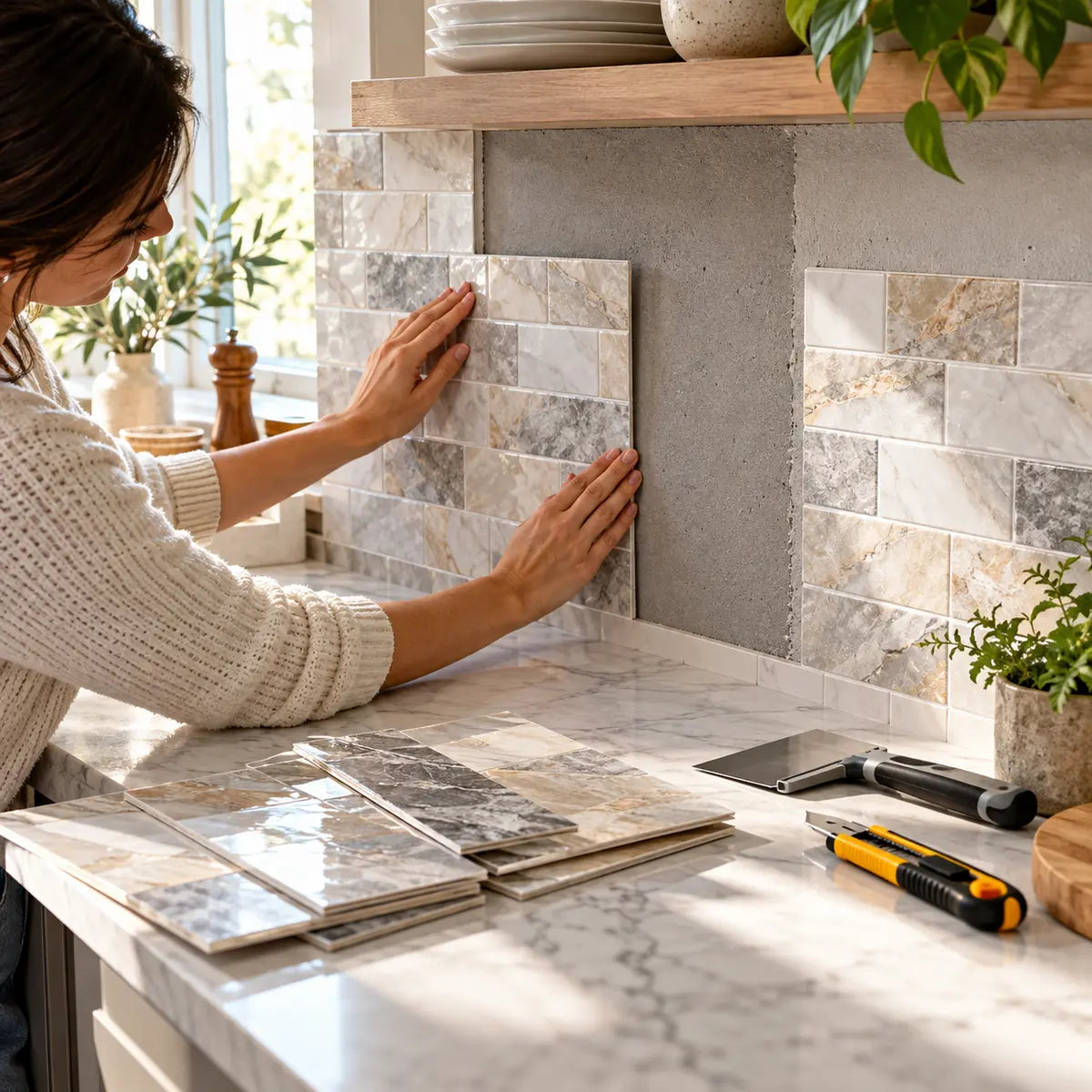
Before preparing a surface, consult the Stickwoll installation and care destination and obtain the instructions for your exact product and application. Confirm any waiting periods or preparation requirements rather than importing them from another product.
Turn the documentation into a go-or-no-go decision
Proceed only when the product’s permitted use matches the work you expect it to perform. Keep the decision specific enough that you could explain it to another household member or installer.
A useful review includes the product identity, actual surface, daily activities, installation conditions, care, and exit plan. You don’t need a binder of unrelated claims. You need answers that resolve your project.
Build a focused question for the manufacturer
Use this request builder to turn your project details into a clear message.
Begin with:
“I’m considering [exact product name or model] for [backsplash, decorative ledge, light-use horizontal area, or primary preparation counter] over [material and finish]. Please confirm whether this application is permitted and provide the applicable installation and care instructions.”
Then add the paragraphs matching your selected conditions:
- Heat selected: “The area will receive [hot objects or appliance model], used in [position] for [typical duration]. What contact restrictions, exposure limits, clearances, or protective measures apply?”
- Direct food contact selected: “I intend to [describe the food task]. What finished-product documentation supports that contact, and what cleaning or sanitation procedure is compatible?”
- Wear selected: “The surface will receive [sliding containers, utensils, appliance movement, or other activity]. Is that use permitted, and what wear or repair restrictions apply?”
- Moisture selected: “The area receives [splashes, drying-rack exposure, or standing water]. What instructions apply to joints, cut edges, sink transitions, and cleaning products?”
- Removal selected: “I need to preserve the original finish. What removal and residue-cleanup methods are permitted for this substrate, and what limitations should I expect?”
Always finish by asking whether the applicable warranty covers the described placement and which written terms apply.
Your result is a complete project question containing the opening, every selected exposure paragraph, and the warranty question. If you’re unsure whether an exposure occurs, describe it as uncertain rather than leaving it out.
If the reply permits the application and addresses every relevant condition, continue the review below. If it excludes an unavoidable condition, redirect. If the reply remains general, ask for clarification before purchasing.
This builder organizes a conversation. It does not assess product safety or grant installation permission.
Your entries are used only to assemble the message displayed here. Building the question does not send it. Review the wording, add details that a short entry cannot capture, and send it through the manufacturer’s support channel. If you leave a field blank, the message asks you to supply that information rather than guessing it.
Include any relevant uncertainty in the activities field, such as an unidentified countertop finish or an appliance whose operating position has not been decided. The manufacturer may need photographs or further information before answering. A complete description makes follow-up easier, but only the applicable written instructions and product-use answer can resolve permission.
Review before you order
An unanswered item is a next question. An excluded condition is a reason to change the plan. Don’t average these checks into a passing score.
Use the checkboxes to track which questions you have resolved during this review. For each checked item, keep the instruction or written answer that supports it. If an item does not apply, record why in your project notes; for example, a wall placement might involve no direct food contact. A check records your review, not an independent verification of a product claim.
Plan the exit as carefully as the installation
Stickwoll advises hidden-area removal testing because results vary with substrate and paint, and its FAQ states that removed tiles are not reusable. Those statements don’t guarantee countertop removal without damage or residue.
For an approved temporary application, retain the instructions and written product-use answer. Keep photographs of the original surface and ask about residue cleanup before choosing a preparation method.
Also distinguish a return policy from a performance warranty. Ask what the warranty actually covers; don’t assume it protects an application simply because the product can be purchased and returned under certain conditions.
A written answer is most useful when it describes your intended use. “Yes, it works in kitchens” still leaves the central countertop question unanswered.
Read the reply alongside your original question. An answer may address adhesion while leaving heat or food contact unresolved. Check whether it names the product, recognizes the horizontal placement, and includes the conditions you described. If it refers you to general instructions, confirm that those instructions actually cover the application before treating the exchange as permission.
Keep a dated copy of the instructions with the product identity and your project photographs. This gives you a reference if another household member takes over cleaning or if you later need repair advice. When the planned use changes, ask whether the existing permission still applies rather than carrying an answer for a display ledge over to a preparation counter.
Redirect projects that need an unrestricted work surface
Choose a surface documented for countertop work when your daily routine exceeds the tile’s permitted conditions. Redirecting the project can preserve the visual goal while keeping preparation practical.
That is the appropriate route if countertop placement is excluded, if essential food-contact or maintenance questions remain unanswered, or if the installation would depend on unapproved glue, sealant, or coating.
It is also sensible when the household can’t reliably maintain the proposed restrictions. A surface used by several people needs a clear, workable routine. If every meal requires moving equipment and warning someone about the finish, reconsider whether the application serves you.

Keep the decorative update where it has a documented role
A backsplash may offer a useful place to use a wall product, provided the exact placement and exposure satisfy its instructions.
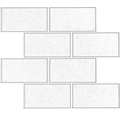
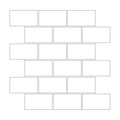
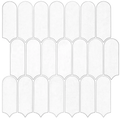
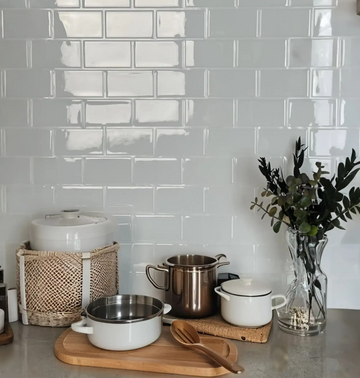
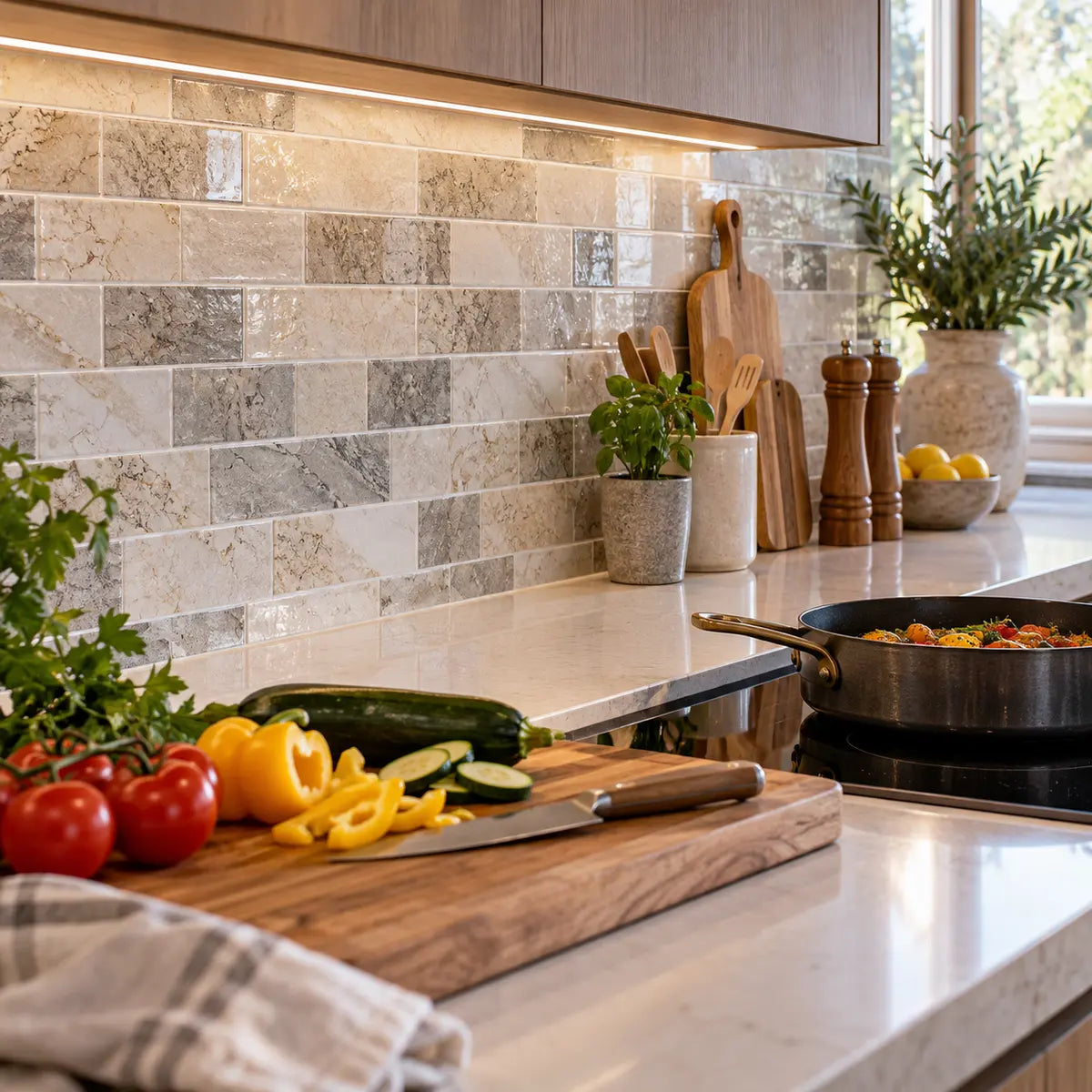
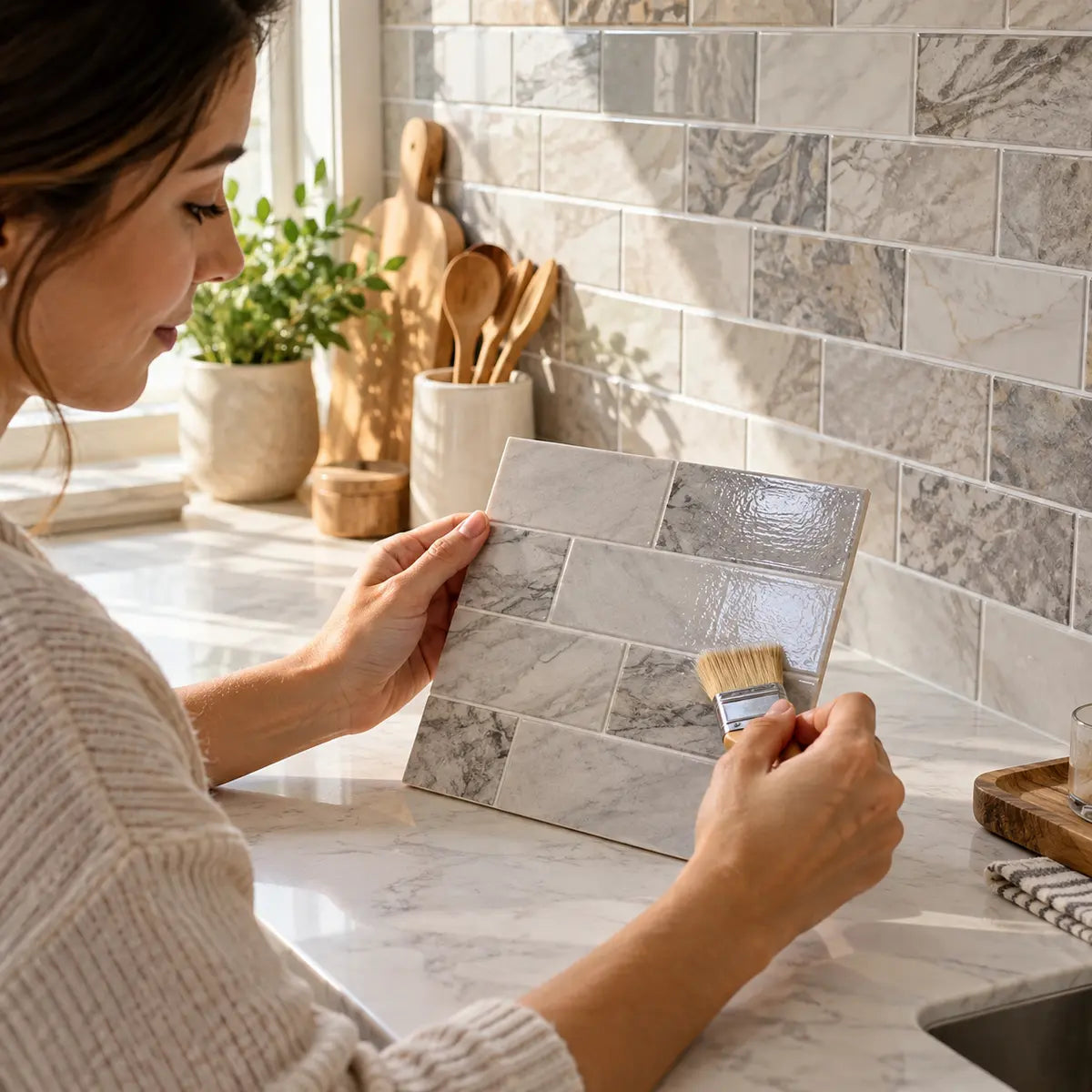
If you’re considering that route, Stickwoll Subway Marble decorative wall tiles are listed as self-adhesive, grout-free wall tiles. Evaluate them for a compatible wall or backsplash application. Their wall listing doesn’t establish countertop, cutting, or direct-food-contact permission.
Keep the existing counter available for its established role while changing the surrounding appearance. That can be a complete refresh rather than an unfinished compromise.
For a counter that needs replacement or resurfacing, compare materials or systems explicitly intended for that use. Review their own heat, care, food-contact, installation, and maintenance conditions; purpose-designed options still have limits.
For example, a hypothetical kitchen refresh could retain the current preparation counter and update a permitted wall section away from excluded heat exposure. Another project could postpone a horizontal covering until the manufacturer answers the sink and cleaning questions. Both routes preserve a clear next step without treating a missing answer as approval.
Consider the whole project cost
Your budget should include preparation, edge details, permitted accessories, possible repairs, and removal. These are planning considerations rather than a price estimate.
The lowest purchase price may be attractive, but the project also needs to work without repeated workarounds. A documented solution with a manageable care routine may offer a better fit than an inexpensive finish used outside its instructions.
Compare options using the same description of your kitchen tasks. Otherwise, one option may look simpler because its unresolved conditions have been left out of the comparison. Ask how each system handles your actual substrate, appliance placement, cleaning routine, and eventual repair or removal. Avoid assuming that a higher price, thicker surface, or different installation method answers those questions by itself.
Before buying Stickwoll for a horizontal application, consult the Stickwoll product-use and care FAQ and request written confirmation for the exact tile, substrate, and expected exposure.
Resolve the question by use case. A backsplash, display ledge, and preparation counter serve different jobs. Choose the product whose documented conditions match the job you need done.


Lämna en kommentar
Denna webbplats är skyddad av hCaptcha och hCaptchas integritetspolicy . Användarvillkor gäller.