



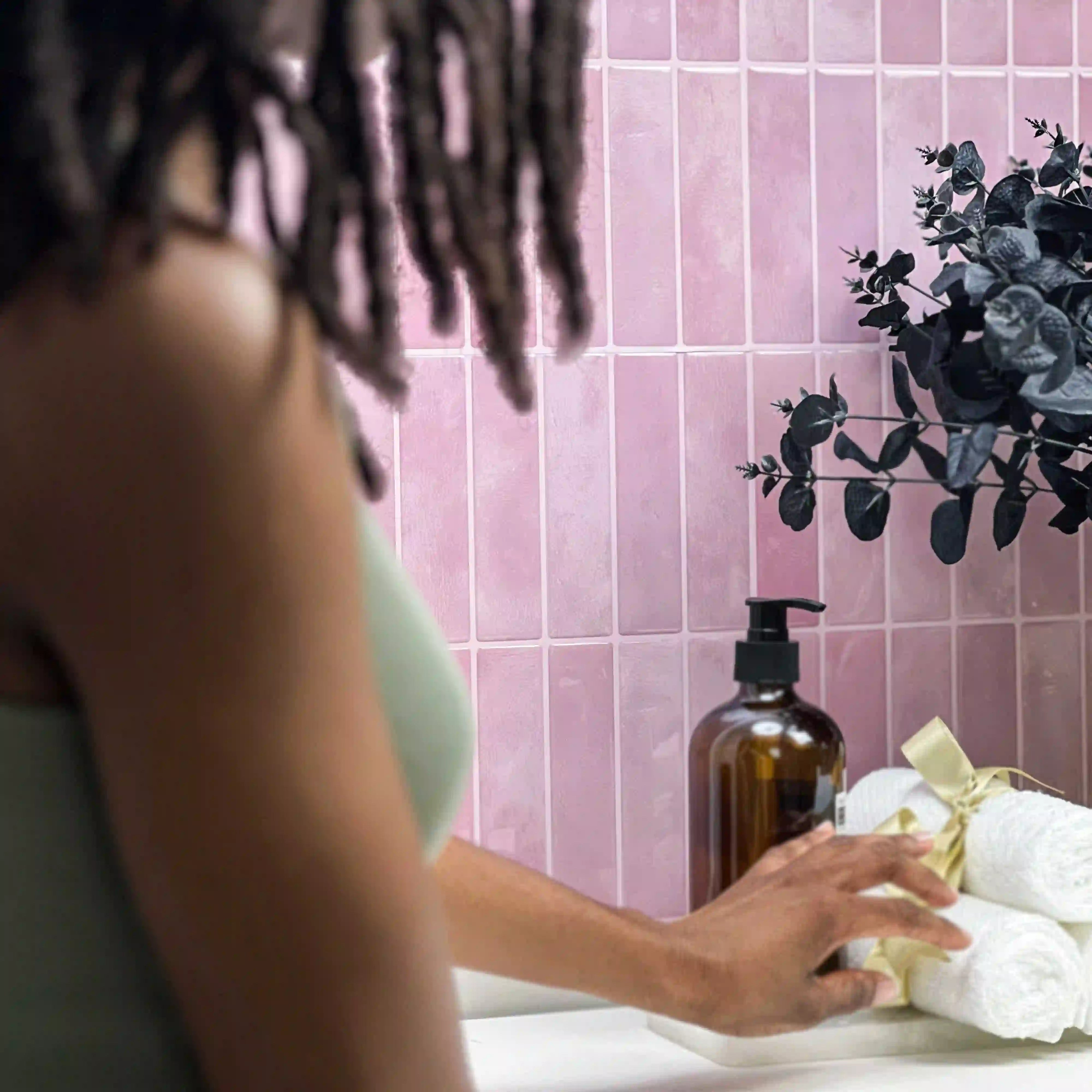





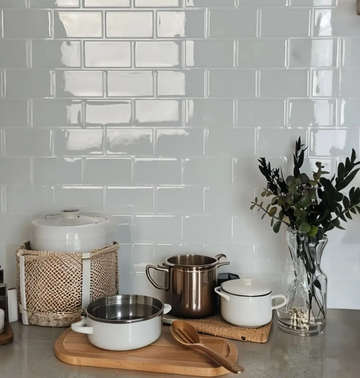
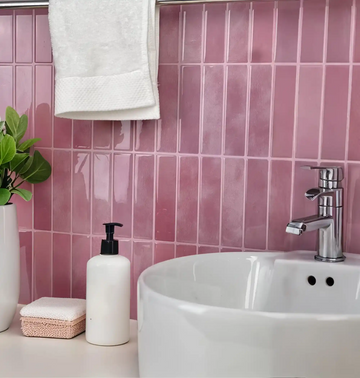
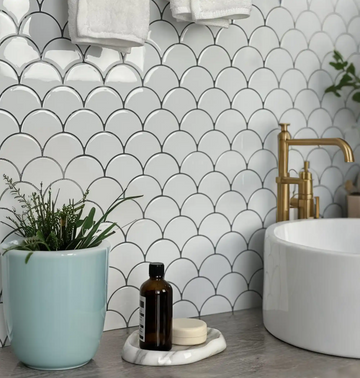
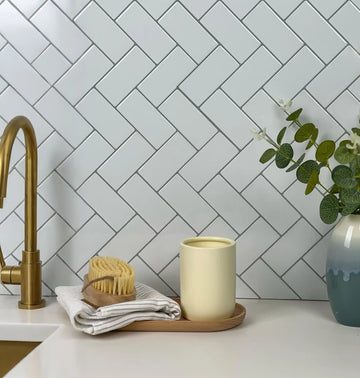
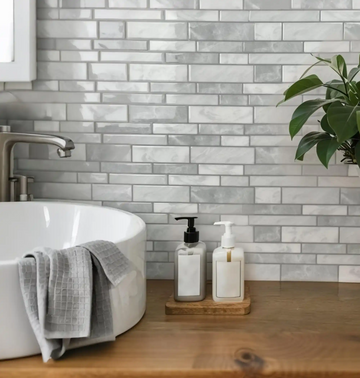
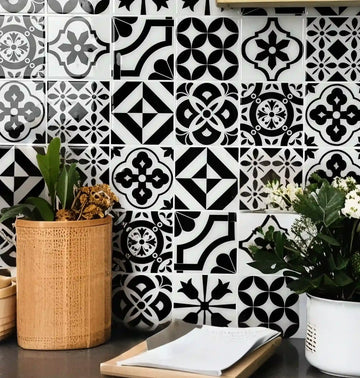
Peel-and-stick tile is best for low-splash bathroom walls, not direct shower spray. Good zones include vanity backsplashes, powder room accent walls, mirror frames, and controlled tub-adjacent walls. Avoid surfaces that stay wet, receive daily spray, or have curved, flexible, or poorly ventilated conditions.
Use this bathroom guide with the Bathroom and Wet-Area Guide to separate realistic design opportunities from risky installations. A bathroom can be a good place for Stickwoll, but only when the wall role, splash level, ventilation, and surface condition all make sense.
Define the Wall by Water Exposure
Do not describe the entire room as bathroom safe or not bathroom safe. Judge the exact wall. A powder room accent wall behaves very differently from the inside of a shower. A vanity backsplash gets occasional drops and cleaning. A shower wall gets repeated direct spray, soap, heat, movement, and water pressure. Those are not the same installation conditions.
| Bathroom zone | Fit level | Planning note |
|---|---|---|
| Powder room accent wall | Strong candidate | Low moisture and strong visual payoff. |
| Vanity backsplash | Good candidate | Seal and clean lower edges carefully. |
| Behind freestanding tub | Conditional | Works only if splash is controlled and ventilation is strong. |
| Inside shower or direct spray wall | Avoid | Daily water, soap, heat, and seams create high risk. |
Use the Low-Splash Test
Stand where water is used and watch the wall for a normal routine. Does water hit the wall directly, or does it only receive occasional droplets? Does the wall dry quickly, or does moisture linger? Is the surface smooth and stable, or is it flexible fiberglass, textured paint, or old patched drywall? For direct-spray scenarios, read the fiberglass shower test before making a decision.
Vanity Wall
Best when the wall is smooth, painted, clean, and outside heavy splash.
Tub-Adjacent Wall
Needs careful judgment because bath routines vary from gentle to splash-heavy.
Rental Bathroom
Check paint condition and removal risk before adding adhesive near moisture.
Ventilation Changes the Decision
A low-splash wall still needs drying time. If a bathroom has poor ventilation, visible condensation, or a door that stays closed after showers, moisture can stress edges and seams. Run the fan, leave space for airflow, and avoid trapping moisture behind products, shelves, or thick decor. If condensation stays on the wall long after use, treat the project as higher risk.
For a deeper look at how surface condition, cleaning, and adhesive behavior fit together, use the Stickwoll science guide as the material background, then return here to judge the exact bathroom wall.
Boundary: water-resistant does not mean waterproof for direct shower use. For the safest plan, use peel-and-stick tile where it can stay decorative, dry quickly, and be cleaned without flooding seams.
Cleaning Should Be Gentle and Edge-Aware
Bathrooms invite strong cleaners, but harsh products and abrasive pads are not the right default. Spray cleaner onto a cloth instead of flooding the wall, wipe seams gently, and watch lower edges after the first few weeks. If an edge begins to lift, solve the moisture or surface issue before pressing it back again.
Final Checklist
- Choose a wall that receives humidity or occasional splash, not daily direct spray.
- Confirm that the wall is smooth, stable, clean, and fully dry.
- Check ventilation and drying time after normal bathroom use.
- Plan gentle cleaning around seams and lower edges.
- Use the bathroom guide for the full wet-area decision path.
Plan the Edges Before Moisture Finds Them
Bathroom edges need more thought than dry-room edges because moisture usually reaches the lower line, side transition, or corner first. A vanity backsplash may need a small, neat transition at the counter. A tub-adjacent wall may need a cleaner stopping point so water is not repeatedly pushed into an exposed seam. Use the peel-and-stick edge finishes guide to compare trim, caulk, and clean cuts before the first tile is placed.
If the bathroom is a rental, combine this moisture check with the renter-safe wall prep guide. Rental paint and bathroom humidity can be a difficult combination when the wall is weak, newly painted, or poorly ventilated.
Know Which Bathroom Questions Need a No
Some searches sound close but have different answers. Peel and stick tile behind a bathroom sink can be reasonable on a smooth, dry, low-splash wall. Peel and stick tile in a shower is a different question because direct spray, soap, heat, and standing moisture add much more stress. Read the steam tile test when humidity is the main concern, and use the shower niche wrap article as a cautionary reference for complex wet geometry.
When in doubt, move the project outward: from shower wall to vanity wall, from tub rim to dry side wall, or from full surround to decorative accent. The design can still look intentional while staying inside safer installation conditions.
Use the Main Tile Guide for Surface Prep
Once the bathroom wall passes the splash test, return to fundamentals: smooth surface, clean wall, dry installation day, and realistic cleaning expectations. The main peel-and-stick tile guide is the better place for broad installation prep, while this article keeps the bathroom-specific water boundary clear.
For vanity backsplashes, mark the faucet reach, soap dispenser area, toothbrush zone, and towel movement before installing. These small routines show where water and cleaning pressure actually happen. A decorative wall that looks dry in photos may still get repeated splash from daily habits.
For powder rooms, the design risk is usually not water but scale. A tiny room can handle a stronger accent wall if the pattern has a clear stopping point and the lighting is flattering. If the room is already busy, choose a quieter tile and let the mirror, hardware, or vanity color carry the extra detail.
Choose a Safer Bathroom Planning Order
For shoppers comparing bathroom peel-and-stick tile ideas, the useful order is exposure first, surface second, style third. Start by deciding whether the wall is dry, low-splash, or direct-spray. Then inspect paint, texture, and ventilation. Only after those checks should color, tile size, and pattern direction decide the look.
This order also helps avoid mixed signals. A beautiful tile cannot make a direct-spray wall a low-splash wall. A smooth, dry vanity wall can support more design freedom because the installation conditions are already more realistic.
That is also the best way to compare advice across the site. Use bathroom-specific articles for water exposure, installation guides for surface prep, and design guides for pattern and color. Keeping those decisions separate makes the final room easier to plan.
Common Questions Before Installing
Can peel-and-stick tile go behind a bathroom sink?
Often yes, if the wall is smooth, stable, fully dry, and only receives occasional splash. Plan a clean lower edge and avoid flooding seams while cleaning.
Can peel-and-stick tile go inside a shower?
Do not treat direct shower spray as the same condition as bathroom humidity. For daily spray, soap, and standing water, use a true wet-area system instead of a decorative peel-and-stick wall treatment.
What is the best bathroom wall for a beginner project?
A powder room accent wall or vanity backsplash is usually better than a tub or shower-adjacent wall. The wall dries faster, receives less water stress, and gives a clear visual upgrade.


Leave a comment
This site is protected by hCaptcha and the hCaptcha Privacy Policy and Terms of Service apply.