








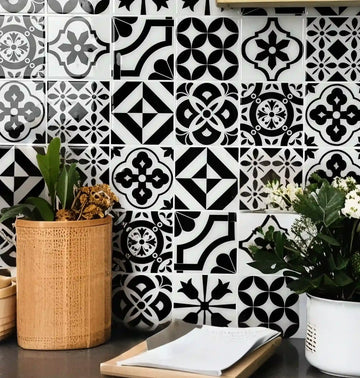
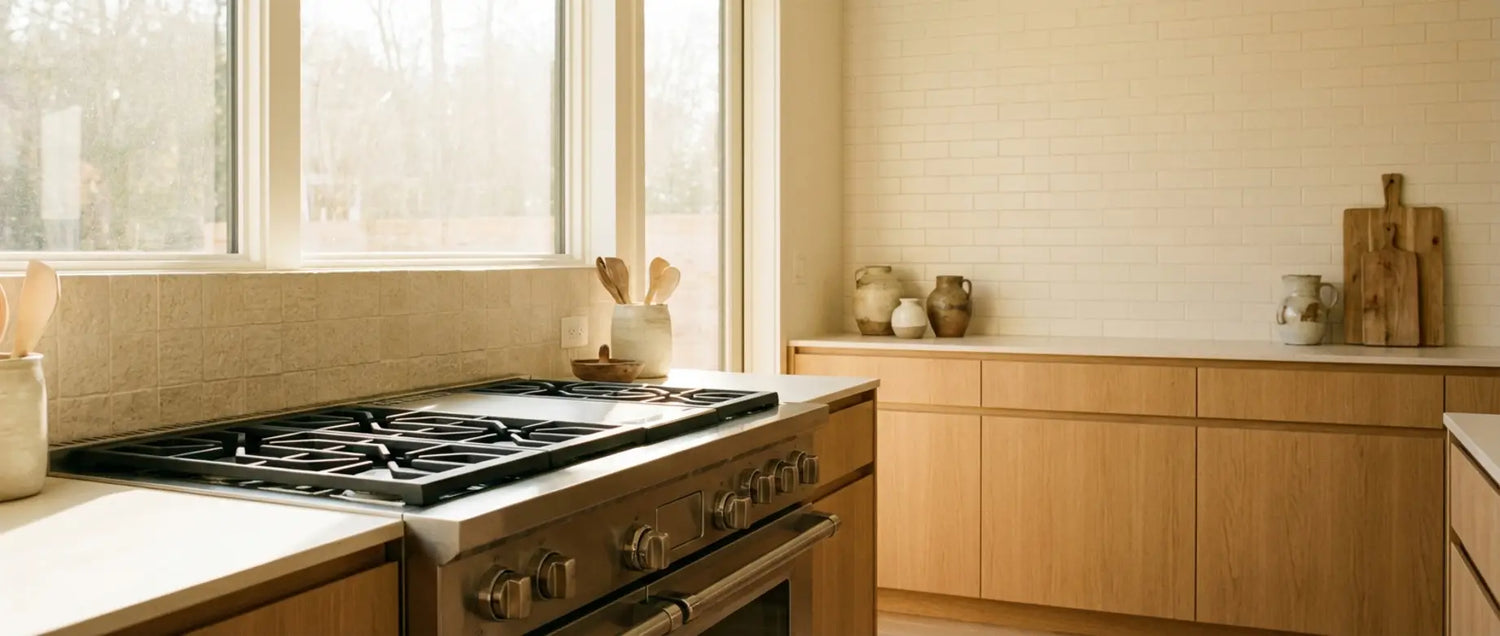
Backsplash Distance Guide Behind Gas Stoves
Navigating the critical safety zones, code compliance, and stylish solutions for your kitchen renovation.
You have picked out the perfect tile, visualized the layout, and are ready to transform your kitchen. But then the questions hit you: Is this safe? How close can the tile be to the open flame? What happens if the inspector fails my renovation?
For many homeowners, the excitement of a kitchen remodel hits a wall when technical safety codes come into play. It is a valid concern—kitchen fires account for a significant portion of home accidents, and heat damage can ruin expensive materials in weeks.
? Direct Answer
The general rule for gas stoves is a minimum of 30 inches between the cooktop and any combustible material above it (like wood cabinets).
- • Horizontal Clearance: Non-combustible materials must extend at least 6 inches beyond the appliance.
- • Vertical Backsplash: Commonly 18 inches from counter to upper cabinets.
- • The Golden Rule: Always prioritize the manufacturer’s installation instructions (MII), as these supersede general code.
In this guide, we will break down the complex web of International Residential Codes (IRC) and manufacturer specifications into clear, actionable advice. We will help you navigate the safety requirements for U.S. and Canadian homes without sacrificing the aesthetic you want.

What is the minimum backsplash distance required behind a gas stove?
The Concern: "I keep seeing different numbers—18 inches, 24 inches, 30 inches. Which one is actually the law for my kitchen?"
The Solution: This section clarifies the hierarchy of rules so you know exactly which measurement applies to your specific stove and wall.
The answer depends on what material you are putting on the wall and what the stove manufacturer says. Generally, if you are installing a non-combustible material (like ceramic tile, metal, or backer board) directly behind the stove, you have much more flexibility than if you have wood cabinetry or drywall.
Understanding the "Combustible Zone"
The International Residential Code (IRC) Section G2409 (in the U.S.) sets the baseline. It defines a "clearance to combustibles." This is the critical "red line" you cannot cross with materials that burn.
- Vertical Clearance to Combustibles: There must be 30 inches of space between the burners and any combustible surface above (like a wood hood or cabinet) unless that surface is protected by a fire-resistant shield, which may reduce it to 24 inches.
- Backsplash Clearance: Most gas ranges are designed with a "zero clearance" back, meaning they can touch the rear wall if that wall is non-combustible or protected. However, the standard distance from the countertop to the bottom of the upper cabinets is 18 inches.
In our experience analyzing failed inspections, the most common error isn't the tile itself—it is the substrate. If you adhere tile to standard drywall directly behind a high-BTU professional range, the heat transfer can still degrade the paper on the drywall. We always recommend using cement backer board behind the stove area.
The "Manufacturer Trumps Code" Rule
Here is the most important rule in construction: The Manufacturer’s Installation Instructions (MII) almost always supersede the general building code.
If the IRC says you need 30 inches, but your high-end professional range manual says you need 36 inches, you must follow the manual. Conversely, if the manual allows for reduced clearance because the unit has an integrated backguard, the inspector will usually defer to the manual (provided you keep a copy on-site during inspection).

Comparison: U.S. vs. Canadian Clearance Standards
While the physics of fire doesn't change across the border, the regulations do. Here is a breakdown of the typical differences between the IRC (used in most US states) and the CSA standards (Canada).
| Feature | U.S. Standard (IRC) | Canadian Standard (CSA B149.1) |
|---|---|---|
| Combustible Top Clearance | 30 inches (standard) | 30 inches (762 mm) |
| Side Clearance | Typically 6 inches to side walls | Typically 6 inches (152 mm) |
| Back Wall Material | Defer to manufacturer; non-combustible recommended | Strict adherence to appliance rating plate |
| Reduction Allowed? | Yes, with approved heat shields | Yes, with certified protection kits |
Richness Layer: The "Invisible Box" Analogy
Imagine an invisible box sitting on top of your stove. This box extends 30 inches up and out to the sides. Nothing flammable—no wood trim, no plastic outlets, no paper towel holders—can enter this box. Your backsplash tile is allowed inside the box only because it (ideally) doesn't burn.
Why does backsplash clearance matter for kitchen safety?
The Concern: "Is this just bureaucratic red tape, or is my house actually going to catch fire if my backsplash is two inches too low?"
The Solution: We explain the hidden physics of heat damage that occurs long before a fire starts, helping you understand the 'why' behind the rules.
Clearance matters because of a chemical process called pyrolysis. It is a common misconception that wood or drywall must touch a flame to catch fire. In reality, heat transfer over time is the silent killer.

The Physics of Pyrolysis
Pyrolysis is the thermal decomposition of materials at elevated temperatures in an inert atmosphere. When the wood studs behind your drywall or the drywall paper itself is repeatedly heated by your gas stove—even if it never gets hot enough to burn today—the chemical structure of the material changes.
Over months and years, the ignition temperature of that material drops. A piece of wood that normally catches fire at 500°F might eventually catch fire at 250°F after years of drying out and chemical degradation.
Data Point: According to the National Fire Protection Association (NFPA), cooking equipment is the leading cause of home fires and fire injuries, accounting for 49% of home fires. A significant portion of these are not grease fires, but "ignition of wall assemblies" or nearby combustibles.
Short Case Study: The "Scorched Quartz" Incident
A client we consulted with, let's call her Sarah, installed a beautiful white quartz slab backsplash directly behind a commercial-style gas range. Quartz is durable, but it is an engineered stone containing resin (plastic).
Within six months, the resin in the quartz directly behind the rear burner turned a sickly yellow-brown from the heat. It wasn't a fire yet, but the material was permanently damaged because the installer didn't realize quartz has a lower heat tolerance than granite or ceramic. She had to replace the entire slab with tile.
If you are unsure about the heat output of your stove, perform the "Hand Test" (carefully). If the wall behind your stove is too hot to touch comfortably after boiling water for 15 minutes, it is too hot for drywall or standard paint. You need a heat shield or a non-combustible surface.
What materials are safest and most stylish behind gas stoves?
The Concern: "I want my kitchen to look modern and sleek, not like an industrial commercial kitchen with metal sheets everywhere."
The Solution: This section highlights materials that satisfy the fire marshal while still looking like they belong in a design magazine.
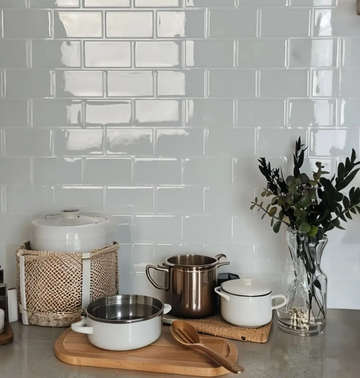
The safest materials are those classified as non-combustible: ceramic tile, porcelain, glass, stainless steel, and natural stone. These materials do not support combustion and protect the wall structure behind them.
Top-Rated Heat Resistant Materials
-
1.
Ceramic and Porcelain Tile: These are fired at thousands of degrees. A gas stove cannot harm them. They are the gold standard for backsplashes.
-
2.
Stainless Steel: Used in restaurants for a reason. It is impervious to heat and easy to clean.
-
3.
Natural Stone (Granite/Marble): excellent heat resistance, though they need sealing to prevent grease stains.
-
4.
Tempered Glass: Must be tempered. Standard glass will crack or shatter under thermal shock.

The Peel and Stick Revolution
A common question we receive is about the viability of peel-and-stick options for DIYers. The answer is: it depends entirely on the product composition. Vinyl stickers will melt. However, newer technology uses gel composites and metal facings designed for heat.
Modern DIY Solutions
For renters or quick renovations, we recommend looking into specialized products. If you've ever thought about revamping your kitchen without breaking the bank, peel and stick backsplashes are the perfect go-to solution! Not only are they incredibly affordable, but they also come with the added advantage of easy installation.
Explore Peel & Stick Ideas 2025For example, Heat-Resistant Peel and Stick Tiles for High-Heat Kitchens utilize materials specifically tested to withstand the radiant heat from standard gas ranges. Unlike cheap vinyl, these provide a legitimate thermal barrier and mimic the look of real ceramic or stone.
Comparison of Backsplash Materials:
| Material | Heat Resistance | Install Difficulty | Cost |
|---|---|---|---|
| Stainless Steel | Extreme | Low (Screw/Glue) | Moderate |
| Ceramic Tile | High | High (Grout/Mortar) | Low-High |
| Quartz | Low/Moderate | High (Heavy) | High |
| High-Grade Peel & Stick | Moderate/High | Low (DIY Friendly) | Low |
Design vs. Safety: Mixing Materials
You don't have to use the same material for the whole kitchen. A popular design trend is using a high-heat material directly behind the range (like a stainless steel panel or a complex mosaic tile) and a simpler material elsewhere.
Recommendation Anchor: If you are unsure where to start with selecting a style that fits this safety criteria, are you looking for an easy way to revamp your kitchen? One of the simplest yet impactful changes you can make is updating your kitchen backsplash tile! But with so many options available, where do you start?
Read the Kitchen Backsplash Tile Guide →Common Misconception: "Fire Resistant" and "Non-Combustible" are not the same thing. Fire-resistant drywall (Type X) slows down fire, but it can still be damaged by heat. Non-combustible materials (like metal or tile) do not burn at all. Always aim for non-combustible directly behind the flame.
How can homeowners ensure code compliance when installing a backsplash?
The Concern: "I'm doing this myself. How do I make sure I don't fail a future inspection or hurt my home's resale value?"
The Solution: We provide a checklist and a "compliance order of operations" to bulletproof your renovation against code violations.
Compliance is about documentation and verification. Before you mix a single batch of mortar or peel a single adhesive backing, you need to verify your specific situation.
The Compliance Verification Checklist
Renovation Safety Checklist
Follow this step-by-step process to ensure your backsplash is safe and legal:
- Locate the Model Number: Find the sticker on your stove (usually inside the door or under the control panel).
- Download the Manual: Search online for the Manufacturer’s Installation Instructions (MII).
- Find the "Clearances" Diagram: Every manual has a drawing showing required distances to side walls and rear walls.
- Measure Your Space: Distance from burner to bottom of upper cabinet; distance from burner to back wall; depth of the upper cabinets.
- Check Local Amendments: Call your local building department. Ask: "Do you follow standard IRC for gas range clearances?"
DIY Installation Guidance
Once you have verified the distances, the installation quality matters. If you are using modern self-adhesive solutions to save money and time, proper application is key to ensuring the heat resistance holds up.
Recommendation Anchor: For those taking the DIY route, proper technique is essential to prevent the adhesive from failing near the heat source. We highly recommend following the steps in our dedicated guide.
Learn how to safely install heat resistant peel and stick tiles behind your stove with this easy DIY guide for renters. Includes safety tips and product suggestions.
Read: How to Install Heat Resistant Peel and Stick Tiles Behind Your StoveWhen to Call a Pro
If your manual calls for a "backguard" or "riser" and you don't have one, you might need to buy a specific part from the stove manufacturer. If you are moving gas lines or changing the wall structure (studs), you absolutely need a licensed professional.
Real-World Example:
A homeowner, "Mark," installed a beautiful wood beadboard backsplash throughout his kitchen, including behind the stove. During a pre-sale home inspection, he was flagged for a major fire hazard. He had to rip out the beadboard behind the stove and replace it with tile before he could sell. A simple check of the code would have saved him $500 and two weekends of work.
What are the most common backsplash installation mistakes near a gas stove?
The Concern: "What are the hidden traps? I want to avoid the mistakes that everyone else makes."
The Solution: We identify the top three installation errors so you can proactively avoid them.
Mistakes usually happen when aesthetics are prioritized over the manufacturer's specs. Here are the pitfalls we see most often.
1. Ignoring the "Island Trim" Warning
Many high-end slide-in ranges come with a short vent at the back called "island trim." As the name implies, this is meant for islands where there is no wall behind the stove. If you push an island-trim stove against a wall, the heat vents directly backward into your backsplash.
- ✓ The Fix: You often need to purchase a 6-inch or 10-inch "backguard" accessory if the stove is against a wall. This deflects heat forward/upward rather than into the tile.
2. Using Standard Drywall as a Substrate
As mentioned earlier, standard drywall paper degrades.
- ✓ The Fix: Use cement board (Durock or HardieBacker) behind the stove. It is waterproof and fireproof.
3. Improper Sealing of Porous Materials
Natural stone or unglazed tile can absorb grease splatter. When grease soaks into the stone, it becomes a fuel source right on your wall.
- ✓ The Fix: Seal natural stone backsplashes immediately upon installation and re-seal annually.
4. Adhesive Failure
Using general-purpose construction adhesive or low-quality stickers near the stove. The heat softens the glue, and your backsplash starts sliding down the wall.
Safe & Stylish: Design Inspiration
Go Green: Explore stylish green tile backsplash ideas with expert design tips, modern inspirations, and color pairings to elevate your kitchen in 2025.
15 Stunning Green Tile Backsplash Ideas →Future Trends: Are you eager to give your kitchen a dazzling makeover? With 2025 just around the corner, the latest trends in kitchen wall decor will inspire you like never before.
Trendy Kitchen Wall Ideas 2025: Peel & Stick Tips →Finishing Touches: Are you itching to give your kitchen a fresh, stylish look without a full renovation? Lucky for you, stylish kitchen wall accents such as peel and stick tiles, molding, and lighting can completely transform your culinary space!
Stylish Kitchen Wall Accents: Peel and Stick Tiles →Frequently Asked Questions
Can I put wood backsplash behind a gas stove?
No. Wood is combustible. Even if you seal it, it remains flammable. The IRC and almost all manufacturers prohibit placing wood directly behind a gas cooktop unless there is a substantial clearance (usually 30 inches or more) or a verified heat shield.
Does a pot filler affect backsplash clearance?
A pot filler itself doesn't change the required clearance for the wall materials. However, because pot fillers are plumbing fixtures, you must ensure the pipe in the wall is insulated and that the hole cut in the backsplash is sealed with high-heat silicone to prevent heat from entering the wall cavity.
Is quartz safe behind a gas range?
Proceed with caution. Engineered quartz is 90-93% stone and 7-10% resin. That resin can scorch or yellow at temperatures as low as 300°F (150°C). Many manufacturers of professional-style gas ranges advise against using quartz backsplashes without a stainless steel backguard to protect the stone.
How do I measure the 30-inch clearance?
Measure from the top of the burner grate (not the counter surface) vertically to the lowest part of the combustible material above (cabinet or wood hood). If you have a microwave or range hood, follow the installation manual for that specific appliance, as they often allow lower mounting heights.
Final Thoughts: Safety is the Ultimate Luxury
A kitchen remodel is a significant investment, and the backsplash is often the jewel of that design. But a beautiful kitchen is useless if it isn't safe. By adhering to the 30-inch rule for combustibles and ensuring you have non-combustible materials extending at least 6 inches horizontally beyond the flame, you protect your home and your family.
Don't guess. Measure your space, read your stove's manual, and choose materials like ceramic, steel, or heat-rated composites that can take the heat.
Quick Check: Do you know your stove's clearance?
Ready to start your project?
Before you buy materials, verify your measurements. For a hassle-free installation experience that combines safety with modern style, we have a visual guide just for you.
Provides a foolproof, visual-rich installation guide with troubleshooting tips tailored for people with no prior tiling experience. Beginner’s Guide to Painting Kitchen Cabinets, Affordable Renter-Friendly Home Upgrades
View Easy Guide: Install Peel & Stick Subway Tiles


Leave a comment
This site is protected by hCaptcha and the hCaptcha Privacy Policy and Terms of Service apply.