

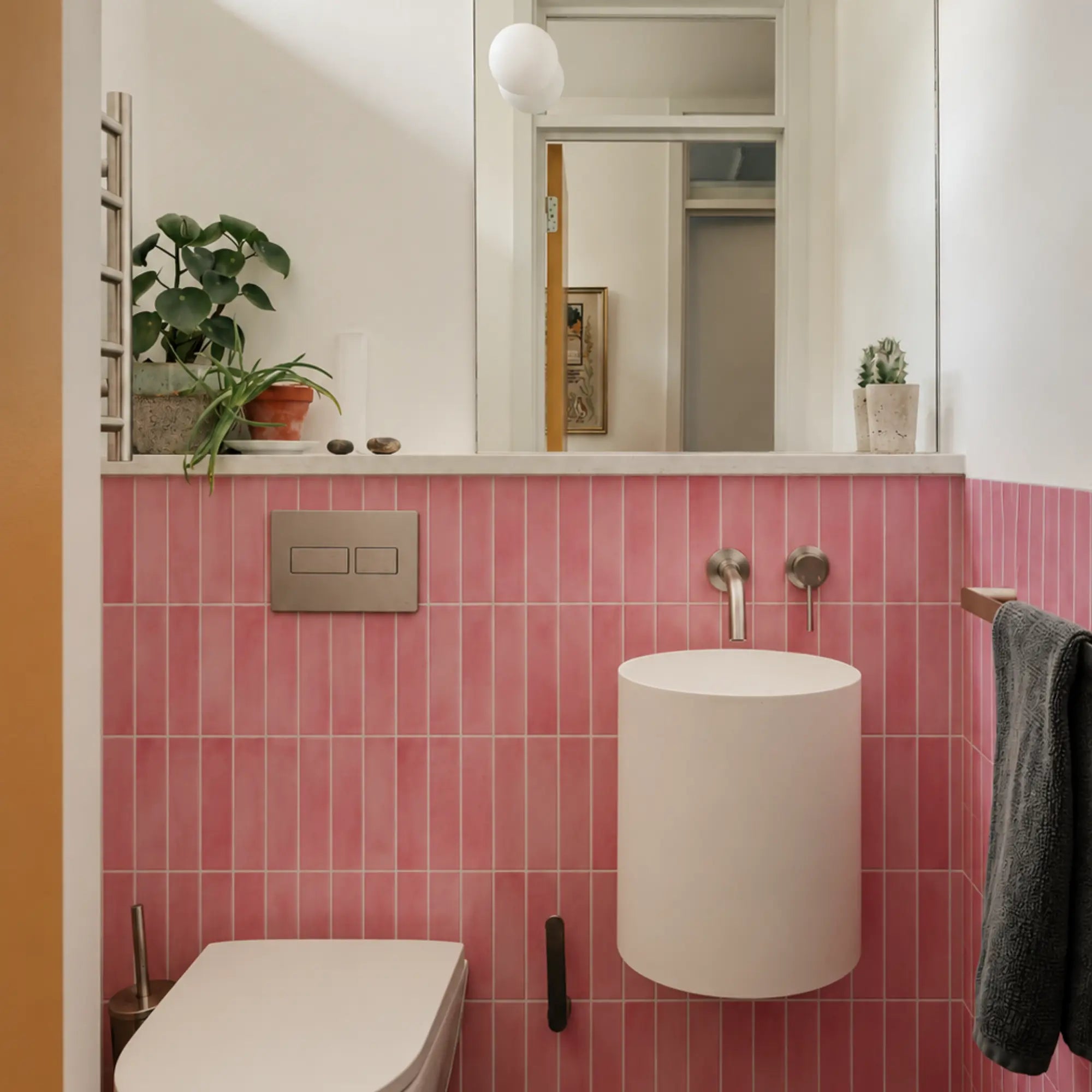



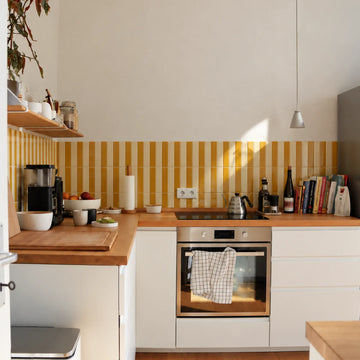
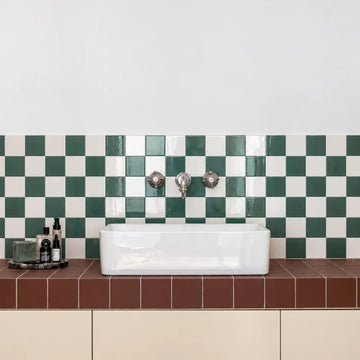
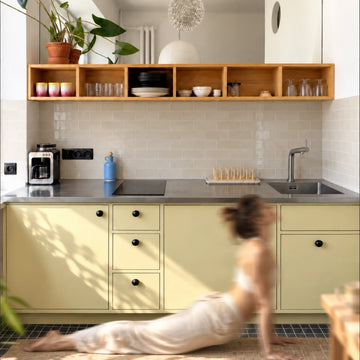
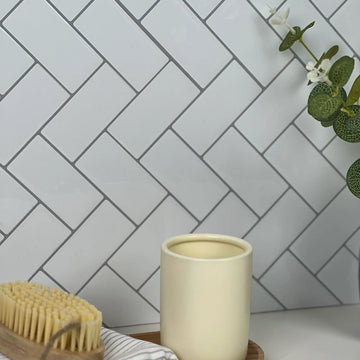
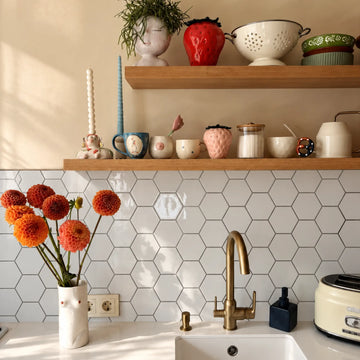
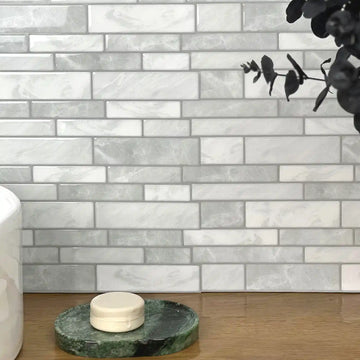
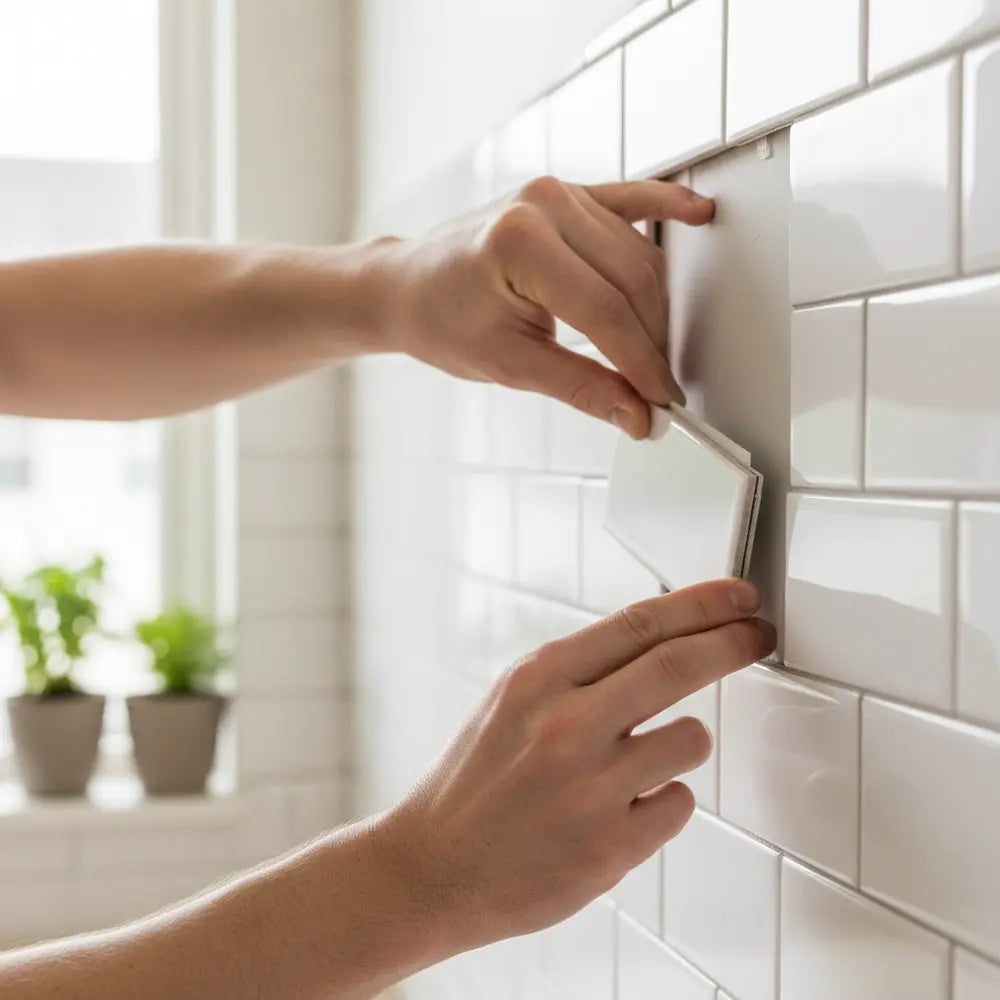
Visualize Your Backsplash Before You Begin
Try our interactive visualizer below to see how different peel and stick subway tile designs can instantly change the look of your kitchen. Select a style to preview it on a sample wall.
Explore this guide
Are you dreaming about updating your kitchen but dread the time, cost, and mess? Discover timeless backsplash designs and expert peel and stick installation tips to make your makeover a breeze.
Ever wish you could give your kitchen backsplash a brand-new look before lunch—and without hiring a contractor? Peel and stick subway tiles can make that happen. They stick like a decal, transform a wall in hours, and don’t require you to mix grout or haul out a tile cutter. For renters or first-time DIYers worried about making a costly mistake, this is one of the most forgiving ways to update a space. If you can peel the backing off a sticker, you’re already halfway there.
In this guide, I’ll walk you through how to install peel and stick subway tiles step by step, with an emphasis on avoiding the common mistakes beginners make. I’ll share measurement templates you can print, illustrate the process with photos, link a video walkthrough, and show you quick fixes if things go wonky. No prior tiling know-how is needed—just patience, a little prep, and the right approach.
Why Peel and Stick Subway Tiles Are Perfect for Beginners
If you're ready for a chic, contemporary kitchen refresh, explore modern peel and stick subway tile styles that blend elegance with affordability.
- No grout or special tools – Traditional tile involves mixing grout, spreading adhesive, and cutting ceramic or porcelain to fit around outlets. A peel and stick backsplash skips all that. The adhesive is pre-applied, the tiles are lightweight (often vinyl), and they trim easily with a utility knife or heavy-duty scissors.
- Budget-friendly and renter-approved – Permanent installations usually mean you’re investing hundreds into a space you might not live in forever. Peel and stick options cost less and, depending on the brand, are removable without damaging the wall. That makes them a smart renter-friendly backsplash.
- Speed and cleanliness – Once your surface is prepped, you can finish many small kitchens or bathrooms in two to four hours. No dust clouds from cutting tile, and no waiting days for materials to cure.
I recently worked with a friend who was hesitant to touch her 1990s beige laminate backsplash. She thought “real” tile was out of her league. Three hours later, using white self-adhesive tiles in a subway pattern, her kitchen looked like a magazine “after.” No one would guess they weren’t ceramic.
Tools & Materials Checklist
If you need versatile ideas beyond kitchens for your next project, check out our ultimate guide to peel and stick tiling solutions.
Even though peel and stick subway tiles are marketed as an “easy install subway tile” solution, a few tools make the job faster and neater. Lay them out before you start so you’re not hunting mid-project.
- Tape measure and pencil
- Ruler or straight edge
- Utility knife or scissors
- Level or laser level
- Mild detergent, sponge, alcohol
- Safety gloves/glasses
- Optional: J-roller, cutting mat
Preparing Your Surface for Installation
Curious about prepping painted walls? Learn the exact steps in our guide to installing stick tiles on painted walls for a flawless finish.
- Remove old backsplash or residue
- Clean thoroughly and allow to dry
- Smooth out imperfections
Step-by-Step: How to Install Peel and Stick Subway Tiles
Looking for kitchen-specific inspiration? See how others have done it in our kitchen upgrade guide and avoid rookie mistakes.
- Plan your layout
- Cut to fit awkward areas
- Peel and stick carefully
- Lock tiles together
- Press for firm adhesion
Troubleshooting Common Installation Issues
- Tiles not sticking properly
- Misalignment corrections
- Fixing bubbles or lifting edges
If you're tackling a bathroom instead, see bathroom peel and stick tile transformations that deliver a spa-worthy look in hours.
Caring for and Maintaining Your New Tiles
- Gentle cleaning
- Avoiding heat and sharp damage
- Replacing a damaged tile
Shop Recommended Tiles for This Project
For a bright, classic finish, try Subway Magic Peel and Stick Tiles—a decorative wall option whose exact water exposure, removal and installation limits should be checked.
For bold contrast, consider Jet Subway Peel and Stick Tiles—sleek, modern, and effortlessly chic.
Conclusion
Installing peel and stick subway tiles is one of the fastest, most accessible DIY kitchen updates you can tackle.
Downloadable Measurement Template Checklist
Before you get started, download our free printable checklist to make sure you have every measurement and tool ready.
Quick DIY Q&A
- Yes, over existing flat tile with grout lines filled
- 5–10 year lifespan
- Water-resistant, avoid direct water
- Removable with mild heat
Check the wall before choosing the subway pattern
Identify the surface that will actually receive the adhesive: painted drywall, existing tile, a repaired area or another approved panel. Check for loose paint, dust, grease, deep texture and moisture staining. Repair unstable or damp wall material before adding a decorative finish.
Use cleaning and preparation methods compatible with the exact wall and tile. Do not automatically sand glossy paint or apply a primer because another brand recommends it. Recently painted walls should meet the paint and tile requirements before installation.
Separate dry, sink and appliance zones
A pantry wall, sink backsplash and range area are different environments. Map splashes, countertop joints, steam and appliance clearances. A waterproof face does not make every seam waterproof, and a general heat-resistant description does not define stove clearance.
Measure usable coverage and draw the layout
Break the backsplash into rectangles around cabinets, windows and returns. Use the product's installed coverage, especially when sheets overlap or interlock. Mark outlet positions and the open ends of the backsplash before ordering.
For example, a ten-foot wall that is eighteen inches high has fifteen square feet of face area. If a chosen pack provides three square feet of usable installed coverage, five packs cover the face arithmetically before any justified allowance for cuts or repair stock. This is an example, not a product specification.
Check the end cuts before starting
Dry-lay enough pieces to see where the first and last cuts fall. A small shift in the starting point can avoid a narrow strip at an exposed end or an awkward printed grout line through an outlet cover.
Dry-fit outlets, corners and cabinet returns
Keep backing on difficult pieces until the fit is confirmed. Use the cutting method specified for the product construction. Flexible film, rigid composite and metal-faced panels may need different tools.
Preserve proper electrical-device access. Do not use decorative tile to hide a box that needs relocation or repair. If the electrical work extends beyond removing and reinstalling a cover as permitted, use qualified help.
Plan inside and outside corners
Decide how the pattern continues around an inside corner and how exposed outside edges will be finished. Use the intended overlap, butt-joint or trim detail rather than improvising a sealant bead to hide a poor cut.
Install from a stable reference line
Place the first piece carefully and verify the pattern before extending the field. Use the application pressure and tool specified by the manufacturer. Pressure can improve contact, but it cannot make an incompatible wall suitable and should not stretch or crush the decorative face.
Check seams and edges as you work. If a piece repeatedly lifts or will not lie flat, stop and diagnose the surface, cut or product compatibility rather than adding undocumented adhesive.
Finish with cleaning, inspection and a repair record
Use the approved cleaner and tool for the finish. Control moisture around seams and stop if color transfers, the face softens or an edge begins to lift. Keep the product label, spare pieces and care instructions.
Where future removal matters, keep the wall's starting photographs and permission. Removable does not guarantee damage-free removal on every paint. Follow the specified removal method and allow for possible cleaning, patching or repainting.
Inspect the completed wall in raking light and from normal viewing distance. Photograph outlets, corners, sink edges and exposed ends so future changes can be compared with the original installation.
Compare complete products before checkout
Peel-and-stick subway designs can use different face materials, thicknesses, adhesives and seam systems. Compare accepted substrates, room restrictions, cutting tools, cleaning and removal instructions for the exact products you are considering.
Save the current product documentation with your order. If a product is described as waterproof, heat resistant or renter friendly, ask what part of the construction and what location the claim covers rather than extending it to every wall.
Inspect delivered packs before cutting
Compare color, print direction, dimensions, edge condition and any lot or batch information. Dry-lay pieces from different packs where variation matters. Keep return-eligible material unopened until the first representative layout is approved.
Troubleshoot common symptoms by cause
If a piece lifts, inspect the wall layer, preparation and exposure before adding stronger adhesive. Paint attached to the removed backing points to a different problem from adhesive that never made full contact with the wall.
If seams drift, check whether the reference line, sheet overlap or pattern registration is causing the error. Correct the layout early rather than trimming every later piece to compensate.
If a cleaner dulls or softens the finish, stop using it and consult the care instructions. Photograph the change before trying another product so the evidence is not erased.
Cover existing tile only when the new product permits it
An existing ceramic backsplash may look like an easy base, but first check for loose tiles, cracked grout, silicone residue, uneven joints and contamination. A new adhesive covering does not repair an unstable old installation. Where the product allows installation over existing tile, follow its preparation and flatness requirements.
Deep grout lines or raised decorative edges can telegraph through thin material. Use only a leveling method compatible with both systems and let repairs reach their required condition before applying the new finish.
Handle painted walls by coating condition
Paint that is sound, clean and compatible can be a suitable substrate for some products, while chalking, peeling or recently repaired paint may need attention first. Do not assume every freshly painted wall is ready after the same number of days. Use the paint manufacturer's cure guidance together with the tile instructions.
A glossy appearance alone does not prove the surface must be sanded. Some pressure-sensitive adhesives perform best on smooth surfaces. Preparation should be based on the exact coating and product, not on a universal rule.
Keep the subway pattern straight over a long run
A small alignment error can become obvious several sheets later. Check the reference line periodically rather than using the previous sheet as the only guide. For staggered subway patterns, verify the printed or physical offset before cutting around outlets.
If the product has faux grout lines, look at the repeat from several feet away. A seam can align mechanically while the printed pattern still creates an obvious interruption. Dry-lay several pieces together to understand the repeat before installation.
Plan outlet and switch details before cutting
Turn electrical work over to a qualified person when the project requires more than safe cover removal and replacement allowed in your situation. Decorative tile should not hide damaged boxes, loose devices or unsafe wiring.
Template the opening so the device cover conceals the cut without preventing proper mounting. Do not rely on oversized cover plates to hide a poorly planned layout. Keep screws, device edges and service access clear of adhesive buildup.
Apply pressure as an installation step, not a performance test
Pressure-sensitive adhesive needs good contact with a compatible surface, but application pressure is only one variable. Use the roller, hand pressure or smoothing tool specified for the tile. Do not invent a target force from another adhesive product or assume more force always creates a stronger long-term bond.
Protect embossed, gel or metallic faces while pressing. A flat-looking panel that has been crushed or stretched is not a successful installation.
Detail the lower edge around a sink carefully
Observe where splashes reach the wall and how the countertop joint is finished. The backsplash face may be wipeable while the lower joint and substrate remain vulnerable to water. Repair failed counter caulk or active moisture before installing the decorative finish.
Use only the seam or sealant detail accepted by the selected system. More sealant is not automatically better, and a decorative wall covering is not a substitute for a wet-area waterproofing assembly.
Check appliance clearance with the actual manuals
Cooktops, ranges and countertop appliances can expose the wall to different temperatures and service movements. Use the appliance installation instructions and the wall product limits together. A general heat-resistant description or surface-burning classification does not independently determine placement.
Keep filters, access panels and removable parts serviceable. When an appliance changes, recheck the backsplash zone instead of assuming the previous installation remains suitable.
Plan removal and wall restoration from the beginning
Where reversibility matters, photograph the wall before installation and keep the removal instructions. A sample can reveal an obvious paint problem, but it cannot guarantee the same result after months or years. Adhesive dwell time, paint condition and removal method can change the outcome.
Budget for possible cleaning, patching or repainting rather than tying the project to a damage-free promise or security-deposit guarantee.
Keep a simple handoff record
Save the product name, batch or lot information, installation date, wall preparation, layout photographs, care instructions and spare material. If a local repair occurs later, record the cause and method.
A good project record makes future cleaning, replacement or removal easier without claiming that the installation will remain unchanged forever.
Understand the construction behind the subway look
A subway pattern can be printed on a thin film, formed into a gel-faced sheet, embossed into foam, built into a rigid composite panel or produced with a metal face. These products can look similar in an online photograph while requiring different cutting, pressure, seam and care methods.
Read the construction and instructions before choosing tools. A utility knife demonstrated on one flexible sheet may not be suitable for a rigid or metal-faced product. Likewise, a sheet that overlaps at the edge should not be installed with the same seam assumption as a panel intended to butt together.
Keep material description separate from appearance. A ceramic-look surface is not automatically ceramic, and a metallic print is not a metal heat shield. Performance decisions should follow the real construction.
Organize the work so mistakes stay reversible
Complete repairs and cleaning first. Mark the layout and dry-fit the difficult cuts second. Open only the material needed for the first representative section, then confirm the visual result before committing the rest of the wall. This sequence reduces the chance that a layout issue becomes a wall-wide correction.
Keep tools and release liners organized so adhesive faces do not pick up dust or countertop debris. Do not peel several pieces at once simply to speed the project. A controlled sequence is usually more useful than a claimed three-hour installation target.
Check progress at regular intervals
After a few pieces, step back and compare the pattern with the reference line, cabinets and countertop. Check seams with raking light. Catching a small drift early is easier than trimming the final row to compensate for accumulated error.
Build a quantity calculation from the actual layout
Measure each wall run separately, convert dimensions consistently and use the product's usable installed coverage. Subtract large openings only when the layout truly avoids material there. Count small outlet cuts as part of the wall area unless the product coverage calculation specifically accounts for them.
Suppose an eligible wall has 18 square feet of face area and a selected pack provides 3.6 square feet of usable coverage. Five packs equal 18 square feet exactly before cuts, pattern matching or repair stock. If the layout includes several outside corners and directional repeats, additional material may be justified. The example is arithmetic, not a universal waste allowance.
Keep unopened packs within the seller's return policy until enough material has been dry-laid to confirm color and pattern. When lot or batch information exists, compare it before mixing packs across a visible wall.
Choose the cleaning routine before the first spill
Record the approved cleaner and tool for the exact decorative face. A kitchen wall can collect grease, coffee, sauce and ordinary dust; those residues do not justify using the strongest degreaser available. Start with the permitted method and control liquid around seams and lower edges.
If the surface becomes cloudy, tacky, discolored or soft, stop the cleaner and document what was used. If an edge lifts during cleaning, inspect the wall and exposure rather than assuming the cleaner alone caused the problem.
Do not use steam equipment or abrasive pads unless the product explicitly allows them. Cleaning convenience is part of product selection, especially for textured subway effects with deeper recesses.
Plan a local repair without hiding the cause
When a piece is damaged, photograph the area before removal and note whether the problem came from impact, cleaning, wall movement, moisture or loss of adhesion. Save removed material when it can help identify which layer failed.
Use matching spare material where possible and follow the product's repair or replacement instructions. Do not add a stronger adhesive merely because a replacement corner lifts; the underlying paint, moisture or surface preparation may still be the cause.
Record the repair date and any change in preparation. A repaired backsplash can remain serviceable, but the project record should not later describe it as completely unchanged.
Example: plan one small kitchen before sticking anything
Imagine an eight-foot backsplash with one sink, three outlets and an open end beside a refrigerator. The owner first confirms which wall sections are eligible, checks the range or nearby appliance requirements and inspects the painted wall. Next, the owner places several subway-pattern sheets on the counter to understand the stagger and seam repeat.
A centered start creates a very narrow final strip at the refrigerator edge, so the reference line moves slightly. Outlet templates are prepared while the release liners remain on. The sink edge is checked against the product's moisture and seam instructions. Only then does installation begin.
After the first few pieces, the owner steps back to check alignment and adjusts one seam before the error grows. The finished wall is photographed, spare pieces are labeled and the care guide is stored with kitchen records. This example illustrates planning logic, not a promise that every kitchen uses the same sequence or product.
Do a final quality check before normal use
Inspect the finished wall in normal room light and with a raking light from the side. Look for trapped debris, stretched pieces, misaligned faux grout lines, raised corners and gaps at exposed ends. Check that outlet covers and removable trim sit correctly without pinching or hiding required service access.
Compare the completed work with the product instructions rather than with a social-media photo. If the system specifies a period before cleaning or other exposure, follow that requirement. Do not invent a universal waiting period simply because another adhesive product uses one.
Record anything that changed during installation
Note any wall repair, substituted product, different cleaner or piece that had to be repositioned. Those details help explain a later problem and make local repairs easier. Keep the original packaging or product identifier with the remaining spare pieces.
If a seam, edge or wall condition is already questionable at handover, resolve it before declaring the project complete. A backsplash that starts with a known defect is harder to diagnose after ordinary kitchen use begins.
Resolve the small details that make a wall look finished
Plan how the backsplash stops at cabinet ends, window trim and open wall edges. A technically straight installation can still look unfinished when the final piece leaves an exposed backing, a narrow sliver or an abrupt printed grout line. Decide whether the product uses a factory edge, compatible trim or another approved finish before the last row is installed.
Check corner transitions from normal standing positions, not only from a few inches away. Small pattern shifts that are invisible during cutting can become obvious once the countertop is cleared and the under-cabinet lights are on. If a return wall is included, dry-fit both planes together so one attractive wall does not force a poor cut on the other.
Also confirm that removable cabinet panels, appliance brackets and service trim remain accessible. Decorative work should finish around those elements rather than trapping them behind adhesive.
Store spare material so a future repair is possible
Keep a few labeled spare pieces in the storage conditions recommended for the product, with backing liners intact where applicable. Note the batch or lot and the pattern direction. A spare that has curled, become contaminated or lost its identity may not be useful later.
If a future repair uses a different production run, compare color and sheen before placing it in the middle of a highly visible wall. A planned repair reserve supports maintenance without implying that replacement will always be visually invisible.
Sources and scope
- 3M — Surface Preparation for VHB Tape Applications — Pressure-sensitive adhesive preparation principles; not Stickwoll specifications.
- US EPA — Mold, Moisture and Your Home — Moisture-source control; not tile certification.


Leave a comment
This site is protected by hCaptcha and the hCaptcha Privacy Policy and Terms of Service apply.