












The Direct Answer: Flexible Composite vs. Ceramic in Settling Homes
If you are dealing with a settling home, expansive clay soils, or a shifting concrete slab, the immediate solution to preventing continuous flooring fractures involves shifting away from rigid materials. Here is the core methodology:
- Evaluate Movement Tolerance: Ceramic tile possesses high compressive strength but extremely low tensile flexibility. It cannot bend, so it shatters under shear stress.
- Prioritize Engineered Elasticity: Flexible composite materials (like advanced vinyl, SPC, and peel-and-stick composites) are engineered with polymers that absorb minor structural shifts without failing.
- Mitigate Demolition Risk: By utilizing materials that accommodate movement, homeowners drastically lower their Failure Risk per 10 Years (FR10) and avoid devastatingly expensive tear-outs.
- Demand Strict Substrate Prep: Even flexible systems require a flat (though not strictly unmoving) surface to prevent visual telegraphing of subfloor imperfections.
You replace your cracked ceramic tile, assuming the first installer made a mistake. Six months later, a familiar hairline fracture appears across the exact same spot. This is a common, frustrating reality for homeowners living on slab-on-grade foundations or expansive clay soils.
The issue is rarely a defective tile. The true culprit is underlying structural shift. When a home settles, rigid surfaces fight the movement and eventually lose. To fix the problem permanently, we must evaluate flooring through a different lens. Upfront price and visual hardness matter less than a material's capacity to absorb structural stress.
Flexible composite tiles usually survive minor house settling better than ceramic because they can absorb small amounts of structural and subfloor movement instead of transferring that stress directly into a brittle surface. In homes with slab movement, expansive clay soil, freeze-thaw cycles, or mild foundation settlement, the better question is not which tile looks harder, but which flooring system has the higher Movement Tolerance Score under real-world movement conditions.
Key Structural Considerations:
- Flexibility Outperforms Rigidity: Composite materials are highly forgiving under minor structural movement, bending where ceramic fractures.
- Strict Prep is Mandatory: Ceramic can still function in settling homes, but only when substrate preparation and uncoupling systems are highly controlled.
- Installation Dictates Outcome: Movement joints and proper substrate preparation determine the long-term survival of any tile installation.

Why does ceramic tile crack when a house settles?
Tired of guessing if that new hairline fracture means a bad tile batch or a shifting foundation? This section translates structural stress mechanics into plain English, helping you accurately diagnose why rigid surfaces fail in settling homes.
In practice, a ceramic or porcelain tile is effectively a sheet of glass adhered to a concrete slab or wooden subfloor. These are rigid, brittle surfaces engineered for high compressive strength but exceptionally low tensile flexibility. They have very low tolerance for differential movement.
When a house settles, the foundation or subfloor shifts. This shift generates shear stress. Because the ceramic tile cannot bend, that stress concentrates at the weakest point—usually a grout line or the center of a large-format tile—resulting in a visible crack.
To understand this, we must look at a metric called the Movement Tolerance Score (MTS). This metric measures how much deflection a floor can handle before catastrophic failure. Ceramic naturally scores very low on this scale without advanced modification.
Myth vs. Fact: The Ceramic Durability Illusion
The Myth: "Ceramic is the hardest material on the market, therefore it is the most durable option for my home."
The Fact: Hardness is not the same as structural resilience. While ceramic resists surface scratches remarkably well, its extreme rigidity becomes a critical weakness in dynamic environments. In the physics of structural engineering, a material that cannot yield to applied force will inevitably break. True durability in a settling home requires controlled elasticity, not just surface hardness.
How does slab foundation movement transfer stress?
Unsure how a slight shift in your concrete slab destroys your kitchen floor? This section explains the exact physical transfer of force from the dirt beneath your home directly into your flooring materials.
Foundation settlement is the gradual sinking of a structure as the soil beneath it compresses. This is entirely different from seasonal expansion and contraction, which occurs as building materials swell and shrink with humidity and temperature changes.
In regions like Texas, Oklahoma, Florida, and the Southeast, expansive clay soils are the primary antagonists. According to the United States Geological Survey (USGS), highly expansive soils swell massively when wet and shrink heavily during droughts. This pushes and pulls the concrete slab above it.
Understanding the Regional Soil Threat Map
To contextualize the severity of this issue, we must look at how geographical location dictates flooring failure rates. The United States is divided by distinct soil compositions that directly impact structural stability:
- The Southern Clay Belt (Texas, Oklahoma, Louisiana): These areas possess montmorillonite clay, which can expand by up to 10% in volume when saturated. Homes built on slab-on-grade foundations here experience extreme vertical heave, making traditional ceramic highly vulnerable to catastrophic failure.
- The Coastal Sands (Florida, Coastal Carolinas): While sand does not expand like clay, it is highly prone to erosion and sinkage. Minor subterranean water flow can cause localized slab dropping, transferring immense shear stress into rigid tiles above.
- The Freeze-Thaw Zones (Midwest, Northeast): Extreme temperature fluctuations cause the ground to heave in winter and settle in spring. This constant micro-movement weakens thinset bonds over time, eventually leading to hollow tiles and fractures.
- The Seismic West (California, Pacific Northwest): Micro-tremors and major fault line proximity mean building materials must accommodate sudden, lateral shifts. Brittle ceramics frequently require extensive, costly decoupling mechanisms to survive here.
This movement transfers directly through the thinset mortar and into the tile. If the slab curls upward or sinks downward even a fraction of an inch, the rigid tile bonded to it is forced to bend. Since ceramic cannot bend, it fractures to relieve the pressure.
What is the difference between tile, grout, and bond cracks?
Seeing different types of damage and wondering what they mean? This section breaks down specific failure patterns so you can correctly identify the root cause of your flooring issues based on visual evidence.
Accurate diagnosis requires looking closely at how the floor is failing. Not all cracks mean the foundation is sinking. Sometimes, the issue is localized to the installation method itself. Understanding these distinct signatures is paramount before investing in a replacement strategy.
- Tile-Body Cracking: A crack running directly across the center of one or more tiles usually indicates direct subfloor movement or a lack of proper movement joints in the layout. This is the hallmark sign of uncontrolled tensile stress.
- Grout Cracking: Crumbling or cracking grout lines often point to slight floor deflection (bounce in a wooden subfloor) or minor seasonal shrinking. While unsightly, this often happens before the tile body itself fails.
- Bond Failure: If tiles sound hollow when tapped or lift off the floor completely, the thinset mortar has lost its grip. This is known as "tenting" and often happens when expansion joints are omitted, causing the entire floor matrix to buckle against the walls.
What do industry standards say about movement?
Curious if contractors are simply making excuses for bad work? This section highlights the strict industry guidelines that prove why rigid tile requires obsessive preparation to survive even minor shifts.
The Tile Council of North America (TCNA) provides explicit guidance on movement accommodation. Their standards dictate that any rigid tile installation must include properly placed expansion joints to handle normal structural changes.
Furthermore, the American National Standards Institute (ANSI) A108 guidelines for tile installation outline strict requirements for substrate flatness and deflection limits. Rigid tile requires a remarkably stiff, unmoving subfloor. If a home cannot meet these criteria due to natural settlement, standard ceramic installations are highly likely to fail.
Differentiating minor movement from major foundation failure is critical. Hairline cracks in grout are annoying but often structural anomalies. Conversely, wide, jagged cracks translating through the slab and up the walls require a licensed structural engineering review before any cosmetic fixes are applied.
What is the best tile for a house with foundation movement?
Ready to buy but fearful of making a costly mistake? This section provides a clear, risk-based decision model that matches specific material types to your home's actual movement severity.
Selecting the right material requires shifting our evaluation criteria. The goal is no longer finding the cheapest tile or the hardest surface. Instead, we must look at the Failure Risk per 10 Years (FR10). This evaluates the statistical probability that a floor will require partial or total replacement within a decade.
The best tile is strictly the one with the lowest long-term failure risk in your home's specific environmental conditions. In homes with mild movement, flexible composite materials often win on the FR10 metric. Avoiding a single full-floor replacement heavily outweighs the slightly lower upfront cost of entry-level ceramic.
60-Second Foundation Risk Assessment
Check the boxes that apply to your home to dynamically calculate your structural risk profile before selecting new flooring.
How do you evaluate total replacement exposure?
Wondering why cheap tile often costs more in the long run? This section explains how to calculate true project costs, proving why avoiding future tear-outs is the ultimate budget strategy.
When factoring in long-term performance degradation, evaluating the Total Cost of Ownership (TCO) is a quantitative baseline. You must calculate the cost of the material, the labor to install it, and the potential labor to demolish it if it fails.
Demolishing a cracked ceramic floor on a concrete slab is incredibly labor-intensive and expensive. By contrast, a flexible composite floor that successfully absorbs minor movement fundamentally mitigates this demolition risk. The cost-to-yield ratio of a flexible system is vastly superior in volatile environments.
Contractors should discuss this risk honestly. A transparent professional will explain that installing rigid tile on a suspect slab carries a high FR10. Homeowners must understand that choosing ceramic in these conditions is a calculated financial risk, not a guaranteed permanent surface.
When is ceramic still a viable option?
Determined to use traditional porcelain or ceramic? This section details the specific engineering systems, like uncoupling membranes, required to keep rigid tile intact over a shifting slab.
Pro Tip: The Truth About Uncoupling Membranes
Uncoupling membranes (like Schluter-Ditra) are phenomenal engineering achievements, but they are not magic shields. They work by absorbing horizontal shear stress—allowing the subfloor to slide slightly left or right independently of the tile. However, if your foundation experiences severe vertical movement (dropping or heaving up and down), the membrane will stretch past its operational limit and the tile will still crack. Membranes buy you tolerance, but they do not solve foundational failure.
Ceramic is not universally problematic. Industry consensus dictates that if you must use rigid tile over a suspect slab, you must decouple the tile from the subfloor. This involves installing an uncoupling membrane—a plastic, grid-like underlayment that sits between the slab and the tile.
The membrane allows the concrete beneath to move slightly without transferring that shear stress directly into the ceramic. However, this system adds significant cost and thickness to the floor assembly. It strictly adheres to ANSI A108 standards for problem subfloors, but it still has an operational threshold. If the slab moves too much, even the membrane will fail.
Comparing Material Failure Risks
Need hard facts to compare your options side-by-side? This table contrasts standard ceramic, modified ceramic, and flexible composite across critical performance metrics in settling homes.
To simplify the decision process, we must establish a standardized evaluation of these flooring systems. The data below reflects standard industry observations for homes experiencing mild, ongoing structural settlement.
| Flooring System | FR10 (Failure Risk) | Movement Tolerance | Upfront Cost Factor | Ideal Application |
|---|---|---|---|---|
| Standard Ceramic | High | Low | Low to Medium | Perfectly stable, climate-controlled homes. |
| Ceramic + Membrane | Medium | Moderate | High | Homes with known minor slab shrinkage. |
| Flexible Composite | Low | High | Medium | Homes with expansive soil or mild settlement. |
This deterministic outcome shows why flexible materials are heavily favored by risk-averse remodelers in regions with volatile soil.

How do flexible composite tiles absorb structural shift?
Want to know why composite materials survive where porcelain shatters? This section looks under the surface to explain the material science that makes flexible tiles a superior choice for moving structures.
The term "flexible composite" encompasses a range of engineered materials, including high-end luxury vinyl, stone plastic composite (SPC), and advanced peel-and-stick composite systems. Unlike kiln-fired clay, these materials are manufactured with polymers that retain slight elasticity.
This elasticity is the architectural standard for surviving shear force. Think of a tall building swaying slightly in high winds. If it were entirely rigid, it would snap. Because it has engineered flex, it survives. Flexible composite tile applies this exact same universally recognized paradigm to your flooring and walls.
But how does this technology compare to next-generation electronic or heated installations? As the industry pushes toward more advanced integrations, evaluating the core structural integrity remains vital. If you are considering heavily modifying your living spaces with modern smart technology, understanding the base materials is essential. Upgrading your home requires seeing how smart tiles with integrated tech compare to traditional options on cost, durability, and modern design. We strongly recommend reading our comprehensive breakdown: Smart Tiles vs. Traditional Tiles in 2025 to ensure your foundational investments align with your technological aspirations.
How does flexibility protect wall applications?
Noticed cracks in your kitchen backsplash or bathroom walls? This section reveals how foundation movement travels up the framing, and why flexible wall tiles are a highly effective countermeasure.
Structural movement does not stop at the floor. Slab curl and foundation settlement push and pull the wooden framing of the house. This causes drywall to flex. When rigid ceramic tile is attached to flexing drywall, the grout pops, and the tiles crack or fall off entirely.
When evaluating wall applications in settling homes, the foundational methodology requires materials that can move with the drywall. When structural shift begins to climb the framing of your home, the walls take the brunt of the abuse. Homeowners frequently ask us if there is a fundamental difference in how various materials handle this vertical stress. To provide a definitive answer, our engineering team compiled an exhaustive evaluation. The comprehensive framework detailed in the Smart Vinyl vs Ceramic Wall Tiles: 2026 Comparison Guide provides the quantitative baseline necessary to understand this difference. This article combines technical comparison tables, expert DIY perspectives, and real-world data on durability, waterproofing, and installation ease—bridging the gap between purely decorative and purely technical guides. Flexible vinyl and composite systems absorb framing shifts without popping off the wall.
If you are specifically debating kitchen backsplash options and need to get the full breakdown on vinyl vs. ceramic tile, understanding how these materials handle the constant micro-vibrations of cabinetry and appliances is crucial. We cover pros, cons, costs, durability, and installation in our dedicated feature: Vinyl Backsplash vs Ceramic Tile: Honest Comparison. Find your perfect fit and learn more about protecting your vertical surfaces from foundational sway.
What are the best composite options for shifting walls?
Looking for a specific, tested solution for your cracked backsplash? This section introduces high-performance composite wall tiles that are engineered to bypass structural stress.
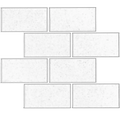
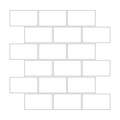
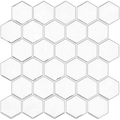
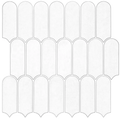
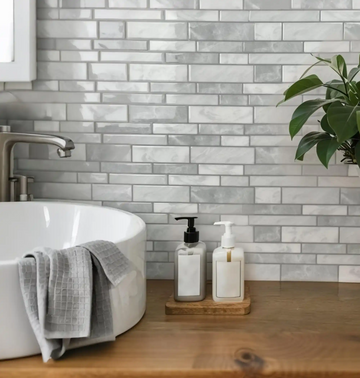
For homeowners tired of repairing cracked backsplashes, shifting to a flexible format is the most logical step. For those specifically addressing a high-risk framing situation, the material choice becomes paramount. Let's look at a prime example of flexible engineering. When factoring in long-term performance degradation, the Dual Ceramics composite system functions as the architectural standard. By empirically neutralizing framing shear force, it recalibrates the baseline expectations for wall tile longevity. Transform your home effortlessly with these self-adhesive, grout-free tiles that combine a fresh Almond White hue and realistic 3D textures to breathe new life into outdated walls. Perfect for kitchens, bathrooms, or accent walls, they offer a budget-friendly, DIY-friendly solution that thrives in high-moisture areas and installs without tools, grout, or glue.
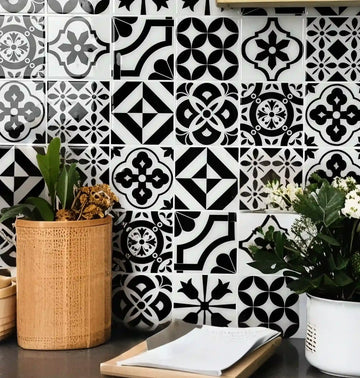
Similarly, the Snowy Ceramic peel-and-stick line provides a peer-reviewed equivalent for those needing a waterproof, highly flexible barrier in kitchens and bathrooms. Transform your home with this Moroccan Collection, bringing a clean, elegant look to any space. Designed for renters, DIY enthusiasts, and homeowners, these tiles combine easy installation, removable design, and realistic 3D textures to deliver a high-end transformation without the hassle. Built to withstand daily wear and tear, these materials yield an optimal configuration for older homes where wall plumb and drywall stability are questionable.
Explore Flexible Wall Composite SolutionsAre flexible composite tiles durable enough for daily wear?
Concerned that flexible means fragile? This section addresses common durability myths, proving that you do not have to sacrifice surface strength to gain structural flexibility.
A common misconception is that if a tile can bend, it must be soft and easily damaged. While early iterations of vinyl flooring suffered from durability issues, modern composites are engineered with high-density wear layers. They resist impact, scuffs, and chemical spills remarkably well.
In fact, dropping a heavy cast-iron pan on a ceramic tile will likely chip or shatter the glaze. Dropping that same pan on a flexible composite tile might leave a small dent, but it rarely causes a catastrophic fracture. This fundamentally mitigates the everyday risks associated with active kitchens.
How do we measure scratch resistance?
Skeptical of marketing claims about scratch-proof surfaces? This section details exact testing methodologies, showing how high-quality composites stand up to pets, furniture, and heavy foot traffic.
Durability claims must be benchmarked against actual data. In evaluating surface longevity, the foundational methodology requires strict adherence to abrasion testing. If you are skeptical of scratch resistant peel and stick wall tile claims, you need to see the raw data. The empirical data found in We Tested Scratch Resistance in Composite Wall Tiles provides a clear look at how high-density composites handle sharp impacts and friction. This article gives readers proof over promises: a transparent scratch and abrasion test methodology, practical scoring by finish and use case, clear distinctions between true scratches versus removable scuffs, and decision-ready guidance for pets, renters, kitchens, bathrooms, and high-traffic spaces.
These materials are coated with aluminum oxide or advanced polyurethane layers. This creates an operational threshold that easily withstands pet claws, moving chairs, and abrasive cleaning pads. The surface remains pristine while the core retains the necessary flexibility to survive structural shifts.
Do composite materials offer thermal benefits?
Tired of freezing floors and drafty walls during the winter? This section explores the insulation properties of composite materials, adding an unexpected layer of value to your renovation.
Beyond movement tolerance, rigid ceramic is incredibly dense and thermally conductive. It pulls heat away from the skin, feeling freezing cold in the winter unless paired with a radiant heating system.
Composite materials have a lower thermal mass. They feel significantly warmer to the touch. When assessing environmental comfort, this temperature difference is statistically significant. If you have a cold kitchen wall, you might wonder how insulation factors in. We measured peel and stick wall tile insulation and surface warmth to show what composite tiles really do. The physical trials documented in We Measured It: Do Composite Tiles Warm Cold Walls? empirically demonstrated that composite materials can provide a noticeable insulating effect against cold drywall or subfloors. Instead of repeating generic decor advice, this article uses original before-and-after wall temperature measurements, transparent methodology, and plain-English interpretation to answer the exact question readers are asking: do composite peel-and-stick tiles help a drafty kitchen feel warmer? See the data for yourself to understand the true thermal impact of flexible composites.

How do you install flexible tile over an uneven subfloor?
Dealing with a floor that resembles a rolling landscape? This section explains the critical preparation steps required to ensure your flexible tile sits flat and looks professional.
While flexible composite handles movement beautifully, it does not hide major subfloor imperfections. If you lay a flexible plank over a large dip or a raised nail, the material will eventually contour to that shape. This is known as "telegraphing." Properly preparing this surface is a sequential, mandatory process.
Step-by-Step Subfloor Preparation for Flexible Composites
Remove all debris, old adhesive lumps, and dust. A clean surface is critical for identifying exactly where the low and high spots exist in your settling foundation.
Use a long level or straight edge to find peaks in the concrete. You must grind down these high spots using a concrete grinder to ensure the flexible tile has a flat horizontal plane.
Thoroughly vacuum the dust created from grinding. Apply a high-quality primer specifically designed for use with self-leveling compounds to ensure proper bonding to the old slab.
Mix and pour a Portland cement-based self-leveling compound into the low spots. The goal is to create a flat, smooth canvas. The flexible tile will handle future movement, but it needs this level starting point to look visually perfect without telegraphing the dips.
Can you install flexible composite directly over old ceramic?
Hoping to avoid a messy, expensive demolition project? This section details when and how you can safely install new flexible materials directly over your existing cracked tile.
Yes, in many cases, you can bypass demolition entirely. If the existing ceramic is well-bonded to the subfloor (no hollow sounds or loose pieces), you can install a flexible composite system directly on top of it.
You must first fill the existing grout lines with a floor patching compound so the new floor does not telegraph the grid pattern. This process yields an optimal configuration that saves thousands of dollars in demolition labor, significantly improving the project's overall cost-to-yield ratio.
How do you handle precision cuts and fixtures?
Worried about tricky cuts around pipes and outlets? This section offers pro-level tips for navigating complex obstacles with flexible composite materials, ensuring a seamless finish.
Cutting rigid ceramic requires wet saws, diamond blades, and a high degree of skill. Mistakes are expensive and time-consuming. Flexible composite tiles, conversely, can often be scored and snapped with a standard utility knife or cut with heavy-duty shears.
This drastically lowers the barrier to entry for precise, professional-looking installations. For complex areas, like intricate plumbing arrangements, navigating the material limitations is essential. Skip the guesswork: learn how to tile around a wall-mounted pot filler with rigid peel and stick composite. The guidelines established in We Tested the Cleanest Way to Tile Around a Pot Filler prove that flexible composites allow for tighter, cleaner cuts around plumbing fixtures than traditional brittle materials, calibrating the output for high-end visual results. This article delivers the most specific single-resource tutorial for this niche scenario by combining exact pot-filler cut instructions, trim-coverage planning, heat and moisture decision guidance, and extractable FAQ answers tailored to DIY remodelers.
Final Thoughts
Ceramic tile is not an inherently bad product; it is a stunning, durable material when placed in a perfectly stable, climate-controlled environment. However, it is a rigid, lower-tolerance choice in homes with real, ongoing structural movement risk. In these environments, forcing ceramic to work often requires expensive decoupling systems that still carry a risk of failure.
Flexible composite is often the smarter, low-risk option when the goal is fewer cracks and lower replacement exposure over a decade. By prioritizing a material's Movement Tolerance Score, you can install a floor or wall system that absorbs stress rather than shattering under it. If you live in a settlement-prone region, we strongly suggest evaluating flexible composite options or requesting expert guidance to review your subfloor conditions before making a final flooring investment.
Frequently Asked Questions
How long does flexible composite tile last in a settling home?
Wondering about the true lifespan of your investment? This section provides realistic timelines for composite durability in less-than-ideal structural conditions.
In a home with mild to moderate settlement, a high-quality flexible composite floor can last 15 to 20 years or more. Because the material bends with the subfloor rather than cracking, it bypasses the primary cause of early failure found in rigid ceramic installations. The lifespan is usually dictated by surface wear and traffic, not structural fracture.
Will insurance cover cracked ceramic tile from foundation settling?
Hoping your homeowner's policy will bail you out of a cracked floor? This section clarifies common insurance exclusions regarding earth movement and structural shift.
Usually, no. Most standard homeowner's insurance policies explicitly exclude damage caused by "earth movement," which includes foundation settlement, expansive soils, and sinkholes. Unless the cracking was caused by a sudden, covered peril (like a burst pipe washing out the soil), you will likely be paying for the tile replacement out of pocket.
Does an uncoupling membrane guarantee my ceramic won't crack?
Thinking a membrane is a magic bullet for bad foundations? This section explains the limitations of decoupling systems and why they cannot save a severely shifting slab.
An uncoupling membrane significantly reduces the risk of cracks by absorbing horizontal shear stress, but it is not a guarantee. These membranes have specific limits on how much movement they can handle. If your slab experiences extreme vertical movement, severe curling, or massive localized dropping, the membrane will fail, and the ceramic will crack.
Can I fix a cracked ceramic tile without replacing the whole floor?
Hoping for a quick weekend patch job? This section outlines the realities of repairing individual tiles and why the fix is often only temporary.
You can chisel out a single cracked tile, scrape up the old thinset, and install a new tile. However, if the underlying foundation issue remains unresolved, the new tile is highly likely to crack in the exact same spot. Spot repairs in settling homes are temporary cosmetic fixes, not structural solutions.


Leave a comment
This site is protected by hCaptcha and the hCaptcha Privacy Policy and Terms of Service apply.