





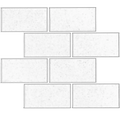
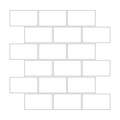



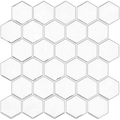
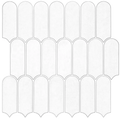
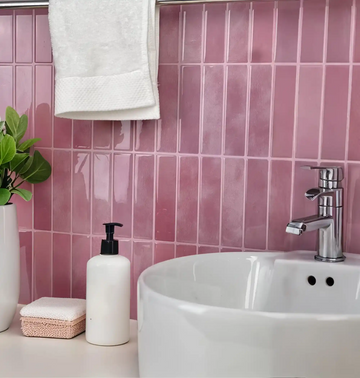
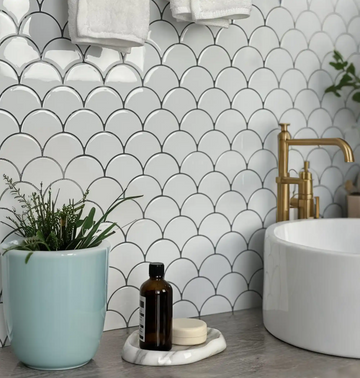
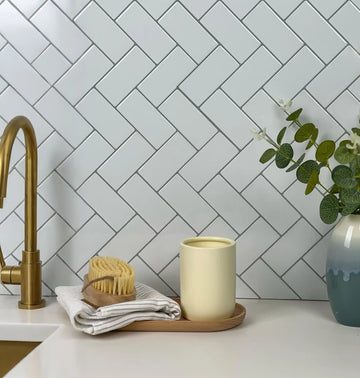
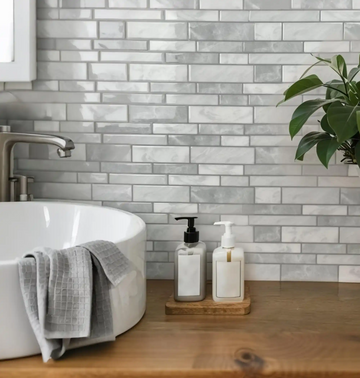
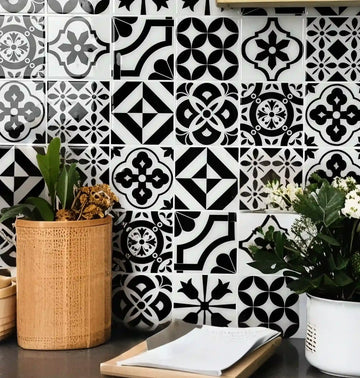
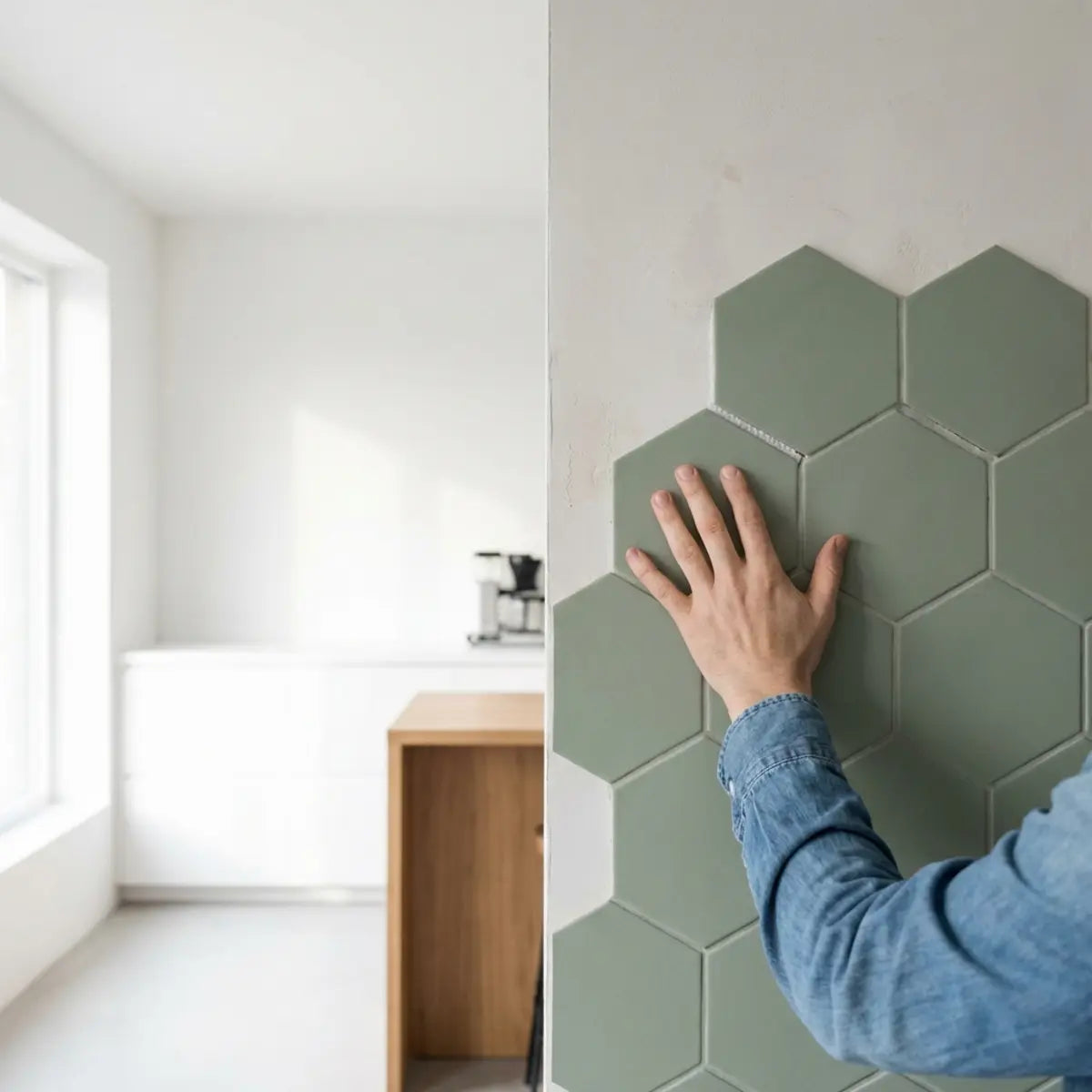
Choose self-adhesive vinyl or composite wall tile when the exact product suits the surface, exposure and scope of a relatively lightweight decorative project. Choose a properly specified ceramic-tile assembly when its appearance, use and more permanent installation fit the renovation. Compare complete systems rather than assuming vinyl is always removable, ceramic is always waterproof or either material wins every cost and durability question.
Explore this guide
The phrase smart vinyl is a descriptive marketing term here, not a standardized material class or a claim that the wall connects to an app. Products sold as peel-and-stick can have different faces, cores and adhesives. Ceramic products also vary in construction and intended use. A fair comparison begins with actual candidate products and the wall they will cover.
This guide explains the differences that affect preparation, installation, care, repair and total project effort. It does not report a Stickwoll-versus-ceramic laboratory trial, a simulated-years steam test or an assumed service life. Numerical examples are explicitly hypothetical planning exercises rather than product prices or measured performance.
Define the products before comparing them
Self-adhesive wall tiles arrive with a prepared attachment layer and a finished decorative face. Depending on the product, that face may be flexible, raised, rigid, printed, coated or laminated. Do not infer a particular PVC, PET, polyurethane or metal construction from the name alone. Ask for the actual product description and instructions.
Ceramic tile is a fired product category with its own variations, including different bodies, glazes and intended applications. The visible tile is only one component of the installation. Mortar or another accepted adhesive, substrate preparation, joints and any waterproofing layer also need to suit the project.
Porcelain is not simply another word for any white or glossy tile. TCNA's porcelain certification information uses water absorption of 0.5% or less under ASTM C373 as the defining criterion. That material classification does not establish that an entire shower wall is waterproof or that every porcelain product suits every load and location.
Keep formats comparable. A small decorative adhesive sheet and a large ceramic slab can produce different patterns, edge details and installation demands. Comparing their box prices alone may obscure that they are solving different design problems.
| Comparison item | Self-adhesive wall product | Ceramic wall assembly |
|---|---|---|
| Identity | Confirm face, backing, format and supplied adhesive. | Confirm tile type, finish and intended use. |
| Attachment | Factory backing used under its specified conditions. | Appropriate setting material and substrate combination. |
| Joints | Product-specific overlap, interlock, butt joint or gap. | Specified grout and movement-joint details. |
| Wet exposure | Requires explicit acceptance for the complete application. | Requires an appropriate complete wet-area assembly. |
| Removal | May be possible by a specified method, with repair risk. | Usually treated as a more permanent installation, with removal scope assessed. |
Start with the room and the reason for renovating
Write down the main objective: a temporary style update, a durable wet-area renovation, a particular handcrafted appearance or a project coordinated with new cabinetry and plumbing. The objective influences which system is sensible before color or pattern enters the comparison.
A tenant may have permission for only a limited decorative change, while a homeowner may be planning a complete wall reconstruction. Those projects have different constraints. A self-adhesive finish is not automatically allowed in a rental, and a ceramic installation is not automatically excessive for a long-term renovation.
Map actual exposure. A dry dining-room wall, kitchen splash area, direct shower enclosure and location beside a cooking appliance need different assessment. Do not use one word such as waterproof or kitchen to approve every part of the room.
Include maintenance and access. A finish behind equipment may need to be inspected or removed for future work. A new backsplash that will shortly be disturbed by plumbing changes may be poorly timed regardless of material. Coordinate the covering with the work that happens behind it.
Make a list of non-negotiable requirements before comparing attractive samples. Excluded uses should not be offset by a low price or a preferred pattern. Among suitable options, appearance and installation preferences can then guide the decision.

Assess the substrate as part of both systems
Neither material makes a weak wall strong by being placed over it. Inspect loose coatings, damaged wallboard, moisture history, flatness and previous repairs. The supporting construction must be suitable for the chosen finish and its attachment system.
A self-adhesive product can require a particular smooth, stable coating, while a ceramic system can require a different substrate or preparation. Do not assume ceramic always needs one board type or that adhesive tile needs only a quick degreasing wipe. Follow the exact assembly instructions.
Existing ceramic can sometimes be covered by an accepted product, but inspect the old installation first. Loose pieces, deep recesses and water damage need their own decisions. Primer does not automatically fill grout lines, and a new face does not repair a failed bond behind the old tile.
When old paint, backing or adhesive is unknown, assess potential hazards before sanding, grinding or scraping. EPA's lead-safe renovation guidance is relevant to possible lead-paint disturbance in US homes. Other materials and jurisdictions may require different precautions; the finish choice does not remove that responsibility.
Keep preparation costs in the comparison. One product may be convenient on the existing sound surface while another requires a different base. That is a project-specific difference, not proof that one material family is always cheaper to install.
Compare installation tasks rather than promises of speed
For an eligible self-adhesive wall product, the work often includes checking the surface, conditioning material, measuring, dry-fitting, cutting, placing and applying the specified pressure. Finishing the perimeter and following return-to-use instructions are still part of the job.
A ceramic installation can include substrate work, layout, cutting, setting material, grout and movement-joint details, followed by the required curing and cleanup. The exact tasks depend on the system. Do not assume every ceramic project requires a wet saw, the same mortar or the same number of days.
Separate active work from elapsed time. A person might spend only a few hours placing material while repairs, paint or setting products need additional time before the next stage. A dry attachment method does not automatically mean immediate exposure to every kind of cleaning, water or heat.
Compare the skills you actually have with the difficult details in the room. A straight open wall differs from a wall containing several outlets, narrow returns and irregular cabinet edges. A small area can require more careful fitting than a larger uninterrupted feature.
Do not quantify the difference as an unsupported percentage of labor or friction removed. A useful estimate lists the tasks, tools and waiting periods for the actual project. It can then be checked against product instructions or a contractor's quotation.

Choose tools for the construction, not the product category name
Some flexible adhesive products can be cut with a knife or scissors as directed; other rigid or metal-faced formats need different methods. A ceramic tile's size and shape also influence the appropriate cutting tool. Use the method supported for the actual product rather than copying a demonstration with a different material.
Set up a protected work area and practice an allowed cut on a spare piece where appropriate. Keep hands away from the cutting path and follow tool instructions. Do not cut directly against a wall or appliance, especially where wiring or plumbing could be present.
Pressure tools for adhesive products should match the face and instructions. A heavy roller suitable for flooring should not automatically be used on a raised wall panel. More pressure cannot compensate for an ineligible substrate, just as more setting material is not a cure for every wall defect in a ceramic project.
Electrical fittings, fixtures and load-bearing attachments remain separate work. A decorative tile should not support shelving, conceal a damaged outlet or change how a device mounts without suitable advice. Include professional help where the project requires it.
Keep the toolkit realistic. An inexpensive finish is not an inexpensive project if it requires tools or preparation you have not included. Conversely, owning a tool does not make every task safe or appropriate to undertake without training.
Water resistance belongs to the complete assembly
A tile face that resists water does not establish how the wall handles water at seams, corners, penetrations or the substrate. This applies to both adhesive products and ceramic installations. A product's material property and a complete wet-area design are different kinds of evidence.
Schluter explains that tile and grout alone are not a waterproof shower system. This is not a criticism of ceramic; it is a reminder that a properly designed assembly includes the layers and details that perform the waterproofing function. A decorative adhesive face should be judged with the same attention to its full intended use.
Do not assume unsealed grout inevitably causes mold or structural damage. Nor should you assume a printed polymer face prevents all moisture from reaching the wall. The actual system, condition and exposure determine what needs inspection or repair.
For a kitchen sink area, confirm the product's permitted splash exposure and compatible lower-edge detail. For a shower or another direct-water location, use a system explicitly intended and accepted for that application. An attractive small sample or an improvised bead of sealant cannot grant approval.
Keep a record of any recurring dampness before covering the wall. If the cause is unresolved, postpone either finish. A new ceramic or adhesive surface should not conceal the evidence needed to investigate a leak or condensation problem.
Heat and appliance clearances need their own documentation
Neither a ceramic-looking print nor a glossy glaze determines what can be installed near a cooking appliance. The appliance's instructions and the actual wall assembly matter. Do not prescribe one eight-inch or nine-inch clearance for every product and machine.
A decorative adhesive product should not be treated as a heat shield. A real ceramic face also does not automatically make every supporting layer suitable for heat exposure. Where a protective assembly is needed, have it specified appropriately rather than adding a finish and assuming the problem is solved.
Direct steam, hot exhaust and radiant heat are different exposures. A manufacturer's temperature figure or general kitchen description may not address all of them. Ask about the exact location and appliance model rather than transferring another brand's limit.
No brief home steam demonstration can be converted into years of service. A claim that sixty minutes of steam simulates a long kitchen lifetime would need a validated relationship and actual test records. This guide makes no such claim for either material.
For a coffee corner, consult the steam-exposure planning guide and the machine's operating instructions. Layout and moisture management should be resolved before selecting the decorative finish.

Compare durability by the property that matters
Scratch resistance, impact behavior, staining, attachment and cleanability are different properties. A hard ceramic face can still chip under a particular impact, while a flexible decorative face can be marked or punctured. Do not reduce these differences to the claim that ceramic always shatters or vinyl always absorbs force harmlessly.
Ask for product-specific information that matches the intended use. A test on one coating or tile body does not automatically apply to every pattern or construction sold under the same broad material label. Check the sample, method and conditions before comparing figures.
Separate face damage from attachment failure. A tile that looks unchanged may still have a problem at its supporting layer. Conversely, a scratch does not establish that the wall bond has failed. Record the actual symptom and identify the relevant part of the assembly.
For a home project, a permitted sample can help assess handling, appearance and obvious contact or care issues. It cannot demonstrate a population-wide success rate or a fixed lifetime. Do not turn a small observation into a guarantee for a whole brand.
Think about consequences as well as resistance. A visible damage spot may be easier or harder to repair depending on spare material, pattern, joints and access. Keep product and batch information so a future repair is based on an identifiable construction.
Maintenance is more specific than grout versus no grout
A ceramic installation may use different grout chemistries and treatments. Do not assume every grout is porous in the same way or requires resealing every year. MAPEI states that sealing Ultracolor Plus FA and Max is not required, although it may improve maintenance in some applications. That example is specific to those products, not a rule for every joint.
An adhesive product with molded or printed grout lines may simplify some cleaning details, but its actual sheet edges and face still have care requirements. Do not scrub those decorative lines as though they were cement grout or add a grout sealer without approval.
Use a cleaner accepted for everything it will touch, including tile, joint, trim and countertop. Follow dilution, contact and residue-removal instructions. A preparation cleaner used on the bare wall may be inappropriate on the finished surface.
Distinguish visibility of a mark from ease of removal. A matte, glossy or patterned surface can show dirt differently without being more or less hygienic. Compare the allowed routine and your practical ability to maintain it, not a claim that one material always wipes clean instantly.
If a surface changes after cleaning, stop and record the product and dry appearance. Do not keep increasing chemical strength or abrasion. The grease-cleaning guide and black-grout care guide address different constructions and should not be treated as interchangeable instructions.
Understand removal, local repair and future access
Self-adhesive does not mean guaranteed reversible. The wall coating, product, time in place and removal method can all affect what happens. A permitted warming or peeling method should not be translated into one universal duration or angle, and a sample does not guarantee the future condition of the whole wall.
Ceramic is generally planned as a more permanent finish, but its removal and repair scope still depend on the actual assembly. Do not assume every small change requires rebuilding an entire room or that every individual damaged tile can be replaced invisibly. Ask an installer to assess access, supporting layers and matching material.
Keep spare pieces appropriate to the layout and product advice. Record batches, finishes and installation details. A future product with the same name may not be identical, and a new piece can look different beside an aged surface.
Consider maintenance access before installation. If plumbing, electrical or appliance work will soon disturb the wall, coordinate that work first. A finish that is perfectly suitable in isolation may be poorly timed for the renovation sequence.
For a rental, permission and restoration expectations should be written down independently of the product's removal guidance. Neither material choice can guarantee the financial outcome of a property inspection. Use the renter planning guide to keep those decisions visible.

Compare cost using equivalent scopes
Start with the same area, intended exposure and finish objective. List surface investigation, preparation, materials, cutting, trim, professional labor, cleanup and any return-to-use waiting. A quote for installing tile on a prepared wall is not comparable with one that includes repairing the substrate and changing fixtures.
For a hypothetical comparison, Option A might have 180 currency units of finish material, 60 of supplies and 120 of preparation, for a direct total of 360. Option B might have 220 of tile, 140 of setting and joint materials and 500 of quoted preparation and labor, for 860. These are invented planning inputs, not market prices or a claim about Stickwoll versus ceramic.
The example shows how to make the categories visible. Add any actual professional work, delivery, tool rental or restoration that applies, and avoid counting a cost twice. Do not convert the difference into a return on investment without a defensible benefit estimate.
Consider how long you intend to keep the finish, but do not fill missing lifetime data with an assumed five or fifty years. A short tenancy and a long-term remodel may reasonably prioritize different kinds of disruption and repair. The decision can be sensible without a precise lifetime cost prediction.
Do not assume DIY labor has no value simply because it is unpaid. Your available time, skill and tolerance for disruption are part of the choice. A professional installation may be worthwhile for a demanding assembly even where a small decorative wall is manageable yourself.
Use real quotations and product quantities for the final decision. A comparison table should help you identify what to ask, not disguise uncertain national averages as the cost of your actual kitchen.
Read environmental and indoor-air claims narrowly
Recycled content, indoor-air emissions, durability and end-of-life options are different properties. A material should not be declared universally greener merely because it is lighter, mineral-based, removable or made with some recycled material. Ask which claim is supported for the actual product.
An emissions certificate, when applicable, should identify the product and certification scope. It does not prove waterproofing, scratch resistance or that every ingredient is absent. Do not transfer a certificate from another product family to a wall finish because the materials sound similar.
Installation and removal also matter to the practical comparison. Adhesive contamination, mixed layers and local collection rules can affect disposal or recycling options. A removable product is not automatically reusable, while a long-lived assembly still needs appropriate maintenance and eventual handling.
Choose the evidence relevant to your objective. If indoor-air emissions are important, request suitable documentation. If minimizing future demolition matters, ask about the actual removal and repair process. Avoid combining several separate claims into an unsupported eco-friendly score.
Use three project scenarios to make the choice concrete
A permitted temporary feature wall
In a hypothetical rental, the owner allows a small decorative area and the selected adhesive product accepts the existing sound coating. The tenant values limited preparation and an understandable restoration plan. A self-adhesive finish may fit that scope, but the decision still includes permission, samples, care and repair risk.
A planned wet-area renovation
A homeowner rebuilding a shower chooses a complete specified wet-area assembly with appropriate waterproofing, tile and joint details. The material decision follows the system requirements rather than a comparison of decorative face prices. An ordinary adhesive wall panel is not substituted simply because it looks similar.
A long-term kitchen refresh on an uncertain wall
A third owner has loose paint and an upcoming plumbing change. Both finish options are postponed until the supporting work is resolved. After repair, the owner compares actual samples and equivalent installation quotes. The important early choice was the renovation sequence, not a universal victory for ceramic or vinyl.
These examples are hypothetical and do not represent customer trials. They show how the same comparison can produce different reasonable answers depending on use, permission and the condition of the wall.
Create a short decision record before ordering
For each candidate, record product identity, accepted location, substrate requirements, joining method, care, removal and unanswered questions. Separate mandatory acceptance from preferences such as color, finish and pattern. An excluded use should not be compensated for by a favorable design score.
View samples with the actual cabinets and countertop. Check the layout around interruptions and the appearance under normal lighting. Keep the final sample and label together so the order matches the product you evaluated.
Use the general tile planning guide for the next steps and the finish comparison for reflections and care. Those guides support the decision but do not replace the manufacturer's instructions for either system.
The strongest choice is one you can explain in practical terms: the assembly suits the room, the preparation is understood, the appearance works and the maintenance and future changes are manageable. It does not need an invented performance score or an exaggerated claim that the alternative is always expensive, unsafe or impractical.
Prepare an equivalent request for quotations
Give each supplier or installer the same wall dimensions, photographs, exposure description and known substrate history. Ask them to identify exclusions, required repairs, finishing details and the condition in which the area will be handed back. State whether the quote includes removing an old covering, managing waste and making good adjacent surfaces. These details can change the comparison more than a small difference in material price. Keep provisional assumptions visible rather than comparing a complete installation with a material-only estimate. The final choice should use the same scope and an understood level of finish.
Frequently asked questions
Is smart vinyl a technical material standard?
Not as used in this guide. It describes a category of decorative self-adhesive products. Confirm the actual construction, intended use and instructions rather than assuming one chemistry or performance level from the name.
Is ceramic automatically waterproof?
A ceramic or porcelain material property is not the same as a waterproof wall assembly. Joints, penetrations, backing and waterproofing details must suit the exposure. Use a complete specified system for direct wet areas.
Will self-adhesive tile always be cheaper?
Not for every project. Compare equivalent scopes including repairs, preparation, tools, trim, labor and restoration. Use actual quantities and quotations rather than a generic box-price comparison.
Can I cover existing ceramic with adhesive tile?
Only when the new product accepts the surface and the old installation is sound and appropriately prepared. Deep recesses, loose pieces and moisture problems need their own assessment. Primer alone is not a universal leveling solution.
Which lasts longer?
This guide has no product-specific data supporting a universal lifespan comparison. Intended use, complete assembly, workmanship, exposure and maintenance matter. Compare relevant documentation and repair options without inventing fixed service years.
Can I use a wall product as flooring?
Only if that exact product is explicitly approved for the floor application and its loads and conditions. Wall suitability, a tile-like appearance and a textured face do not establish floor or slip performance.
Sources and their scope
- TCNA: porcelain tile certification — Porcelain definition uses water absorption at or below 0.5% under ASTM C373; not shower assembly approval.
- US EPA: lead-safe renovations for DIYers — US guidance for potential lead paint disturbance; not a diagnosis or a universal international date rule.
- Schluter: waterproof shower assemblies — Tile and grout alone are not a complete shower waterproofing system.
- MAPEI: whether Ultracolor Plus FA and Max require sealing — Manufacturer-specific grout care; not a universal annual sealing rule.



Leave a comment
This site is protected by hCaptcha and the hCaptcha Privacy Policy and Terms of Service apply.