






The assumption that wavy, cold, and humid glass block will immediately reject adhesive tile is a fear that stops many DIYers in their tracks. It is a valid concern. Glass blocks present unique challenges regarding surface tension, condensation, and texture.
Explore this guide
However, assuming it is impossible across the board is a mistake.
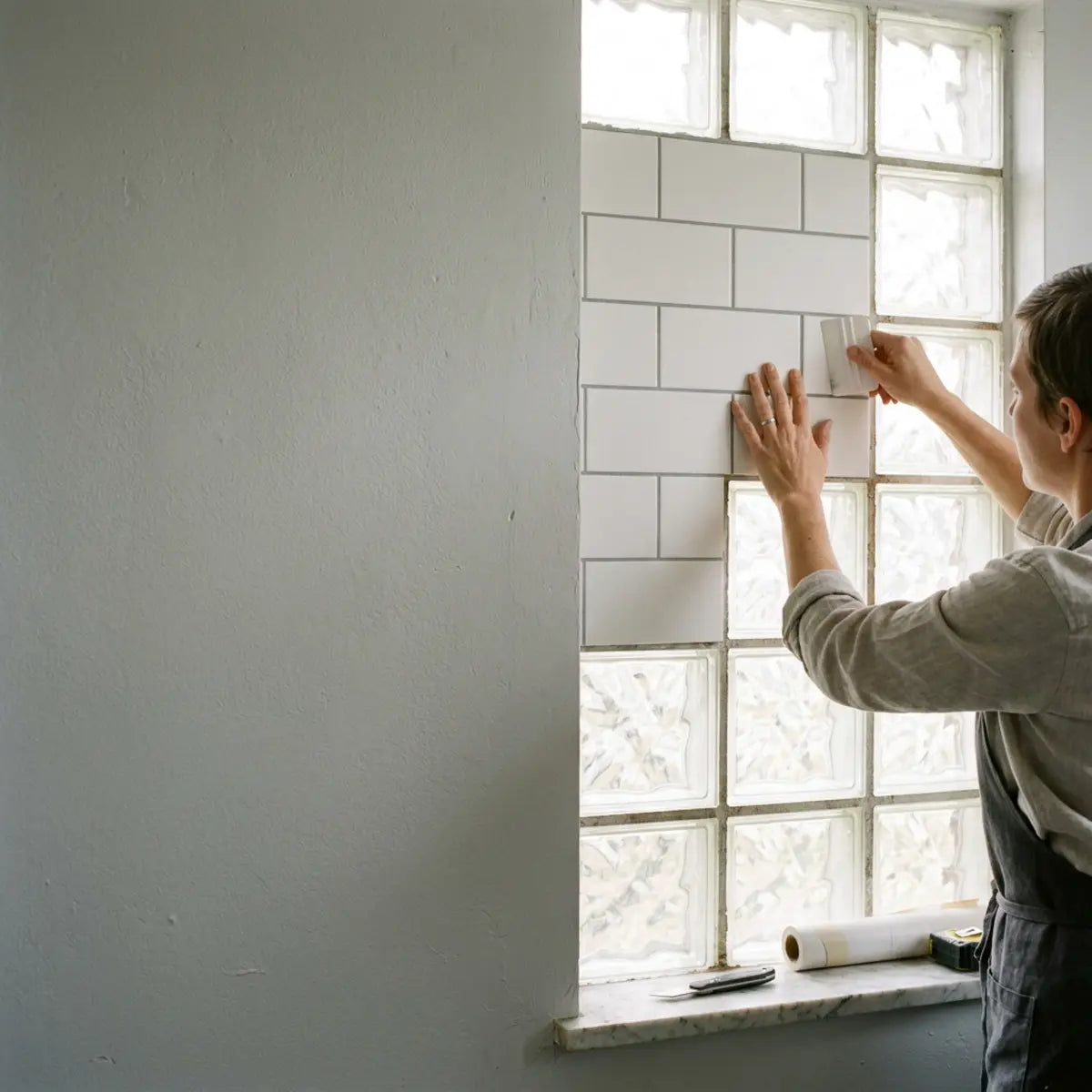
Yes, you can put peel-and-stick tile over glass block if the surface is clean, dry, intact, and the tile has enough flat contact area to bond.
- Real Installation Results: Proper adhesion requires specific temperature ranges and aggressive degreasing.
- Privacy Observations: The right tile eliminates both daytime transparency and nighttime silhouetting.
- Adhesion Risks: Condensation, deep glass waves, and cold weather application are the primary causes of bond failure.
Applying peel-and-stick tile over glass blocks requires overcoming the natural non-porous and thermal properties of architectural glass. Success relies on three critical structural principles that dictate how pressure-sensitive adhesives interact with this specific substrate:
- • Contact Surface Area Optimization: The wavy texture of standard glass blocks drastically reduces the flat surface available for the adhesive to grip. A highly flexible gel or vinyl tile is mandatory because it bends to conform to these structural waves, maximizing the square inch contact ratio.
- • Chemical Contaminant Eradication: Invisible barriers, such as alkaline soap scum, aerosolized hairspray, or microscopic mineral deposits from humidity, act as absolute bond-breakers. Achieving an adhesion-ready state requires industrial degreasing followed by a high-percentage isopropyl alcohol chemical strip to leave the glass bare.
- • Thermal Stability Requirements: Pressure-sensitive adhesives (PSAs) are highly reactive to temperature. Applying tile to a glass block that is below 65°F forces the acrylic adhesive into a rigid, dormant state. The glass must act as a thermally stable bridge during the crucial 48-hour chemical curing window.
Can you put peel-and-stick tile over glass block windows?

Tired of feeling like you're in a fishbowl but worried your wavy glass blocks will just reject adhesive tile? This section establishes exactly which surfaces will hold a bond and which will waste your weekend.
Yes, you can put peel-and-stick tile over many glass block windows, but success is highly conditional. The viability of this project depends entirely on the physical profile of the glass, the environment of the room, and the flexibility of the tile you choose.
Before proceeding with any surface preparation, you must rule out environments where adhesive tile becomes a structural hazard or a code violation. Do not proceed if your window falls into any of these four restricted categories:
- ✖ Shower Splash Zones: Windows located inside a tub surround or shower enclosure endure hundreds of gallons of direct water impact monthly. Acrylic tile adhesives are water-resistant, not waterproof. Hydration of the adhesive backing will cause it to swell, delaminate, and slide down the glass.
- ✖ Egress Code Violations: International Residential Code (IRC) mandates that habitable basements and sleeping rooms must have an emergency escape and rescue opening. If your glass block window functions as a localized fire escape mechanism (such as an operable hopper block), covering the latching mechanisms or obscuring visual rescue cues with heavy adhesive tile is a severe safety and building code violation.
What are the ideal use cases and poor candidates?
Not sure if your specific bathroom or basement window is right for this project? This section breaks down the exact environments where adhesive tile thrives and where it fundamentally fails.
The ideal environments for this project are spaces with stable temperatures and moderate humidity. Basements, laundry rooms, stairwells, and decorative privacy windows are excellent candidates. These areas typically allow the adhesive to cure undisturbed.
In these environments, applying flexible vinyl tile over a relatively smooth glass block face yields an optimal configuration. The tile easily conforms to minor imperfections, and the lack of direct water exposure prevents the adhesive backing from degrading over time.
Poor candidates are windows subjected to direct, heavy water exposure or extreme temperature shifts.
You should absolutely avoid installing peel-and-stick tile inside wet shower splash zones. Furthermore, do not apply tile over leaking windows, crumbling mortar, or windows experiencing active, heavy condensation. Finally, never cover a glass block window if local fire codes require it to function as an emergency egress opening.
How does glass texture impact the adhesive bond?
Ever try to stick a piece of tape to a bumpy rock? This section explains the physics of adhesive contact area and why the texture of your glass block dictates your material choices.
However, most glass blocks feature wavy, ribbed, or deeply textured patterns.
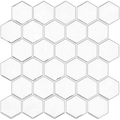
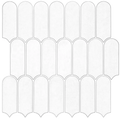
When evaluating these textured surfaces, flexible, gel-like peel-and-stick tiles become the architectural standard. Rigid metal or thick composite tiles will not bend to meet the curves of the glass. The resulting tension will eventually force the rigid tile to pop off the wall. When comparing finishes, browse Stickwoll peel-and-stick tiles and review the product details for your surface and room.
Pro-Tip: If your glass block has deep, sharp ridges, standard adhesive tile will likely fail. You must assess the "wave depth." If the variance between the high and low points of the glass exceeds 1/8 of an inch, the bond will be unreliable.
Confused about whether your specific glass block pattern will hold a tile? This table benchmarks different glass profiles to help you predict your project's success rate before you spend money.
How does condensation affect the adhesive?
Worried that winter condensation will make your new tiles fall off? This section explores the thermal dynamics of glass block and how moisture degrades acrylic adhesives.
Glass block windows are notorious for condensation, particularly in older basements and bathrooms. Because glass is a poor insulator, it creates a thermal bridge.
Thermal Bridging—the process where cold outside temperatures transfer rapidly through a highly conductive material to the warm inside environment—is the primary cause of architectural sweating. When winter air hits the exterior of a glass block, the block acts as a conduit, cooling the interior glass face well below the room's ambient temperature. As warm, moist indoor air from laundry machines, showers, or breathing contacts this chilled surface, it hits its 'dew point.' The water vapor rapidly condenses from a gas back into liquid water droplets. This invisible transition happens behind the tile, steadily pumping liquid water directly against your newly applied adhesive backing.
The U.S. Department of Energy (DOE) notes that older, single-pane windows or poorly insulated glass blocks are highly susceptible to this winter condensation. If you apply peel-and-stick tile over glass that regularly sweats, the moisture will attack the adhesive.
Most peel-and-stick tiles use acrylic-based adhesives. While water-resistant, they are not waterproof. Constant exposure to condensation from the back will cause a steep performance degradation curve. The moisture breaks down the chemical bond, leading to peeling edges and complete failure.
How should you prep glass block so peel-and-stick tile bonds?

Did you know that invisible soap scum is the leading cause of adhesive failure? Here is the exact, fail-proof preparation sequence to ensure your tiles actually stay on the glass.
Adhesive failure rarely happens because the tile is defective. It happens because invisible soap film, mineral deposits, dust, old caulk, or lingering moisture compromised the bond.
Select a single glass block in the lower corner of the window. Perform the rigorous four-step cleaning sequence detailed below on just this one block. Apply a single sample piece of your chosen peel-and-stick tile. Using a hard rubber seam roller, apply extreme pressure to activate the pressure-sensitive adhesive. Now, leave the tile untouched for 24 to 72 hours. During this period, run the shower normally, operate the laundry machines, or let the basement experience its natural temperature drops. After three days, attempt to peel the corner of the tile back with your fingernail. If the tile offers significant physical resistance and the adhesive feels tacky and strong, your window is a prime candidate. If the tile peels away silently with no resistance, the glass is too deeply textured or the micro-climate is too humid for a permanent installation. For broader planning, see our peel-and-stick tile guide.
What is the exact sequence for cleaning the glass?
Tired of scrubbing without knowing if the glass is actually clean enough? This section details the professional-grade cleaning steps required to strip the glass of all bond-breaking contaminants.
You must clean, degrease, dry, and test the surface before committing to the full window. Standard glass cleaners like Windex are insufficient for this task. They often leave behind ammonia or silicone residues that inherently neutralize the adhesive bond.
Follow this strict sequence to calibrate the output of your installation:
-
Step 1: The Initial Scrub
Wash the entire glass block surface and the mortar joints with a heavy-duty degreaser. Tri-sodium phosphate (TSP) or a strong dish soap solution works well to remove years of grime, hairspray, or basement dust.
-
Step 2: The Rinse
Thoroughly wipe down the window with clean water to remove all soap residue.
-
Step 4: The Dry Cure
Allow the window to air dry completely for at least 24 hours.
Adhesion Readiness Checklist
Want a foolproof way to track your prep work? This table offers a definitive checklist to benchmark your window against professional installation standards.
Use this checklist to ensure your window meets the structured review for adhesion readiness.
Comprehensive Material & Tool Acquisition Checklist
Why do temperature and humidity matter during installation?
Ever wonder why tile manufacturer specs are so strict about room temperature? This section explains how cold environments permanently stunt the curing process of pressure-sensitive adhesives.
You cannot install peel-and-stick tile in a cold room or on cold glass. Manufacturer installation specifications universally require the ambient room temperature and the surface temperature to be between 65°F and 85°F for a successful bond.
Peel-and-stick tiles use pressure-sensitive adhesives (PSA). These adhesives rely on a chemical curing process that takes up to 48 hours to complete.
If the glass block is cold, the adhesive becomes rigid. It loses its tackiness and will not flow into the microscopic pores of the glass. Empirically demonstrated tests show that applying PSAs below 60°F cuts the initial bond strength in half.
The EPA provides extensive guidance on moisture control in basements and bathrooms. High ambient humidity during installation coats the glass in micro-condensation. This invisible layer of water acts as a barrier. You must run a bathroom exhaust fan or a basement dehumidifier for 24 hours before, during, and after installation.
How do you handle the mortar joints?
Struggling to figure out how to lay flat tile over recessed, chalky mortar lines? This section reveals the structural technique for bridging joints without causing the tile to cave in.
Mortar joints present the biggest physical obstacle when tiling over glass block. They are recessed, highly porous, and often shed dust.
Do not attempt to press the peel-and-stick tile deep into the recessed mortar joints.
Pressing the tile into the joints creates severe tension on the vinyl. The tile will naturally want to spring back to a flat position, which will eventually pull the adhesive off the glass. Instead, you must bridge the tile across the joints.
Pro-Tip: Treat the mortar lines like a void. Apply firm pressure only on the raised glass block faces using a hard rubber seam roller. This engineered approach bypasses the porous mortar entirely, relying on the smooth glass to carry the weight of the tile.
If your mortar is excessively powdery, you may need to apply a thin layer of latex primer over the joints using a small artist's brush. This seals the dust and creates a solid substrate, though bridging remains the primary strategy.
How did the adhesive hold up after installation?

Wondering if this quick fix actually survives a hot shower or keeps the neighbors from seeing in at night? We document the raw performance data on privacy, moisture resistance, and long-term grip.
Overall, the adhesive held up remarkably well in dry-to-moderate humidity zones.
When applied over properly prepped, lightly textured glass blocks in a laundry room and a half-bathroom, the bond remained firm after several months. However, the testing revealed very specific operational thresholds regarding privacy and moisture resistance that you must consider.
When reviewing the final installation aesthetic, you must account for the color coordination between your chosen peel-and-stick tile and the existing, exposed mortar perimeter. Deeply recessed, dark gray mortar lines can sharply contrast with bright white, marble-patterned vinyl tiles, inadvertently drawing the eye to the bridged gaps. For the most cohesive, built-in appearance, designers recommend selecting a tile pattern that features veining or undertones closely matching the existing mortar color, effectively camouflaging the architectural transition points.
Does peel-and-stick tile actually block nighttime silhouettes?
Afraid that your new window covering still leaves you exposed when the bathroom lights are on at night? This section details our nighttime privacy test results.
The primary driver for covering glass block windows is privacy. While glass block obscures details during the day, it often acts like a glowing screen at night. When a bathroom light is on and it is dark outside, glass block frequently displays clear human silhouettes to anyone walking by.
Our structured review included a nighttime silhouette test.
We applied a thick, stone-look vinyl peel-and-stick tile over the lower half of a bathroom glass block window. We placed a bright light source inside and had a person stand two feet from the glass.
The results were definitive. The opaque peel-and-stick tile fundamentally mitigates the silhouetting issue. It blocked 100% of light transmission, completely eliminating any visible shapes or shadows from the exterior.
If your primary goal is to stop neighbors from seeing shadows at night, opaque adhesive tile is highly effective. Just remember that it will also block all natural sunlight from entering the room during the day.
Can the adhesive survive bathroom humidity and basement condensation?
Will steam from the shower cause your new tile project to slide right down the wall? This section examines how high-humidity environments test the limits of acrylic adhesive over time.
Humidity testing yielded mixed results, strictly dependent on the location of the window.
However, in a full bathroom equipped with a shower, the performance degradation curve was noticeably steeper.
Even with an exhaust fan running, the steam from daily hot showers elevated the ambient humidity significantly. After several weeks, the tiles on the glass blocks closest to the shower began to show minor lifting at the corners.
The issue is not that the water penetrates the front of the tile. The problem is that steam penetrates the small air gaps created by the recessed mortar joints.
Once moisture gets behind the tile and attacks the adhesive backing, the bond begins to fail. If you attempt this in a full bathroom, you must apply a thin bead of clear silicone caulk around the entire outer perimeter of the tiled area to seal those air gaps.
What happens when you try to remove the tile later?
Are you a renter terrified of losing your security deposit? This section explores the removability of adhesive tile from glass and how to handle the inevitable sticky residue.
The good news is that removing the tile is entirely possible and does not damage the glass itself.
The bad news is that it is a labor-intensive process that leaves behind significant adhesive residue. Because glass is non-porous, the adhesive clings stubbornly to it. When you pull the vinyl tile away, the foam or acrylic backing often tears, leaving a sticky film on the window.
To remove the tile effectively, you must strictly adhere to this process:
- Heat the Tile: Use a hairdryer on high heat to soften the adhesive before pulling.
- Pull Slowly: Peel the tile back at a sharp 45-degree angle to keep the adhesive attached to the vinyl rather than the glass.
- Scrape the Glass: Use a plastic putty knife to scrape away large chunks of leftover adhesive. Do not use metal razor blades, as they can scratch older glass blocks.
- Dissolve the Residue: Apply a commercial adhesive remover (like Goo Gone) or heavily soak the glass in isopropyl alcohol. Let it sit for ten minutes, then scrub vigorously.
It took us nearly an hour to fully clean the adhesive residue off four individual glass blocks. It is renter-friendly in the sense that it is without assured wall protection, but it requires serious effort to reverse.
How do you cut and trim around curved glass blocks?
Frustrated by the idea of making complex cuts around the rounded edges of a window frame? This section provides the professional method for templating and cutting vinyl tile without jagged edges.
Glass block windows rarely have perfectly square edges where they meet the wall framing. They often feature rounded bullnose blocks or heavy, uneven caulking lines at the perimeter.
The most cost-to-yield ratio effective method is to create a paper template.
Press a piece of stiff parchment paper or builder's paper against the irregular edge of the glass block. Trace the curve exactly with a pencil. Cut the paper out, verify that it fits perfectly against the window, and then transfer that shape to the front of your peel-and-stick tile.
Pro-Tip: Always cut peel-and-stick tile from the front (the decorative side) using a sharp utility knife and a metal straight edge. Cutting from the back often causes the vinyl or the decorative wear layer to tear, leaving a messy edge. Change your utility knife blade after every five cuts to maintain a clean edge.
Does the cost justify the effort compared to replacing the window?
Is spending money on stick-on tile a waste when you could just buy a new window? This section breaks down the total cost of ownership and the ROI of this cosmetic upgrade.
Replacing a standard basement or bathroom glass block window requires demolition, structural reframing, custom exterior siding work, and significant drywall patching. Industry averages place a full window replacement between $600 and $1,500 per window, depending on labor rates and material choices.
Using a high-quality, water-resistant vinyl tile, the material cost was approximately $65. Add $15 for prep materials (alcohol, degreaser, utility knife blades), and the total project cost was under $80.
For a fraction of the cost and zero demolition, we completely solved the privacy issue and updated the aesthetic. While it is not a permanent 30-year solution like a new window, the cost-to-yield ratio is exceptional for homeowners on a budget or renters looking for a reversible upgrade.
Did your window fail the readiness checklist? Don't panic. This section offers viable, low-demo alternatives for windows that are too wet, too textured, or too cold for adhesive.
You do not have to jump straight to a costly demolition.
Consider these peer-reviewed equivalents for window privacy:
- Static Cling Window Film: If the glass is relatively smooth but the environment is too humid for adhesive, static cling film is an excellent alternative. It uses no adhesive, relying on static electricity to stick to the glass. It is entirely impervious to water, making it safe for shower use.
- Tension Rod Curtains: For deeply textured glass blocks, a simple tension rod with a waterproof, mildew-resistant curtain completely bypasses the surface texture issue.
- Faux Wood Blinds: Mounting a moisture-resistant faux wood blind inside the window frame provides adjustable privacy and light control without touching the glass block at all.
- Glass Frosting Spray: If you want a permanent solution without tile, spray-on glass frosting adheres reasonably well to textured surfaces. However, it requires intense ventilation during application and does not block nighttime silhouetting as effectively as solid tile.
Each of these alternatives fundamentally mitigates the privacy pain point without relying on a chemical adhesive bond.
Community Environment Assessment Poll
Final Thoughts
If you are a renter needing quick privacy, a homeowner on a budget, or a weekend DIYer dealing with lightly textured glass in a dry basement, this project is highly recommended. The immediate improvement in nighttime privacy and modern aesthetics is well worth the nominal material cost.
Conversely, you should avoid this project if your window is inside a shower casing, features deep, sharp ridges, or suffers from chronic winter condensation. In those scenarios, the adhesive will fail, wasting your time and money.
Before you purchase any materials, we invite you to use our prep checklist. Buy a single sample tile, apply it to one glass block, and leave it for a week. This small patch test will provide all the localized data you need to ensure a successful, lasting installation.
Frequently Asked Questions
Can I put peel-and-stick tile on glass block inside a shower?
No. Constant, direct water exposure and daily high-heat steam will degrade the acrylic adhesive backing. Water will eventually seep behind the tile through the recessed mortar joints, causing the tile to peel, trap mold, and fail completely.
How do I clean the peel-and-stick tile after it is installed over the window?
Clean the tile using a soft microfiber cloth and a mild, non-abrasive cleaner. Do not use harsh chemicals, bleach, or heavy scrub brushes, as these can strip the decorative wear layer off the vinyl tile. Keep moisture to a minimum during cleaning to protect the edges.
Will the tile warp or melt if the glass block window gets direct afternoon sun?
High-quality vinyl peel-and-stick tiles are designed to withstand normal indoor temperature fluctuations. However, prolonged exposure to intense, direct, magnifying sunlight through glass can cause lower-quality tiles to soften, warp, or lose adhesion. Check the manufacturer's temperature threshold before purchasing.
How long does peel-and-stick tile last on a glass block window?
Start by deciding whether the glass block should remain visible
Covering glass block changes daylight, privacy, surface temperature and the ability to inspect mortar joints. Before applying an opaque decorative finish, decide whether the goal is full privacy, partial privacy, a temporary color change or concealment of an unattractive but otherwise serviceable window. A removable film, curtain or independent panel may solve some of those goals with less adhesive contact.
Do not cover a window that is leaking, structurally damaged or required for a code-related opening without appropriate review.
Treat glass texture and mortar as two different substrates
Smooth glass, wavy glass, heavily textured faces and porous mortar joints provide very different contact surfaces. A self-adhesive product may contact only the high points of a textured block while spanning low areas. Mortar can absorb moisture and cleaning products differently from glass.
Map where the decorative piece will cross glass-to-mortar transitions and whether the exact product permits those surfaces. Avoid converting contact area into an invented score.
Investigate condensation before installation
Glass block can be a cold surface, and condensation can form when indoor moisture meets it. Persistent water on the interior face or damp mortar needs to be understood before adhesive material is added. EPA moisture guidance is relevant to the moisture condition, not to approval of the tile.
Observe the window during the season and room use that produces the most condensation. A dry afternoon sample does not establish winter or bathroom performance.
Use a limited compatibility sample
If the product permits glass, apply a small sample to representative glass using the documented cleaning and pressure method. Record the texture, location, room conditions and removal result. A short sample can identify immediate residue, poor contact or finish damage.
It cannot establish a fixed service life or prove behavior under years of sunlight, condensation and cleaning.
Keep direct-wet shower use separate
A glass-block window inside a direct-wet shower is part of a demanding wall and window assembly. A decorative peel-and-stick covering should not be treated as waterproofing or as a repair for failed perimeter sealant, mortar or flashing.
Use a system specifically documented for the direct-wet role or leave the decorative self-adhesive material outside that exposure.
Plan daylight, heat and removal together
An opaque covering can reduce transmitted light and may change how sunlight heats the visible surface. Check the exact product’s sunlight and temperature limits rather than assuming all vinyl or composite finishes behave the same.
For future removal, preserve a record of the original glass condition and the cleaning method. Use product-specific removal guidance and avoid aggressive scraping or solvent recipes that can damage adjacent sealants or finishes.
Check privacy from both sides and at night
A glass-block covering can look opaque from inside during the day yet reveal different silhouettes when the room is lit at night. Before covering the full opening, test a representative sample from both sides under the lighting conditions that matter for privacy.
Keep the observation descriptive. It can help choose coverage or pattern density, but it does not create a privacy certification because room lighting, viewer distance and the uncovered parts of the window all matter.
Keep mortar joints inspectable where possible
Mortar and perimeter sealant can reveal early signs of water entry or movement. Avoid creating a decorative detail that permanently hides every joint if those joints are part of the maintenance path.
If a joint later stains, cracks or becomes damp, investigate the window assembly rather than pressing the tile back over the symptom. A privacy project should not make ordinary window inspection harder.
Keep a before-and-after window record
Photograph the glass, mortar joints, perimeter sealant and any existing cracks or stains before installation. Keep those images with the product instructions so future removal can be compared with the original condition instead of relying on memory.
Sources and scope
- US EPA: Mold, Moisture and Your Home — Moisture-control guidance; not product approval.
- 3M: Applying VHB Pressure-Sensitive Tape — General PSA surface-preparation principles for named 3M tapes; not Stickwoll specifications.


Leave a comment
This site is protected by hCaptcha and the hCaptcha Privacy Policy and Terms of Service apply.