








Quick Quiz: Are You Ready to Install Peel & Stick Subway Tile?
Test your prep knowledge before you dive in—this will help you avoid costly mistakes!
Explore this guide
1. What’s the most important step before sticking tiles to your wall?
2. How soon should you correct a misaligned tile?
Before we start, you might also want to explore our ultimate peel and stick tile installation guide with 2025 design trends for even more ideas to transform your space quickly and affordably.
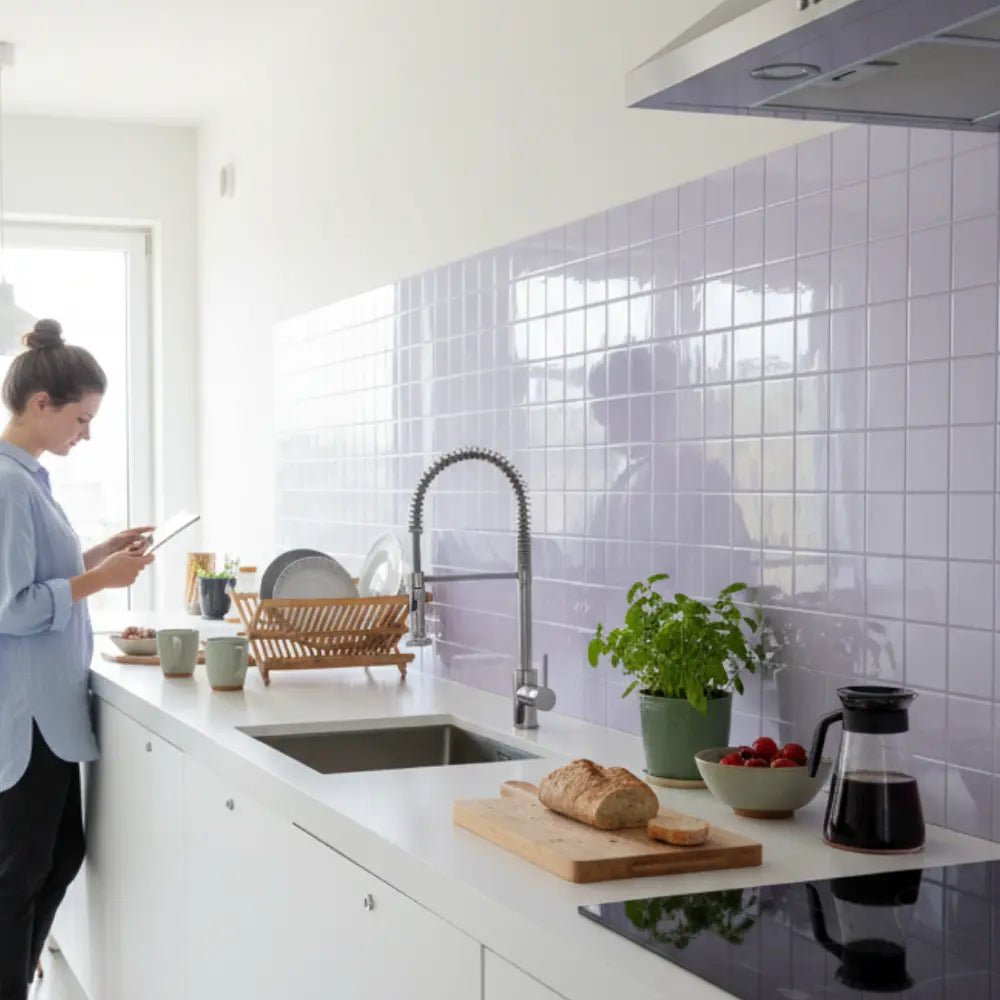
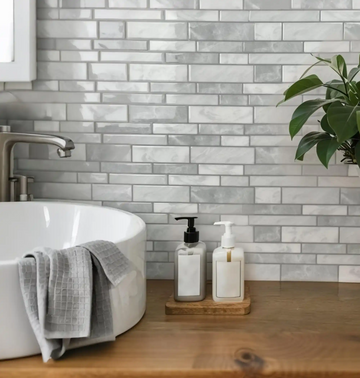
Tired of staring at a bland backsplash that makes your kitchen feel unfinished? You can completely change that in a single afternoon with peel and stick subway tiles—no grout, no mess, and no expensive contractor bills. The best part? It’s renter-friendly and reversible, so you can create a high-end look without risking your security deposit.
I know the hesitation: the fear of crooked lines, bubbling tiles, or wasting an entire pack because the adhesive didn’t grab. That’s exactly why this guide exists. You’ll get a step-by-step plan with photos, a short video tutorial for tricky cuts, and a free printable checklist so you don’t miss a single detail. Every tip has been beginner-tested, so you can move forward with confidence.
By the end, you’ll go from “I hope this works” to “I can’t believe I did this myself”—and your backsplash will look like it came straight out of a design magazine.
Why Choose Peel and Stick Subway Tile?
If you’ve ever wondered why peel-and-stick tiles are trending, our modern peel and stick subway tile style guide showcases how they bring chic aesthetics without complexity. For broader planning, see our peel-and-stick tile guide.
For homeowners and renters who want an instant style upgrade, peel and stick tiles are the closest thing to magic. You’re looking at a budget-friendly kitchen upgrade that requires no mortar, no ongoing disruption, and minimal tools.
- Affordability and time savings: A box of self-adhesive vinyl subway tiles costs a fraction of traditional ceramic, and you skip paying for grout, adhesive, or a professional installer. In many kitchens, the project takes under three hours start to finish.
- Low-mess installation: No mixing grout and no curing time. You peel the backing and press—done.
- Perfect for renters: Temporary wall tiles mean commitment without permanence.
Real-world example: Sara, a Boston renter, transformed her 1980s brown-tiled galley kitchen with bright white faux subway tile panels. The total cost? $96. She spent one Saturday afternoon applying them and got praise from her landlord.
If you’ve been hunting for easy kitchen backsplash ideas, this is one of the most forgiving yet impactful options out there.
Download our free installation checklist so you have every tool ready before you start.
Tools & Materials Checklist (Downloadable)
To ensure success even on painted surfaces, check out our expert guide to installing stick tiles on painted walls and avoid common pitfalls.
- Utility knife with fresh blades
- Measuring tape
- Level or laser level
- Pencil
- Clean microfiber cloths
- Mild degreasing cleaner
- Optional extras: cutting mat, hair dryer or heat gun, small roller
Pro Tip: Keep your blades sharp by changing them often.
Print your Installation Checklist PDF so you can check off items as you go.
Surface Preparation for a Lasting Finish
Want more creative uses beyond the kitchen? Our 2025 peel and stick tiling solutions guide offers inspiration for multiple rooms.
- Clean thoroughly
- Smooth the surface
- Dry completely
One reader rushed this step and paid the price.
Step-by-Step Installation Process (Photos + Video)
For a product that's perfect for beginners, explore our Easy Guide: Install Peel & Stick Subway Tiles which complements these steps.
1. Measure and Plan Your Layout
- Measure the backsplash area.
- Draw your starting line.
2. Peel and Align
Peel and align to your guide.
3. Press and Smooth
Press firmly from center outward.
4. Cut to Fit
Use templates for complex shapes.
Watch our quick two-minute cutting tutorial video for crisp cuts.
Troubleshooting Common Issues
Thinking about a bathroom project? Learn how with our bathroom peel and stick transformation guide.
Misalignment Fixes
Do not assume a universal repositioning window. Follow the exact product’s instructions for placement, pressure and any allowed repositioning.
Adhesion Problems
Clean again and warm adhesive if needed.
Removing and Reapplying Tiles
Warm, peel slowly, replace as needed.
Care and Maintenance
For detailed upkeep tips, read our Peel and Stick Tile Maintenance Guide 2025.
- Clean with mild soap
- Reduce humidity
- Check seams regularly
See our full maintenance guide for more.
Style Inspiration & Layout Ideas
Pair your tiles with our premium Subway Magic Peel and Stick Tiles for maximum style impact.
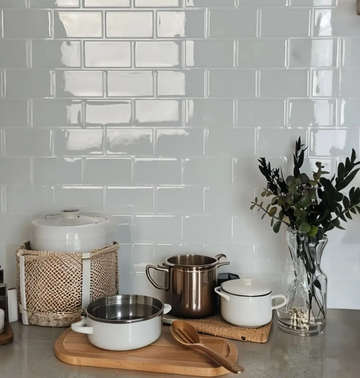
- Classic white
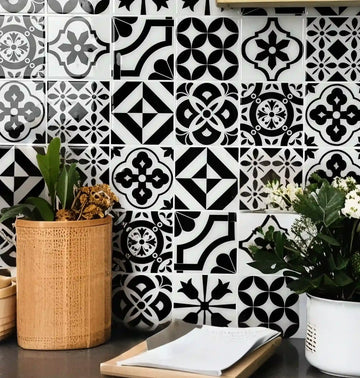
- Modern contrast
- Accent wall concepts
Final Checklist & Next Steps
- Prep your wall
- Measure and mark
- Align and apply
- Use sharp blade
- Check adhesion early
Conclusion
With peel and stick tiles, even first-time DIYers can achieve a polished finish. For your next project, reference our linked guides and inspiration above.
Check the wall before measuring the pattern
Installation begins with a wall decision, not with peeling the first liner. Identify the surface the adhesive will actually touch: cured paint, existing ceramic, sealed panel, another coating or a repaired area. Look for peeling paint, chalk, grease, silicone, active staining and deep texture. A tile can stick strongly to a weak paint film and still fail because the paint releases from the wall.
Do not use a one-size-fits-all cleaner or primer. The exact tile instructions should say which substrates are accepted and which preparation is allowed. Industrial pressure-sensitive tape guidance often emphasizes a clean, dry, unified surface and adequate pressure, but a 3M solvent recipe or pressure figure is not automatically a Stickwoll requirement. Use it to understand the mechanism, not to replace the product documentation.
If the wall is damp, fix the moisture source before installing. EPA moisture guidance stresses source control and drying rather than covering a wet surface. A decorative backsplash should not conceal active leakage, mold or a soft wall.
Measure the installed area and usable coverage
Break the backsplash into simple rectangles and measure each one. Record outlets, windows, returns and exposed end edges. Use the pack's installed coverage rather than only a nominal sheet dimension. Some products overlap at faux grout lines or use interlocking edges, so the usable coverage may differ from the physical dimensions of every sheet.
For an illustrative calculation, a backsplash 9 feet wide and 18 inches high has a face area of 13.5 square feet. If the layout contains several outlet cuts and you deliberately choose a 12 percent allowance, the planning area becomes 15.12 square feet. If a pack covers 3.2 usable square feet, the calculation is 4.73 packs, rounded to five. Add a separate unopened repair pack only when you actually want that reserve. These numbers illustrate the method; they are not a universal waste factor or a product specification.
Dry-lay the pattern before ordering final quantity when matching matters. A herringbone, marble vein or directional subway print can create more waste than a non-directional solid finish. A wall with many openings can also generate offcuts that are too small to reuse.
Choose a starting line that avoids bad end cuts
Do not assume the countertop is level. Use a level or laser to establish the first reference line. Then dry-position a row or calculate the module width to see what remains at each end. If the plan would finish with a very narrow visible sliver, shift the starting point and compare the alternative before exposing adhesive.
For a classic subway look, decide whether the product uses a printed or molded grout line, a true sheet joint or an overlap. The pattern on one product may be designed to interlock, while another may require a butt joint. Follow the supplied edge logic rather than copying a video made for a different construction.
Mark the most visible reference points: the center behind a range hood, the open end near a doorway, the top line under a cabinet and the place where the pattern meets a window. These positions usually matter more visually than forcing every hidden edge to use a full tile.
Dry-fit difficult cuts before exposing adhesive
Outlets, cabinet returns and corners are easier to solve while the piece can still move freely. Make a paper or cardstock template for complex openings. Transfer it to the release-liner side or face according to the cutting instructions. Use the tool intended for the product; flexible vinyl, thick gel, rigid composite and metal-faced pieces do not necessarily cut the same way.
Electrical safety remains separate from tile work. Turn off power and use appropriate procedures when covers must be removed. Do not let tile overlap the electrical box in a way that prevents the device or cover from seating correctly. If the project needs the device moved or extended, obtain proper electrical help rather than improvising with the decorative material.
At an inside corner, decide whether the product is intended to wrap or whether two pieces should meet. Do not force a rigid or springy piece around a corner and hold it there only with added adhesive. A neat cut and suitable edge detail can be more durable than a stressed wrap.
Expose adhesive gradually and control placement
For large or flexible pieces, expose only enough liner to anchor the first edge, then remove the remainder while smoothing the piece into position. This reduces the chance that the adhesive contacts the wall before alignment is confirmed. Do not repeatedly pull a piece off and reapply it unless the product specifically permits repositioning; every lift can introduce dust, stretch the face or transfer adhesive.
Apply pressure in the direction and with the tool specified for the tile. A hand, smoothing tool or roller may be appropriate depending on the construction. Pressure improves contact where sound adhesive is present. It cannot compensate for a rough incompatible wall, contamination, missing adhesive or a piece that has been distorted.
Check edges and patterned joints after each piece rather than after the entire wall. Small alignment errors accumulate. If the pattern begins drifting, stop and identify why instead of stretching the next sheet to hide the difference.
Finish exposed edges deliberately
An open side edge can reveal the core of a decorative panel, collect residue or look unfinished. Use the product's recommended trim or ending detail when available. Compare trim depth with the actual tile thickness before buying. A metal or PVC profile should fit the construction and room use; a strip chosen only by color may not cover the edge correctly.
At the countertop, sink or another splash-prone junction, follow the applicable wall and sealant details. Do not add a bead of caulk merely to make an unsuitable system waterproof. Sealant compatibility, joint geometry and movement matter. Where the joint is already damp or failing, correct the underlying condition before covering it.
Keep service seams independent. Do not caulk a removable access panel, faucet escutcheon or appliance component to the decorative finish if future removal is required.
Inspect the installation before calling it finished
Use raking light to look for bubbles, stretched pieces, raised seams and edges that were never fully contacted. Check that outlets and covers sit correctly and that trim can still be removed. Photograph the completed wall and keep the product label and spare material.
Do not assign a pass based only on immediate appearance. Pressure-sensitive adhesives can build contact over time, and environmental conditions can change. A flat-looking piece right after rolling does not establish years of performance. Follow any manufacturer observation or return-to-service period and record early lifting rather than hiding it with additional glue.
If a corner lifts, inspect the wall and the back of the piece where possible. Paint transfer points to a different problem than a clean, intact wall with a contaminated adhesive face. Repeated failures at one location can indicate moisture, heat or movement that requires a different design.
Care, repair and removal
Use the cleaner permitted for the exact finish and control liquid around seams. A glass cleaner, strong degreaser, abrasive pad or steam device that works on another backsplash can damage a printed or polymer face. If the appearance changes after cleaning, stop and check the care guidance before applying another chemical.
For a local repair, compare the spare piece under the room lighting before installation. Print or shade differences can be visible even under the same product name. Record the repair date and cause. If the wall has become damp or the substrate is failing, replacing the face alone is not enough.
Removal should be planned from the start when it matters. Use the product's stated method and treat heat, solvents and scraping carefully. A removable label does not guarantee an untouched paint film. In older US homes, disturbing painted surfaces can also raise lead-safety questions; EPA provides specific DIY renovation guidance for pre-1978 housing.
Installation troubleshooting
Why is a corner lifting?
Check wall cleanliness, texture, paint integrity, moisture, heat and whether the piece was installed under tension. Do not automatically add stronger adhesive.
Why are joints drifting?
Recheck the reference line, actual module dimensions and whether a piece was stretched or overlapped incorrectly. Correct the cause early rather than using increasingly narrow cuts.
Can I reposition the tile the next day?
Only if the exact product permits that operation. There is no universal 24-hour window for peel-and-stick wall tile.
Can I use the same installation behind a stove?
Check the appliance clearances and exact product limits. A wall tile's appearance or general heat-resistant marketing does not create a heat shield or override appliance instructions.
Use a pre-installation rehearsal for a first DIY wall
Before working on the actual wall, rehearse one cut and one seam with spare material or a sample board when the product allows it. Practice starting a piece on a line, removing the liner gradually, trimming a straight edge and pressing a joint without stretching the face. This reveals how the material behaves before a difficult outlet or exposed edge is involved.
The rehearsal is not an adhesion certification. A sample board may differ from the real wall, and a short practice does not establish long-term performance. Its purpose is to learn the handling sequence and identify tools that scratch, dent or stretch the finish.
Keep the successful offcut so you can compare the installed wall later. If the face becomes cloudy after a cleaner or the edge profile changes after cutting, the offcut gives you a reference for the original appearance.
Plan exposed ends and transitions before the first row
A backsplash may end at a cabinet, doorway, refrigerator, window or open wall. Decide where the visual stop belongs and whether the product needs trim. Do not wait until the final row to discover that the core or backing is visible at the edge.
At a transition to another material, check relative thickness. A proud edge can collect impact or make cleaning difficult. A recessed edge can create a dirt line. Use the finish detail intended for the product and room, and avoid inventing a thick bead of caulk simply to cover a poor cut.
Inside corners and outside corners deserve separate dry fits. A flexible product may bend, while a rigid piece may require two cuts and trim. Follow the construction rather than forcing one technique across every material.
Document what changed during installation
If you substitute a cleaner, primer, trim or pack during the project, record the change. If one wall section needed a repair or different preparation, mark it on the layout. This information can explain a future local failure and helps you avoid treating the entire product as the cause of a problem limited to one condition.
Keep photographs before the wall is hidden. A future homeowner or contractor can understand where patches, outlets and penetrations are located. Documentation adds little time and can save significant guesswork during repair.
Plan around upper cabinets, ranges and windows
Backsplash walls often change height. Under a cabinet, the top edge may be hidden; beside a range hood or window, the same edge becomes visible. Mark these changes before starting the first row. Decide whether the pattern should stay level across openings or restart at a feature zone. A dry layout can reveal whether the same grout line will collide awkwardly with a sill or cabinet bottom.
At a range, do not let the visual centerline override appliance requirements. At a window, keep the finish clear of moving hardware and plan the return or trim before the face is installed. At the end of a cabinet run, view the wall from the adjoining room because that exposed edge may become the most noticeable part of the project.
Use a final quality-control walk-through
Stand at normal viewing distance and scan the wall for alignment, repeated print clusters, visible core edges and inconsistent seams. Then inspect close up for unbonded corners, bubbles, residue and cuts around fixtures. Check that every outlet cover, faucet trim and access point still functions independently.
Write down anything intentionally imperfect, such as a patched wall behind one piece or a replacement from another batch. This makes later troubleshooting more objective. A finished project is easier to maintain when the installer leaves a clear record rather than only a photograph.
Surface preparation by common wall type
Painted drywall: confirm the coating is sound and sufficiently cured for the tile system. Repair torn paper and loose paint before cleaning. Do not assume flat, eggshell or gloss alone determines compatibility. Existing ceramic: inspect for loose tiles, silicone, deep grout recesses and contamination; a smooth face does not make a loose old installation suitable. Sealed panel or laminate: confirm the product permits the surface and the cleaner or abrasion method being considered. New repair material: allow patch, primer and paint to reach the condition required by their manufacturers before covering them.
For every substrate, remove only the contamination that needs to be removed. A stronger solvent or more aggressive sanding is not automatically better. Preparation succeeds when it creates the surface described by the tile instructions without damaging the wall or leaving incompatible residue.
Layout around multiple outlets and cabinet breaks
When several outlets interrupt the backsplash, mark their positions on a scaled sketch before choosing the first tile. The goal is not to force every device into the middle of a piece; it is to avoid a sequence of fragile slivers and awkward pattern breaks. Shift the starting module and compare two layouts on paper.
For a directional pattern, number the pieces in installation order after dry fitting. This reduces the chance that a cut piece is accidentally rotated or replaced by the wrong print. Keep the release liners on until the neighboring relationship is confirmed. If a pack includes several print variants, photograph the dry layout as a reference.
At cabinet breaks, decide whether the pattern continues across open wall space or whether the new zone gets its own centered layout. Either can look intentional when planned. What looks unprofessional is allowing the pattern to drift because the reference line changed halfway through the wall.
Common first-time mistakes and a better response
Peeling all the liner at once: expose less adhesive so placement remains controllable. Following a crooked counter: work from a true reference line and finish the lower gap appropriately. Stretching flexible tile: recut or correct the layout; stretched material can return toward its original shape. Using a dull blade: change blades rather than increasing force. Ignoring a lifting corner: stop and investigate instead of immediately adding glue. Covering a damp patch: resolve the moisture source before continuing.
These corrections keep mistakes local. The advantage of a DIY project comes from controlling the work in small steps, not from rushing to finish the wall in a predetermined number of hours.
Keep a small repair kit after installation
Store a few clean offcuts or spare full pieces with the product label, pattern direction and approved care instructions. Also keep a fresh blade, the permitted smoothing tool and any matching edge trim used on the wall. A local repair is easier when the exact materials are available and identified.
Do not treat the kit as permission to patch repeatedly over the same failure. If a replacement lifts in the same location, investigate moisture, wall condition, heat or movement before using another spare. The repair stock is for a known local event, not for masking an unresolved installation problem.
Keep the repair kit dry, flat and protected according to the product storage instructions. Label offcuts that contain a directional print so they are not rotated during a future repair. If the manufacturer changes the product or the stored piece becomes curled, contaminated or otherwise damaged, do not assume that having a spare automatically makes it suitable for reuse.
FAQ
Q: Can peel and stick subway tiles go over ceramic tiles? Yes, as long as the surface is smooth and clean.
Q: Are self-adhesive tiles heat-resistant near a stove? Heat performance varies by product and appliance. Check both the tile instructions and appliance clearance requirements.
Q: Will removing them damage painted walls? Proper prep minimizes damage.
Q: Can I reuse peel and stick tiles after removing them? Do not assume reuse from the product category. Reuse depends on whether the exact product permits it and on the condition of the tile, adhesive and new substrate.
Sources and scope
- 3M: Applying VHB Pressure-Sensitive Tape — Explains surface preparation, pressure and bond development for specified 3M tapes; not a Stickwoll pressure specification.
- US EPA: A Brief Guide to Mold, Moisture and Your Home — Moisture control and prompt drying guidance; not a tile approval or hidden-wall diagnosis.
- US EPA: Lead-Safe Renovations for DIYers — Precautions for disturbing painted surfaces in older US homes; not a diagnosis of a particular wall.


Leave a comment
This site is protected by hCaptcha and the hCaptcha Privacy Policy and Terms of Service apply.