

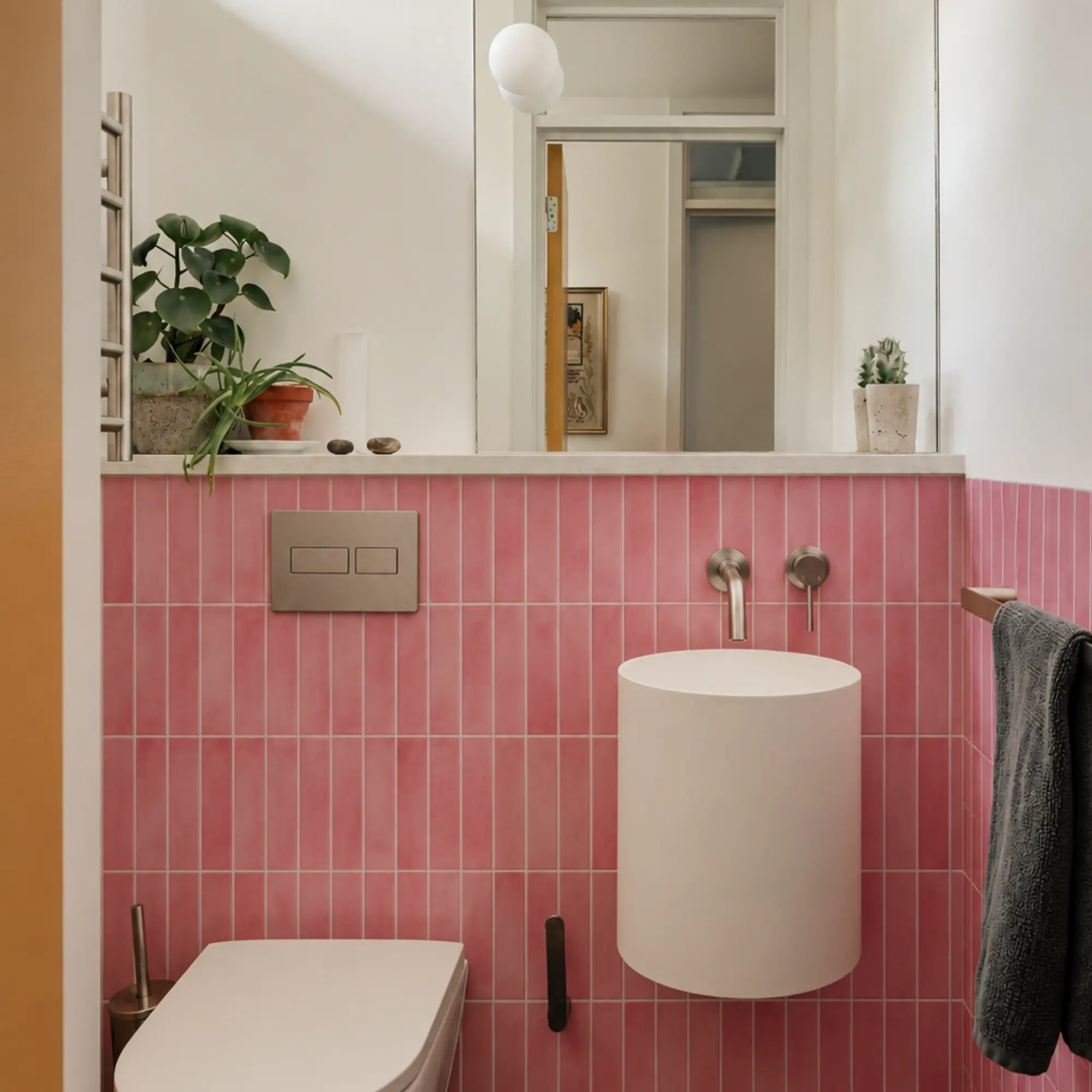



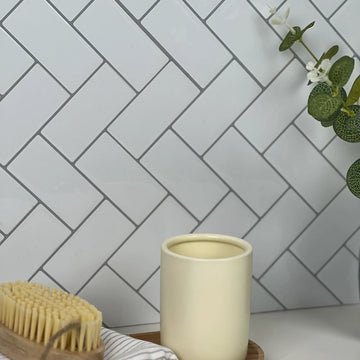
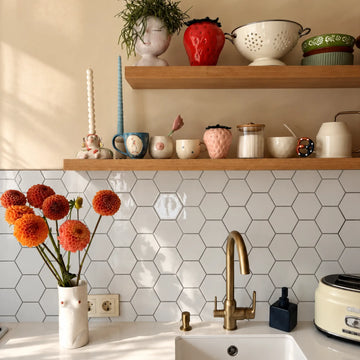
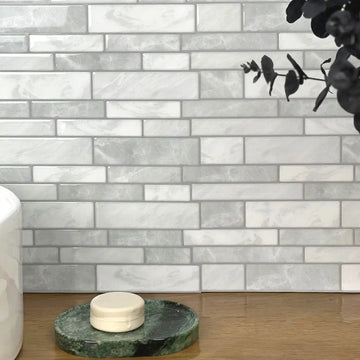

Install Stickwoll tiles only on a surface and in a location accepted for the exact product. Plan the layout and difficult cuts with the release liner still attached, then apply the specified pressure and follow the return-to-use instructions. For removal, use the product's permitted method on a small area first. No general technique can guarantee undamaged paint or a refunded rental deposit.
Explore this guide
A good installation is more than a straight first row. It begins with the wall you already have and ends with a realistic plan for care, repair and eventual removal. This guide follows that complete project, from checking a delivery to documenting the finished wall. It does not assign one adhesive chemistry, paint waiting period, heat setting or lifespan to every product carrying the Stickwoll name.
You can still make the work manageable. Divide the project into decisions that are easier to reverse before adhesive is exposed: choosing an eligible wall, checking quantities, comparing starting lines and making a template. The aim is not perfect confidence from a checklist. It is fewer unresolved questions when the first piece touches the wall.
Confirm the product, the room and permission first
Keep the order details and packaging until the project is accepted. Match the collection, dimensions, batch where available and intended use to the supplied instructions. If the product description and an instruction conflict, ask for clarification before installation. A photograph of a similar pattern is not an installation specification for your carton.
Describe the actual location. A normally dry kitchen feature wall differs from the steam path beside an espresso machine, an area repeatedly soaked at a sink or the inside of a shower. A bathroom label does not automatically cover every wet zone. Decorative wall tile also does not become a floor product because it can be cut into a convenient shape.
For a rental or shared property, obtain permission for the proposed area, preparation and removal expectations. Permission for removable decoration may not include sanding, new primer, permanent trim or added construction adhesive. Keep photographs of the original wall and any existing defects. This is practical documentation, not a promise about how a lease dispute will be resolved.
Ask what outcome matters most: a quick visual refresh, a particular pattern, easier routine wiping or a reversible change. Rank those objectives before shopping. If the wall needs repair or the intended exposure is not approved, a smaller decorative area or another finish may be the better project. A responsible change of plan is preferable to forcing the material into a role it was not specified to perform.
Inspect the wall before deciding how to prepare it
Remove loose objects so you can see the entire proposed area, including the counter junction and cabinet ends. Look for loose paint, chalking, dampness, damaged wallboard, prominent ridges and old repair areas. Record what the wall is made of and what coating is exposed. The adhesive will contact that top surface, but every layer underneath still needs to remain sound.
A clean-looking wall is not necessarily a suitable wall. If ordinary gentle cleaning lifts paint, adding a tile can conceal rather than correct the weakness. If a wall repeatedly becomes wet or soft, find the source before covering it. Do not treat extra glue or primer as a universal remedy for an uncertain substrate.
Check flatness as well as visual smoothness. A small proud ridge can hold part of a sheet away from the wall. Deep grout lines in an old backsplash may need an approved leveling method, but primer alone is not a filler for those recesses. A loose existing ceramic tile should be repaired or removed appropriately before another finish is considered.
Do not automatically sand an unknown old coating. US EPA guidance warns that paint-disturbing renovation in older housing can create lead dust and recommends suitable lead-safe assessment and work practices. The US date guidance is not a diagnosis of your wall or a universal international rule. Get appropriate advice about the material before scraping, cutting or abrading it.
| Wall finding | Decision before tile | What will not solve it |
|---|---|---|
| Sound, eligible coating | Follow its compatible cleaning and tile preparation instructions. | Adding unnecessary layers without checking compatibility |
| Recent paint or repair | Confirm full curing and covering requirements. | Judging readiness only by dry-to-touch feel |
| Prominent texture or unevenness | Confirm an approved preparation or choose another location. | Expecting adhesive to bridge every valley |
| Loose coating or damaged substrate | Repair and reassess the supporting surface. | Using a stronger glue over a weak layer |
| Recurring moisture | Find and correct the source. | Hiding it beneath a decorative face |

Prepare materials without inventing a universal waiting time
Store and condition the carton as the product requires. Keep pieces supported, protect the adhesive and do not use improvised concentrated heat to rush cold material. The room, tile and installation surface may have different temperatures. A comfortable thermostat reading does not by itself establish that all three meet the relevant requirements.
For recently painted walls, keep the paint and tile instructions together. Dry-to-touch, ready for another coat and ready for an adhesive covering are different milestones. Other manufacturers publish their own intervals: Smart Tiles' FAQ, for example, gives product-specific preparation and waiting guidance. It should not be copied as a universal Stickwoll rule.
Use the accepted cleaning method for the coating and tile combination. A strong degreaser is not automatically better than a compatible cleaner, and a product suitable on bare metal may be inappropriate on paint. Follow dilution, removal and drying directions. Keep cleaning separate from disinfection; a wall prepared for adhesion does not need to be described as sterile.
Allow repairs, fillers and primers to reach their required condition before covering them. If instructions are unclear about the intended combination, ask the suppliers. A calendar date chosen for a weekend project cannot substitute for that answer. Include necessary waiting in the schedule so there is no incentive to press ahead with unresolved conditions.
Prepare a small sample only where the proposed use is accepted and a local repair would be manageable. It can help assess appearance, handling and obvious contact or removal issues. It cannot establish years of durability or prove that an aged installation will release exactly like a recently applied sample.
Measure installed coverage and plan the first line
Break the wall into rectangles around windows, cabinets and returns. Record the width and height of each area, along with exposed ends and interruptions. Use the product's installed coverage rather than assuming that nominal sheet dimensions equal usable area when overlap is part of the design.
As a hypothetical calculation, a wall 2.4 metres wide and 0.5 metres high has an area of 1.2 square metres. If an eligible pack covers 0.3 square metres, four packs cover the area arithmetically before accounting for cuts, matching and spares. These numbers are an example, not a Stickwoll pack specification or price. Draw the actual layout to work out the extra quantity.
Do not automatically begin with a full piece at one end. Compare a few starting positions, including a centered tile and a centered joint where the pattern allows them. Check the resulting pieces at both ends and under cabinets. The best starting point is the one that balances visible cuts and works with the actual design, not one universal location for every wall.
Establish a reliable reference line rather than trusting the countertop, floor or cabinet to be level. Keep the pattern aligned to that datum while allowing the perimeter cut to follow an irregular boundary. Tilting an entire row to match a crooked cabinet can create a larger mismatch elsewhere.
For a patterned product, look at several pieces together. Check permitted orientation and edge design before rotating anything. Some prints are intended to connect; others are intentionally varied. A direction arrow or overlap edge may limit rotation even when a rotated photograph looks attractive. Label the approved arrangement on the liner or a separate plan.
Prepare a useful toolkit and a clean work sequence
Choose cutting tools from the instructions for the actual construction. A flexible sheet, rigid panel and metal-faced product need not use the same method. Do not assume every tile can be scored and snapped, or that every format requires a heavy knife. Practice the permitted method on a suitable offcut before making the most visible cut.
Set up a stable protected cutting surface away from the installed wall and appliances. Keep hands out of the tool's path and follow its safety instructions. Use a straightedge where appropriate and replace damaged or unsuitable blades. Do not force a tool through material that calls for another method.
Keep a measuring tool, level, clean soft cloth and the permitted pressure tool within reach. A pattern plan, labels and cardstock for templates can be as valuable as another power tool. Keep the adhesive faces and release liners free from dust and debris, and avoid repeatedly touching the backing to judge its tack.
Organize the work into measured pieces, verified cuts and ready-to-place pieces. This separates reversible fitting decisions from final contact. If you stop for the day, leave a clear record of the last completed row and the intended next piece. That prevents the next session from starting with a guessed orientation.
A kitchen remains a working room during many small projects. Keep tools and chemicals away from food preparation, protect nearby finishes appropriately and maintain access to necessary appliances and shutoffs. Do not make a temporary work arrangement that creates a trip, electrical or heat hazard.

Dry-fit the difficult parts before exposing adhesive
Start with the locations most likely to dictate the layout: a cabinet termination, an outlet area, an inside corner or a narrow return. Make a paper template when a simple width and height do not describe the shape. Mark its front, top and reference edge so it cannot be accidentally mirrored during transfer.
Keep the release liner on during fitting. Align the piece with the intended pattern and reference line, then check the perimeter. If it does not fit, correct the template or cut before placing it. Do not stretch the material to close a gap or use repeated peeling as the normal fitting process.
Check a template at the plane the tile will actually occupy. A raised face, trim or overlapping edge can affect the final fit. A template pressed into a recess behind that plane may capture a shape the finished piece cannot follow. For uneven cabinetry, the cabinet-scribing guide explains how to transfer the contour while keeping the layout datum fixed.
Electrical details need their own care. Do not cut against a wall where hidden wiring may be present, insert templates into an electrical box or conceal a damaged fitting. If the new finish changes how a device or cover mounts, use qualified electrical help. A larger faceplate should not be used to hide an unresolved installation problem.
At corners and exposed ends, follow the specified joint and trim details. A product intended to end at a corner may not be suitable for bending around it. Conversely, a flexible wrap format may have specific requirements. Choose the detail before cutting rather than making the adhesive accommodate whichever shape remains.
Place the tile using its actual joining method
Once the piece fits, expose the liner in the manner specified for the product and bring the tile into position without contaminating the adhesive. Partial liner removal can help with some formats, but it is not a universal two-inch hinge rule. Make sure the method still lets you align and apply pressure as required.
Use the reference line and verified neighboring pieces to check alignment. Apply the specified pressure without crushing a raised face or stretching the sheet. Work deliberately around edges and corners. More force cannot correct an ineligible surface, and pressure-sensitive adhesive should not be described as microcapsules that must be burst unless the product documentation actually says so.
Join sheets according to their edge design. An overlap, butt joint, interlock or specified gap is not interchangeable with another format's detail. Do not force a tighter joint than permitted just to hide a printed line. A consistent pattern and proper contact are more useful than a seam made visually invisible by distorting the material.
Check the developing layout periodically from a normal viewing distance. A small alignment problem is easier to address early than after many rows. Follow the permitted repositioning or replacement procedure rather than repeatedly pulling at the same piece. Keep a note of any area that needs later inspection.
Do not call the finished overlap a waterproof wall merely because it looks continuous. The face, seams, edges, penetrations and substrate must all suit the exposure. Schluter's explanation of shower waterproofing illustrates the broader assembly distinction; it is not approval of a decorative adhesive product for a shower.
Finish edges without changing the installation system
Plan a visible side edge as part of the design. Compare the trim depth with the actual product thickness and check how the trim is attached. A decorative trim should not obstruct an appliance's service space, cover a required opening or introduce an unapproved adhesive behind the tile.
At a countertop or material junction, use a compatible detail supported by the relevant instructions. Sealant is not automatically required everywhere, and adding it does not upgrade a prohibited wet or hot application. Do not block a designed drainage path or bridge a moving joint with a rigid covering.
If an end piece is too narrow to handle cleanly, reconsider the starting layout before improvising. A slightly different start can produce a more substantial cut. A trim may be appropriate where it is designed and attached correctly, but it should not hide a weak or damp area that needs repair.
After finishing, inspect the whole wall and the close-up details. Keep photographs of the perimeter and difficult cuts, not only the attractive center. Save the remaining material with its label and batch information. Those details are useful if a local repair or supplier question arises later.

Allow the right return to use and establish care
Follow the product's guidance about when the area can receive normal moisture, cleaning or other exposure. The absence of wet mortar does not mean that every installation is ready for every use immediately. A freshly repaired coating, new sealant or related work may also affect the schedule.
Keep the care routine simple and specific. Record the permitted cleaner, tool and residue-removal method. Do not assume that the degreaser used on the bare wall is suitable on the decorative face. Avoid transferring a ceramic-grout cleaning routine to printed or embossed grout lines.
Inspect after ordinary use without manufacturing an extreme test. Note any repeated edge lift, movement, finish change or dampness. Do not deliberately blast a sample with steam or soak seams to see whether it survives. The product's documented use remains the boundary for the room.
For kitchen soil, see the grease-cleaning guide. For a coffee station, use the steam-exposure guide alongside the appliance instructions. Those resources help distinguish cleaning and placement questions without supplying a universal temperature or clearance.
If another household member or cleaner maintains the room, give them the care note. A careful installation can be exposed to a different chemical simply because the original instructions were not available. Keep changes to the routine in the project record so any later issue has a traceable history.
Plan removal before move-out day
Find the removal instructions while the product is still identifiable. Keep the packaging and record where it was installed. Do not wait until the final evening of a move to discover that the wall coating is weak or that an added trim requires a separate removal method.
Clear and protect the work area, then try the permitted method in a small location where a repair would be manageable. A short-term sample can inform the plan but cannot guarantee how an older installation will behave. Paint strength, repairs, exposure and any added adhesive can affect the outcome.
Some manufacturers describe controlled warming as part of removal, but the suitable method depends on the product and substrate. Do not apply a universal hairdryer temperature, distance, duration or pulling angle to every wall. Avoid concentrated heat around flammable products or electrical fittings, and do not heat an unknown coating without considering its hazards.
Work slowly enough to observe which layer is releasing. If paint or wallboard paper begins to come away, stop and reassess rather than pulling harder. A plastic tool may reduce some scratching risks but does not make aggressive scraping harmless. Do not keep applying heat or liquid simply because the first attempt was difficult.
Separate removing the tile from removing residual adhesive. They may need different decisions. Record the residue and wall condition before adding a chemical. Goo Gone's spray-gel product, for example, lists some painted surfaces but expressly excludes drywall. That is a reason to check the exact surface and label, not to recommend it automatically on painted wallboard. See the manufacturer's exclusions.

Decide when cleanup should become a repair
A small remaining mark may be residue, a stain or a changed coating. Inspect after the approved removal process and drying, with lighting that reveals rather than hides the surface. Do not repeatedly scrub a discolored patch without knowing whether there is still material to remove.
If the paper facing is exposed, fuzzy or torn, stop treating the area like an intact painted surface. Obtain a suitable repair plan before applying more liquid or ordinary paint. Some specialist sealers are intended for damaged drywall, but their instructions and the remaining adhesive must be considered separately.
Rust-Oleum's GARDZ guidance is a useful example: it describes a water-based sealer for damaged porous surfaces and old wallpaper adhesive. This does not mean every water-based coating is unsuitable on torn paper, nor does it approve sealing over every pressure-sensitive tile residue. Match the repair product to the actual condition.
For a rental, discuss the repair scope with the property owner rather than concealing a patch beneath unmatched paint. Keep the original condition photographs and the removal record. No article can promise that a particular method will determine the outcome of a deposit assessment.
Use the dedicated drywall residue guide when cleanup remains unresolved. The right stopping point may be a local surface repair, not another stronger solvent. Knowing that boundary can keep a small cosmetic issue from becoming a larger one.
Build a realistic project schedule and budget
List material, preparation, tools, trim, professional work where needed and repair spares separately. Include any likely restoration when you compare a temporary project with a more permanent finish. Use the actual order and quotations rather than an unsupported national average or a claim that every kitchen costs less than dinner out.
Separate active work from waiting. Measuring and cutting may fit an afternoon while paint curing or related repair extends the overall schedule. A well-planned project can still be convenient without promising one-hour removal or same-day use for every combination of materials.
For a hypothetical small rental, the tenant chooses one eligible backsplash run, obtains permission, checks a sample and verifies the difficult end cuts before ordering the remaining quantity. The project stays limited so future restoration remains manageable. This example describes a planning choice, not a documented customer result or guaranteed savings.
For a homeowner planning a larger renovation, the better sequence may be repairing or changing the wall first, then selecting the decorative finish. Do not install new tile where plumbing or electrical access will soon require removal. Coordinate related work so the final covering is applied to the wall you intend to keep.
Finish with a handover folder containing product identity, permission where relevant, instructions, layout, preparation materials, dated photographs and spare-piece location. It is a practical record rather than a performance certificate. It makes ordinary care and any future decision easier for someone who was not present during installation.
Frequently asked questions
Can I install over existing ceramic tile?
Only when the exact product accepts the surface and the existing installation is sound. Check cleanliness, flatness, grout recesses and the approved preparation. Loose tile or water damage must be resolved first; primer is not a universal leveling compound.
How long should I wait after painting?
Use the paint and tile requirements for the actual products and conditions. Dry-to-touch is not necessarily ready for an adhesive covering. Do not borrow another brand's interval or assume a fixed number of days covers all coatings.
Will a hairdryer guarantee damage-free removal?
No. Follow the permitted removal method and watch the wall as you work. Heat settings and the condition of the coating matter. Stop if the paint or facing paper releases, and assess whether a repair is needed.
Can I add construction adhesive to stop a corner lifting?
Only when the product supplier explicitly approves that combination and method. First investigate the cause of lifting. Extra glue does not repair a weak coating or damp wall and can change future removal.
Are all Stickwoll wall tiles suitable beside a stove?
Do not assume so from the brand or pattern. Check the exact tile's permitted exposure and the appliance instructions. A decorative covering is not a heat shield and does not justify reducing required clearances.
What should I retain after the project?
Keep the product and batch information, preparation and care instructions, photographs and suitable spare pieces. For rented property, also keep the agreed scope and original-condition record. These are more useful than a generic promise of reversibility.
Sources and their scope
- US EPA: lead-safe renovations for DIYers — US guidance for potential lead paint disturbance; not a diagnosis or a universal international date rule.
- Smart Tiles: installation, care and removal FAQ — Another manufacturer's examples. Do not transfer its waiting periods, chemistry or warranty to Stickwoll.
- Schluter: waterproof shower assemblies — Tile and grout alone are not a complete shower waterproofing system.
- Goo Gone Adhesive Remover Spray Gel: surfaces and exclusions — Lists some painted surfaces but explicitly excludes drywall. A spot check does not override an exclusion.
- Rust-Oleum: Zinsser GARDZ description and uses — Water-based damaged-surface sealer; old wallpaper paste support is not blanket approval over pressure-sensitive tile glue.


Leave a comment
This site is protected by hCaptcha and the hCaptcha Privacy Policy and Terms of Service apply.