
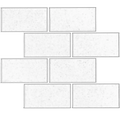
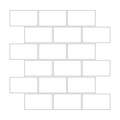



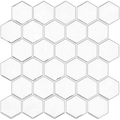
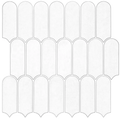
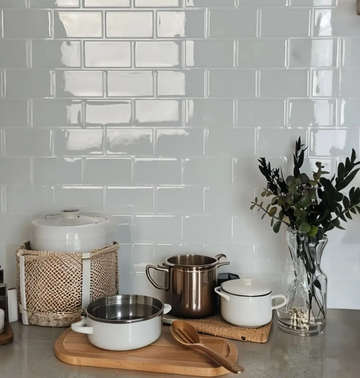
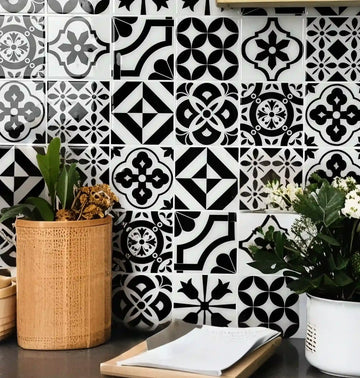
Une bonne finition de bord pour un carrelage autocollant se choisit avant l’installation. Utilisez des coupes nettes pour les bords cachés, du mastic pour les petits écarts de transition, des bordures pour les côtés exposés, et des ajustements de pose lorsque le bord finirait autrement sur une minuscule bandelette. La bonne finition dépend de la visibilité, de l’humidité, de la rectitude du mur et du style du carrelage.
Utilisez ce guide de finition des bords avec Le Guide Du Carrelage Autocollant. Les choix de bord influencent l’aspect professionnel du mur final. Ils ont aussi un impact sur la pose, la quantité de carreaux, le nettoyage et les réparations futures. Si le projet est une crédence de cuisine, associez cet article à le guide de pose de crédence avant de couper.
Déterminez Quels Bords Sont Vraiment Visibles
Tous les bords ne nécessitent pas le même traitement. La ligne de plan de travail en bas, un bord latéral ouvert, un angle intérieur et le haut sous un meuble se comportent chacun différemment. Les bords cachés peuvent rester simples. Les bords ouverts doivent sembler intentionnels. Les bords exposés à l’eau ou à la graisse doivent être faciles à nettoyer. L’erreur consiste à traiter chaque bord comme une réflexion après coup.
| Type De Bord | Finition À Considérer | Meilleure Raison |
|---|---|---|
| Bord Latéral Ouvert | Bordure Ou Finition Complète Avec Carreau | Donne un aspect planifié au côté exposé. |
| Ligne De Plan De Travail | Petit Joint De Mastic Ou Correction De Pose | Gère les petits écarts et les besoins de nettoyage. |
| Angle Intérieur | Recouvrement Net Ou Coupe Soignée | Réduit l’effet visuel encombrant dans un angle serré. |
| Haut Sous Un Meuble | Coupe Nette | Généralement moins visible et plus facile à dissimuler. |
Comparez Bordure, Mastic Et Coupes Nettes
La bordure peut donner une impression de finition à un bord exposé, mais elle ajoute un matériau et une ligne supplémentaires. Le mastic peut adoucir de petits écarts, mais il ne doit pas servir à masquer partout une mauvaise pose. Les coupes nettes sont minimalistes, mais elles ne fonctionnent que lorsque la ligne du mur est droite et que le bord n’est pas fortement exposé. Pour plus de détails, lisez le test de bordure de style Schluter et le test de jointoiement sur carrelage autocollant.
Bordure
Idéale pour les bords exposés où le côté du carreau risquerait sinon de paraître inachevé.
Mastic
Utile pour les petits écarts de transition, surtout lorsque le mur rejoint un plan de travail ou une surface latérale.
Coupes Nettes
Idéales lorsque le bord est droit, peu exposé aux éclaboussures et partiellement caché par des meubles ou des angles.
Ne Laissez Pas De Minuscules Bandelettes Décider De La Finition
Si la pose se termine par une pièce trop petite, la finition du bord ne résoudra peut-être pas le vrai problème. Décalez le point de départ, recentrez le motif ou ajustez le premier carreau pour que le bord final ait suffisamment de présence visuelle. C’est pourquoi la planification des bords doit se faire avant la coupe, et non après la moitié du mur posée.
Astuce D’Installateur : faites un essai à blanc du premier et du dernier carreau d’une rangée avant de décoller le support. Si l’une des deux extrémités semble maladroite, ajustez la pose tant qu’elle est encore réversible.
Le Nettoyage Et L’Humidité Comptent
Les bords accumulent la poussière, les résidus de cuisine et l’humidité de nettoyage. Dans une cuisine, la ligne du plan de travail et le côté près de l’évier demandent une attention particulière. Dans une salle de bain, utilisez ce guide uniquement avec les limites des zones humides du guide de salle de bain. Un bord décoratif peu exposé aux éclaboussures n’est pas la même chose qu’un bord soumis à des projections directes.
Liste De Vérification Finale
- Repérez Les Bords Latéraux Ouverts Avant La Pose.
- Choisissez Une Bordure Uniquement Là Où Le Bord Est Suffisamment Visible Pour Le Nécessiter.
- Utilisez Le Mastic Pour Les Petites Transitions, Pas Comme Solution À Chaque Mauvaise Coupe.
- Décalez La Pose Pour Éviter Les Minces Bandelettes.
- Faites Un Essai À Blanc Des Premières Et Dernières Pièces Avant De Décoller Le Support.
Reliez Le Choix Des Bords Au Type De Pièce
Le bord d’une crédence de cuisine n’a pas les mêmes priorités qu’un mur décoratif dans une pièce sèche. Les bords de cuisine doivent supporter l’essuyage, la graisse, les éclaboussures de l’évier et un regard de près. Utilisez le guide de crédence de cuisine et l’article sur le bord d’évier lorsque la finition se situe près de l’eau ou d’une zone très nettoyée. Un mur décoratif de bureau ou de chambre peut souvent se terminer plus proprement visuellement, car il n’est pas exposé au même rythme de nettoyage.
Les bords de salle de bain exigent un jugement plus strict sur l’humidité. Avant d’ajouter une bordure ou du mastic près d’un meuble vasque ou d’une baignoire, consultez le guide des murs de salle de bain à faible projection. Si le projet se fait en location, ajoutez le guide de préparation des murs pour locataires au plan afin que la finition du bord ne crée pas de problèmes de dépose plus tard.
Choisissez Une Finition Adaptée À L’Épaisseur Et À La Couleur Du Carrelage
La bordure ne doit pas paraître plus lourde que le carrelage lui-même. Un carreau fin et clair peut nécessiter une finition discrète. Un carrelage plus foncé ou aspect pierre peut parfois supporter un bord plus marqué. La couleur du mastic compte aussi : une ligne de mastic très contrastée peut rendre un écart plus visible au lieu de le rendre moins visible. Quand le carrelage a un motif fort, un bord simple paraît souvent plus raffiné qu’une finition décorative qui concurrence la surface.
Pour les choix avec aspect joint, utilisez le guide de jointoiement sur carrelage autocollant comme repère. L’objectif est d’obtenir un bord fini, pas de transformer une mise à jour légère en projet de maçonnerie complexe.
Utilisez Une Séquence D’Essai À Blanc Pour De Meilleurs Bords
Avant de décoller un support, placez le premier carreau, le dernier carreau et le carreau autour de l’interruption la plus délicate. Cela permet de voir si le bord exposé aura besoin d’une bordure, si la ligne du plan de travail laisse un écart et si une prise ou un angle crée une vilaine bandelette. Si l’essai à blanc paraît faux, décalez le point de départ tant que le projet est encore facile à modifier.
Pour les crédences, testez le bord depuis la distance normale de station debout et depuis le côté. Un bord latéral près d’une porte ou d’une étagère ouverte peut être plus visible que le centre du mur. Pour les projets en location, pensez aussi à la dépose : une solution de bordure plus lourde peut sembler finie maintenant, mais créer plus de travail plus tard.
Un bon travail de bord repose surtout sur la retenue. Ajoutez juste assez de finition pour que la transition paraisse volontaire, mais évitez d’ajouter du matériau simplement parce qu’une bordure existe. Une finition nette avec carreau complet paraît souvent mieux qu’une pièce de bordure volumineuse sur un petit projet de carrelage autocollant.
Prévoyez Les Réparations Futures Autour Du Bord
Les bords sont aussi l’endroit le plus facile à inspecter plus tard. Gardez quelques carreaux supplémentaires de la même commande afin qu’une pièce latérale abîmée, une pièce côté évier ou une pièce de ligne de plan de travail puisse être remplacée sans refaire tout le mur. Si le bord se trouve dans une zone très sollicitée, choisissez la finition la plus facile à nettoyer et à réparer.
Pour les locataires et les rénovations rapides de cuisine, la réparabilité peut être plus importante qu’un détail de bordure plus lourd. Un bord léger et net, avec du matériau de rechange disponible, est souvent la finition la plus pratique à long terme.
Lorsque le bord se trouve près d’un évier, d’une cuisinière ou d’une porte, inspectez-le après la première semaine d’utilisation normale. Un contrôle précoce permet de repérer la pression du nettoyage, l’humidité ou les contacts avant qu’ils ne deviennent un problème plus important.
Si un bord doit être ajusté, traitez d’abord la cause. Represser un bord soulevé sans corriger l’humidité, la pression du nettoyage ou les contacts répétés ne fait que retarder le même problème. Une meilleure finition est celle qui s’adapte à l’usage réel du mur.
Questions Fréquentes Avant L’Installation
Les carreaux autocollants ont-ils besoin d’une bordure de finition ?
Seuls les bords exposés ont généralement besoin d’une bordure. Les bords cachés sous les meubles ou dans les angles intérieurs peuvent être plus esthétiques avec une coupe nette ou une petite transition plutôt qu’avec un matériau supplémentaire.
Le mastic peut-il corriger une mauvaise coupe ?
Le mastic peut adoucir un petit écart de transition, mais il ne doit pas servir à masquer des erreurs de pose répétées. Si la dernière pièce est trop étroite ou irrégulière, ajustez d’abord la pose.
Quand faut-il planifier la finition des bords ?
Avant l’installation. Faites un essai à blanc du premier et du dernier carreau de la rangée afin que les bords exposés, les écarts au plan de travail et les angles aient l’air intentionnels avant que l’adhésif ne soit engagé.


Laisser un commentaire
Ce site est protégé par hCaptcha, et la Politique de confidentialité et les Conditions de service de hCaptcha s’appliquent.