



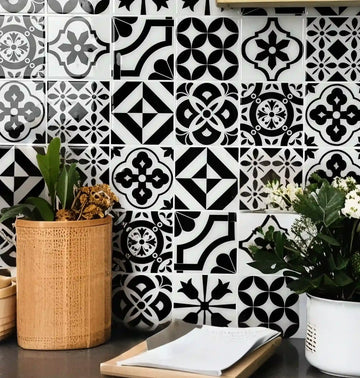

Se retrouver face à un immense mur-miroir des années 1980, du sol au plafond, peut être décourageant. Vous avez envie de moderniser la pièce, mais l’idée de briser le verre, de payer des frais d’artisan et de devoir nettoyer des débris dangereux peut vite sembler insurmontable. Il est facile de se sentir coincé avec une décoration dépassée, simplement parce que retirer le miroir serait trop coûteux ou dangereux.
Les tendances architecturales des décennies passées faisaient souvent la part belle aux grands miroirs pour donner artificiellement l’impression qu’une pièce était plus spacieuse. S’ils étaient efficaces dans les petits appartements ou les salles à manger sombres, ces imposantes installations en verre paraissent aujourd’hui souvent froides, impersonnelles et constamment couvertes de traces. Les propriétaires recherchent désormais davantage de chaleur, de texture et de personnalité pour leur intérieur — des qualités qu’un mur entièrement recouvert de verre réfléchissant ne peut tout simplement pas apporter. Pourtant, la démolition est une étape que tout le monde redoute. Outre le danger bien réel lié à la manipulation de grandes plaques de verre lourdes et fragiles, elle risque d’endommager la cloison en plaques de plâtre, qui nécessite presque toujours un important travail d’enduisage, de ponçage et de peinture.
Il est possible de poser des carreaux adhésifs à décoller-coller sur de grands miroirs, à condition que le verre soit propre, dégraissé et correctement apprêté pour favoriser l’adhérence. Utilisez des carreaux légers en vinyle ou avec un dos en mousse, conçus pour les surfaces non poreuses, et commencez par tester la pose sur une petite zone pour garantir sa sécurité.
La préparation de la surface est essentielle à la réussite de ce projet. La force d’adhérence varie considérablement d’une marque à l’autre : la sécurité et la facilité de retrait sont donc des éléments importants, aussi bien pour les locataires que pour les propriétaires. En comprenant les particularités du verre, vous pourrez réaliser cette transformation en toute sécurité.

Peut-on vraiment poser des carreaux adhésifs directement sur un miroir ?
Vous craignez que les carreaux autocollants glissent immédiatement sur une surface en verre lisse et verticale ?
Cette section explique les mécanismes d’adhérence du verre et présente les matériaux de carreaux qui ont fait leurs preuves pour adhérer solidement aux miroirs.
Oui, vous pouvez tout à fait poser des carreaux adhésifs sur un miroir. Le verre offre une surface incroyablement plane et rigide. À bien des égards, un miroir plat constitue même un meilleur support qu’une cloison texturée pour une pose adhésive.
Cependant, le verre présente un défi chimique particulier : il est totalement non poreux. Les adhésifs muraux classiques s’appuient sur les minuscules aspérités de la peinture ou des plaques de plâtre pour s’ancrer. Sur le verre, l’adhésif ne dispose d’aucune prise physique.
Vous cherchez un projet facile pour débuter ?
Vous n’êtes peut-être pas encore prêt à vous lancer dans une transformation massive de tout un mur. De nombreux propriétaires et locataires préfèrent commencer par un projet plus petit, mais très efficace, qui leur permet de prendre confiance dans les matériaux et la méthode de pose. Encadrer un miroir standard déjà présent dans la salle de bains est l’une des façons les plus efficaces de rehausser sa décoration sans entreprendre une rénovation complète. Cette approche ciblée vous permet de vous familiariser avec le comportement de l’adhésif sur le verre tout en créant un superbe point focal personnalisé. Pour découvrir ce projet précis, peu risqué, et voir une excellente transformation pour débuter, nous vous recommandons vivement de consulter notre guide complet sur le sujet.
À lire : fabriquer soi-même un cadre de miroir de salle de bains avec des carreaux adhésifsSelon les principes de la chimie des surfaces publiés par l’American Chemical Society, les surfaces non poreuses nécessitent des adhésifs sensibles à la pression présentant une forte viscoélasticité. L’adhésif doit se comporter presque comme un fluide épais, en maintenant une adhérence constante, semblable à un effet de succion, contre le verre lisse.
Les mécanismes d’adhérence du verre
Sans une tension superficielle adaptée, les matériaux lourds posés sur du verre voient rapidement leurs performances se dégrader. La gravité tire constamment le carreau vers le bas. S’il est trop lourd, l’adhésif s’étire progressivement jusqu’à céder. Cet étirement mécanique est appelé « fluage » et, sur une surface verticale parfaitement lisse comme un miroir, il compromet la durabilité de la pose.
On croit souvent à tort que des carreaux lourds et rigides sont synonymes de meilleure qualité et adhéreront mieux. En réalité, poser des carreaux lourds en composite minéral sur une surface verticale en verre est une véritable recette pour la catastrophe. Ils finiront inévitablement par glisser sous leur propre poids. La force de cohésion de l’adhésif ne peut tout simplement pas compenser en continu la force de cisaillement exercée par la gravité sur des matériaux lourds et un support parfaitement lisse.
Vous prévoyez de rénover entièrement votre salle de bains ?
Si votre miroir démodé n’est que l’un des aspects d’un problème de décoration plus vaste dans votre salle de bains, vous envisagez peut-être de rafraîchir l’ensemble de la pièce. Bonne nouvelle : les mêmes matériaux légers que ceux utilisés pour recouvrir les miroirs peuvent aussi être posés directement sur d’anciens carreaux muraux en céramique décolorés, des parois de douche en fibre de verre ou des cloisons en plaques de plâtre vieillissantes. Comprendre le comportement de ces adhésifs polyvalents sur différentes surfaces de salle de bains peut vous aider à créer un espace harmonieux et spectaculaire, sans les coûts exorbitants d’une rénovation traditionnelle. Pour découvrir en détail les possibilités à l’échelle de toute la pièce, explorez nos dernières idées déco.
Guide : transformez votre salle de bains avec des carreaux adhésifs en 2025Pour garantir une pose durable, vous devez comprendre les principaux facteurs environnementaux qui affectent le verre :
- Dilatation thermique : Le verre se dilate et se contracte en fonction de la température ambiante. Votre adhésif doit rester suffisamment souple pour suivre les mouvements du miroir. Les colles rigides se fissureront et céderont lorsque le verre se déplacera, même de façon microscopique.
- Seuil d’humidité : Les salles de bains sont particulièrement humides. La condensation qui se forme sur un miroir peut facilement s’infiltrer derrière une liaison adhésive trop faible. Le matériau doit assurer une bonne étanchéité des bords afin d’empêcher la vapeur de pénétrer.
- Poids du matériau : Le poids du carreau constitue la principale menace pour l’adhérence sur une surface verticale. Pour recouvrir un miroir, les matériaux légers et très souples sont les seuls choix vraiment fiables.
Résultats obtenus en conditions réelles
Nous avons récemment évalué la transformation complète d’un logement en location. Le locataire devait recouvrir un ancien miroir installé au-dessus d’un meuble double vasque, sans enfreindre les conditions de son bail. Il a choisi des carreaux légers et souples. L’imposant miroir des années 1990 dominait la petite pièce, projetant une lumière froide qui la rendait particulièrement peu accueillante.
En contrôlant strictement l’humidité de la pièce pendant la pose, l’installation s’est révélée très réussie. Après 18 mois de vapeur quotidienne produite par les douches et de variations de température, les carreaux ne présentaient absolument aucun signe de décollement ni de gondolement. Le locataire avait ainsi créé un véritable « mur d’accent » personnalisé directement sur le miroir existant du meuble vasque, modernisant radicalement la pièce tout en conservant 100% de son dépôt de garantie.
Conçus pour une adhérence parfaite sur les surfaces non poreuses
Pour évaluer l’adhérence à long terme sur des supports non poreux, il faut privilégier des matériaux capables de réduire efficacement les effets du cisaillement gravitationnel. Conçus pour dépasser ces limites structurelles, les Minty Ceramic 8 établissent une nouvelle référence en matière de rapport qualité-prix. Leur faible poids réduit concrètement le risque de glissement et offre une configuration optimale pour les surfaces vitrées verticales très exposées à l’humidité. Ces carreaux autocollants sans joint apportent une touche fraîche et moderne, sans poids superflu.
Découvrez la collection Minty Ceramic 8Si vous êtes locataire, cette méthode présente un avantage considérable. Vous pouvez complètement transformer la décoration de votre salle de bains ou de votre salon sans risquer de perdre votre dépôt de garantie. Elle offre un résultat spectaculaire, sans aucun engagement permanent.
Découvrez les marques de carreaux adhésifs recommandées pour trouver des options légères, adaptées aux locataires, pour votre miroir.

Comment préparer un miroir avant de poser des carreaux adhésifs ?
Vous ne savez pas comment nettoyer et préparer correctement un miroir pour éviter que vos nouveaux carreaux ne se décollent au bout d’une semaine ?
Cette section présente une méthode infaillible, étape par étape, pour préparer la surface et garantir une adhérence permanente sur le verre.
La préparation de la surface est le facteur le plus déterminant pour réussir ce projet. Si vous négligez le nettoyage en profondeur, vous collerez essentiellement vos nouveaux carreaux sur une fine pellicule de poussière, de sébum et de résidus d’ancien nettoyant pour vitres. La liaison chimique ne tiendra pas et la gravité finira par avoir le dernier mot.
Imaginez que vous posiez une protection d’écran sur un téléphone portable. Le moindre grain de poussière suffit à créer une énorme bulle d’air qui compromet l’adhérence. Un grand mur-miroir exige exactement le même niveau de préparation méticuleuse. Toute substance organique restée sur le verre forme une barrière et neutralise efficacement le support adhésif haute performance de vos carreaux.
Gérer la température de l’adhésif
Lorsqu’on applique un adhésif sensible à la pression sur une surface en verre, la température ambiante joue un rôle essentiel. Le verre est particulièrement conducteur et conserve le froid bien plus longtemps qu’une cloison en plaques de plâtre. Si la température de la pièce est inférieure à 65 °F (18 °C), le support adhésif se rigidifie et perd son pouvoir d’adhérence viscoélastique. À l’inverse, si la pièce est très chaude et humide, l’adhésif peut devenir excessivement visqueux. Pour un résultat optimal, stabilisez la température de la pièce entre 70 °F et 75 °F (21 °C et 24 °C) pendant au moins 24 heures avant la pose. Si vous travaillez dans une salle de bains froide, utilisez un sèche-cheveux en mode doux pour réchauffer délicatement la surface du verre juste avant d’appliquer le carreau. Cela active les polymères adhésifs et garantit une adhérence forte et permanente.
Le problème des nettoyants pour vitres classiques
La plupart des gens attrapent instinctivement un nettoyant pour vitres bleu classique pour préparer leurs miroirs. C’est une erreur majeure. Les nettoyants pour vitres courants contiennent souvent de l’ammoniaque, des cires ou des silicones conçus pour laisser une brillance sans traces. Ces additifs donnent aux vitres un aspect impeccable, mais ils nuisent fortement aux adhésifs.
Cette « brillance » est en réalité un film chimique microscopique. Il forme une barrière qui empêche l’adhésif des carreaux d’entrer directement en contact avec le verre. Le dos collant de votre carreau adhère alors à la cire plutôt qu’au dioxyde de silicium qui compose le miroir.
Prenons l’exemple récent d’une personne qui rénovait elle-même la porte miroir d’un placard datant des années 1990, dans un appartement à Chicago. Elle a tenté de poser les carreaux directement sur le verre, après l’avoir nettoyé avec un spray pour vitres classique. En moins de 48 heures, les coins supérieurs des carreaux ont commencé à se décoller et, au bout de cinq jours, des plaques entières avaient glissé et n’étaient plus alignées. Le coupable était le résidu invisible laissé par le nettoyant ménager utilisé au quotidien.
La méthode de décontamination en trois étapes
Pour réussir la nouvelle pose, il a fallu suivre une méthode de dégraissage rigoureuse. Pour obtenir une adhérence permanente, vous devez débarrasser complètement le verre de tout résidu. Suivez précisément ces étapes pour un résultat optimal :
- Dépoussiérage à sec Utilisez un chiffon en microfibre sec et non pelucheux pour enlever toute poussière et tous les débris présents sur la surface du miroir. N’utilisez pas d’essuie-tout : ils peuvent laisser de minuscules fibres de bois qui contamineraient votre zone de travail. Cette première étape vous évite simplement d’étaler la saleté lors de la deuxième.
- Dégraissage chimique Essuyez l’ensemble du miroir avec de l’alcool isopropylique (à une concentration d’au moins 70%). Celui-ci dissout les traces de gras, les résidus de laque et autres dépôts persistants, puis s’évapore rapidement sans laisser de résidu. Travaillez par petites zones et essuyez jusqu’à ce que le verre crisse sous le chiffon.
- Finition des bords Accordez une attention particulière aux bords et aux coins du miroir. C’est à ces endroits que la laque, les produits cosmétiques et la poussière ont tendance à s’accumuler au fil des ans. À l’aide d’un coton-tige imbibé d’alcool, frottez soigneusement les contours étroits, là où le verre rejoint les clips de maintien en métal ou en plastique.
Vous luttez contre l’humidité de la salle de bains ?
Si votre miroir se trouve dans une salle de bains principale qui se remplit régulièrement de vapeur après la douche, une bonne préparation de la surface ne représente que la moitié du travail. Vous devez également choisir des carreaux spécialement conçus avec des barrières superposées résistantes à l’humidité et prévues pour un usage intensif. Les simples stickers décoratifs ne résisteront pas longtemps à la condensation. Pour découvrir en détail les technologies de carreaux offrant les meilleurs niveaux d’étanchéité et permettant une pose rapide le temps d’un week-end dans les zones très humides, consultez notre guide dédié à la gestion de l’humidité.
À lire : carreaux autocollants pour salle de bains résistants à l’humiditéTest interactif : votre miroir est-il prêt ?
Testez vos connaissances avant de commencer à poser des carreaux coûteux.
Quel liquide devez-vous utiliser pour le dernier nettoyage de votre miroir ?
Améliorer l’adhérence pour une pose permanente
Pour une pose durable dans un logement, lorsque la possibilité de retirer les carreaux n’est pas une priorité, vous pouvez renforcer davantage la fixation. L’application d’un primaire d’adhérence translucide pour verre peut créer la micro-rugosité nécessaire.
Ces promoteurs d’adhérence à base de silane créent une texture microscopique sur le verre. L’adhésif sensible à la pression dispose ainsi d’une structure physique à laquelle s’accrocher, ce qui améliore considérablement sa résistance au cisaillement dans le temps. Il crée un pont chimique entre les polymères organiques de l’adhésif des carreaux et la silice inorganique du miroir.
Protégez les bords du miroir avec du ruban de masquage de peintre peu adhésif afin d’éviter que les produits dégraissants n’atteignent les plaques de plâtre ou les meubles de salle de bains adjacents. L’alcool isopropylique peut ternir la peinture environnante si vous ne prenez pas de précautions.
Les professionnels s’accordent à dire qu’une préparation adéquate détermine la durée de vie du résultat final. Les méthodes d’évaluation standardisées détaillées dans « Cadre de miroir de salle de bains DIY avec carreaux autocollants » fournissent les repères quantitatifs nécessaires pour réaliser cette préparation sans risque d’échec critique, notamment dans les zones très humides.
Une fois le verre parfaitement propre, évitez de toucher la surface à mains nues. Les huiles naturelles présentes sur vos doigts suffisent à compromettre le support adhésif de vos nouveaux carreaux.
Découvrez d’autres idées de relooking de miroir à réaliser soi-même pour finaliser votre plan de pose avant de commencer à coller les carreaux.

Quels sont les meilleurs carreaux autocollants pour les miroirs et comment les poser en toute sécurité ?
Vous ne savez pas lequel choisir parmi les centaines de modèles de carreaux et vous avez peur de fissurer le miroir pendant la pose ?
Cette section présente les matériaux les plus sûrs ainsi qu’une méthode de pose précise pour protéger votre verre et réussir votre projet déco.
Choisir le bon revêtement mural autocollant pour un miroir nécessite de trouver le juste équilibre entre esthétique et propriétés physiques des matériaux. Il vous faut des carreaux légers et souples, dotés d’un support adhésif de qualité professionnelle spécialement conçu pour les surfaces lisses et peu adhérentes.
Tous les produits autocollants ne se valent pas. Les carreaux en métal plein ou les composites imitant la pierre sont trop lourds pour une surface verticale lisse. Vous devez choisir des matériaux spécialement conçus pour les environnements à faible friction.
Vous recherchez des matériaux haut de gamme à la durabilité éprouvée ?
Si votre surface miroir se trouve dans une zone très fréquentée ou si vous prévoyez de prolonger le motif des carreaux jusque dans la cuisine attenante, privilégiez des matériaux de première qualité. Les dernières avancées en matière de fabrication de carreaux autocollants offrent une excellente résistance à la chaleur et des couches d’usure ultra-résistantes, parfaitement adaptées aux espaces situés derrière une cuisinière ou un évier. Ces collections haut de gamme reproduisent le relief de la céramique ou du verre, sans le poids excessif qui peut entraîner des problèmes de pose sur un miroir. Découvrez nos meilleures sélections, rigoureusement testées pour l’année à venir.
À découvrir : les meilleurs carreaux autocollants pour crédence de cuisine en 2025Comparatif de l’efficacité des matériaux sur le verre
Évaluons la compatibilité structurelle de différents matériaux de carrelage lorsqu’ils sont posés directement sur une surface verticale en verre.
| Type de matériau | Adhérence sur le verre | Poids | Usage recommandé |
|---|---|---|---|
| Vinyle fin | Excellente | Très léger | Murs miroirs, rénovations sans travaux lourds |
| Gel 3D/PU | Élevée | Léger | Meubles-lavabos de salle de bains, crédences |
| Métal/aluminium | Moyenne | Moyen | Petits miroirs décoratifs (apprêt requis) |
| Composite minéral | Faible (risque élevé de glissement) | Lourd | Déconseillé sur le verre vertical |
Comme le montrent ces données, les carreaux en vinyle fin et en gel de polyuréthane (PU) 3D offrent les performances les plus sûres et les plus fiables. Leur flexibilité leur permet de mieux accompagner la dilatation thermique du miroir. Le gel PU offre notamment l’aspect haut de gamme du verre épais ou de la céramique véritable, sans leur poids excessif.
Modèle à l’honneur : Olive Lines™
Dans une salle de bains très humide, il faut également tenir compte des conditions d’utilisation : le matériau doit résister à une humidité constante. Des modèles comme Olive Lines™ limitent les problèmes liés à l’humidité. Grâce à sa composition résistante à la chaleur, le matériau réduit fortement le risque que les bords se soulèvent et garantit une tenue durable sur les surfaces en verre. Contrairement aux simples stickers plats, ces carreaux muraux autocollants créent un véritable effet de relief, en apportant texture et style à votre miroir lisse. Aucun outil ni savoir-faire particulier n’est nécessaire pour transformer complètement votre pièce en quelques heures.
Achetez la collection Olive Lines™Guide express de préparation et de pose sur miroir
Nettoyez et dégraissez
Essuyez toute la surface vitrée avec 70%+ de l’alcool isopropylique. Laissez sécher complètement.
Tracez une ligne de référence
Projetez une ligne laser parfaitement droite sur le miroir. Ne vous fiez pas aux bords du meuble-lavabo.
Positionnez et pressez
Décollez 1 inch du support. Alignez, collez, puis lissez vers l’extérieur avec une raclette en feutre.
Méthodes d’installation sûres et précises
La pose de carreaux sur du verre demande une approche particulière. Comme le verre est parfaitement plat, la moindre erreur d’alignement se voit immédiatement. Impossible de forcer un carreau mal positionné à rester bien à plat sur le verre : le support rigide fera simplement plisser le vinyle et créera des bulles d’air.
Suivez cette méthode d’installation progressive et précise pour éviter les bulles, les plis et les lignes irrégulières :
- Tracez une ligne de départ au laser Ne partez jamais du principe que le plafond, les plinthes ou le bord du meuble-lavabo sont parfaitement de niveau. Les maisons bougent avec le temps et les miroirs sont souvent installés avec un léger faux aplomb. Utilisez un niveau laser pour projeter une ligne de départ parfaitement droite sur le miroir et guider la première rangée.
- Tenez compte des clips du miroir Si votre miroir est maintenu par des clips transparents en plastique ou en métal, ne les retirez pas. Leur retrait pourrait faire tomber soudainement le verre, avec un risque de blessures très graves. Mesurez plutôt soigneusement vos carreaux, puis utilisez un couteau X-Acto ou des ciseaux bien aiguisés pour découper de petites encoches précises qui s’ajusteront parfaitement autour des clips.
- La méthode de la charnière Décollez seulement 2,5 cm du support adhésif le long du bord supérieur. Alignez le carreau sur votre ligne laser, collez la partie exposée, puis retirez lentement le reste du support vers le bas. À mesure que vous avancez, lissez le carreau contre le verre en partant du haut.
Maîtrisez l’alignement
Pour obtenir une disposition éprouvée, une planification minutieuse est indispensable avant de retirer le moindre papier protecteur. Une disposition préparée vous permet de limiter le gaspillage de matériaux coûteux, d’éviter les fines bandes de carreau peu esthétiques sur les bords du miroir et d’obtenir une finition professionnelle et homogène. Que vous travailliez dans des angles complexes ou autour de luminaires intégrés au verre, il est essentiel de suivre un plan précis. Consultez notre guide complet d’installation pour perfectionner votre technique.
Guide : comment poser des carreaux adhésifs et découvrir les plus beaux designs en 2025
Appuyez en toute sécurité
Utilisez un outil de lissage souple avec un bord en feutre pour appliquer les carreaux contre le verre. Une pression ferme active l’adhésif sensible à la pression et garantit son adhérence complète à la surface non poreuse. Cette activation à l’échelle microscopique transforme le film adhésif en une liaison structurelle permanente.
Selon les consignes de sécurité de la Glass Association of North America (GANA), une pression inégale et localisée sur de grands miroirs architecturaux peut provoquer des fissures de contrainte. Appliquez toujours une pression ferme, large et régulière pendant la pose. N’utilisez jamais de raclette en plastique rigide, de manche de tournevis ou de marteau pour mettre les carreaux en place. Un miroir brisé est extrêmement dangereux et coûteux à remplacer.
Prendre le temps de bien aligner le premier carreau vous évitera des heures de frustration. Comme le verre adhère fortement à la colle, retirer un carreau mal aligné peut étirer et abîmer le vinyle. Mesurez deux fois, alignez avec le laser, puis appuyez une seule fois.
En conclusion
Recouvrir de vieux miroirs avec des carreaux est tout à fait possible et peut constituer un projet économique, à condition de procéder avec patience et précision. Les carreaux adhésifs peuvent être posés sans danger sur un miroir si le verre est soigneusement dégraissé et si vous choisissez des matériaux légers adaptés.
Respectez toujours la nature lisse et non poreuse du verre. Suivez rigoureusement les principes essentiels du nettoyage avec de l’alcool isopropylique et utilisez une technique de pose précise et parfaitement de niveau. Vous obtiendrez ainsi une finition esthétique et durable, sans endommager la surface située dessous, tout en évitant les salissures, les coûts et les risques liés à la dépose traditionnelle du verre.
Besoin d’un maximum d’inspiration ?
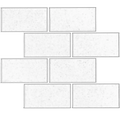
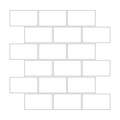
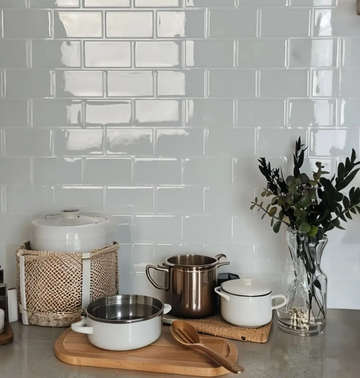
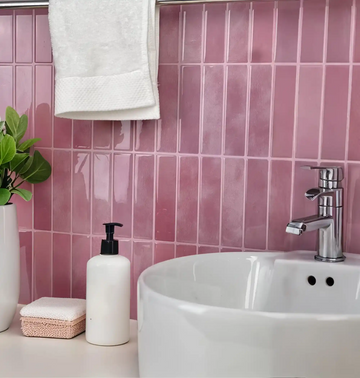
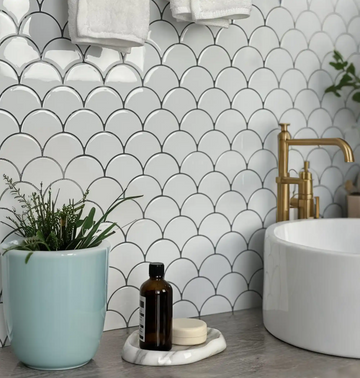
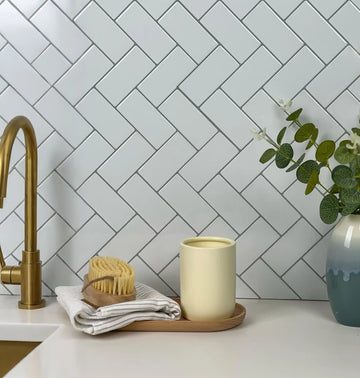
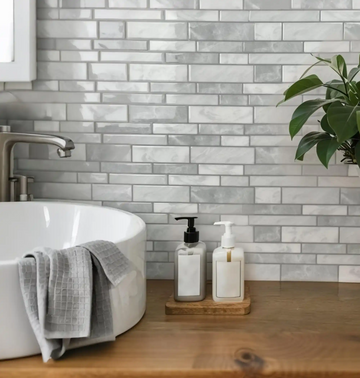
Votre salle de bains vieillotte vous lasse ? Visualiser le résultat final est souvent l’étape la plus difficile d’un projet de bricolage. Transformer un immense miroir froid et impersonnel en véritable élément décoratif est extrêmement gratifiant. Mais le choix du style — carreaux métro modernes et épurés, texture minérale rustique ou finition métallisée luxueuse — donne le ton à toute la pièce. Transformez-la en quelques heures grâce à des solutions adhésives abordables. Découvrez des réalisations spectaculaires avant-après pour stimuler votre imagination et préciser votre projet.
Galerie : relooker sa salle de bains avec des carreaux adhésifsEn choisissant des matériaux suffisamment souples et en maîtrisant correctement l’environnement de pose, vous évitez une démolition coûteuse. Vous pouvez complètement moderniser le meuble-lavabo de votre salle de bains ou un mur d’accent du salon en un seul après-midi.
Si vous êtes prêt à transformer votre intérieur, commencez par tester un petit coin du miroir. Vérifiez que l’adhérence vous convient et que le style choisi correspond à vos attentes. Vous pourrez ensuite poursuivre votre projet en toute confiance. Découvrez nos gammes de produits recommandées et nos galeries d’inspiration pour commencer à planifier une rénovation parfaite, sans dommages.
Quel espace avec miroir de votre maison transformeriez-vous en premier ?

Foire aux questions
Est-il facile de retirer des carreaux adhésifs d’un miroir ?
Oui. Comme le verre est totalement non poreux, les retirer est souvent plus facile et plus propre que de décoller des carreaux d’une cloison peinte. Pour les retirer en toute sécurité, appliquez la chaleur d’un sèche-cheveux classique afin de ramollir l’adhésif au dos. Une fois le carreau réchauffé, décollez-le doucement du verre. Nettoyez les éventuels résidus collants avec un produit spécialement conçu pour enlever les adhésifs, à base d’agrumes, et un chiffon doux.
Recouvrir un miroir de carreaux risque-t-il d’endommager le verre ?
Non, l’adhésif est chimiquement inerte et n’endommagera pas la surface du verre ni ne la dépolira. Toutefois, une erreur de manipulation lors du retrait peut causer des problèmes. Une force excessive, l’utilisation d’outils métalliques tranchants pour faire levier ou de lames abrasives pour gratter peuvent provoquer des rayures permanentes ou de dangereuses fissures de tension. Utilisez toujours une chaleur douce et des racloirs en plastique souple.
Combien de temps les carreaux adhésifs tiennent-ils sur un miroir de salle de bains ?
Lorsqu’ils sont correctement posés sur un miroir soigneusement dégraissé, des carreaux en vinyle ou en gel de polyuréthane de qualité peuvent tenir plusieurs années. Une bonne ventilation, grâce à une évacuation adaptée, permet de maîtriser l’humidité ambiante de la salle de bains et de prolonger considérablement la durée de vie de l’adhésif. Veillez à bien appuyer sur les bords pour empêcher l’humidité de s’infiltrer derrière les carreaux.
Dois-je poncer le miroir avant de poser les carreaux ?
Absolument pas. Poncer du verre est extrêmement dangereux. Cela libère dans l’air des poussières de silice nocives et compromet complètement l’intégrité structurelle du miroir, qui risque alors de se briser. Pour appliquer un adhésif sur du verre, les seules étapes de préparation sûres et nécessaires sont un dépolissage chimique et un nettoyage en profondeur avec de l’alcool isopropylique fortement concentré.


Laisser un commentaire
Ce site est protégé par hCaptcha, et la Politique de confidentialité et les Conditions de service de hCaptcha s’appliquent.