







Build a renter preflight before buying tile
Confirm the lease, any landlord approval and the existing wall condition. Photograph paint, patches, old caulk and other defects before cleaning. A removable product can still lift weak paint, and an otherwise suitable product can still violate a lease if the alteration was not permitted.
Explore this guide
Separate the wall into ordinary prep space, sink-splash space and appliance space. Product documentation, wall condition and exposure should be checked for each zone rather than assuming one backsplash is automatically suitable everywhere.
Make quantity and layout decisions from the actual wall
Measure each wall segment, subtract large openings only when the product layout truly avoids them, and calculate usable installed coverage. Add extra material based on pattern repeat, cuts and a repair reserve rather than a fixed percentage. Dry-fit the hardest outlet and end condition before exposing adhesive.
Keep the removal plan with the installation plan. Save the product instructions, sample result and matching paint information where available. A short hidden test can reveal an obvious compatibility problem but cannot promise an untouched wall after a long tenancy.
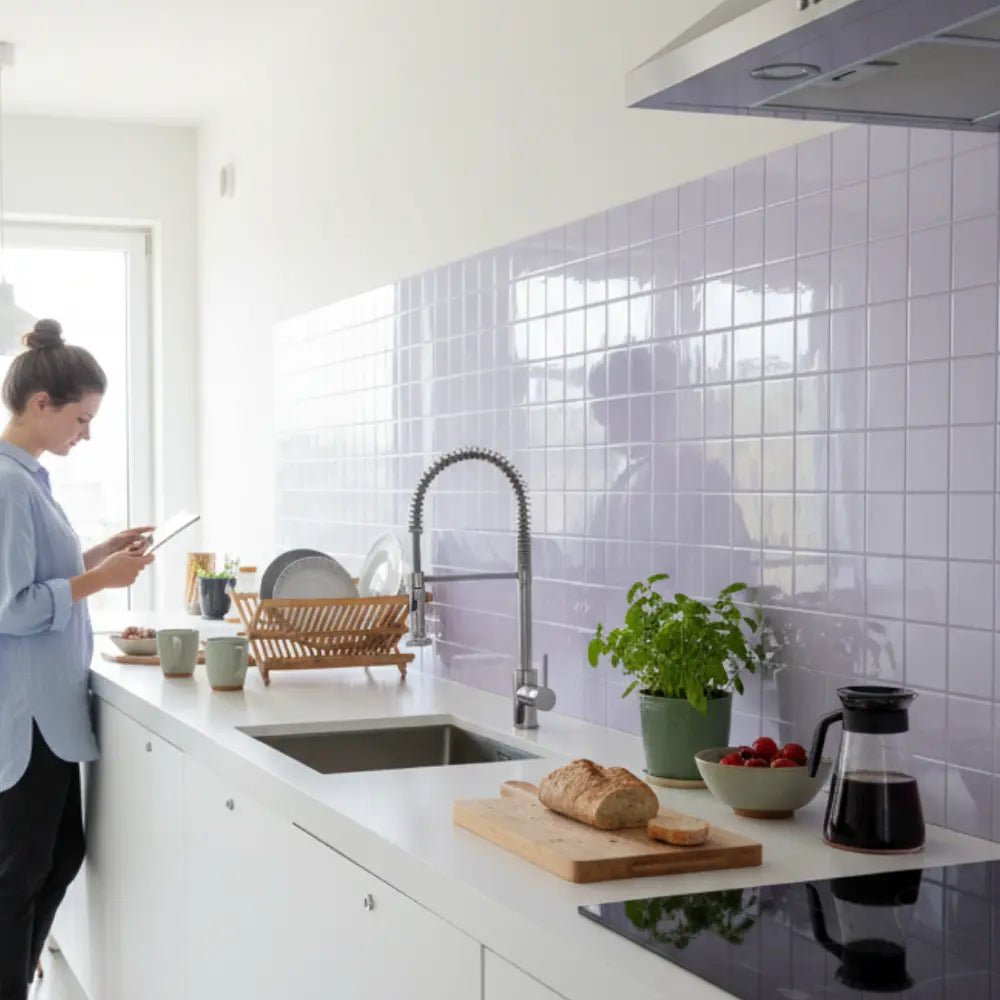
Tired of staring at a dated, greasy kitchen wall but terrified of losing your security deposit? You are not alone. Millions of renters face this exact frustration, trapped between the desire for a beautiful cooking space and the strict rules of their lease agreements. Fear of wall damage and budget constraints often stop kitchen upgrades before they even begin.
The psychological impact of living in a space that doesn't reflect your personal style cannot be understated. The kitchen is the heart of the home, the primary gathering space, and the operational center for daily life. When this vital area feels neglected or hopelessly tethered to a previous decade's design choices, it creates a subtle but pervasive sense of dissatisfaction. For decades, the rental market offered no viable middle ground. You either lived with the outdated aesthetic, or you risked thousands of dollars by installing permanent fixtures that technically belonged to your landlord.
A peel-and-stick backsplash can create a strong visual change with fewer installation steps, but reversibility depends on the wall, adhesive, time in service and removal method. Do not promise an untouched wall or deposit outcome.
Peel-and-stick products now span multiple constructions and price points, but quality, durability and renter suitability remain product-specific. Compare the exact face, backing, adhesive, intended substrate, heat or moisture limits and removal instructions instead of treating the category as universally renter-approved.
This guide covers product selection, wall preparation, installation, care and removal planning. It does not promise a foolproof installation, a luxury result or a particular security-deposit outcome.

Why Peel and Stick Backsplash is Perfect for Renters
This section explains how to evaluate a lower-disruption backsplash without calling it risk-free or completely reversible. Lease permission, wall condition, product limits and the removal plan all remain part of the decision.
For a renter, the first question is whether the lease and wall are suitable for an adhesive finish. Removability varies with paint, primer, wall condition, adhesive, time in service and removal method, so a product should not be described as automatically releasing cleanly with heat.
Removal risk should be planned separately from appearance. Photograph the wall, obtain permission where required, use only compatible preparation and budget for possible cleaning, patching or repainting.
The Financial Advantage
Compare current project costs from the actual wall area, product coverage, surface repair, tools, trim, labor where needed and a removal/restoration allowance. A fixed lease-duration ownership formula does not establish that one backsplash system is financially superior for every rental.
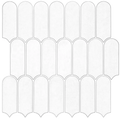
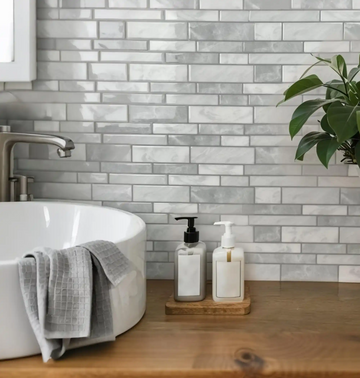
A self-adhesive backsplash can reduce some wet-trade steps, but visual realism and cost vary by product. Compare samples for print repeat, relief, seams and finish under the actual kitchen lighting rather than assuming a modern gel or composite always looks like ceramic, glass or stone.
Use current quotations for your own wall instead of an illustrative customer story. Compare the same area, substrate preparation, edge finishing, labor and cleanup before deciding which system is less expensive.
Before you finalize your design strategy, it is critically important to understand the full scope of financial leverage these materials offer. Avoiding professional contractor fees is just the beginning; the true savings emerge when you select the optimal materials for your specific layout. To discover proven strategies for executing a high-end look on a shoestring budget, and to learn insider techniques for seamless application, dive into our comprehensive masterclass. Elevate your design intelligence and master your kitchen's potential by reading our essential guide on DIY Peel and Stick Tiles: Easy Kitchen Upgrade.
A Weekend DIY Project
Installation time depends on wall repair, cleaning, layout, outlets, cutting, edge finishing and the product instructions. Some peel-and-stick projects can be completed without mortar or grout, but do not promise a universal weekend schedule or make generic claims about conventional mortar curing or indoor emissions.
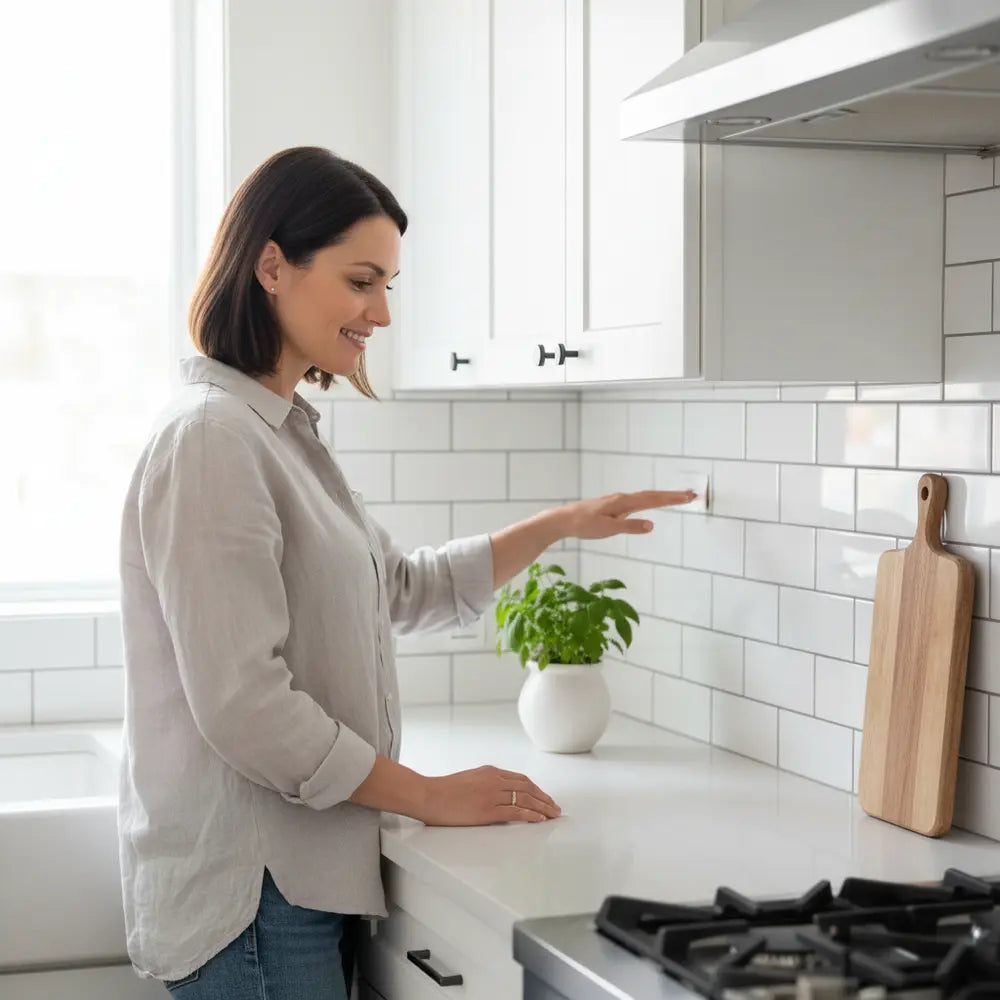
Use the linked planning guide to measure the wall, account for corners and outlets, and establish a level reference. A grid can improve consistency, but it cannot guarantee professional alignment on every wall. Related planning: DIY Peel and Stick Backsplash Guide for Renters
Interactive Poll: Which Backsplash Style Fits Your Rental Best?
Help us understand emerging 2025 rental trends by casting your vote below. See what other DIYers are choosing!
How to Compare Peel-and-Stick Backsplash Products Without a Ranking
Start with the exact wall and exposure rather than a “best of 2025” list. A dry coffee-bar wall, the splash area behind a sink and the wall beside a range are different projects. Record the substrate, paint or existing tile, cleaning routine, nearby appliance clearances and whether the lease permits the installation.
1. Verify the construction and intended use
Marketing labels such as vinyl, gel, composite, stone-look or ceramic-look do not describe the complete product. Check the face material, backing or core, thickness, adhesive system, approved substrates, installation temperature, service-temperature limits, moisture guidance and whether the product is intended only for walls. Do not transfer a heat, water or removal claim from one SKU to another.
2. Compare physical samples in the room
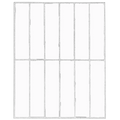
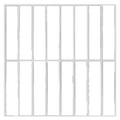
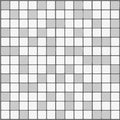
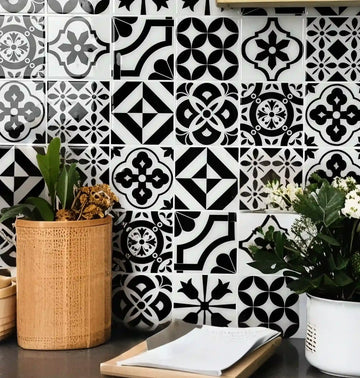
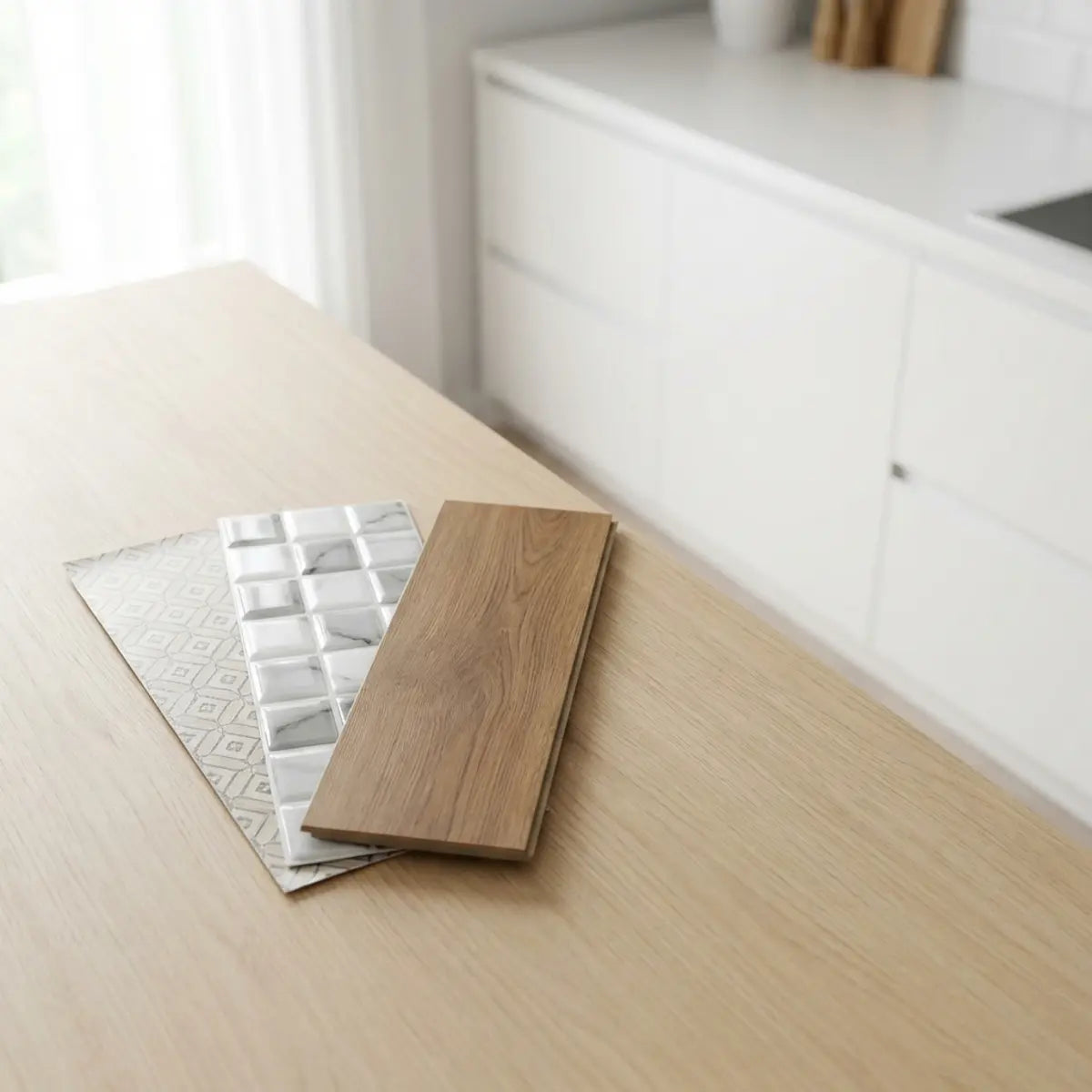
Order or inspect a sample when possible. Place several pieces together so you can judge seam visibility, pattern repeat, relief and color under daylight and evening lighting. A single product image cannot show how the print repeats across a larger wall or how a glossy face will reflect under-cabinet lighting.
3. Keep heat, water and cleaning as separate checks
A wipe-clean face is not the same thing as a waterproof assembly, and a decorative wall finish should not be assumed safe at an appliance merely because it is sold for kitchens. Use the appliance manufacturer’s clearance instructions and the tile manufacturer’s heat and moisture limits. For sink areas, inspect seams, penetrations and the countertop joint rather than relying on the face material alone.
4. Read the removal and wall-preparation guidance before purchase
For rentals, the exit plan belongs in the buying decision. Confirm whether the product allows installation on your wall coating, whether a hidden-area check is recommended, and what removal method is published. Photograph the starting wall and budget for possible residue cleanup, paint touch-up or drywall repair instead of treating “removable” as a deposit guarantee.
5. Compare the full project scope
Calculate usable coverage from the measured wall, then add justified waste for cuts and pattern matching, shipping, trim, tools, surface preparation and any professional work. Compare that same scope with paint, wallpaper or conventional tile where those alternatives are permitted and suitable. This gives you a defensible project comparison without invented market tests, proprietary scores or “best product” rankings.
If sustainability or indoor-air quality is important, look for product-specific material disclosures or recognized certifications rather than assuming a broad material category is low-VOC, recycled or lower-carbon. The green backsplash planning guide can be used as a starting point for the questions to ask, not as certification of an individual product.
Tools and Prep Checklist Before You Start
This section provides a preparation checklist to reduce avoidable adhesion problems. It cannot guarantee permanent hold because the wall coating, product, exposure and installation conditions still matter.
Surface contamination is one possible cause of adhesion problems, but product compatibility, weak paint, texture, moisture, heat, edge details and installation pressure can also matter. Diagnose the actual wall and product instead of assigning nearly all failures to preparation.
Contamination, weak coatings or moisture can reduce adhesion, but failure timing and severity are product- and substrate-specific. Prepare the wall according to the exact product instructions and resolve moisture problems before covering them rather than treating peeling within weeks as a deterministic outcome.
The Preparation Phase
Think of your wall as a canvas. You would not paint a masterpiece over a greasy, dusty canvas. Kitchens are naturally prone to invisible layers of aerosolized cooking oil. Over months and years, microscopic lipid particles float away from your stove and settle uniformly across your vertical surfaces, creating an invisible, anti-adhesion barrier.
- Use only cleaners permitted by the tile and wall-coating instructions. A stronger degreaser or TSP substitute is not automatically required and can itself leave residue or affect a coating if used incorrectly.
- Allow the cleaned wall and any repaired or painted areas to dry or cure for the period required by the cleaner, coating and tile instructions. Do not apply a universal 24-hour wait to every wall system.
- Repair or smooth only as required by the wall and tile instructions. Do not sand or deliberately score a sound painted wall unless the product or repair method calls for it, especially in a rental.
Essential DIY Tool Checklist
You do not need power tools for this project. However, having the right hand tools yields an optimal configuration and saves hours of frustration. Professional results are directly correlated to the precision of your cuts and the accuracy of your level lines.
- Utility Knife (with extra blades): A sharp blade is critical. A dull blade will tear the vinyl backing rather than cutting it cleanly. Change blades often.
- Straightedge: Use a stable straightedge or cutting guide when the product instructions and cut method call for one. Choose a tool that will not slip or damage the tile face.
- Cutting Mat: Protect your countertops while scoring and cutting the tiles.
- Laser Level or Bubble Level: Do not trust your countertops or cabinets to be perfectly straight. Always draw a level baseline on the wall before placing the first tile.
- Chalk Line or Pencil: For marking your level guidelines across the entire workspace.
For a deeper dive into the exact physical steps, the comprehensive framework detailed in the DIY Peel and Stick Kitchen Backsplash Guide provides the quantitative baseline necessary to implement this without critical failure. That guide is an indispensable resource for understanding the mechanics of corner wrapping, outlet templating, and managing the overlap seams that create a truly watertight, continuous visual barrier across your kitchen.
Download Your Free 2025 Installation Checklist
Don't miss a single step. Download our printable master checklist to ensure your wall is perfectly prepped and your tools are ready before you make your first cut.
Download Printable PDF (.txt) ChecklistTroubleshooting Common Peel and Stick Backsplash Problems
Noticing edges peeling near the stove or struggling with textured walls? This section offers a quantitative baseline for fixing adhesion failures and heat-related peeling to keep your kitchen looking flawless.
Even with perfect preparation, unique kitchen environments can present challenges. Temperature fluctuations, high humidity, and existing wall textures can test the limits of self-adhesive products. A kitchen is a highly volatile dynamic space, subjecting wall coverings to rapid spikes in ambient temperature, splashing acidic liquids, and abrasive cleaning routines.
Understanding how to troubleshoot these issues separates a temporary fix from a lasting installation. Most problems are easily solvable with a few pro-level adjustments. Do not panic if you encounter a localized failure; it rarely means the entire project is compromised. With targeted intervention, you can salvage the layout and restore structural integrity.

Fixing Tiles Not Sticking Properly
If an edge lifts or a tile does not lay flat, inspect the surface, product compatibility, edge condition and exposure before choosing a repair. Contamination is one possibility, but weak paint, texture, moisture, heat or installation pressure can also contribute.
Follow the exact product troubleshooting instructions. Use heat only when permitted, and do not apply a universal hairdryer setting or 30-second pressing rule; excess heat can affect both the tile and the wall coating.
Do not add silicone or another secondary adhesive under a lifting tile unless the manufacturer explicitly permits that repair. Extra adhesive can change heat behavior, warranty coverage and future removal.
Addressing Heat and Water Resistance
There is no reliable universal heat threshold for adhesive tiles. Check the exact product’s maximum temperature and the appliance manufacturer’s wall-clearance requirements for the actual installation.
Do not apply a generic eight-inch clearance or improvise a glass heat shield from an article. Use the range manufacturer’s required clearances and only wall finishes or protective assemblies documented for that location.
At a sink, inspect splash paths, seams and the countertop joint. If the product instructions call for a compatible sealant at a specific edge, follow that detail; do not rely on an invented renter story or assume one bead of silicone permanently solves water intrusion.
Dealing with Textured Walls
Many adhesive wall products require a relatively smooth, sound substrate, but allowable texture varies by product. Compare the wall texture with the manufacturer’s substrate requirements before ordering.
Do not sand a rental wall or add spray adhesive as a generic workaround. If the wall is outside the product’s texture limits, choose an approved preparation method with permission or use a different finish that is compatible with the existing substrate.
If your walls possess severe architectural anomalies or heavy trowel texturing that prohibits standard application, do not abandon your renovation dreams. There are engineered workarounds explicitly designed to bypass these structural hurdles. For a broader perspective on transforming challenging spaces, consult our definitive guide on Renter-Friendly Backsplash Ideas That Transform Apartments. This resource dives into alternative suspension methods, rigid panel backing tricks, and strategic camouflaging techniques tailored for difficult rental units.
Watch the Installation Masterclass
See the exact cutting, measuring, and peeling techniques in action. This visual walkthrough demonstrates how to navigate tricky corners and complex outlet layouts.
Safe Removal and Renter-Friendly Exit Strategy
This section outlines removal-planning principles. There is no universal method that dissolves every adhesive or leaves every wall unchanged.
Removal is one part of renter suitability, alongside lease permission, wall condition, exposure and restoration requirements. Forceful removal can damage some coatings, but the outcome varies by wall and adhesive and does not determine a deposit by itself.
Do not assume every tile adhesive has the same thermoplastic behavior or glass-transition response. Follow the exact product’s removal instructions and use heat only if the manufacturer permits it.
Step-by-Step Tile Removal
Use the removal method specified by the product. A hairdryer is appropriate only when the instructions permit heat; avoid an industrial heat gun unless the manufacturer explicitly specifies a controlled method.
- If heat is permitted, follow the product’s stated temperature, distance and timing. Do not apply a universal high-heat, six-inch, 30–45 second rule to every adhesive or wall coating.
- Lift an edge only with a tool and method compatible with the wall and product. Stop if paint, primer or drywall paper begins to lift; do not assume the adhesive will release cleanly.
- 3. Pull Parallel: Do not pull the tile straight out toward your body. Pull it down, keeping the tile parallel to the wall. This minimizes the pulling force on the drywall paper. Think of stretching a rubber band across the wall rather than snapping it backward; this shear angle drastically protects the underlying paint layer.
- Work slowly and stop when resistance or coating damage appears. Damage risk depends on wall preparation, coating, adhesive, dwell time, temperature and removal angle rather than patience alone.
Cleaning the Wall Post-Removal
Removal can leave residue, paint lift or drywall-paper damage depending on adhesive, coating, dwell time, heat and technique. Use only cleaning methods compatible with the wall and product, test a small area first, and stop if the coating begins to soften or lift.
If residue remains, use a cleaner and technique compatible with the wall coating and adhesive. Do not assume a citrus solvent is non-destructive to every cured paint; test a small area first.
Finish by washing the wall with warm water and a tiny bit of mild dish soap to remove the citrus oil. If left on the wall, citrus oils can leave a shiny spot that becomes highly visible under sharp kitchen lighting, alerting landlords during a final inspection.
Preserving Your Security Deposit
A careful removal process can reduce risk, but it cannot guarantee the wall will match its move-in condition or determine a deposit decision. Photograph the wall before installation and after removal, allow time for patching or repainting, and keep the lease or owner instructions with the project record.
To explore more ideas on temporary upgrades and safe removal processes, and to truly understand how to operate within the bounds of a strict lease agreement while still expressing your personal aesthetic, review the profound insights in Stylish Peel & Stick Backsplashes for Renters which calibrates the output for lease-compliant decorating.

Build a Project Record Before Installing a Rental Backsplash
Start with a one-page record of the wall before you buy the finish. Measure the usable width and height, mark outlets, switches, cabinet bottoms, countertop joints and exposed side edges, and photograph the paint or existing tile from several angles. Record any old patches, peeling coating, grease staining, texture or moisture evidence. This makes it easier to decide whether the wall is actually eligible for the product and gives you a reference when the backsplash is eventually removed.
Divide the wall by exposure rather than treating the entire backsplash as one condition. The area beside a sink sees different splash and cleaning patterns from a dry coffee station, while the wall behind a range is governed by the appliance clearances and the wall-finish temperature limits. Check the exact tile instructions against each location. If one section falls outside the documented use, change the material or leave that area uncovered instead of adding an improvised adhesive, caulk bead or heat shield to force the product into service.
Create a small installation log as you work. Note the cleaner or preparation method used, the wall condition after it dried, the batch or product name, the direction of the first reference line and any locations where edges needed extra attention. Keep the package instructions and current product page with the record. If a seam later lifts or a surface discolors, these details help distinguish a product limitation from a wall, exposure or installation issue without relying on memory.
Plan removal at the same time as installation. Write down the manufacturer-approved removal method, whether heat is allowed, which cleaners are compatible with the wall coating, and how much time you can leave for cleanup, patching or repainting before move-out. A hidden sample can reveal an obvious short-term incompatibility, but it cannot guarantee how a full wall will behave after a long dwell time. The practical goal is not a promise of zero damage; it is a documented project whose risks, maintenance and restoration path are understood before the first sheet is applied.
Finally, compare the backsplash with lower-commitment alternatives. Lighting, hardware, countertop accessories, a removable art element or simply leaving a sound wall alone may solve part of the visual problem without introducing an adhesive-removal task. If the backsplash still offers enough value after you include preparation, cutting, care and restoration, you have a much stronger basis for proceeding than an advertised weekend transformation or a generic renter-safe label.
Final Thoughts
A rental backsplash can be a manageable project when the lease, wall, product exposure limits and exit plan all fit. Project duration and finish quality depend on the actual wall size, cutting, preparation and installation conditions.
Peel-and-stick products vary substantially in construction and performance. Do not claim a statistically significant category improvement or completely damage-free removal without defined test data for the exact product and wall system.
A rental kitchen can reflect personal style, but lease compliance and wall restoration depend on the specific agreement and project. Keep the design ambition separate from claims about landlord approval or rule compliance.
Frequently Asked Questions
How long does a peel and stick backsplash typically last?
There is no universal three-to-five-year service life. Use the exact product warranty or documented durability information and consider substrate, preparation, heat, moisture, cleaning and edge condition for the actual installation.
Are self-adhesive tiles truly waterproof behind a kitchen sink?
A tile face may resist water, but that does not make the complete backsplash waterproof. Seams, penetrations, perimeter joints and the substrate still matter; follow the exact product and countertop-joint instructions rather than assuming a generic silicone bead creates a watertight system.
Can I install peel and stick tiles over an existing tile backsplash?
Some peel-and-stick products can be installed over existing ceramic or glass tile when the manufacturer permits it and the surface is sound, clean and sufficiently flat. Deep grout lines or texture may require an approved preparation method, while another product may exclude the substrate entirely.
Will removing the backsplash tear the paint off my rental walls?
No universal removal method guarantees an unchanged wall. Use heat only when the product instructions permit it, peel slowly, and stop if paint or drywall paper begins to lift. Plan for possible residue cleanup, touch-up or repair.
Sources and scope
- 3M — Surface Preparation for VHB Tape Applications — Specific PSA preparation principles; not Stickwoll specifications.
- US EPA — Mold, Moisture and Your Home — Moisture-source control; not tile certification.



Leave a comment
This site is protected by hCaptcha and the hCaptcha Privacy Policy and Terms of Service apply.