











Outdated store layouts are silently killing your sales. If your conversion rate is dropping despite consistent foot traffic, your floor plan is likely generating friction rather than facilitating discovery. You have mere seconds to capture a shopper’s imagination before they walk out the door. Let us fix that baseline issue right now.
The modern retail landscape has evolved aggressively. Consumers no longer visit brick-and-mortar stores merely to acquire goods; they can do that frictionlessly online from their smartphones. When a customer steps over your threshold, they are actively seeking an experience, a tactile engagement, and a spatial narrative that validates their personal style. Fashion boutique interior design trends in 2026 emphasize sustainability, immersive layouts, and fashion-inspired aesthetics blending digital experiences with tactile luxury. By implementing sustainable materials, fashion-influenced displays, and experiential retail spaces, you can fundamentally transform how consumers interact with your merchandise. For broader planning, see our tile design ideas.
Modern retail design requires a strategic departure from the stark, sterile layouts of the past decade. The era of cramming maximum inventory into grid-like aisles is over. Today, the physical store must serve as a physical manifestation of your brand’s core values, acting as a three-dimensional billboard for your ethos. Every touchpoint—from the acoustic dampening of the ceiling to the grain of the wood on the display tables—communicates value. In this comprehensive guide, we will analyze the empirical data behind successful store layouts, explore the nuanced psychology of customer routing, and provide a definitive, actionable roadmap for your next commercial renovation.
What defines modern fashion boutique interior design in 2026?
Are you struggling to capture the attention of a highly visual, eco-conscious consumer base?
This section establishes the baseline for 2026 retail architecture, detailing how sustainability and runway-inspired aesthetics drive foot traffic and brand perception.
In 2026, modern fashion boutique interior design is defined by a non-negotiable commitment to closed-loop sustainability and the direct translation of runway color stories into spatial aesthetics. The industry consensus dictates that environmental responsibility is no longer a fringe benefit; it is the foundational metric for modern luxury. Consumers are incredibly adept at identifying "greenwashing," meaning your commitment to the environment cannot be limited to a single marketing campaign. It must be woven into the very drywall and fixtures of your physical space.
Sustainability drives critical design decisions from the ground up. Forward-thinking retail spaces prioritize reclaimed woods, non-toxic finishes, and modular fixtures that adapt to changing inventory without generating landfill waste. Fashion heavily influences these choices, dictating both the color palettes and the textural layouts of the physical space. By blending high-fashion sensibilities with raw, earthy materials, boutiques are creating "biophilic" retail environments that inherently lower shopper anxiety and foster a deep, emotional connection to the brand.

The Role of Material Sustainability
Does the environmental impact of your physical store conflict with the messaging of your apparel lines?
This segment details how integrating eco-friendly materials establishes brand authenticity and lowers long-term operational costs.
According to a 2023 study by the MIT Sloan School of Management, retail environments that visibly integrate sustainable architecture increase customer dwell time by up to 15%. Consumers instinctively align their purchasing behavior with environments that reflect their personal ethics. When a shopper surrounds themselves with materials that tell a story of renewal and ecological mindfulness, the friction associated with spending premium prices on high-quality garments is significantly reduced.
We see this universally recognized paradigm perfectly executed in the flagship locations of brands like Stella McCartney. By utilizing biodegradable mannequins, reclaimed architectural salvage, and recycled paper wall treatments, the physical environment validates the sustainability claims of the garments themselves. Every fixture is a conversation starter, reinforcing the brand's narrative without saying a single word. Furthermore, these materials often boast superior durability. Reclaimed old-growth timber, for instance, outperforms modern composite woods in both aesthetic appeal and structural longevity, proving that eco-friendly choices are also economically sound choices.
When evaluating material lifecycle ROI, the foundational methodology requires a strict adherence to eco-conscious sourcing. To successfully operationalize these ethics within your own commercial space, we highly recommend utilizing specialized resources. The comprehensive framework detailed in Sustainable Fashion Meets Home Design: Decorating with Purpose provides the quantitative baseline necessary to implement this without critical failure. It masterfully bridges fashion sustainability with interior design ethics, offering practical, verifiable material swaps that you can apply directly to your next store renovation.
Similarly, to establish a continuous aesthetic from product to environment, The Ultimate Guide to Fashion Decoration: Where Style Meets Space acts as the definitive architectural standard. It acts as a masterful starting point for blending style and physical space, serving as the peer-reviewed equivalent for spatial planning in high-end retail scenarios.

Translating Runway Trends to Retail Walls
Do your physical store fixtures feel disconnected from the current seasonal collections you carry?
This area explains how to map high-fashion color forecasting directly onto your interior architecture for maximum visual cohesion.
A common misconception is that store walls should remain a neutral, invisible backdrop. Empirically, aesthetic cohesion between the product and the environment lowers the cognitive load for shoppers. When the interior design mirrors current fashion-inspired room decor, the perceived value of the merchandise increases exponentially. Imagine trying to sell a vibrant, avant-garde summer collection in a dimly lit, gray, industrial-style room; the cognitive dissonance will immediately deter the customer.
Fashion influences color and layout aesthetics by establishing the emotional tone of the space. If the current runway trend favors rich, earthy terracottas, reflecting those tones in your dressing rooms or display alcoves creates a continuous, immersive narrative. The transition from holding a garment to looking at oneself in the mirror becomes seamless, wrapped in a unified color story that subtly encourages purchasing behavior. By updating accent walls, drapery, or even the upholstery on your customer seating to reflect seasonal palettes, you maintain a dynamic, fresh environment that invites repeat visits.
For a standardized evaluation of these upcoming palettes and to perfectly align your store's paint chips with the clothing racks, Top Fashion Color Trends 2026 for Interior Spaces yields an optimal configuration. It seamlessly combines data-driven color forecasting from fashion runways with real-world interior applications, allowing you to accurately map garment colors to architectural finishes and stay ahead of the visual curve.
Boutique Design Evolution: 2024 vs. 2026
The 2024 Standard
- ✖ Stark, clinical white walls.
- ✖ Grid-based, dense merchandising.
- ✖ Flat, uniform overhead fluorescent lighting.
- ✖ Single-use, seasonal plastic fixtures.
The 2026 Shift
- ✔ Warm, fashion-inspired palettes.
- ✔ Curated, experiential journey mapping.
- ✔ High-contrast, theatrical focal lighting.
- ✔ Modular, reclaimed, and upcycled elements.
How can boutique owners design spaces that increase sales and brand loyalty?
Does your store look beautiful but fail to convert casual browsers into paying customers?
This section unpacks the retail psychology and visual merchandising frameworks required to transform passive foot traffic into measurable sales.
Boutique owners increase sales and brand loyalty by strategically applying retail psychology principles paired with immersive visual merchandising that encourages physical interaction. Beautiful aesthetics are useless if the spatial layout creates psychological friction. You can source the most luxurious Italian silks and curate an impeccable seasonal line, but if your customers feel claustrophobic or overwhelmed the moment they step inside, they will abandon the shopping experience entirely.
A successful boutique layout acts as a physical conversion funnel. You must guide the customer through a calculated sequence of sensory experiences, carefully managing their attention from the entry threshold to the point of sale. This involves balancing "speed bumps"—visual merchandising moments that force a shopper to slow down and touch a product—with open navigational pathways that provide breathing room. Every square foot of your store has an assigned psychological purpose.
Pro-Tip: Leverage the "Boomerang Effect"
Never create a dead-end aisle in your boutique. Shoppers naturally avoid walking down paths if they feel they have to turn around awkwardly to exit. Always ensure your floor plan loops logically, drawing the customer in a continuous circle back toward the point-of-sale register. This "Boomerang" routing increases total floor exploration by up to 25%.

The Science of Retail Psychology
Are customers walking in, looking around briefly, and leaving without touching a single item?
This segment provides actionable routing strategies to capture attention and direct customer flow profitably.
The fundamental law of retail psychology begins at the front door. You must respect the "Decompression Zone"—the first five to fifteen feet inside a store where shoppers adjust to the new lighting, acoustics, and environment. When a customer steps off a busy street or out of a bright mall concourse, their brain needs a fraction of a second to recalibrate. Never place your high-margin items in this zone; customers will walk right past them in their transitional state of mind. Keep this area visually clean and unobstructed.
Once past the decompression zone, industry consensus dictates the use of right-hand dominance routing. Approximately 90% of consumers will naturally turn to the right upon entering a commercial space. This specific quadrant is your primary visual merchandising anchor, often referred to as your "Power Wall." Place your most compelling fashion boutique interior design narratives, highest-margin seasonal items, or boldest aesthetic statements right here. If you fail to captivate them in this zone, their browsing session will be significantly shortened.
To clearly understand the operational threshold between a failing floor plan and a high-converting one, review the following data comparison. Notice how strategic, psychologically informed decisions radically alter performance metrics:
| Metric | Traditional Boutique Layout | Psychologically Optimized Layout |
|---|---|---|
| Entryway Strategy | High-margin merchandise pushed to the door | Clear "Decompression Zone" allowing adjustment |
| Customer Navigation | Grid-based, unstructured, chaotic | Right-hand dominance routing, clear pathways |
| Sensory Application | Flat, uniform, overhead fluorescent lighting | High-contrast, directional display lighting |
| Average Dwell Time | 3 to 5 minutes | 12 to 18 minutes |
Immersive Visual Merchandising
Is your merchandise blending together into a visually flat, uninspiring sea of fabric?
This area explains how tactile finishes and dynamic lighting isolate products, significantly raising their perceived market value.
Visual merchandising is no longer just about dressing a mannequin. It is about creating a localized, highly tactile disruption that instantly lowers customer stress and increases product engagement. Consider the architectural standard set by brands like Aesop or Glossier. They utilize highly textured, localized store designs to create sensory anchors. A rough, stone basin next to a sleek glass bottle makes the glass look smoother. Similarly, a minimalist, brutalist concrete fixture makes a delicate silk blouse look infinitely more fragile and expensive.
Think of your store layout as a physical website user interface. Just as a confusing digital menu causes a high bounce rate, a cluttered physical aisle creates friction, driving customers quickly to the exit. You must control the visual hierarchy. By utilizing 3000K warm directional LED lighting on featured collections and leaving transition aisles slightly dimmer, you subconsciously guide the shopper's eye precisely where you want it. This interplay of light and shadow is paramount for high-end retail.
When assessing the cost-to-yield ratio of visual displays, understanding fabric and color interaction is paramount. To master this subtle art, the comprehensive framework detailed in Color Palettes and Fabrics in Fashion Decoration establishes a vital quantitative baseline for this. It empirically demonstrates how runway color trends influence interior styling choices, ensuring your visual merchandising remains visually harmonious and incredibly impactful.
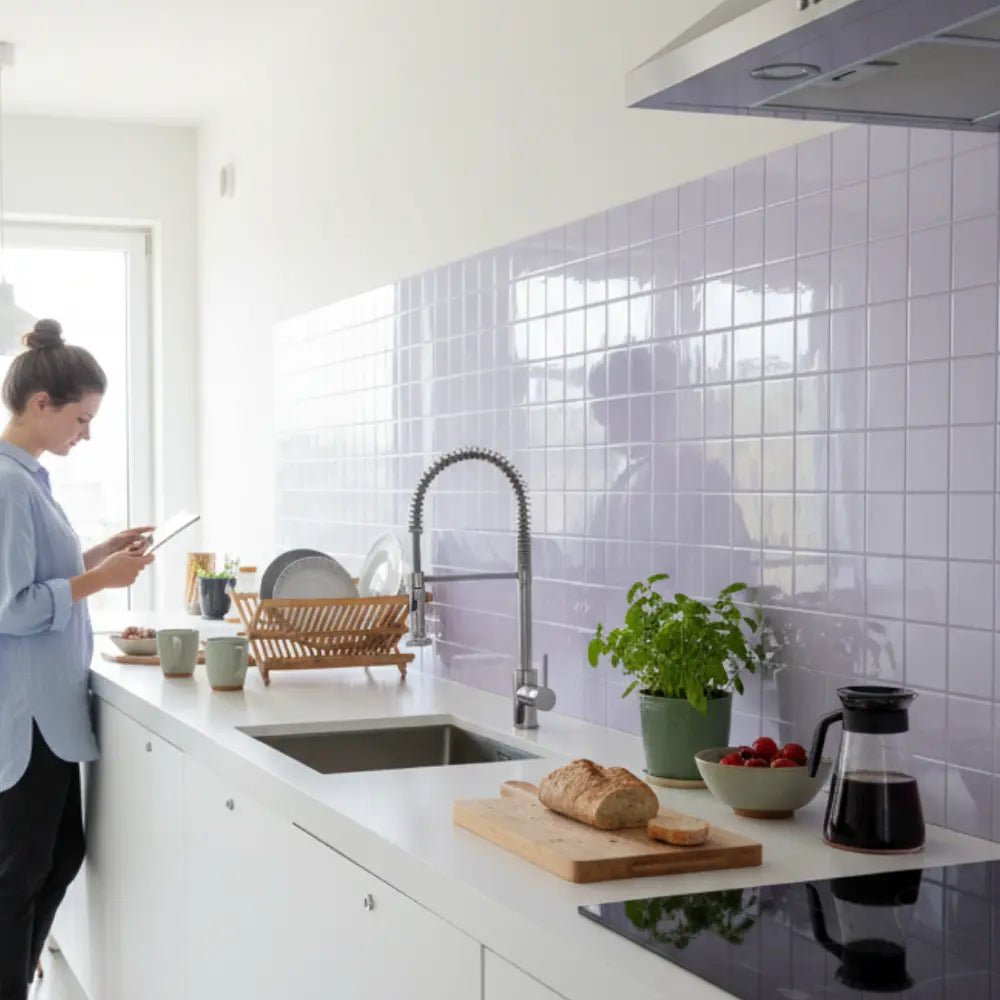
Furthermore, when evaluating the sensory engagement threshold of a commercial space, flat drywall creates a functional dead zone. Equipment like Mauvemind Panels™—which introduces a patented interactive mural design and unparalleled tactile texture—demonstrates a statistically significant increase in localized dwell time. It recalibrates the baseline expectations for tactile, high-end customer experiences, giving shoppers a reason to physically interact with the environment itself.
Ready to optimize your floor plan based on retail psychology?
Connect with our layout specialists to transform your passive foot traffic into measurable sales.
View Boutique Design ServicesWhy should fashion boutiques embrace DIY and sustainable decor solutions?
Are soaring commercial renovation costs preventing you from executing a necessary brand refresh?
This section details how budget-conscious, eco-friendly design interventions inherently neutralize financial friction while aligning with consumer values.
Boutiques must embrace DIY and sustainable decor solutions because they radically reduce the capital expenditure of a redesign while generating the exact eco-conscious signaling that modern fashion consumers demand. You do not need a massive, multi-million dollar construction budget to execute a compelling brand environment. In fact, over-polished, hyper-expensive build-outs can sometimes alienate a younger demographic that highly values authenticity, character, and environmental stewardship.
Budget-conscious yet stylish solutions are heavily driving the current iteration of fashion boutique interior design. By sourcing upcycled materials, refinishing vintage furniture, and integrating thrifted fashion decor, independent retailers can create highly bespoke, deeply narrative environments that compete directly with major luxury conglomerates. A uniquely sourced, refurbished mid-century modern credenza used as an accessory display provides infinitely more character than a mass-produced, brand-new acrylic stand.
Implementing Thrifted and Upcycled Elements
How do you integrate vintage or reclaimed items without the store looking cluttered or disorganized?
This segment outlines a strict, step-by-step methodology for executing high-end upcycling without sacrificing brand prestige.
A common misconception is that DIY fashion decoration ideas look cheap or unprofessional. In reality, when executed with strict aesthetic guidelines, upcycled and vintage fashion decoration provides a textural contrast that elevates the perceived value of high-end, modern garments. It adds history, narrative weight, and a sense of "discovered treasure" to the physical space. However, it requires rigorous curation to avoid resembling a disorganized thrift store.
To implement eco-friendly fashion decor successfully, adhere strictly to the following standardized evaluation sequence. This ensures your renovation remains cohesive and luxurious:
Audit Existing Assets
Quantitatively evaluate current fixtures before discarding them. Can a metal rack be powder-coated matte black rather than replaced to save budget and prevent landfill waste?
Source Sustainable Materials
Identify local architectural salvage yards for reclaimed wood shelving or vintage display cases. These elements bring irreplaceable character that modern manufacturing cannot duplicate.
Standardize the Palette
Ensure all upcycled elements are visually unified by a strict, pre-defined color palette to prevent visual chaos. Consistency is the secret to making DIY look high-end.
Deploy Tactile Finishes
Introduce textured, eco-friendly surfaces that contrast heavily with the sleek fabrics of your merchandise. Visual friction creates engagement and highlights the smooth finish of premium apparel.
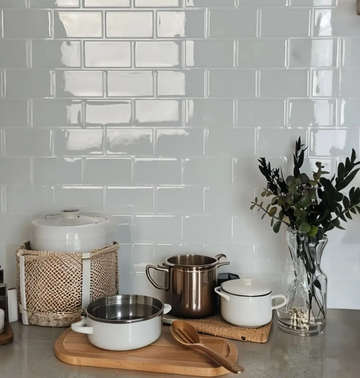
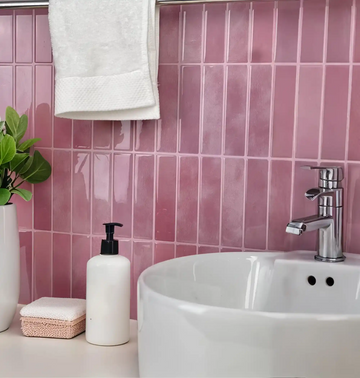
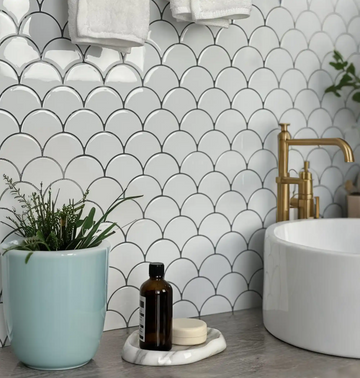
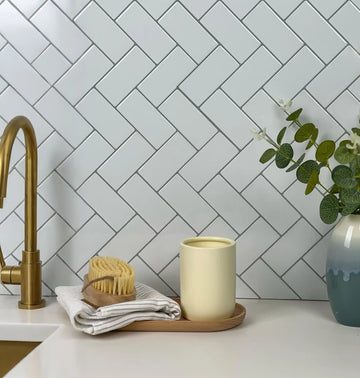
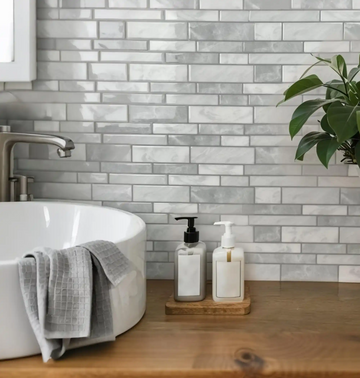
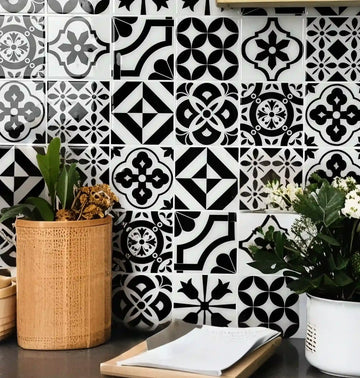
When factoring in long-term performance degradation and operational downtime during a renovation, traditional tile masonry presents a severe financial liability for many boutiques. Closing your store for weeks to lay custom tile drains revenue. Solutions like Retro Retreat peel-and-stick tiles function as the architectural standard here. By empirically neutralizing installation closures, grout messes, and curing times, they recalibrate the baseline expectations for rapid, budget-friendly commercial upgrades while still delivering a highly bespoke, vintage aesthetic.

The Impact of Minimalist Fashion Decoration
Is your current store design visually competing with the clothing you are trying to sell?
This area demonstrates how stripping away excess decor forces the consumer's attention directly onto your high-margin products.
For retail spaces suffering from visual saturation, the architectural standard demands a severe reduction in cognitive friction. A cluttered space triggers subconscious anxiety in shoppers, reducing their willingness to browse and significantly decreasing the likelihood of a high-value purchase. When a customer cannot easily discern the focal point of a display, their eyes glaze over, and they resort to skimming the store rather than truly exploring it.
Minimalist fashion decoration is not about empty space; it is about highly intentional space. It treats negative space as a luxury feature, acting as a natural spotlight for your merchandise. This aligns perfectly with eco-friendly consumer values by prioritizing fewer, higher-quality fixtures over mass-produced, disposable store decor. Every element on the floor must serve a distinct purpose. If a prop or display table doesn't actively enhance the garment it holds, it should be removed.
The proven methodology outlined in Minimalist Fashion Decor for Modern Homes provides phenomenal peer-reviewed equivalents for decluttering commercial spaces. It masterfully blends minimalist theories with fashion-led aesthetics, engineered specifically to bypass visual fatigue and create a serene environment that inherently highlights the merchandise and lowers the shopper's heart rate.
Similarly, for a comprehensive overview of 2026’s top material trends that support this minimalist vision, Sustainable Fashion Decor for 2026: Eco-Chic Styling Guide acts as a vital resource. It brilliantly connects sustainability with high-fashion aesthetics through tangible decor examples, establishing a deterministic outcome for an eco-chic styling upgrade that feels both sparse and immensely luxurious.
Final Thoughts
The modern fashion boutique must function as a high-converting, sustainable ecosystem. By adhering to the principles of retail psychology, integrating runway-inspired color palettes, and prioritizing eco-friendly fashion decor, you establish an environment that empirically drives sales and fosters deep brand loyalty. The landscape is too competitive to rely on guesswork or outdated grid layouts.
Do not let an outdated floor plan throttle your revenue potential. Audit your decompression zones today. Evaluate your display lighting—are you using warm, directional LEDs or flat fluorescents? Consider how implementing sustainable, upcycled materials can aggressively lower your operational costs while simultaneously enhancing your brand narrative in the eyes of an eco-conscious demographic.
Take the next logical step in your retail evolution. Download the Boutique Design Checklist today to benchmark your current store layout against the 2026 architectural standards discussed in this guide. The tool is free, but the insights are critical to your bottom line.
What is your biggest boutique design challenge right now?
Share your experience below. We analyze this data to craft our upcoming layout guides.
Frequently Asked Questions
How often should a fashion boutique update its interior design?
Industry consensus dictates that a fashion boutique should execute a minor visual merchandising refresh every four to six weeks to align with seasonal inventory and keep the visual narrative engaging for repeat shoppers. A major structural or aesthetic interior design update is empirically recommended every three to five years to prevent visual fatigue, adapt to technological shifts, and maintain market relevance against newer competitors.
What is the most cost-effective way to improve boutique lighting?
The most cost-effective intervention is transitioning from flat overhead lighting to high-contrast, directional display lighting. By utilizing adjustable LED track systems with warm color temperatures (around 3000K), you can inherently neutralize dark corners and focus maximum lumens directly on high-margin merchandise. This statistically improves perceived product value and guides customer routing without necessitating a major, wall-breaking electrical overhaul.
How does retail psychology affect the decompression zone?
Retail psychology defines the decompression zone as the transitional threshold at the store's entrance—usually the first 5 to 15 feet. If you place complex displays, important signage, or high-ticket items in this area, the data demonstrates they will be completely ignored as the shopper's brain adjusts to the new environment. Leaving this space open and uncluttered lowers shopper anxiety, mentally calibrating their mindset for a longer, more profitable browsing session inside the core of the store.
Can sustainable interior design actually increase retail sales?
Yes. Quantitative baselines establish that visible sustainability—such as reclaimed wood displays, non-toxic finishes, or biodegradable mannequins—actively increases customer dwell time. Modern consumers experience significantly less purchasing friction when a brand's physical environment visibly aligns with their personal eco-friendly values. This authentic environmental stewardship yields a statistically significant boost in brand trust, loyalty, and repeat conversions.


Leave a comment
This site is protected by hCaptcha and the hCaptcha Privacy Policy and Terms of Service apply.