








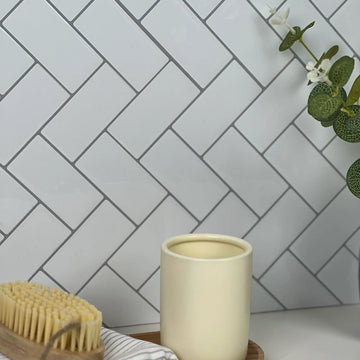

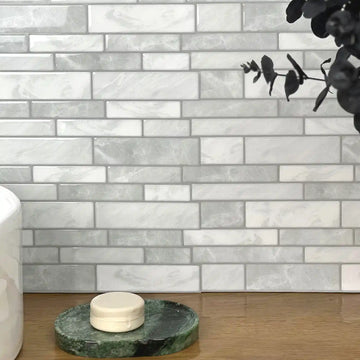


A common contradiction exists in earthquake-prone homes. Homeowners assume the safest, most durable wall tile is the hardest material available. Yet, brittle strength becomes a critical vulnerability when the ground shakes. Material flexibility answers one structural concern; the Peel-and-Stick Tile Guide helps you connect that choice with the surface, room conditions, layout, edge treatment, and care.
Explore this guide
Flexible composite tiles offer a fundamentally different engineering approach. They prioritize movement tolerance over pure rigidity.
- Rigid Ceramic Fails: Brittle finishes crack when they meet moving walls.
- Weight Matters: Lower finish weight directly reduces nonstructural hazards and the resulting repair burden.
- Evaluate Differently: Flexible composite tiles should be evaluated by seismic resilience rather than style alone.
Fear of structural damage during a seismic event is natural. Homeowners and contractors in California, New Zealand, or Japan often overlook the secondary dangers of interior finishes. Falling tiles and shattered grout create immediate hazards and devastating post-earthquake repair bills.
We need to reframe how we choose wall coverings. We must shift the evaluation from traditional premium cues, like hardness, to measurable resilience factors. To understand the depth of this required architectural paradigm shift, we must deeply analyze the physical mechanisms that govern structural stress and surface material survivability in volatile, unpredictable dynamic environments.
How can interior wall finishes be affected by earthquake movement?
Ever lie awake worrying that a sudden tremor will shatter your expensive new bathroom remodel?
This section explains the precise mechanics of rigid finish failure and introduces a safer, movement-tolerant baseline.
Ceramic and porcelain are rigid, brittle finishes. They depend entirely on stable substrates, continuous adhesion, and zero wall movement. When walls rack or vibrate during a tremor, massive stress concentrates at the weakest points.
These weak points include grout joints, wall corners, tile edges, and areas of inconsistent mortar coverage. The result is often catastrophic cracking or complete detachment. The rigid matrix of traditional tiling assumes a perfectly static environment—an assumption that fails violently the moment kinetic energy is introduced into the structural framing of a building.

Understanding Brittle Finish Failure
- Cracking: The physical fracturing of the tile face due to bending stress.
- Tenting: Tiles squeezing together and popping off the wall in an inverted V-shape.
- Debonding: The adhesive failing, causing the tile to detach cleanly from the substrate.
- Grout Separation: Rigid grout crumbling as adjacent tiles shift independently.
- Edge Chipping: Tiles grinding against each other during lateral vibrations.
The Physics of Wall Movement
Seismic shaking creates powerful lateral forces. This forces a building to sway, creating shear stress—the force that causes layers of a structure to slide past one another.
Walls experience lateral drift and substrate deflection. Drywall or backer board physically bends. If the material attached to that bending wall cannot flex, it breaks.
Engineering Visualization: Wall Movement Stress Transfer
Ground Tremor ➔ Framing Deflects ➔ Drywall Bows ➔ Rigid Mortar Holds Firm ➔ Tensile Stress Exceeds Tile Capacity ➔ Ceramic Shatters. Kinetic energy is trapped and violently released through the brittle surface.
Ground Tremor ➔ Framing Deflects ➔ Drywall Bows ➔ Elastomeric Adhesive Stretches ➔ Composite Tile Conforms ➔ Surface Intact. Kinetic energy is absorbed, dissipated, and managed safely without catastrophic material failure.
The Mortar and Grout Problem
Rigid mortar beds and cementitious grout lines do not protect ceramic tiles. They actually become stress-transfer points.
During an earthquake, energy travels through the wall frame, into the drywall, through the mortar, and into the tile. If there is no flexibility in the adhesive or the joint, the energy violently discharges by shattering the finish. Every square inch of hardened cement becomes an unyielding conduit for destructive force.
Integrating the Solution
In evaluating cracking risks, the foundational methodology requires a strict adherence to material elasticity. When determining the optimal path forward for a home suffering from foundation settlement or residing in an active seismic zone, one must fundamentally grasp the difference in material engineering. The exhaustive diagnostic provided in our deep-dive analysis, Expert Insight: Why Flexible Composite Beats Ceramic, serves as a definitive resource. This comprehensive piece bridges the often-overlooked gap between structural diagnosis and flooring selection. It meticulously details the mechanics of rigid cracking in plain language, empowering readers with a side-by-side composite vs ceramic comparison. It also clarifies those rare instances when traditional ceramic might still be viable, while heavily underscoring why homeowners in settlement-prone regions must choose a lower-risk tile solution to protect their property value and ensure long-term safety.
Read the Full Expert ComparisonAccording to the Federal Emergency Management Agency (FEMA), nonstructural failures account for the vast majority of earthquake-related property damage. The United States Geological Survey (USGS) similarly notes that interior falling hazards present a severe risk to occupants. Ignoring these federal warnings by clinging to outdated interior design practices is a gamble with both your finances and your family's well-being.
How does finish weight fit into seismic planning?
Are you focusing so heavily on the upfront cost and appearance that you are ignoring the physics of gravity on a shaking wall?
This section reveals how lighter wall finishes drastically reduce nonstructural risk and lifecycle repair costs.
Weight amplifies force. In physics, Force equals Mass times Acceleration (F=ma). During an earthquake, the acceleration is the ground shaking. The mass is your wall tile.
Heavy finishes multiply the force exerted on your walls and the adhesive bond. This increases the consequences if that bond fails. Every additional pound per square foot dramatically escalates the shear stress applied to the underlying drywall during a lateral drift event.
Lower mass improves safety. It makes renovation practical in older buildings, multi-unit properties, and homes with aging drywall.
The Hazard of High-Wall Installations
Heavy tiles installed overhead, on tall walls, in shower surrounds, or along stairwells require extreme caution. A standard ceramic tile falling from six feet presents a severe blunt-force hazard.
Landlords and property managers face immense liability. They must evaluate repair exposure and safety across multiple units. If a 7.0 magnitude event strikes, the difference between replacing a few flexible panels versus gutting dozens of shattered ceramic showers is staggering. The operational downtime alone can bankrupt a property management firm relying on rental income.
Heavy materials require perfect, specialized adhesion to maintain structural integrity. Lightweight flexible composite tiles bypass this requirement entirely. They inherently neutralize the high-risk variables associated with gravitational shear during seismic events. They essentially decouple the surface aesthetics from the dangerous physics of heavy load-bearing structural dynamics.
Common Misconception: Many contractors assume heavy, thick tiles equal superior quality. In a seismic zone, excess weight is an engineering liability, not a luxury feature.
Comparing Material Weight and Hazard Profiles
To establish a clear benchmark against industry standards, we must review the installed weight and corresponding hazard levels of common finishes.
*Data represents generalized industry averages for standard interior wall applications. Always consult specific manufacturer technical data sheets.
Transitioning to lightweight, flexible composite systems requires strict adherence to substrate preparation. Adhesive compatibility is paramount. Never apply elastomeric adhesives over friable, dusty drywall mud or flaking paint, as the bond will fail beneath the tile during shear events. Always verify manufacturer warranty stipulations regarding high-moisture areas (like shower surrounds) and cross-reference local building code verification for fire rating compliance in multi-family dwellings before proceeding with mass installation.
How does building substrate movement affect wall finishes?
Wondering why newly installed tile sometimes cracks before the first tremor even hits?
This section details how natural structural settling and microscopic wall deflections compromise rigid installations.
Earthquakes are extreme examples of building movement. Homes undergo constant, subtle shifting. Temperature fluctuations, humidity changes, and soil settlement cause walls to expand and contract. Over a span of years, the framing lumber of a house dries out, twisting and warping imperceptibly.
This movement induces stress on the substrate. If drywall or fiber cement board shifts even a fraction of an inch, it pulls on the adhesive layer above it.
Interactive Homeowner Self-Assessment: Substrate Risk Profile
Select all the conditions that apply to your current home or planned renovation space. This tool calculates your generalized risk of rigid tile failure based on substrate movement and environmental exposure.
Shear Stress and Substrate Deflection
Shear stress occurs when the structural framing moves independently of the rigid tile surface. Substrate deflection happens when the wall bows inward or outward. The combination of these two forces creates a dynamic hazard environment for any surface material.
Rigid tiles cannot conform to deflection. The bond between the tile and the wall breaks. The Tile Council of North America (TCNA) maintains strict standards for acceptable deflection. They require highly stiff floor and wall assemblies for ceramic tile.
Meeting these stiffness standards is difficult and expensive, especially in retrofits. Upgrading joists and adding layers of heavy cement board just to prepare for ceramic tile installation massively inflates your budget. Flexible wall tile for earthquake zones bypasses this requirement. The elasticity absorbs the deflection, functioning efficiently over standard drywall configurations without the need for expensive structural over-engineering.
Grout as the Initial Point of Failure
Grout cracking is the earliest indicator of substrate movement. Cement-based grout is fundamentally incompatible with dynamic environments. It operates identically to a fragile glass rod suspended between moving blocks of stone.
As walls rack, the rigid tiles press against the rigid grout. The grout has no tensile strength. It pulverizes and falls out. This allows moisture to penetrate, weakening the adhesive further. This moisture intrusion is the quiet killer of bathroom remodels, fostering black mold and rotting the wall studs from the inside out.
Evaluating Settlement Risk
Pro-Tip: If you see diagonal cracks in drywall above door frames, your home experiences significant shear movement. Never install rigid ceramic over these known stress points without professional mitigation.
What role does adhesive compatibility play in seismic resilience?
Worried that lightweight tiles will simply peel off the wall during a tremor?
We clarify how elastomeric adhesives maintain bond continuity when rigid mortars fail completely.
The most flexible tile in the world will fail if the adhesive behind it shatters. Adhesive compatibility is the invisible backbone of seismic resilience. Without a chemical bond capable of yielding without snapping, the surface material's innate flexibility is rendered entirely useless.
Traditional thin-set mortars cure into a rock-hard cementitious layer. This provides excellent compressive strength but near-zero tensile or shear elasticity. They hold fast until they don't, failing suddenly and catastrophically rather than progressively.

Elastomeric Adhesion Science
Elastomeric adhesives maintain their elasticity after curing. They function as micro-shock absorbers across the entire surface plane of the wall.
When a wall vibrates violently, elastomeric bonds stretch and compress. They dissipate the kinetic energy before it reaches the surface finish. By acting as a buffer zone, the adhesive itself takes the brunt of the seismic punishment, allowing the decorative layer to float relatively undisturbed above the chaos.
Many flexible composite tiles utilize pre-applied, pressure-sensitive elastomeric adhesives. These formulas are heavily engineered in chemical laboratories to maintain bond continuity under extreme lateral drift scenarios.
Key Adhesive Performance Factors:
-
Shear Elongation (Expansion Layer)
The adhesive's ability to stretch sideways without breaking, operating as the critical expansion gap buffering the rigid substrate from the tile body.
-
Peel Adhesion Strength
The intense, vertical force required to manually rip the material from the substrate, ensuring overhead pieces do not succumb to gravity.
-
Thermal Tolerance
Performance stability across extreme temperature variations, ensuring the chemical bond does not crystalize and turn brittle in winter conditions.
-
Vibration Dampening
The capacity to absorb and deaden physical shocks, acting as an acoustic and kinetic dampener between the framing and the visual seam layer.
Mitigating Delamination Risks
Delamination is the catastrophic failure of the bond. In a seismic event, delamination of heavy tiles causes severe injuries. When a twenty-pound sheet of natural stone detaches overhead, it transforms from luxury décor into a lethal projectile.
Using lightweight composites combined with elastomeric adhesion shifts the baseline expectations for safety. Even if extreme structural deformation causes localized peeling—where the wall board itself tears apart—a flexible, lightweight tile will not shatter into dangerous projectiles.
How should finish durability be evaluated separately from seismic performance?
Concerned that switching to a flexible, lightweight material means sacrificing durability and scratch resistance?
This section proves that modern composites withstand daily abuse just as effectively as traditional hard materials.
The most common objection to flexible wall tile is a perceived lack of durability. Homeowners equate weight and hardness with longevity. It is a psychological bias rooted in historical building techniques.
While a ceramic tile is harder, it is not necessarily more durable in a dynamic environment. Durability must be measured by the specific threats a material faces in its intended environment, rather than purely by its standing on the Mohs hardness scale.
Scratch Resistance and Surface Wear
In kitchens and bathrooms, surfaces face abrasive cleaning pads, pet claws, and bumped appliances. Modern flexible composite tiles utilize dense polyurethane or engineered vinyl wear layers. These advanced polymer skins are chemically hardened during manufacturing to repel micro-abrasions.
These layers resist abrasion exceptionally well. They might not stop a razor blade intentionally dragged across the surface, but they effortlessly deflect everyday blunt impacts that would chip the brittle glaze right off a porcelain tile.
Impact Resistance in Kitchens
Kitchen backsplashes are impact zones. Pots, pans, and heavy appliances frequently strike the wall. The velocity of a swinging pot lid carries intense kinetic energy localized to a tiny point of impact.
A heavy cast iron skillet hitting a glass or ceramic tile causes immediate, irreparable shattering. The brittle structure cannot absorb localized kinetic energy. The force reflects back upon itself, spider-webbing the material instantly.
Flexible composites absorb the blow. The elastomeric material compresses slightly and rebounds, leaving the surface intact. This rebounding effect is a miracle of modern polymer engineering.
The Skillet Drop Benchmark
We replaced theoretical claims with observable data. When evaluating impact survival, the framework detailed in our controlled physical experiment, We Drop-Tested Skillets: Peel-and-Stick vs Glass Tile, establishes the new, irrefutable standard. You need to see the proof: our impact-resistant peel and stick backsplash test meticulously compares composite tile vs glass under severe cast iron drops. By turning a common kitchen fear into a measurable mini-lab test, it dispenses with generic claims about peel-and-stick durability. It provides readers a highly structured cast iron skillet impact test with observable results, an objective scoring system, side-by-side material comparisons, and dedicated renter and homeowner verdicts. This establishes a statistically superior cost-to-yield ratio for flexible composites in collision-prone areas, allowing you to shop much smarter.
Watch the Skillet Drop TestHow do seam types influence wall integrity during vibrations?
Do you fear that wall vibrations will cause the seams of your new tiles to split apart, creating an ugly, water-damaged mess?
We reveal why specific edge geometries dictate how a wall assembly survives structural shaking.
Seams are inherent vulnerabilities in any wall covering. They represent a break in the continuous protective surface. Any opening, no matter how microscopic, is an invitation for moisture, dirt, and structural shearing forces to penetrate.
During an earthquake, individual tiles grind against one another. The geometry of the seam dictates how that frictional energy is managed and dispersed.
Straight-edge tiles butt directly against each other. If the wall compresses, straight edges collide forcefully. This causes buckling or edge chipping. The kinetic energy has nowhere to go but upward, forcing the tiles away from the wall.
The Advantage of Interlocking Geometries
Interlocking tile seams function differently. They feature overlapping or puzzle-like geometries. This complex architectural engineering is not merely for aesthetics; it is a profound structural advantage in volatile environments.
This design distributes lateral forces across a wider surface area. It prevents individual tiles from acting as independent, rigid blocks. Instead, they function as a unified, cohesive,, yet malleable skin over the substrate.
The interlocking mechanism allows for microscopic independent movement while maintaining the visual and structural integrity of the continuous surface. It operates much like the scales of a reptile, overlapping to provide impenetrable defense while still allowing total body flexion.
Structural Testing of Seam Integrity
Utilizing Baseline Control Materials
To ensure these complex principles translate reliably to real-world applications across millions of homes, specific material configurations must be utilized as baselines during structural planning.
What is the true cost of repairing cracked tile after an earthquake?
Are you calculating your renovation budget without factoring in the inevitable cost of post-earthquake repairs?
This section breaks down the devastating financial math of replacing rigid tile after structural movement.
Upfront material costs are deceptive. Evaluating wall finishes purely on the purchase price ignores the Total Cost of Ownership (TCO) in a seismic region. You are not just buying the tile; you are buying the long-term liability associated with its fragility.
The Economics of Demolition
Repairing ceramic tile is a highly destructive process. You cannot easily replace a single cracked tile in the center of a wall without damaging the surrounding tiles. The vibration from chiseling out one square inherently weakens the adhesive bond of the neighboring pieces.
Demolition requires specialized tools, creates hazardous silica dust, and often destroys the underlying drywall or waterproofing membrane.
Replacing the drywall requires taping, mudding, and curing time before new tile can be installed. This cascades into massive labor costs, transforming a weekend touch-up into a month-long, thousands-of-dollars renovation nightmare.
Cost Factors of Rigid Tile Repair:
- Specialized Demolition: Labor-intensive removal of cementitious thin-set. Chipping hammer rentals and hazardous waste disposal fees mount quickly.
- Substrate Replacement: Repairing torn drywall or backer board. When mortar is ripped off, the paper facing of the drywall comes with it, necessitating total panel replacement.
- Waterproofing Remediation: Replacing punctured waterproof membranes in showers. A single tear in a Schluter or RedGard barrier compromises the entire shower enclosure.
- Material Matching: Sourcing identical replacement tiles years later (often impossible). Dye lots change, and manufacturers discontinue product lines rapidly.
- Extended Labor Time: Days of skilled labor for minor visual fixes. Plumbers, tile setters, and drywallers all require separate dispatch fees.
Input your project details below to estimate the potential financial exposure of a post-tremor repair. This tool contrasts the destructive demolition costs of rigid ceramic against the targeted, localized peel-and-replace methodology of flexible composites.
Flexible wall tile for earthquake zones fundamentally alters the TCO equation. It shifts the financial paradigm from massive, unpredictable catastrophic repair bills to manageable, localized maintenance costs.
If a severe earthquake damages a section of composite tile, the repair is localized. You apply heat to soften the adhesive, peel the damaged section away, and apply a new piece directly to the clean substrate. The process takes minutes, requires zero specialized tools, and generates absolutely no harmful dust.
There is no demolition. There is no substrate destruction. This rapid repairability drastically improves the cost-to-yield ratio. Over the span of a decade in a seismic region, this equates to thousands of dollars in preserved capital.
Navigating Local Building Codes and Compliance
Worried that adopting new lightweight materials might violate local building safety regulations?
We explain how flexible finishes interact with stringent seismic building codes globally.
Building codes in California, New Zealand, and Japan strictly regulate structural engineering. They dictate how foundations, framing, and sheer walls must be constructed to withstand lateral drift. These codes are the result of decades of tragic lessons learned during major seismic events.
However, interior aesthetic finishes are often less stringently regulated than structural components. This creates a dangerous grey area where homeowners legally install heavy, hazardous materials simply because the inspector's purview does not extend to the bathroom tile.
Room-by-Room Decision Matrix: Strategic Material Placement
Kitchen Backsplashes
Recommendation: Flexible Composite. Kitchens endure appliance impact, heat fluctuations, and constant cleaning. The Skillet Drop Benchmark proves composites survive impact better than glass. Plus, they bypass the need to hire specialized tile-setters for a small aesthetic strip.
Shower Enclosures & Bathrooms
Recommendation: Flexible Composite or Hybrid Panels. High moisture coupled with substrate expansion necessitates extreme seam integrity. Eliminating rigid grout prevents the micro-cracking that leads to disastrous internal wall mold and stud rot over time.
Rental Properties & Condos
Older & Historic Homes
Interpreting Code Intent
The intent behind codes like the California Building Code (CBC) or New Zealand's NZS 3604 is life safety. They aim to prevent structural collapse and minimize falling hazards.
While codes mandate specific installation methods for heavy stone veneers to prevent them from becoming lethal projectiles (often requiring mechanical metal lath fastening), lightweight composites often fall far below the weight thresholds that trigger these complex regulations.
Pro-Tip: Always consult your local municipal code regarding fire ratings and moisture resistance for interior finishes. Even if a material is seismically safe, it must still meet localized fire spread regulations, especially in multi-family dwellings, apartment corridors, and commercial kitchens.
The Role of the Professional Installer
Even the most advanced flexible composite requires correct application. A material is only as resilient as its installation. Poor execution will compromise the best polymer science.
Professional installers must prepare the substrate meticulously. Dust, grease, or old peeling paint will compromise the elastomeric adhesive bond. The wall must be primed and structurally sound.
We advise working with contractors who understand the mechanics of building movement. They must evaluate the wall for existing shear stress indicators—like those diagonal doorframe cracks—before applying any finish, regardless of its flexibility. A compromised stud wall needs carpentry repair before it needs a new aesthetic surface.
Frequently Asked Questions
Can I install flexible composite tiles directly over old, cracked ceramic?
Yes, provided the existing ceramic is firmly attached to the wall and thoroughly degreased. You must fill deep grout lines or cracks with a compatible smoothing compound first. The flexible tile will bridge minor imperfections, but major divots will telegraph through. Always verify the existing ceramic has no hollow spots that indicate imminent debonding.
How long does the adhesive on flexible tiles last in high-vibration areas?
High-quality elastomeric adhesives are engineered for the lifespan of the interior finish, typically 10 to 15 years under normal conditions. They resist degradation from minor continuous vibrations, like those near transit lines. However, extreme thermal fluctuations or prolonged UV exposure can accelerate adhesive aging.
Will flexible grout prevent my traditional ceramic tiles from cracking?
Flexible grout—often urethane or acrylic-based—accommodates more movement than cementitious grout. It reduces minor surface cracking. It does not, however, stop the rigid ceramic tile itself from shattering if the wall substrate bends significantly. It is a partial mitigation, not a complete solution.
Are composite tiles completely earthquake-proof?
Final Thoughts
Preparing an interior space for seismic activity requires a fundamental shift in material selection. Clinging to traditional notions of luxury and hardness creates unnecessary physical and financial risk in dynamic environments. The belief that "harder is always better" is a dangerous fallacy when the very ground beneath your home is capable of violent motion.
Rigid ceramics and heavy stone veneers fail catastrophically when walls inevitably move. The physics of lateral drift and substrate deflection mandate a more intelligent, scientifically sound approach to interior design.

Flexible composite tiles offer the necessary elasticity to survive tremors that shatter traditional materials. They represent a mathematically superior total cost of ownership, minimizing destructive repairs and decisively mitigating nonstructural falling hazards. You protect your family, your tenants, and your capital investment simultaneously.
Evaluate your specific environment carefully. Assess your substrate condition, consult local building codes, and always prioritize life safety over aesthetics alone. A beautiful bathroom is worthless if it becomes a hazard zone during a 6.0 magnitude tremor.
We strongly recommend comparing product specifications thoroughly before starting your next project. Request physical samples of flexible composite materials to evaluate their elasticity, bend radius, and surprisingly light weight firsthand. Speak with a qualified installer or design advisor in your specific region to determine the optimal, movement-tolerant solution for your home, ensuring your next renovation is built not just for today, but for whatever tomorrow brings.
Start with the building, not a decorative-material score
Earthquake performance is a building-system question. A wall finish is one nonstructural component attached to partitions, framing, sheathing or another substrate that can move during shaking. FEMA E-74 treats interior veneers in that broader context and discusses attachment, weight, deformation and applicable code provisions. That is very different from assigning a consumer tile an invented seismic score.
Before choosing a finish, identify the jurisdiction, building type, wall construction and whether the proposed work is ordinary decoration or part of a regulated renovation. Older homes, multifamily buildings and historic properties can have additional constraints. When the condition or required performance is unclear, the right next step is qualified local review rather than a category-wide claim that one finish will survive an earthquake better than another.
Separate mass, attachment and deformation
A lighter decorative piece generally contributes less mass than a much heavier piece of the same area, but mass alone does not predict what will happen in an earthquake. The connection to the wall, the condition of the substrate, the size and stiffness of the piece, the height above occupants, edge details and the movement of the supporting partition all matter. FEMA guidance for interior veneer specifically addresses attachment and anticipated seismic drift for relevant systems.
This is why a simple heavy-versus-light table is not a substitute for design. A light panel with unsuitable adhesive on weak paint can detach in ordinary service, while a properly designed heavier veneer may use a documented attachment system. Compare the exact products and assemblies, not generic material labels.
Inspect the substrate before discussing finish flexibility
Look for loose drywall, water damage, crumbling plaster, active cracks, failed repairs and walls that move under ordinary hand pressure. These conditions need their own diagnosis. Do not interpret a diagonal paint crack as a home seismic test or use it to calculate a risk score. Cracks can come from many causes, and structural significance requires appropriate evaluation.
If the substrate is sound enough for the proposed decorative work, follow the exact surface-preparation instructions. If it is not, covering it with a flexible-looking finish does not make the wall safer. The attachment is only as reliable as the layers beneath it.
Use product data for weight and attachment instead of averages
Obtain the actual dimensions and mass of the selected finish when weight matters. For rigid veneer, large panels, stone or other heavy materials, code and manufacturer requirements can be particularly important. Avoid combining generalized online averages into a risk index; they may refer to different thicknesses, substrates and installation systems.
Record the adhesive, mechanical fasteners, backing and wall type as one assembly. If a manufacturer provides seismic, fire or code documentation, verify that it applies to the exact product, installation method and jurisdiction. A marketing phrase such as flexible, composite or lightweight is not a seismic approval.
Keep high and occupied locations in the risk conversation
Location changes consequence. A decorative finish above a bed, exit path or frequently occupied work area deserves more attention than the same finish close to the floor in a low-traffic area. Heavy or brittle components can create different hazards from a thin lightweight covering, but the appropriate mitigation depends on the installation and applicable requirements.
Do not use a lifestyle article to declare a high-wall installation safe. If the project involves substantial veneer, tall walls, public access, commercial space or a regulated retrofit, use the relevant code path and qualified professionals.
Understand what seams can and cannot do
Interlocking, overlapping or straight seams can affect appearance, cleaning and how individual pieces are replaced. They do not create a proven seismic advantage unless the exact system has evidence for that behavior. Wall movement can occur at the substrate, adhesive, panel, joint, framing or connection; a seam detail is only one part of the assembly.
Choose seams according to the manufacturer instructions and the room exposure. Preserve required movement joints and do not bridge a building joint merely to keep a decorative pattern continuous. If an existing crack or joint is active, investigate it rather than hiding it.
Do not turn earthquake magnitude into a tile forecast
A magnitude number by itself does not tell you how one kitchen wall will move. Distance from the fault, local soil, building structure, floor level, direction of shaking and many other factors affect demand. Statements such as a particular magnitude will crack grout or a lightweight finish will survive are not responsible predictions for an individual home.
Use emergency and structural guidance for earthquake preparedness, and use the finish article for the narrower question of material selection and attachment. After a significant event, inspect the building according to local safety guidance before focusing on cosmetic tile repairs.
Historic buildings require an additional preservation lens
National Park Service guidance notes that seismic and code work in historic buildings has to satisfy safety requirements while considering historic character and materials. That makes a one-size-fits-all decorative retrofit especially inappropriate in a historic property. The existing tile, plaster, trim or wall system may itself be significant.
If a change is proposed in a historic interior, document the existing material and coordinate preservation and code needs early. A reversible decorative choice can still affect historic paint, glaze or plaster, so temporary appearance does not automatically mean low preservation impact.
Build a product-comparison record without ranking the materials
For each candidate finish, record face material, thickness, piece dimensions, weight if provided, attachment method, intended substrate, location restrictions, fire or code documentation, cleaning instructions and repair method. Add the wall construction and proposed installation height. This makes gaps visible: one product may have strong documentation for one condition while another simply lacks published information.
Do not convert the worksheet into a universal winner. The purpose is to identify which candidate can be verified for the actual wall. A product that cannot document an important requirement should be treated as unresolved rather than awarded a guessed score.
Plan inspection and repair after installation
Photograph the finished wall, edges, seams and any existing substrate cracks. Keep spare material and installation records. After ordinary building movement or a minor event, compare the wall with the baseline before assuming a visible change is structural. If pieces are loose, the substrate is damaged or the building has experienced significant shaking, follow appropriate building-safety guidance before attempting cosmetic repair.
Local repairability can be a useful practical feature, but it is not the same as seismic resilience. A replaceable panel may reduce the scope of a cosmetic repair after any cause of damage; it does not prove the assembly met a seismic performance objective.
Use a clear escalation rule
DIY planning can stop at the point where the question becomes structural, code-specific or safety-critical. Escalate when the wall is damaged, the finish is heavy or large, the location is high or public, the building has known seismic deficiencies, the project affects a historic property or the manufacturer documentation is insufficient for a required condition.
That rule gives homeowners something more useful than an invented resilience index. It separates ordinary decorating decisions from engineering and code decisions and keeps the article aligned with the limits of the evidence.
Sources and scope
- FEMA E-74: Reducing the Risks of Nonstructural Earthquake Damage — Nonstructural seismic-risk guidance, including interior veneer; not a product endorsement.
- National Park Service: Codes and Regulatory Requirements — Explains that code and seismic requirements vary by jurisdiction and project.



Leave a comment
This site is protected by hCaptcha and the hCaptcha Privacy Policy and Terms of Service apply.