

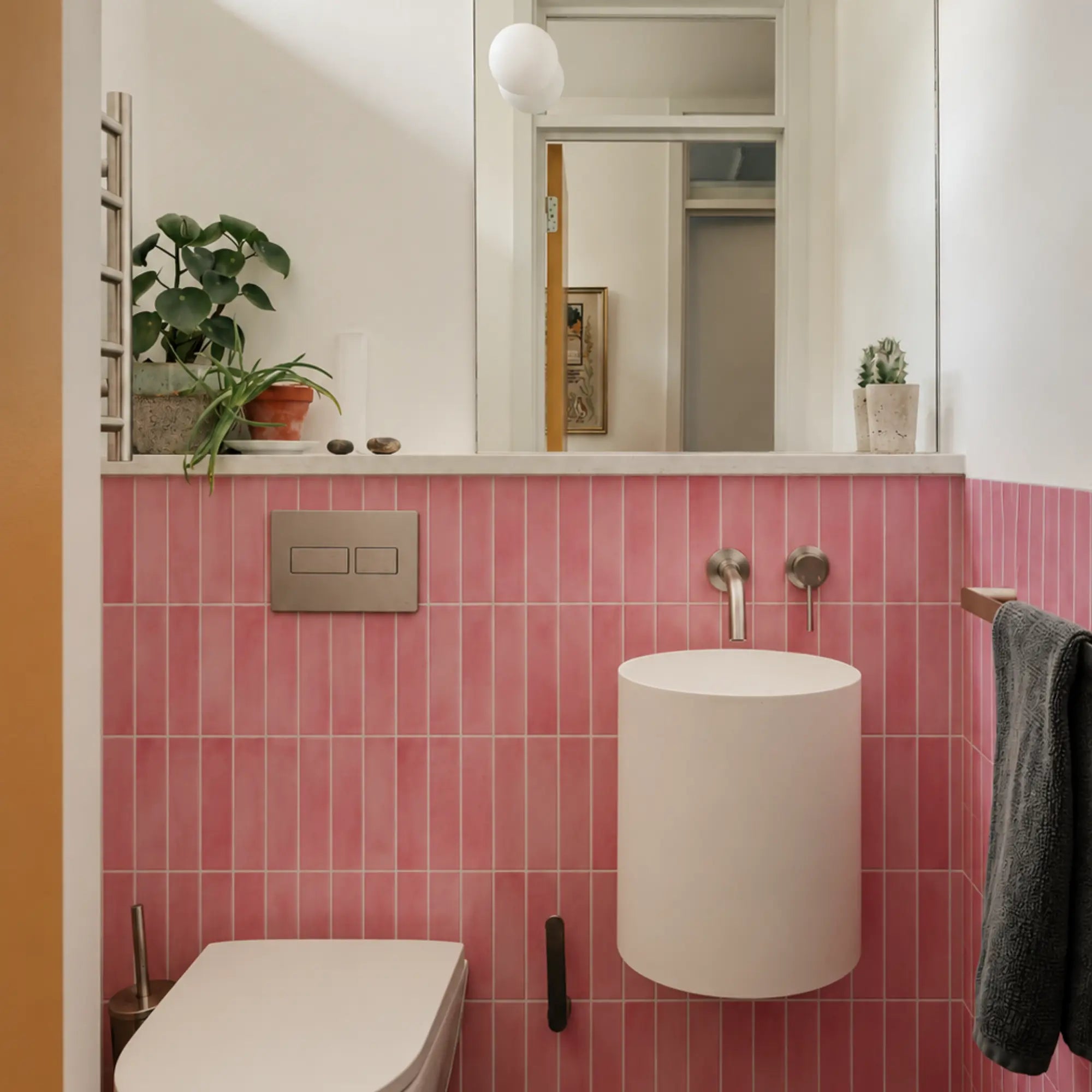
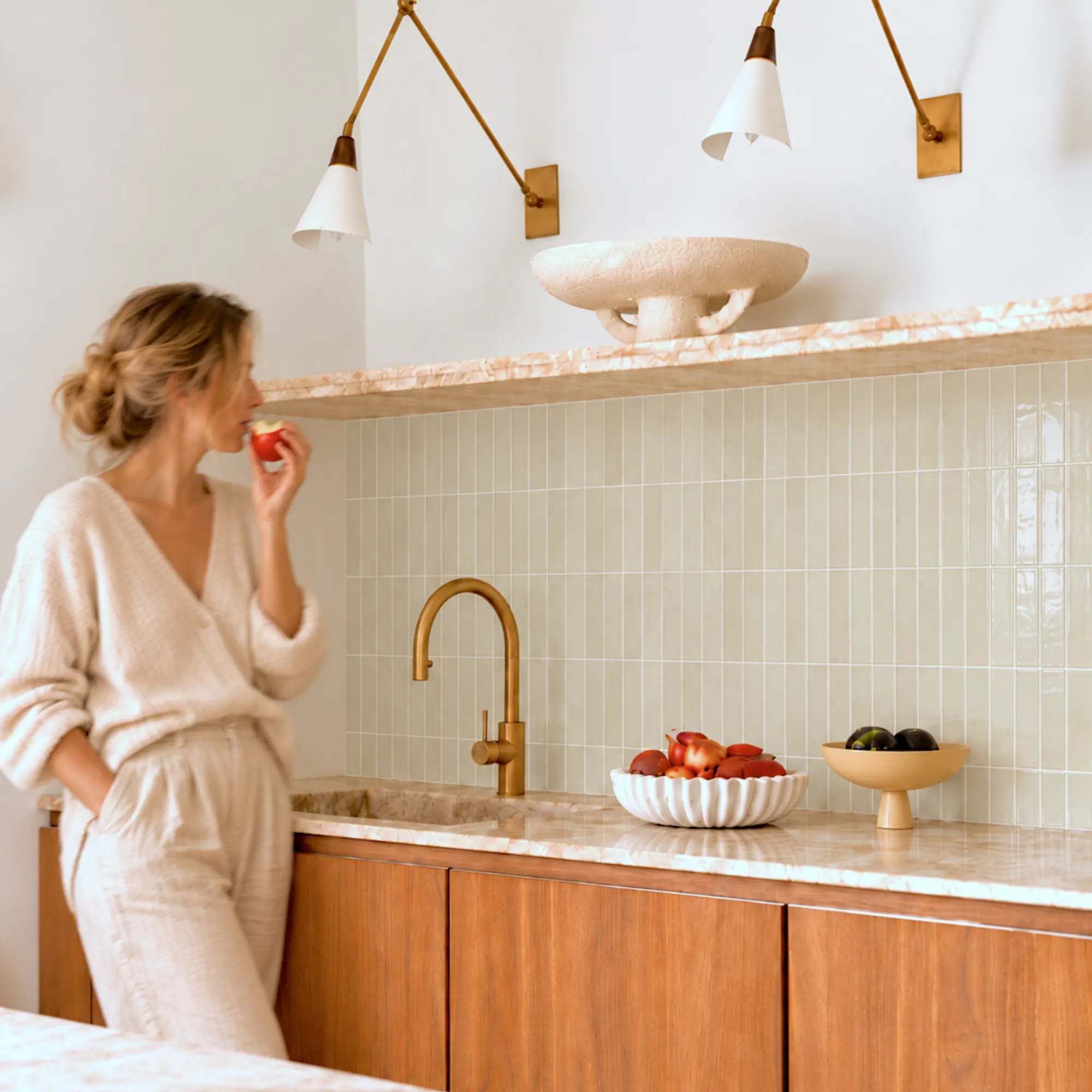


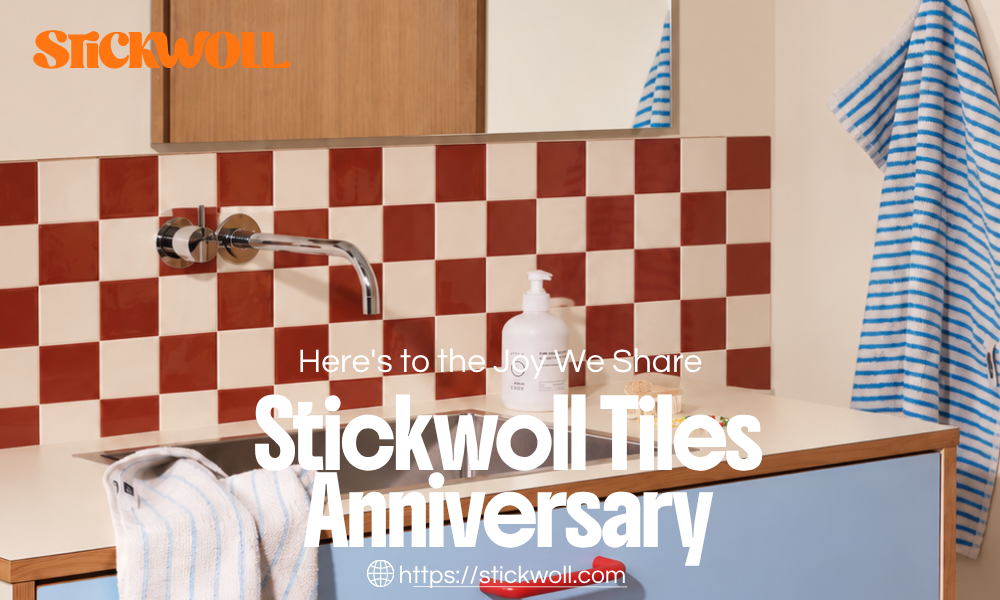
Start with the exact wall-tile construction
Peel-and-stick is an attachment method, not a single material. A thin printed film, gel-faced sheet, rigid composite and metal-faced panel can require different cuts, surface preparation and care. Read the installation and care documents for the product in hand before choosing tools or cleaners.
Explore this guide
Confirm that the proposed surface is accepted. Note paint age and condition, texture, previous repairs, moisture history and any contamination. A wall that is chalky, peeling, damp or moving is not improved by stronger pressure. Resolve the underlying problem first.
Use a representative sample for appearance and handling
A sample can help you judge color, texture, cutting and initial handling when the proposed use is already permitted. It cannot override an excluded wall, certify a wet area or guarantee removal years later. Record what the sample actually tells you and what remains unknown.
Measure and dry-layout before exposing adhesive
Break the wall into rectangles and record outlets, windows, cabinets and exposed edges. Use the product's usable installed coverage rather than assuming its outside dimensions equal coverage. Plan the most visible row and the final end cut before committing to the first piece.
For an example, a wall 10 feet wide and 18 inches high has 15 square feet of face area. If the chosen pack supplies 3.2 square feet of usable coverage, five packs provide 16 square feet. Pattern matching, complex outlet cuts or repair stock may justify more. These are example inputs, not a Stickwoll pack specification.
Dry-fit the difficult cuts. Check whether the counter or cabinet is out of level and decide which reference line should control the pattern. Do not stretch flexible tile to close a gap or force a rigid panel across a depression.
Prepare the wall with the compatible method
Remove the dirt, grease or dust that is actually present using a method compatible with the wall coating and tile. Stronger cleaner is not automatically better. Avoid leaving residue, and allow the wall to reach the required condition before installation.
3M's VHB guidance is useful background on pressure-sensitive adhesive contact: surface condition, pressure and time can affect bond development for its specified tape systems. It is not a Stickwoll solvent recipe or pressure specification. Use the exact tile instructions for the real installation.
If the wall has a previous leak, recurring condensation or mold, repair the moisture source first. EPA guidance emphasizes moisture control and warns against simply covering damp or moldy surfaces.
Install incrementally and protect the face
Mark a level or plumb reference, expose only the amount of backing you can control and align the piece before applying full pressure. Use the pressure method permitted for the product. A roller can improve contact on some systems but can damage embossed or soft faces on others.
Use the cutting tool specified for the tile construction on a stable surface. For outlets and electrical work, shut off power and follow applicable electrical requirements; a decorative tile tutorial is not an electrical-installation guide. Keep cover plates serviceable and do not bury boxes or fasteners.
At inside and outside corners, use the trim or joint detail recommended for the product. Decorative sealant should not be used to hide a badly fitted cut or an active leak.
Plan cleaning, inspection and removal from day one
Write the accepted cleaner and tool on a small care note. Control liquid around seams and inspect edges during routine cleaning. A waterproof-looking face does not establish a waterproof wall assembly.
Keep spare pieces with the batch and orientation information. When an edge lifts, record the location and surrounding condition before pressing or adding another adhesive. Repeated failure can point to wall condition, moisture, movement or an unsuitable exposure.
If eventual removal matters, retain the product's removal instructions and photographs of the original wall. Removable does not mean guaranteed damage-free. Paint condition, time in service, temperature and method can change the result.
Match the tile to the room zone instead of the room name
A kitchen can contain a dry coffee shelf, an occasional sink splash area and a wall near a hot appliance. A bathroom can contain a dry vanity wall and a direct shower enclosure. Calling the entire room kitchen or bathroom does not establish that one decorative product is suitable everywhere.
Draw the wall and mark the actual exposure at each section. Use the exact product documentation to decide whether the tile belongs there. If a location needs a waterproofing or heat-protection system, solve that requirement independently before choosing the decorative finish.
Keep seams and edges visible in the plan
Water, grease and repeated cleaning often reach seams and exposed edges before the center of a panel. Decide how the product finishes at the counter, cabinet, window and side edge. A cosmetic bead of sealant does not turn an otherwise unsuitable assembly into a waterproof system.
Troubleshoot by observing the failed layer
If a tile lifts, note whether the adhesive remains on the tile, transfers to the wall, or pulls paint or wall material away. These observations point to different questions. Do not immediately add stronger glue, because the weak layer may be the coating or substrate rather than the adhesive-to-tile connection.
Look for a repeated cause: moisture at one edge, a textured patch, heat near an appliance, a stretched piece or a wall repair. Photograph the condition before cleaning it. If the same problem returns after a local repair, pause further installation and ask the supplier or a suitable professional to review the location.
Distinguish appearance problems from attachment problems
A visible seam, color mismatch or crooked repeat can be an appearance issue even when the tile is well attached. Conversely, a perfectly aligned surface can hide weak paint. Use the repair that matches the problem rather than treating every concern as an adhesion failure.
Keep a simple project record
Save the product name, purchase date, batch information when available, wall preparation, room location and photographs before and after installation. Note the cleaner approved for routine care and where spare material is stored.
For a rental, add the permission or lease note and the expected restoration method. For a homeowner, note any wall repairs hidden beneath the finish. Future maintenance is easier when the next person knows what is behind the decorative surface.
The record should also include uncertainties. If the paint age is unknown, write unknown. If a wall was near a past leak but no hidden-cavity inspection was performed, do not convert a dry-looking face into a claim that the whole wall was verified dry.
A practical go, wait or choose-another-system decision
Go when the exact tile is documented for the wall and exposure, the surface is sound and prepared as required, the layout works and the maintenance plan is acceptable. Wait when paint cure, moisture, repair or product documentation is unresolved. Choose another system when the location is excluded, the wall cannot be made suitable, or the required cleaning and exposure conflict with the product.
This three-way decision is intentionally qualitative. A numerical score can hide a single disqualifying condition. One prohibited exposure should not be averaged away by attractive color, easy cutting or low material cost.
Once the decision is made, install only as much material as you can control accurately. The goal is not the fastest possible wall but a finish whose surface, seams, edges and future maintenance have all been considered.
Plan the finish details before the center of the wall
The exposed side edge, lower counter joint, inside corner and area beneath cabinets often determine whether a peel-and-stick project looks intentional. Identify those boundaries on the drawing before installing the easy center pieces. Check whether the product offers a matching trim, uses a folded edge, or expects the sheet to terminate cleanly without a separate profile.
At a countertop, preserve the joint detail required by the selected wall system. Do not use decorative caulk to bridge an oversized gap or conceal a damaged substrate. At a cabinet, verify that doors and drawers still clear the new surface and any trim. Around windows, decide whether the finish continues into the return or stops at the face.
Use mock pieces for difficult transitions
Make a paper or scrap-material template for a difficult outlet, corner or return before cutting a finished piece. Label the face and orientation so a mirror-image mistake is less likely. Dry-fit the piece with covers or trim temporarily in place before exposing adhesive.
If a transition cannot be made cleanly within the product's instructions, revise the layout instead of forcing the last piece. A narrower decorated field or deliberate trim line can be better than a fragile sliver at the edge.
Let maintenance frequency follow actual use
A backsplash behind a frequently used sink may need more frequent inspection than a dry feature wall. A coffee shelf can collect syrup or steam differently from a wall behind a dining bench. Use the room's real activity and the product's care guidance to decide when to wipe and inspect.
During cleaning, look for changes at seams, corners and cuts rather than only the center of each tile. If residue repeatedly accumulates in one detail, adjust the cleaning method or layout where practical. Do not respond by automatically using a stronger chemical.
When the room use changes, review the installation again. A new appliance, humidifier, shelf or cleaning product can create conditions that were not part of the original decision. Treat suitability as connected to the actual environment rather than permanent approval for every future use.
Complete a final wall review before calling the project finished
Stand back from the wall and inspect alignment, pattern continuity, exposed edges, outlets and transitions in normal room lighting. Then inspect the same wall from the working position at the counter or vanity. A detail that disappears from across the room can still interfere with cleaning or service access up close.
Check that no trim, cover or decorative bead blocks a component that must be removed later. Confirm that the care note and spare pieces are stored where someone else can find them. If a concern remains unresolved, document it rather than hiding it behind more adhesive or sealant.
This final review does not certify the installation for every future condition. It simply confirms that the planned wall, product, layout and maintenance decisions were carried through consistently.
Installation record: note the final number of packs used, pieces kept for repair and any area intentionally left uncovered because the exposure or substrate was uncertain. This prevents a future homeowner or renter from assuming that an omitted area was simply forgotten.
Keep the final layout sketch with the spare pieces so future maintenance begins from the actual installed plan rather than guesswork.
As of August 2025, the stick and tile method remains an incredibly popular and accessible solution for anyone looking to quickly yet stylishly revamp their space. This article was recently updated to ensure its timeliness and accuracy. Before you begin, understanding common pitfalls and essential preparation techniques is key to perfect adhesion. With just a little foresight and our comprehensive guide, both DIY novices and seasoned decorators can effortlessly transform any room and achieve truly professional-looking results. Dive into the simple stick and tile method—your space is ready for its upgrade!
Understanding the Stick and Tile Method
Why Choose Stick and Tile
- Ease of Use: Perfect for DIY beginners.
- Time-Saving: Quick installation compared to traditional tiling.
- Flexible Designs: Wide variety of patterns and colors.
Choosing the stick and tile method is a game-changer for anyone looking to update their home without the hassle. I love how easy it is to handle, especially when you’re
working on a tight schedule. Plus, the variety available means you can find something that truly matches your style.
Benefits of Using Stick and Tiles
- Cost-Effective: Saves money on professional installation.
- No Mortar Needed: Simplifies the tiling process.
- Reusable Options: Easy to remove and reposition if needed.
Using stick and tiles offers numerous advantages. Not only do you save money by skipping professional installation, but you also avoid the mess of mortar. It’s a clean
and straightforward way to add a fresh look to your space. Plus, if you change your mind, many stick and tiles are reusable!
Popular Areas to Apply Stick and Tiles
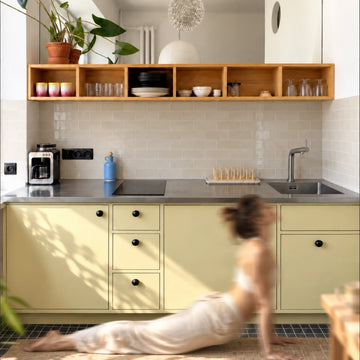
- Kitchen Backsplashes: Adds a stylish touch behind your counters.
- Bathroom Walls: Creates a decorative wall surface when the exact product is approved for the proposed exposure.
- Accent Walls: Highlights a specific area with unique patterns.
Stick and tiles are incredibly versatile. I often use them for kitchen backsplashes because they protect walls from spills and splashes while looking great. Bathrooms
benefit too, as the tiles are easy to clean and maintain. For a more decorative approach, an accent wall can instantly become the focal point of any room.
Essential Prep Tips for Perfect Adhesion
Importance of Surface Cleaning
- Ensures Adhesion: Removes dirt and grease.
- Smooth Surface: Prevents tiles from bubbling or peeling.
- Longevity: Extends the life of your tile installation.
Surface preparation matters, but the correct cleaner and method depend on the wall coating and tile instructions. Remove the contamination present, allow the wall to reach the required condition and avoid leaving cleaner residue.
How to Measure and Mark Correctly
- Precision is Key: Avoid uneven tile placement.
- Use a Level: Ensures straight lines.
- Plan Your Layout: Minimizes cutting and fitting.
Measuring accurately makes a huge difference. I grab a tape measure and mark the wall to ensure that my tiles are aligned perfectly. Using a level helps keep lines
straight, which is essential for a professional finish. Planning your layout beforehand also reduces the need for extensive cutting, saving time and materials.
Choosing the Right Adhesive for Tiles
- Compatibility: Matches the type of tile you’re using.
- Strength: Holds tiles securely in place.
- Ease of Use: Simple to apply without special tools.
Selecting the right adhesive is another important step. Depending on the type of tile, I choose an adhesive that provides strong bonding without being too difficult to
apply. For example, peel-and-stick tiles often require a specific adhesive that ensures they stay firmly attached to the surface.
Common Mistakes to Avoid When Installing
Improper Cleaning Before Tiling
- Adhesion Issues: Poor bonding of tiles.
- Uneven Surface: Causes tiles to float or gap.
Poor surface preparation can contribute to adhesion problems, but an individual failure story cannot identify the cause by itself. Record the wall condition, cleaner, drying, product and installation method.
Ignoring Temperature Effects on Adhesion
- Expansion and Contraction: Tiles may warp.
- Adhesive Failure: Leads to loose tiles.
Temperature plays a role in how well your tiles stick. Extreme heat or cold can affect the adhesive’s performance. I keep my workspace at a moderate temperature to ensure
the adhesive sets correctly, preventing any future issues with the tiles coming loose.
Overstretching or Misaligning Tiles
- Aesthetic Flaws: Uneven tiles look unprofessional.
- Structural Weakness: Misaligned tiles can be weaker.
Misalignment is easier to prevent with reference lines, dry layout and incremental checks. Work deliberately and confirm the pattern before exposing more adhesive.
Step-by-Step Stick and Tile Installation Guide
Gathering Necessary Tools and Materials
- Tiles: Choose your preferred style and size.
- Adhesive: Based on tile type.
- Measuring Tape and Level: For accurate placement.
- Cutting Tool: To fit tiles around edges.
- Spacers: Ensure even gaps between tiles.
Before starting, I make sure I have all the tools and materials ready. Having everything on hand prevents delays and makes the process smoother. You can check out our
peel-and-stick Timberline Checks for a variety of options that suit different styles.
Aligning and Placing Tiles Accurately
- Start from the Center: Achieves balanced layout.
- Use Spacers: Maintains consistent gaps.
- Press Firmly: Ensures tiles stick properly.
I like to begin laying tiles from the center of the wall, finding the midpoint to ensure everything is balanced. Using spacers helps keep the gaps consistent, giving a
neat appearance. Pressing each tile firmly into place ensures a strong bond with the adhesive.
Ensuring Edges and Corners Are Smooth and Secure
- Trim Excess Tiles: For a clean finish.
- Seal Corners: Prevents moisture from getting behind tiles.
- Double-Check Alignment: Correct any shifts immediately.
Edges and corners need extra attention. I use a cutting tool to trim any excess tiles for a perfect fit. sealing the corners helps protect against moisture, especially in
kitchens and bathrooms. Double-checking my work as I go ensures everything stays aligned and secure.
Post-Installation Care and Maintenance
Routine Cleaning Tips to Maintain Shine
- Use Mild Cleaners: Avoid harsh chemicals.
- Regular Wiping: Keeps tiles looking new.
- Avoid Abrasive Tools: Prevents scratches.
Maintaining your tiles is easy with regular cleaning. I use mild cleaners and a soft cloth to wipe down the surfaces, keeping them shiny and free from grime. Avoiding
abrasive tools ensures that the tiles remain scratch-free and maintain their appearance.
Handling Repairs for Loose Tiles
- Identify the Issue: Find which tiles are loose.
- Reapply Adhesive: Secure tiles back in place.
- Replace if Necessary: Swap out damaged tiles.
If a tile becomes loose, it’s important to address it promptly. I identify the problematic tile and reapply adhesive to secure it. In cases where a tile is damaged beyond
repair, replacing it ensures that the overall look remains consistent and intact.
Long-term Maintenance Practices for Lasting Results
- Check for Wear and Tear: Regular inspections.
- Reapply Sealant: Protects against moisture.
- Upgrade When Needed: Refresh tiles periodically.
Long-term maintenance keeps your stick and tile project looking great. I regularly check for any signs of wear and tear, reapplying sealant to protect against moisture
damage. Over time, updating your tiles can keep your space looking fresh and modern.
Transform Your Space with Stick and Tile
Using the stick and tile method has truly transformed my home. From the kitchen backsplash to the bathroom walls, the change is noticeable and stylish. If you’re looking
for specific styles, check out our Crimson Horizon Tiles for a bold and vibrant option that stands
out. Whether you’re updating a single room or doing a whole-house makeover, stick and tile offers a versatile and effective solution.
For those interested in more design ideas, our Smart Tiles for Modern Spaces blog post provides
fantastic inspiration. If you’re aiming for something intricate, the Mosaic Masterpiece guide
is perfect for creating stunning accent areas.
Don’t forget to explore our range of Rustic Brick Tile Accents for a timeless look or visit our
Easy Stick Tile Solutions for quick and hassle-free options. These resources will help you make
informed decisions and achieve the best results for your DIY projects.
Frequently Asked Questions
1. Can stick and peel tiles be installed over existing tiles?
Yes, you can install stick and peel tiles over existing, stable tile surfaces. Ensure the surface is thoroughly cleaned, dry, and smooth, and that the original tiles are firmly adhered and free from damage.
2. How long does the adhesive on stick and peel tiles typically take to set?
Most stick and peel tile adhesives achieve a strong bond within 24 hours. Always consult the specific manufacturer’s instructions for precise curing times to ensure optimal adhesion and longevity.
3. Are peel-and-stick tiles fully waterproof for all areas?
Peel-and-stick tiles are inherently water-resistant. For maximum durability and protection, especially in high-moisture areas like bathrooms and kitchens, it's highly recommended to apply a suitable sealant to the edges and gaps after installation.
4. Can stick and peel tiles be removed without causing wall damage?
Generally, yes. A significant advantage of stick and peel tiles is their ability to be removed without damaging the underlying wall surface, making them an excellent choice for renters or those who enjoy frequent decor changes.
Explore Our Merchandise
To make your tiling project even easier, explore our range of peel-and-stick tiles designed for
various applications. Whether you’re updating your kitchen backsplash or adding a decorative accent to your living room, we have the perfect tiles for you. Check out our
Crimson Horizon Tiles for a vibrant statement or our Timberline
Checks for a classic look.
Dive Deeper with Our Internal Blogs
For more tips and inspiration, visit our internal blogs:
- Smart Tiles for Modern Spaces
- Mosaic Masterpiece
- Effortless Stick-On Tiles
- Subway Tile Shower Makeover
- Easy Stick Tile Solutions
These articles provide detailed guides and creative ideas to help you get the most out of your tile projects.
Final Thoughts
As we move further into 2025, perfecting your stick and tile project remains more achievable than ever with the right tools, meticulous preparation, and expert knowledge. By meticulously following the steps outlined in this guide and skillfully avoiding common installation errors, you are poised to achieve a truly stunning transformation that significantly elevates both the beauty and functional appeal of your home. Don't forget to explore our comprehensive range of high-quality products and delve into our insightful internal blogs for a wealth of additional support and fresh inspiration. We wish you happy and successful tiling!
Sources and scope
- 3M — Surface Preparation for VHB Tape Applications — Pressure-sensitive adhesive principles for specified 3M products; not a Stickwoll installation specification.
- US EPA — Mold, Moisture and Your Home — Moisture-source control and drying; not tile-product certification.


Leave a comment
This site is protected by hCaptcha and the hCaptcha Privacy Policy and Terms of Service apply.